 While chatting recently to a friend about book reviews and their purpose, he came up with a definition: ‘To help the writers know they are understood and appreciated without too much attention to their mistakes, to help the readers know whether or not it is for them, to identify one or two critical issues worth discussing along the way, and to ease the conscience of the reviewer about all the free books s/he has acquired through this means, not all of which were ever read’. Doesn’t cover all bases, to be sure, but it’s as good a definition as I’ve encountered.
Month: March 2010
March bests …
 From the reading chair: Genesis: Interpretation Commentary by Walter Brueggemann (this really is an exceptional book); The Incarnation: An Interdisciplinary Symposium on the Incarnation of the Son of God edited by Stephen T. Davis, Daniel Kendall and Gerald O’Collins; God in the Wasteland: The Reality of Truth in a World of Fading Dreams by David F. Wells (this was a re-read for me and, for the most part, was almost as profitable as the first time ‘round way back in 1994); Love’s Endeavour, Love’s Expense: The Response of Being to the Love of God by William Hubert Vanstone; Lament for a Son by Nicholas Wolterstorff; Incarnation Anyway: Arguments for Supralapsarian Christology by Edwin Chr Van Driel (I’ll post a review of this one in due course).
Through the iPod: In Our Bedroom After the War by Stars; Scratch My Back by Peter Gabriel; Another Sky by Altan; Hobo by Charlie Winston; Melodii Tuvi: Throat Songs and Folk Tunes from Tuva by Various Artists; Black Noise by Pantha Du Prince; Knee Deep in the North Sea by Portico Quartet; Albertine by Brooke Fraser; American Central Dust by Son Volt; Grace by The Soweto Gospel Choir; San Patricio by The Chieftains & Ry Cooder; A Young Person’s Guide To Kyle Bobby Dunn by Kyle Bobby Dunn.
On the screen: The Wire: Second Season; Marx Brothers – The Cocoanuts/Animal Crackers/Monkey Business/Horse Feathers/Duck Soup; Hancock’s Half Hour [Volume 1]
By the bottle: Highland Park 15 Year Old
From the sentiment of Christ’s babyhood to the fellowship of his death
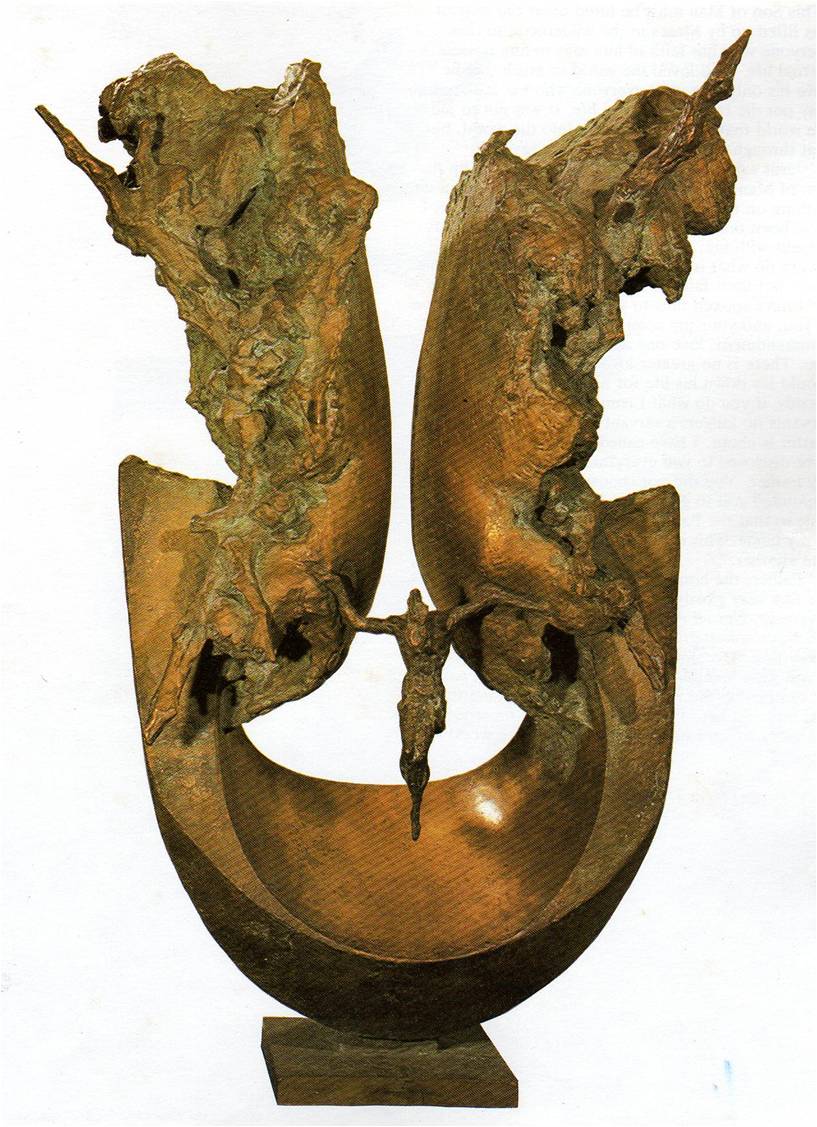
A word of encouragement to those who may be preaching on Philippians 2.5–11 this week:
‘The centre of the Incarnation is where Christ placed the focus of His work—not at the beginning of His life, but at its end; not in the manger, but in the cross. The key to the Incarnation is not in the cradle, but in the cross. The light on Bethlehem falls from Calvary. The virtue lies in some act done by Christ; and He Himself did no act in His birth, but in His death He did the act of the universe. The soul of the Incarnation does not lie in His being born of a pure virgin; but it lies in the death of His pure soul and the perfect obedience of His will as a propitiation for the sins of the world. God was in Christ as reconciler, not as prodigy. The key to the Incarnation lies, not in the miracle performed on His mother, but in the act of redemption performed by Himself. Christ’s great work on our behalf was not in assuming our nature at birth, but in what He did with the nature we call assumed. Men were not redeemed by Christ being born as He was, but by His dying as He did. It is that which establishes His power over us sinners. It is that which makes His real value to our souls, because it is there that He atones, expiates, reconciles. It is that which gives chief value to His entrance in the world—not that He was miraculously born, but that He was born to die and redeem. The saving humiliation was not that of the manger but of the cross. It was a humiliation not inflicted or imposed, but achieved. And the self-emptying behind all was one to be explained, not by anything happening to Him in His humble birth, but by what happened through Him in His humiliating death. If He had not been born in that way, and yet had died as He did, He would still have been our reconciliation with God, our Redeemer from the curse, and our Saviour from the sin of the soul and of the race. The power of His Incarnation has become so weak among men, for one reason, because its explanation has been sought at the wrong end of His life. The wonder has been transferred from Good Friday to Christmas, from the festival of the second birth to the festival of the first, from redemption to nativity, from the fellowship of His death to the sentiment of His babyhood’. – PT Forsyth, God the Holy Father, 40–1.
John Barclay to lecture kiwis on ‘unconditioned’ and ‘pure’ gifts
 Professor John Barclay will be at the University of Otago (Dunedin) next week to deliver the De Carle Open Lectures on Tuesday 30 March and Wednesday 31 March. All are welcome. Here’s the details:
Tuesday 30 March, 5.10pm. (Archway 1 Lecture Theatre): ‘Paul and the Subversive Power of the Unconditioned Gift‘
Working from the anthropology of gift, and the practice of gifts in Paul’s first-century context, a critical question emerges concerning who is qualified or worthy to receive the gift; answers on the gift’s proper distribution reveal foundational social norms. Paul’s mission to non-Jews broke Jewish ethnic and legal norms, and was the social corollary of his conviction that a divine gift (of Christ) had been given and distributed without qualificatory conditions. This conviction represents a highly unsettling perception of the world, at odds with the normal categories of hierarchy, quality and significance, and capable of creating irregular, socially creative communities. Paul emerges as one of the most subversive thinkers of the ancient world.
Wednesday 31 March, 5.10pm. (Archway 1 Lecture Theatre):‘Paul, Reciprocity and the Modern Myth of the Pure Gift’
The modern ideology of the pure, unilateral and utterly disinterested gift is the product of social and economic developments in Western history, strengthened by Protestant polemics and modern individualism. In Paul’s context, as in most traditional societies, gifts create obligations, are bi-lateral in exchange, and are a key mechanism for social integration. Paul’s ideology of gift-reciprocity in a community bound together by gift and need indicates that he is not a modern – and all the better for that! Special features of Paul’s notion of community-construction will be explored, with suggestions concerning their relevance to contemporary social and economic problematics.
Some good news
 Some considerable time has passed since I completed writing my PhD thesis. Friday night saw me formally defend it in an oral exam known as a viva voce. In its most hoped for form, ‘the viva’ is a kind of friendly inquisition which involves a richly-rewarding conversation with two (or more) very qualified examiners, both of whom are encouraging and constructive in their comments, deeply perceptive in their questions, who assess a solid piece of work fairly and without unduly pushing personal agendas, and who pass the thesis without qualification or any further editing required. Mine was just such an experience with Tom Smail and Ivor Davidson.
For those who may be interested, here’s an abstract of my essay:
‘This essay explores whether the notion of “hallowing” provides a profitable lens through which to read and evaluate the soteriology of British theologian P.T. Forsyth, and it suggests that the hallowing of God’s name is, for Forsyth, the way whereby God both justifies himself and claims creation for divine service. It proposes that reading Forsyth’s corpus as essentially an exposition of the first petition of the Lord’s Prayer is an invitation to better comprehend not only his soteriology but also, by extension, his broader theological vision and interests. Chapters One and Two are concerned with questions of methodology, and with placing Forsyth in the social context of his day, with introducing the theological landscape and grammar from which he expounds his notion of reality as fundamentally moral, and with identifying some of the key but neglected voices that inform such a vision. Chapter Three explores the principal locale wherein the first petition of the Lord’s Prayer is answered: in Jesus Christ, whose confession of holiness ‘from sin’s side’ justifies God, destroys sin and creates a new humanity. Chapter Four examines Forsyth’s moral anthropology – specifically, the self-recovery of holiness in the human conscience – and considers holiness’ shape in the life of faith. Chapter Five inquires whether Forsyth’s theology of hallowing finally requires him to embrace dogmatic universalism, and identifies what problems might attend his failure to so do and consequently threaten to undermine his soteriological program’.
A review
 The Journal of Theological Studies has kindly made available a copy of my review of Jacqueline Mariña’s Transformation of the Self in the Thought of Friedrich Schleiermacher in both HTML and pdf versions.
Conference: Being Christian in the South Pacific — Kiwi Christian Practice
 The Pastoral/Practical Theology Group in Aotearoa New Zealand is organising a conference around the topic Being Christian in the South Pacific — Kiwi Christian Practice.
Here’s the details:
The Date: 8—9 November, 2010
The Location: Knox Centre Seminar Room, Hewitson Wing, Knox College, Arden Street, Dunedin
The Cost: $10 donation to cover morning and afternoon tea
The Blurb
Pastoral/practical theology stands at the intersection of Christian ministry and academic research. In pastoral/practical theology, we critically examine the practices of Christian ministry using theological and historical analysis as well as humanities and social science research methods. If you wish to register for the conference, please email Mary Somerville.
The Call for Papers
We are seeking presentations that address a wide variety of topics related to congregational life in Aotearoa. We hope that graduates and current students of MMin, MTheol, DMin and PhD programs who studied topics related to congregations will consider presenting a summary of their research or one aspect of their research. We are seeking papers for 20- and 40-minute slots. In a 20-minute slot, please plan on speaking for 15 minutes and allow 5 minutes for discussion. In a 40-minute slot, please plan on a 30-minute presentation and 10 minutes for discussion.
In submitting a proposed paper, please
- indicate what sort of time slot you are applying for, remembering that most of us suffer from the occupational hazard of nearly always saying more than we think we’re going to;
- include a 50-100 word abstract of the proposed paper.
Proposals should be emailed to Dr Lynne Baab or, if necessary, posted to her at the Department of Theology and Religious Studies, University of Otago, PO Box 56, Dunedin, and should be received by 30 July.
[Image: bluebison]
Paul Mitchell, ‘Get the Word’
 In the beginning was the word
and the word was with God
then a bag snatcher snatched it
laughed and carried it along a laneway
climbed a cyclone fence
pursued by the constabulary
then dropped the word
in an empty playground.
Now the word was with the law
who took it to the station.
But they took their eyes off it.
The word slipped out the window
said itself down a wall
I can I will I am
finding my way to God.
Overhearing was a priest
who dragged it off to seminary
bound it up in leather
shone a torch in its face
said Show the way to God.
The tortured word was honest
but struggled with its bindings
tried to free itself from paper
it was stamped upon
the imprisoned word of God cried.
Let me off these pages
I can show the way to love
the one I had with Dad
when he spoke me I spoke him
and when that phrase was in the air
it was both of us as well.
The priest took the word to council
who took it to a committee who slapped it
on the table of a busy bishop
who fenced it from intruders.
But he was knocked clean over
by that scheming snatcher
who took the word and threw it
all over the speaking earth.
— Paul Mitchell, Minorphysics (Brisbane: Interactive Press, 2003), 28.
[HT: Simon Carey Holt]
The finality of Christ in a pluralist world
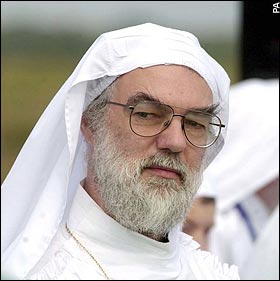 During a recent visit to the Diocese of Guildford, Archbishop Rowan Williams gave a lecture (based on John 14:5-6 and Acts 4:8-13) on the finality of Christ in a pluralist world. The whole piece is well worth reading, but here’s how he concludes:
‘[B]elief in the uniqueness and finality of Jesus Christ — for all the assaults made upon it in the modern age — remains for the Christian a way of speaking about hope for the entire human family. And because it’s that, we are bound to say something about it. We are very rightly suspicious of proselytism, of manipulative, bullying, insensitive approaches to people of other faith which treat them as if they knew nothing, as if we had nothing to learn and as if the tradition of their reflection and imagination were of no interest to us or God. God save us from that kind of approach. But God save us also from the nervousness about our own conviction which doesn’t allow us to say that we speak about Jesus because we believe he matters. We believe he matters because we believe that in him human beings find their peace. Their destinies converge and their dignities are fully honoured. And all the work that we as Christians want to do for the sake of convergent human destiny and fullness of human dignity has its root in that conviction that there is no boundary around Jesus — that what he is and does and says and suffers is in principle liberatingly relevant to every human being; past, present and future.
The challenge is partly re-connecting our christology (what we say about Jesus and the Trinity) with our anthropology (our sense of what belongs properly to human beings); and rightly understood, I think that the belief in Jesus’ uniqueness and finality allows us to do this. And, rightly understood, I believe it also allows us to encounter both the religious and the non-religious other with the generous desire to share, and the humble desire to learn, and the patience to let God work out his purpose as is best in his eyes’.
Answer: Donald MacKinnon
 Sometimes you’ve just gotta go with your gut on things. After assuming that Andre would totally nail this wee comp (he just needed to trust his instinct that ‘it has to be MacKinnon’), my dear friend Theng Huat (a fellow Forsyth devotee who has a habit of beating people to the post!) has pinched it with the suggestion of the great Donald MacKinnon. Well done Theng Huat. It’s, as you indicate, from MacKinnon’s essay in Justice the True and Only Mercy: Essays on the Life and Theology of Peter Taylor Forsyth (ed. by Trevor Hart).
Theng Huat, of course I’d love to shout you an all-expenses paid trip to NZ, but will you settle for a few books instead? Here’s a few that I thought may interest you. Take your pick of any three:
- The City in the Valley: Biblical Interpretation and Urban Theology by Dieter Georgi
- The Book of Job: A Contest of Moral Imaginations by Carol A. Newsom
- Believing Scholars: Ten Catholic Intellectuals edited by James L. Heft
- The Myth of a Christian Religion: Losing Your Religion for the Beauty of a Revolution by Gregory A. Boyd
- Reality of God and the Problem of Evil by Brian Davies
- Sacred Attunement: A Jewish Theology by Michael Fishbane
- Finding the Groove: Composing a Jazz-Shaped Faith by Robert Gelinas
- A Greener Faith: Religious Environmentalism and Our Planet’s Future by Roger S. Gottlieb
- Feminist Reconstructions of Christian Doctrine: Narrative Analysis and Appraisal by Kathryn Greene-McCreight
- Naming the Silences by Stanley Hauerwas
- Spirituality and the Ethics of Torture by Derek S. Jeffreys
- Getting on Message: Challenging the Christian Right from the Heart of the Gospel edited by Peter Laarman
- Providence Lost by Genevieve Lloyd
- Jesus Wants to Save Christians: A Manifesto for the Church in Exile by Rob Bell
- Rediscovering Confession: The Practice of Forgiveness and Where it Leads by David A. Steere
- The Epistemology of Belief by Hamid Vahid
- Re-thinking Christianity by Keith Ward
- Justification: God’s Plan & Paul’s Vision by N.T. Wright
A love which overflows from fullness
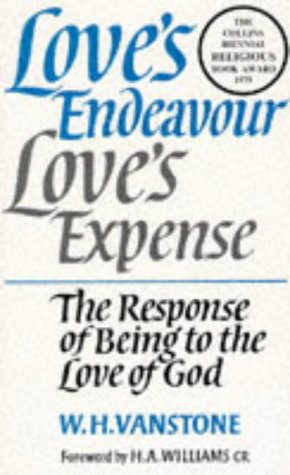 The Incarnation: An Interdisciplinary Symposium on the Incarnation of the Son of God (edited by Stephen T. Davis, Daniel Kendall and Gerald O’Collins) is a fascinating collection of essays from a theologically and ecumenically diverse group of scholars, including NT Wright, Gordon Fee, Jean-Noël Aletti, Sarah Coakley, Stephen T. Davis, David Brown, and others. It also includes a piece by C. Stephen Evans in which he defends a brand of kenoticism, convinced (rightly in my view) that some form of kenotic christology does most justice to the NT’s accounts of Jesus and that it is possible to provide an account of kenoticism that does not in any way abrogate the claims of Chalcedonian orthodoxy. This is precisely what Evans sets out to do in this essay.
In conversation with Stephen Davis, Ronald Feenstra and Richard Swinburne (why does he go there?), Evans proposes that God’s gracious decision to enflesh – because it is a decision fully laden with soteriological intent – is necessarily best understood as a decision to assume certain limitations. This is the shape of love. Along the way, Evans cites this beautiful passage from W.H. Vanstone, among whose many further contributions, as Jim Gordon reminded us some years back, was to ‘sell the vicarage furniture to pay for the repair of the church roof!’ (Paul Fromont also posted some good stuff from Vanstone some time back). Anyway, enough waffle, here’s the quote:
‘Trinitarian theology asserts that God’s love for his creation is not the love that is born of ‘emptiness’ … It is the love which overflows from fullness. Its analogue is the love of a family who, united in mutual love, take an orphan into the home. They do so not out of need but in the pure spontaneity of their own triumphant love. Nevertheless, in the weeks that follow, the family, once complete in itself, comes to need the newcomer. Without him the circle is now incomplete; his absence now causes anxiety: his waywardness brings concern; his goodness and happiness are necessary to those who have come to love him; upon his response depends the triumph or the tragedy of the family’s love … Love has surrendered its triumphant self-sufficiency and created its own need. This is the supreme illustration of love’s self-giving or self-emptying – that it should surrender its fullness and create in itself the emptiness of need. Of such a nature is the Kenosis of God – the self-emptying of Him Who is already in every way fulfilled’. – William Hubert Vanstone, Love’s Endeavour, Love’s Expense: The Response of Being to the Love of God (London: Darton, Longman, and Todd, 1977), 69.
A wee reminder
 A wee reminder that our Who said it? competition ends tomorrow. Responses for this one have been a bit light on thus far (to say the least).
Perhaps a prize might have been a good incentive; and here was I thinking that serious theologians might be above such triviality …
Then again, perhaps I can arrange something …
… becoming estranged from the earth

‘We do not rule; instead we are ruled. The thing, the world, rules humankind; humankind is a prisoner, a slave, of the world, and its dominion is an illusion. Technology is the power with which the earth seizes hold of humankind and masters it. And because we no longer rule, we lose the ground so that the earth no longer remains our earth, and we become estranged from the earth. The reason why we fail to rule, however, is because we do not know the world as God’s creation and do not accept the dominion we have as God-given but seize hold of it for ourselves … There is no dominion without serving God; in losing the one humankind necessarily loses the other. Without God, without their brothers and sisters, human beings lose the earth’. — Dietrich Bonhoeffer, Creation and Fall, Dietrich Bonhoeffer Works, Volume 3 (Minneapolis: Fortress Press, 2004), 67.
[HT: W. Travis McMaken]
‘Story of God’, by Michael Crotty
 ‘Story of God’
My story of God seems
pass the tambourine
and do we have a dollar
here for Jesus.
Essentially, it is
disaster relief,
as history made
not in tutorials,
but from middens of waste.
Best interpretations
are so far off the mark
they must be a laugh
if they last a decade,
then like the wireless
of the forties
maybe derivations will remain.
Create a phonetic alphabet
with one sound missing
randomly chosen by algorithm
in a very limited edition
to be printed on a sheet
of guillotined B4
in six point calibri
and you may start
to get the picture.
When futility had truly tired of me,
only devotion would let it be.
— Michael Crotty
[Source: Eureka Street]
David Bentley Hart interview: ‘Revolutionary Christianity and its alternatives’
 The Centre for Public Christianity has generously made available a six-part interview with David Bentley Hart wherein Hart talks about the impact of Christianity on the West, some questionable interpretations of history, suffering and the problem of evil and why he remains a believer.
- The violence of Christian history
- The new atheists and an ugly God
- Ethics and the good life
- Nostalgia for a pagan past
- Gnosticism and alternative gospels
- Suffering and the problem of evil
The full interview is also available here as a download via iTunes.
Who said it?
 It’s time again for another ‘Who said it?’ competition. From whose mouth/pen did the following words come:
‘Aristotle claimed superiority for the poet over against the historian on the ground that the latter was only concerned with the detail of what Alcibiades did and suffered; while the former probed the universal import of Oedipus’ suffering. The Gospel writers (Mark and Luke as well as John) are in this respect nearer to Aristotle’s poets than to his historians; they guess and hint a universal import in those events whose detail they chronicle, constrained to this effort by the mystery of the resurrection to which their often stumbling and contradictory conclusions bear witness. The authentic Anselmian theology of the atonement is ultimately continuous with the Evangelists’ interpretation of the details they record … This interpretation of Christ’s passion is grounded in the manner of its presentation in the Gospels, where … the universal is manifested through the particular – the judgement of God through the particularities of human envy, and cruelty, through the grim actualities of Judas’ greed, of Caiaphas’ cold raison d’état, of Pilate’s self-regarding capitulation. It is Jesus who tears away the masks from their faces, his witness to the truth the ordeal imposed upon him by his fidelity. Even the women of Jerusalem who lament his fate, are warned in almost harsh tones, of the disaster that awaits their city, oblivious of the summons to a new way offered them by Jesus. Human pretension is stripped bare, and the judgement of God accepted in an action profoundly tragic in its cost’.
Closing on Friday. No cheating.
Some recent wanderings

- Japanese pastor dismissed for giving communion to unbaptised.
- A really cool video: ‘Who wrote the Bible?’
- Byron Smith shares a quote from Barth on the ‘free theologian’ and the profanity of theological adversary. Byron’s follow up comments are excellent too.
- Todd Walatka has posted a synopsis of Kathryn Tanner’s Christ the Key, – Part 1, Part 2.
- Aaron Fudge (Edward Fudge’s nephew) reviews Edward Fudge’s The Fire That Consumes: A Biblical and Historical Study of the Doctrine of Final Punishment. He concludes with this quote: ‘[The traditional view of hell] must be loyally proclaimed or else denounced. If believed, it should be preached from the house-tops; if not believed, it should be opposed to the very end. If this dogma be false, it is a calumny against God and a stumbling-block in the way of humanity’ (Fudge, 434–5, citation from Emmanuel Petavel, The Problem of Immortality, 267).
- A free audio of Bonhoeffer’s ‘The Cost of Discipleship’.
- Jim Gordon attempts a justification of his book-buying habits.
- Leonard Sweet is on the way to developing Twitter Theology: 5 Ways Twitter Has Changed My Life and helped me be a better Disciple of Jesus.
- The Presbyterian Church in Canada has pulled together a 194-page booklet called ‘Equipping Elders’ which is available as either a free download or, if you’re after a ‘real’ copy’, from the PCC Book Room for about CAN$20.
- Bruce Hamill is thinking out loud on the gift of life.
- Ben Myers seeks suggestions of a title for a new book.
- Cynthia Nielsen posts on Foucault and power (I, II, III).
- Father Robert shares some James Stewart.
- Steve Holmes emerges from a wee blogging exile to share some thoughts on the problems of preaching.
- Finally, Pete Enns on Adam is Israel, i.e. Adam (as opposed to ‘adam’) is “proto-Israel.”
Walking unhampered – and strangely – among the golden lampstands
 Last Sunday, Andrew Stock and more than half (around 100) of the Brisbane Destiny Church [whose website has been pulled offline] walked out of church. This is nothing exceptional in itself, not least of all, it would seem, in less sensible denominations. And not a few have interpreted this action as a sign of courage and integrity, applauding Stock as one who at least has ‘the guts to stand up to the Tamaki machine’. Among the many things that I find most disturbing about this story, however, is today’s report that ‘new pastors have [already] been appointed to run Brisbane’s Destiny Church’ (an outcrop of Brian Tamaki’s Destiny Church in New Zealand).
Is this a sign of a ministry which has failed to foster maturity among the members of God’s flock which remain? And/or is this yet another example that bolsters the claim that one of the markers of a cult is an unwillingness – or inability – to be ‘community’ without a ‘dynamic’ personality at the helm, one who has ‘strong leadership qualities and the ability to cast vision’? Possibly, though I’m in no position to really know.
Contrast Destiny’s pastoral search model with something I posted a while back from Richard Lischer about Lutherans:
‘Lutherans fill their vacancies more deliberately than any of the churches in Christendom. Vacant congregations go months without thinking about choosing a new leader, and pastors, once they have received a call, may sit on it for additional months before hatching a decision. The time isn’t used for negotiating more favorable terms; it is simply filled with prayer and dormancy. The President-elect of the United States names a Cabinet faster than the smallest Lutheran congregation picks a pastor, because Lutherans consider the latter process far more important. All is left to prayer and the brooding of the Spirit, and everyone knows the Spirit always works slowly’. – Richard Lischer, Open Secrets: A Memoir of Faith and Discovery, 220.
Perhaps it’s a good time to recall some of PT Forsyth’s advice on ‘How To Help Your Minister’.
Either way, it seems that the sovereign Lord still walks unhampered – and strangely – among the golden lampstands …
‘Pastors aren’t Prophets: Some Unsolicited Advice for Newly-Minted Ministers’, by Rick Floyd
Rick Floyd is a seasoned minister and a very astute theologian who has posted a wonderful and wise reflection on pastoral ministry for ‘newly-minted ministers’. I appreciated it so much that I’m going to re-post it here in its entirety. I reckon that there’s wisdom here that needs to be shared.
‘Too many of our new pastors in the mainline church leave the ministry after a few years. There are many reasons why this happens, but for whatever reason, it is not good. It’s bad for them and bad for the church, and it is bad stewardship to train someone who only serves a short time.
Some of these ministers should never have been ordained in the first place, and the gatekeepers didn’t do their due diligence. Some were lacking the necessary “gifts and graces” for ordained ministry, which doesn’t mean they didn’t have a different and effective ministry in the church.
There are far too many sad situations where a ministry fails for one reason or another, where hopes are shattered, and a young (or not so young) person is saddled with a financially crippling debt for the years in seminary they paid for in loans.
Being a pastor of a church is a hard job. I was one for thirty years. Despite the nonsense being promulgated by the “experts,” faithful pastoring is not a matter of working a certain number of hours (or “units” as they are now sometimes called.) It’s a vocation that takes up most of your waking hours,
When a congregant really needs you, it doesn’t matter whether it is your day off. If you asked me how many seasoned pastors are burned out to one degree or another, I would say, “All of them, if they are really doing their job.” That is why pastors need to exercise radical self-care, pray constantly, and accept the fact, that not being yourself God, you cannot do all that is demanded of you.
Now I readily admit that there is some truth to the whole boundary/take care of yourself/take time for yourself movement. But like all partial truths it is not the whole truth. The church once had a useful word, now much out of favor, for when one piece of the truth gets blown out of proportion. The word is heresy.
One of the modern heresies (but by no means the only one) of the contemporary mainline church, is that you can have something akin to a normal 40 hour a week professional life and be a faithful pastor. It isn’t true. A pastor’s life, and the life of the pastor’s family is necessarily involved in the community of their congregation in season and out of season. Sometimes, even often, it is wonderful; other times it isn’t. That’s the way it goes. It isn’t the Canyon Ranch spa. I often say being a pastor is the best vocation there is, but perhaps the worst job. If you are not called to it, it is something you really don’t want to do.
When I started as a pastor thirty-five years ago I was well trained and well educated and didn’t have a clue what I was really supposed to do. I learned quickly. One of the things I learned was that you have to love your congregants, even the unlovable, of which there are far too many, and who take up a good deal of your time. If and when you find yourself loving them, you know you are on your way to really being a pastor. Some of them you will just never learn to love, and you have to turn them over to God, who does.
 I had been a anti-war and civil rights activist in college and seminary, and had gone to jail for my causes, but when I got into the pastorate I learned very quickly that you can’t be a prophet until you have earned the peoples’ trust. This means years of marrying and burying and sitting by sick beds and in hospital rooms.
If you do this well they may be ready to hear hard truths from the pulpit. They may not. Certainly Isaiah’s prophecies fell on deaf ears.
New ministers who have grown up in the church have a leg up, because they know its rhythms and customs, it’s “grandeur and misery.”
But today many of our ministerial candidates haven’t grown up in the church. Some of them turn out to be our best ones, but they are at a disadvantage. They don’t know the church’s music and it’s well-worn liturgies. They don’t know the joys of a community strawberry festival on a warm spring day, or the energy and agony of a capital-funds campaign to get a new boiler.
They often come to seminary or divinity school in a process of self-discovery, which is fine. Most of us did that to one degree or another. I recall from seminary that the ones who knew they wanted to be a minster since the age of six were best avoided, and probably needed therapy.
Now seminary is a good place to learn many useful things, like that David didn’t write all (or perhaps any) of the Psalms, that the Scriptures are thick and have a literary history, and that the heresies we see around us are as old as the church. If one is lucky, you’ll find a mentor or two, and be able to intern in a healthy church who will love you and teach you what it means to be the church.
What seminaries are not good at (because its not really their job) is forming men and women into Christians, much less teach them how to be faithful pastors. Christian formation is primarily the church’s job, not the schools, although they can help out.
There are many fine teachers and students in these schools, and I don’t want in any way to impugn their integrity or their faith.
At the same time, we are seeing too many newly-minted pastors who come to seminary, not only to find themselves, but with a passion for a social cause or causes, which is fine. I certainly had mine. In seminary the flame of their passion is often fanned by others who share it, which is also fine.
But if all you know of the faith is what you learn in divinity school you are at a distinct dis-advantage. And if the main reason you accept a call from a congregation is to promote your passion and cause then your soul is in danger, and so is the life of a congregation.
Because the congregation you go to may or may not share your passions. It can be dangerous either way.
If they agree with most of your views, be they liberal or conservative, the temptation is to self-justification and self-righteousness, and a tendency to see sin and evil as “out there” in your ideological adversaries, and not also in your own heart and soul. Then the great insight expressed by the Reformers’ axiom simul justus et peccator, that we are at the same time justified and sinners, is lost. This danger in the mainline church can exist in some ministers for their entire careers and they will never even now it.
The other temptation is perhaps more dangerous, at least in mainline churches. That is to go to your first congregation where they don’t share your passion for your social cause or causes, and you scold them for it. You do not learn to love them, and they do not learn to love you, and eventually your ministry fails.
 Typically we are too polite to ever actually fire anyone (although it does happen), but there are other ways to get you to leave, the best one being to so discourage you that you lose heart and leave. Some, too many, of our new pastors actually seek out this kind of martyrdom, and when they are inevitably cast out, they can then turn and say how stiff-necked and hard-hearted their congregation was. But my sympathy for them is limited. Congregations can be stiff-necked and hard-hearted and even abusive. This is nothing new. Just go read Exodus or First Corinthians.
But congregations can be also be wonderful, supportive, gracious, and long-suffering, especially if they sense you are really trying to be their faithful pastor.
The late great Bill Coffin, a prophet himself, once told a bunch of us young ministers (about 1972) a story (which my version here will be only a loose approximation) about one of his students from Yale.
The young pastor was in hot water for his deeply prophetic views and fiery pulpit pronouncements on social issues (it was Vietnam time, and the nation was deeply divided.) The lay leaders wanted to fire him. As the discussion heated up, one of them, a banker, prominent member and very conservative, stood up and said, “You can’t fire him, he’s our pastor. It’s true that he’s a real pinko, and I can’t stand most of the stuff he says from the pulpit, but when my wife was dying he came to see her every day. He’s staying.” And he did. Bill went on to say that if you are a faithful pastor, your flock will give you great freedom to pursue your passions, be it peace and justice work, or collecting butterflies.
A dear rabbi friend of mine who is well up in his eighties told a bunch of us a powerful story last week. He had been an army chaplain in the Korean War, and, perhaps because of that, he was a firm supporter of the Vietnam War. But when our National Guard opened fire and killed some students who were peacefully protesting the war at Kent State University in 1970, he had a change of heart, and he changed his mind. And on the next High Holy Days in the fall, when he preached to the biggest congregation of the year, he apologized to them and asked them to forgive him, admitting that he had been wrong about the war. This story brought tears to my eyes.
He had been their faithful rabbi by then for fifteen years, and he stayed for another dozen or so. The Vietnam War by 1970 was very unpopular, especially here in what until last December was sometimes called by conservatives “The Peoples Republic of Massachusetts.” I am sure that many of his congregants had been hearing sermons they didn’t agree with for some time. But he had earned the right. And when he finally repented publicly, he was indeed a prophet with the full attention of his people. From then on, when he spoke out against the war, he had every ear.
So at the right time and place you can sometimes be both a prophet and a pastor. But you’d better be a pastor to the people first, because that is your primary calling. If you just want to be a prophet, I suggest you go work for a political action organization’.
Lecturing Position in Biblical Studies
 The School of Theology at the University of Auckland seeks to appoint a Lecturer in Biblical Studies with expertise in Hebrew Bible, but capacities to teach into the New Testament. The position may expand to include studies of Emerging Judaism in the future.
The successful applicant will be expected to undertake research, to teach at introductory undergraduate, advanced undergraduate and postgraduate levels, and to supervise research students for the MTheol and PhD degrees.
Applicants will be expected to have a PhD or equivalent in Biblical Studies, some research publications and teaching experience.
Applications close on 21 March 2010.
For more information contact Elaine Wainwright.
 jasongoroncy.com