 ‘… No Line on the Horizon is mostly restless, tentative and confused. It’s not terrible, but it feels like the work of musicians torn between the comfort of the present and the lure of one last run into the adventurous past … Not surprisingly, the album lacks a unified feel. On a few tracks, the Edge, drummer Larry Mullen Jr. and bassist Adam Clayton sound at home rumbling through the verses and blowing out the choruses in the old familiar way. But as No Line trudges on, it slumps under the weight of its own need to surprise … U2 has clearly found itself stuck in a very strange moment of self-reckoning’. – Josh Tyrangiel, ‘U2’s Unsatisfied — and Unsatisfying — New Album’. Time Magazine, 26 February, 2009.
Year: 2009
‘Adam, where are you?’
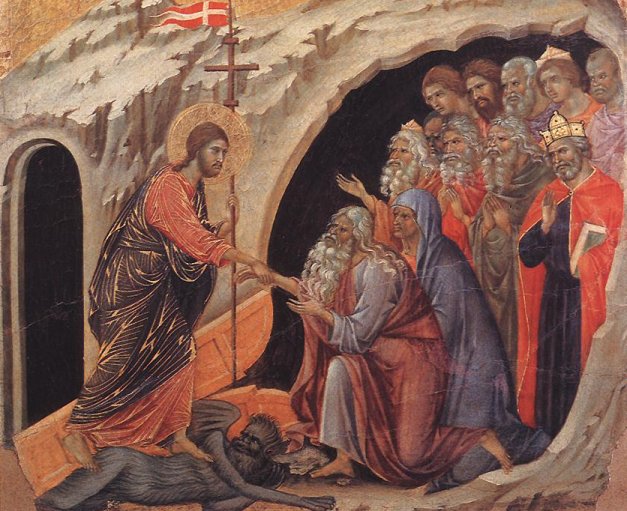 ‘God … has gone to search for Adam, our first father, as for a lost sheep. Greatly desiring to visit those who live in darkness and in the shadow of death, He has gone to free from sorrow Adam in his bonds and Eve, captive with him … “I did not create you to be a prisoner in hell. Rise from the dead, for I am the life of the dead”‘. – ‘Ancient Homily for Holy Saturday’, ascribed to Epiphanius of Constantia, cited in Catechism of the Catholic Church (Homebush: Society of St Pauls, 1994), 165:
Malcolm Gordon – ‘One Voice’ – A Review
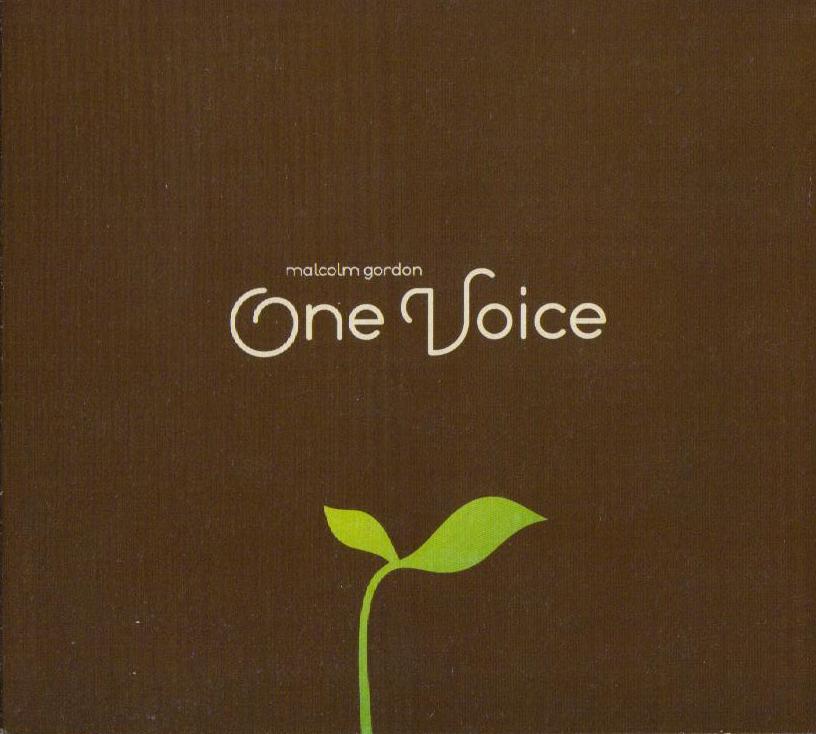 ‘People remember what they sing. Ultimately, they believe what they sing’. So believes Malcolm Gordon – a Presbyterian minister who writes songs, good songs, even songs ‘decently and in order’. In 2001, he toured with Y-One, and between 2002-2006 with the band Somebody’s Cousin, with whom he recorded two albums – ‘Brighter Day’ (2004) and ‘Here We Are (2006). Since then, this Kiwi has written and directed his first musical, and released his debut solo album, As I Am.
2008 witnessed the release of his latest album – One Voice – and the One Voice Project dedicated to ‘exploring contemporary expressions of Christian worship’ and to ‘rally song writers and lyricists to produce a resource of contextual and contemporary worship music every couple of years’. He writes that ‘the guiding principal throughout this has been to create music that is “Theologically authentic and culturally credible”. Too often music that is sung in churches tends to excel in one of those areas at the expense of the other’.
One Voice betrays the witness of a gifted artist with a theologically-astute nose, of one who believes that what we sing matters and whose heart joins those for whom ‘aching for the dawn’ defines the way of true being. The prayerful songs on this beautifully-produced album take up themes of hope, justice-making, and of identity – that ‘our stories might find their meaning’, rhyme and reason in God. Gordon recognises that however one chooses to express eschatological hope, the ultimate theological foundation remains a basic conviction concerning the faithfulness of the God whose relationship with this world is secured in one who – though one with God – did not consider equality with God something to be exploited, but who made himself nothing. Believers bear witness to this ground of hope every time we break bread and drink wine together – an act, of prolepsis as well as of obedience, undertaken by the Church in hope for a time when every tongue might taste the goodness of the Lord, when friends and enemies, victim and perpetrators, sit at the same table and find their healing in its host who has borne the pain, shame, isolation and fear of all. It is to this that the Church’s songs, including Gordon’s, bear witness. I recall words from one of Halden Doerge‘s sermons on ‘Holy Saturday‘:
In the face of hopelessness and death we [the church] are called to be conduits of hope that dare to speak and listen on the day of silence. We are to dare to continue to give of ourselves, even to the point of death even when all hope seems to have vanished. When foundations dissolve, when brothers betray and God seems silent, we are called to buy fields of hope, to stand between our betrayer and his noose and to break bread together in senseless hope that we serve a God who abounds in surprises that follow the day of silence. We are bound to remember Holy Saturday and to live in it in senseless, glorious hope. Let us be a church that lives in Holy Saturday, longing to see the surprises of the self-giving God who transforms fields of blood into fields of hope. We are called this day to continue in the form of the self-giving that is the very life of God. On this day, this cold and silent yet gloriously beautiful day, let us remember the brokenness and the senselessness that we face as followers of Christ. And then let us gather up our courage in the Spirit and continue to give ourselves away without ceasing. In the deathly quiet of Holy Saturday, let us interrupt it with songs of hope, bread broken and lives poured out.
 The invitation to such interruption is taken up by Gordon in his powerful song ‘Break the Bread’ (sample):
Let’s break the bread,
with the broken hearted.
Break the bread,
in broken homes and in broken lives.
Spill the wine, for all the tears they’ll cry
Spill the wine, wherever innocents die.
Let’s break the bread,
with the ragged stranger.
Break the bread,
with the friendless child.
Spill the wine, with those who spill our blood
Spill the wine, Lord, as we remember you.
I’m praying I’ll live to see the day
When the Table is open
I’m praying a time will come around
When Your hope isn’t wasted.
Let’s break the bread,
with the unclean before the Unseen.
Break the bread,
inside these cold prison walls.
Spill the wine; let it run rich and red across this land
Spill the wine, Lord, as we remember you.
I’m praying I’ll live to see the day
When peace is more than a ceasefire.
Let’s break the bread …
‘People remember what they sing. Ultimately, they believe what they sing’.
News from Burma
Al-Jazeera television recently aired the following Burma Campaign UK report on the plight of Karen refugees on the Burma-Thai border:
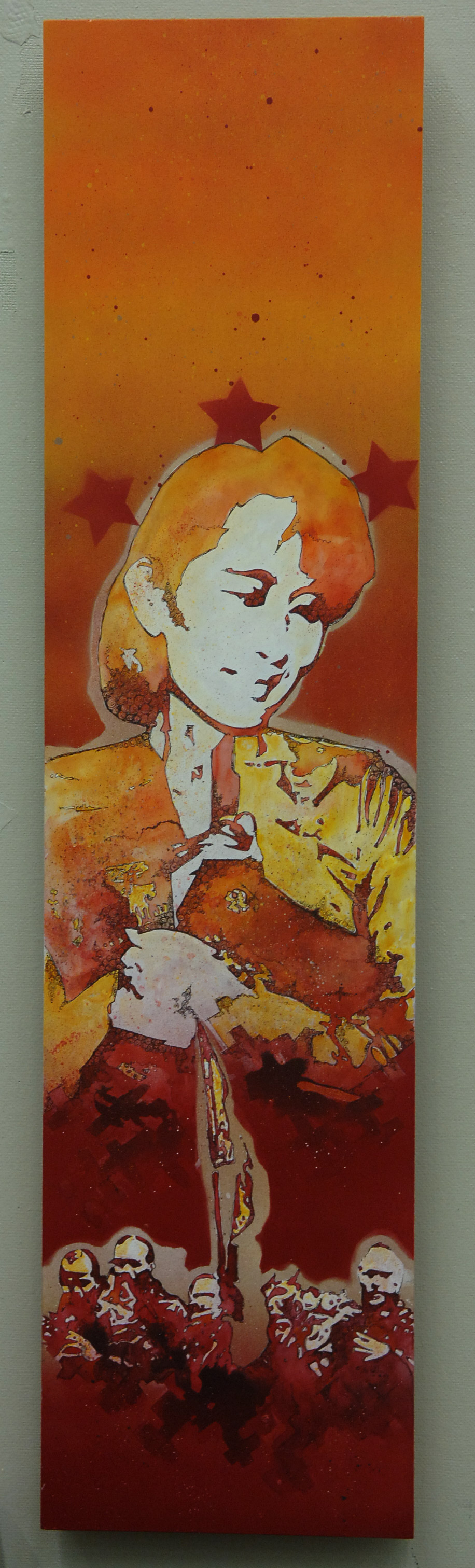 On a related matter, Glasgow City Council recently awarded Aung San Suu Kyi with a Freedom Of The City in absentia. Their media release reads:
‘Burmese pro-democracy campaigner Dr Aung San Suu Kyi will be given the Freedom of the City of Glasgow in absentia, at the City Chambers at noon on Wednesday, March 4.
A representative of the iconic politician, Dr Thuang Htun, will accept the award on her behalf. Dr Suu Kyi remains under house arrest imposed by Burma’s military regime.
Dr Htun is a representative for United Nations Affairs for the National Coalition Government of the Union of Burma. He also represents the democracy movement at the United Nations Commission on Human Rights.
In advance of accepting the award on Dr Suu Kyi’s behalf, Dr Htun commented on the irony of the situation. He said: “The fact that Dr Aung San Suu Kyi should be given the freedom of a city far from her home, at a time that she is denied even basic freedoms in her own country is a sharp reminder of the reality of today’s Burma.”
Lord Provost Bob Winter will present the honour to Dr Htun who will also be presented with a silver plate and a crested scroll. He will then be guest of honour at a special lunch.
The Lord Provost said: “It is with profound respect and admiration for Dr Aung San Suu Kyi’s unflinching bravery that the Council has conferred upon her the Freedom of the City of Glasgow. This is tempered with frustration that she cannot be here today, in person.
“However, I am delighted that her loyal representative Dr Htun has been able to visit our city to accept the award in her absence. He goes with our very best wishes for Dr Suu Kyi, a shining beacon of hope in her country.”
The Freedom of the City Award was originally proposed by Amnesty International and Glasgow Women’s Library.
John Watson, Amnesty’s International’s Scottish Programme Director, said:
“Aung San Suu Kyi is an inspiration to the people of Burma and to those around the world who applaud bravery and dignity in the face of oppression. Amnesty International congratulates Glasgow City Council on its decision to present her with its highest award”
Dr Adele Patrick of Glasgow Women’s Library said: “As part of Glasgow Women’s Library’s ongoing efforts to celebrate, uncover, and promote women’s cultural and political achievements locally and globally we warmly congratulate Glasgow City Council’s decision to offer Dr Aung San Suu Kyi the Freedom of the City.
“We acknowledge how this award raises the profile of the life and work of this remarkable woman and, by extension the people of Burma. We look forward to more pioneering women being added to this roll of honour.”
Dr Suu Kyi is the daughter of Aung San, wartime leader of Anti-Fascist People’s Freedom League (AFPFL, assassinated 1947). She has endured prolonged periods of detention and imprisonment over the past 20 years by Burma’s oppressive regime.
She founded the National League for Democracy (NLD) in 1988 and was swiftly put under house arrest with the offer of freedom if she left Burma.
In 1990 the NLD won the general election decisively and once again Dr Suu Kyi was placed under house arrest. The election result was nullified by a military junta. This was also the year she was awarded the Sakharov Prize for Freedom of Thought.
Accepting the prize Dr Suu Kyi said: “It is not power that corrupts but fear. Fear of losing power corrupts those who wield it and fear of the scourge of power corrupts those who are subject to it. “
The following year she was awarded the Nobel Peace Prize and donated the $1.3 million prize money to establish a health and education trust for the people of Burma’.
I recall the closing words from an album that is very fastly growing on me: ‘Choose your enemies carefully ‘cos they will define you/Make them interesting ‘cos in some ways they will mind you/They’re not there in the beginning but when the story ends/Gonna last with you longer than your friends’.
‘Evolution and God’: a report
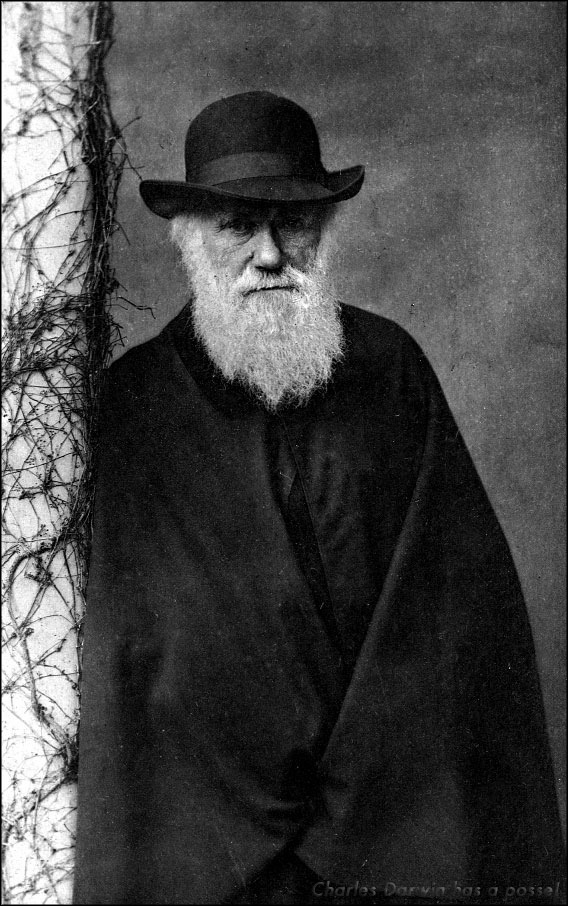 This report just in from Theos:
‘The findings of the biggest research project ever carried out into UK public opinion on evolution and human origins were published by Theos on Monday, ahead of a major conference in Rome on religion and science.
The independent research for Theos, undertaken by ComRes, was released in a new Theos report, Faith and Darwin. The publication is the second of four reports being launched as part of the Rescuing Darwinproject.
The report reveals that 54% of people know that Charles Darwin wrote The Origin of Species (3% believe he wrote The God Delusion by Richard Dawkins and 1% think he wrote The Naked Chef by Jamie Oliver). Only 15% of people know that Darwin was a self-described agnostic towards the end of his life (20% think he was an atheist). 42% of people believe that evolution presents some challenges to Christianity but that it is possible to believe in both.
ComRes also interviewed people across the UK about the origins of human life and found that the East of England has the largest proportion of people in the UK who believe that the theory of evolution removes any need for God (44%). Wales has the largest proportion of theistic evolutionists (the belief that evolution is part of God’s plan – 38%). Northern Ireland has the highest proportion of people who believe in Intelligent Design (16%) and Creationism (25%).
To read the report in full, click here.’
And while we’re on the topic, be sure to check out Kim Fabricius’ Ten propositions on Darwin and the deity. I hope that this latest ’10’ will contribute to the birth of Volume Two of what is a brilliant book.
Around the traps …
- Church and Postmodern Culture has been hosting a great 6-part conversation (1, 2, 3, 4, 5 & 6) on Nathan Kerr’s Christ, History and Apocalyptic: The Politics of Christian Mission. Be sure to also check out Halden’s posts on Kerr’s book too: Mission and Apocalyptic Ecclesiology and The Church as Polis? Some Biblical Reflections
- The latest edition of Journal of Reformed Theology (3/1, 2009) is out and includes articles by Veli-Matti Kärkkäinen, Christoph Schwöbel , Robert Letham, Dirkie Smit, Steve Holmes and Seung Goo Lee on the Trinity
- “Where are the Protestants?”
- Registration is now open for the 2009 Karl Barth Conference at Princeton Seminary
- Lots of Barth-related book reviews:
- Christophe Chalamet reviews Stefan Holtmann’s “Karl Barth als Theologe der Neuzeit”
- William Barnett reviews Eberhard Busch’s “Barth”
- David W. Congdon reviews P.H. Brazier’s “Barth and Dostoevsky”
- David W. Congdon also reviews R. Dale Dawson’s “The Resurrection in Karl Barth”
- John L. Drury reviews Stephen Wigley’s “Karl Barth and Hans Urs von Balthasar: A Critical Engagement”
- Shannon Nicole Smythe reviews “A Shorter Commentary on Romans by Karl Barth
- Shannon Nicole Smythe also reviews Donald Wood’s “Barth’s Theology of Interpretation”
- Jason T. Ingalls reviews Matt Jenson’s “The Gravity of Sin: Augustine, Luther, and Barth on Homo Incurvatus in Se”
- Jason T. Ingalls and W. Travis McMaken review Willimon’s “Conversations with Barth on Preaching” and Yocum’s “Ecclesial Mediation in Karl Barth”
- Alexander Massmann reviews Matthias D. Wüthrich’s “Gott und das Nichtige: Zur Rede vom Nichtigen ausgehend von Karl Barths KD § 50”
- W. Travis McMaken reviews Paul T. Nommo’s “Being in Action: The Theological Shape of Barth’s Ethical Vision”
- Shane Wilkins reviews Neil MacDonald’s “Karl Barth and the Strange New World within the Bible: Barth, Wittgenstein and the Metadilemmas of the Enlightenment”
- Byron Smith posts on Dying for the half-hearted and the corrupt
- Peter Liethart asks if there’s not even something right about the vision of Christendom
- Ben Myers posts a great quote from William Cavanaugh on Church and eucharist
- Steve Holmes asks What is evangelism?
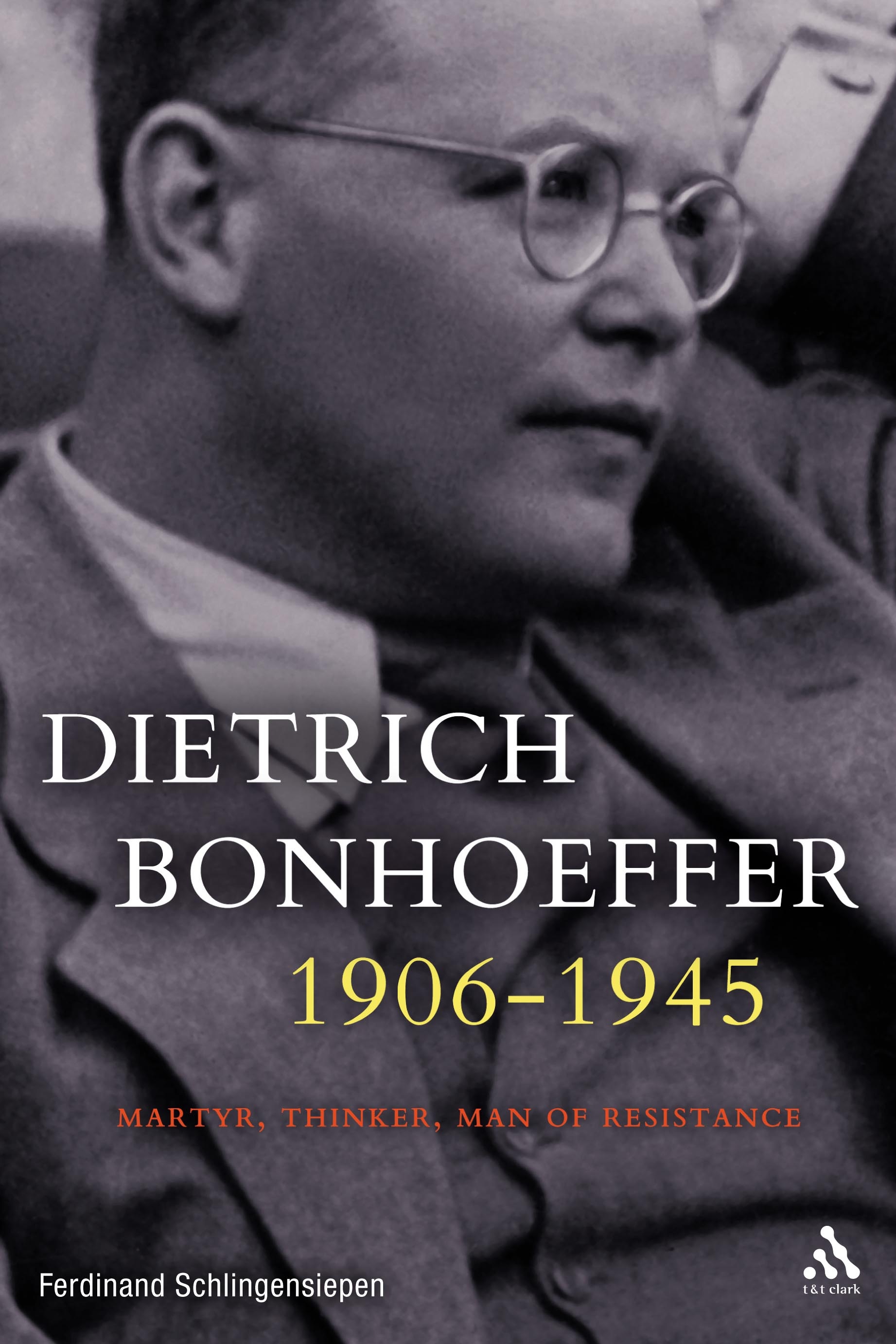
- A wonderful excerpt from a new biography on Dietrich Bonhoeffer. Dietrich Bonhoeffer 1906-1945. Martyr, Thinker, Man of Resistance is on its way in October. How awesome is that!
- Unmasking lies about Picasso
- John Pilger on the loss of freedom in totalitarian Britain
- Lawmakers Debate Establishing “Truth Commission” on Bush Admin Torture, Rendition and Domestic Spying: ‘… How did we get to a point where we were holding a legal US resident for more than five years in a military brig without ever bringing charges against him? How did we get to a point where Abu Ghraib happened? How did we get to a point where the United States government tried to make Guantanamo Bay a law-free zone, in order to deny accountability for our actions? How did we get to a point where our premier intelligence agency, the CIA, destroyed nearly a hundred videotapes with evidence of how detainees were being interrogated? How did we get to a point where the White House could say, “If we tell you to do it, even if it breaks the law, it’s alright, because we’re above the law”?’
- Italians get together to remember Calvin
John Calvin on Children

'The Young Calvin', by Oliver Crisp
Children take on a ‘largely symbolic character’ in most of Calvin’s writings wherein children are viewed as ‘metaphor for the religious life of adult Christians’.[1] Unlike Luther, Calvin tells us very little about his encounters with children. He does, however, tell us that he and his wife lost their only biological child: ‘God had given me a little boy. God took [him] away’.[2] We know little about his relationship with the two children from his wife’s first marriage aside from his pledge (on her deathbed) to care for them; or about the children of his brother Antoine, who lived in his household.
Calvin was not, however, indifferent to children. So Pitkin:
[Calvin’s] writings, along with the social and ecclesial changes he participated in and sought to effect, bear witness to the importance of children in church and society. Serious implications for children’s lives and important assumptions about their nature emerge in his radically theocentric theology of grace, especially in his understandings of providence, covenant, baptism, and human nature as created and fallen. Moreover, when one takes into account the full range of his reforming activity, especially his preparation of ordinances for regulation of the Genevan church (1541), his two catechisms (1537 and 1541-2), and his promotion of school reforms in Geneva, it becomes clear that Calvin, like many intellectuals and reformers of his day, was intensely interested in children and child rearing.[3]
There are multiple ways to approach Calvin’s thought on children, one of which is via his thinking on election: ‘the elect are from birth full inheritors of God’s covenant and members in the church’.[4] Another profitable avenue is via Calvin’s thinking on God’s providence. For Calvin, all human life exists under divine providence; children, therefore, are not ‘begotten … by a secret instinct of nature’ or the ‘fruit of chance’ but are gifts of God.[5] So even when he lost his only son (child mortality at the time ranged between 30 and 50 percent), he would write (to Pierre Viret):
The Lord has certainly inflicted a severe and bitter wound in the death of our infant son. But he is himself a Father, and knows best what is good for his children.[6]
Providence does not equate to laxness, however, and Calvin took seriously the responsibility of parents (indeed, it was a coordinated effort of family, state and church)[7] in rearing children:
… unless men regard their children as the gift of God, they are careless and reluctant in providing for their support, just as on the other hand this knowledge contributes in a very eminent degree to encourage them in bringing up their offspring. Farther, he who thus reflects upon the goodness of God in giving him children, will readily and with a settled mind look for the continuance of God’s grace; and although he may have but a small inheritance to leave them, he will not be unduly careful on that account.[8]
And what sort of children ought parents wish for?
… the children which we ought to wish for, are not such as may violently oppress the wretched and suffering, or overreach others by craft and deceit, or accumulate great riches by unlawful means, or acquire for themselves tyrannical authority, but such as will practice uprightness, and be willing to live in obedience to the laws, and prepared to render an account of their life. Farther, although fathers ought diligently to form their children under a system of holy discipline, yet let them remember that they will never succeed in attaining the object aimed at, save by the pure and special grace of God.[9]
Calvin consistently stressed the parental obligation to fulfil God’s commands and diligently instruct children in the family.
Associated with this is the duty of Christian parents to baptise their children. ‘Parents ought to consider that children in the home constitute a “mirror of God’s grace,” a sign that God cares for the family, and from this consideration be moved to fulfil their parental obligations’.[10] Unlike some, Calvin did not believe that baptism was strictly necessary for salvation. Salvation depends entirely on the promise of God in God’s word, and not on the sign of that promise. Christian parents, therefore, have a duty to baptise their children, but should not worry about the fate of children who die unbaptised.
Calvin takes all authority – parental and otherwise – with the utmost seriousness. But where parents lead their children to violate God’s law, ‘children should regard them not as parents but as strangers’.[11]
Stages of childhood
Like many of his contemporaries and predecessors, Calvin divides childhood up into three stages, each lasting about 7 years.
1-7 On Matthew 18:1-5:
[Jesus] holds up to them a little child as an emblem of humility. When he enjoins his followers to become like a child, this does not extend indiscriminately to all points. We know that in children there are many things faulty; and accordingly Paul bids us be children, not in understanding, but in malice, (1 Cor. xiv. 20;) and in another passage he exhorts us to strive to reach the state of a perfect man, (Eph. iv. 13). But as children know nothing about being preferred to each other, or about contending for the highest rank, Christ desires that their example should banish from the minds of his followers those eager longings after distinction … It will perhaps be objected, that children, even from the womb, have a native pride, which leads them to desire the highest honor and distinction; but the reply is obvious, that comparisons must not be too closely or too exactly carried out, so as to apply at all points. The tender age of little children is distinguished by simplicity to such an extent, that they are unacquainted with the degrees of honor, and with all the incentives to pride; so that they are properly and justly held out by Christ as an example’.[12]
Based on Psalm 8:2, Calvin considers young infants [those still nursing] as mature proclaimers of God’s goodness: ‘[David] says that babes and sucklings are advocates sufficiently powerful to vindicate the providence of God. Why does he not entrust this business to men, but to show that the tongues of infants, even before they are able to pronounce a single word, speak loudly and distinctly in commendation of God’s liberality towards the human race?’.[13]
These comments are remarkable given that Calvin’s stress on sin’s noetic effects. This statement remained unchanged from the 1536 Edition of the Institutes:
Even infants bear their condemnation with them from their mother’s womb; for, though they have not yet brought forth the fruits of their own iniquity, they have the seed enclosed within themselves. Indeed, their whole nature is a seed of sin; thus it cannot but be hateful and abominable to God. Through baptism, believers are assured that this condemnation has been removed and withdrawn from them, since (as was said) the Lord promises us by this sign that full and complete remission has been made, both of the guilt that should have been imputed to us, and of the punishment that we ought to have undergone because of the guilt.[14]
Infancy ends with the onset of reason, at about age six.
 7-14 A period of intellectual, spiritual and moral maturation.
So Calvin, on 1 Corinthians 13:11 [‘When I was a child, I talked like a child, I thought like a child, I reasoned like a child. When I became a man, I put childish ways behind me’], insists on the necessity of education for childhood, but which does not suit those who have already reached ‘maturity’ (Latin commentary) or the ‘age of discretion’ (French commentary). The awakening of reason involves a lapse from the earlier simplicity. Consider Calvin’s comments on Genesis 8:21 [‘The LORD smelled the pleasing aroma and said in his heart: “Never again will I curse the ground because of human beings, even though every inclination of the human heart is evil from childhood [from youth]. And never again will I destroy all living creatures, as I have done’]:
… the clause which is added, “from youth”, more fully declares that men are born evil; in order to show that, as soon as they are of an age to begin to form thoughts, they have radical corruption of mind.[15]
Again from his comments on Psalm 8:2,
If God has appointed children even in infancy the vindicators of his glory, there is no absurdity in his making them the instruments of showing forth his praise by their tongues after they have arrived at the age of seven years and upwards.[16]
Education/instruction was at the forefront of the Church’s/parents’ responsibility towards children. Calvin taught (and practised) and that before a child was admitted to the Lord’s Supper at about age 11 or 12, they underwent weekly catechism classes (based on 52 question-and-answer format questions on nature of faith, the Creed, the Law, prayer, worship, Word and Sacraments) and learnt to sing the psalms. The assumption throughout, however, was that the child (indeed all children and not only those of Christian parents, because one could not know who the elect were) was to be treated as fully Christian (by virtue of the one covenant) and not as an object for conversion. 7-14-year-olds also had to give a public confession of their faith before the congregation. The confession proceeded an oral interview with a pastor and involved a brief verbal testimony. The catechism classes were not with a view to rote learning of answers but with a view to providing young catechumens with a vocabulary for articulating their growing faith.
14-21 [maybe slightly earlier for girls].
Calvin describes this as ‘an age of pride and rebelliousness fired by the awakening sex drive’.[17] Note Calvin on Genesis 34:4:
young men [ought] to take heed to themselves, lest in the slippery period of their age, the lusts of the flesh should impel them to many crimes. For, at this day, greater license everywhere prevails, so that no moderation restrains youths from shameful conduct.[18]
In sum:
Like Augustine, Calvin assumes a graduated guilt as one moves with age to greater accountability for acts of wrongdoing. However, he does not dwell on evidences of corruption in small children, as Augustine does … Although young children are corrupted by original sin, when compares to older children and adults, they demonstrate a lack of malice that their elders ought to emulate. The biblical basis for this view ins 1 Corinthians 14:20, where Paul urges believers to be children not in understanding but in malice … Adult believers ought to imitate children’s natural simplicity but not their lack of understanding … Calvin, the theologian of “total depravity,” is more appreciative of the positive character of children, dwelling less on their sinfulness that some of his forebears (such as Augustine) or successors (such as Jonathan Edwards).[19]
[1] Barbara Pitkin, ‘”The Heritage of the Lord”: Children in the Theology of John Calvin’ in The Child in Christian Thought (ed. Marcia JoAnn Bunge; Grand Rapids/Cambridge: Wm. B. Eerdmans, 2001), 161.
[2] John Calvin, ‘Responsio ad Balduini convicia’ in Ioannis Calvini Opera Quae Supersunt Omnia (ed. G. Baum, et al.; vol. 9 of Corpus Reformatorum; Brunswick/Berlin: C.A. Schwetschke and Son [M. Bruhn], 1863-1900), 576.
[3] Pitkin, ‘Children in the Theology of John Calvin’, 161-2.
[4] Ibid., 164.
[5] John Calvin, Commentary on the Book of Psalms, Vol. V (trans. James Anderson; Grand Rapids: Baker, 2003), 110.
[6] John Calvin, ‘To Viret. Geneva, 19th August 1542’ in Letters, Part I: 1528-1545 (ed. Jules Bonnet; vol. 4 of Selected Works of John Calvin: Tracts and Letters; Grand Rapids: Baker, 1983), 344.
[7] See Pitkin, ‘Children in the Theology of John Calvin’, 174-89.
[8] Calvin, Comm. Psalms V, 111.
[9] Ibid., 112.
[10] Pitkin, ‘Children in the Theology of John Calvin’, 173.
[11] Ibid., 172.
[12] John Calvin, Commentary on a Harmony of the Evangelists, Matthew, Mark, and Luke, Vol. 1 (trans. W. Pringle; vol. 16; Grand Rapids: Baker, 2003), 332-3.
[13] John Calvin, Commentary on the Book of Psalms, Vol. I (trans. James Anderson; vol. 4; Grand Rapids: Baker, 2003), 96.
[14] John Calvin, Institutes of the Christian Religion, 1536 Edition (trans. Ford Lewis Battles; Grand Rapids: The H.H. Meeter Centre for Calvin Studies/Wm. B. Eerdmans, 1975), 97; John Calvin, Institutes of the Christian Religion (ed. John T. McNeill; trans. Ford Lewis Battles; Philadelphia: The Westminster Press, 1977), 4.15.10.
[15] John Calvin, Commentaries on the First Book of Moses called Genesis, Vol. I (trans. J. King; vol. 1; Grand Rapids: Baker, 2003), 285.
[16] Calvin, Comm. Psalms I, 99.
[17] Pitkin, ‘Children in the Theology of John Calvin’, 165.
[18] John Calvin, Commentaries on the First Book of Moses called Genesis, Vol. II (trans. J. King; vol. 1; Grand Rapids: Baker, 2003), 219.
[19] Pitkin, ‘Children in the Theology of John Calvin’, 165, 169.
Alfonse Borysewicz: The Art of Lent
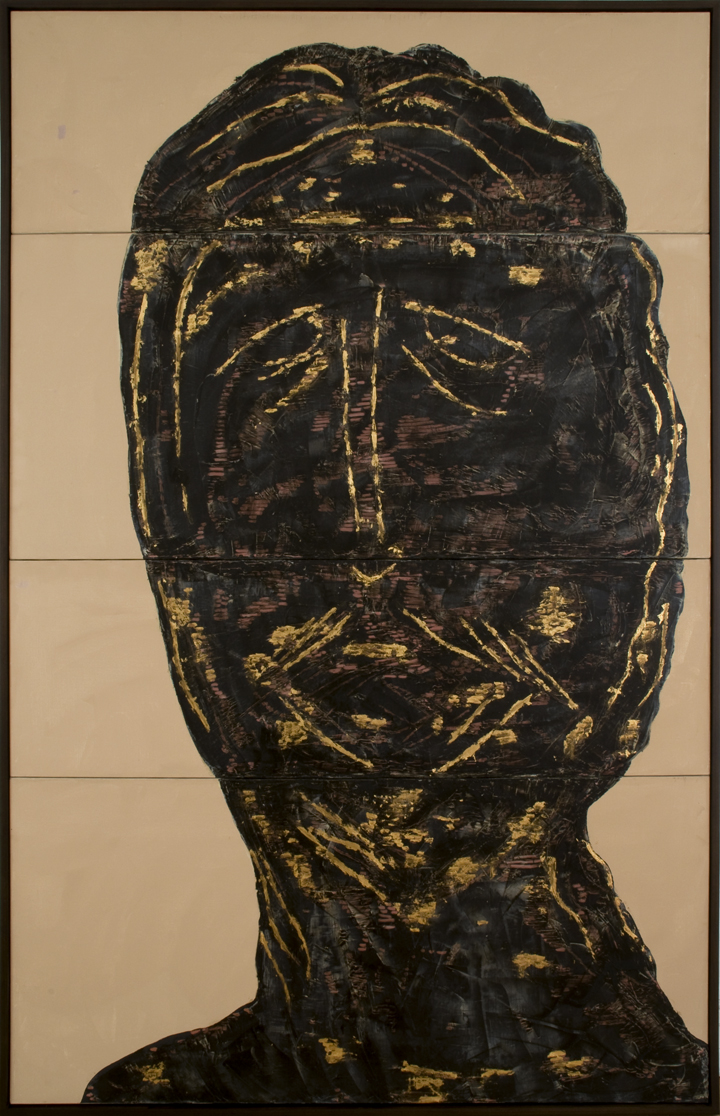 During Lent, the Oratory Church of St Boniface will exhibit the works of the distinguished Catholic artist and Oratory parishioner, Alfonse Borysewicz. I have posted previously on Alfonse here.
Alfonse was born in Detroit in 1957 and has been residing in Brooklyn since 1988 where he and his family have been members of the Oratory Church of St. Boniface. He received a master’s degree in theology before studying painting at the Museum School of Fine Arts in Boston. Borysewicz has received two Pollack-Krasner Foundation Grants (1987, 1992) and a Guggenheim Painting Fellowship (1995). He has exhibited widely in the United States, Europe and Japan. His writings can also be found in Image. Jonathon Goodman wrote in Art in America, ‘Borysewicz’s ability to invent a language of transcendence which is both traditional and of the moment makes him a compelling artist’.
The paintings on exhibit for Lent are a continuance of Borysewicz’s work for the Oratory since the early 1990s (he has completed two side chapels, a processional cross as well as paintings for the residence chapel).
 The Lenten paintings will cover the stained-glass windows for the 40 day period of Lent. These paintings with their austerity of near abstraction reverence the Icons of Christian antiquity. With a modern hand Borysewicz gives pictorial voice to the Catholic heritage. As Pope Benedict once observed, ‘next to the saints the art which the church has produced is the only real apologia for her history’.
Alfonse Borysewicz will also deliver the Brooklyn Oratory ‘2009 Baronius Lecture’ on 22 March at 4 pm. His lecture will be entitled ‘Art and Faith: Can You Be a Contemporary Artist and a Practicing Catholic?’. The lecture will be followed by a reception and tour of Alfonse’s paintings. See here for more details.
Left image: ‘Emmaus’, 2007; Right image: ‘Mary Magdalene’, 2007.
Towards a Theology of the Child
 Recently, I posted on Karl Rahner’s theology of childhood. Over the coming weeks, I plan to post similar reflections that contribute towards developing a theology of childhood. Initially, I propose to post mainly from those of the Reformed camp: John Calvin, Friedrich Daniel Ernst Schleiermacher, Karl Barth, David Jensen, Jürgen Moltmann, and from Australian Roman Catholic theologian Anthony Kelly. At some future stage, I’d also like to work on similar contributions from the Celtic and Anabaptist traditions (I’d welcome any relevant resources regarding these two areas).
February bests …
 Best book: Kim Fabricius, Propositions on Christian Theology: A Pilgrim Walks the Plank (Durham: Carolina Academic Press, 2008).
Best music: Archie Roach, Charcoal Lane; Morrissey, Years of Refusal [2009].
Best films: Seven Pounds [2008] ♦♦♦; The Wrestler ♦♦♦♦; Frozen River ♦♦♦½.
Best drink: Two Paddocks Pinot Noir (2007).
Political prisoners set free in Myanmar
 ‘Twenty-four political prisoners were set free in Myanmar on Saturday after the government announced that it would release 6,313 prisoners.
One of those released is prisoner of conscience Ma Khin Khin Leh, who has been the subject of Amnesty International campaigns since her arrest in July 1999. The authorities detained her because they could not find her husband, Kyaw Wunna, who was connected to a pro-democracy march expected to take place that month.
Of the other released political prisoners, there were nine Buddhist monks and one nun. Some were members of Myanmar’s opposition party, the National League for Democracy. These included Dr. Zaw Myint Maung, a MP-elect who had been in prison since 1990.
Another man, Zaw Naing Htwe, was released from a labour camp. Zaw Naing Htwe was sentenced to nine years in prison in December 2008 because he had received a letter from his elder brother, who was one of the imprisoned 88 Generation Students group leaders.
“There are still more than 2,100 political prisoners behind bars in Myanmar. Many of them are in poor health, partly as a result of harsh prison conditions,” said Donna Guest, Asia Pacific Deputy Director.
“While the release of these prisoners is welcome, the Myanmar government must release all other prisoners of conscience immediately and unconditionally.”‘
Source: Amnesty International
Seeing the world through Christian eyes
 ‘We know the world only as a sinful world, and we know the relation of Christ to it, experimentally, only as that of its Saviour from sin’. We must ‘stick to the actual’ and try to ‘understand and interpret what is, not to wander off into what might have been, as though it might find there truths sublime or more profound. The world we live in is the only world’. – James Denney, The Christian Doctrine of Reconciliation (London: James Clarke & Co., 1959 [1917]), 181-2.
God: the artist who completes his work
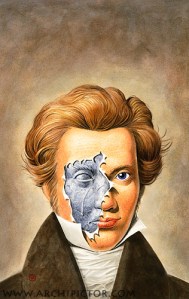 ‘If a poet or an artist puts himself into his Productions he is criticized. But that is exactly what God does, he does so in Christ. And precisely that is Christianity. The creation was really only completed when God included himself in it. Before the coming of Christ, God was certainly in the creation, but as an invisible sign, like the watermark in paper. But the creation was completed by the Incarnation because God thereby included himself in it’. – Søren Kierkegaard, The Journals of Kierkegaard (edited by Alexander Dru. New York: Harper & Brothers, 1959), 324.
William James on evolution
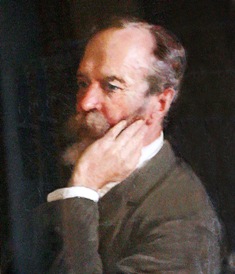 ‘The idea of a universal evolution lends itself to a doctrine of general meliorism and progress which fits the religious needs of the healthy-minded so well that it seems almost as if it might have been created for their use’. – William James, The Varieties of Religious Experience: A Study in Human Nature, being The Gifford Lectures on Natural Religion delivered at Edinburgh in 1901-1902 (New York: Longmans, Green, and Co., 1920 [1902]), 91.
Robert Jenson @ Otago: ‘The Regula Fidei and Scripture’
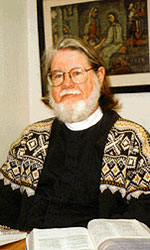 During March, the Department of Theology and Religious Studies at the University of Otago will be hosting Professor Robert Jenson who will deliver the 2009 Burns Lectures.
The title for the series is ‘The Regula Fidei and Scripture’, and will include the following lectures:
1. ‘Creed, Scripture, and Their Modern Alienation’, Wednesday March 11th, 5.10pm, Archway 2 Lecture Theatre.
2. ‘The Tanakh as Christian Scripture’, Thursday March 12th, 5.10pm, Archway 2 Lecture Theatre.
3. ‘The New Testament and the Regula Fidei’, Friday March 13th, 5.10pm, Archway 2 Lecture Theatre.
4. ‘The Apostles’ Creed’, Tuesday March 17th, 5.10pm, Archway 2 Lecture Theatre.
5. ‘The Creed as Critical Theory of Scripture’, Wednesday March 18th, 5.10pm, Archway 2 Lecture Theatre.
6. ‘Genesis 1:1 and Luke 1:26-38’, Thursday March 19th, 5.10pm, Archway 2 Lecture Theatre.
For more information, contact the department.
J. Baldwin Brown on the Fatherhood of God
 ‘God is not only a Father, He is the Father, whose restored love is to be the joy of the child’s heart …The Father includes in His Fatherhood and its manifestations, all that is needful to satisfy every need, instinct, sympathy, judgment, conviction, of the child’s nature; while He must equally reconcile Himself, in the wholeness of His nature, to the child. It is no casual yearning of a Father’s spirit, which may find a passing expression; it is the complete Fatherly nature, in the justice, righteousness, holiness, sacredness, of its love, which has to manifest itself to the world. Therefore it is by the Atonement that it declares itself’. – James Baldwin Brown, The Divine Life in Man (London: Ward & Co., 1859), 50.
PT Forsyth on ‘How To Help Your Minister’
 ‘By great care in his (sic) selection. I do not mean merely care as to his ability and character. I mean care that he is one who increases your own faith and ministers to your own soul. It is fatal to our Protestant principle to vote for a minister because you can just tolerate him yourself, but think he will be of great use among the young or in the town. The minister is first and foremost minister to your faith; and he will not feel that he gets from you what he needs unless he feel also that you are united in the bond of a growing faith and love. Select your minister for yourself, and not for your neighbour.
Let him feel that his ministry is a real factor in the reasons which lead you to live where you do. What help can you give to the minister’s work and soul if he feels that you are ready to remove to the other side of the town for better tennis, a better golf–course, or for a change merely? It is amazing that Christian people should take a house without any inquiry what the neighbourhood offers a family in the way of religious advantage. When men complain that they cannot hold their family to their faith because there is no church near they can profit by, whose fault is that?
Represent to him that it is unnecessary for him to attend every meeting held in connection with the church, that to be out most nights at such meetings is mischievous to next morning’s study, and that he cannot hope to be the blessing to his people that he might be if Sunday arrive simply at the close of a jaded week. Do not forget that what starts you on a new week is for him the end of a stale one, so far as nervous condition goes.
Tell him when he first comes to see you that it will make no difference to your sympathy or your Sunday attendance if he never comes to see you at all except in some crisis. You stand some chance then of being the best–visited family in the congregation.
Tell his wife the same thing, especially if she have a family of children.
Send him a note when the sermon has done you special good; and add that if he answer it, you will not send another.
But if a text trouble you, or a problem, put it in black and white, and say that if he is at a loss for a subject at any time, you would be grateful if he would take that, or would let you talk to him about it.
Use your opportunity to practise local preaching and the conduct of a service. Few things carry home to the pew so well as that what it means to be in the pulpit every Sunday. The minister has this reason of his own for wishing that all the Lord’s people were prophets. Besides, it is a great thing for a minister to know that he preaches to preachers, and is giving to givers. If you have a class, treat it not only as a teacher, but also as a pastor. Have a care of souls. That will open your eyes a little to what pastoral concern is. Faults and failings which to an outsider are mere matter of curiosity are to the pastor an anxiety and grief. You will help him to carry it if you know by experience what this divine concern is, if you have souls you watch for, and lives you train for Christ. Your family may teach you this pastoral sympathy if no other sphere does. Do not omit or neglect this pastoral office at home, as the manner of so many is. It casts on the minister a burden he was never meant to bear. The father is the true pastor of the young. You have no right to blame the minister for the indifference of your young people unless he is palpably incompetent, or worse. It seems to me sometimes that the congestion of work thrown on the church, the dispersion of its energies over trivial efforts to catch youth, the oppressive distraction of the minister, all have their root in the general neglect of family religion. The church and the minister are called on for work which God never meant should be done by the church at all, but by the home. The church is but one organ of the Kingdom of God, and the home is another. And we know what happens when a vital organ refuses work and throws a long strain on another. The end is weakness, illness and death.
Bring to church affairs business methods, but not the business spirit. A Church Meeting is not a committee, nor is it a political assembly. It is the sphere neither of criticism nor of mere discussion, but of Christian work and fellowship in faith and love. Let all truth–telling be the telling of the truth as it is in Jesus.
When the minister asks you to do something, do it without excuses, and without deprecating yourself as compared with someone else. If you wish to escape being asked, do what you are asked and let your unfitness be proved. People will not believe it till you convince them. Then you will have peace.
Do not ask him and his wife to tea “and spend the evening”. At least, do not regard it as part of his ministerial work.
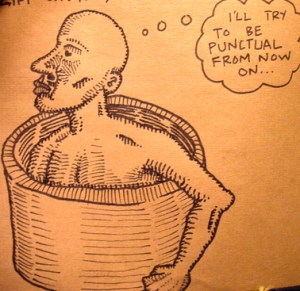 Insist that he be punctual in keeping engagements, answering letters, and especially in beginning service. You can sometimes see the whole secret of an ‘ineffectual ministry in the ten minutes after the hour at which worship should begin. A man who is systematically late at public meetings loses more influence than he knows. How can he hope to be effective with business people whom he exasperates to begin with? Besides, it is an offensive liberty to take.
It might help him if he thought there were the occasional risk of a deacon calling on some pressing business at 9 a.m.
If you are absent from church, let it be when he is there, not when he goes away. The minister supplying finds and reports abroad a poor congregation. It is gauche flattery to say to your minister you only miss when he does.
It would be a help to some if you made it understood, in some kind way, that the minister’s speech at a social meeting need not always be funny, so long as it was sunny.
Do not omit to thank him for asking a subscription. They do you a true service who suggest to you, or collect from you what it is your duty to find means to give. Let him know that when he has a case of real need, he may always reckon on you according to your power. Few things are more disagreeable to most ministers than to ask for money. Remember, those who ask you for Christian money are your agents, not your duns.
Make it clear that you have a higher respect for the office of the ministry than even for the man who fills it. A minister who holds his place only in the affection of his own people carries a too heavy burden; it puts too much of the responsibility upon his personal qualities alone. After all, the church is more than the minister, and the apostolic office is more than the idiosyncrasy of its occupant. No minister should be encouraged to think that he improves his position or usefulness by what doctors or lawyers would call unprofessional or undignified conduct, or by any course that lowers the standard of his office. Your minister, to be sure, needs sympathy, and he must have it; for with us the whole ministerial bond is dissolved when sympathy ceases between pulpit and pew, and divorce should quickly ensue. But there is something that the true minister craves more than sympathy with his person, and that is sympathy with his gospel. “I believe in you, but I don’t believe in your truth,” is no Christian relation. It is mere personal friendship, and the minister must have a higher aim than being his people’s friend; he must be their guide, teacher, and at need corrector. When he is appointed, he is appointed to this. He is not merely the representative of his own community, he is a representative of the whole Church and a special trustee of what Christ committed to the Church. He must speak sometimes to his own church in the name of the Church universal and invisible. You should help to protect him from a frame of mind that overlooks this or makes it impossible. You will lose as well as he if he become parochial or conventialist, if he be a mere prophetic individualist and make nothing of his office. A freelance may rouse and pique, but a lance of any kind is very apt to wound, especially when it is nothing but free.
The old–fashioned advice, “Pray for your minister”, is never out of date. I would only press it into detail.
Pray with him–i.e. let your private prayers include what is most on his heart.
Pray for him–not generally, but in detail. Realize his position by an act of imaginative sympathy, and pray for the special things you divine he needs.
 It may help him even more if you really and privately study your Bible. The minister is hampered by his people’s ignorance of their Bible more than by most things. It is a joy and a power to minister to a people exercised in the Bible and hungry for its light. The more you pray over your Bible, the more you pray with and for your minister. You both work with the same textbook. What must it be for the teacher when the class is habitually unprepared?
The more you do to help your minister, the more he will feel, if he is of the right sort, that he is there to help you rather than to be helped by you. He comes not to be ministered unto, but to minister. Your help will be abundantly returned to you. Help his gospel if you would have him help your soul. But if you go on neither really helping the other, then God help you both!’
– PT Forsyth, ‘How to help your minister’, in Revelation Old and New: Sermons and Addresses (ed. John Huxtable; London: Independent Press, 1962), 115-19.
[Editorial note: I have left unchanged Forsyth’s non-inclusive language. He was a person of his time after all, a truth evident not only in terms of grammar but also in terms of the shape that pastoral ministry took, and the way the home was understood. Still, there is enough truth and meat in this short piece to encourage and challenge pastors and pastored alike.]
Pastoral Ministry: Enter at Risk
 A quick glance over to the bookshelf beyond my desk, four titles catch my eye:
- Burnout in Church Leaders, by Peter Kaldor and Rod Bullpitt
- High Calling, High Stress: The Vocational Needs of Ministers, by Robin Pryor
- Pastors at Greater Risk by H. B. London and Neil B. Wiseman
- Coping With Depression in the Ministry and Other Helping Professions by Archibald D. Hart
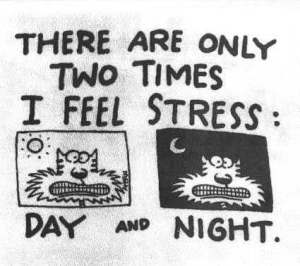
These titles remind me – as if I needed reminding – that the journey into pastoral ministry ought to be impossible without regularly passing a sign that reads: ‘BEWARE: YOU ARE NOW ENTERING A DANGROUS AREA’, or ‘ ENTER AT RISK’, or ‘HAZARDOUS FOR HEALTH’, or ‘SPEEDING KILLS: SLOW DOWN’, or ‘SLIPPERY WHEN WET’.
One such sign appears in the latest edition of the Presbyterian Record (a monthly from the Presbyterian Church of Canada) and its cover story by Sandra Moll and Kristine O’Brien entitled ‘Breaking the Silence: The mental health of our clergy’. Also, a 2003 study undertaken by The Centre for Clergy Care and Congregational Health was recently brought to my attention. The study, ‘Clergy Well-Being: Seeking Wholeness with Integrity’, examined responses from 338 clergy from the six major protestant denominations in Ontario: United, Anglican, Presbyterian, Evangelical Lutheran, the Baptist Convention of Ontario and Quebec, and the Pentecostal Assemblies.
 And the results are in:
* Ministers worked an average of 50 hours per week, but over 25 per cent worked in excess of 55 hours each week.
* In a 30-day period, almost 40 per cent of ministers took three or fewer days off.
* 80 per cent felt guilty if people saw them taking time off during the week.
* 78 per cent felt their position as a minister demanded perfection.
* 51 per cent indicated that they had suffered physically from stress-induced problems.
* 67 per cent said they sometimes projected job frustrations onto their families.
* 38 per cent sought the aid of a clinical councillor;
* 21 per cent a psychologist;
* 15 per cent a psychiatrist;
* 45 per cent the advice of a family doctor regarding stress and anxiety issues.
* 20 per cent had been diagnosed with an emotional condition;
* When asked to specify the condition, 16 per cent named depression.
* 62 per cent said they sometimes appeared outwardly happy while they were in emotional distress.
* 75 per cent were afraid to let their parishioners know how they really felt.
* Close to 49 per cent of ministers identified two or fewer close friends in their church or community.
* 60 per cent said evenings with friends usually involved ‘church talk.’
* 55 per cent indicated that they sometimes feel very lonely.
*  81 per cent experienced a situation in which they required personal pastoral care in the past five years.
* Only 71 per cent sought and received such care.
* 40 per cent of ministers indicated that they had someone who was their personal pastor, but only 16 per cent indicated that they had a spiritual director.
* 80 per cent were sometimes jealous of the success of other ministers.
* 83 per cent believed ministry was a calling from God and the church. [How this informs/deforms one’s doctrine of God is significant in itself]
* 91 per cent agreed that being a minister felt more like a job than a calling.
* 77 per cent felt more like CEOs than pastors.
* 83 per cent felt their churches wanted a CEO, not a pastor.
* 94 per cent said they read Scripture for sermon preparation, but it rarely spoke to them personally.
* 86 per cent prayed regularly with others but had little time for personal prayer.
* 71 per cent did not feel spiritually affected while leading worship.
* 89 per cent sometimes felt like they were simply going through a ritual when they led worship.
* 70 per cent felt unfulfilled in ministry.
* 33 per cent had considered leaving their denomination.
* 60 per cent indicated that they had at some time considered leaving ministry.
 All this caused me to pause and pray for those families in pastoral ministry (particularly my students), and then to recall words penned long ago by one who though he lived in an age when the shape of pastoral ministry was significantly different from our own, also knew the burden, demands and cost of ministry:
‘There are churches that seem to live in an atmosphere of affable bustle, where all is heart and nothing is soul, where men decay and worship dies. There is an activity which is an index of more vigour than faith, more haste than speed, more work than power. It is sometimes more inspired by the business passion of efficiency than the Christian passion of fidelity or adoration. Its aim is to make the concern go rather than to compass the Righteousness of God. We want to advance faster than faith can, faster than is compatible with the moral genius of the Cross, and the law of its permanent progress. We occupy more than we can hold. If we take in new ground we have to resort to such devices to accomplish it that the tone of religion suffers and the love or care for Christian truth. And the preacher, as he is often the chief of sinners in this respect, is also the chief of sufferers. And so we may lose more in spiritual quality than we gain in Church extension. In God’s name we may thwart God’s will. Faith, ceasing to be communion, becomes mere occupation, and the Church a scene of beneficent bustle, from which the Spirit flees. Religious progress outruns moral, and thus it ceases to be spiritual in the Christian sense, in any but a vague pious sense. Before long the going power flags, the petrol gives out on a desert’. – PT Forsyth, The Preaching of Jesus and the Gospel of Christ (Blackwood: New Creation Publications, 1987 (1915)), 119.
Tomorrow, I’ll post Forsyth’s wee essay, ‘How To Help Your Minister’. Until then, check out this short piece and long blibliography.
Bruce Hamill: ‘Response to Kevin Ward’s Inaugural Lecture’
 Rev Dr Kevin Ward’s recent lecture – ‘It may be emerging, but is it church?’ – has sparked a good deal of constructive conversation, a conversation that was kicked off by a brief public response to the lecture by one who had enquired after one of Kevin’s earlier lectures – ‘So where’s the theology in all this? – the Rev Dr Bruce Hamill. Here’s Bruce’s gracious and insightful response to Kevin’s paper:
Introduction
Thanks for the privilege of responding to today very briefly, in just 10 minutes… Kevin, those who know you expect nothing less than a broad-visioned, scholarly, insightful, pastoral, provocative but conciliatory lecture, grounded in your passion for the church and the gospel. You have not disappointed us…
Since I am expected to ask theological questions I will try not to disappoint.
Right Question?
I particularly liked the provocative title… however, as I have thought about the relation between the title and the concluding answer, I reached the conclusion that, for all its provocation this question is not quite right. Not that I want to avoid your question, but perhaps to narrow down the scope of my response…a better question might be: Does this movement within the church (or among the churches) point the way forward for reform of the body of Christ? Does this movement with its 3 foci of (1) alignment with postmodernism (2) relevance (3) incarnationalism have the theological resources for a missional church in our time? Now my suspicion is that your answer to this question would be a nuanced one, but probably, like mine, a ‘no’. Indeed the last half of your paper demonstrates how the emergent church consistently shows a conflict with the classical marks of the church – a strong indicator that its theological principles and direction is fundamentally flawed. In this respect my response is, I suspect in basic agreement with your view (particularly in the latter half of your paper)
Incarnation and Mission
However, if this is the case, then I fear that the framework you inherit from Niebuhr and others in the missiology movement is too close to that used by the emergent church itself, to really expose its flaws. In what remains of my few minutes response I want to indicate some of the tensions within your argument.
To begin with I would note that your adoption of the term incarnation, as an adjective (‘incarnational’) to represent a stance which is neither isolationist nor accomodationist, raises my theological antennae. This appears to me to be a sociologising of the language of theology – of incarnation – which trades on its theological background.
So to a more directly theological question: What is the incarnation? (in just 5 minutes!) And how does it relate to the church’s cultural existence and mission?
David Congdon, a Princeton theologian who has influenced my response to this, says:
‘the incarnation is sui generis, i.e., it is wholly unique and unrepeatable. In short, the incarnation is an event, not an idea that can be applied or a process that can be completed or a reality that can be replicated.’
What I believe lies behind this is the whole doctrine of divine grace emerging from the church’s experience of salvation in the raising of the crucified Jesus. Namely, that the life of Jesus originated unnecessarily (contingently) and freely from God’s transcendent act and being. In the incarnation God’s freedom from us is the basis for God’s freedom for us in the life of Jesus.
 In this sense Jesus life represents a break in the fabric of culture and tradition and original sin. It introduces a radical newness from the Word of God. In this sense the church came to talk of him as being born of a virgin and also suggest that the Holy Spirit ‘overshadowed’ even the maternal contribution to Jesus existence. God enters into the physical conditions of human life, adopting, as it were, the human condition, however this is not an accommodation to or adaption to culture, but rather human culture is here accommodated to the Word of God.
So as Congdon argues, the incarnation cannot be a model for us. However, it does transform and con-form our life. As already enfleshed and enculturated, fallen human beings, we are, because of the incarnation and the form and history it took, reculturated (that’s my word) by God.
In Christ we are not made ‘incarnational’, but a given a history that conforms to his history culminating in death and resurrection. It is here that we see the weakness of the link so often made between ‘incarnation’ and ‘adaptation to human culture’. ‘As the Father sent me…’ refers not to his incarnation but to the form of his life culminating in crucifixion and resurrection – a transformative, salvific encounter with culture.
Other Missional Language in Tension
Let me mention some further places where I think the language of the earlier half of your paper leads you closer to the framework of the ’emerging church’ than the latter half of your paper should allow. You suggest that the aim of missional thinking is a ‘culturally indigenous church’. According to my dictionary “indigenous” means: “born in or originating from where it is found”. If however, the church is created by the crucifixion and resurrection of the incarnate Word it may look like its surrounding culture (like Paul sought to in 1 Cor 9 in order to serve those cultures) but it will not originate from where it is found. The cultural processes that we rely on in the creation of the church are not indigenous processes of human meaning-making. They are the processes whereby God “crunches” from the old order, in all its indigenous and alienated diversity and constant change, a new social order. Jesus very definitely did take the human context in all its particularity seriously, seriously enough to get crucified by it (as you point out). Seriously enough to spend most of his time with those who functioned as essentially non-representative of the culture – the culturally marginalised. I contend that to take culture seriously as Jesus did, is not to conform to its agenda.
As you say ‘there are limits to how far the culture can set the agenda and determine the shape’. My contention is that the issue is not the presence of a limit, but how that limit is set (and who determines it). I believe it is not by the balancing of principles, especially if one of those principles is Andrew Walls’ rather cosy ‘the gospel is at home in every culture and every culture is at home in the gospel’. Such a principle, even if balanced by the pilgrim principle which says that ‘the gospel is never fully at home’, makes the cross the exception rather than the culmination of Christ’s life. One cannot serve two masters, Christ and Culture (as Walls’s balancing act suggests). Cultural processes must have their limits set for them by Christ in the formation of his body, or our enlightenment culture becomes the default determiner of this process.
Church is not people who ‘have the gospel’ (like some ideal) and then apply it, enlightenment style, to the world’s forms. They are worldly people being re-formed by Spirit and Word and re-culturated into a new creation and an anticipation of the kingdom.
Barth, Form and Content
Which brings me to Karl Barth’s problem. He says that there is no ‘sacred sociology’, however I feel he needs to be challenged, by those like John Milbank, to understand the need of a theological sociology – a fuller ecclesiology.
Quoting Barth you say, “If then the church has been, and indeed should (the should is your addition) have its forms determined by whatever the current “political, economic and cultural models” of “its situation in world history” are, does that mean that anything goes?” [loaded question!] Barth has no “should”. I suspect he does not see such accomodation as an ecclesiological virtue – just an inevitability. However, I want to go beyond Barth and challenge the easy separation between form and content. Not only is it not true that anything goes (as you also clearly argue), but it is true that the form as well as the content should be subject to Christ and the Spirit (as you hinted at in places in your paper). This claim does not, as many seem to fear, imply that it will be a fixed form, or that to believe this requires identifying the form that Christ gives the church with a human form from the post. On the contrary it simply requires a formative process, by which enculturated people attend to Word and Sacrament, not just in their private spiritualities but also in their social habits and structures. This is in my view what it means to be a Reformed Church – constantly being re-formed socially.
Thanks again for the chance to respond to your stimulating lecture.
Kevin Ward: ‘It may be emerging, but is it church?’
 A week or so ago, I posted some reflections on the emerging church. I offered these in anticipation of Rev Dr Kevin Ward‘s then forthcoming inaugural lecture at the Knox Centre for Ministry and Leadership entitled ‘It may be emerging, but is it church?’ Kevin delivered his lecture on Monday, which was followed by a brief response by Rev Dr Bruce Hamill. Bruce’s response can be read here. Here’s Kevin’s paper:
‘IT MIGHT BE EMERGING: BUT IS IT CHURCH?’, a guest post by Kevin Ward
At a recent theological conference I was attending, one of the presenters outlining some of the factors in the changing context for theological education, referred to “fresh expressions” which he said was a more appropriate term than the previously favoured descriptor for experimental faith communities, “emerging church”, since as it turned out most of what they were emerging from was not church. He was Anglican and the term “fresh expressions” is a phrase developed by the C of E for some of its new developments, but the term “emerging church’ is still widespread and gains much attention from younger church leaders in NZ, including many of those accepted for ministry training by the PCANZ and coming to the Knox Centre for Ministry and Leadership. One of our courses here is now titled “Missional and Emerging Churches.” At the VisionNZ Conference last year one of the major presentations was “A Kiwi Emerging Kiwi Church: Yeah Right!” by Steve Taylor, who has emerged as the leading spokesperson for emerging church in NZ, and a significant global voice. Indeed it is interesting in reading on the movement globally how much NZ comes up in the material as being, along with, Australia and the UK initiators in it. Mike Riddel and Mark Pierson from NZ, and Michael Frost and Alan Hirsch from Australia are seen as pioneers. I might add that as well as being from down under, they along with Taylor are Baptists, a heritage of course I share myself, and something I will come back to.
A google search of “emerging church” came up with about 1,530,000 entries. So what are we to make of what Scot McKnight calls “the most controversial and misunderstood movement in the church today”. One article I read was titled “Emerging Churches – Heroes or Heretics.” Clearly unambivalent about the answer a brochure I received at the beginning of the year blazed out. “The last days Apostacy. Coming to a church near you. The emergent church.” It warns that “With the move of the Church back to Rome through organisations like evangelicals and Catholics together, Alpha, Promise Keepers and Interfaith dialogue… Rick Warren’s Purpose Driven and now the postmodern Emergent wave… believe that today’s post modern culture needs a more relevant and experiential approach to God, Church and Worship. Eg. Playing u2 as an expression of worship using multi-sensory stimulation, candles, icons, art, images, stained glass etc.” And it warns “The Emergent Church has taken hold in NZ and its teachings have been aired on Radio Rhema and also being taught in the BCNZ.” I must point out that the Knox Centre for Ministry and Leadership you’ll be pleased to know was not listed among those who have fallen into “the last days deception.”
We need of course to ask the question why has this movement arisen? The broad answer is fairly simple: it is part of a number of responses over the past half century to the increasingly obvious fact that the church in particular and Christian faith in general has been having a rather difficult time of it in western societies like NZ. I have written in a number of places on this, as have many others, and have no intention of rehearsing that fact. It is simply a given, whatever figures one uses and however positive the spin one tries to put on them. There have been many responses to this post Christian, or perhaps more correctly post Christendom reality, from the God is Dead theologies of the 60s, through the Church Growth movement of the 70s and Cell Churches of the 80s, to the Seeker Sensitive Churches of the 90s. Despite all these grand initiatives the rot continues.
What emerged in the 1990s was the realisation among some that not only were our western societies post Christendom, but they were also postmodern in at least some ways. That term is rather problematic, and again it is not my intention to explore all the issues around it. However in the broadest sense it is helpful to identify the fact that the cultural, social and intellectual world we live in today is very different from that which existed in 1960, even if there may well be more continuities than discontinuities. In this world all sorts of institutions that have existed for centuries have increasingly struggled. A number of Christian thinkers and leaders began arguing that the problem with all the recent efforts to reorganise church for our postChristendom world, was that they were still based on the assumptions and thinking of a modern society and culture. As that was rapidly diminishing and being replaced by postmodern forms so these attempts were simply short term arrangements, much like rearranging the deck chairs on the Titanic. Something more fundamental was needed.
There are many attempts, some helpful others not, to define the emerging church movement, but perhaps the simplest and most widely used is that by Eddie Gibbs and Ryan Bolger, in their study of the phenomenon, which they titled Emerging Churches¸ “communities that practice the way of Jesus within postmodern cultures.” Brian McLaren, who has emerged as its main spokesperson wrote in 1998 in the first of his many books:
You see, if we have a new world, we will need a new church. We don’t need a new religion per se, but a new framework for out theology. Not a new Spirit, but a new spirituality. Not a new Christ, but a new kind of Christian. Not a new denomination, but a new kind of church… The point is … you have a new world.
Now I want to say at this point that overall I would agree with the broad parameters of this argument. As Randall Prior summarised it at the Presbyterian General Assembly last year, “The form of the church which evolved in the era of Christendom and which served us well in that period is no longer sustainable. It is dying. It will die.” However I do want to add at least one cautionary note. Often the people involved use rather hyperbolic language, as if the church has only ever existed in one form or shape, at least since the inception of Christendom, often referred to as inherited church. Now that old form needs to be discarded and a brand new form developed. This is of course quite misleading. The form and shape of the church has constantly changed throughout its 2000 years of history. We see this even in the NT, and writers such as Hans Kung, David Bosch and Andrew Walls have provided helpful ways of understanding this.
Andrew Walls invites us to imagine a long living, scholarly visitor from space, a Professor of Comparative Inter Planetary Religions, able to get periodic study grants to visit planet earth every few centuries, to study earth religion, Christianity, on principles of Baconian induction. He visits a group of Jerusalem Jewish Christians about 37 CE; his next visit is in about 325 CE to a Church Council in Nicea; then in about 650 CE he visits a group of monks on a rocky outcrop in Ireland; in the 1840s he visits a Christian assembly in Exeter Hall London promoting mission to Africa; finally in 1980 he visits Lagos Nigeria where a white robed group is dancing and chanting through the streets on the way to church. At first glance they might appear to have nothing in common, or be part of the same religious community at all, but on deeper analysis he finds an essential continuity about the significance of Jesus, the use of scriptures, of bread and wine and water. But writes Walls, he recognises that these continuities are “cloaked with such heavy veils belonging to their environment that Christians of different times and places must often be unrecognizable to others, or even to themselves, as manifestations of a single phenomenon.”
At the heart of this debate about these emerging new forms of church life is the question of just what is the relationship between the historic faith and the environment in which it presently finds itself, between Christ and culture, of theology to context . This question is actually at the heart of many of the disputes that go on in the church, and I am aware were fought with some intensity and lasting consequences around a variety of issues in these hallowed halls for some considerable time.
When it comes to the relationship between the church and the culture that surrounds it there are a number of different models used to explain the various orientations. The classic work, which has formed the basis for all following discussions, is that of Richard Niebuhr, in Christ and Culture. He identifies five basic models: Christ against culture, the Christ of culture, Christ above culture, Christ and culture in paradox and Christ the transformer of culture. It seems, though, that the alternatives can be more simply discussed by reducing these to three.
(i) An “anticultural” response, “Christ against culture”. The attitude where the church sets itself up in opposition to the prevailing culture. The difficulty with this position is that there is no such thing as a culture free articulation of theology or understanding of the church. Consequently this position while opposing contemporary culture is in fact usually holding on to some culture of the past. The Amish, for example, hold on to the culture of early nineteenth century German settlers in Pennsylvania, traditional Anglicans to 1950s England and many fundamentalists to the pre 1960s American south.
(ii) An “accommodationist” response, “Christ of culture”. This is the opposite, where the church is so anxious to fit into the world that it becomes merely an extension of the culture and has lost any distinguishing particularity as a culture of its own. This response assumes the congruence of church and culture. It is assumed that the primary symbols of the church and of the culture are identical. The church sees itself in some way as representative of the culture at large and prides itself on its shaping, transforming role. Churches in nations where the two grew up together often exhibit the most radical forms of this. This has been a strong tendency in liberalism in western countries and can be seen as a major factor in the decline of mainstream denominations. The view fails to recognise that there is a basic incompatibility between the church and whatever time in which it lives.
(iii) An “incarnational” response. This response recognises some kind of tension between Christ and culture, as is found in all of Niebuhr’s final three categories. There is both continuity and discontinuity. Lesslie Newbigin rightly insists that the gospel only retains “its proper strangeness, its power to question us… when we are faithful to its universal suprarational, supranational, supracultural nature.” Yet the gospel travels through time not in some ideal form, but from one inculturated form to another. Consequently what missiologists call the “culturally indigenous church” is the aim of the incarnational approach.
A number of different terms are used to describe this approach to culture. The one that I find most helpful is “contextualisation”, although heated debate over its precise meaning continues, with Ecumenical and Evangelical interpretations differing considerably. At the core though is a recognition that many aspects of what humans believe, think, and do are contextually shaped. William Reiser defines it as “the process of a deep, sympathetic adaptation to, and appropriation of, a local culture in which the Church finds itself, in a way that does not compromise its faith.”
At the heart of the process is the model of the incarnation. In Jesus God took the human context in all its particularity seriously. Jesus was a historical person and so he was chronologically, geographically, religiously and culturally a first-century Jew. He neither repudiated his humanity or his Jewishness. The early church continued the principle as the gospel moved out of the language and culture of Jesus and his disciples into that of Graeco-Roman culture. Ever since those most effective in mission have “assumed that any culture can be host to Jesus Christ.”
However the critical point to note in an authentic contextual or incarnational approach is that there are limits to how far culture can set the agenda or determine the shape. Andrew Walls reminds us there are two important principles. On the one hand there is the ‘indigenzing’ principle, which affirms that the gospel is at home in every culture and every culture is at home with the gospel. But then there is the ‘pilgrim’ principle, which warns us that the gospel is never fully at home in any culture and will put us out of step with every society.
So there are two critical dimensions, which Max Stackhouse defines as the “textuality’ of the church – its faithfulness to the gospel – and its “contextuality” – its faithfulness to the world in which it finds itself. Hans Kung contends that we should aim for a “critical correlation” between the biblical message and the paradigm of the culture” and that “the task today is to come to terms with a postmodern paradigm”. The emerging church movement is endeavouring to take that task seriously and is to be commended for that.
If I can engage in a bit of personal narrative at this point, because, in a sense this lecture is part of an ongoing and unfinished conversation with myself. This is the second time I have given the inaugural lecture here. My earlier title was “Is New Zealand’s Future Churchless?” I outlined the paradox of countries like NZ where the data showed an ongoing resilience of relatively high levels of religious, and mainly Christian, believing and relatively low and declining levels of religious belonging. In light of this while it seemed religion was destined to continue rather than die out, as had been previously postulated in various forms of secularisation theory, the church itself may face a somewhat tenuous and uncertain future. I suggested that it would continue but needed to develop many more diverse forms, and these in essence would be “less church” in the sense of being much looser, less institutionalised, more eclectic, fluid rather than solid. Sounds much like emerging church!
After the address, Bruce Hammil, who through fate or destiny has been asked to be the respondent today, came up to me and asked “Where’s the theology in all of this?” A somewhat surprising question from Bruce! It was though a healthy rejoinder to me and a reminder that, central to my own thesis was the proposition that churches which had thrived had not only shown an ability to adapt their life and message to their rapidly changing cultural and social situation, but had also held a strong commitment to the central tenets of orthodox Christian belief. My major focus has been on the first half of that proposition, endeavouring to help churches realise the forms their life and message have taken have been wedded to a cultural and social context that has not existed for some time, and while they continue in their current form they indeed have a rather limited future. They are no longer incarnating the gospel in their context. To quote the new leader of the Labour Party, they have “lost touch with their electorate” and “need to reconnect”. Change is the essential challenge for the church, and I continue to be invited to help a broad range of churches understand the context they are in and how they might change to become culturally connected.
Now this is an essential task. While in some realms of theology we might be able to argue for some pure theology of the word, although I am somewhat sceptical of both the possibility and worth of that, even that great theologian Karl Barth, so often used to buttress the case for disregarding context when it comes to constructing theology, that it must be based solely on the self revelation of God in Christ, argued when it came to the church:
… in every age and place its constitution and order have been broadly determined and conditioned by political, economic, and cultural models more or less imperatively forced on it by its situation in world history… It has had and still has to adapt or approximate itself to these in order to maintain itself… in respect of the form of its existence… there is no sacred sociology [of the church].
There are then no sacred forms of church, however sacrosant these might appear to some. Of course we in the reformed tradition have always held this to be so, holding central to our understanding the reformation principle, ecclesia reformata semper reformanda. If then the church has its forms determined by whatever the current “political, economic and cultural models” of “its situation in world history” are does that mean that anything goes? That the answer to Bruce’s question is that “theology does not have a place in determining the form of church life.” That in fact ecclesiology is a pointless discipline. There is not a theology of the church, merely a praxis.
It is interesting to review literature on the church, from a historical perspective. It used to be for centuries that the basic questions these endeavoured to answer was “What are the marks of a true church?” From the 1970s on the nature of the question most writing was endeavouring to answer had changed, by one word. Instead of “What are the marks of a true church?” it was “What are the marks of a successful church?” – the word ‘successful’ some times being interchanged with the word ‘growing’, since to be successful was equated with growing. Probably two things lay behind this: as the decline of churches in the west became increasingly evident the overwhelming preoccupation became with turning decline into growth; and as the church splintered into greater and greater variety as the culture became more and more diverse, it became seen as a hopeless task to try and presume there was any true form. It was reinforced by a developing culture that became suspicious of any insistence on adherence to one particular form or expression in any area of life. Indeed ideology became the enemy, grammar was fascist, theory was irrelevant, praxis was what mattered. I might add that in NZ, which has always had a bent toward pragmatism and suspicion of intellectualism, all of this found fertile ground.
And so in the emerging church movement there is a sense of anything goes. For those for whom tradition or inherited forms are in fact the obstacle to being effective churches and a barrier to the mission of Jesus, it is a waste of time to listen to what it might have to say us about how the church should form its life. Graham Redding may have asked the question did Calvin have any place in the Café Church? in his 2005 inaugural lecture, but café church is relatively mild fare and rather orthodox when church can apparently be a bunch of kids at a skate board park or bmx track, a group of students gathering in pub or dance club, or some mid life couples sharing a few wines and a movie together.
So when is a gathering of followers of Jesus actually a church?
Many of those engaged in experimental forms of church argue that because Jesus promised that “wherever two or three come together in my name, there am I with them”, any such gathering is church. Within the Baptist tradition this is the primary definition that is used, as in the Pentecostal and Charismatic streams. The presence of Jesus by the Spirit is all that matters. It is thus no coincidence that many of the initiators of the emerging church movement in NZ and Australia have been Baptist. Such a simple definition leaves them much freer to experiment with a diversity of forms. I would hasten to add that for some quite some time I would also have held that as sufficient. It is interesting to observe though that the Baptist movement in NZ, after being driven by sheer pragmatism for the past couple of decades, is now acknowledging it has significant problems and challenges. The current leader of the movement in conversation with me in December said “our first task is to get our ecclesiology sorted out”. Interesting for me in that this drift was a significant factor in my leaving to become Presbyterian.
Further reflection though has made me realise I was still more Baptist than I imagined. As I mentioned one half of my thesis argued that effective churches had maintained a strong commitment to the central tenets of orthodox Christian beliefs. I identified these as being beliefs about Jesus Christ, about God, about scripture and about conversion, and used the Nicene Creed to define these. Nothing about the church though. No ecclesiology. And of course the Nicene Creed does include among its statements “We believe in one holy catholic and apostolic church”. So if we use this as a measure how does the emerging movement measure up? Is it in fact church?
1. One. Everybody affirms the unity or the oneness of the church, but ever since the Schism of 1054 that oneness has been somewhat difficult to locate, and since the splintering of the Reformation even more so. Daniel Migliore helpfully defines it as “a distinctive unity rooted in communion with God through Christ in the Spirit. The unity of the church is a fragmentary and provisional participation in the costly love of the triune God.” Recent trinitarian theology with its focus on a plurality within an essential oneness is helpful for us in understanding how the Christian gospel embraces both diversity and unity. Much of the NT is written dealing with this issue. The unity of the church does not lie in either a controlling doctrinal conformity or a formal institutional structure, and I would eschew all endeavours to impose either of those kinds of unity on the church. Within the diversity of our expressions it is in the life we participate in together with the triune God, and as Hans Kung expresses it, “It is one and the same God who gathers the scattered from all places and all ages and makes them into one people of God.”
However ever since the Reformers placed the focus on seeing the unity of the church in the invisible church rather than the visible church, that understanding has been used as a way of enabling churches and their leaders to do nothing about working to see unity as an actual mark of the church in its present reality. We have continued to be happily schismatic, tearing apart the fabric of church it seems whenever we have something on which we differ. What has been called the “creeping congregationalism”, which afflicts all varieties of church life in contemporary societies, heightens the tendency to focus on the local and the particular, as if that is all there was to being church. Jesus left behind a visible community not an invisible concept. A community he called to be one, and so it is incumbent on we who are the church to continually work hard to find ways to express in our increasingly diverse culture that this is a reality, not merely some ethereal and mystical entity. If the life of the trinity is the model of our unity then it does involved the diverse members working synergistically together for the glory of the one. One of my criticisms of the emerging church movement, is that with its brisk dismissal of inherited forms of church life, its distancing itself from tradition, its reluctance to work with the church as it is, it magnifies the image of a divided church and fails to put energy into working hard at ways to give expression to and so maintain the unity of the church. While I would admire its willingness to engage with our cultures and seek to find new ways of incarnating gospel and church within those, I believe it would be more true to being the church of Jesus Christ in the world today if it sought to do that working with the church as it already is. Brian McLaren says we need “a new church”. There is only one church, and it already is. The challenge is to continue to work within that church so it might better faithfully be the presence of God in Christ through the Spirit in the diverse communities it inhabits.
2. Holy. The word holy and the concept of holiness is hardly a popular word in our contemporary context, either inside or outside the church. It raises images of a “holier than thou” judgmentalism and an isolationist separatism fearful of contamination by an evil world. A preoccupation with holiness it is suggested has been a major hindrance to the mission of the church in the world. Identification and engagement with the world is what the creator God is about. The word holy is of course the primary word used to name the essence of the nature of God. It is if you like what marks out God as God, as distinctly different from everything else in creation. It is something that belongs essentially to God. For other things or persons to be described as holy therefore is to claim that they also are marked by the essence of the character of God, and in this way are to some extent different from the rest of creation. But how do we know what God is like if we are to share in that character. The central claim of the NT and of Christian thought is that the fullest revelation of God is to be found in the human person Jesus Christ. By looking at the life of Jesus we see what it is like to live a human life marked by the character, or holiness, of God. But more than that the NT claims that by his death, resurrection and gift of the Holy Spirit Christ mediates to us the very life of God so we can share in the fellowship of the trinity. Here is the essence of the holiness of the church. It can be identified by the degree to which it lives a life reflecting the glory of God seen in Christ and this is made possible by the presence of the Spirit in its midst. When we do this we will demonstrate a distinctive quality to our life that will indeed mark us out as different, distinct from others, as Peter put it a “peculiar people”. While this quality of holiness will be demonstrated in the church in an imperfect way, as Calvin put it, it is the “measure toward which it is daily advancing”.
 As suggested in my overview of the relationship of church and culture, the church lives in a relationship of some tension with whatever culture it lives in. It needs to both incarnate the gospel into that culture but also allow the gospel to transcend and judge every culture in which it is present. Part of the problem with Christendom and the way of being church that developed in that context, is that it ended up identifying the culture of those societies as being Christian, and simply became a reflection of the societies in which they existed. They no longer were a distinct or holy people. As the society and the culture in which they existed changed rapidly in the post war era they ended up with nothing left to offer the new societies which emerged and were seen as antiquarian reminders of a world that once was. Dean Inge once said that “If you marry the spirit of the age you will find yourself a widow in the next.” Sadly that has come to be true of much of mainline Protestantism in the West, including many of its evangelical expressions, shaped more by the values of the consumer market and business models than the gospel. The emerging church movement has been quite right in much of the critique it has offered of the way in which traditional church life had been simply an expression of modern western life and values.
But while some of its analysis of what has been problematic for the church is invaluable, in its headlong rush to become relevant to the emerging culture of a postmodern world, it runs the risk of making the same mistake and may end up wedding itself to the spirit of this age, just as firmly as the church it critiques may have to a previous age. When the wonders of this age begin to wind down, and I might suggest it might be a phase in history that is much more short lived than the previous, where will it be then? What will it have to offer and to say when all its flaws have been laid bare. The emerging church articulates strongly an incarnational theology and understands Jesus almost solely in these terms. Yet any serious reading of the life and ministry of Jesus will identify that while he did live incarnationally within the culture of first century Judaism, he also lived in considerable tension with most in that culture, at times spoke judgement on it, and ended up being rejected by it. If he was simply concerned with relevance why was he strung up on a cross. At times it is difficult to distinguish an emerging café or night club church from any other café or night club down the street. Postmodern culture is neither any better nor any worse than modern culture. So emerging leaders celebrate the death of modernity and raise three cheers for the arrival of postmodernity, without recognising the need to provide a proper critique of that which is problematic for living a Christ shaped life. On the other hand some critics of the emerging movement such as Don Carson and David Wells see only a culture antithetical to Christ in postmoderrnity, and fail to recognise they are just as closely wedded to the culture of modernity. Whatever culture we happen to be in as the church of Jesus Christ, we need first to allow Christ by the Spirit to form us into a distinctive culture of its own that preaches in the language of the time and place in which it is set the unique holy life of our Trinitarian God.
3. Catholic. The affirmation of the catholicity of the church refers to its universality and inclusivity. It is the church that has existed everywhere, always and for all. It guards the church against parochialism, sectarianism, racism and conceit chronology, among other things. It is clear that both the unity and the catholicity of the church go together, they are two interwoven dimensions of the one church. However as with oneness we need to guard against it being understood merely as an abstract kind of universalism hovering over the particularities of culture and history. Again it is a mark that needs to be demonstrated in the life of the visible church, its expression in the life of local congregations. Avery Dulles claims that catholicity “is not the accomplished fact of having many members or a wide geographical distribution, but rather the dynamic catholicity of a love reaching out to all and excluding no one.” I would agree with Daniel Migliore that the “church today needs to interpret the meaning of catholic as inclusive of all kinds of people”. What might this mean for us today?
One of the major trends of a post 60s world of the global village, has been a growing pluralism of our societies. Not just through the coming to societies such as NZ of markedly different cultural groups from overseas, but also by the breakup of the dominant white European culture into a multiplicity of subcultures. Not only is this across generations, but also within generations, so much so that since the beginning of the 90s it has been pointless to talk even about youth culture. This pluralisation has been heightened by the fact that increasingly people do not live their life in one geographical place where they might mix with people of a wide variety of ages and cultures, but rather are mobile and live their life with communities of choice, usually consisting of people of the same culture as me. Often these subgroups are quite exclusive, having their own distinctive language, symbols and lifestyles. At a time in the past when people in a community lived their lives in that particular community, when generations shared many of the activities of life together, the local church embraced within its community members from every walk and stage of life within that community. It was catholic, inclusive, in that sense. This was the parish or family church, an increasingly rare bird in our pluralistic society. How do we reach people today within all these different cultural subgroups, when the culture of church as it is, represents that culture of a bygone age?
The answer of much of the emerging church is that we need separate churches to incarnate the gospel into all those cultural subgroups. And so we have youth church, student church, young adults church, young marrieds church, breakfast church, café church, biker church – and so on and so on. These churches become quite age or culture specific. One practical question to ponder is what happens to these churches when their particular niche finishes? But there is a bigger issue. Murray Robertson retires this month after 40 years as Pastor of Spreydon Baptist Church during which he has had significant influence on the church in NZ. Last year he served as President of the Baptist Church, and wrote a series of columns in the Baptist Magazine on his observations as he visited churches around NZ. In one of these he noted that churches now “tend to divide along shared interest lines” and there is “an age based apartheid”. He writes “Maybe this is part of the phenomenon of people looking for a church in which they will feel comfortable, but… something quite precious is lost when you only meet and share with people who are pretty much identical to yourself.” Indeed is it a church when its membership is so exclusively limited to some subgroup that others are in fact shut out? The emerging church movement is again to be commended for its recognition that in our multicultural world there is no one expression of the gospel that will incarnate it for “all” those, even within one community in NZ. They draw correctly on the missional principle Paul spells out in 1 Corinthians 9 of becoming “all things to all peoples so that I might by all possible means save some”. But that needs to be balanced by the ecclesial principle he spells out in Ephesians 2, talking about the major cultural divide of his world, that “Christ…. Has made the two one and has destroyed the barrier, the dividing wall… to create in himself one new humanity.” Maybe what is a legitimate mission group is not in fact a church. It needs to see itself as part of the church catholic, and commit itself to being part of that church, and share its life with the greater whole in its lived practices, so that in this fractured divided tribalised world people may see that the gospel makes a difference, that estranged groups can be reconciled, that in Christ cultural separation might be transcended and that the new community of God’s people is inclusive of people of every race and every tribe and every tongue, even here now on earth. Might these questions also be asked of ethnic specific churches? To quote David Bosch
The new fellowship transcends every limit imposed by family, class or culture. We are not winning people like ourselves to ourselves but sharing the good news that in Christ God has shattered the barriers that divide the human race and has created a new community. The new people of God has no analogy; it is a “sociological impossibility” that has become possible.
4. Apostolic. Randall Prior at the Presbyterian Assembly defined the Apostolicity of the church as its essential missional nature. That before it is anything else it is missional, a view expressed by the missional church movement. While it is true the word apostle does have in it the idea of one who is sent, and while I agree fully with the sentiment being expressed, I do not believe that interpretation of apostolic as a mark of church is how it was understood by those who created the Nicence Creed or historically within the church. In confessing the apostolicity of the church we are acknowledging that the true church is founded on the apostles. The faith and life of the church must stand in continuity with their enduring witness. This continuity is ensured not by some physical continuity through the sacramental laying on of hands, but by our faithfulness to and reaffirmation of the gospel they gave witness to in the writings of the NT. As Jurgen Moltmann puts it: “The apostolic succession is in fact and in truth the evangelical succession, the continuing and unadulterated proclamation of the gospel of the risen Christ.”
It is of course one thing to affirm that “our supreme rule of faith is the Word of God” as the Presbyterian Church does or that “the Bible is the final authority in all matters of faith and practice”, as a Baptist church might. It is quite another to interpret what those words actually mean for us today. One of the things postmodern hermeneutics has made us aware of is there is no such thing as an un-interpreted word or act. There are two things this raises in relation to our engagement with emerging church. Being faithful to the apostolic witness is not just mere repetition of those words, or repeating the way in which they might have been interpreted as being appropriate to another place and another time. The apostolic word must be interpreted anew for every generation and every context. The emerging church is to be commended for its willingness, by and large, to take scripture seriously, and to seek to interpret afresh what it might mean for us today in our particular context rather than just repeat unthinkingly the formulas and answers of the past.
But secondly how do we know that new appropriation or interpretation is faithful to the witness of the apostles. Calvin argued that interpretation of scripture must take place within the hermeneutical community of the church. Too often in protestant and evangelical circles the doctrine of the priesthood of all believers has been understood within the culture of enlightenment individualism, to mean the right of every individual to interpret scripture for them self, a tendency heightened in the radical individualism of late modernity. So much so that Kevin van Hoozer asks in his hermeneutical tour de force, Is there a meaning in this text? or is there in fact just a never ending possibility of meanings. Listening to the voice of the church, the hermeneutical community, is one of the significant factors to take account of in discovering what this text means for us today. And by the church we mean the “one, holy, catholic, apostolic church”, the church throughout time historically and throughout the world geographically. This means giving due, but not stifling, weight to the voice of tradition. GK Chesterton wrote: “Tradition means giving votes to the most obscure of all classes – our ancestors. It is the democracy of the dead. Tradition refuses to submit to the small and arrogant oligarchy of those who happen to walking around.” With its ditching of traditional church, its giving up on traditions that might have developed and been passed on for centuries, apart from occasionally ransacking them and tearing out of any meaningful context some token that seems cute in the eclecticism of postmodern culture, the emerging church runs the risk of missing the wisdom that has developed over the centuries, of listening to the caution that might come from previous misinterpretations, and thus in the end run outside the boundaries of where the Spirit might be willing to venture with them. Sadly this is a pattern that has happened all too often in the history of well intentioned new movements. There is a use of scripture which is false teaching. There is heresy that is full of proof texts. Less dramatically there are also representations of the gospel that are unbalanced and therefore unhelpful, and maintaining conversation and community with the whole church so interpretation occurs within the checks and balances of that will help ensure an ongoing yet presently meaningful faithfulness to the gospel within the emerging movement.
Two further marks of the church have also been identified, particularly among Protestants. As Calvin put it, “Wherever we see the Word of God purely preached and heard, and the sacraments administered according to Christ’s institution, there it is not to be doubted, a church of God exists.” Holding this definition central to our understanding of the church, the Presbyterian Church has sent to Knox another group of students this year, to hopefully complete the final stage of their training so they can be ordained as Ministers of Word and Sacrament. So that we will have communities of believers where the “Word of God is purely preached” and as other definitions put it “the sacraments are rightly administered”. The former is in some ways easier to assess than the latter. What does it mean to ensure the sacraments are rightly administered? Orthodox theologian John Zizioulas argued it is the presence of the bishop that makes it so. Obviously a problematic definition for many churches. For Catholics and Anglicans it is someone rightly appointed by the bishop who ensures it is in faithful continuity with the apostolic tradition. We have argued here that being apostolic means faithfulness to the witness of the apostles as contained in the NT. Hence for Calvin, “as instituted by Christ”. Here is why the Reformed tradition has held word and sacrament together, because it is not just receiving the bread and the wine but doing so in the context of hearing the gospel story of what they mean that makes them a sacrament, a means of grace. So a theologically informed and properly recognised ministry is important to ensure that the church remains apostolic, faithful to the scriptures, in all aspects of its life, including the preaching and sacraments.
Parts of emerging church, as well as other experimental forms of church life, have often been critical of and resistant to theological training, often preferring to have leaders and pastors who are more entrepreneurial and creative. Too much theology kills those. Many Baptist churches in NZ have followed this also. And I have to say that at times I have been in churches and listened to sermons or seen communion or baptisms, that at best have not been faithful to the Scriptures and at times even heretical. An entertaining event but scarcely a sacrament. Sometimes they are missing completely. Which of course raises the question, is it church? A central reformation principle is ecclesia reformata semper reformanda, “the church reformed is always being reformed”. This phrase is often quoted by those who want to change and reform and do church in different ways . We are being true to our tradition in doing this. In some senses yes, but it is a misunderstanding of the reformers intent to see it as giving carte blanche to try whatever we want. The reformers reformed the church in the light of the Scriptures. Luther did not just way “Here I stand I can do no other”, but “My conscience is bound to the word of God, here I stand…” It is why ministers were teaching elders, and now ministers of word and sacrament, so that by placing the role of scripture central in life of the church and office of ministry the church will be continually reformed in the light of scripture. As the Church of Scotland statement on ministry in 2000 puts it, they are “to represent Christ in the faithful proclaiming of the Word and right administration of the Sacraments and so ensure the possibility of such reform and renewal.” The emerging church movement would do well to seek to ensure a theologically formed leadership so that it too will experience the renewing presence of Christ that come from faithful preaching of the gospel and administration of the sacraments.
I want to finish briefly by drawing from a sociological insight. Some of you might be surprised that it has taken me this long to mention one. Many of the grand theories of the earlier sociologists are now viewed with much suspicion. However there is one theory I think continues to provide invaluable insight. Max Weber’s theory of the routinisation of charisma. He argues that what happens in the evolution of religion is that a new group gathers around a charismatic leader and is a dynamic, free, loose charismatic movement. Over time it rationalises, routinises and systemises its life and so looses its charisma. Some people become frustrated with this and break away around the edges to form a new charismatic group with new energy and dynamism. It is this that ensures the ongoing renewal of the religion. Looking at the history of Christianity in the west there is much that can be helpfully explained by Weber. There is no question that much of church life in the west has become routinised and rationalised, there is little dynamism and charisma. The Spirit has been routinised out. I believe the emerging church movement can be understood in these terms, as can the charismatic movement of the 1960s and 70s. What has happened often in the past is that the established religious institution dechurches the new movement and the action is reciprocated by the movement. My hope is that in this instance we can avoid repeating history and that by remaining in communion and continuing in conversation, the emerging church may be part of the movement for renewal and reformation of the church in the west, and that the emerging church movement may gain from the wisdom and catholicity of the church to grow into a more faithful and dynamic communion of the triune God in our challenging western context.
When is a church a church? I would probably in the end agree with Miroslav Volf’s conclusion, that “where two or three are gathered in Christ’s name, not only is Christ present among them, but a Christian church is there as well, perhaps a bad church, a church that may well transgress against love and truth, but a church nonetheless.” Many in the emerging movement prefer to talk about the emerging conversation than emerging church. My plea would be for those within the movement to include in the conversation all of those who with them are members of the “one holy catholic apostolic church”, so they might come to more adequately share those marks. And to those sure they are members of that church, but suspicious as to whether these new comers qualify, to reach out in conversation with them and so help us all to more fully demonstrate the transforming presence of the risen Christ in our life together.
Brian McLaren, Reinventing Your Church, Grand Rapids: Zondervan, 1998, 13-14.
Andrew Walls, The Missionary Movement in Christian History, Edinburgh: T&T Clark, 1996, 3-7.
H. Richard Niebuhr, Christ and Culture, New York: Harper Brothers, 1953.
Lesslie Newbigin, “The Enduring Validity of Cross-Cultural Mission,” International Bulletin of Missionary Research 12, 1988 50.
As quoted in L. Sweet, Aquachurch. Loveland: Group Publishing, 1999. 81.
D. R. Jacobs, “Contextualization in Mission.” In Toward the Twenty First Century in Christian Mission, J.M. Phillips and R.T. Coote eds. Grand Rapids: Eerdmans, 1993. 236.
Max Stackhouse, “Contextualization, Contextuality and Contextualization.” In One Faith, Many Cultures: Inculturation, Indigenization, and Contextualization, R.O. Costas ed. New York: Orbis Books, 1988, 6.
Hans Kung, Theology for the Third Millennium: An Ecumencial View, New York: Doubleday, 1998, 166, 211.
Karl Barth, Church Dogmatics, IV/ 3/2: The Doctrine of Revelation, transl. G. Bromiley, Edinburgh: T&T Clark, 1962, 739.
Daniel Migliore, Faith Seeking Understanding: An Introduction to Christian Theology, Grand Rapids: Eerdmans, 1991, 201.
Hans Kung, The Church, New York: Image Books, 1967, 353.
Avery Dulles, Models of the Church, New York: Doubleday, 1974, 122.
David Bosch, Transforming Mission, Maryknoll: New York, 1991, 389.
Jurgen Moltmann, The Church in the Power of the Spirit¸ New York: Harper & Row, 177, 359.
Max Weber, The Sociology of Religion, Boston: Beacon Press, 1963.
Miroslav Volf, After Our Likeness: The Church as the Image of the Trinity¸Grand Rapids: Eerdmans, 1998, 136.
 jasongoroncy.com