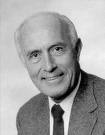
Dynamic Dads: How to be a hero to your kids

A Review: Dynamic Dads: How to be a hero to your kids, by Paul Pettit.

Paul Pettit is a man’s man. The president of Dynamic Dads and a former sports broadcaster who writes on a level geared to the average dad, this book is best suited for a man who either doesn’t have the time to invest in a 300 page tome, or would turn apoplectic at the simple thought of a 300 page tome.  This book is a mere seven chapters, punctuated by inset ‘Dynamic Dad’ textboxes. Prefacing each chapter is a selection of quotations drawn from surveys, journals, Scripture, and various other luminaries, while each chapter ends with discussion questions ostensibly written with a ‘Dynamic Dad’s’ accountability group in mind. Pettit begins with the following statement, reflecting his desire that this book would serve its readers:  “I hope reading this book helps you become a better father. Or to be more precise, I hope reading this book helps you to father better.” This incident of inversion is a promising opening to a book that promises much by its allusion to heroic fathering.

Yet another propitious early sign is the author’s assurance that this is not another “nine steps” or “follow this proven plan” type of book; he does not claim to possess some “secret formula that unlocks the fathering code.” Pettit draws the parallel that just as God is mysterious and His ways are “often difficult to track or explain,” so fathering is a messy business with no surefire manual, nor recipe for success. With these humble statements Pettit launches into the rationale for writing this book, supporting his findings by proffering disturbing statistics, helpfully placing them in proper perspective: “Statistics, however, are cold, lifeless numbers. They alert us to a problem and for that I am grateful. But rarely do they move us to feel or to act. In addition, numbers do not have names. Statistics represent people and things, but numbers are not the people themselves. My heart does not break for the statistics but for the children: children who have never had a bedtime storey read to them by an adult male…” Throughout the book Pettit reveals his burden for children who lack fathers, or truly fatherly figures. Here is the wellspring of this book, and it goes deep.

The second chapter addresses the priorities of a godly father. Firstly, Pettit underscores the field on which fatherly heroics are performed: “It’s in the day-to-day, run-of-the-mill activities of our life that we impact our children the most. Habits, routines, and heroes are made in the normal days, not at the annual visit to the theme park.” That’s not to say that regular family vacations aren’t indispensible opportunities which serve to bind a family together, but the point is taken. Secondly, Pettit places people priorities over against time priorities, in correct sequence: “I personally know of no better way to accomplish [the task of being a hero] than to be a hero at home. How? Work hard each day at becoming a servant leader in your home. Honor your wife. Interact with your children at a deep level. And commit yourself to great character and integrity.” Later he states, “Your family will only be as solid as your marriage”, yet he realizes that fathering is a sacrificial endeavor on the part of both the husband and the wife.

Theologically, I was fairly impressed. Not only does this book root all fatherhood in God the Father, which many books on fatherhood do, but it is solidly Trinitarian, which is quite a bit rarer: “what is the Father is saying repeatedly? He is saying, ‘Listen to my Son!’ Jesus Christ said, “Truly, truly, I say to you, the Son can do nothing of Himself…” Not only is Pettit concerned with the practical how-to’s of excellent fathering, he is careful to set out the theological underpinnings of fatherhood. He reflects a refreshing God-centered view of fathering: “we can’t compare God with an earthly father because doing so demeans God, but we can compare the actions of a good father with God and say, ‘In the ways that a father is acting as a good father, he’s acting like God acts.’ ”

Obligingly, Pettit brings theology home to roost. He owns that “In the real world that you and I occupy, dads engage us in the same manner as all humanity; fathers are fallen, imperfect beings with flawed motives and actions.” Therefore, we ought to teach our children that not only all fathers “trace their lineage back to the father of fathers, apple-crunching Adam”, but we ought also to actively instruct our children about sin, since “there is only one perfect Father and He is in heaven. The job of perfect father is filled. You need not apply” (author’s emphasis).

This book’s blemishes are few but worth mentioning. Most jarring is a recollection of a locker room event that monopolized an entire page of type and seemed only tenuously related to the point at hand. The author’s broadcasting roots are showing. Likewise, some references to pop psychology concepts such as father wounds, performance anxiety, self-esteem and natural male aggression didn’t seem to jive with the biblical care exhibited in the rest of the book. And I couldn’t really fathom that children would be excited about composing a family mission statement, nor that many dads would enjoy constructing a Legacy Map calculating net end results of quality time spent with their children. Those points aside, this book is a useful bottom-shelf introduction to excellent fathering. It’s appropriate to close with quote ardently calling for God-centered fathering, the only truly successful parenting in light of eternity:

“Let’s jump into this fray we call fathering. Let’s father as hard as we can until our sides ache and we feel like we can’t father one more day. Let’s father in selfless ways, continually pointing our wife and children to the Father of fathers.” Amen.

This review is taken from DiscerningReader.com

Kierkegaard on staking all upon one throw

Over the last week or so (and probably for the next week or so), I have set myself the task of reading Søren Kierkegaard’s works. My impressions of the great Pascal of the North thus far are, to say the least, quite mixed. That said, like with Barth, when he’s right Kierkegaard’s so right, and when he’s wrong … well that’s perhaps for another post.

Yesterday I read with great profit and encouragement Fear and Trembling. Today, The Sickness Unto Death. Here’s a wee paragraph that sent me away for a think … and a strong coffee:

Doubtless most men live with far too little consciousness of themselves to have a conception of what consistency is; that is to say, they do not exist qua spirit. Their lives (either with a certain childish and lovable naïveté or in sheer banality) consist in some act or another, some ccurrence, this or that; and then they do something good, then in turn something wrong, and then it begins all over again; now they are in despair, for an afternoon, perhaps for three weeks, but then they are jovial again, and then again they are a whole day in despair. They take a hand in the game of life as it were, but they never have the experience of staking all upon one throw, never attain the conception of an infinite self-consistency. Therefore among themselves their talk is always about the particular, particular deeds, particular sins.

The Jesus Storybook Bible

We are grateful to Gordon Cheng for alerting us to The Jesus Storybook Bible: Every Story Whispers His Name; finally, a ‘big Bible picture’, as opposed to a heap of random and moralised stories.

Judging the book by its cover, Gordon notes that the book is ‘a small hardback, nearly square, and it looks like a better quality children’s storybook’. He also praises the artwork: ‘The illustration for Goliath in the David story is a hoot. The waves in the storm before Jesus speaks words of calm are shaped like the stylised waves depicted in traditional Oriental art. The Pharisees and Sadducees—boo and hiss—look like they stepped out of the Spanish inquisition, with their Pythonesque blood-red robes and hoods. Fire, water, sky, stars and the green, green grass are textured and the colours are suitably primary where they need to be.’

And then, just when we think he’s forgotten to comment on the actual words themselves, he applauds author Sally Lloyd-Jones as ‘a natural story-teller’ whose stories are ‘funny, friendly, sad, scary, joyful and playful’. Sounds just like the Bible to me. Here’s a snippert from the crossing of the Red Sea:

What were God’s people going to do? In front of them was a big sea. It was so big there was no way around it. But there was no way through it—it was too deep. They didn’t have any boats so they couldn’t sail across. And they couldn’t swim across because it was too far and they would drown. And they couldn’t turn back because Pharaoh was chasing them. They could see the flashing swords now, glinting in the baking sun, and the dust clouds, and chariot after scary chariot surging towards them. So they did the only thing there was left to do—PANIC!

You can read heaps more about it here.

David Livingstone on video

The Royal Society has made available online an informative documentary of David Livingstone FRS, missionary, explorer, doctor and natural historian. A team of experts is now publishing Livingstone’s letters online, including those in the Royal Society’s archives. While it is not the most exciting documentary I’ve ever seen, it is a wonderfully informative introduction nevertheless to an important figure in Victorian church, and missiological, history, describing Livingstone’s adventures and introducing us to an exciting new project. The video can be downloaded here.

The website that the documentary refers to is Livingstone Online.

Two new books on Barth

Eisenbrauns have recently announced two new books on Barth:

Karl Barth’s Trinitarian Theology, by Peter S. Oh (Continuum, 2007)

Karl Barth’s Trinitarian Theology is an original and insightful discussion of the theme of the Trinity in the thought of Karl Barth, with particular reference to ecclesiology. The book examines Karl Barth’s analogical use of the Trinity, with respect to various patterns of divine-human communion in the context of the doctrine of redemption. In the first part of the book Oh explores Barth’s understanding and use of analogy throughout his theological development, and compares the work of Kierkegaard and Barth. This research gives fresh insight into Karl Barth’s Trinitarian, theological hermeneutics. In part II, Oh examines Barth’s analogical use of the doctrine of the Trinity from an ecclesiastical perspective.

and…

Karl Barth and Hans Urs Von Balthasar: A Critical Engagement, by Stephen Wigley (Continuum, 2007)

Karl Barth and Hans Urs von Balthasar are two of the most important theologians of the last century. Although one being Reformed and the other Catholic, they kept a lifelong friendship which also influenced their theological work. The book argues for the crucial influence of von Balthasar’s meeting with and study of Barth for the emergence of his own great theological trilogy, beginning with The Glory of the Lord, continuing with the Theo-Drama and concluding with the Theo-Logic. In particular it argues that it is von Balthasar’s debate with Barth over the analogy of being which is to determine the shape of von Balthasar’s subsequent theology, structured as it is around the transcendentals of being, the beautiful, the good and the true.

On this second book, check out Jim Gordon’s excellent 6-part review: here, here, here, here, here and here.

Journal of Theological Interpretation

The latest edition of Journal of Theological Interpretation (1.2; Fall 2007) is out. The Table of Contents reads:

‘P. T. Forsyth, Scripture, and the Crisis of the Gospel’, by Angus Paddison

It is truly exciting to see a paper on Forsyth. They are an all-too-rare thing. I commend Angus’ paper to you, in which he examines Forsyth’s theological interpretation of Scripture. Scripture for P.T. Forsyth is a sacramental agent of the gospel and the NT writings are decisively incorporated within the redemptive activity of God in Christ. Forsyth’s location of authority in the gospel conveyed by Scripture allows him considerable flexibility in relation to two alternative sources of authority: biblical scholarship and biblical infallibility. An ecclesial reading of Scripture is beholden neither to the rationalism of the academy nor to mechanical theories of verbal inspiration. A church resourced by what Forsyth termed the “positive gospel” will read Scripture with decisiveness and litheness, giving space for the lively activity of the Spirit upon the Word. Moreover, the cross is the one super-historic principle capable of interpreting all history and human action. The essay then turns to the Jesus that Forsyth encounters in his preaching of John 12 and John 16. Forsyth’s powerful reading of the NT reinvigorates John’s language of judgment, conviction, and sin. The holiness of the Son moving through the world and dying on the cross is the crisis of the world and accomplishes the sinful world’s reconciliation with the Holy Father. Forsyth’s consistently theological interpretation demonstrates the potential of a theologian immersing herself in Scripture and concentrating on the resources of the gospel.

‘”Although/Because He Was in the Form of God”: The Theological Significance of Paul’s Master Story (Phil 2:6–11)’, by Michael J. Gorman

‘The “New Creation,” the Crucified and Risen Christ, and the Temple: A Pauline Audience for Mark’, by Andy Johnson

‘Apocalypticizing Dogmatics: Karl Barth’s Reading of the Book of Revelation’, by Joseph L. Mangina

‘The Hermeneutical Circle of Christian Community: Biblical, Theological, and Practical Dimensions of the Unity of Scripture’, by Charles J. Scalise


He Giveth His Beloved Sleep

The long day passes with its load of sorrow:
In slumber deep
I lay me down to rest until tomorrow —
Thank God for sleep.
Thank God for all respite from weary toiling,
From cares that creep
Across our lives like evil shadows, spoiling
God’s kindly sleep.

We plough and sow, and, as the hours grow later,
We strive to reap,
And build our barns, and hope to build them greater
Before we sleep.

We toil and strain and strive with one another
In hopes to heap
Some greater share of profit than our brother
Before we sleep.

What will it profit that with tears or laughter
Our watch we keep?
Beyond it all there lies the Great Hereafter!
Thank God for sleep!

For, at the last, beseeching Christ to save us
We turn with deep
Heartfelt thanksgiving unto God, who gave us
The Gift of Sleep.

A B Banjo Paterson, ‘He Giveth His Beloved Sleep’, 1902

Journal of Anglican Studies

The latest edition of the Journal of Anglican Studies (1 December 2007; Vol. 5, No. 2) is now available online. It includes an article on William Paley by one of my former theology professors, Graham Cole (who is a genius! Cole did his doctoral work on Paley). The contents are: 

High Speed Conflict and Anglican Identity’, by Bruce Kaye (pp. 135–143) 

Introduction: Classic Texts and the Consensus Fidelium’, by Rowan Strong (pp. 145–148) 

Stephen Neill’s Anglicanism: An Anglican Classic’, by W.L. Sachs (pp. 149–162) 

Politics as the Church’s Business: William Temple’s Christianity and Social Order Revisited’, by Malcolm Brown (pp. 163–185) 

Grace and Nation: Coleridge’s On the Constitution of Church and State’, by Alan Gregory (pp. 187–208) 

William Paley’s Natural Theology: An Anglican Classic?’, by Graham Cole (pp. 209–225)           

Synopsis: ‘This article pursues the question of whether William Paley’s Natural Theology is an Anglican classic. I place Paley’s natural theology project in its historical context of skepticism about Christianity’s truth claims and in the context of Paley’s `system’. His teleological argument is briefly explained and four challenges, past and present, to its thesis are considered. The question of what makes a work a classic is explored in terms of its enduring interest, especially in the light of the controversy concerning Intelligent Design Theory, and its enduring value. It is argued that because of its enduring interest and value Paley’s Natural Theology may be judged a classic but not of a peculiarly Anglican kind.’

Jesus Christ – The Centre of Theology in Richard Hooker’s Of the Lawes of Ecclesiastical Polity, Book V’, by Egil Grislis (pp. 227–251)

Dan Hardy (1930-2007)

Dan HardyAndy has shared with us the very sad news of Dan Hardy‘s passing yesterday. He writes:

‘Rev Professor Dan Hardy was an outstanding Anglican theologian, who taught at Birmingham, Durham (where he was Van Mildert Professor), the Centre for Theological Inquiry (where he was the Director) and most recently, although retired, at Cambridge. He was editor of the excellent Cambridge Studies in Christian Doctrine (jointly with Colin Gunton until he died). He was the co-author of Jubilate (1984, reprinted recently as Living in Praise, 2005), God’s Ways with World (1996), Finding the Church (1999) and co-editor with Colin Gunton of On Being the Church (1989). In more recent years he was at the forefront of the scriptural reasoning movement with his son-in-law Professor David Ford and Peter Ochs. He will be sadly missed’.

Indeed. Dan was deservedly one of the most respected theologians in Britain. He was also, with Colin Gunton, a Forsyth fan. In his excellent essay, ‘Created and Redeemed Sociality’, he bore witness to this love, and to his deeper love for the Church and her Lord, and his world:

As few others have done, Forsyth recognised the social problem as primary for civilisation and for Christianity; there is an inseparable connection between the two. And the Church is called as an apostle and witness to society as a whole on behalf of One whose work was for the whole of society, its witness being determined by Christ’s achievement in securing the Kingdom of God through and ethical and spiritual victory’. – Daniel Hardy, ‘Created and Redeemed Sociality’, in On Being the Church: Essays on the Christian Community (ed. Colin E. Gunton and Daniel W. Hardy; Edinburgh: T&T Clark, 1989), 39.

Zinzendorf on Preaching Christ

Our method to proclaim salvation is this: to point out to every heart the loving Lamb (das herzliche Lamm) which died for us, and although he was the Son of God, offered himself for our sins, as his God, his Mediator between God and man, his preacher of the law, his Confessor, his Comforter, his Saviour, his throne of grace, his example, his brother, in short his all and in all, by the preaching of his blood, and of his love unto death, even the death on the cross; never, either in the discourse or in argument, to digress even for a quarter of an hour from the loving Lamb; to name no virtue, except in Him and from Him and on His account; to preach no commandment except faith in him; no other justification but that he atoned for us; no other sanctification but the privilege to sin no more; no other happiness, but to be around him, to think of him and do his pleasure; no other self-denial, but to be deprived of him and his blessings; no other calamity, but to displease him; no other life, but in him’. – Count Nicolaus Ludwig von Zinzendorf, in ‘Home Missionary Operations of the Brethren in the United States, 17421752: Home Mission Sermon preached by Br. Levin T. Reichel’, in The Moravian Church Miscellany (Bethlehem: The Church of the United Brethren, 1852), 2345.

Polkinghorne on ‘The Truth in Religion’

There’s an insightful piece in a recent The Times Literary Supplement in which John Polkinghorne review’s two recent books: John Cornwell’s Darwin’s Angel: An angelic riposte to The God Delusion, and In God we Doubt: Confessions of a failed atheist, by John Humphrys. Polkinghorne writes:

‘Religious belief is currently under heavy fire. Books by Richard Dawkins, Christopher Hitchens and others tell us that religion is a corrupting delusion. Despite their assertions of the rationality of atheism, the style of their onslaughts has been strongly polemical and rhetorical, rather than reasonably argued. Historical evidence is selectively surveyed. Attention is focused on inquisitions and crusades, while the significance of Hitler and Stalin is downplayed. Believers in young-earth creationism are presented as if they were typical of religious people in general. The two books under review aim to make a more temperate contribution to the debate.

John Cornwell has hit on the amusing conceit of writing in the persona of Richard Dawkins’s guardian angel, a being, moreover, who had earlier stood in the same relationship to Charles Darwin. The book’s tone is gently ironic and its style that of modest discussion, which all makes for an enlightening read. The twenty-one short chapters each consider some claim made in Dawkins’s book The God Delusion and then subject it to reasoned questioning.

Cornwell begins by pointing out that Dawkins makes no serious attempt to engage with the academic discussion of religious thought and practice. His book is “as innocent of heavy scholarship as it is free from false modesty”. When it asserts that Jesus’ call to love our neighbour referred only to relations between Jews (despite this claim being in clear contradiction to the point of the parable of the Good Samaritan), the only support quoted for this highly questionable statement is a book written by an anaesthesiologist.

Over the centuries, theologians have wrestled with how human language can attempt to speak about the nature of God, emphatically rejecting the idea that the deity is simply an invisible object among the other objects of the world. Yet, as Cornwell points out, the God in whom Dawkins disbelieves is a kind of “Great Science Professor in the Sky”, a simplistic notion that any thinking theist would be quick to reject. We are continually told that theology is no proper academic discipline, a conclusion that could only be reached by someone whose knowledge of the subject was comparable to the scientific knowledge displayed by those who write in green ink that “Einstein was wrong”.

Dawkins is relentlessly rude about religious believers. They are said to be “malevolent, barking mad, mendacious, deluded” and much more. He cannot have the courtesy to take seriously those of us who are both scientists and believers. Religious education of the young is equated with child abuse. Darwin’s angel pertinently asks, “Would you really trade child sexual abuse for being brought up in the religion of your parents?”. The tone of contempt – one might almost say hatred – that characterizes many of the assertions in The God Delusion is one of the most disturbing aspects of the book.

In God We Doubt displays much more even-handedness. John Humphrys is respectful of religious belief and the kind of life that often, but not invariably, issues from it, while emphasizing that he is unable himself to accept such belief. His approach is that of one who remains open and questioning about these matters, as indicated by the subtitle of his book, Confessions of a failed atheist. Humphrys writes in the chirpy colloquial style one might expect from a presenter of the Today programme on Radio 4. In fact, the book originated partly from interviews he conducted with the Archbishop of Canterbury, the Chief Rabbi and Tariq Ramadan, a Muslim academic, for the radio, and from the deluge of correspondence that followed.

Humphrys takes very seriously the human experience of conscience, urging us to do some things and to refuse to do others. No doubt, evolutionary thinking offers us some partial understanding of this, with its concepts of kin altruism (protecting the family gene pool) and reciprocal altruism (I’ll help you in the expectation that you will help me). Nevertheless, Humphrys rightly sees that these concepts fail to offer insight into the kind of radical altruism which, to use an example he discusses at some length, led Irena Sendlerova repeatedly to risk her life in saving 2,500 Jewish children who were trapped in the Warsaw ghetto. Humphrys sees ethical intuition as the signal of a transcendent dimension in life, which he values but does not know how to explain from an atheist point of view.

Humphrys believes that the case for God made by the Abrahamic faiths is “riddled with holes”. He fails to acknowledge the subtlety and truth-seeking character of theological thought, or to recognize that the care and discrimination exercised in serious biblical studies carries us well beyond a plodding, crypto-literalist approach to the interpretation of Scripture.

Both Dawkins and Humphrys rightly engage with the challenge to theism that is represented by the existence of a world claimed to be the creation of a good and powerful God, but which nevertheless contains so much evil and suffering. This is surely the greatest difficulty holding people back from religious belief, and it is one that continually troubles religious believers. One could not claim that there is a complete and straightforward answer available to remove the perplexity. Yet there are some arguments, not discussed by either Humphrys or by Dawkins, which offer modest help as theologians struggle with the problems of theodicy. Interestingly, science is of some assistance in this regard. Its understanding of how the world works shows that natural processes are inextricably entangled with each other. They cannot be separated out, so that those with good consequences could have been retained by a competent creator who, at the same time, eliminated those with bad consequences. The integrity of creation is a kind of package deal. For example, the process of genetic mutation produced new forms of life, but it has also resulted in malignancy. You cannot have the one without the other. Humphrys asks why there are not repeated divine interventions to avert evil consequences. Such things could only happen in a magical world, and that kind of world is not this one, because its creator is not a capricious magician. Only a world with sufficient reliability for deeds to have foreseeable consequences could be one in which moral responsibility was exercised. These insights do not dispose of all the anguish and anger that we feel in the face of individual human suffering, but they suggest that it is not simply gratuitous, easily removable by a God who was a bit less callous.

Fundamental to the discussion to which both books are seeking to contribute is the relationship between faith and reason. Too often the two have been pitted against each other, as if they were in necessary contradiction. Religious faith is not a matter of the unquestioning acceptance of unmotivated belief, demanded of us by some overriding authority. Quite the contrary. Faith is a commitment to a form of motivated belief, differing only from scientific reason in the nature of the subject of that belief and the kind of motivations appropriate to it. Science achieves its success by the modesty of its ambition, only considering impersonal experience open to repetition at will. Personal experience, let alone encounter with the transpersonal reality of God, does not fit within this limited protocol. The concept of reality offered by scientism is that of a world of metastable, replicating and information-processing systems, but it has no persons in it. Darwin’s Angel criticizes Dawkins for a lack of trust in the power of imagination to explore reality, such as we exercise through poetry. He is said to sound “as though he would substitute a series of case-notes on senile dementia for King Lear”.

No progress will be made in the debate about religious belief unless participants are prepared to recognize that the issue of truth is as important to religion as it is to science. Dawkins invokes Bertrand Russell’s parable of the teapot irrationally claimed to be in unobserved orbit in the solar system. Of course there are no grounds for belief in this piece of celestial crockery, but there are grounds offered for religious belief, though admittedly different people evaluate their persuasiveness differently. Religion does not have access to absolute proof of its beliefs but, on careful analysis, nor does science. In all realms of human inquiry, the interlacing of experience and interpretation introduces a degree of precariousness into the argument. Yet this does not mean that we cannot attain beliefs sufficiently well motivated to be the basis for rational commitment. In his book on the philosophy of science, Personal Knowlege (1964), Michael Polanyi stated that he was writing in order to explain how (scientifically) he could commit himself to what he believed to be true, while knowing it might be false. That is the human epistemic condition. Recognizing this should encourage caution, but not induce intellectual paralysis. It is in this spirit that the dialogue between science and religion needs to be conducted’.

For those interested, there’s also an excellent Royal Society lecture by Polkinghorne available from here.

Rereading Historical Theology

Our good friends at Wipf and Stock have announced the arrival of a new book, Rereading Historical Theology: Before, During, and After Augustine, by Margaret R. Miles. The blurb reads:

Augustine of Hippo is arguably the most influential author in the history of Christian thought and institutions. Yet he has been revered by some reviewers and vilified by others. Contemporary critical approaches to historical authors can illuminate features of Augustine’s thought and activities that are not noticed when reviewers’ attention is either exclusively sympathetic or intransigently critical. Anyone who seeks to present an Augustine who has relevance for the twenty-first century must somehow hold together delight in the beauty of his prose and the profundity of his thought with dismay over some of the intentions and effects of his teachings. The essays in this book endeavor to read Augustine simultaneously critically and appreciatively. Miles places his thought in the context of his classical heritage and notices how pervasive in later Christian authors are the themes that informed Augustine’s thought. Understanding his writings as a passionate effort to describe a metaphysical universe that accounts for the endlessly fascinating mystery of embodied life makes many of Augustine’s proposals accessible, useful, and delightful in the context of contemporary quandaries and issues. His conclusions are less important than his method: In Augustine, knowledge and life mutually illuminate, energize, and critique each other, exemplifying the practice of a fully human life. Exploring some of his most persistent themes, these essays seek to show Augustine’s theology works.

James Wetzel, of Villanova University, writes: ‘In this collection of sixteen of her best essays, she tracks the ambivalences in Augustine’s love of the flesh, finds a Platonism with an earthly pull, sustains her sense of an antique social location, and finishes with a flourish of mystics and reformers—all successors to an Augustinian passion. An historian of great cultural sensitivity, Miles is not afraid to meet the past under the skin of contemporary life (where it, in fact, has always been). In the art of critical sympathy, she has no peer’.

More information here.

Children in the Spotlight: Issues in Early Childhood and Parenting

The 2006 New College Lectures – Children in the Spotlight: Issues in Early Childhood and Parenting – are now available.

Alone?

Today’s The Independent includes a story of an international panel of retired pilots and aviation officials who have ‘risked ridicule by sharing their personal stories of close encounters with unidentified flying objects, and urging the US government to reopen its investigation into extra-terrestrial spacecraft’.

Amidst the usual cries of ‘government coverup’ and ‘natural but not-as-yet known explanations’, the article notes that ‘among the UFO incidents discussed by the gathering in Washington DC this week was an alleged sighting of a triangular-shaped flying machine with unfamiliar markings near the former US air base at RAF Woodbridge in Suffolk in 1980. “Nothing in my training prepared me for what we were witnessing,” James Penniston, a retired US Air Force pilot, told the panel. He said the UFO, with “blue and yellow lights swirling around the exterior”, was “warm to the touch and felt like metal”. Finally, “it shot off at an unbelievable speed” in front of 80 witnesses. “In my log book, I wrote ‘speed: impossible’,” Mr Penniston added. At the time, the case was labelled the “English Roswell” – referring to the furore caused by the alleged discovery of UFO parts in New Mexico in 1948.’ Read on here.

UFO’s or not, my thesis is not going to write itself, so its head down for the rest of the day … ish.

Thirteen Propositions on Voting


A preamble: this is not an exhaustive list.


1. Remember, if you are a Christian then you are part of a pilgrim people who ought never really feel at home in this world because we have been made for another.

2. No matter which government is in power, the Church’s charge remains the same – to preach the Gospel. This will include, among other things, at least a 4-fold word: (i) challenging the structures of our society that demean humanity made in the image of God; (ii) challenging the agendas of our society that leave the poor and the widows and the orphans without a voice; (iii) challenging the complacency of a people who refuse to think, or can’t be bothered thinking, about the consequences of the decisions we are making (this has obvious international consequences); and (iv) challenging the selfishness of those who get fatter and fatter at the expense of others, and at the expense of the creation.

3. God’s people receive their identity not from earthly governments, but from the knowledge that they belong to the Lord Jesus and live under his government, and by his word. 

4. Regardless of what’s going on in the fleeting world of politics, the Gospel will always have something to say to the world, and to a Church that must continuously strive to keep itself from ever thinking that the Gospel of the Cross is not enough.

5. We must beware lest we fall into the trap that so many Christians throughout history have fallen into of believing that there is such a thing as the only and true Christian form of government. No political party can be baptised, nor any political system. The radical call of Jesus remains regardless of what the government of the day is doing. This doesn’t mean that we shouldn’t strive to bring about godly reforms and laws in the land, but it does mean that we mustn’t delude ourselves into thinking that we can create a heaven on earth.

6. The temptation to deny Christ exists no matter what the political situation and culture is.

7. Don’t be among those who see voting as a chore and as a painful waste of time. Remember that it is a privilege to vote. God has placed many of us in countries where we have the opportunity to take part in decision making as well as in the keeping of our elected leaders accountable. Thank God that some of God’s people live in such places. [I have always struggled to understand how a democracy can encourage non-compulsory voting, not least given the claim of support for democracy-making in other parts of the world!]

8. Thank God for democracy, but never trust it. ‘Democracy’, wrote Forsyth, ‘is but a half-truth. It must have a King. Aristocracy is just as true and as needful. It builds on an authority in things no less than democracy builds on an equality. The free personality of democracy is only possible under a free authority. The free soul is only possible in a free King … There must always be a House of Moral Lords. There must always be leaders and led, prophets and people, apostles and members, genius and its circle, and elect and a called. Ah! democratic and aristocratic principles are both deep in the foundations of our Christian faith’. At the end of the day, ‘democracy is the recurrent suspicion that more than half of the people are right more than half the time’ (E. B. White). Recall the words of C.S. Lewis: ‘I am a democrat [believer in democracy] because I believe in the Fall of Man. I think most people are democrats for the opposite reason. A great deal of democratic enthusiasm descends from the ideas of people like Rousseau, who believed in democracy because they thought mankind so wise and good that every one deserved a share in the government. The danger of defending democracy on those grounds is that they’re not true … I find that they’re not true without looking further than myself. I don’t deserve a share in governing a hen-roost. Much less a nation … The real reason for democracy is just the reverse. Mankind is so fallen that no man can be trusted with unchecked power over his fellows. Aristotle said that some people were only fit to be slaves. I do not contradict him. But I reject slavery because I see no men fit to be masters’.

9. Remember that even secular leadership comes under the domain of God’s sovereignty, and that God uses non-Christians, as well as Christians, to bring about his purposes. The Bible assures us that all those who serve the people well are servants of God. So thank God for his own sovereign governing of the world (Rom 13:1-7).

10. Pray diligently for the leaders and all those in responsibilities of power and decision making. We are commanded by God to pray for all our leaders. Pray that they would make wise and just decisions and govern with mercy as well as strength. Pray for those who do not know Christ, that they would become Christians.

11. Pray for wisdom about your vote. Make your vote count. Make your vote a wise vote.

12. Don’t vote for the party who will best serve your pocket and own interests, but vote for the government or person who you prayerfully and honestly believe can best think through the necessary and complex issues with an attitude of serving others within their own country, and beyond.

13. Once the election has taken place, don’t grumble if your choice of party or person is not elected, for Peter tells us to, ‘Live such good lives among the pagans that, though they accuse you of doing wrong, they may see your good deeds and glorify God on the day he visits us. Submit yourselves for the Lord’s sake to every authority instituted among men: whether to the king, as the supreme authority, or to governors, who are sent by him to punish those who do wrong and to commend those who do right. For it is God’s will that by doing good you should silence the ignorant talk of foolish men. Live as free men, but do not use your freedom as a cover-up for evil; live as servants of God. Show proper respect to everyone: Love the brotherhood of believers, fear God, honour the king (1 Peter 2:12-17).

Dulles on ‘Saving Ecumenism from Itself’

The December issue of First Things is now out and includes an good reflection by Avery Cardinal Dulles entitled Saving Ecumenism from Itself’ in which he reports that ‘the principal instrument of ecumenism over the past half century has been a series of theological conversations between separated churches. Proceeding on the basis of what they held in common, the partners tried to show that their shared patrimony contained the seeds of much closer agreement than had yet been recognized. Rereading their confessional documents in light of Scripture and early creeds as shared authorities, they produced remarkable convergence statements on traditionally divisive subjects such as justification, Mariology, Scripture and tradition, the Eucharist, and the ordained ministry’. And yet, valuable though it was, the convergence method was not without limitations, not least, he suggests, because all parties do not accept the historical-critical method. He observes:

Many of the twentieth-century dialogues have opted to take Scripture, interpreted by the historical-critical method, as their primary norm. This method has worked reasonably well for mainline Protestant churches and for the Catholic Church since Vatican II. But many Christians do not rely on the critical approach to Scripture as normative. Catholics themselves, without rejecting the historical-critical method, profess many doctrines that enjoy little support from Scripture, interpreted in this manner. They draw on allegorical or spiritual exegesis, authenticated by the sense of the faithful and long-standing theological tradition. As a consequence, certain Catholic doctrines, such as papal primacy, the Immaculate Conception, the Assumption, and purgatory, have been banished to the sidelines. Unable to cope with doctrines such as these, the dialogues have treated them as an ecumenical embarrassment.

Also, he contends, that as valuable and as principled as the convergence method of dialogue between various denominations has been over the past half century, it has not been without limitations: ‘Each new round of dialogue raised expectations for the future. The next dialogue, at the price of failure, was under pressure to come up with new agreements. The process would at some point reach a stage at which it had delivered about as much as it could. It would eventually run up against hard differences that resisted elimination by this method of convergence. When the dialogues attempted to go beyond convergence and achieve full reconciliation on divisive issues, they sometimes overreached themselves’.

Finally, he concludes his essay by asking ‘How then can Christian unity be envisaged?’. His response:

The first condition, I believe, is that the various Christian communities be ready to speak and listen to one another. Some will perhaps receive the grace to accept what they hear credibly attested as an insight from other communities. The witnesses and their hearers need not insist on rigorous proof, because very little of our faith can be demonstrated by deductive methods. Testimony operates by a different logic. We speak of what has been ­graciously manifested to us and what we have found to be of value for our relationship with God. If others accept what we proclaim, it is because our words evoke an echo in them and carry the hallmark of truth.

The process of growth through mutual attestation will probably never reach its final consummation within historical time, but it can bring palpable results. It can lead the churches to emerge progressively from their present isolation into something more like a harmonious chorus. Enriched by the gifts of others, they can hope to raise their voices together in a single hymn to the glory of the triune God. The result to be sought is unity in diversity.

True progress in ecumenism requires obedience to the Holy Spirit. Vatican II rightly identified spiritual ecumenism as the soul of the ecumenical movement. It defined spiritual ecumenism as a change of heart and holiness of life, together with public and private prayer for the unity of Christians. We must pray to God to overcome our deafness and open our ears to what the Spirit is saying to the churches, including our own. No mutual rapprochement can be of any value unless it is also a closer approach to Christ the Lord of the Church. We must ask for the grace to say only what the Spirit bids us say and to hear all that he is telling us through the other.

Then we may hope that, by accommodating what other communities are trying to tell us, we may be enriched with new and precious gifts. By accepting the full riches of Christ we lose nothing except our errors and defects. What we gain is the greatest gift of all: a deeper share in the truth of Christ, who said of himself, “I am the way, and the truth, and the life.”

The entire essay can be read here.

Resistance Is Surrender

Today’s London Review of Books includes a provocative and challenging (for all who value democracy) essay by Slovenian sociologist, philosopher and cultural critic Slavoj Žižek entitled ‘Resistance Is Surrender’. I reproduce it here:

One of the clearest lessons of the last few decades is that capitalism is indestructible. Marx compared it to a vampire, and one of the salient points of comparison now appears to be that vampires always rise up again after being stabbed to death. Even Mao’s attempt, in the Cultural Revolution, to wipe out the traces of capitalism, ended up in its triumphant return.

Today’s Left reacts in a wide variety of ways to the hegemony of global capitalism and its political supplement, liberal democracy. It might, for example, accept the hegemony, but continue to fight for reform within its rules (this is Third Way social democracy).

Or, it accepts that the hegemony is here to stay, but should nonetheless be resisted from its ‘interstices’.

Or, it accepts the futility of all struggle, since the hegemony is so all-encompassing that nothing can really be done except wait for an outburst of ‘divine violence’ – a revolutionary version of Heidegger’s ‘only God can save us.’

Or, it recognises the temporary futility of the struggle. In today’s triumph of global capitalism, the argument goes, true resistance is not possible, so all we can do till the revolutionary spirit of the global working class is renewed is defend what remains of the welfare state, confronting those in power with demands we know they cannot fulfil, and otherwise withdraw into cultural studies, where one can quietly pursue the work of criticism.

Or, it emphasises the fact that the problem is a more fundamental one, that global capitalism is ultimately an effect of the underlying principles of technology or ‘instrumental reason’.

Or, it posits that one can undermine global capitalism and state power, not by directly attacking them, but by refocusing the field of struggle on everyday practices, where one can ‘build a new world’; in this way, the foundations of the power of capital and the state will be gradually undermined, and, at some point, the state will collapse (the exemplar of this approach is the Zapatista movement).

Or, it takes the ‘postmodern’ route, shifting the accent from anti-capitalist struggle to the multiple forms of politico-ideological struggle for hegemony, emphasising the importance of discursive re-articulation.

Or, it wagers that one can repeat at the postmodern level the classical Marxist gesture of enacting the ‘determinate negation’ of capitalism: with today’s rise of ‘cognitive work’, the contradiction between social production and capitalist relations has become starker than ever, rendering possible for the first time ‘absolute democracy’ (this would be Hardt and Negri’s position).

These positions are not presented as a way of avoiding some ‘true’ radical Left politics – what they are trying to get around is, indeed, the lack of such a position. This defeat of the Left is not the whole story of the last thirty years, however. There is another, no less surprising, lesson to be learned from the Chinese Communists’ presiding over arguably the most explosive development of capitalism in history, and from the growth of West European Third Way social democracy. It is, in short: we can do it better. In the UK, the Thatcher revolution was, at the time, chaotic and impulsive, marked by unpredictable contingencies. It was Tony Blair who was able to institutionalise it, or, in Hegel’s terms, to raise (what first appeared as) a contingency, a historical accident, into a necessity. Thatcher wasn’t a Thatcherite, she was merely herself; it was Blair (more than Major) who truly gave form to Thatcherism.

The response of some critics on the postmodern Left to this predicament is to call for a new politics of resistance. Those who still insist on fighting state power, let alone seizing it, are accused of remaining stuck within the ‘old paradigm’: the task today, their critics say, is to resist state power by withdrawing from its terrain and creating new spaces outside its control. This is, of course, the obverse of accepting the triumph of capitalism. The politics of resistance is nothing but the moralising supplement to a Third Way Left.

Simon Critchley’s recent book, Infinitely Demanding, is an almost perfect embodiment of this position. For Critchley, the liberal-democratic state is here to stay. Attempts to abolish the state failed miserably; consequently, the new politics has to be located at a distance from it: anti-war movements, ecological organisations, groups protesting against racist or sexist abuses, and other forms of local self-organisation. It must be a politics of resistance to the state, of bombarding the state with impossible demands, of denouncing the limitations of state mechanisms. The main argument for conducting the politics of resistance at a distance from the state hinges on the ethical dimension of the ‘infinitely demanding’ call for justice: no state can heed this call, since its ultimate goal is the ‘real-political’ one of ensuring its own reproduction (its economic growth, public safety, etc). ‘Of course,’ Critchley writes,

‘history is habitually written by the people with the guns and sticks and one cannot expect to defeat them with mocking satire and feather dusters. Yet, as the history of ultra-leftist active nihilism eloquently shows, one is lost the moment one picks up the guns and sticks. Anarchic political resistance should not seek to mimic and mirror the archic violent sovereignty it opposes’.

So what should, say, the US Democrats do? Stop competing for state power and withdraw to the interstices of the state, leaving state power to the Republicans and start a campaign of anarchic resistance to it? And what would Critchley do if he were facing an adversary like Hitler? Surely in such a case one should ‘mimic and mirror the archic violent sovereignty’ one opposes? Shouldn’t the Left draw a distinction between the circumstances in which one would resort to violence in confronting the state, and those in which all one can and should do is use ‘mocking satire and feather dusters’? The ambiguity of Critchley’s position resides in a strange non sequitur: if the state is here to stay, if it is impossible to abolish it (or capitalism), why retreat from it? Why not act with(in) the state? Why not accept the basic premise of the Third Way? Why limit oneself to a politics which, as Critchley puts it, ‘calls the state into question and calls the established order to account, not in order to do away with the state, desirable though that might well be in some utopian sense, but in order to better it or attenuate its malicious effect’?

These words simply demonstrate that today’s liberal-democratic state and the dream of an ‘infinitely demanding’ anarchic politics exist in a relationship of mutual parasitism: anarchic agents do the ethical thinking, and the state does the work of running and regulating society. Critchley’s anarchic ethico-political agent acts like a superego, comfortably bombarding the state with demands; and the more the state tries to satisfy these demands, the more guilty it is seen to be. In compliance with this logic, the anarchic agents focus their protest not on open dictatorships, but on the hypocrisy of liberal democracies, who are accused of betraying their own professed principles.

The big demonstrations in London and Washington against the US attack on Iraq a few years ago offer an exemplary case of this strange symbiotic relationship between power and resistance. Their paradoxical outcome was that both sides were satisfied. The protesters saved their beautiful souls: they made it clear that they don’t agree with the government’s policy on Iraq. Those in power calmly accepted it, even profited from it: not only did the protests in no way prevent the already-made decision to attack Iraq; they also served to legitimise it. Thus George Bush’s reaction to mass demonstrations protesting his visit to London, in effect: ‘You see, this is what we are fighting for, so that what people are doing here – protesting against their government policy – will be possible also in Iraq!’

It is striking that the course on which Hugo Chávez has embarked since 2006 is the exact opposite of the one chosen by the postmodern Left: far from resisting state power, he grabbed it (first by an attempted coup, then democratically), ruthlessly using the Venezuelan state apparatuses to promote his goals. Furthermore, he is militarising the barrios, and organising the training of armed units there. And, the ultimate scare: now that he is feeling the economic effects of capital’s ‘resistance’ to his rule (temporary shortages of some goods in the state-subsidised supermarkets), he has announced plans to consolidate the 24 parties that support him into a single party. Even some of his allies are sceptical about this move: will it come at the expense of the popular movements that have given the Venezuelan revolution its élan? However, this choice, though risky, should be fully endorsed: the task is to make the new party function not as a typical state socialist (or Peronist) party, but as a vehicle for the mobilisation of new forms of politics (like the grass roots slum committees). What should we say to someone like Chávez? ‘No, do not grab state power, just withdraw, leave the state and the current situation in place’? Chávez is often dismissed as a clown – but wouldn’t such a withdrawal just reduce him to a version of Subcomandante Marcos, whom many Mexican leftists now refer to as ‘Subcomediante Marcos’? Today, it is the great capitalists – Bill Gates, corporate polluters, fox hunters – who ‘resist’ the state.

The lesson here is that the truly subversive thing is not to insist on ‘infinite’ demands we know those in power cannot fulfil. Since they know that we know it, such an ‘infinitely demanding’ attitude presents no problem for those in power: ‘So wonderful that, with your critical demands, you remind us what kind of world we would all like to live in. Unfortunately, we live in the real world, where we have to make do with what is possible.’ The thing to do is, on the contrary, to bombard those in power with strategically well-selected, precise, finite demands, which can’t be met with the same excuse.

Criminal trial tomorrow for Baptist leader

Tomorrow, the government of Uzbekistan is holding a criminal trial for Baptist leader Nikolai Zulfikarov. Here’s the brief:

‘A Baptist who hosts worship in his home will be tried on criminal charges tomorrow (13 November), Forum 18 News Service has learnt. Nikolai Zulfikarov is being prosecuted under the Criminal Code for “teaching religious doctrines without special religious education and without permission from a central organ of administration of a religious organisation, as well as teaching religion privately”. Punishments range from fines of fifty times the minimum monthly wage to three years’ imprisonment. Local Baptists, who preferred not to be identified, have complained about continuing harassment. “The authorities have repeatedly visited worship services, drawn up official records [of alleged offences] and confiscated Bibles, concordances, hymnbooks and other Christian brochures and leaflets.” They called for the case against Zulfikarov to be closed, for confiscated literature to be returned and for the congregation’s worship not to be impeded. Repression of religious communities of all faiths is taking place in Uzbekistan’.

Please remember to pray for Nikolai Zulfikarov, for his brethren in Christ, and for their enemies.

More information here, here and here.

Rescue me from my enemies, O my God, protect me from those who assail me. Deliver me from those who do evil, and save me from the bloodthirsty. All day long they twist my words; they are always plotting to harm me. They conspire, they lurk, they watch my steps, eager to take my life. Hear my prayer, O God; listen to the words of my mouth. Strangers are attacking me; ruthless men seek my life – men without regard for God. Surely God is my help; the Lord is the one who sustains me. (A selection from the psalms)