Theology

Music and Theology in the European Reformations

The Katholieke Universiteit Leuven is planning to host a ‘Music and Theology in the European Reformations’ conference on 19–21 September 2012 at which theologians, historians, biblical scholars and musicologists will come together to consider the relationship between music and theology during the sixteenth century with a particular emphasis on the question of reformation in all its forms (Lutheran, Calvinist, Catholic, and Radical).

More information is available here, and short paper proposals can be submitted via here before 15 May.

Donald MacKinnon on the very stuff of human existence

In the midst of some fruitful discussion generated by the recent posts on Rowan Williams by Chris Green and Joel Daniels, a friend of mine (who also happens to be an outstanding MacKinnon scholar) shared these words with me. I’ve been meditating on them all week, and thought that they were worth sharing here not only for what they tell us about MacKinnon’s mind (and perhaps too about Williams’), but also for what they tell us about ourselves and about our being overcome, and – here playing the risk of presumptuousness – of the depths that such overcoming involves:

At its heart there lies the recognition that historical self-consciousness belongs to the very stuff of human existence, that freedom in the sense of a true autonomy is at once the foundation of our every effort to make sense of our inheritance; but that it is a freedom menaced all the time by forces, many but not all of which lie outside our control, facing us by the pressure of their ugly insistence upon our purposings with a sense of overmastering futility, defeat, even besetting cruelty. The threat is of something much more profound than that of Cartesian malin génie, it is the menace of a backlash somehow built into the heart of things that will lay our sanity itself in ruins. We are face to face not with a grisly theodicy that allows historical greatness to provide its own moral order (there are more than hints of this in Hegel) but with a cussedness which seems totally recalcitrant to the logos of any justification of the ways of God to man. And here the last word is with the cry of redemption.

– Donald M. MacKinnon, ‘Finality in Metaphysics, Ethics and Theology’ in Explorations in Theology, Volume 5 (London: SCM Press, 1979), 105–06.

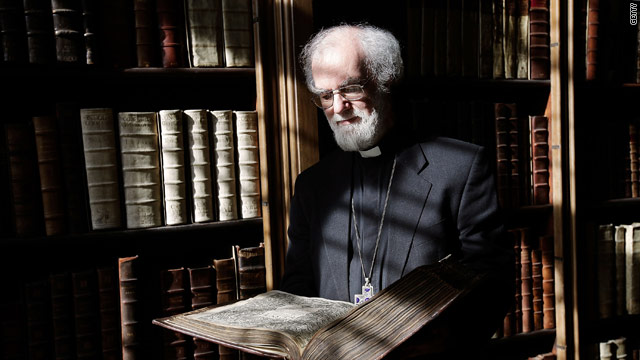
On Rowan Williams’ Theology

A guest post by Joel Daniels.

1) Williams exaggerates the importance of maintaining unsettledness, preventing resting, etc.

Williams shares with Donald MacKinnon a sense of the moral priority of tragedy, and one gets the sense that he sees a straight line from closure to murder. At the risk of being too flip about it, the road to genocide is paved with good intentions. Efficient systems, set up by well-meaning people, to accomplish the greatest ends, eventually justify the most atrocious horror: it is fitting that one man should die for the people. Or the shaken revolutionary Shigalyov in Dostoevsky’s Demons, who has written out the plan for the revolution, reporting that, “Starting from unlimited freedom, I conclude with unlimited despotism. I will add, however, that apart from my solution to the social formula, there is no other.” Efficient theoretical systems (economic, political, philosophical, theological) produce victims, with the crucified Christ, one without sin, being the pure example of this fact – though the history of the last century provides ample examples by itself. I think that this really is the overarching concern of Williams’ theology.

Part of this may simply be disposition: there’s a really revealing line in WWA where he’s comparing Balthasar and Rahner, and he writes, “for Balthasar, dialogue with ‘the world’ is so much more complex a matter than it sometimes seems to be for Rahner; because [for Balthasar] the world is not a world of well-meaning agnostics but of totalitarian nightmares, of nuclear arsenals, labor camps and torture chambers” (100). If you look at the world and see harmony, you end up in one theological place; if you see torture chambers, you end up in another. I think the relentless self-criticism comes from having the second perspective as his default.

The downside of this is what Chris described; Mike Higton (in Difficult Gospel) puts it this way: “But I suspect that the tenor or atmosphere of his [Williams’] writing is too unrelentingly agonized…” Perhaps so; I remember reading that MacKinnon couldn’t order lunch without severe moral anguish.

2) For Williams, the logical outcome of good theology is the silence of frustration, not of adoration.

What prevents simple frustration supplanting the possibility of positive worship is the strong element of Anglican orthopraxis at work: while it may be the case that the Cross reveals that there is nothing we can securely know or think (frustration), the practice of worship (adoration) takes priority over the practice of theology. It would be interesting to know whether Williams would adopt Pseudo-Dionysius’ use of “hymn” as a theological category, along the lines of the “celebratory” mode of theological work he describes. If so, perhaps we could say that good theology culminates not in silence, but in the singing of the liturgy. It’s as if the Eucharistic service provides a kind of foundation from which we can work and to which we can return: our Eucharistic celebration may not be perfect; it is certainly interpreted by fallible human beings; and entails its own risks (clericalism, among many others). Nonetheless, we can identify the effect of the Eucharist over the course of history to complicate any easy answers, by returning us to the broken body of Christ.

3) Similarly, the effect Williams has is to make it too difficult to talk about God; the end result is paralysis or restlessness.

It’s not so much that we shouldn’t make attempts to talk about God (paralysis), as that we have to realize that no attempt is ever final: it’s dialectic all the way down. Is this eternal restlessness? In a sense, I think it probably is. But I hope that it’s the restlessness of two lovers’ delight in each other, not the restlessness of dissatisfaction; the kind of restlessness that is the way that the meaning of a great text (for example) is never exhausted, but always there to be plumbed for meaning, new circumstances bringing out existing aspects of the same work in a different light.Further, some attempts at talking about God are better than others, and one of the benefits of the tradition is a head start, so to speak, in identifying which ones are going to be liberating and fecund, and which will lead to dead ends, inconsistencies with the Eucharist, or something worse.

4) Williams makes anti-programmatic thinking programmatic.

I can understand a concern about a conception of theology that sees as its primary objective the destabilization of every affirmative statement about God – especially when that destabilization is being done by a professional class that isn’t explicitly or especially in relationship with a worshipping community. There is a difference between a smirking hermeneutic of suspicion and a pious refusal of idolatry, but they may look quite similar on the page. Further, an affinity for disruption can become its own security blanket.

At the very least, we can see that Williams is aware of that: I frequently return to the sermon “The Dark Night,” with its first paragraph “If I am a ‘conservative’ my circular path will be one of conventional sacramental observance… If I am a ‘radical’ my God will be the disturber of the social order… Both of these pictures as they stand are delusional.” Both of them use God to accomplish some other ends. I think he does a pretty good job at this, keeping his own perspective under interrogation also.

An End to All Endings? Reflections on Rowan Williams’ Critical Theology

A guest post by Chris Green

In his Pro Ecclesia review of Williams’ On Christian Theology, Robert Jenson observes—and calls into question—what he believes is Williams’ ‘obsessive fear of closure’. As Jenson sees it, the Archbishop is attempting at every turn to ‘enforce theology’s function as critique, and especially as self-critique’, as if ‘keeping the questions alive’ in a state of ‘indefinitely sustained puzzlement’ were the raison d’être for Christian dogmatics. Jenson suspects that such a use of theology, for all the good it might do, is finally inadequate because it is for all intents and purposes useless for the life of faith. Or, to put the same point another way, Jenson worries that Williams’ methodology is useful only for theological de(con)struction and not for ‘building up’.

I don’t quite agree with Jenson. For one thing, even assuming that Williams is obsessively afraid of ‘closure’, such interminable self-criticism is useful to the life of faith at least in this way: it helps guard against presumptive and trite God-talk—and that is no small gift. For another, Williams can and sometimes does talk in adoring, even confident ways. Nevertheless, I don’t entirely disagree with Jenson. Or, to put it another way, I think Williams at least sometimes puts himself at risk of exaggerating the obscurity of revelation and the difficulty of thinking and living Christianly. Whether he intends it or not—and I’m fairly certain he does not—the Archbishop can be taken to mean that Christian theology is a finally useless enterprise.

For example, he suggests in OCT that ‘puzzlement over “what the Church is meant to be” is the revelatory operation of God as “Spirit” insofar as it keeps the Church engaged in the exploration of what its foundational events signify’ (p. 144). Read in one way, this claim means only that the Spirit’s work is to chasten theological hubris. Read in another way, however, it effectively circumscribes the Spirit’s work, as if the Spirit’s role were merely disruptive. Such a theological mode has the effect of keeping Christian thought endlessly ‘up in the air’ and so incapable of arriving at any dogmatic stability, which, as Jenson quips, leads us to say not ‘I believe!’ but ‘I wonder…’ It’s telling, I believe, that Williams speaks of the creeds as only the ‘least inadequate’ way of talking of God.

Of course, Williams wants to make it ‘harder to talk about God’ (OCT, p. 84) precisely to protect the church and the world from destructive misunderstandings of God and misappropriations of theological justifications. Much like St John of the Cross, he refuses ‘infantile dependence on forms and words and images’ (WK, p. 189) precisely because he knows the danger of ‘premature harmonies’ (OCT, p. 50). He wants to ‘save the theologian from a captivity to trivial optimism … and lying cliché’. So far, so good. But at some point does it become too difficult to talk about God? How do we not all fall finally, everlastingly silent?

For the Archbishop, God is ‘a stranger in the most radical way possible’ so that faith is ‘the receptivity of the self before the ungraspable mysteriousness’ (WK, p. 188) of God’s ‘alien sovereignty’ (WSP, p. 114). In describing the theology of Gregory of Nyssa, Williams remarks that ‘God is what we have not yet understood: the sign of a strange and unpredictable future’ (WK, p. 66). Perhaps this is a defensible summation of Nyssa’s speculations, but it might defensibly be read as a distortive amplification of God’s otherness and unknowability.

At times, the Archbishop’s theological reflections sound quasi-masochistic. For example, he returns again and again in his work to the idea that the ‘inner readiness to come to judgment’ (OCT, p. 32) is the mark of the true disciple. In WK, he claims that ‘the greatness of the great Christian saints lies in their readiness to be questioned, judged, stripped naked and left speechless by that which lies at the center of their faith’ (p. 11). If he means that this ‘readiness to come to judgment’ is one of the marks of genuine faithfulness, then I agree wholeheartedly. I would argue, however, that it belongs to a complex of other readinesses that together constitute the form of faithfulness. In other words, openness to judgment is genuinely Christian only insofar as it is wedded to the humble audacity—to take up the S. Bulgakov’s idiom—also to receive blessings and to offer judgments in Christ’s name.

So, in conclusion, it seems clear that Jenson’s criticisms hit near the mark. At least in some of his work, Williams seems to exaggerate the gospel’s incomprehensibility and disruptiveness. Perhaps his theologizing suffers from an overdetermined theologia crucis? But thankfully Williams does not do all of his theology with a hammer. He knows that ‘the concern is not to inscribe disruption at the heart of the Christian story’ (WSP, p. 44), and that Christ is ‘the root of our security and our insecurity alike, promise and judgment, end and beginning’ (WK, p. 77). As he himself says, the Christian life simply does not make sense ‘without some confidence in the possibility of the reality of our own transformation in Christ’ (OCT, p. 28). Even if Williams sometimes talks as if he’s forgotten it, not all confidence is trivial. Oddly, perhaps no one has said this better than Williams himself:

If the Christian way were simply an experimental spirituality loosely inspired by a dead foreigner, we should no doubt be spared a lot of trouble; we should also be spared the transformation of the human world by God’s mercy in Christ. As it is, theology remains hard, for theologians and for their public, but the fact itself indicates the occasion or unstinted gratitude, celebration and—as we have seen—wonder at the sovereign work of grace. ‘The wrath of man shall turn to thy praise’; so, too, should the complexities and the turmoil of theology (On Doing Theology).

A final, anticlimactic word: so much depends on how Williams is read. In OCT (pp. xii-xv), he speaks of three styles of theology. Accordingly, readers of Williams must be careful to always hear even his ‘critical’ theology as both ‘celebratory’ and ‘communicative’. Otherwise, we play back in monophonic mode what is necessarily heard stereophonically.

On the theology of Rowan Williams

‘The Church sees through a glass darkly; but it sees none the less. These are the two components that Catholic Christianity seeks to hold in tension. Say too little, and you may betray the costly demands of the gospel. Say too much, and you risk sounding fanciful or authoritarian. [Rowan] Williams has been charged at one time or another with straying in either direction’. So wrote Rupert Shortt in his book Rowan Williams: An Introduction (p. 5). This week here at Per Crucem ad Lucem I will be posting two guest posts that attend to this seeing and saying in the theology of Rowan Williams. Stay tuned.

some friday link love

The biggest threat to science and scientific progress is not religion or religious believers, with our superstitious or supernatural beliefs, but the arrogance of those atheist fundamentalists among the scientific community who believe that science is the only legitimate and conceivable way to explain or understand the world – and who antagonise a sceptical public in the process.

Reformed World

The latest edition of Reformed World has landed on my desk. It contains the following articles which arose from the first consultation of the World Communion of Reformed Churches‘ Global Network of Theologians which took place last October at Karnataka Theological College in Mangalore, India:

  • ‘Reformation and the Unity of the Churches’, by Bas Plaisier
  • ‘Reformed Identity: Some Approaches’, by Michael Weinrich
  • ‘In Search of a Shared Theology: Reformed Theology between the Contextual and the Universal’, by Heleen Zorgdrager
  • ‘Reformed Theology and Mission’, by Jurgens Hendriks
  • ‘Church and Civil Society in the Reformed Tradition: An Old Relationship and a New Communion’, by Jason A. Goroncy
  • ‘The World Communion of Reformed Churches and its Office of Theology’, by Douwe Visser

BTW: I blogged a bit about my time in India here.

Marilynne Robinson, ‘The Book of Books: What Literature Owes the Bible’

Marilynne Robinson nails it yet again in this recent piece – ‘The Book of Books: What Literature Owes the Bible’ – published in the online version of the New York Times (The print version will appear on page BR1 in tomorrow’s Sunday Book Review). Here’s a snippet:

Literatures are self-referential by nature, and even when references to Scripture in contemporary fiction and poetry are no more than ornamental or rhetorical — indeed, even when they are unintentional — they are still a natural consequence of the persistence of a powerful literary tradition. Biblical allusions can suggest a degree of seriousness or significance their context in a modern fiction does not always support. This is no cause for alarm. Every fiction is a leap in the dark, and a failed grasp at seriousness is to be respected for what it attempts. In any case, these references demonstrate that in the culture there is a well of special meaning to be drawn upon that can make an obscure death a martyrdom and a gesture of forgiveness an act of grace. Whatever the state of belief of a writer or reader, such resonances have meaning that is more than ornamental, since they acknowledge complexity of experience of a kind that is the substance of fiction …

A number of the great works of Western literature address themselves very directly to questions that arise within Christianity. They answer to the same impulse to put flesh on Scripture and doctrine, to test them by means of dramatic imagination, that is visible in the old paintings of the Annunciation or the road to Damascus. How is the violence and corruption of a beloved city to be understood as part of an eternal cosmic order? What would be the consequences for the story of the expulsion from Eden, if the fall were understood as divine providence? What if Job’s challenge to God’s justice had not been overawed and silenced by the wild glory of creation? How would a society within (always) notional Christendom respond to the presence of a truly innocent and guileless man? Dante created his great image of divine intent, justice and grace as the architecture of time and being. Milton explored the ancient, and Calvinist, teaching that the first sin was a felix culpa, a fortunate fall, and providential because it prepared the way for the world’s ultimate reconciliation to God. So his Satan is glorious, and the hell prepared for his minions is strikingly tolerable. What to say about Melville? He transferred the great poem at the end of Job into the world of experience, and set against it a man who can only maintain the pride of his humanity until this world overwhelms him. His God, rejoicing in his catalog of the splendidly fierce and untamable, might ask, “Hast thou seen my servant Ahab?” And then there is Dostoyevsky’s “idiot” Prince Myshkin, who disrupts and antagonizes by telling the truth and meaning no harm, the Christ who says, “Blessed is he who takes no offense at me.”

Each of these works reflects a profound knowledge of Scripture and tradition on the part of the writer, the kind of knowledge found only among those who take them seriously enough to probe the deepest questions in their terms. These texts are not allegories, because in each case the writer has posed a problem within a universe of thought that is fully open to his questioning once its terms are granted. Here the use of biblical allusion is not symbolism or metaphor, which are both rhetorical techniques for enriching a narrative whose primary interest does not rest with the larger resonances of the Bible. In fact these great texts resemble Socratic dialogues in that each venture presupposes that meaning can indeed be addressed within the constraints of the form and in its language, while the meaning to be discovered through this argument cannot be presupposed. Like paintings, they render meaning as beauty …

In our strange cultural moment it is necessary to make a distinction between religious propaganda and religious thought, the second of these being an attempt to do some sort of justice to the rich difficulties present in the tradition. The great problem for Christianity is always the humility of the figure in whom God is said to have been incarnate, and the insistence of the tradition that God is present in the persons of the despised and rejected. The failure of the notionally Christian worlds of Russia and Mississippi to be in any way sufficient to the occasion of Christ among them would be a true report always and everywhere. But theology is only in part social commentary. Crucially it has to do with the authority of a vision, of a world that is only like this world in essence …

Read the rest here.


Bruce McCormack’s 2011 Kantzer Lectures now available

Back in September, I posted on Bruce McCormack‘s 2011 Kantzer Lectures on the theme ‘The God who Graciously Elects’. I tried watching these at the time via the livestream, but the stream itself, or something at my end of it, was really quite inadequate. That said, what I did hear of the lectures was, as expected, fantastic. I’m pleased to announce that the lectures are now available for MP3 download:

Lecture One: Tuesday, September 27 |
“Is the Reformation Over? Reflections on the Place of the Doctrine of God in Evangelical Theology Today”.

Lecture Two:  Wednesday, September 28 | 
“From the One God to the Trinity: The Creation of the Orthodox
Understanding of God”.

Lecture Three: Wednesday, September 28 |
“The Great Reversal: From the Economy of God to the Trinity in
Modern Theology”

Lecture Four: Thursday, September 29 | 
“The God Who Reveals Himself: The Mystery of the Trinity in the New
Testament”

Lecture Five: Monday, October 3 | 
“Which Christology?  Refining the Economic Basis of the Christian
Doctrine of God”.

Lecture Six: Monday, October 3 | 
“The Processions Contain the Missions: Reconstructing the Doctrine
of an Immanent Trinity”.

Lecture Seven: Tuesday, October 4 |
“The Being of God as Gift and Grace: On Freedom and Necessity, Aseity
and the Divine “Attributes”.

The lectures are also available to watch via Henry Centre Media.


◊◊◊◊◊◊◊◊◊◊◊◊◊◊◊◊◊◊◊◊◊◊◊◊◊◊◊◊◊◊◊◊◊◊◊◊◊◊◊◊

By the way, if you’re the praying kind – i.e., if you’re someone who tries to be human – please consider ascending a few breaths for the people of Christchurch who have just, about an hour ago, experienced another earthquake.

Seneca on the difference between philosophy and theology

Regular readers of Per Crucem ad Lucem will probably have observed that I’ve been meandering my way (in a somewhat slow version of what Ben Myers once called ‘binge reading‘) through Seneca’s works. (My other current binge, by the way, is Iris Murdoch’s work.) It’s been a real treat so far, and has even made me contemplate doing some serious study in classics. I can’t understand how anyone who has ever read Letters from a Stoic, or Dialogues and Essays, or Seneca’s wee essay On the Shortness of Life (an experience somewhat akin to reading Dostoyevsky’s Crime and Punishment for the first time – you’re left completely naked!) could not be entirely mesmerised with the guy. And in an age of ‘friending’, for example, his Selected Letters are simply must reading (alongside, say, Jacques Ellul’s The Technological Society). Anyway, because I suspect that most readers of this blog are both theo-blog readers and Seneca virgins, and because I’m desperate to ‘shout from the housetops what I’ve heard whispered in the darkness’ (Matt 10.27) of my own reading time, I thought I’d try and offer to you dear reader an apple or apricot or whatever fruit it is that snakes like to advertise around goodies so close to the tree of life, and that by way of some words from Seneca on the difference between philosophy and theology:

‘In my opinion, Lucilius, excellent man, the difference between philosophy and other areas of study is as great as the difference, within philosophy itself, between the branch concerned with humans and the one concerned with the gods. The latter is more elevated and more noble; it allows itself immense scope; it is not satisfied with the eyes; it suspects that there is something greater and more beautiful that nature has placed beyond its sight. (2) In brief, the difference between the two is as great as the difference between god and human beings: the one branch teaches what should be done on earth; the other what is done in the heavens; the one dispels our wrongdoings and brings a light up close to us so that the uncertainties of life can be clearly discerned; the other rises far above the darkness in which we stumble around, whisks us away from the shadows, and leads us to the source of light’.

– Lucius Annaeus Seneca, Natural Questions (trans. Harry M. Hine; The Complete Works of Lucius Annaeus Seneca; Chicago: The University of Chicago Press, 2010), 136.

Around the boab trees

There’s some good reading around at the moment. Here’s a few pieces I’ve enjoyed:

Systematic Theology Association of Aotearoa New Zealand – annual meeting

The annual meeting of STAANZ (Systematic Theology Association of Aotearoa New Zealand) will be held in Auckland, at Epsom Baptist Church, 6 Inverary Rd, Epsom, beginning a 0900 on Wednesday 7 December and concluding at 1700 on Thursday 8 December. The topic this year is ‘Trinity’. There is a call for papers, and abstracts can be emailed to Nicola Hoggard-Creegan before the end of August.

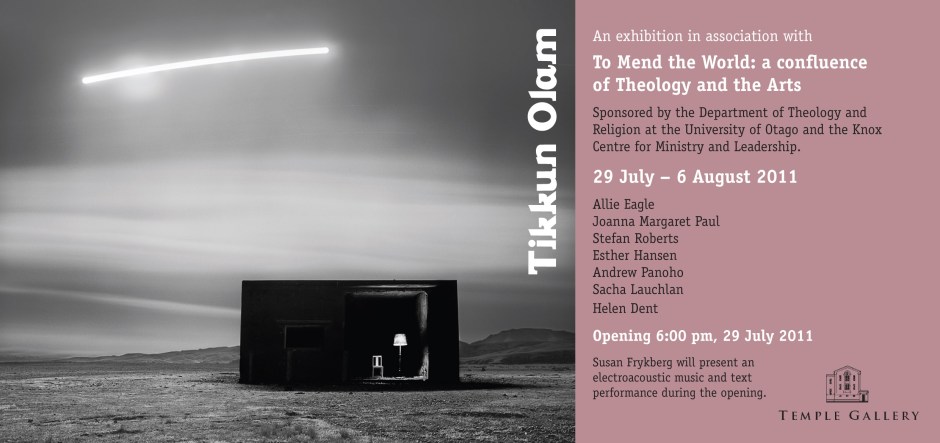
‘To Mend the World’: conference and exhibition

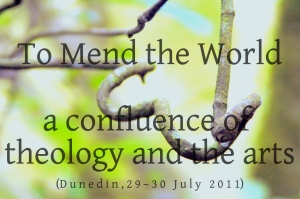
I want to give the ‘To Mend the World’ conference and exhibition one final plug. The conference runs from 29–30 July, and the exhibition from 29 July through to 6 August. It really is shaping up to be a very exciting twin-project, with an impressive line-up of speakers and artists. Registration for the conference has exceeded expectation, and is still open if you’re keen to attend.

Hinterland Theology: A Stimulus to Theological Construction: A Review

Alan P.F. Sell, Hinterland Theology: A Stimulus to Theological Construction (Studies in Christian History and Thought; Milton Keynes/Colorado Springs/Secunderabad: Paternoster, 2008). xvi+715pp.

In his book Defending and Declaring the Faith: Some Scottish Examples 1860–1920 (1987), Alan Sell had already demonstrated his ardour and gift for bringing the dead back to life, for turning strangers into friends, and for wading the small streams and largely-inaccessible rivers on the landscape of British ecclesiastical life. Now, over two decades later, Professor Sell, in Hinterland Theology: A Stimulus to Theological Construction, turns his binoculars south to introduce readers to some other forgotten saints, to those whose writings are not the staple of general undergraduate courses. These are the second eleven (actually ten), if you like, of Nonconformist Dissent – drawn from among those who served the Church in the wake of the Toleration Act of 1689 after which there was ‘no longer one authority to which appeals on religious questions could be lodged’ (p. 54), and in the wake of the Enlightenment and the Evangelical Revival, and in the wakes of modern biblical criticism and theological liberalism. From the outset, Sell suggests that ‘we have not fully understood the Lockes and Barths of this world until we have investigated what the hinterland people made of them’ (p. 2).

Drawing upon letters, sermons, tracts and monographs, and with an eye on doctrinal controversies, the prevailing intellectual winds, and impressively alert to pastoral challenges, Sell has penned an encyclopaedic dictionary of rarely-mentioned theologians – Thomas Ridgley, Abraham Taylor (who ‘shot across the London sky like a volatile theological meteor’ (p. 41)), Samuel Chandler, George Payne, Richard Alliott, David Worthington Simon, T. Vincent Tymms, Walter Frederick Adeney, Robert S. Franks and Charles S. Duthie. Apart from Chandler, who was Presbyterian, and Tymms, who was Baptist, the rest were Congregationalists, and all but two (or perhaps three) were sons of the manse. Each chapter begins with a comprehensive biography of the chosen personality before turning to introduce and then engage with their thought, contribution and intellectual location. A familiar encore of themes appear over the period surveyed (1667 to 1981), including deism, miracles, apologetics, supernaturalism, Bible, Trinity, theism, Arianism, Calvinism, Unitarianism, Roman Catholicism, theological method, the eternal generation of the Son, kenotic christology, divine impassibility, natural theology, ecclesiology and pastoral ministry, among others, suggesting that theological adjustments and time-lags, and the ongoing ‘construction through conversations’ (p. 1) conducted by hinterland theologians, significantly stimulated the philosophico-theological landscape, and bore significant fruit – for good and for ill – in the Church.

After a brief Introduction, the book is presented in five parts. In Part One, ‘In the Wake of Toleration’, and with colour and wit, Sell introduces us to Thomas Ridgley whose ‘greatest contribution lay in the field of theological education’ (p. 13), and to Abraham Taylor and his defence against John Gill’s charge of antinomianism, and his plunge into the debates over the doctrinal declension betrayed in eighteenth-century trinitarian controversies and, in particular, his dissatisfaction in these matters with fellow Congregationalist, Isaac Watts. (Taylor charged Watts with sponsoring Sabellianism and Socinianism, with teaching that Christ possessed a super-angelic spirit, and with displaying a lack of clarity over the nature of divine personhood, among other things). Sell also introduces us to Samuel Chandler, the ‘moderate Calvinist’ and ‘apostle of liberty of conscience and freedom of thought’ (p. 85) who also wrestled with John Gill (on the relationship between morality and the will of God) and with Anthony Collins, John Locke and Thomas Morgan (on deism), and with John Guyse (on what it means to preach Christ),who spoke at Watts’ internment, who (from 1732 to 1739) was a prime advocate of the repeal of the Test and Corporation Acts that precluded Dissenters from holding state or civic office’ (p. 77) and whose greatest talents most conspicuously shone forth from the pulpit.

In Part Two, ‘In the Wake of Enlightenment and Revival’, Sell considers the life and contribution of George Payne, a thinker who ‘set out to be “useful” but was perceived as “dangerous”’ (p. 123). Sell’s discussion here introduces us to the landscape of early-nineteenth century thinking on metaphysics and ethics, on moderate Calvinism, and on the Trinity. Sell turns next to the inexorable logician and winsome evangelist Richard Alliott, who was ‘among the first Congregationalists to notice Schleiermacher in print’ (p. 191) and who, while longing for the revival of the Church, insisted that there would be no revival until believers ‘experience within stronger faith in the presence and word of our God, in the finished work of Christ, [and] in the indwelling of the Spirit in our hearts’ (p. 200). But Alliot, who by 1860 held the Chair of Theology and Philosophy at Spring Hill College,  held no misconceptions that ‘piety by itself will not sustain a ministry’ and that ‘scholarship will render a preacher more effective’ (p. 203). Sell describes Alliot, who authored Psychology and Theology (1855), as ‘a theologian between the times’ in whom ‘classical theism’s cosmological-causal head came together with Romanticism’s heart, and the whole was undergirded by the Evangelical Revival’s concern for souls’ (p. 222).

Part Three is titled ‘In the Wake of Modern Biblical Criticism’. Here we are acquainted with David Worthington Simon, T. Vincent Tymms, and Walter Frederick Adeney. Describing Simon as ‘the most spiritually anguished, the slowest-burning, and the most pioneering scholar – and hence the most highly suspect – to fall with the confines of this book’ (p. 227), Sell recalls Simon’s study at Lancashire College and in Germany (a land to which he returned again), his oversight of the newly formed church at Birkenhead from 1855, and his call to serve as Resident Tutor and Professor of Theology at Spring Hill College, ‘an institution where at least relatively open theological enquiry was the order of the day’ (p. 236), and then, from 1883, as Principal of the Scottish Congregational Theological Hall in Edinburgh, and thereafter as Principal of Yorkshire United Independent College on Bradford (1893 until 1907). Alive to the changing intellectual environment, Simon, championing what Sell names as a ‘biblical-historical-pneumatic epistemology’ (p. 250), championed a marriage of both intellectual and spiritual depth, resisting attempts by some to divorce the historical and the spiritual and arguing that the soul’s relation to God is not independent of biblical facts. From Simon, Sell turns to Tymms, tracing the Baptist theologian’s journey from Regent’s Park College, to his pastorates at Berwick, Accrington and Clapton, to Vice-President of the Baptist Union of Great Britain and Ireland, to President of the London Baptist Association, and to the Presidency of Rawdon College, Leeds. Sell reflects on Tymms’ widely-read book, The Mystery of God, and his embroilment in controversies over Bible translation, particularly as such affected the Indian mission field. He notes that Tymms distinguished himself by encouraging ‘original thought among his students rather than … prepar[ing] them for examinations’ (p. 311), and by his Forsyth-like witness to the centrality of Christ’s Cross which has ‘irradiated the world with light, and is filling the moral universe with songs of everlasting joy’ (p. 317). Tymms would press further still, insisting in his stimulating and judicious book The Christian Idea of Atonement, that ‘the cross is God’s definition of Himself’ (p. 340). Moreover, the cross is, Tymms insists, the only word of theodicy available to the Christian: ‘The cross is … precious because it reveals that God is not a mere passionless watcher of an agonising evolution, but is Himself a partaker of the universal travail, and has been constrained by love to take the chief labour on Himself’ (p. 345). Sell introduces us next to Adeney, Congregationalist minister turned Professor of Church History and New Testament, whose attention to the centrality of the cross fell some way short of Tymms’, but among whose enviable gifts included an ability to ‘write at varying degrees of technicality, and … a particular concern to reach ministers, people in the pews, and children’ (p. 366). He was one of those ‘believing biblical critics’, like Westcott, Hort, Peake and W.H. Bennett, who ‘harvested the fruits of modern biblical criticism in such a way that only the most suspicious conservative evangelicals’ (p. 410) would think to accuse him of undermining Scripture. No advocate of sentimental theology, Adeney championed the truth of God’s fatherly love – love expressed in the ‘essentially Christian’ (p. 399) doctrine of the Trinity – as ‘the source and spring of the Christian gospel’ (p. 395). Still, he warned that ‘speculation about God always plunges us into darkness’, an observation which draws the following comment from Sell: ‘It is, no doubt, an unsanctified thought, but one sometimes feels that some present-day theologians think that they know as much about the inner working of the Trinity as some older Calvinist divines thought they knew about God’s inscrutable will’ (p. 411).

‘In the Wake of Theological Liberalism’ is the equally-revealing title of Part Four, and the subjects here are Robert S. Franks and Charles S. Duthie. Again, Sell locates each personality in their biographical and intellectual context before turning to introduce and appraise their writings and thoughts. Sell highlights the former’s engagement with the thought of Kant, Abelard, Anselm, and Schleiermacher, and the latter’s engagement with Pascal, Barth, Thielicke, Ferré and Tillich. Of these last two named, Duthie’s introducing of their thought to both Church and students (he spent 30 years of his life training ministers) was ‘not because [he agreed] with all the main positions they occupy but because [he felt] deeply that they are concerned to fashion a living theology for our own time, a theology which is faithful to the “given” Gospel in terms of man’s predicament today’ (p. 521). In calling the Church to its evangelistic task, Duthie suggested that we not only read Tillich with Barth in hand, but also the reverse.

After 562 pages, Sell still has more to say, and the book’s final part is a 71-page conclusion wherein Sell retraces the landscape he has just surveyed, recapitulates key themes, offers suggestions about contemporary practice, and recalls that the voices of hinterland theologians – past and present – are ‘frequently constructive, occasionally provocative, and variously stimulating. They have pertinent observations to share on our current theological agenda, and they challenge us by reminding us of some themes which we may have been inclined to overlook’ (p. 635).

Readers already familiar with Professor Sell’s writing will know that he is a meticulous researcher whose reading is extensive, whose commitment to ecumenism is exemplary, whose love for, and devotion to, the Nonconformist tradition is contagious, who is not shy of noting error and distortion of the Gospel when and where he sees it, whose acumen for critically-identifying contemporary theological trends is cultivated and well coached, and whose writing betrays not a few hours of pastorally-informed reflection. While Hinterland Theology could certainly have done with a more meticulous proof-reader, with this hefty tome Sell has given us a rich resource. That he decided to take the trouble to write this book leaves the Church in his debt. This volume will be of interest to historians, theologians, philosophers, and a must-read for those with a particular interest in British Nonconformity.


Entering the New Theological Space: A Review

John Reader and Christopher R. Baker, eds, Entering the New Theological Space: Blurred Encounters of Faith, Politics and Community. Explorations in Practical, Pastoral and Empirical Theology (Farnham/Burlington: Ashgate, 2009), pp. xiii + 241, £55.00, ISBN 978-0-7546-6339-3.

Nicholas Lash, in his book Holiness, Speech and Silence: Reflections on the Question of God, gives voice to the difficulty of thinking Christianly in ‘a culture whose imagination, whose ways of “seeing” the world and everything there is to see, are increasingly unschooled by Christianity and, to a considerable and deepening extent, quite hostile to it’. He notes the serious and dangerous demands posed in such a situation by continuing to hold the Gospel’s truth rather than paying mere lip-service to ‘undigested information’ (p. 4). Believing that the time has come to help missiological communities to engage and digest in the linear spaces opened up between post-Christendom politics and interfaith actualities, institutional monads and inter-organisational networks, rural and urban spaces, the status of paid and unpaid, and the contested and evolving relationship between faith and science, for example, the contributors to Entering the New Theological Space seek, in different ways, to map such space ‘by means of a triangulation between narrative, praxis and theory’, to ‘offer some idea of the complexity and interdisciplinarity associated with this new space’ – a so-called ‘third space’, the ‘space of the both/and’ (p. 5), a more fluid space which discards the oft-maintained binarism of the either/or space – and to assist readers to analyse the significance of such ‘blurred encounters’ which, the editors believe, are ‘forcing the church to develop increasingly fluid and experimental forms’ (p. 10).

Each of the fifteen essays in this volume are in their own way stimulating, and most are well-researched and eruditely penned. They cover a range of topics, from John Atherton’s ethical-economical-theological reflection on a ‘pilgrimage’ down Edinburgh’s Royal Mile to explore places where ‘inevitable and potentially creative’ (p. 25) ‘“edges” have become mainstream’ (p. 19), to Malcolm Brown’s essay on the ‘social atomisation’ and ‘rootlessness’ (p. 70) of London’s suburbs, to Margaret Goodall’s exploration of human personhood in a thought-provoking essay on dementia, to Clare McBeath’s piece which asks whether a community or a city can be said to ‘suffer from mental illness’ (p. 147), to Philip Wagstaff’s reflection on the fluidity and stability of rural ministry.

Two essays merit special mention: Martyn Percy’s considers the nature of the cultural dynamics, implicit theology and ‘invisible religion’ (p. 179; the phrase is Thomas Luckmann’s) that continue to birth requests for baptism (or ‘christening’) of children from non-churched families. He writes concerning the ‘deeply coded ways in which people talk and act about God’, that ‘religious language is carried in the emotion, timbre and cadence of worship’ and that ‘deeply coded language is not [necessarily] a strategy for avoiding explicit theological language’ (p. 184). Percy’s attempt to sketch a theology of cultural conversation, and to explore some implications of such conversations for missional and risky engagement in the ‘areas of overlap and hinterlands between the life of the church and the world’ (p. 179) merits further thought.

Drawing upon the work of Bruno Latour and Slavoj Žižek, and bringing their thought into conversation with events surrounding the 2007 outbreak (in Surrey) of foot and mouth disease, John Reader contributes an intriguing, if somewhat undercooked, essay on the nature, possibility and linguistic challenges posed to truth speech by the mutual encounter of science and theology. He concludes by stating that it is ‘only by keeping the insights and theories of both faith and science in circulation’ that we can be ‘certain of remaining “in the truth”‘, and that it is ‘only by loading into the process that contact with the wider world’ that we ‘avoid an unhealthy closure of questioning and debate’ (p. 208).

Some reservations: the noticeable absence in this volume of any discussion on the significance and place of technology (blogging, social media and gaming, for example) in theological and ecclesial discourse and praxis, and vice-versa, represents a disappointing gap. Also, there is in this volume a significant number of typological, grammatical and factual errors (John Knox, for example, was not the ‘first Presbyterian minister of St Giles and Scotland’ (p. 20)), errors which one expects would be corrected before print and to be rare in a book wearing such an inflated price tag. Finally, while one may well concur that ‘all the essays in this book are a testament to the ongoing adaptability and robust mutuality of Christian thought and the church’ (p. 7), if this volume represents ‘the new theological space’ then one might be forgiven for observing that, with one or two exceptions, such space is a little light on the theology front.

These reservations aside, not a few of the essays in this volume deserve wide reading, and the ongoing conversations encouraged therein are to be commended. Social planners, missiologists, pastoral practitioners and those training them will all benefit from reading this book, and from taking up the challenge to engage in the interdisciplinary and multilayered interstices of cultural, political and theological realities.

To Mend the World: a confluence of theology and the arts

The sixteenth-century Jewish mystic, Isaac Luria, made much of the notion of tikkun olam, a phrase which we might translate as ‘to mend the world’. Luria believed that the Creator of all things, in deciding to create a world, drew in – contracted – the divine breath in order to make room for the creation coming into being. In this enlarged space, the Creator then set vessels and poured into them the radiance of the divine light. But the light was too brilliant for the vessels, causing them to shatter and scatter widely. Since then, the vocation given to human person has consisted of picking up and to trying to mend or refashion the shards of creation.

Tikkun olam is also the theme of a conference and exhibition that I’m involved in organising, and which will take place in Dunedin this July. It is shaping up to be a very exciting twin-project, with an impressive line-up of speakers and artists. Registration for the conference has exceeded expectation for this stage so far out from the date, is still open, and there’s still some time to get in on the ‘early-bird’ rate.

Holy Saturday, the Son who is held in oneness with the Father

‘If it is hard to understand how the Father-Son relationship is maintained when Jesus is among the god-forsaken, it is even harder to understand how it could be maintained when at the end of his passion he is among the dead. What can it possibly mean to say that the eternal Son of God has died? … The Nicene creed within its second christological answer affirms that he of whom it speaks is “of one Being (homoöusios) with the Father” and also that as part of his work “for us men and our salvation”, “he suffered death and was buried”, but it does not tell us how we are to understand these statements in their relationship to each other.

Hans Urs von Balthasar warns against failing to face up to the stark fact of Holy Saturday, the fact of a dead Christ. We can rush on too quickly to the joys of the third day; we can, with the Greek iconographers, picture a living and active and glorious Christ invading the world of the dead, raising Adam and Eve from their coffins in a pre-resurrection triumph. All that has its place, but it must not be allowed to displace or distract attention from the fact that from Good Friday to Holy Saturday the Son of God lies dead. His identification with us will be incomplete and his saving act insufficient if he does not share with us the ultimate consequence of our subservience to evil, either as its victims or its servants. Hebrews is quite clear that it belongs to the redeeming act of God’s grace that Jesus should experience the death that all of us have to experience and that this is the way he must go in order to reach his glorious destination: “… we see Jesus, who was made a little lower than the angels, now crowned with glory and honour because he suffered death, so that by the grace of God he might taste death for everyone” (Heb. 2.9).

Death, whatever function it might be designed to fulfil in the purpose of the Creator, becomes for those who are the sinful victims of evil the dreaded ultimate moment in which the destructiveness that is endemic to the sinful situation finally has its way. When we die all our relationships with God and with people are severed and we are carried from being to non-being: “The wages of sin is death.” Jesus dies, to quote Hebrews again, to “free those who all their lives were held in slavery by their fear of death” (Heb. 2:15).

The illusion of death as the automatic transition from an imperfect to a perfect heavenly state, deceptively propagated at many semi-Christian funerals, is untrue both to scripture and experience. Death can be more biblically and realistically described as the “ultimate enemy” (1 Cor. 15:26) and our reluctance to contemplate the reality of our own death only goes to prove the point.

There must therefore be no mitigation of the awfulness of death either in Jesus’ case or our own. As von Balthasar puts it:

It [death] is a happening which affects the whole person, though not necessarily to the point of obliterating the human subject altogether. It is a situation which signifies in the first place the abandonment of all spontaneous activity and so a passivity, a state in which, perhaps, the vital activity now brought to an end is mysteriously summed up.

Death is the collapse of all relationships into unresponsiveness. Those who are dead can neither speak nor be spoken to, they can neither receive love nor return it, they can neither initiate nor participate in all the activities and concerns in which our relationships are expressed and by which they are nourished. “I have lost my husband”, says the widow, and exactly that is the source of her grief. All that makes up life is lost to the dead and they are lost to it.

And so it is with Jesus, as his body is lowered from the cross and carried to Joseph of Arimathea’s dark garden tomb. No more parables, no more healing, no more praying to his Father; he has offered everything and he has nothing more. It looks as if all the hopes he roused are now reduced to mocking illusions, his promises become retreating echoes fading into nothingness: The Son of God is dead.

As Alan Lewis puts it, we are “compelled to confront the possibility that God’s own Son is dead and buried among the transgressors, and that God himself has failed in his fatherhood and deity” and as a consequence “the world is delivered up to godlessness and negativity”. That is the reality of Holy Saturday and we must give it its own space and its own meaning before we hurry on to Easter Sunday, not least because Holy Saturday is a day that both individuals and the Church have to live through again and again. We shall all have to confront the day of our dying when resurrection may seem a distant hope rather than an imminent reality.

The Son of God is dead; his death is our death. It is an evil undoing of the work of the Creator which looks like the final triumph of all the powers of darkness that have brought him to the cross. He is dead and unresponsive to his friends and he is dead and unresponsive to his Father. This is the ultimate disruptive attack on the unity of Father and Son, this is the permitted intrusion of death into the Trinitarian life of God.

Nevertheless … in his furthest absence from the Father, the dead Son is still in profound unity with the Father. His passivity and unresponsiveness are still the expressions of his obedience that hold him in oneness with the Father in his execution of the Father’s redeeming purpose. That fact alone makes his death different from ours and, even before the resurrection, full of hope for ours. This dead man is indeed bearing the death of the victims and perpetrators of evil, but he is bearing it as the loved and obedient Son of the Father’.

– Thomas A. Smail, Once and For All: A Confession of the Cross (Eugene: Wipf and Stock, 2005), 137–40.