Music

March stations

Reading:

Listening:

Watching:

February stations …

Reading:

Listening:

Watching:

January stations …

I’ve decided to continue on with my habit of recording some of my stopping points – books read, music listened to, films watched, etc. – each month. Some readers seem to enjoy knowing from where I’m being fertilised, and I enjoy keeping a track of my journeys. So here’s January’s ‘stations’:

Reading:

Listening:

Watching:

Some other news
I’m anticipating that posts here at Per Crucem ad Lucem might be a little scantier over the next few weeks. I have some other writing that I need to set aside some extra time to do, and I’ll be away speaking at a number of events, including Going Further. By the way, upon my return I’ll be giving a public lecture on the Supper entitled ‘Learning to See and to Waddle with our Tongues: a view from the Table’. All are heartedly invited (both to the lecture and to the Supper!). For any who may be interested, I plan to post a copy of my talk here after the event.


2010: ‘It was the best of times …’

‘It was the best of times, it was the worst of times, it was the age of wisdom, it was the age of foolishness, it was the epoch of belief, it was the epoch of incredulity, it was the season of Light, it was the season of Darkness, it was the spring of hope, it was the winter of despair, we had everything before us, we had nothing before us, we were all going direct to heaven, we were all going direct the other way – in short, the period was so far like the present period, that some of its noisiest authorities insisted on its being received, for good or for evil, in the superlative degree of comparison only’. – Charles Dickens, A Tale of Two Cities.

Best books

Theology

Biography

Ministry

History

Cooking

Poetry

Best albums

1. Officium Novum by Jan Garbarek & The Hilliard Ensemble.
2. The Age of Miracles by Mary-Chapin Carpenter.
3. Foundling by David Gray.
4. Scratch My Back by Peter Gabriel.
5. Sacrificium by Cecilia Bartoli.
6. Women and Country by Jakob Dylan.
7. 100 Miles From Memphis by Sheryl Crow.
8. Great and Small by Butterflyfish.
9. Downtown Church by Patty Griffin.
10. No Better Than This by John Mellencamp.

Honorable mentions: All Delighted People by Sufjan Stevens; The Age of Adz by Sufjan Stevens; Leave Your Sleep by Natalie Merchant; Go by Jónsi; April Uprising by The John Butler Trio; The Promise by Bruce Springsteen; The Astounding Eyes of Rita by Anouar Brahem; American VI: Aint No Grave by Johnny Cash; San Patricio by The Chieftains & Ry Cooder; In Person & On Stage by John Prine; How I Learned to See in the Dark by Chris Pureka.

Best films

1. How I Ended This Summer
2. Winter’s Bone
3. Abandoned
4. The Infidel
5. Shutter Island
6. Boy

Overrated films

Worst films

Best TV shows

1. An Idiot Abroad (Series 1)
2. Rev

Some Personal Highlights

December exploits …

Not sure why (although holidays and extended daylight may have something to do with it), but December seemed to be a month in which I knocked over a bucket-load of reading, listened to a tonne of music, and enjoyed more flicks than usual. Here’s my exploits:

Reading:

Listening:

Watching:

Brewing: Sumatra Mandaling

Drinking:


November exploits …

Reading:

Listening:

Watching:

Drinking:

Why We Can’t Hear Wagner’s Music

David P. Goldman has posted a fascinating reflection on Why We Can’t Hear Wagner’s Music. The entire piece is well worth the time it takes to read it, but here’s a few snippets:

‘Why did Wagner loom so large to his contemporaries? The answer is that he evoked, in the sensuous, intimate realm of musical experience, an apocalyptic vision of the Old World. Wagner’s stage works declared that the time of the Old Regime was over—the world of covenants and customs had come to an end, and nothing could or should restrain the impassioned impulse of the empowered individual. Wagner’s baton split the sea of European culture.

It is hard to make sense of what has become of the West without engaging Wagner on his chosen terrain in the musical theater, for electronic media are a poor substitute for live performance. To engage Wagner on that chosen terrain is harder to do as directors bury him under supposedly creative interpretations. We have had Marxist, feminist, and minimalist versions of The Nibelung’s Ring and a production of Wagner’s last opera, Parsifal, dominated by a video image of a decomposing rabbit. A demythologized Wagner opera, much less a decomposing one, is not Wagner at all; as Thomas Mann said, Wagner’s work “is the naturalism of the nineteenth century sanctified through myth.” Without the myth, there is no sanctification, and Wagner’s effort to substitute art for religion becomes incomprehensible …

Wagner’s power comes, first of all, from his music, but we have lost the capacity to hear it the way Baudelaire and Mahler did. And our inability to hear Wagner’s music constitutes a lacuna in our understanding of the spiritual condition of the West. Despite Wagner’s reputation for compositional complexity, his musical tricks can be made transparent to anyone with a rudimentary knowledge of music. In some ways, Wagner is simpler to analyze than the great classical composers. Because—as Nietzsche said—Wagner is a miniaturist who sets out to intensify the musical moment, his spells, at close inspection, can be isolated …

Wagner set out to destroy musical teleology, which he abhorred as the “tyranny of form.” As Nietzsche perceptively noted:

If we wish to admire him, we should observe him at work here: how he separates and distinguishes, how he arrives at small unities, and how he galvanizes them, accentuates them, and brings them into pre-eminence. But in this way he exhausts his strength; the rest is worthless. How paltry, awkward, and amateurish is his manner of “developing,” his attempt at combining incompatible parts.

That is what Rossini meant when he said that Wagner has beautiful moments and awful quarter-hours. (He also said that Lohengrin couldn’t be appreciated at first hearing, and that he had no intention of hearing it a second time.) Wagner had a gift, as well as an ideological purpose, for the intensification of the moment. If Goethe’s Faust bets the Devil that he can resist the impulse to hold onto the passing moment, Wagner dives headfirst into its black well. And if Faust argues that life itself depends on transcending the moment, Wagner’s sensuous embrace of the musical moment conjures a dramatic trajectory toward death …

If Wagner himself was not quite a premature Nazi, he remains a horrible affirmation of Franz Rosenzweig’s claim that Christianity, once severed from its Jewish roots, would revert rapidly to paganism …

Wagner’s shift away from goal-oriented motion to intensification of the moment deafens our ears to the expectations embedded in classical composition and ultimately ruins our ability to hear his manipulation of these expectations. In other words, Wagner’s aesthetic purpose is at war with his methods. Once we are conditioned to hear music as a succession of moments rather than as a journey to a goal, we lose the capacity for retrospective reinterpretation, for such reinterpretation presumes a set of expectations conditioned by classical form in the first place. Despite his dependence on classical methods, Wagner’s new temporal aesthetic weakened the capacity of later musical audiences to hear classical music. As Sir Thomas Beecham joked, people really don’t like music; they just like the way it sounds …

What made Wagner his century’s most influential artist was not merely that he portrayed as inevitable and even desirable the fall of the old order but that through his music he turned the plunge into the abyss into an intimate, existential experience—a moment of unbounded bliss, a redemptive sacrifice that restores meaning to the alienated lives of the orphans of traditional society. On the ruins of the old religion of throne and altar he built a new religion of impulse: Brünnhilde becomes Siegfried’s co-redemptrix in Wagner’s heretical Christianity.

And that is why (as Bernard Shaw said) Wagner’s music is better than it sounds. There really are a few moments worth the painful wait, when Wagner’s application of classical technique yields the illusion of timelessness. Because we are mortal (as I argued in “Sacred Music, Sacred Time”), and our time on earth is limited, a transformation of our perception of the nature of time bears directly on our deepest emotions—those associated with the inevitability of our death. That, I think, is what Schopenhauer tried to get at when he argued that “music does not express this or that particular and definite pleasure, this or that affliction, pain, horror, sorrow, gaiety, merriment, or peace of mind, but joy, pain, horror, sorrow, gaiety, merriment, peace of mind themselves, to a certain extent in the abstract, their essential nature, without any accessories, and so also without the motives for them.”’

Read the whole essay here.

October exploits …

Reading:

Listening:

Watching:


Hymn: ‘We praise the Word of God’

The PCUSA has kindly made available the text and music of a hymn by David Gambrell. The words are set to the familiar tune Leoni (‘The God of Abraham Praise’), and bear witness to the dynamic nature of the Word of God as understood in the Reformed tradition, as ‘Scripture – the Word written, preaching – the Word proclaimed, and the Sacraments – the Word enacted and sealed, bear testimony to Jesus Christ, the living Word’ (Directory for Worship, W-1.1004). Permission is granted for congregational use in worship/educational settings.

1. We praise the Word of God
made flesh in Jesus Christ:
the wellspring of undying love,
the bread of life,
who spoke with human lips
yet taught with heaven’s voice,
in whom we put our hope and trust,
and still rejoice.

2. We learn the Word of God
in stories of the faith:
the Scriptures’ living witness to
God’s truth and grace,
where prophets cry for peace,
apostles preach and pray,
and saints of all the ages seek
God’s holy way.

3. We live the Word of God
when good news we proclaim:
when captives find their liberty
and lose their chains;
when mourners sing with joy
the Word of God resounds,
the Spirit of the Lord still speaks,
and grace abounds.

The sheet music is here.

September exploits …

Reading: Desiring the Kingdom: Worship, Worldview, and Cultural Formation by James K.A. Smith; A Long Obedience in the Same Direction: Discipleship in an Instant Society by Eugene H. Peterson; Home by Marilynne Robinson; Absence of Mind: The Dispelling of Inwardness from the Modern Myth of the Self (The Terry Lectures Series) by Marilynne Robinson; On My Country and the World by Mikhail Gorbachev; The Theology of Food: Eating and the Eucharist by Angel F. Mendez Montoya; Theology of the Reformed Confessions by Karl Barth; Practicing Our Faith: A Way of Life for a Searching People edited by Dorothy C. Bass; Confessions of a Reformission Rev.: Hard Lessons from an Emerging Missional Church by Mark Driscoll (I confess that some skim reading was required here, but this is proof that I read widely!); The Challenge of Jesus’ Parables edited by Richard N. Longenecker; Counterpoint by R.S. Thomas; The Parables of Grace by Robert Farrar Capon; Between Two Worlds: Understanding And Managing Clergy Stress by Andrew R. Irvine; Theological Controversies in the Presbyterian Church of New South Wales, 1865–1915: The Rise of Liberal Evangelicalism by Peter Barnes.

Listening: Songs of Love & Hate by Leonard Cohen; Beneath Southland Skies by Mike Brosnan; Mass in G Minor by Vaughan Williams; In Buenos Aires Volume 1: 1973 Concert by Bill Evans Trio; Symphonies Nos. 7 ‘Sinfonia Antartica’ & 8 by Vaughan Williams; God Willin’ & The Creek Don’t Rise by Ray Lamontagne & The Pariah Dogs; Trouble and Gossip In The Grain by Ray LaMontagne; August & Everything After, Recovering the Satellites, This Desert Life, Across A Wire: Live In New York City, Films About Ghosts, Saturday Nights & Sunday Mornings, New Amsterdam: Live at Heineken Music Hall and Hard Candy by Counting Crows; So Much More, Hope for the Hopeless and Brett Dennen by Brett Dennen; Supply And Demand and Last Days At the Lodge by Amos Lee; Stop All The World Now, Sound The Alarm, Australia by Howie Day; You Can Tell Georgia, Take My Blanket and Go, Stompin Grounds, Sessions From Motor Ave., Paris In The Morning, Only Four Seasons, Last Clock On The Wall, Julie Blue, Joe Purdy and Canyon Joe by Joe Purdy.

Watching: U2: Go Home – Live from Slane Castle; Abandoned; Law Abiding Citizen; Salt; Saw VI; Alice in Wonderland; The Matrix; When Did You Last See Your Father?; Pink Floyd: Pulse; Robin Hood; Love Happens.

Brewing: Sumatra Mandaling.

Drinking: Felton Road Pinot Noir Cornish Point 2009; Waipara Hills Pinot Noir 2008.

[Image: Elizabeth Kaeton]

August exploits …

From the reading chair: A People Betrayed: The Role of the West in Rwanda’s Genocide by Linda Melvern; Colossians and Philemon: An Introduction and Commentary by NT Wright; Critical Reflections Of Stanley Hauerwas’ Theology Of Disability: Disabling Society, Enabling Theology edited by John Swinton; The Disabled God: Toward a Liberatory Theology of Disability by Nancy L Eiesland; The Good and Beautiful God: Falling in Love With the God Jesus Knows by James Bryan Smith; Christian Identity (Studies in Reformed Theology) edited by Eddy Van Der Borght; Counterpoint by RS Thomas; Uncommon Gratitude: Alleluia for All That Is by Joan Chittister & Rowan Williams; The Promise of the Father: Jesus and God in the New Testament by Marianne Meye Thompson; How to Read a Poem: And Fall in Love with Poetry by Edward Hirsch; Teachers As Cultural Workers: Letters to Those Who Dare Teach by Paulo Freire; Theological Fragments: Essays in Unsystematic Theology by Duncan B. Forrester; Very Little … Almost Nothing: Death, Philosophy and Literature by Simon Critchley; Foundations of Dogmatics, Vol. 1 by Otto Weber; Reformational Theology: A New Paradigm for Doing Dogmatics by Gordon J. Spykman; Care of the Soul : A Guide for Cultivating Depth and Sacredness in Everyday Life by Thomas Moore; Bread Baking: An Artisan’s Perspective by Daniel T. DiMuzio; Books of Amos and Hosea by Harry Mowvley; Resist!: Christian Dissent for the 21st Century edited by Michael G. Long.

Through the iPod: U2 Go Home – Live from Slane Castle by U2; London Calling: Live in Hyde Park by Bruce Springsteen & The E Street Band; Foundling by David Gray; All Delighted People by Sufjan Stevens.

On the screen: Edge of Darkness; Where the Wild Things Are; Shelter; Shutter Island; The Infidel; The Wolfman; After Life; Into the Storm; Into the Wild.

July bests …

From the reading chair:

Hannah’s Child: A Theologian’s Memoir by Stanley Hauerwas; White on Black by Ruben Gallego; Les Murray: A Life in Progress by Peter F. Alexander; Metamorphosis and Other Stories by Franz Kafka; The South Pole: An Account of the Norwegian Antarctic Expedition in the “Fram” 1910–1912 by Roald Amundsen; On Human Worth: A Christian Vindication of Equality by Duncan B. Forrester; God’s Being is in Becoming: The Trinitarian Being of God in the Theology of Karl Barth by Eberhard Jüngel; Prayers Plainly Spoken by Stanley Hauerwas.

Through the iPod:

Life in Slow Motion by David Gray; Sunshine on Leith by The Proclaimers; Telling Stories by Tracy Chapman; Masterpieces by Bob Dylan; Complete Recordings by Robert Johnson; In Person & On Stage by John Prine; The Age of Miracles by Mary-Chapin Carpenter; I and Love and You by The Avett Brothers; Mingus Ah Um by Charles Mingus; 11:11 by Rodrigo y Gabriela; Open Sesame by Freddie Hubbard; 100 Miles From Memphis by Sheryl Crow; Songs From The Heart by Celtic Woman; The Imagine Project by Herbie Hancock; Sweet and Wild by Jewel; Heart and Soul by Kenny G; Need You Now by Lady Antebellum; Revolution by Miranda Lambert; Journey to the One by Pharoah Sanders; Fearless by Taylor Swift; Monk’s Dream by Thelonious Monk; Backatown by Trombone Shorty; Sigh No More by Mumford & Sons; Go by Dexter Gordon; April Uprising by The John Butler Trio; Intriguer by Crowded House.

On the screen:

The Road [2009]. (BTW: The worst flick I saw this month was The Lovely Bones [2010])

Eating Out:

Catlins Café: The best lunch I’ve had out in many moons. Remember those burgers we used to eat in the seventies? I found them again here. Soooo good. The food in this wee Owaka café was brilliant, the coffee was very nice, and the new hosts – Aileen & Steve Clarke – are delightful … friendly, but not ‘in-ya-face’ kind of friendly. If you’re in the Catlins, you ought consider popping in for a feed. They also run some accommodation. And just in case you’re wondering, I’m not getting paid for this wee plug. And if you do visit the area, make sure you get along to Nugget Point, one of my favourite bits of coastline in the world.


June bests …

From the reading chair: Patterns of Reform: Continuity and Change in the Reformation Kirk by James D. Kirk; Humanism and Reform: The Church in Europe, England and Scotland, 1400–1643 edited by James Kirk; The True Face of the Kirk: An Examination of the Ethos and Traditions of the Church of Scotland by R. Stuart Louden; Theology of the Reformed Confessions and Knowledge of God and the Service of God According to the Teaching of the Reformation: Recalling the Scottish Confession of 1560 by Karl Barth; John Knox: An Introduction to His Life and Works by Richard G. Kyle and Dale W. Johnson (reviewed here); Called to Be Human: Letters to My Children on Living a Christian Life by Michael Jinkins; Theosis in the Theology of Thomas Torrance by Myk Habets (reviewed here); Hyperion and Selected Poems by Friedrich Holderlin.

Through the iPod: Beethoven, Britten: Violin Concertos, Bach: Inventions & Partita and Vivaldi: The Four Seasons by Janine Jansen.

On the screen: The Wire: The Complete Third Season; Invictus.

‘The Musician’, by R. S. Thomas

A memory of Kreisler once:
At some recital in this same city,
The seats all taken, I found myself pushed
On to the stage with a few others,
So near that I could see the toil
Of his face muscles, a pulse like a moth
Fluttering under the fine skin,
And the indelible veins of his smooth brow.

I could see, too, the twitching of the fingers,
Caught temporarily in art’s neurosis,
As we sat there or warmly applauded
This player who so beautifully suffered
For each of us upon his instrument.

So it must have been on Calvary
In the fiercer light of the thorns’ halo:
The men standing by and that one figure,
The hands bleeding, the mind bruised but calm,
Making such music as lives still.
And no one daring to interrupt
Because it was himself that he played
And closer than all of them the God listened.

– R. S. Thomas, ‘The Musician’ in Tares (Chester Springs: Dufour Editions, 1961), 19.

May bests …

From the reading chair: The Night Trilogy: Night, Dawn, Day by Elie Wiesel; A Simplicity of Faith: My Experience in Mourning and Free in Obedience by William Stringfellow; Christology: A Global Introduction by Veli-Matti Karkkainen; Emily Dickinson’s Approving God: Divine Design and the Problem of Suffering by Patrick J. Keane; Return to Rome: Confessions of an Evangelical Catholic by Francis J. Beckwith; The Plague by Albert Camus; Changing the Conversation: A Third Way for Congregations by Anthony B. Robinson (reviewed here); Theological Investigations, Volume 19 by Karl Rahner; Playing God: Poems About Medicine by Glenn Colquhoun; For Us Surrender Is Out of the Question: A Story from Burma’s Never-Ending War by Mac McClelland; Naming the Silences: God, Medicine, and the Problem of Suffering by Stanley Hauerwas.

Through the iPod: Bach Cantatas 57, 110, 151 by Bach Collegium Japan, Masaaki Suzuki; Sacrificium by Cecilia Bartoli; After the Morning and Hill of Thieves by Cara Dillon; Hindemith: Viola Sonatas, Vol. 1 by Lawrence Power Lawrence Power and Simon Crawford-Phillips; The Near Demise of The High Wire Dancer by Antje Duvekot; Nicola Porpora: Orlando by Olga Pitarch, Betsabee Hass Robert Expert.

On the screen: The Idiot (Hakuchi) [1951]; Winter in Wartime (Oorlogswinter) [2008]; We Can Be Heroes [2010]; Breaking the Silence: Burma’s Resistance [2009].

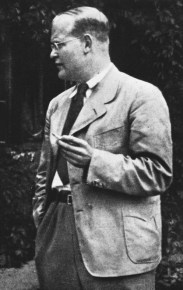
Bonhoeffer’s hymns

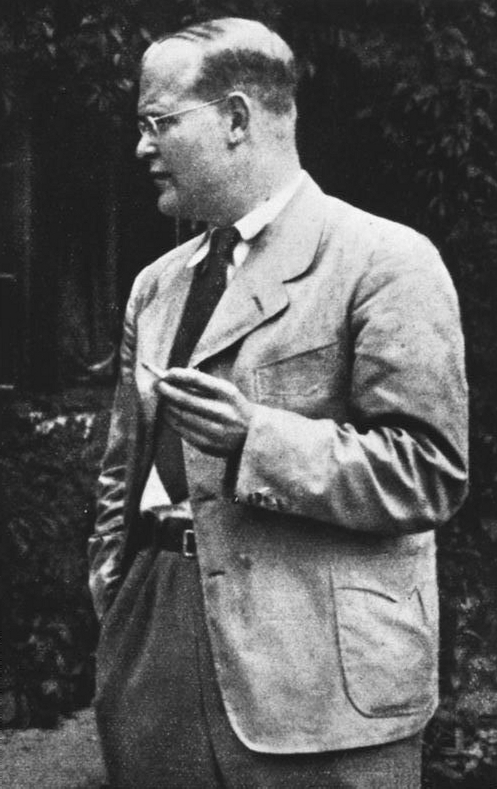
I spent some time today trying to find the music for three hymns whose lyrics were all authored by Dietrich Bonhoeffer.

The first one was ‘In boundless mercy God has called’. It is reproduced in several publications, including The Hymnal of the United Church of Christ (1974) #251; The New Century Hymnal (1995), #413; Glory to God (PCUSA, 2013) #818; and Worship and Praise (Hope), #75. (Thank you to Edward Sewell for drawing my attention to these references.)

The second hymn was ‘O Lord my God, I thank thee that thou hast brought this day to its close’. It is reproduced in The United Methodist Hymnal (1989), #689.

The third hymn, ‘We turn to God when we are sorely pressed’, is more commonly reproduced. Its words come from Bonhoeffer’s poem ‘Christen und Heiden’, translated as ‘Christians and Unbelievers’ in his Letters and Papers from Prison:

Men go to God when they are sore bestead,
Pray to him for succour, for his peace, for bread,
For mercy for them sick, sinning, or dead;
All men do so, Christian and unbelieving.

Men go to God when he sore bestead,
Find him poor and scorned, without shelter or bread,
Whelmed under weight of the wicked, the weak, the dead;
Christians stand by God in his hour of grieving.

God goes to every man when sore bestead,
Feeds body and spirit with his bread;
For Christians, heathens alike he hangeth dead,
And both alike forgiving.

— Dietrich Bonhoeffer, Letters and Papers from Prison (ed. Eberhard Bethge; trans. Reginald H. Fuller; London: SCM Press, 1954), 167–68.

I sourced music for this poem from two places: Together in Song, Australian Hymn Book II, #240 (which also includes Bonhoeffer’s more well-known hymn ‘By gracious powers so wonderfully sheltered’, #617), and the Church Hymnary, Fourth Edition, #393. This is available in either a full music and words edition or a melody and words edition.

One of the things that I found really interesting here was comparing the different ways that this poem had been translated. The original reads:

Menschen gehen zu Gott in ihrer Not,
flehen um Hilfe, bitten um Glück und um Brot,
um Errettung aus Krankheit, Schuld und Tod.
So tun sie alle, alle, Christen und Heiden.

Menschen gehen zu Gott in Seiner Not,
finden ihn Arm, geschmäht, ohne Obdach und Brot,
sehn ihn verschlungen von Sünde, Schwachheit und Tod.
Christen stehen bei Gott in Seinem Leiden.

Gott geht zu allen Menschen in ihrer Not,
sättigt den Leib und die Seele mit seinem Brot,
stirbt für Christen und Heiden den Kreuzestod,
und vergibt ihnen beiden.

Together in Song, Australian Hymn Book II translates it thus:

All go to God when they are sorely placed,
they plead to him for help, for peace, for bread,
for mercy, for them sinning, sick or dead.
We all do so in faith or unbelief.

We all go to God when he is sorely placed,
find him poor, scorned, unsheltered, without bread,
whelmed under weight of evil, weak or dead.
We stand by God then, in his hour of grief.

God comes to us when we are sorely placed,
body and spirit feeds us with his bread.
For everyone, he as a man hangs dead:
forgiven life he gives all through his death.

And the Church Hymnary, like so:

We turn to God when we are sorely pressed;
we pray for help, and ask for peace and bread;
we seek release from illness, guilt, and death:
all people do, in faith or unbelief.

We turn to God when he sorely pressed,
and find him poor, scorned, without roof and bread,
bowed under weight of weakness, sin, and death:
faith stands by God in his dark hour of grief.

God turns to us when we are sorely pressed,
and feeds our souls and bodies with his bread;
for one and all Christ gives himself in death:
through his forgiveness sin will find relief.

Robert Frost was right: ‘Poetry is what is lost in translation’.

April bests …

From the reading chair: Atonement: The Person and Work of Christ by T.F. Torrance; Divine Empathy: A Theology of God by Edward Farley; The Knot of Vipers, by François Mauriac; Reformed Worship by Howard L. Rice & James C. Huffstutler; God’s Inescapable Nearness by Eduard Schweizer; Aussie Gems: Cindy Ella by Tom Champion & Glen Singleton; Aussie Gems: Redback on the Toilet Seat by Slim Newton & Craig Smith; Participating in God: A Pastoral Doctrine of the Trinity by Paul S. Fiddes; The Doors of the Sea: Where Was God in the Tsunami? by David Bentley Hart; Theology & Ministry in Context & Crisis: A South African Perspective by John W. de Gruchy; Good and Evil by Edward Farley; Common Life: Poems by Robert Cording.

Through the iPod: Women and Country by Jakob Dylan; Hold on to Me by The Black Sorrows; X&Y by Coldplay; Symphony No. 6; Into the Twilight; Summer Music by Sir Arnold Bax; Infamous Angel, My Life and The Way I Should by Iris DeMent; Paganini: Violin Concertos with Salvatore Accardo; Nothing Like the Sun and The Dream of the Blue Turtles by Sting; Leave Your Sleep by Natalie Merchant; Standard Songs for Average People by John Prine & Mac Wiseman; Fair & Square by John Prine.

On the screenBoy [2010]; Endgame [2009]; The White Ribbon [2009]; God on Trial [2008]. BTW: I also saw von Trier’s Antichrist, the most hideous and uninteresting film I’ve seen this year.

By the bottle: Wasp, by Invercargill Brewery.

March bests …

From the reading chair: Genesis: Interpretation Commentary by Walter Brueggemann (this really is an exceptional book); The Incarnation: An Interdisciplinary Symposium on the Incarnation of the Son of God edited by Stephen T. Davis, Daniel Kendall and Gerald O’Collins; God in the Wasteland: The Reality of Truth in a World of Fading Dreams by David F. Wells (this was a re-read for me and, for the most part, was almost as profitable as the first time ‘round way back in 1994); Love’s Endeavour, Love’s Expense: The Response of Being to the Love of God by William Hubert Vanstone; Lament for a Son by Nicholas Wolterstorff; Incarnation Anyway: Arguments for Supralapsarian Christology by Edwin Chr Van Driel (I’ll post a review of this one in due course).

Through the iPod: In Our Bedroom After the War by Stars; Scratch My Back by Peter Gabriel; Another Sky by Altan; Hobo by Charlie Winston; Melodii Tuvi: Throat Songs and Folk Tunes from Tuva by Various Artists; Black Noise by Pantha Du Prince; Knee Deep in the North Sea by Portico Quartet; Albertine by Brooke Fraser; American Central Dust by Son Volt; Grace by The Soweto Gospel Choir; San Patricio by The Chieftains & Ry Cooder; A Young Person’s Guide To Kyle Bobby Dunn by Kyle Bobby Dunn.

On the screen: The Wire: Second Season; Marx Brothers – The Cocoanuts/Animal Crackers/Monkey Business/Horse Feathers/Duck Soup; Hancock’s Half Hour [Volume 1]

By the bottle: Highland Park 15 Year Old

February bests …

From the reading chair: Concerning The True Care of Souls by Martin Bucer [the appearance of this volume – the first ever translation in English! – is a momentous landmark]; People of Bread: Rediscovering Ecclesiology by Wolfgang Vondey; Cross-Shattered Christ: Meditations on the Seven Last Words by Stanley Hauerwas; Words for Silence: A Year of Contemplative Meditations by Gregory Fruehwirth; On Religion: The Revelation of God As the Sublimation of Religion by Karl Barth; Thinking about Christ with Schleiermacher by Catherine L. Kelsey.

Through the iPod: Keepers, Workbench Songs, and Somedays The Song Writes You by Guy Clark; Going Somewhere by Colin Hay; Arrogance Ignorance and Greed by Show of Hands; Too Long in the Wasteland by James McMurtry; Cimarron Manifesto by Jimmy LaFavel; Live and No Deeper Blue by Townes Van Zandt; American VI: Aint No Grave by Johnny Cash. Did I mention Somedays The Song Writes You by Guy Clark? Absolutely brilliant!!!!

On the screen: Two Weeks [2007]; Dead Man Walking [1995].