Jürgen Moltmann

Jürgen Moltmann on Childhood: it all depends on perspective

kidsBy way of drawing a conclusion to a series of wee posts on exploring a theology of childhood (see previous posts on John Calvin, Friedrich SchleiermacherKarl Barth, David JensenKarl Rahner and Tony Kelly) I turn here to German Reformed theologian Jürgen Moltmann. In his essay ‘Child and Childhood as Metaphors of Hope’ [Theology Today 56, no. 4 (2000), 592-603], Moltmann observes the difference in how parents or educators speak about the child, how a child speaks about herself, and how adults recall their own childhood. These three ways of speaking of childhood can also be referred to as (1) ‘pedagogical childhood’, (2) ‘child’s childhood’, and (3) ‘future childhood’.

1. A concerned parents and educators view of childhood.

From the view of concerned parents and teachers, childhood is an age that is meaningful and good in itself on the one hand; on the other hand, it is a stage that is to be overcome by the child’s own development, through training provided by adults and education provided by the society. Finally, parents have to bring up their children, so that they can become something and can be made fit for a life in the world of adults … The open future of children has been pressed into the prescribed adult world through parental and educational measures. Childhood has been viewed as the ‘evolving’ stage of human existence, while old age seems to be the ‘devolving-stage of human existence’. The model of full humanity thus has been the grown-up human being between the ages of twenty-five and sixty-preferably, of course, the ubiquitous man ‘in his best years’.

Moltmann proceeds to cite the work of Leopold von Ranke to sponsor his protest against those notions which would reduce childhood to a mere ‘underdeveloped stage that must be overcome’, or, in von Ranke’s words, as a ‘prologue of the future’, claiming that

‘every epoch is immediate to God’, since the Divine strives to manifest itself in every epoch, and cannot be manifest in its entirety in any one single age. The same is valid for the stages of human life. Children, adolescents, adults and seniors find meaning in each stage of their lives. Every lived moment has meaning for eternity and represents ‘life in abundance’. Thus, every child and youth has a ‘right to their own present’. Even a child who dies early could have had an ‘abundant’ life. Life in abundance is not measured in terms of length, but in terms of the depth of life experience, a quality that will never be reached by a mere quantity of years lived and time spent. Life that is abundant in every present moment has to be affirmed and respected by others, by parents and educators, and should not be sacrificed on the altar of progress.

girl2. A child’s view of childhood.

How children view childhood is an almost impossible mystery for adults to discern. Moltmann writes:

What childhood is for children or how children view their own childhood remains a mystery almost impossible for adults to access since our experiences get confused with both our desires and fears … Perhaps we only become conscious of our childhood experience when we are no longer children, since we can only recognize that from which we are already removed. I think that childhood is outlined and determined by the fact that we are no longer ‘in the safety’ of our mother’s womb, but not yet ‘independent’ … On the other hand, we recall the dependencies, the nightly fears, the powerless dreams of one’s own all-powerfulness and the empty days. We also call to mind how small we were and how big the father, how helpless we were and how omniscient our mother, as well as how the bigger children always seemed already capable of everything. And still we experienced and performed everything ‘for the first time’. With boundless amazement, we would follow the flight of a fly and would interrogate our parents with unanswerable questions of ‘why’. How entranced we were in our games, reacting spontaneously and with unpremeditated laughter and tears. The darkness of the lived moment” would often be very dark and would not become light, either before or after. Surely before we were ‘school children’, we were ‘playing children’ but even then we were watched by adults and we adopted their attitudes and opinions in order to please them. Still, we will have to find some way to respect the interior perspectives of a child’s experience: otherwise all of our analyses read our own projections onto the child.

childlike-wonder3. An adult’s view of their childhood or the child in themselves.

Moltmann names the sentimentality and regressiveness that keep us from making peace with the reality of our own aging, when our ‘beginning gets glorified’ and ‘childhood is retrospectively seen as a landscape of unlimited possibilities and objectified as the potential of beginning’. He continues:

Since there is always more in our beginnings than we can actually bring forth, given the complexity of our circumstances, childhood and youth come to be seen as the glorified dawn of life. When we think of our youth and of all we might have been, we discover the future in our past. Our past ‘beginnings’ become the source of our future, in such a way that a ‘future childhood’ is constructed. This childhood awakens deep longings inside of us: the longing to be secure, to feel warm; the longing to experience life as a mystery one more time, the longing to experience wonder; the longing for a new beginning; a longing for the child within that wants to be born anew, so that the miracle of life may begin yet again. From this perspective, the beginnings of life seem pure and good. Consequently, children always seem innocent to us: their eyes mirror dreamy innocence. Yet, when is it that humans become capable of guilt? The dream of a sexually innocent childhood may only be the reversal of the old, terrible doctrine of original sin, which taught that children were conceived and born in sin and therefore had to grow tip under humanity’s hereditary burden. But from this perspective of ‘future childhood’, ‘innocence’, ‘new beginning’, and access to a ‘world of unlimited possibilities’, we construct childhood as a metaphor of hope.

Kevin Ward: ‘It may be emerging, but is it church?’

kevin-ward-08-2A week or so ago, I posted some reflections on the emerging church. I offered these in anticipation of Rev Dr Kevin Ward‘s then forthcoming inaugural lecture at the Knox Centre for Ministry and Leadership entitled ‘It may be emerging, but is it church?’ Kevin delivered his lecture on Monday, which was followed by a brief response by Rev Dr Bruce Hamill. Bruce’s response can be read here. Here’s Kevin’s paper:

‘IT MIGHT BE EMERGING: BUT IS IT CHURCH?’, a guest post by Kevin Ward

At a recent theological conference I was attending, one of the presenters outlining some of the factors in the changing context for theological education, referred to “fresh expressions” which he said was a more appropriate term than the previously favoured descriptor for experimental faith communities, “emerging church”, since as it turned out most of what they were emerging from was not church. He was Anglican and the term “fresh expressions” is a phrase developed by the C of E for some of its new developments, but the term “emerging church’ is still widespread and gains much attention from younger church leaders in NZ, including many of those accepted for ministry training by the PCANZ and coming to the Knox Centre for Ministry and Leadership. One of our courses here is now titled “Missional and Emerging Churches.” At the VisionNZ Conference last year one of the major presentations was “A Kiwi Emerging Kiwi Church: Yeah Right!” by Steve Taylor, who has emerged as the leading spokesperson for emerging church in NZ, and a significant global voice. Indeed it is interesting in reading on the movement globally how much NZ comes up in the material as being, along with, Australia and the UK initiators in it. Mike Riddel and Mark Pierson from NZ, and Michael Frost and Alan Hirsch from Australia are seen as pioneers. I might add that as well as being from down under, they along with Taylor are Baptists, a heritage of course I share myself, and something I will come back to.

A google search of “emerging church” came up with about 1,530,000 entries. So what are we to make of what Scot McKnight calls “the most controversial and misunderstood movement in the church today”. One article I read was titled “Emerging Churches – Heroes or Heretics.” Clearly unambivalent about the answer a brochure I received at the beginning of the year blazed out. “The last days Apostacy. Coming to a church near you. The emergent church.” It warns that “With the move of the Church back to Rome through organisations like evangelicals and Catholics together, Alpha, Promise Keepers and Interfaith dialogue… Rick Warren’s Purpose Driven and now the postmodern Emergent wave… believe that today’s post modern culture needs a more relevant and experiential approach to God, Church and Worship. Eg. Playing u2 as an expression of worship using multi-sensory stimulation, candles, icons, art, images, stained glass etc.” And it warns “The Emergent Church has taken hold in NZ and its teachings have been aired on Radio Rhema and also being taught in the BCNZ.” I must point out that the Knox Centre for Ministry and Leadership you’ll be pleased to know was not listed among those who have fallen into “the last days deception.”

We need of course to ask the question why has this movement arisen? The broad answer is fairly simple: it is part of a number of responses over the past half century to the increasingly obvious fact that the church in particular and Christian faith in general has been having a rather difficult time of it in western societies like NZ. I have written in a number of places on this, as have many others, and have no intention of rehearsing that fact. It is simply a given, whatever figures one uses and however positive the spin one tries to put on them. There have been many responses to this post Christian, or perhaps more correctly post Christendom reality, from the God is Dead theologies of the 60s, through the Church Growth movement of the 70s and Cell Churches of the 80s, to the Seeker Sensitive Churches of the 90s. Despite all these grand initiatives the rot continues.

What emerged in the 1990s was the realisation among some that not only were our western societies post Christendom, but they were also postmodern in at least some ways. That term is rather problematic, and again it is not my intention to explore all the issues around it. However in the broadest sense it is helpful to identify the fact that the cultural, social and intellectual world we live in today is very different from that which existed in 1960, even if there may well be more continuities than discontinuities. In this world all sorts of institutions that have existed for centuries have increasingly struggled. A number of Christian thinkers and leaders began arguing that the problem with all the recent efforts to reorganise church for our postChristendom world, was that they were still based on the assumptions and thinking of a modern society and culture. As that was rapidly diminishing and being replaced by postmodern forms so these attempts were simply short term arrangements, much like rearranging the deck chairs on the Titanic. Something more fundamental was needed.

There are many attempts, some helpful others not, to define the emerging church movement, but perhaps the simplest and most widely used is that by Eddie Gibbs and Ryan Bolger, in their study of the phenomenon, which they titled Emerging Churches¸ “communities that practice the way of Jesus within postmodern cultures.” Brian McLaren, who has emerged as its main spokesperson wrote in 1998 in the first of his many books:

You see, if we have a new world, we will need a new church. We don’t need a new religion per se, but a new framework for out theology. Not a new Spirit, but a new spirituality. Not a new Christ, but a new kind of Christian. Not a new denomination, but a new kind of church… The point is … you have a new world.

Now I want to say at this point that overall I would agree with the broad parameters of this argument. As Randall Prior summarised it at the Presbyterian General Assembly last year, “The form of the church which evolved in the era of Christendom and which served us well in that period is no longer sustainable. It is dying. It will die.” However I do want to add at least one cautionary note. Often the people involved use rather hyperbolic language, as if the church has only ever existed in one form or shape, at least since the inception of Christendom, often referred to as inherited church.  Now that old form needs to be discarded and a brand new form developed. This is of course quite misleading. The form and shape of the church has constantly changed throughout its 2000 years of history. We see this even in the NT, and writers such as Hans Kung, David Bosch and Andrew Walls have provided helpful ways of understanding this.

Andrew Walls invites us to imagine a long living, scholarly visitor from space, a Professor of Comparative Inter Planetary Religions, able to get periodic study grants to visit planet earth every few centuries, to study earth religion, Christianity, on principles of Baconian induction. He visits a group of Jerusalem Jewish Christians about 37 CE; his next visit is in about 325 CE to a Church Council in Nicea; then in about 650 CE he visits a group of monks on a rocky outcrop in Ireland; in the 1840s he visits a Christian assembly in Exeter Hall London promoting mission to Africa; finally in 1980 he visits Lagos Nigeria where a white robed group is dancing and chanting through the streets on the way to church. At first glance they might appear to have nothing in common, or be part of the same religious community at all, but on deeper analysis he finds an essential continuity about the significance of Jesus, the use of scriptures, of bread and wine and water. But writes Walls, he recognises that these continuities are “cloaked with such heavy veils belonging to their environment that Christians of different times and places must often be unrecognizable to others, or even to themselves, as manifestations of a single phenomenon.”

At the heart of this debate about these emerging new forms of church life is the question of just what is the relationship between the historic faith and the environment in which it presently finds itself, between Christ and culture, of theology to context . This question is actually at the heart of many of the disputes that go on in the church, and I am aware were fought with some intensity and lasting consequences around a variety of issues in these hallowed halls for some considerable time.

When it comes to the relationship between the church and the culture that surrounds it there are a number of different models used to explain the various orientations. The classic work, which has formed the basis for all following discussions, is that of Richard Niebuhr, in Christ and Culture. He identifies five basic models: Christ against culture, the Christ of culture, Christ above culture, Christ and culture in paradox and Christ the transformer of culture. It seems, though, that the alternatives can be more simply discussed by reducing these to three.

(i) An “anticultural” response, “Christ against culture”. The attitude where the church sets itself up in opposition to the prevailing culture. The difficulty with this position is that there is no such thing as a culture free articulation of theology or understanding of the church. Consequently this position while opposing contemporary culture is in fact usually holding on to some culture of the past. The Amish, for example, hold on to the culture of early nineteenth century German settlers in Pennsylvania, traditional Anglicans to 1950s England and many fundamentalists to the pre 1960s American south.

(ii) An “accommodationist” response, “Christ of culture”. This is the opposite, where the church is so anxious to fit into the world that it becomes merely an extension of the culture and has lost any distinguishing particularity as a culture of its own. This response assumes the congruence of church and culture. It is assumed that the primary symbols of the church and of the culture are identical. The church sees itself in some way as representative of the culture at large and prides itself on its shaping, transforming role. Churches in nations where the two grew up together often exhibit the most radical forms of this. This has been a strong tendency in liberalism in western countries and can be seen as a major factor in the decline of mainstream denominations. The view fails to recognise that there is a basic incompatibility between the church and whatever time in which it lives.

(iii) An “incarnational” response. This response recognises some kind of tension between Christ and culture, as is found in all of Niebuhr’s final three categories. There is both continuity and discontinuity. Lesslie Newbigin rightly insists that the gospel only retains “its proper strangeness, its power to question us… when we are faithful to its universal suprarational, supranational, supracultural nature.” Yet the gospel travels through time not in some ideal form, but from one inculturated form to another.  Consequently what missiologists call the “culturally indigenous church” is the aim of the incarnational approach.

A number of different terms are used to describe this approach to culture. The one that I find most helpful is “contextualisation”, although heated debate over its precise meaning continues, with Ecumenical and Evangelical interpretations differing considerably. At the core though is a recognition that many aspects of what humans believe, think, and do are contextually shaped. William Reiser defines it as “the process of a deep, sympathetic adaptation to, and appropriation of, a local culture in which the Church finds itself, in a way that does not compromise its faith.”

At the heart of the process is the model of the incarnation. In Jesus God took the human context in all its particularity seriously. Jesus was a historical person and so he was chronologically, geographically, religiously and culturally a first-century Jew. He neither repudiated his humanity or his Jewishness. The early church continued the principle as the gospel moved out of the language and culture of Jesus and his disciples into that of Graeco-Roman culture. Ever since those most effective in mission have “assumed that any culture can be host to Jesus Christ.”

However the critical point to note in an authentic contextual or incarnational approach is that there are limits to how far culture can set the agenda or determine the shape. Andrew Walls reminds us there are two important principles. On the one hand there is the ‘indigenzing’ principle, which affirms that the gospel is at home in every culture and every culture is at home with the gospel. But then there is the ‘pilgrim’ principle, which warns us that the gospel is never fully at home in any culture and will put us out of step with every society.

So there are two critical dimensions, which Max Stackhouse defines as the “textuality’ of the church – its faithfulness to the gospel – and its “contextuality” – its faithfulness to the world in which it finds itself. Hans Kung contends that we should aim for a “critical correlation” between the biblical message and the paradigm of the culture” and that “the task today is to come to terms with a postmodern paradigm”. The emerging church movement is endeavouring to take that task seriously and is to be commended for that.

If I can engage in a bit of personal narrative at this point, because, in a sense this lecture is part of an ongoing and unfinished conversation with myself. This is the second time I have given the inaugural lecture here. My earlier title was “Is New Zealand’s Future Churchless?” I outlined the paradox of countries like NZ where the data showed an ongoing resilience of relatively high levels of religious, and mainly Christian, believing and relatively low and declining levels of religious belonging. In light of this while it seemed religion was destined to continue rather than die out, as had been previously postulated in various forms of secularisation theory, the church itself may face a somewhat tenuous and uncertain future. I suggested that it would continue but needed to develop many more diverse forms, and these in essence would be “less church” in the sense of being much looser, less institutionalised, more eclectic, fluid rather than solid. Sounds much like emerging church!

After the address, Bruce Hammil, who through fate or destiny has been asked to be the respondent today, came up to me and asked “Where’s the theology in all of this?” A somewhat surprising question from Bruce! It was though a healthy rejoinder to me and a reminder that, central to my own thesis was the proposition that churches which had thrived had not only shown an ability to adapt their life and message to their rapidly changing cultural and social situation, but had also held a strong commitment to the central tenets of orthodox Christian belief. My major focus has been on the first half of that proposition, endeavouring to help churches realise the forms their life and message have taken have been wedded to a cultural and social context that has not existed for some time, and while they continue in their current form they indeed have a rather limited future. They are no longer incarnating the gospel in their context. To quote the new leader of the Labour Party, they have “lost touch with their electorate” and “need to reconnect”. Change is the essential challenge for the church, and I continue to be invited to help a broad range of churches understand the context they are in and how they might change to become culturally connected.

Now this is an essential task. While in some realms of theology we might be able to argue for some pure theology of the word, although I am somewhat sceptical of both the possibility and worth of that, even that great theologian Karl Barth, so often used to buttress the case for disregarding context when it comes to constructing theology, that it must be based solely on the self revelation of God in Christ, argued when it came to the church:

… in every age and place its constitution and order have been broadly determined and conditioned by political, economic, and cultural models more or less imperatively forced on it by its situation in world history… It has had and still has to adapt or approximate itself to these in order to maintain itself… in respect of the form of its existence… there is no sacred sociology [of the church].

There are then no sacred forms of church, however sacrosant these might appear to some. Of course we in the reformed tradition have always held this to be so, holding central to our understanding the reformation principle, ecclesia reformata semper reformanda. If then the church has its forms determined by whatever the current “political, economic and cultural models” of “its situation in world history” are does that mean that anything goes? That the answer to Bruce’s question is that “theology does not have a place in determining the form of church life.” That in fact ecclesiology is a pointless discipline. There is not a theology of the church, merely a praxis.

It is interesting to review literature on the church, from a historical perspective. It used to be for centuries that the basic questions these endeavoured to answer was “What are the marks of a true church?” From the 1970s on the nature of the question most writing was endeavouring to answer had changed, by one word. Instead of “What are the marks of a true church?” it was “What are the marks of a successful church?” – the word ‘successful’ some times being interchanged with the word ‘growing’, since to be successful was equated with growing. Probably two things lay behind this: as the decline of churches in the west became increasingly evident the overwhelming preoccupation became with turning decline into growth; and as the church splintered into greater and greater variety as the culture became more and more diverse, it became seen as a hopeless task to try and presume there was any true form. It was reinforced by a developing culture that became suspicious of any insistence on adherence to one particular form or expression in any area of life. Indeed ideology became the enemy, grammar was fascist, theory was irrelevant, praxis was what mattered. I might add that in NZ, which has always had a bent toward pragmatism and suspicion of intellectualism, all of this found fertile ground.

And so in the emerging church movement there is a sense of anything goes. For those for whom tradition or inherited forms are in fact the obstacle to being effective churches and a barrier to the mission of Jesus, it is a waste of time to listen to what it might have to say us about how the church should form its life. Graham Redding may have asked the question did Calvin have any place in the Café Church? in his 2005 inaugural lecture, but café church is relatively mild fare and rather orthodox when church can apparently be a bunch of kids at a skate board park or bmx track, a group of students gathering in pub or dance club, or some mid life couples sharing a few wines and a movie together.

So when is a gathering of followers of Jesus actually a church?

Many of those engaged in experimental forms of church argue that because Jesus promised that “wherever two or three come together in my name, there am I with them”, any such gathering is church. Within the Baptist tradition this is the primary definition that is used, as in the Pentecostal and Charismatic streams. The presence of Jesus by the Spirit is all that matters. It is thus no coincidence that many of the initiators of the emerging church movement in NZ and Australia have been Baptist. Such a simple definition leaves them much freer to experiment with a diversity of forms. I would hasten to add that for some quite some time I would also have held that as sufficient. It is interesting to observe though that the Baptist movement in NZ, after being driven by sheer pragmatism for the past couple of decades, is now acknowledging it has significant problems and challenges. The current leader of the movement in conversation with me in December said “our first task is to get our ecclesiology sorted out”. Interesting for me in that this drift was a significant factor in my leaving to become Presbyterian.

Further reflection though has made me realise I was still more Baptist than I imagined. As I mentioned one half of my thesis argued that effective churches had  maintained a strong commitment to the central tenets of orthodox Christian beliefs. I identified these as being beliefs about Jesus Christ, about God, about scripture and about conversion, and used the Nicene Creed to define these. Nothing about the church though. No ecclesiology. And of course the Nicene Creed does include among its statements “We believe in one holy catholic and apostolic church”.  So if we use this as a measure how does the emerging movement measure up? Is it in fact church?

1. One. Everybody affirms the unity or the oneness of the church, but ever since the Schism of 1054 that oneness has been somewhat difficult to locate, and since the splintering of the Reformation even more so. Daniel Migliore helpfully defines it as “a distinctive unity rooted in communion with God through Christ in the Spirit. The unity of the church is a fragmentary and provisional participation in the costly love of the triune God.” Recent trinitarian theology with its focus on a plurality within an essential oneness is helpful for us in understanding how the Christian gospel embraces both diversity and unity. Much of the NT is written dealing with this issue. The unity of the church does not lie in either a controlling doctrinal conformity or a formal institutional structure, and I would eschew all endeavours to impose either of those kinds of unity on the church. Within the diversity of our expressions it is in the life we participate in together with the triune God, and as Hans Kung expresses it, “It is one and the same God who gathers the scattered from all places and all ages and makes them into one people of God.”

However ever since the Reformers placed the focus on seeing the unity of the church in the invisible church rather than the visible church, that understanding has been used as a way of enabling churches and their leaders to do nothing about working to see unity as an actual  mark of the church in its present reality. We have continued to be happily schismatic, tearing apart the fabric of church it seems whenever we have something on which we differ. What has been called the “creeping congregationalism”, which afflicts all varieties of church life in contemporary societies, heightens the tendency to focus on the local and the particular, as if that is all there was to being church. Jesus left behind a visible community not an invisible concept. A community he called to be one, and so it is incumbent on we who are the church to continually work hard to find ways to express in our increasingly diverse culture that this is a reality, not merely some ethereal and mystical entity. If the life of the trinity is the model of our unity then it does involved the diverse members working synergistically together for the glory of the one. One of my criticisms of the emerging church movement, is that with its brisk  dismissal of inherited forms of church life, its distancing itself from tradition, its reluctance to work with the church as it is, it magnifies the image of a divided church and fails to put energy into working hard at ways to give expression to and so maintain the unity of the church. While I would admire its willingness to engage with our cultures and seek to find new ways of incarnating gospel and church within those, I believe it would be more true to being the church of Jesus Christ in the world today if it sought to do that working with the church as it already is. Brian McLaren says we need “a new church”. There is only one church, and it already is. The challenge is to continue to work within that church so it might better faithfully be the presence of God in Christ through the Spirit in the diverse communities it inhabits.

2. Holy. The word holy and the concept of holiness is hardly a popular word in our contemporary context, either inside or outside the church. It raises images of a “holier than thou” judgmentalism and an isolationist separatism fearful of contamination by an evil world. A preoccupation with holiness it is suggested has been a major hindrance to the mission of the church in the world. Identification and engagement with the world is what the creator God is about. The word holy is of course the primary word used to name the essence of the nature of God. It is if you like what marks out God as God, as distinctly different from everything else in creation. It is something that belongs essentially to God. For other things or persons to be described as holy therefore is to claim that they also are marked by the essence of the character of God, and in this way are to some extent different from the rest of creation. But how do we know what God is like if we are to share in that character. The central claim of the NT and of Christian thought is that the fullest revelation of God is to be found in the human person Jesus Christ. By looking at the life of Jesus we see what it is like to live a human life marked by the character, or holiness, of God. But more than that the NT claims that by his death, resurrection and gift of the Holy Spirit Christ mediates to us the very life of God so we can share in the fellowship of the trinity. Here is the essence of the holiness of the church. It can be identified by the degree to which it lives a life reflecting the glory of God seen in Christ and this is made possible by the presence of the Spirit in its midst. When we do this we will demonstrate a distinctive quality to our life that will indeed mark us out as different, distinct from others, as Peter put it a “peculiar people”. While this quality of holiness will be demonstrated in the church in an imperfect way, as Calvin put it, it is the “measure toward which it is daily advancing”.

grad-1As suggested in my overview of the relationship of church and culture, the church lives in a relationship of some tension with whatever culture it lives in. It needs to both incarnate the gospel into that culture but also allow the gospel to transcend and judge every culture in which it is present. Part of the problem with Christendom and the way of being church that developed in that context, is that it ended up identifying the culture of those societies as being Christian, and simply became a reflection of the societies in which they existed. They no longer were a distinct or holy people. As the society and the culture in which they existed changed rapidly in the post war era they ended up with nothing left to offer the new societies which emerged and were seen as antiquarian reminders of a world that once was. Dean Inge once said that “If you marry the spirit of the age you will find yourself a widow in the next.” Sadly that has come to be true of much of mainline Protestantism in the West, including many of its evangelical expressions, shaped more by the values of the consumer market and business models than the gospel. The emerging church movement has been quite right in much of the critique it has offered of the way in which traditional church life had been simply an expression of modern western life and values.

But while some of its analysis of what has been problematic for the church is invaluable, in its headlong rush to become relevant to the emerging culture of a postmodern world, it runs the risk of making the same mistake and may end up wedding itself to the spirit of this age, just as firmly as the church it critiques may have to a previous age. When the wonders of this age begin to wind down, and I might suggest it might be a phase in history that is much more short lived than the previous, where will it be then? What will it have to offer and to say when all its flaws have been laid bare. The emerging church articulates strongly an incarnational theology and understands Jesus almost solely in these terms. Yet any serious reading of the life and ministry of Jesus will identify that while he did live incarnationally within the culture of first century Judaism, he also lived in considerable tension with most in that culture, at times spoke judgement on it, and ended up being rejected by it. If he was simply concerned with relevance why was he strung up on a cross. At times it is difficult to distinguish an emerging café or night club church from any other café or night club down the street. Postmodern culture is neither any better nor any worse than modern culture. So emerging leaders celebrate the death of modernity and raise three cheers for the arrival of postmodernity, without recognising the need to provide a proper critique of that which is problematic for living a Christ shaped life. On the other hand some critics of the emerging movement such as Don Carson and David Wells see only a culture antithetical to Christ in postmoderrnity, and fail to recognise they are just as closely wedded to the culture of modernity. Whatever culture we happen to be in as the church of Jesus Christ, we need first to allow Christ by the Spirit to form us into a distinctive culture of its own that preaches in the language of the time and place in which it is set the unique holy life of our Trinitarian God.

3. Catholic. The affirmation of the catholicity of the church refers to its universality and inclusivity. It is the church that has existed everywhere, always and for all. It guards the church against parochialism, sectarianism, racism and conceit chronology, among other things. It is clear that both the unity and the catholicity of the church go together, they are two interwoven dimensions of the one church. However as with oneness we need to guard against it being understood merely as an abstract kind of universalism hovering over the particularities of culture and history. Again it is a mark that needs to be demonstrated in the life of the visible church, its expression in the life of local congregations. Avery Dulles claims that catholicity “is not the accomplished fact of having many members or a wide geographical distribution, but rather the dynamic catholicity of a love reaching out to all and excluding no one.” I would agree with Daniel Migliore that the “church today needs to interpret the meaning of catholic as inclusive of all kinds of people”. What might this mean for us today?

One of the major trends of a post 60s world of the global village, has been a growing pluralism of our societies. Not just through the coming to societies such as NZ of markedly different cultural groups from overseas, but also by the breakup of the dominant white European culture into a multiplicity of subcultures. Not only is this across generations, but also within generations, so much so that since the beginning of the 90s it has been pointless to talk even about youth culture. This pluralisation has been heightened by the fact that increasingly people do not live their life in one geographical place where they might mix with people of a wide variety of ages and cultures, but rather are mobile and live their life with communities of choice, usually consisting of people of the same culture as me. Often these subgroups are quite exclusive, having their own distinctive language, symbols and lifestyles. At a time in the past when people in a community lived their lives in that particular community, when generations shared many of the activities of life together, the local church embraced within its community members from every walk and stage of life within that community. It was catholic, inclusive, in that sense. This was the parish or family church, an increasingly rare bird in our pluralistic society. How do we reach people today within all these different cultural subgroups, when the culture of church as it is, represents that culture of a bygone age?

The answer of much of the emerging church is that we need separate churches to incarnate the gospel into all those cultural subgroups. And so we have youth church, student church, young adults church, young marrieds church, breakfast church, café church, biker church – and so on and so on. These churches become quite age or culture specific. One practical question to ponder is what happens to these churches when their particular niche finishes? But there is a bigger issue. Murray Robertson retires this month after 40 years as Pastor of Spreydon Baptist Church during which he has had significant influence on the church in NZ. Last year he served as President of the Baptist Church, and wrote a series of columns in the Baptist Magazine on his observations as he visited churches around NZ. In one of these he noted that churches now “tend to divide along shared interest lines” and there is “an age based apartheid”. He writes “Maybe this is part of the phenomenon of people looking for a church in which they will feel comfortable, but… something quite precious is lost when you only meet and share with people who are pretty much identical to yourself.” Indeed is it a church when its membership is so exclusively limited to some subgroup that others are in fact shut out? The emerging church movement is again to be commended for its recognition that in our multicultural world there is no one expression of the gospel that will incarnate it for “all” those, even within one community in NZ. They draw correctly on the missional principle Paul spells out in 1 Corinthians 9 of becoming “all things to all peoples so that I might by all possible means save some”. But that needs to be balanced by the ecclesial principle he spells out in Ephesians 2, talking about the major cultural divide of his world, that “Christ…. Has made the two one and has destroyed the barrier, the dividing wall… to create in himself one new humanity.” Maybe what is a legitimate mission group is not in fact a church. It needs to see itself as part of the church catholic, and commit itself to being part of that church, and share its life with the greater whole in its lived practices, so that in this fractured divided tribalised world people may see that the gospel makes a difference, that estranged groups can be reconciled, that in Christ cultural separation might be transcended and that the new community of God’s people is inclusive of people of every race and every tribe and every tongue, even here now on earth. Might these questions also be asked of ethnic specific churches? To quote David Bosch

The new fellowship transcends every limit imposed by family, class or culture. We are not winning people like ourselves to ourselves but sharing the good news that in Christ God has shattered the barriers that divide the human race and has created a new community. The new people of God has no analogy; it is a “sociological impossibility” that has become possible.

4. Apostolic. Randall Prior at the Presbyterian Assembly defined the Apostolicity of the church as its essential missional nature. That before it is anything else it is missional, a view expressed by the missional church movement. While it is true the word apostle does have in it the idea of one who is sent, and while I agree fully with the sentiment being expressed, I do not believe that interpretation of apostolic as a mark of church is how it was understood by those who created the Nicence Creed or historically within the church. In confessing the apostolicity of the church we are acknowledging that the true church is founded on the apostles. The faith and life of the church must stand in continuity with their enduring witness. This continuity is ensured not by some physical continuity through the sacramental laying on of hands, but by our faithfulness to and reaffirmation of the gospel they gave witness to in the writings of the NT. As Jurgen Moltmann puts it: “The apostolic succession is in fact and in truth the evangelical succession, the continuing and unadulterated proclamation of the gospel of the risen Christ.”

It is of course one thing to affirm that “our supreme rule of faith is the Word of God” as the Presbyterian Church does or that “the Bible is the final authority in all matters of faith and practice”, as a Baptist church might. It is quite another to interpret what those words actually mean for us today. One of the things postmodern hermeneutics has made us aware of is there is no such thing as an un-interpreted word or act. There are two things this raises in relation to our engagement with emerging church. Being faithful to the apostolic witness is not just mere repetition of those words, or repeating the way in which they might have been interpreted as being appropriate to another place and another time. The apostolic word must be interpreted anew for every generation and every context. The emerging church is to be commended for its willingness, by and large, to take scripture seriously, and to seek to interpret afresh what it might mean for us today in our particular context rather than just repeat unthinkingly the formulas and answers of the past.

But secondly how do we know that new appropriation or interpretation is faithful to the witness of the apostles. Calvin argued that interpretation of scripture must take place within the hermeneutical community of the church. Too often in protestant and evangelical circles the doctrine of the priesthood of all believers has been understood within the culture of enlightenment individualism, to mean the right of every individual to interpret scripture for them self, a tendency heightened in the radical individualism of late modernity. So much so that Kevin van Hoozer asks in his hermeneutical tour de force, Is there a meaning in this text? or is there in fact just a never ending possibility of meanings. Listening to the voice of the church, the hermeneutical community, is one of the significant factors to take account of in discovering what this text means for us today. And by the church we mean the “one, holy, catholic, apostolic church”, the church throughout time historically and throughout the world geographically. This means giving due, but not stifling, weight to the voice of tradition. GK Chesterton wrote: “Tradition means giving votes to the most obscure of all classes – our ancestors. It is the democracy of the dead. Tradition refuses to submit to the small and arrogant oligarchy of those who happen to walking around.” With its ditching of traditional church, its giving up on traditions that might have developed and been passed on for centuries, apart from occasionally ransacking them and tearing out of any meaningful context some token that seems cute in the eclecticism of postmodern culture, the emerging church runs the risk of missing the wisdom that has developed over the centuries, of listening to the caution that might come from previous misinterpretations, and thus in the end  run outside the boundaries of where the Spirit might be willing to venture with them. Sadly this is a pattern that has happened all too often in the history of well intentioned new movements. There is a use of scripture which is false teaching. There is heresy that is full of proof texts. Less dramatically there are also representations of the gospel that are unbalanced and therefore unhelpful, and maintaining conversation and community with the whole church so interpretation occurs within the checks and balances of that will help ensure an ongoing yet presently meaningful faithfulness to the gospel within the emerging movement.

Two further marks of the church have also been identified, particularly among Protestants. As Calvin put it, “Wherever we see the Word of God purely preached and heard, and the sacraments administered according to Christ’s institution, there it is not to be doubted, a church of God exists.” Holding this definition central to our understanding of the church, the Presbyterian Church has sent to Knox another group of students this year, to hopefully complete the final stage of their training so they can be ordained as Ministers of Word and Sacrament. So that we will have communities of believers where the “Word of God is purely preached” and as other definitions put it “the sacraments are rightly administered”. The former is in some ways easier to assess than the latter. What does it mean to ensure the sacraments are rightly administered? Orthodox theologian John Zizioulas argued it is the presence of the bishop that makes it so. Obviously a problematic definition for many churches. For Catholics and Anglicans it is someone rightly appointed by the bishop who ensures it is in faithful continuity with the apostolic tradition. We have argued here that being apostolic means faithfulness to the witness of the apostles as contained in the NT. Hence for Calvin, “as instituted by Christ”. Here is why the Reformed tradition has held word and sacrament together, because it is not just receiving the bread and the wine but doing so in the context of hearing the gospel story of what they mean that makes them a sacrament, a means of grace. So a theologically informed and properly recognised ministry is important to ensure that the church remains apostolic, faithful to the scriptures, in all aspects of its life, including the preaching and sacraments.

Parts of emerging church, as well as other experimental forms of church life, have often been critical of and resistant to theological training, often preferring to have leaders and pastors who are more entrepreneurial and creative. Too much theology kills those. Many Baptist churches in NZ have followed this also. And I have to say that at times I have been in churches and listened to sermons or seen communion or baptisms, that at best have not been faithful to the Scriptures and at times even heretical. An entertaining event but scarcely a sacrament. Sometimes they are missing completely. Which of course raises the question, is it church? A central reformation principle is ecclesia reformata semper reformanda, “the church reformed is always being reformed”. This phrase is often quoted by those who want to change and reform and do church in different ways . We are being true to our tradition in doing this. In some senses yes, but it is a misunderstanding of the reformers intent to see it as giving carte blanche to try whatever we want. The reformers reformed the church in the light of the Scriptures. Luther did not just way “Here I stand I can do no other”, but “My conscience is bound to the word of God, here I stand…” It is why ministers were teaching elders, and now ministers of word and sacrament, so that by placing the role of scripture central in life of the church and office of ministry the church will be continually reformed in the light of scripture. As the Church of Scotland statement on ministry in 2000 puts it, they are “to represent Christ in the faithful proclaiming of the Word and right administration of the Sacraments and so ensure the possibility of such reform and renewal.” The emerging church movement would do well to seek to ensure a theologically formed leadership so that it too will experience the renewing presence of Christ that come from faithful preaching of the gospel and administration of the sacraments.

I want to finish briefly by drawing from a sociological insight. Some of you might be surprised that it has taken me this long to mention one. Many of the grand theories of the earlier sociologists are now viewed with much suspicion. However there is one theory I think continues to provide invaluable insight. Max Weber’s theory of the routinisation of charisma. He argues that what happens in the evolution of religion is that a new group gathers around a charismatic leader and is a dynamic, free, loose charismatic movement. Over time it rationalises, routinises and systemises its life and so looses its charisma. Some people become frustrated with this and break away around the edges to form a new charismatic group with new energy and dynamism. It is this that ensures the ongoing renewal of the religion. Looking at the history of Christianity in the west there is much that can be helpfully explained by Weber. There is no question that much of church life in the west has become routinised and rationalised, there is little dynamism and charisma. The Spirit has been routinised out. I believe the emerging church movement can be understood in these terms, as can the charismatic movement of the 1960s and 70s. What has happened often in the past is that the established religious institution dechurches the new movement and the action is reciprocated by the movement. My hope is that in this instance we can avoid repeating history and that by remaining in communion and continuing in conversation, the emerging church may be part of the movement for renewal and reformation of the church in the west, and that the emerging church movement may gain from the wisdom and catholicity of the church to grow into a more faithful and dynamic communion of the triune God in our challenging western context.

When is a church a church? I would probably in the end agree with Miroslav Volf’s conclusion, that “where two or three are gathered in Christ’s name, not only is Christ present among them, but a Christian church is there as well, perhaps a bad church, a church that may well transgress against love and truth, but a church nonetheless.” Many in the emerging movement prefer to talk about the emerging conversation than emerging church. My plea would be for those within the movement to include in the conversation all of those who with them are members of the “one holy catholic apostolic church”, so they might come to more adequately share those marks.  And to those sure they are members of that church, but  suspicious as to whether these new comers qualify, to reach out in conversation with them and so help us all to more fully demonstrate the transforming presence of the risen Christ in our life together.


Brian McLaren, Reinventing Your Church, Grand Rapids: Zondervan, 1998, 13-14.

Andrew Walls, The Missionary Movement in Christian History, Edinburgh: T&T Clark, 1996, 3-7.

H. Richard Niebuhr, Christ and Culture, New York: Harper Brothers, 1953.

Lesslie Newbigin, “The Enduring Validity of Cross-Cultural Mission,” International Bulletin of Missionary Research 12, 1988 50.

As quoted in L. Sweet, Aquachurch. Loveland: Group Publishing, 1999. 81.

D. R. Jacobs, “Contextualization in Mission.” In Toward the Twenty First Century in Christian Mission, J.M. Phillips and R.T. Coote eds. Grand Rapids: Eerdmans, 1993. 236.

Max Stackhouse, “Contextualization, Contextuality and Contextualization.” In One Faith, Many Cultures: Inculturation, Indigenization, and Contextualization, R.O. Costas ed. New York: Orbis Books, 1988, 6.

Hans Kung, Theology for the Third Millennium: An Ecumencial View, New York: Doubleday, 1998, 166, 211.

Karl Barth, Church Dogmatics, IV/ 3/2: The Doctrine of Revelation, transl. G. Bromiley, Edinburgh: T&T Clark, 1962, 739.

Daniel Migliore, Faith Seeking Understanding: An Introduction to Christian Theology, Grand Rapids: Eerdmans, 1991, 201.

Hans Kung, The Church, New York: Image Books, 1967, 353.

Avery Dulles, Models of the Church, New York: Doubleday, 1974, 122.

Migliore, 1991, 203.

David Bosch, Transforming Mission, Maryknoll: New York, 1991, 389.

Jurgen Moltmann, The Church in the Power of the Spirit¸ New York: Harper & Row, 177, 359.

Max Weber, The Sociology of Religion,  Boston: Beacon Press, 1963.

Miroslav Volf, After Our Likeness: The Church as the Image of the Trinity¸Grand Rapids: Eerdmans, 1998, 136.

Thinking Advent: Child and Childhood as Metaphors of Hope

I read a delightful essay today by Jürgen Moltmann entitled ‘Child and Childhood as Metaphors of Hope’ [Theology Today 56, no. 4 (2000): 592-603]. In this essay, Moltmann recalls that Jesus was ‘not merely a “gentle friend of children,” as the sentimental nineteenth century liked to picture him’ but a revolutionary contrast to the Roman world of antiquity wherein children were undervalued and where their legal status (alongside that of women and slaves) was very low; indicative of the fact that as the property of the paterfamilias, they could be sold or abandoned, and often were, particularly girls. Moltmann then offers some helpful commentary on key NT verses concerning children:

(1) “Let the little children come to me; do not stop them; for it is to such as these that the kingdom of God belongs” (Mark 10: 14; Matt 19:14; Luke 18:19). The disciples view children as unworthy and therefore try to keep them from their master. After all, they are not children anymore. Jesus reprimands the disciples; embracing and blessing the children, he proclaims what he embodies, that the kingdom of God is already theirs. According to Jesus’ Sermon on the Mount, the kingdom of God already belongs to the “poor,” the “hungry” and “those who are crying,” In the same way, it also now belongs to children, children are made partners in the covenant with God. Why? Did they deserve it? No. it is exactly because they do not deserve it and are unable to effect it, but in fact receive it like their own birth.

On the other hand, the kingdom “where peace and justice kiss” (as the psalm says) does not appear at the heights of human progress, among the clever and just, rich and beautiful of this world. Rather, it appears among the oppressed, the powerless, the poor, and the children, turning the status quo of human value systems upside down. If the kingdom comes into the world “down below,” those “up there” have been deprived of any religious legitimacy supporting their presumption to dominion. Just as the blessing of the poor was complemented by the lamentations over the rich, the benediction of children belongs with the curse pronounced over the violators of children: “If any of you put a stumbling block before one of these little ones who believe in me, it would be better for you if a great millstone were fastened around your neck and you were drowned in the depth of the sea” (Matt 18:6). If God’s kingdom comes into this world by way of the poor and the children, so does the judgment of God.

(2) “Whoever welcomes one such child in my name welcomes rne, and whoever welcomes me welcomes not me but the one who sent me” (Mark 9:37). And the one who sent Jesus, as we know, is the Father. By way of these identifications, Jesus declares children his representatives in society: Just as the God of his messianic mission is in him, so Christ is present in every child. Thus, whoever takes in a child, takes in Christ. This is exactly how Matthew describes the great judgment day: “Just as you did it to one of the least of these who are members of my family, you did it to me.” “For I was hungry and you gave me food … I was in prison and you visited me” (Matt 25:40, 35-36). The one who will judge the world identifies with the lowly. He is hidden and present in them already now and will eventually judge how the just and the unjust treated the least among humans. Children and the lowly are not, unlike the apostles, agents sent by God. Rather, in them, the poor, powerless, and imprisoned Christ is waiting for his followers to act. Whoever takes in a child, also takes in God. In children, God is waiting for us to take in God. In helpless children, God is waiting for our compassion. This is also the spontaneous impression the image of the child in the manger awakens in us.

(3) “Unless you change and become like children, you will never enter the kingdom of heaven.” This is Jesus’ answer to the question of the disciples: “Who is the greatest in the kingdom of heaven?” (Matt 18:3, 1) By saying this, Jesus underscores the point that whoever wants to be the greatest of all will have to be everybody else’s servant, “deny themselves,” and become “like a child” (18:4). He asks the disciples to accept themselves not in their power, but in their weakness, not in their wealth, but in their poverty: not as grown-up children, but as the children of their adulthood. He asks the disciples to reclaim the facets of their own being, which had been repressed by development and education. We can only come into the kingdom of God if we receive it like a child with empty hands. That does not mean one has to go back to being a child (which would be childish) but become upon analogy “like a child.” We don’t have to imitate children to become part of God’s future, rather we must be in solidarity with them, respecting their intimate proximity to God’s future. The point is not that children are closer to the kingdom of God because of especially childlike properties (like innocence or naivete that adults have lost), but rather that the kingdom of God is closer to them because they are loved, embraced, and blessed by God. We could also say: Whoever experiences God’s closeness in the community of Christ — as humans experienced it in the proximity of Jesus – will become like a child. Another, later way to phrase this is: Gotteskindschaft – “the community of God’s children.”

This stirred a number of questions in me that I’ll go to bed tonight thinking about:

  • What ought we make of Moltmann’s identification of children with Jesus’ words (in the Sermon on the Mount) regarding the “poor,” the “hungry” and “those who are crying”?
  • What ought we make of Moltmann’s claim that just as the God of Jesus’ messianic mission is in him, so too ‘Christ is present in every child’, so that ‘whoever takes in a child, also takes in God. In children, God is waiting for us to take in God’?
  • What might it mean for us to ‘reclaim the facets of [our] own being, which [have] been repressed by development and education’? Are there implications here for pastoral leadership?

Later on, Moltmann unsurprisingly draws on Ernst Bloch’s The Principle of Hope:

“Jesus is himself present among the helpless, as an element of this humbleness, standing in the dark, not in brightness … This is why the child in the manger becomes so important, along with the humbleness of all the circumstances in the out-of-the-way, cramped stable. The unexpectedness of finding the redeemer as a helpless child.” Christian love therefore “regards the helpless as important, that which is discarded by the world as called” and “gathers up its own in their out-of-the-wayness, their incognito to the world, their discordance with the world: into the kingdom where they do accord.”

sinead-1I was reminded of another essay that I recently read by Tony Kelly where the author suggests that in a world of violent competition and the exponential growth of problems and responsibilities, the child calls for the rebirth of wonder, trust and playful contentment within the great womb of life and time. Where the harried adult might see only problems, and become weary in mind and heart, children live otherwise. ‘They breathe another air, content to play within the inexhaustible mystery of what has been so uncannily given. Every child is a call to return to the gift that was at the beginning, is now, and ever shall be’.
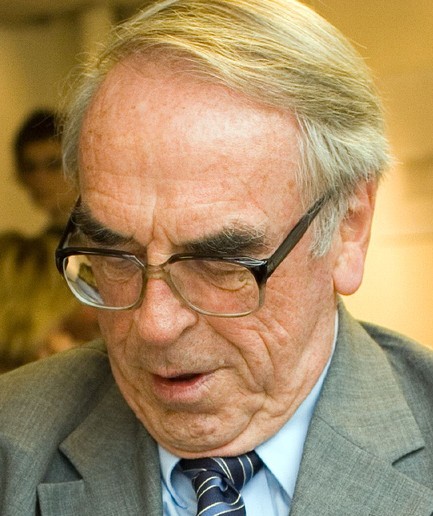
So too does this same refrain echo through Moltmann, who concludes his essay with three reasons for why children remain metaphors of hope:

(1) With every child, a new life begins, original, unique, incomparable. And while it seems that we always ask, who this or that child looks like (apparently because we seem to think we can only understand the new in the comparison with what is already known or similar), we also encounter the entirely different, the entirely dissimilar and unique in each child. It is these differences that we need to respect if we want to love life and allow an open future.

(2) With every beginning of a new life, the hope for the reign of peace and justice is given a new chance. It is important to see children in their own transcendent perspective and so to resist forming them according to the images of our world. Every new life is also a new beginning of hope for a homeland in this unredeemed world. If it were not, we would have no reason to expect anything new from a beginning.

(3) The last reason to see “a new beginning” or a “beginning of the New” in the beginning of a child’s life is the fact that, for me, children are not only metaphors of our hopes, of that which we want, wish for and expect, but also are metaphors of God’s hope for us: God wants us, expects us, and welcomes us. Humanity is God’s great love, God’s dream for God’s earthly world, God’s image for God’s beloved earth. God is “waiting” for the “human person” in every child, is “waiting” for God’s echo, resonance, and rainbow. Maybe that is the reason God is so patient with us, hearing the ruins of human history, inviting one human generation after the other into existence. God is not silent, God is not “dead” – God is waiting for the menschlichen Menschen the “truly humane human.” “In all of the prophets, I have waited for you,” Martin Buber has the Eternal One speak to the Messiah, “and now you have come.”

Moltmann on dogmatic thinking


‘[D]ogmatic thinking in theology likes to express itself in theses; not in theses for discussion, but in theses that are simply promulgated, which evoke agreement or rejection, but not independent thinking and responsible decision. They enforce their own ideas on the listener; they do not help him to formulate his own’. – Jürgen Moltmann, Trinity and the Kingdom of God: The Doctrine of God (trans. by Margaret Kohl; Minneapolis: Fortress, 1993), xii.

Moltmann on the fulness of God

‘The fulness of God is the rapturous fullness of the divine life; a life that communicates itself with inexhaustible creativity; an overbrimming life that makes what is dead and withered live; a life from which everything that lives receives it vital energies and its zest for living; a source of life to which everything that has been made alive responds with deepest joy and ringing exultation. The fulness of God is radiant light, light reflected in the thousand brilliant colours of created things. The glory of God expresses itself, not in self-glorying majesty, but in the prodigal communication of God’s own fullness of life. The glory of God is not to be found, either, in his laborious self-realization by way of his self-emptying, but follows upon that of the eternal day of resurrection’. – Jürgen Moltmann, The Coming of God: Christian Eschatology (translated by Margaret Kohl. Minneapolis: Augsburg Fortress, 2004), 336.

The Theology of the Cross in Historical Perspective: A Review

Anna Madsen, The Theology of the Cross in Historical Perspective (Eugene: Pickwick Publications, 2007. ix + 269 pages. ISBN: 978-1-59752-835-1. Review copy courtesy of Wipf and Stock.

It is encouraging to see a growing stream of books dedicated to engaging with the work of Jürgen Moltmann. I have just finished reading Anna Madsen’s ambitious study The Theology of the Cross in Historical Perspective (Eugene: Pickwick Publications, 2007), part of the young ‘Distinguished Dissertations in Christian Theology’ series that Wipf and Stock are co-sponsoring with the journal Word and World: Theology for Christian Ministry and with the Christian Theological Research Fellowship (CTRF). In this book, this Assistant Professor of Religion at Augustana College in South Dakota (USA) traces the currents of a theology of the cross in St Paul, Luther, von Loewenich, Kitamori and Moltmann, before turning our gaze towards Feminist and Liberationist evaluations and applications of a theologia crucis.

On Luther, the author reminds us that we miss the whole catalyst for the German monks’ revolutionary theological advance when we divorce his theologia crucis from the context of the Church’s appeal for alms in the form of indulgences. The issue, she claims, is that God can not be ‘bought off’.

She explores the twentieth century’s witnessing of a variety of theologies of the cross, some of which, ironically, actually call for the cross itself to be discarded on the grounds that it symbolises (and glorifies) not hope but only violence. The tired divine child-abuse paradigms are briefly discussed. Conversely, Madsen observes that there remain those who insist that in the face of unparalleled and devastating poverty, destruction, abuse, exploitation and suffering, the cross provides the only interpretive tool which theology can offer. Specifically, the cross becomes the symbol to announce God’s full identification with the sufferers and God’s condemnation of the privileged. An adequate critique of this liberationist reading is not forthcoming in this volume.

The section on Moltmann (pp. 181-207) serves as a particularly helpful introduction to Moltmann’s theology as a whole, especially for those unfamiliar with the work of this creative and Reformed theologian. That it is explored in the context of a theological tradition from Paul through Luther et al makes it all the more helpful, for, as Madsen notes, no matter how much Moltmann’s theology of the cross consciously attends to life post-Auschwitz and more consciously extends justification as that which leads to justice-seeking, it remains fundamentally dependent upon Luther’s.

Madsen’s study argues that while there is no uniform theology of the cross, ‘Paul’s approach provides the soundest and most comprehensive’ vista, not least because his is a theology most elucidated not in isolation from but rather vis-à-vis the resurrection. Paul’s theology of the cross is, therefore, (while its various tones and emphases were always determined by its context) that which always concerns the removal of boundaries – both horizontal and vertical. Still, Madsen concludes, the theology of the cross remains that which announces that ‘God is found in death … in the death of sin, of suffering, of uncertainty’, and is marked by service, and is that which assures the people of God that God is present. It is therefore a theology of grace, of freedom and trust. Moreover, without a theology of the cross, she insists, it is unclear what the Church is called to be and to preach.

I warmly commend Madsen’s study as an accessible contribution to a topic at the heart of Christian good news, and as a valuable introduction to work by von Loewenich and Forde (On Being a Theologian of the Cross remains, to my mind, one of the best introductions to Luther’s theology available, alongside Randall Zachman’s The Assurance of Faith, with which, oddly, Madsen fails to engage), Moltmann and Sölle, Sobrino and Gutierrez. It is a clearly-written and pastorally-aware study … and it’s got a beautiful cover!

Back to Moltmann studies: Alongside Madsen’s study, I also have on my desk another book that engages with Moltmann’s thought: Tim Chester’s, Mission and the Coming of God: Eschatology, the Trinity and Mission in the Theology of Jürgen Moltmann (Milton Keynes: Paternoster, 2006). I’m hoping to read and post a review of it sometime soon(ish). Also, Ashgate recently announced that 2009 will witness the arrival of Timothy Harvie’s book, Jürgen Moltmann’s Ethics of Hope: Eschatological Possibilities for Moral Action (Aldershot: Ashgate, 2009). Paternoster too are planning to publish Nik Ansell’s insightful study, The Annihilation of Hell: Universal Salvation and the Redemption of Time in the Eschatology of Jürgen Moltmann.

Again, it’s encouraging to see these studies appearing. Moltmann’s work deserves the attention, and critical evaluation.

Books worth waiting for: Ansell on Moltmann, and Williams on Dostoeveky

Every now and again, there comes along the book that you just can’t wait to read. For me, at the moment there are two deserving of that honour: First, there’s a excellent study that I’m currently reading by Nik Ansell entitled, The Annihilation of Hell: Universal Salvation and the Redemption of Time in the Eschatology of Jürgen Moltmann (soon to be published by Paternoster). This is a laudable first-rate study.

The other is a study on Dostoevsky by Rowan Williams entitled Dostoevsky: Language, Faith, and Fiction. I’ve just ordered my copy. William’s Grace and Necessity is one the most exciting theological books I’ve read, and I’m predicting that Dostoevsky will be just as thrilling. I mean seriously, who better to write a study on the world’s greatest writer than one who has so plunged the (theological) depths of the Russian psyche and who appears to be continuously working through the implications of what it means that grace has encountered the human than Williams! In the meantime here’s what the reviewers are saying:

‘Reading Dostoevsky is like looking from a high peak at several mountain ranges, some brightly lit, others dark with mist, going back farther than the eye can see. In this breathtaking book, Rowan Williams takes us on a journey through literary art, the nature of fiction, psychological depths, historical and cultural setting and allusion, and beyond all else a world of faith and doubt, of philosophy and theology not dry on the page but moist with tears of compassion. We return to Dostoevsky with new insight and wide-ranging understanding and to real life with fresh perspectives on what it means to be human, to be under threat from the demonic, and above all to sense the dark and urgent presence of the living God’. – N.T. Wright, Bishop of Durham

‘Rowan Williams here reveals the originality and daring that have made him such a controversial (and inspiring) leader of his church. The readings demonstrate an impressive grasp of current scholarly criticism of Dostoevsky. But this is not just another book about Dostoevsky. The literary interpretations are guided by an intense humanism that shares at points surprising parallels with radical leftist critiques. As author of a previous book of Sergej Bulgakov, Williams is at home in Russian philosophy, particularly the Orthodox emphasis on kenosis, the voluntary emptying out of Christ’s divine attributes during his time on earth. This aspect of Russian thought was important for Bakhtin, who serves as a kind of dialogic third partner in Williams conversation with his reader. This is a work of learning and passion, a heteroglot blend of literary, ethical, and subtle theological argument that is full of surprising local triumphs of interpretation — and that most un-academic virtue, wisdom’. – Michael Holquist, Professor Emeritus of Comparative and Slavic Literature, Yale University

‘Rowan Williams, in this study of Dostoevsky’s characters, brings to attention the theological anthropology implicit in and generative of the narratives’ dynamics. In his hands, theology becomes not a kind of explanation or completion but both a release, an opening of the narratives to the as yet unsaid, and a clarification of the continuities between the characters and the Orthodox Christianity of the setting. Crucial to this reading of Dostoevsky is an understanding of personal identity not as a possession but as a consequence of an ongoing relational process and an interweaving of freedom with a responsibility for others. As we no longer read Dostoevsky the way we did before reading Mikhail Bakhtin, so also, having read Williams, we no longer will read either Dostoevsky or Bakhtin as we once did’. – Wesley A. Kort, Professor of Religion, Duke University

Jürgen Moltmann – “Horizons of Hope: A critique of ‘Spe salvi'”

In hope we were saved” (Spe salvi facti sumus). Pope Benedict’s encyclical Spe salvi, released in late 2007, begins with this quote from Paul’s letter to the Romans (8:24). Benedict goes on immediately to speak of redemption: “According to the Christian faith, “redemption” – salvationis not simply a given. Redemption is offered to us in the sense that we have been given hope, trustworthy hope, by virtue of which we can face our present.” Commenting on this encyclical is the German Protestant theologian Jürgen Moltmann, who has for years pondered a theology of hope.

If we compare Pope Benedict XVI’s encyclical on hope, Spe Salvi, with Vatican II’s 1965 document on “Joy and Hope,” or Gaudium et Spes (also known as “The Pastoral Constitution on the Church in the Modern World”), the peculiarity of Benedict’s encyclical immediately catches our eye. Benedict’s encyclical is intended for church insiders; it is aimed spiritually and pastorally at the bishops of the Roman Catholic Church and “all Christian believers.” It limits Christian hope to the faithful and separates them from those in the world “who have no hope.”

By contrast, Gaudium et Spes begins with the church’s deep solidarity with “the entire human family.” This solidarity is described as follows: “The joy and hope, the grief and anguish of the men of our time, especially those who are poor or afflicted in any way, are the joy and hope, the grief and anguish of the followers of Christ. Nothing that is genuinely human fails to find an echo in their hearts.” The Vatican II document addresses and responds to the concerns of today’s world: human dignity and human rights as well as peace and the development of an international community.

None of these concerns is discussed in Benedict’s encyclical, which begins neither with the solidarity of Christians with all people nor with the universal “God of hope.” Rather, it subjectively and ecclesially begins with “us”: “in hope we are saved.” We and not the others; the church and not the world. This is a stark distinction indeed between the believing and the unbelieving or otherwise-believing: we have hope – the others have no hope.

“Faith is hope” is the first heading following the introduction and is the encyclical’s primary expression of confidence. What is meant, however, is actually the reverse. “Hope is synonymous with faith.” With this formulation, the distinctive character of Christian hope falls away. The encyclical could also have been called “Through Faith We Are Saved.” One wonders why Paul and the entire theological tradition of faith and hope have thus been altered.

The encyclical positions itself apologetically in response to modern complaints that Christian hope is “individualistic” and in contrast calls it communal. Salvation has always been seen as a “social reality.” “While this community-oriented vision of the ‘blessed life’ is certainly directed beyond the present world, as such it also has to do with the building up of this world.” Yet the section ends with a warning: “Are we perhaps seeing once again, in the light of current history, that no positive world order can prosper where souls are overgrown?”

What is lacking in the papal writing? What is missing is the gospel of the kingdom of God, the gospel that Jesus himself proclaimed. What is missing is the message of the lordship of the risen Christ over the living and the dead and the entire cosmos that we find in the apostle Paul. What is missing is the “resurrection of the body and the life of the world to come” as it appears in the creeds. What is missing is the salvation of a groaning creation and the hope of a new earth where justice dwells. In short, what is missing is the hope of the all-encompassing promise of God who is coming: “See, I am making all things new.” By limiting hope to the blessedness of souls in eternal life, Benedict also leaves out the prophetic promises of the Old Testament. Christian hope then becomes hard to differentiate from a Gnostic religion of salvation.

The encyclical criticizes the modern world’s faith in the idea of progress and human delusions of grandeur. Because faith in progress was finished off by the catastrophes of both world wars in the 20th century, the papal critique resembles the killing of a corpse. The same applies to the critique of the modern Age of Reason and the modern bourgeois and socialist revolutions of freedom. The enthusiasm of the philosopher Immanuel Kant for the Enlightenment is discarded while feudalism and its absolutism that granted no rights is ignored. The corpse of Marxism is subsequently convicted of “fundamental errors.” Marx’s real error is materialism. “He forgot that man always remains man. He forgot man and he forgot man’s freedom. He forgot that freedom always remains also freedom for evil.” Late-born anti-Marxism is rarely more smoothly put!

The pope appropriates the “self-critique” of modernity that came to expression in Frankfurt School philosophers Theodor Adorno and Max Horkheimer’s treatment of “the dialectic of enlightenment”: “Man needs God, otherwise he remains without hope.” That will not convince modern, thinking persons, however, since they have already absorbed this self-criticism, and for it they need no theology.

Supported by the Second Vatican Council, Catholic and Protestant theologians entered into Christian-Marxist dialogue in the 1960s through the Catholic PaulusGesellschaft. The participants tried to bring the humanistic Marxists, who were acquainted with evil and knew the power of death, near to grace and the hope of the resurrection. Milan Machovec and Roger Garaudy understood very well the deficiency of the immanent hopes of the modern age, and we theologians, for our part, took up their passion for the liberation of the oppressed and for the rights of the humiliated. The “theology of hope” and the “theology of liberation” arose from a cooperative-critical engagement with the situation of modernity. “Political theology” shaped greater frameworks for the deepest solidarity of the church “with the entire human family.”

The statement that “a world without God is a world without hope” is in its simplicity empirically misleading, for a world with God is empirically also a world with resignation and terror in the name of God. Hope depends on the God of Israel and of Jesus Christ, on the God of the resurrection of the coming kingdom on earth. Only this One is the “God of hope.” Only this God is expected to be the “One who comes.”

The encyclical does well to name “settings for learning and practicing hope.” “Prayer as a school of hope” is named first. That is certainly correct. But prayer is just as much a school of faith. What joins hope to prayer? It is watching. In the temptation of Gethsemane, Jesus asks the sleeping disciples only this: “So could you not watch with me one hour? Watch and pray, that you may not enter into temptation.” Prayer is always linked with waking up to the world of God and the awakening of all the senses. In prayer we hear and speak, in watching we open our eyes and all our senses for the arrival of God in our life and in the world. Praying with Christ belongs to the spirituality of watchful senses by which we “see” Christ in the poor, sick and imprisoned. That watching is the setting for the learning of hope.

Finally, the encyclical names “judgment as a setting for learning and practicing hope.” That too is not false. But I want to direct the view of the end toward the beginning. The origin of hope is birth, not death. The birth of a new life is an occasion for hope. The rebirth of lived life is an occasion for even greater hope. And when the dead are raised, they enter into the fulfilled hope of life. The setting for learning hope in life, therefore, is the possibility of starting anew and a new beginning, the true freedom.

Benedict XVI closes with a hymn to Mary, the humble and obedient handmaiden of the Lord, who becomes the mother of all the faithful and is named “the Mother of hope.” This is in the Bible, but so too is the other Mary, the Mary who rejoiced in God her Savior: “He has shown strength with his arm; he has scattered the proud in the thoughts of their hearts. He has brought down the powerful from their thrones and lifted up the lowly; he has filled the hungry with good things, and sent the rich away empty” (Luke 1:51-53). She takes the song of Hannah from the book of Samuel and praises the revolutionary God of the prophets. Paul saw this God at work in the community of Christ: “God chose what is weak in the world to shame the strong. God chose what is low and despised in the world, the things that are not, to reduce to nothing things that are … Let the one who boasts, boast in the Lord” (1 Cor. 1:27b-28, 31).

The God who creates justice for those who suffer violence, the God who has raised up the degraded and crucified Jesus, that is the God of hope for Mary, the prophets and the apostles.

[Source: The Christian Century]

On Bauckham’s criticism of Moltmann’s exegetical method

The November 2000 edition of International Journal of Systematic Theology includes Stephen N. Williams’ review of Richard Bauckham, ed., God Will Be All in All: The Eschatology of Jürgen Moltmann, a book I commended here. One of the things Williams’ review highlights is a tension between Bauckham and Moltmann’s exegetical method. Williams writes:

‘Substantively, the most glaringly problematic response is to Bauckham’s essay on time and eternity. This lengthy essay, it should be said, contains constructive material on eschatology and aesthetics which is well worth pondering. In its midst comes a complaint worded with surprising strength, that ‘what little exegesis’ Moltmann offers on the things of time and eternity ‘tends to be remarkably ignorant and incompetent’ engaging in ‘exegetical fantasy’, a ‘substitute for disciplined exegesis’ (pp. 179f.). Moltmann’s reply reveals what is perhaps the Achilles’ heel of his whole theology. Bauckham, he says, is a New Testament scholar and he is not; Bauckham is thus ‘bound to a literal exegesis and committed to the colleagues in his particular field’ whereas he himself must develop his own theological relationship to the texts; he (Moltmann) is a ‘hearer of the texts’ who ‘becomes a friend of the texts, who discusses with them what they are talking about’ but, unlike the biblical Richard Bauckhams of this world, the theologian, or theology, ‘is not subject to the dictation of the texts, or the dictatorship of the exegetes’ (p. 230). One does not need to hold a remotely traditional position on the role of scripture in theology to find the spectre of conceptual chaos looming over Moltmann’s formulations on this point. He has left himself with much to do in a future volume on norms and method in theology’.

Jürgen Moltmann lectures

Andy Rowell recently made available two audio discussions featuring Jürgen Moltmann, recorded at the Society for Pentecostal Studies and the Wesleyan Theological Society 3rd Joint Meeting at Duke Divinity School, March 13-15, 2008. The recordings are not brilliant, but well worth persisting with.

Thursday, March 13, Jürgen Moltmann – Sighs, Signs, and Significance: A Theological Hermeneutics of Nature

Friday, March 14, Jürgen Moltmann – Darwin, Theology, and Culture. Respondents: Ellen Davis, Frederick L. Ware (whose response is downloadable here, and Barry Callen.

Many thanks to Andy for making these available.

April Book Notes – 2

This is my second list of book notes for this month. The first can be read here. It’s been a month of reading around themes of hope. To that end, few are better friends to turn to than Jürgen Moltmann, whose writings grow on me more every year. He seeks to give voice to many of the questions of existential bite that I wrestle with, and along the way creates the invitation for the kind of open and informed conversation that I believe theology ought to be having much more often. So, to the list of highlights:

Richard Bauckham, ed., God Will Be All in All: The Eschatology of Jürgen Moltmann (Minneapolis: Fortress Press, 2001).

This is a valuable collection of 6 critical reflections on Jürgen Moltmann’s eschatology (and 8 responses by Moltmann) that arose from a conversation at St Andrews some years back between Richard Bauckham, Trevor Hart, Timothy Gorringe and Moltmann (there’s also a essay by Miroslav Volf, who was not present). Who would not have loved to have been a fly on the wall in that room! Anyone who wants to engage with Moltmann’s impressive vision – and contemporary theology more generally – could do little better than familiarise themselves with these indispensable interactions. I reckon it’s worth buying just to read Moltmann’s brilliant 5-page essay on ‘The Logic of Hell’. The main drawback is that Bauckham (who is the editor after all) spills more than his fair share of ink and it may have been preferable to have some other voices included, or just a shorter book. ♦♦♦½

Brian Hebblethwaite, The Christian Hope (Basingstoke: Marshall, Morgan & Scott, 1984).

In this study, Brian Hebblethwaite provides the reader with a helpful survey of the tradition of Christian hope in both its classical and modern dialects. While sometimes his brevity leads him to so simplify the facts that he distorts them, this book is a useful introduction to some of the key names and issues that have informed Roman and Protestant eschatological discourse. ♦♦♦

Jürgen Moltmann, In the End – The Beginning: The Life of Hope (trans. Margaret Kohl; Philadelphia: Fortress, 2004).

This was a re-read for me, and not for the last time. One of Moltmann’s best. ♦♦♦♦

Geoffrey Rowell, Hell and the Victorians: A Study of the Nineteenth-Century Theological Controversies concerning Eternal Punishment and the Future Life (Oxford: Clarendon Press, 1974).

I am aware of no more comprehensive – or important – study on nineteenth-century thinking concerning questions of heaven and hell than this one. That Rowell’s work remains a standard text after 30 years is testimony in itself to its abiding value. (The more-recent work by Michael Wheeler, Death and the Future Life in Victorian Literature and Theology (along with its popular-level version, Heaven, Hell, and the Victorians (1994)) is also very valuable.) While Rowell’s study (too) largely neglects non-conformist voices and, to a lesser extent, voices from within evangelicalism (Anglican or otherwise), the treatment remains a valuable and encyclopaedic study! ♦♦♦♦

John Arthur Thomas Robinson, In the End, God.: A Study of the Christian Doctrine of the Last Things (London: James Clarke & Co., 1950).

Though pushing close to 60 years old (Forsyth did encourage us to ‘think in centuries’, after all!), and in parts showing its age, this short treatment remains a useful study, not least for the fact that herein Robinson outlines some critical contours in which the conversation regarding eschatology should take place. I found the chapters on the resurrection of the Body, and ‘The End of the Lord’, to be the most fruitful. Here’s a few tasters:

‘Indeed, every statement of Christian eschatology, whether of the end of the person or of the world, is an inference from some basic truth in its doctrine of God, and must be judged and tested accordingly. False ideas of the last things are direct reflections of inadequate views of the nature of God’. (p. 31)

‘The hope of immortality is a corollary of faith, but yet of a faith which knows no personal God. In consequence, it is a hope that can hold out no guarantee of the future as a life of personal communion’. (p. 79)

‘The sole basis for such a doctrine [of universalism], as more than wishful thinking, is the work of God in Christ’. (p. 108)

‘The recovered awareness is the “the Christian lives not at the End of Time, but rather from the End and in the End of Time” (Lambert). [The Christian] sees everything from an eschatological perspective. The Biblical world-view is not obtained by regarding all things under the form of a timeless eternity, nor as ideally they might be, but as they are already in Christ, the End’. (p. 125).

Covers an impressive amount of material in an easily accessible way. ♦♦♦♦

Jürgen Moltmann, The Coming of God: Christian Eschatology (trans. Margaret Kohl; Minneapolis: Augsburg Fortress, 2004).

It is impossible for me to do justice to this book in a wee book note. Suffice it to say that there is a sense that in this book all that this great teacher has been saying previously – about God, creation, ecclesiology, hope, justice, christology, pneumatology, soteriology, mission, Sabbath, shekinah …everything – reaches its head. Like the best of muscats, this one is to drink slowly, and often. Here’s Moltmann on the fullness of God:

In order to grasp the fulness of God, we are at liberty to leave moral and ontological concepts behind, and to avail ourselves of aesthetic dimensions. The fulness of God is the rapturous fullness of the divine life; a life that communicates itself with inexhaustible creativity; an overbrimming life that makes what is dead and withered live; a life from which everything that lives receives it vital energies and its zest for living; a source of life to which everything that has been made alive responds with deepest joy and ringing exultation. The fulness of God is radiant light, light reflected in the thousand brilliant colours of created things. The glory of God expresses itself, not in self-glorying majesty, but in the prodigal communication of God’s own fullness of life. The glory of God is not to be found, either, in his laborious self-realization by way of his self-emptying, but follows upon that of the eternal day of resurrection (p. 336).

Amen, and Amen. ♦♦♦♦½

James Baldwin Brown, The Doctrine of Annihilation in the Light of the Gospel of Love (London: Henry S. King & Co., 1875).

J. Baldwin Brown was PT Forsyth’s pastor, and his influence on the young Forsyth is obvious in a number of areas, eschatology among them. This series of lectures was penned and presented at a time when conditional immortality was an even more richly debated topic than it is today in the post-Fudge world. While much of what Brown has to say in his critique of annihilationism is inadequately developed, his instincts remain valuable, and his pointing us to towards the broader scope of God’s redemptive purposes as the overflow of his own community of love puts the discussion at least on the right page. ♦♦♦½

‘The Triune God: Rich in Relationships’ – A sermon by Jürgen Moltmann

When we hear the names, Father and Son and Holy Spirit, we sense that in the mystery of God there must be a wondrous community. It is the one name of God in which “the Father, and the Son and the Holy Spirit” are so different that they are named successively, yet bound together with the conjunction “and.”

When we want to emphasize the oneness of the divine mystery we usually use the term “trinity;” when we want to emphasize their difference, we use “triunity.” Regardless of the terminology we use, we hold that God is no single Lord in Heaven who rules everything, as a temporal ruler would. Nor do we mean some sort of cold power of providence who determines all and cannot be affected by anything. Remember, the triune God is a social God, rich in internal and external relationships.

It is only from the perspective of the trinitarian God that we can claim that “God is Love,” because love is never alone. Instead, it brings together those who are separate while maintaining their distinct characters. From the perspective of the triune God, one can say, along with Dietrich Bonhoeffer, “only a suffering God can help.” The God who is with us and for us in his suffering love can understand us and redeem us.

There are two classic Christian images of the Trinity which can prove useful both in sermons and in teaching. The first is the amazing icon done by Andrei Rublev in orthodox Moscow in the 15th century. The three divine persons are seated at a table. In the slight inclination of their heads toward each other and in the gestures of their hands, a deeper unity of the three is suggested. A chalice on the table symbolizes the sacrifice of the Son on Golgotha for the redemption of the world.

The painting originated in the story of Abraham and Sarah (Gen 1:18), who receive and richly entertain “three men” from whom they receive God’s promise of a son, in spite of Sarah’s (laughably) advanced age. A later interpretation claims that the three men were “angels,” while some claim Sarah and Abraham actually met the triune God. Rublev omitted Abraham and Sarah from the painting, leaving only the three “angels.” Thus in his rendition it is impossible to tell which is the Father, Son or Spirit. In this way, the painting expresses the ultimate unrepresentability of the triune God.

The other image of the Trinity is a “Gnadenstuhl” from the Latin Church of the Middle Ages. In it, God the Father, with an expression of deep sorrow on his face, holds the crossbar of the cross from which his dead son hangs. The Holy Spirit, in the form of a dove, descends from the Father onto the Son. Where in many paintings of this sort the eucharistic chalice stands in the midpoint of the three persons, here the cross stands in the middle of the triune God. It is the breathtaking image of Easter Saturday, after Christ was killed, but before his resurrection for the redemption of the world by the life-giving Spirit. This image of the Trinity can thus rightly be called the “Pain of God” or the “Death of God.”

The death of Christ and the eucharistic representation of its salvific significance is in both pictures the heart of the triune God. I know of no Christian image of the Trinity in which the cross is missing. The redemptive cross of Christ is always deeply involved in the divine mystery, but turns it into a revealed mystery. The ancient theo-paschite formula rightly exclaims: “One of the Trinity has suffered.” I would like to add “where one suffers , the others suffer along.” The Son suffers death in our God-forsakenness, the Father suffers the death of his beloved Son and the Spirit binds the other two together through unspoken sighs. It is only by comprehending the depth of this chasm as the “pain of God” that we can fuIly understand the incommensurable joy of the Easter celebration of the victory of life and the beauty of the new creation of all things.

The history of Christ is thus a trinitarian history, otherwise one cannot call the gospel the “Gospel of the Son of God” (Mark 1:1). The history of Jesus is first a Spirit-history. It is through his baptism by John in the Jordan that the experience of the Spirit of God upon him is revealed, and with it, the revelation of God: it was in the Spirit that he heard the voice “You are my beloved Son.” From that point on, he knew that he was the messianic child of God. In the Spirit it was possible for him to refer to God as “Abba, beloved Father.” It is thus in the Spirit that God and Jesus, the “Father” and “Son” are both bound together, yet also uniquely distinguished.

With this, the Spirit-history of Christ becomes the Christ-history of the Spirit. The Spirit of Christ comes out of the Spirit of the Father and just as Christ is sent from the Father, so too is his own spirit sent to his own people and to the whole world (John 20:21-22). This change of subject in the history of salvation is described in a trinitarian manner in the so-called “departure speeches” in John’s Gospel: Jesus must “go forth” (die) so that the Paraclete may come. The Paraclete comes because Jesus asks the Father to send the Paraclete in his name (John 14-16). Good Friday and Pentecost are two sides to salvation: the redemption of the world out of God-forsakenness, and the new creation of all things.

We enter into the trinitarian history of Christ through baptism. It is for this reason that the first confessions of faith are baptismal confessions. The life “in the Spirit” and in “discipleship” is the practice of faith in the triune God. In both faith and in life, everything depends on the God-sonship of Christ. Those who lose sight of this lose their ability to be children of God. Those who forget this lose their future in God, which Paul states is a “hereditary right” of the future world. It is sonship that binds together God and Jesus and provides the foundation for trinitarian faith. If this connection were broken, then Jesus is merely one more good person and God is merely the unfeeling Lord of Heaven. In the 19th century, this led to a “Jesus-humanism.” Today it leads to an “Islamization” of Christianity. It is only through the recognition of the triune God that Christian dialogue with Jews and Moslem’s becomes interesting and dialogue-worthy.

Even more important, however, is the recognition that if Jesus were not “God’s son,” if God were not “in him,” then his suffering would have no divine meaning for the redemption of the world. It would disappear into the endless history of the suffering of murdered people. But, if “one of the trinity suffers,” then healing can come to wounded humanity and hope can enter a dying world.

Jesus’ prayer, “In this you may all be one, as the Father is in me and I in him that you may be in us” (John 17:21) calls for the unity of the Church and for ecumenism. John describes the communion of Jesus with the “Father” not merely as “with each other, ” or “for each other,” but “in each other.” “I am in the Father and the Father is in me.” Therefore, “whoever sees me, sees the Father,” for “I and the Father are one” (John 14: 9-11, 10, 30). It is a unity based in mutual indwelling.

The trinitarian unity of the Son and the Father through the Spirit is a model for the relationships of men and women in the Spirit of Christ. The unity of the Church resides neither in the monarchy of God, nor in God as a supreme, divine essence, but in the trinitarian communion of God. However, this trinitarian community is so wide and so open that the Church and the whole world can “live” within it. The prayer of Jesus that “you may be one in us” is a prayer that is answered. Whether we know it or not we not only believe in the triune God, but also “live” in the triune God.

This reciprocal, sometimes called mystical, “living in God” also belongs to the trinitarian life: “those who live in love, live in God and God in them” (1 John 4:6). “We in God and God in us” is not meant merely as some sort of fleeting, mystical rapture, but is a daily relaxing quiet and intimate “living.” I find this picture of a mutual indwelling ever more beautiful and convincing. The triune God is a “habitable” God: he allows us to become one within him. If the world becomes “inhabitable” for God, then the restless God of history comes to his rest. The Church is an icon of the trinity. Its community of freedom and equality illuminates the image of the triune God. This is best expressed in the base communities in Latin America and in some Pentecostal communities, communities of social justice and personal freedom, modeled on the communities of the early church which lacked nothing because they held all in common.

Finally, we can move beyond the human community and into the creation-community. The Spirit of Life holds everything together in that it enables the various creatures to live with each other, for each other and in each other, created through divine love and destined for eternal joy.

April Book Notes – 1

While there certainly remains a place for more lengthy book reviews, I thought it might be useful to just pen a few very brief book notes (and give some scores – ♦ – out of 5) on some of the more significant books I read each month. So here’s a few from April so far. As you can see, I’ve been following a definite theme.

Geiko Müller-Fahrenholz, The Kingdom and the Power: The Theology of Jürgen Moltmann (trans. John Bowden; Minneapolis: Fortress Press, 2000).

This is one of the most helpful introductions to Moltmann’s thought available. Appreciative, but not uncritical at key points, Müller-Fahrenholz introduces us to the big themes in Moltmann’s major works. Recommended. ♦♦♦

Nigel M. de S. Cameron, ed., Universalism and the Doctrine of Hell: Papers Presented at the Fourth Edinburgh Conference on Christian Dogmatics, 1991 (Carlisle/Grand Rapids: Paternoster/Baker, 1993).

Like most collections of essays, this one is a bit hit and miss. The better essays are those by Trevor Hart, David Powys, TF Torrance and Henri Blocher. ♦♦½

Thomas Talbott, The Inescapable Love of God (Boca Raton: Universal, 1999).

See my review here. ♦♦♦

Robin A. Parry and Christopher H. Partridge, ed., Universal Salvation? The Current Debate (Carlisle: Paternoster, 2003).

This is a well chosen collection of essays and authors on a timely and important topic for evangelicals. It seeks to engage with Talbott’s thesis of dogmatic universalism which Talbott outlines in the first 3 chapters. His chapter on ‘Christ Victorious’ expands on what I believe is an underplayed theme in his The Inescapable Love of God, and so I was encouraged to see it included here. Biblical, philosophical, theological and historical responses are then offered. Talbott responds briefly in the final chapter. The best responses are those offered by Eric Reitan, David Hilborn and Don Horrocks. Overall, it’s a helpful discussion. It needs an index, but the book is worth buying for the bibliography alone. It’s 18 pages! ♦♦♦

Gregory MacDonald, The Evangelical Universalist (Eugene: Cascade Books, 2006).

This is the most well argued exegetical treatment on the subject of universalism currently available. It’s well written, and the combination of ‘MacDonald’s’ cogency of argument, respect for the Biblical texts, and personal humility as to his claims makes his advocacy of evangelical universalism most attractive. Those who disagree with his position will find here a case worthy of as humble response. Good bibliography, but no index. ♦♦♦♦

Rowan Williams, Tokens of Trust: An Introduction to Christian Belief (Norwich: Canterbury Press, 2007).

A beautifully-written reflection – it’s almost a poem – that deserves the widest readership. ♦♦♦♦

Hans Urs von Balthasar, Dare We Hope “That All Men Be Saved”? With a Short Discourse on Hell (Fort Collins: Ignatius Press, 1988).

While this wee book is not particularly well written (it may be better in the German), it’s almost impossible to put down, and it really does have not a few flashes of magnificent insight. Von Balthasar’s overall thesis regarding a hopeful universalism is attractive, even if not at every point convincing. His aggregating of quotes reminded me of Bloesch’s work (which I love). A good read. ♦♦♦½

Lindsey Hall, Swinburne’s Hell and Hick’s Universalism: Are we free to reject God? (Aldershot: Ashgate, 2003).

This is a helpfully lucid outline and critical response to important themes in the theology of Richard Swinburne and John Hick. While her own position is considerably more Hickian than perhaps most evangelical universalists will be comfortable with, Hall is to be commended for avoiding stereotypes and for offering a cogent contribution to an increasingly voluminous discussion on the question of Christian universalism. ♦♦♦

Richard Bauckham and Trevor Hart, Hope Against Hope: Christian Eschatology at the Turn of the Millennium (Grand Rapids/Cambridge: Eerdmans, 1999).

Richard Bauckham and Trevor Hart pair up again for this project that arose out of number of conferences and the result is a stunning collection of six essays on Christian hope – its context, its value, its basis, its power, its praxis, and its goal. Bauckham and Hart set out not merely to expose modernity’s myth of inevitable progress and postmodernity’s Nietzschian anti-metanarrative and deconstruction of mimetic imagination, but do so by laying before our eyes the broad and graced vision of God’s promises begun in the resurrection of Jesus Christ and fully realised in the new creation. Inspired by the work of Jürgen Moltmann (to whom the book is dedicated), this is a book that requires careful and reflective reading, stopping regularly to view the terrain, and then returning to again and again to grapple with its implications. This is one to buy, read, keep and re-read. [NB. This may be a biased note as Trevor is my doctoral supervisor]. ♦♦♦♦

Karl Barth on Jürgen Moltmann’s Theology of Hope

To Prof. Jürgen Moltmann

Bonn

Basel, Bethesda Hospital, 17 November 1964

Dear Colleague,

It was most kind of you to have a copy of your Theologie dei Hoffnung sent to me. During my stay in the hospital, which is to end the day after tomorrow, I had the leisure to read it all at once and assimilate the basic contents. It is time for me to express my thanks not only for the attention shown to me but also for the instruction and stimulation I received from reading your work. May I say a couple of words about the impression it made on me? I have been looking for decades-I was looking even in the twenties-for the child of peace and promise, namely the man of the next generation who would not just accept or reject what I intended and did in theology but who would go beyond it positively in an independent conception, improving it at every point in a renewed form. I took up and studied your book with this expectation, and at beginning of my reading I seriously asked myself whether Jürgen Moltmann, who, as far as I recalled, was as yet unknown to me personally, might not be the man. I have in fact been impressed not only by your varied scholarship but also by the spiritual force and systematic power that characterize your book. This attempt, as I foresaw, had to be ventured one day, and the critical insights you have brought on both the right and left hand must and will carry the discussion further. It is to be hoped that note will be taken of you in all circles. I am glad to see how you deal with some earlier efforts to portray me and to note what you say about the present state of knowledge concerning me.

But, dear Dr. Moltmann, I do not find in your Theology of Hope what is really needed today to refine C.D. and my own theological thrust. I will not hold it against you, as Gollwitzer does, that your book gives us no concrete guidance on ethics in this sphere, determined and bordered by the eschaton. Nor does it seem any more important to me that one looks in vain for a concrete eschatology, i.e., for an elucidation of such concepts as coming again, resurrection of the dead, eternal life etc. You obviously did not intend to write an eschatology, but only the prolegomena to one and to the corresponding ethics. My own concern relates to the unilateral way in which you subsume all theology in eschatology, going beyond Blumhardt, Overbeck, and Schweitzer in this regard. To put it pointedly, does your theology of hope really differ at all from the baptized principle of hope of Mr. Bloch? What disturbs me is that for you theology becomes so much a matter of principle (eschatological principle). You know that I too was once on the edge of moving in this direction, but I refrained from doing so and have thus come under the fire of your criticism in my later development. Would it not be wise to accept the doctrine of the immanent trinity of God? You may thereby achieve the freedom of three-dimensional thinking which the eschata have and retain their whole weight while the same and not just a provisional) honor can still be shown to the kingdoms of nature and grace. Have my concepts of the threefold time [C.D. III, 2, §47.1) and threefold parousia of Jesus Christ [C.D. IV, 3, §69.4) made so little impact on you that you do not even give them critical consideration? But salvation does not come from C.D. (I started out here when reading your book) but from knowledge of the “eternally rich God” with whom I thought I should deal (problematically enough). If you will pardon me, your God seems to me to be rather a pauper. Very definitely, then, I cannot see in you that child of peace and promise. But why should you not become that child? Why should you not outgrow the inspired onesidedness of this first attempt in later works? You have the stuff (and I congratulate you on this) from which may come a great dogmatician who can give further help to the church and the world …

With friendly greetings, renewed thanks, and all good wishes for future,

Yours,

Karl Barth

– Karl Barth, Letters 1961–1968 (trans. Geoffrey W. Bromiley; Grand Rapids: Eerdmans, 1981), 174–6.

Around the traps …

Dan has posted An Open Letter to Jürgen Moltmann.

Baxter Kruger shares a sermon On the Death of Jesus.

Jim Gordon draws our attention to Dora Greenwell who co-wrote a book on prayer with PT Forsyth, and offers a fine reflection on Holy Saturday.

Byron shares a great affirmation of materiality from Rowan Williams’ pen.

Travis has posted a review of Paul Nimmo’s Being in Action: The Theological Shape of Barth’s Ethical Vision.

The recent Balthasar Blog Conference has been helpfully summarised by David Congdon and I’ve just noticed that my mate Jon Mackenzie (who has all but disappeared from blogdom) will be kick starting the second Karl Barth Blog Conference in early June.

David Congdon’s contribution to the Balthasar Blog Conference is a stellar must-read critique of von Balthasar’s pseudo-universalism. He writes:

This is the basis for a true “hermeneutics of hope”: the person of Jesus Christ, the Crucified and Risen One, who reconciled the world to God. When we begin with christological hope, we can preserve anthropological existentialism; but when we begin with anthropological existentialism, we will never truly reach christological hope.

And for your listening pleasure …

Listen to John Dickson talk about historical Jesus research in this podcast.

Graeme Goldsworthy shares a talk on The necessity and validity of Biblical Theology, Graeme Goldsworthy at SBTS.

Paul Davies reflects on the question ‘Could the universe have been other than what it is?’ in this podcast entitled The Cosmic Jackpot.

And barrister and human rights advocate Julian Burnside QC gives the ninth Manning Clark lecture in which he speaks about anti-terror laws, children in detention, and compensation for the stolen generations.

Colin Gunton’s ‘The Barth Lectures’: A Review

Colin E. Gunton, The Barth Lectures (transcribed and edited by Paul H. Brazier; T&T Clark, London/New York, 2007). xxiv + 285 pages. ISBN: 9780567031402.

While he fruitfully enjoyed a life-long engagement with and formation by Karl Barth’s work, produced numerous articles on various aspects of such, and lectured on Barth most years he taught at King’s College London, Colin Gunton never fulfilled his ambition to pen a monograph devoted solely to this his favourite theologian. Had he done so, these lectures (recorded and transcribed almost verbatim by Paul Brazier, complete with charts, diagrams, live-questions and Gunton’s responses) would have served as the basis.

Chapters 1-3 attend to the intellectual, historical and theological background to Barth’s thinking. Beginning with a focus on Enlightenment philosophy as it finds voice in Kant, Schleiermacher and Hegel – all three of whom ‘identified Christianity too closely with modern culture’ (p. 17) – Gunton then turns to Barth’s early theological formation in the nineteenth-century liberalism of Harnack and Herrmann, as well as to some other voices and ideas that impinged on Barth’s theological development – Johann Christoph Blumhardt (who also influenced Moltmann), Albert Schweitzer and Franz Overbeck through whom eschatology was re-confirmed on the theological radar. Barth’s engagement with existentialism (Kierkegaardian and other) and theologies of ‘religion’, ‘crisis’ and ‘dialectics’ are introduced in the second and third lectures, and re-appear subsequently throughout. Certainly, for the Swiss theologian, ‘no road to the eternal world has ever existed except the road of negation’ (p. 33). Thus when Gunton later comes to unpack something of the charge concerning Barth’s ‘irrationality’ through the continuing influence of Der Römerbrief, empiricism, and Barth’s ‘assertive style’, the United Reformed Church minister notes:

The influence of empiricism, especially on the minds of English and American theologians, cannot be dismissed. The English, or to be more pertinent, the Anglican theological mind is shaped by a philosophical tradition that does not find Barth’s approach to theology easy to understand let alone agree with … Part of our intellectual tradition makes it hard for us to understand – particularly an Anglican tradition. Anglicans on the whole like things to be nice and middle way, the via media. And there is not much of the middle way in Karl Barth! … Barth’s assertive style does make it difficult for mild-mannered establishment Anglicans to cope with. (p. 66)

Whether critiquing Augustine, Calvin, Kant, the ‘Absolutely Pagan’ Hegel (p. 17), or the ‘great opponent’ Schleiermacher (p. 15), Gunton repeatedly identifies that the crucial question for the author of the groundbreaking Der Römerbrief remains ‘how much of your intellectual method hangs on something foreign to Christianity?’ (p. 42; cf. pp. 52-3). To this end, Gunton also devotes an entire lecture (pp. 53-63) to Barth’s 1931 work on Anselm, Fides quaerens intellectum, and to the Archbishop’s understanding of the relationship between ‘proof’, ‘reason’ and ‘faith’. He later writes: ‘Barth is a post-Reformation thinker with the rallying cry, by scripture alone and by faith alone! Barth found in the Reformation tradition a conception of theology based on a view of God that is linked with human salvation. The problem for Barth with the Scholastic tradition is that they begin with a rational view of God – a rational idea of God abstracted from human salvation. Barth begins with scripture because the God of scripture is about salvation not philosophical argument’ (p. 69). And on a comparison with Schleiermacher: ‘the problem with beginning with religion is that it is not theological, it can be, it can lead into theology, but in essence it is not: religion is an experiential concept, not a theological concept. Barth wants a theology that is theological right from the very outset. Barth considers that Roman Catholics and Protestants such as Schleiermacher are wrong in thinking that there can be a non-theological basis for theology. Barth is a theologian you see, to the fingernails’ (p. 69).

From Chapter Four onwards, Gunton turns to Barth’s Church Dogmatics, acutely aware that ‘there is nothing as boring as résumés of Barth’s Dogmatics‘ and that ‘the way to get into Barth is to select and to read – read him, there is no substitute!’ (p. 71). Over the next 190 pages, this is precisely what Gunton masterfully helps us do; whether on Barth’s theological prolegomena, his witness to the three-fold Word, trinity, the doctrine of God proper, election, christology, soteriology, ethics and creation, we are all along driven by the only thing of theological interest for Barth, the question ‘Who is the God who makes himself known in Scripture?’ (p. 77). ‘When Barth is at his best’, Gunton writes, ‘he looks at the biblical evidence in detail; when he is weak he tends to evade it’ (p. 119)

A few tastes from ‘5. Barth on the Trinity and the Personal God’:

Barth is anti-foundationalist … God’s revelation is self-grounded; it does not have to appeal to anything else beyond itself. Because it is revelation through itself, not in relation to something else, because it is self-contained, lordship means freedom. This is characteristically Barthian: a characteristically Barthian phrase. Lordship means freedom – freedom for God, absolutely central for Barth’s theology. (p. 78)

The basis of all theology lies in the fact that revelation does happen … This revelation is Christological: Jesus Christ is God’s self-unveiling. The Father cannot be unveiled, but the Father reveals through the Son. This is imparted through the Holy Spirit. A little artificial I actually think, but you can see what he is actually trying to do: he is trying to show that inherent in the structure of God’s presence in Jesus Christ is a Trinitarian view of God … The point here is that in Jesus Christ we see the limits, the possibilities of the knowability of God … So Barth in a way is still retaining this dialectical structure: veiling-unveiling, knowability -unknowability, revelation-hiddenness … In the end you have only got paradox … God preserves his privacy. (pp. 79-80)

The logic is that if God is like this in time then because he doesn’t con us, so to speak, he doesn’t pull the wool over our eyes, because he is a revealing God, then that is what God is. So don’t think that the God we meet in Jesus is one God and that the God of eternity is entirely different from Jesus. The God you meet in Jesus is no different from the God you might meet if you were able to have a direct view of eternity. (p. 83)

Barth is against all mathematics in theology – he is against theories and ideas propounded down the centuries by theologians whereby examples are given of the Trinity, where three things make one; Augustine was often doing this, it is pure analogy or an attempt at analogy, which generally fails to offer any theological elucidation … I don’t like Augustine. I think he is the fountainhead of our troubles. (pp. 84, 96)

[Barth] is often accused of modalism, and I think he is near it … I think he is on a bit of a knife-edge myself, but then all theology is on a knife-edge, it is such a difficult discipline. [Barth] wants to do what the Cappadocians did, and Barth thinks he has done it better with this term – ‘modes of being’. Well, I don’t agree with him, but that is the way he puts it. (pp. 88-9)

Theology is our interpretation of God’s self-interpretation. God interprets himself to us, that is what revelation is. Our response is to interpret this faithfully, or as Jüngel would put it, responsibly … We move from faith to understanding. We move from a grateful acceptance of revelation to an attempt to understand as best we may what that revelation means for God and ourselves. And the understanding consists in the fact that we can talk of God as Father, Son and Spirit. It is so obvious that we should, isn’t it! We might talk of God as a tyrannical monad, but the fact that we can talk of God as Father, Son and Spirit is, so to speak, a demonstration after the event that we are making sense, that God is making sense, our theology makes sense. (p. 91)

And from ‘8. Ethics: Church Dogmatics Chapter VIII:

I do think that there is a problem of abstractness because there isn’t really in Barth, I think (and I say this tentatively), I think that there isn’t really in Barth an account of how this relationship between God and the moral agent takes shape. There is not much of a principle of formation. How are people formed so as to take one ethical direction rather than another? Barth is relatively weak in ecclesiology; that is, some account of how ethics are shaped by the community of belief. He is so anxious not to tie God down; that is always his anxiety, not to tie God down. (p. 133)

Throughout, Gunton is rousing his 30-40 mostly MA and PhD students (although the lectures were intended for undergraduates and so leave considerable ground un-traversed and engage minimally with secondary literature) to ‘read as much of the man himself’ not least because ‘the people that write about him are much more boring than he is’ (p. 9; cf. p. 39). In a sense, this is one book to ‘listen to’ more than to ‘read’. At times, it’s a bit like the difference between a live album and a studio version. Not all the notes are spot on, but the energy – filled with a depth of theological and pastoral insight that betray years of wrestling with the things that matter – is all there.

Such wrestling means that whether expounding a key motif in Barth’s theology or fielding questions, Gunton reveals not only a deep indebtedness to Barth’s work, but also points of divergence. He is upfront in the first lecture: ‘Not everyone buys into Barth … I don’t, all the way along the line, as I get older I get more and more dissatisfied with the details of his working out of the faith … over the years I think I have developed a reasonable view of this great man who is thoroughly exciting and particularly, I can guarantee, if you do this course, that you will be a better theologian by the third year, whether or not you agree with him – he is a great man to learn to think theologically with’ (p. 10; see the prefaces to his Theology Through the Theologians and to the second edition of The Promise of Trinitarian Theology). Clearly, Gunton is no clone of Barth. Though mostly unnamed, he draws upon Coleridge, Owen, Zizioulas and Polanyi as allies in order to attain a measure of distance from Barth’s theology (and that of Barth’s student Moltmann), notably on creation, trinitarian personhood (Gunton prefers the Cappadocians), natural revelation, Jesus’ humanity, Christ’s priesthood, the Word’s action as mediator of creation, ecclesiology, and an over-realised eschatology, among other things (see pp. 52, 74, 82, 88-90, 96, 133, 142, 148, 170-1, 186, 200, 212, 227, 236, 250, 253-4, passim). Not alone here, Gunton reserves his strongest criticisms for what he contends is Barth’s weak pneumatology (for which he blames Augustine and the filioque): there is ‘not enough of the Spirit accompanying and empowering Jesus at different stages of his ministry’ (p. 200). Again: ‘the second person of the Trinity is made to do a bit more than he does in Scripture’ (p. 212). Gunton is always cautious and respectful however: Barth ‘never really forgets anything, he is too good a theologian for that. And when you are criticizing Barth it is only a question of where he puts a weight; he never forgets anything, he is too good a man for that’ (p. 171). Even on the Spirit, Gunton suggests that he can only be critical here because of what he has learnt from Barth already: ‘That’s the great thing about Barth: he enables you to do other things that aren’t just Barth but yet are empowered by him. Yes, that’s his greatness’ (p. 200).

While the reformed theologian is ‘too-multi-layered a thinker to have one leading idea’ if there is one, Gunton suggests it is that of covenant: ‘that from eternity God covenants to be the God who elects human beings into relation with himself’ (p. 149), that from eternity the triune God is oriented towards us. Gunton’s chapter on Barth’s revision of God’s election in CD II/2 is an astounding example of his adroitness and élan as a theological educator. Not many teachers could summarise so sufficiently and with such economy (just 12 pages!) what for Barth is the root of all things, ‘creation, atonement, all’ (p. 115), that is, election. Gunton concludes by (over?)-suggesting that Barth’s effort was ‘a huge improvement in the crude determinism of the Augustinian tradition, which did not represent a gracious God. The Augustinian doctrine replaces grace with gratuity: God gratuitously chooses group A and not group B – this is not the God who seeks out the lost [even Judas] and does not reject them’ (p. 121).

This volume is significantly more than merely a course on the theology of the twentieth century’s superlative theologian. It is also a reminder that to read Barth attentively is to be introduced to a broader dogmatic and philosophical tradition. Moreover, it is to be led to do so by one of Britain’s ablest pedagogues. A foreword by Christoph Schwöbel and a warm introduction by Steve Holmes prepare us for one of the freshest introductions to Barth available. Again, we are placed in Professor Gunton’s debt.

‘The Logic of Hell’ by Jürgen Moltmann

Unknown - Resurrection of Christ and the Harrowing of Hell (Russian, early C16th)The logic of hell is nothing other than the logic of human free will, in so far as this is identical with freedom of choice. The theological argument runs as follows: ‘God whose being is love preserves our human freedom, for freedom is the condition of love. Although God’s love goes, and has gone, to the uttermost, plumbing the depth of hell, the possibility remains for each human being of a final rejection of God, and so of eternal life’. Does God’s love preserve our free will, or does it free our enslaved will which has become unfree though the power of sin? Does God love free men and women, or does he seek the men and women who have become lost. It is apparently not Augustine who is the father of Anglo-Saxon Christianity; the Church Father who secretly presides over it is his opponent Pelagius.

The first conclusion, it seems to me, is that it is inhumane, for there are not many people who can enjoy free will where their eternal fate in heaven or hell is concerned. What happens to the people who never had the choice, or never had the power to decide? The children who died early, the severely handicapped, the people suffering from geriatric diseases? Are they in heaven, in total non being, or somewhere between, in a limbo? What happens to the billions of people whom the gospel has never reached and who were never faced with the choice? What happens to God’s chosen people Israel, the Jews, who are unable to believe in Christ? Are all the adherents of other religions destined for annihilation? And not least: how firm must our own decision of faith be if it is to preserve us from total non being? Anyone who faces men and women with the choice of heaven or hell, does not merely expect too much of them. It leaves them in a state of uncertainty, because we cannot base the assurance of our salvation on the shaky ground of our own decisions. If we think about these questions, we have to come to the conclusion that in the end not many are going to be with God in heaven; most people are going to be in total non being. Or is the presupposition of this logic of hell perhaps an illusion the presupposition that it all depends on the human being’s free will?

If ultimately, after God’s final judgment on human decisions of will, all that is left is ‘heaven’ and ‘hell’, we still have to ask ourselves: what is going to happen to the earth, and all the earthly creatures, which the Creator after all found to be ‘very good’? If they too are to disappear into ‘total non being’, because they are no longer required, how can there then be a new earth’?

The logic of hell seems to me not merely inhumane but also extremely atheistic: here the human being in his freedom of choice is his own lord and god. His own will is his heaven or his hell. God is merely the accessory who puts that will into effect. If I decide for heaven, God must put me there; if I decide for hell, he has to leave me there. If God has to abide by our free decision, then we can do with him what we like. Is that ‘the love of God’? Free human beings forge their own happiness and are their own executioners. They do not just dispose over their lives here; they decide on their eternal destinies as well. So they have no need of any God at all. After a God has perhaps created us free as we are, he leaves us to our fate. Carried to this ultimate conclusion, the logic of hell is secular humanism, as Feuerbach, Marx and Nietzsche already perceived a long time ago.

The Christian doctrine of hell is to be found in the gospel of Christ’s descent into hell, not in a modernisation of hell into total non being. Our century has produced more infernos than all the centuries before us: The gas ovens of Auschwitz and the atomizing of Hiroshima heralded an age of potential mass annihilation through ABC weapons. So many people have experienced hells! It is pointless to deny hell. It is a possibility that is constantly round about us and within us. In this situation, the gospel about Christ’s descent into hell is particularly relevant: Christ suffered the ‘inescapable remoteness from God’ and the ‘God forsakenness’ that knows no way out, so that he could bring God to the God forsaken. He comes ‘to seek that which is lost’. He suffered the torments of hell so that for us they are not hopeless and without escape. Christ brought hope to the place where according to Dante all who enter must ‘abandon hope’. ‘If I make my bed in hell thou art there’ (Ps 139:8). Through his sufferings Christ has destroyed hell. Hell is open: “Hell where is thy victory?’ (I Cor 15:55).

For Luther, hell is not a place in the next world, the underworld; it is an experience of God. For him, Christ’s descent into hell was his experience of God forsakenness from Gethsemane to Golgotha. In the crucified Christ we see what hell is, because through him it has been overcome. The true universalitv of God’s grace is not grounded in ‘secular humanism’. It is on that humanism, rather as the logic of free will shows that the double end is based: heaven hell, being non being. But the universality of God’s grace is grounded on the theology of the cross. This is the way it was presented by all the Christian theologians who were criticized for preaching ‘universal reconciliation’, most recently Karl Barth. In his ‘confession of hope’ the Swabian revivalist preacher Christoph Blumhardt (who profoundly influenced modern Protestant theology in Germany) put it this way: ‘There can be no question of God’s giving up anything or anyone in the whole world, either today or in all eternity. The end has to be: Behold, everything is God’s! Jesus comes as the one who has borne the sins of the world. Jesus can judge but not condemn. My desire is to have preached this as far as the deepest depths of hell, and I shall never be confounded.’

Judgment is not God’s last word. Judgment establishes in the world the divine righteousness on which the new creation is to be built. But God’s last word is ‘Behold, I make all things new’ (Rev 21:5). From this no one is excepted. Love is God’s compassion with the lost. Transforming grace is God’s punishment for sinners. It is not the right to choose that defines the reality of human freedom. It is the doing of the good.