Books

May bests …

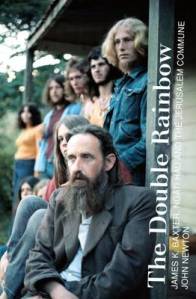
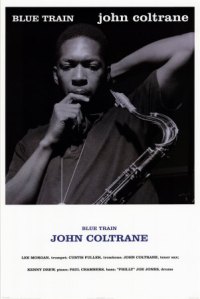
John Coltrane Blue TrainBest books: On Being Family: A Social Theology of the Family by Ray S. Anderson and Dennis B. Guernsey; John Newton, The Double Rainbow: James K. Baxter, Ngāti Hau and the Jerusalem Commune (Reviewed here); Reconstructing Pastoral Theology by Andrew Purves; We Are Still Married: Stories and Letters by Garrison Keillor; Bearing Fresh Olive Leaves by Calvin Seerveld.

Best music: Live In London by Leonard Cohen; Blue Train by John Coltrane; Outer South by Conor Oberst & the Mystic Valley Band.

Best films: A Love Song for Bobby Long [2005]; Kramer vs. Kramer  [1979]. 

Best drink: Frangelico.

‘The Double Rainbow: James K. Baxter, Ngāti Hau and the Jerusalem Commune’: A Review

the-double-rainbowJohn Newton, The Double Rainbow: James K. Baxter, Ngāti Hau and the Jerusalem Commune (Wellington: Victoria University Press, 2009). 224 pages. ISBN: 9780864736031. Review copy courtesy of Victoria University Press.

John Newton’s engaging book, The Double Rainbow: James K. Baxter, Ngāti Hau and the Jerusalem Commune, examines the Ngāti Hau community that Aotearoa’s best-known poet James K. Baxter was instrumental in establishing at Hiruhārama, on the Whanganui River – ‘the country’s first and most influential experiment in “hippie” communalism’ (p. 38). As Newton notes in his Introduction:

The double rainbow is Baxter’s symbol for a mutually regenerative bicultural relationship. He recognised that the Pākehā majority ignored Māori culture, not just to the cost of Māori … but also to its own detriment. Pākehā, he wrote in 1969, a few months before he first moved to Jerusalem, ‘have lived alongside a psychologically rich and varied minority culture for a hundred years and have taken nothing from it but a few place-names and a great deal of plunder’. Pākehā culture’s material dominance was accompanied by an arrogance and ethnocentrism which left it spiritually impoverished.

He cites Baxter:

‘Ko te Maori te tuakna. Ko te Pakeha te teina …’ The Maori [sic] is indeed the elder brother and the Pakeha [sic] the younger brother. But the teina has refused to learn from the tuakana. He has sat sullenly among his machines and account books, and wondered why his soul was full of bitter dust …

And then offers the following commentary:

The cost was everywhere to be seen, but nowhere more plainly than among urban youth. For Baxter, their wholesale disaffection was a realistic verdict on the society they had inherited, a mainstream culture whose spiritlessness and meanness – to say nothing of its arrogance towards its neighbours – deserved no better. In the Māori world, by contrast, and particularly in Māori communalism, he believed he could see an alternative to this atomised majority culture – a system of values that answered to the longings and frustrations that he recognised, both in himself and in the young people around him. To establish an alternative Pākehā community that could ‘learn from the Maori side of the fence’ was to help restore, symbolically, the mana of the tangata whenua and to begin to resuscitate a Pākehā culture that was choking to death on its own materialism. (pp. 11–12)

Such constitutes the earth from which a functioning intentional community at Hiruhārama budded, a community made up largely of those for whom mainstream Aotearoan society meant fatherlessness.

While concerned to not diminish Baxter’s part in the formation of the Ngā Mōkai community but rather to place it in the context of a larger ‘utopian experiment’ (p. 88) he initiated, Newton seeks to ‘offer a stronger account of what Baxter achieved at Jerusalem by bringing into focus its collaborative dimension’ (p. 16). He properly contends that what the 41-year-old Baxter set in motion, and towards which the baby-boomer ‘orphanage’ of the damaged which was his living poetry bore witness to, was something considerably bigger than Baxter himself, and that the unique cohabitation and set of cultural negotiations which was embodied in the Whanganui River communities (particularly Ngāti Hau, Ngā Mōkai, the church – which was ‘threaded through the life of the river’ (p. 59) – and the Sisters of Compassion) draw attention to implications far beyond both Baxter or to the communities themselves. This, of course, is of the essence of Baxter himself, that before he was a hippie, he was ‘a Catholic, a Christian humanist, and an aspiring Pākehā-Māori’ (p. 36), he was a poet-prophet charged not simply with interpreting the social environment which he inhabited, but of actively improving it, of giving material shape to it. The book is loosely divided into three main sections: an introductory phase that addresses the pre-history of the community and Baxter’s first year of residence; a middle section that covers its heyday; and a downstream phase that describes the community’s various offshoots, and considers its legacy. The result – for the reader prepared to follow the narrative – is the stripping away of ‘cultural safety’.

Newton details further upon what we know of Baxter from other places while eloquently introducing us to a host of other equally-fascinating characters – Father Wiremu Te Awhitu, pā women Dolly, Alice, Lizzie and Wehe (who are often remembered as ‘substitute’ mothers (p. 89)), Aggie Nahona, and Denis O’Reilly among them. He also highlights Baxter’s visionary kinship with French-born nun Marie Henriette Suzanne Aubert with whom he shared ‘a staunch commitment to Māori, and to spiritual love as the first principle of a hands-on social mission’ (p. 45). Newton argues that this part of Baxter’s history ‘doesn’t get acknowledged in Baxter’s rhetorical point-scoring at the expense of the mainstream church. Without it, however, his own Jerusalem “orphanage” would never have eventuated. In one sense the debt is symbolic or poetic: the presence of the church at Jerusalem draws te taha Māori into dialogue with the other key spiritual driver of his later career, namely his Catholic faith … Baxter brought his showmanship, and his personal (some might argue, narcissistic) sense of mission. But he also brought with him – embodied, or enacted – the self-interrogation and social radicalisation that had seized hold of the Catholic Church globally in the wake of Vatican II. After the Berrigans and the draft card burnings, after liberation theology, what did the Christian mission imply in the context of ongoing colonial injustice?’ (pp. 46, 47)

Jerusalem was Baxter’s riposte to all those Pākehā institutions – the churches, the university, the nuclear family and so on – whose lack of heart and small-minded materialism were now failing Pākehā youth in the same way that Pākehā culture had always failed Maori. In looking for a remedy for the failings of Pākehā society, he found his prime inspiration in the communitarian virtues that he saw among Māori: aroha, mahi, kōrero, manuhiritanga. This was ‘learn[ingJ from the Maori side of the fence’: his community was to be modelled on the marae. Of course, in offering this open door the commune depended entirely on the hospitality of Ngāti Hau … But the commune was not just a place to live – a material shelter for whomever happened to be there … it was also a piece of political theatre. And the commune’s significance as a political intervention depended for its fullest expression on publicity: it was intended, at least in part, to be a spectacle, a City on a Hill! At the same time, it was integral to the kaupapa that it be open to all comers. This was the paradox that Baxter was confronted by: the more effectively this vision was communicated, the more would it lead to a pressure of numbers that would overwhelm the commune’s own capacity to provide for itself, and which eventually must wear out the patience of the local community. (p. 65)

Yet Newton is at pains to point out throughout his study that Hiruhārama is bigger than Baxter. Indeed, the bulk of the book is given to defending and illustrating this thesis, that Hiruhārama after Baxter entered into a period of unforeseen maturity, and particularly the maturity of its relationship with the pā. Community life under Greg Chalmers’ leadership may have been less eventful, but those years from 1972 do more to fulfil Baxter hopes of regenerative partnerships than those prior.

Two chapters are concerned with articulating the events birthed following the final closure of the community at Hiruhārama, and to highlighting that while a distinctive phase of the Ngā Mōkai narrative had reached its end, its impulse didn’t die with the community itself. Newton draws attention to a network of loosely affiliated houses – from flats and private homes, to crashpads and urban shelters, to far-flung intentional communities – which functioned as homes-away-from-home for a diasporic Ngā Mōkai whānau, a ‘network of initiatives which imported the Jerusalem kaupapa back into urban contexts’ (p. 154), and there ‘offering a dispersed community the chance of reconnection, reaffirmation and renewal’ (p. 164). He recalls Hiruhārama’s various germinations at Reef Point, Wharemanuka and Whenuakura. ‘With the shutting of the original commune, these “shoots of the kumara vine” [became] the focus of the Ngā Mōkai story. It’s here, in this ramshackle archipelago, that those who had been touched by Jerusalem attempted to keep alive the kaupapa’ (p. 131).

The penultimate chapter, ‘Baxter’s Wake’, re-spotlights Baxter, and is given to argue that Baxter’s literary legacy and his social legacy are ‘shoots of the same vine’ (p. 169):

‘Jerusalem’ was never an alternative to the poetry; it was part of it, its logical destination, even its most vivid accomplishment. In his burial on the river we find Baxter the poet and the Baxter the activist inextricably entwined. This integration was precisely his ambition, and the fact he achieved it is what makes these events still resonate. (p. 171)

So Newton appropriately accentuates Baxter’s formulation of the poet’s ethical task to be no mere interpreter of society but one who endeavours to make society more just. ‘It is this sense of embodied ethics … which leaps into focus when we think about Jerusalem’ (p. 179).

The Double Rainbow is the fruit of an incredibly-impressive amount of extensive and laborious research. Newton commendably resists romanticising Baxter, Baxter’s vision, or the Ngāti Hau ‘classroom’ itself. Those engaged in Baxter’s work and who want to better understand his Jerusalem Daybook or are interested in his biography, those seeking to understand, assess and inform Aotearoa’s multi-cultural, historical and spiritual landscape, those wanting to listen and to speak intelligently into contemporary debates about the relationship between government authorities and badge-wearing gangs carving out their own neo-tribal identity, and, more broadly, to a nation fascinated with re-carving a new national identity which buries settler mono-culturalism in its wake, and those devoted to the challenging work of inspiring, creating, leading, building, replanting and closing local and grassroots communities will be well-served to have Newton’s essay in hand. An invaluable and timely record, it is also certain to inform, impress and inspire.

April bests …

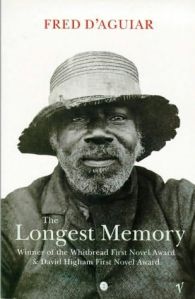
the-longest-memoryBest books: Wilfred Gordon McDonald Partridge, written by Mem Fox and illustrated by Julie Vivas; The Longest Memory, by Fred D’Aguiar; The Death of Adam: Essays on Modern Thought by Marilynne Robinson; The Puppet and the Dwarf: The Perverse Core of Christianity by Slavoj Žižek; Always the Sound of the Sea: The Daily Lives of New Zealand’s Lighthouse Keepers by Helen Beaglehole.

Best music: Blair Douglas, Stay Strong; Don McGlashan and the Seven Sisters, Marvellous Year; Neil Finn, Try Whistling This; Placido Domingo, Amore Infinito: Songs inspired by the Poetry of John Paul II (Karol Wojtyla); Nick Cave and Warren Ellis, The Assassination of Jesse James; Conor Oberst, Conor Oberst; Bob Dylan, Together Through Life.

Best films: Pan’s Labyrinth [2006]; Hunger [2008]; Pride and Prejudice [2001].

Best drink: PNG Coffee (Fairtrade) from Izon Coffee. (BTW: the folk at Izon are great to deal with)

The Double Rainbow: James K. Baxter, Ngati Hau and the Jerusalem Commune

the-double-rainbowLast night saw the launch of John Newton’s new book, The Double Rainbow: James K. Baxter, Ngati Hau and the Jerusalem Commune, which examines the commune that New Zealand’s best-known poet James K. Baxter was instrumental in establishing at Jerusalem, on the Whanganui River.

The book was lauched by Lydia Wevers in Wellington at Unity Books. Here’s what she said:

‘In his introduction John says he was fractionally too young at fifteen to have known Baxter or been part of the commune at Jerusalem, yet it is his book which makes sense of that world to me. I wasn’t too young. I encountered Baxter first as a poet – he was the NZ poet when I came to university in 1968. I loved his richly metaphorical formalist poems, his essays and broadsheets and later Autumn Testament and the Jerusalem Sonnets. He embodied, for me and for many other people, the spirit of the age. Baxter was a frequent presence at Vic, at student meetings, round campus, at class. It was said that when he needed money he rang Frank McKay, our NZ lit lecturer and later Baxter’s biographer, and arranged to teach a class. I remember one 8am lecture when he recited an ode he’d written on the way to class which began with the petrol station at the far end of the Viaduct. Even more excitingly he borrowed my watch-I kept it for years after it stopped working because of that. Soon after he died I was marking first year exam papers, and a number of them were dedicated to Hemi – the emotions of his death marked the end of 1972 in a way that I have never forgotten.

But this book The Double Rainbow is not a book about Baxter in a biographical or personal way. John calls it a ‘work of cultural history which aspires to be a work of bicultural history’ which is his typically modest way of describing what is a really remarkable achievement. Like the story it tells, this is a book inspired by Baxter but not contained by him.

First I want to say-this is a brave book. In February 1969 Thomas Wallace was chopping firewood when ‘a bare-footed, bearded Pakeha emerged from the mist’. This is how John described Baxter’s first appearance at Jerusalem & though John is not barefoot or bearded it made me think about the courage it takes to really engage with another culture. There are very very few scholars in Aotearoa who have attempted real bicultural work. Lots of people, myself included, have discussed Maori history or literature from a Pakeha point of view. But to try to see from the other side of the river requires courage, openness, and the willingness to actually learn something hard and new. Baxter could do that, and so did some of his followers. Ngati Hau did it and so did the sisters at the convent. And now so has John. I think it’s a remarkable achievement.

The second thing I want to say is what a huge amount of work has gone into this book. You can see it in the list of acknowledgements, and its contextual depth. From the ancient eel weirs of the Whanganui to what happened after Baxter died, the book provides a deep and rich slice into a particular place and what has happened there. John has journeyed the length and breadth of Aotearoa, to say nothing of the river, to talk to participants. He has spent months at Jerusalem talking to iwi and to the sisters at the convent. He has read the considerable number of books written about the river, intentional communities, the commune and Baxter – the result is a book that will take its place as a new and adventurous history and also as a cultural analysis that might tell us something about what we should do now. In a way it’s a call to action. Part of what is so striking about this story of Baxter and the diverse community that surrounded him is the loving-kindness and generosity that emerged between cultures, between generations, between city and country and between the pa and the Top House. John makes the point that there were many economic and social transactions that took place – gifts of food for gifts of work – but what struck me most was the way that something happened there, suggested also by what happened at Baxter’s tangi, that briefly transcended the fears and anxieties and moral failings that keeps most people living in the circles of their own skulls. What John’s book reveals, in the voices of the people who lived in it and through his own lucid prose, is something bigger than the people who took part in it.

Before The Double Rainbow the prevailing idea, as John points out and in my own idea of it, was that Jerusalem was Baxter. There’s no doubt that Baxter was visionary and charismatic. But what his vision resulted in was the product of many people – the old ladies at the pa and the Ngati Hau leaders are crucial, as were the sisters at the convent and the remarkable and saintly Father Te Awhitu – there are too many people for me to name and anyway they are in the book. But their collective story is a very powerful one – it is touching and charming but also inspiring – the way the pa educated the influx of city pakeha in tikanga and kaupapa, so they could be part of what happened on the marae. In this book the most remarkable generosity is that of the iwi, as Baxter noted, the tuakana, the older brother, and the response of pakeha to it – open minded to a vision of an alternative world, is what we should all be doing. When I read about how the kuia would march up to the Top House with a bottle of Jeyes fluid and insist they used it, I had to scrub my house from top to bottom.

The last thing I want to say about The Double Rainbow is that this book is a joy to read. I left myself slightly too little time for it – or so I thought, panicking slightly that it was Saturday morning and I hadn’t started. I needn’t have worried. I know John’s writing – it has flow and light. He sweeps you along. I had time to start on something else by Sunday. But at the same time I felt enlightened and excited by John’s lucid prose and even more importantly, his sense of conviction – this is a book with a commitment to what it describes. And it made me go and reread Baxter. So I thought, even though this book is a bicultural social history, an ethnography, a work of fact and not a ‘book about Baxter’, I’d give Hemi the last word

This is from ‘Sestina of the River Road’, one of his last poems from 1972:

I want to go up the river road
Even by starlight or moonlight
Or no light at all, past the Parakino bridge
Past Atene where the tarseal ends
Past Koroniti where the cattle run in a paddock
Past Operiki, the pa that was never taken,

Past Matahiwi, Ranana, till the last step is taken
And I can lie down at the end of the road
Like an old horse in his own paddock
Among the tribe of Te Hau. Then my heart will be light
To be in the place where the hard road ends
And my soul can walk the rainbow bridge
That binds earth to sky. In his cave below the bridge
Where big eels can be taken
With the hinaki, and the ends
Of willow branches trail from the edge of the road
Onto the water, the dark one rises to the light,
The taniwha who guards the tribal paddock

And saves men from drowning.

New books on Bruce Springsteen

springsteen


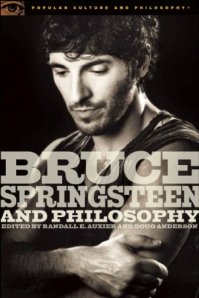
There’s two new(ish) books on Springsteen: Bruce Springsteen and Philosophy edited by Randall E. Auxier and Doug Anderson; and The Gospel According to Bruce Springsteen: Rock and Redemption, from Asbury Park to Magic by Jeffrey B. Symnkywicz [Reviewed here].

As a long-time Springsteen fan, I’d be keen to hear thoughts from anyone who has read one or both of these. What is their value (for the theologian)? Strengths? Weaknesses? Basic theses? Do they provide a healthy model for cross-discipline study?

Around the traps … [updated]

Pacifism and War: Some Resources [Updated]

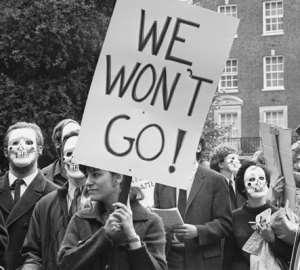
pacifismI’m trying to put together a list of responsible books/essays that explore theologically questions of Christian pacifism and Christian attitudes to war, and would be keen to hear of such that others have found helpful (and, if possible, why). Here’s what I’ve come up with so far:

Wilma A. Bailey, “You shall not kill” or “You shall not murder”?: The Assault on a Biblical Text (Collegeville: Liturgical Press, 2005).

Roland H. Bainton, Christian Attitudes Towards War and Peace: A Historical Survey and Critical Re-evaluation (Nashville: Abingdon Press, 1960).

Oliver R. Barclay, ed., Pacifism and War (When Christians Disagree) (Leicester: Inter-Varsity Press, 1984).

Clive Barrett, ed., Peace Together: A Vision of Christian Pacifism (Cambridge: James Clarke & Co., 1987).

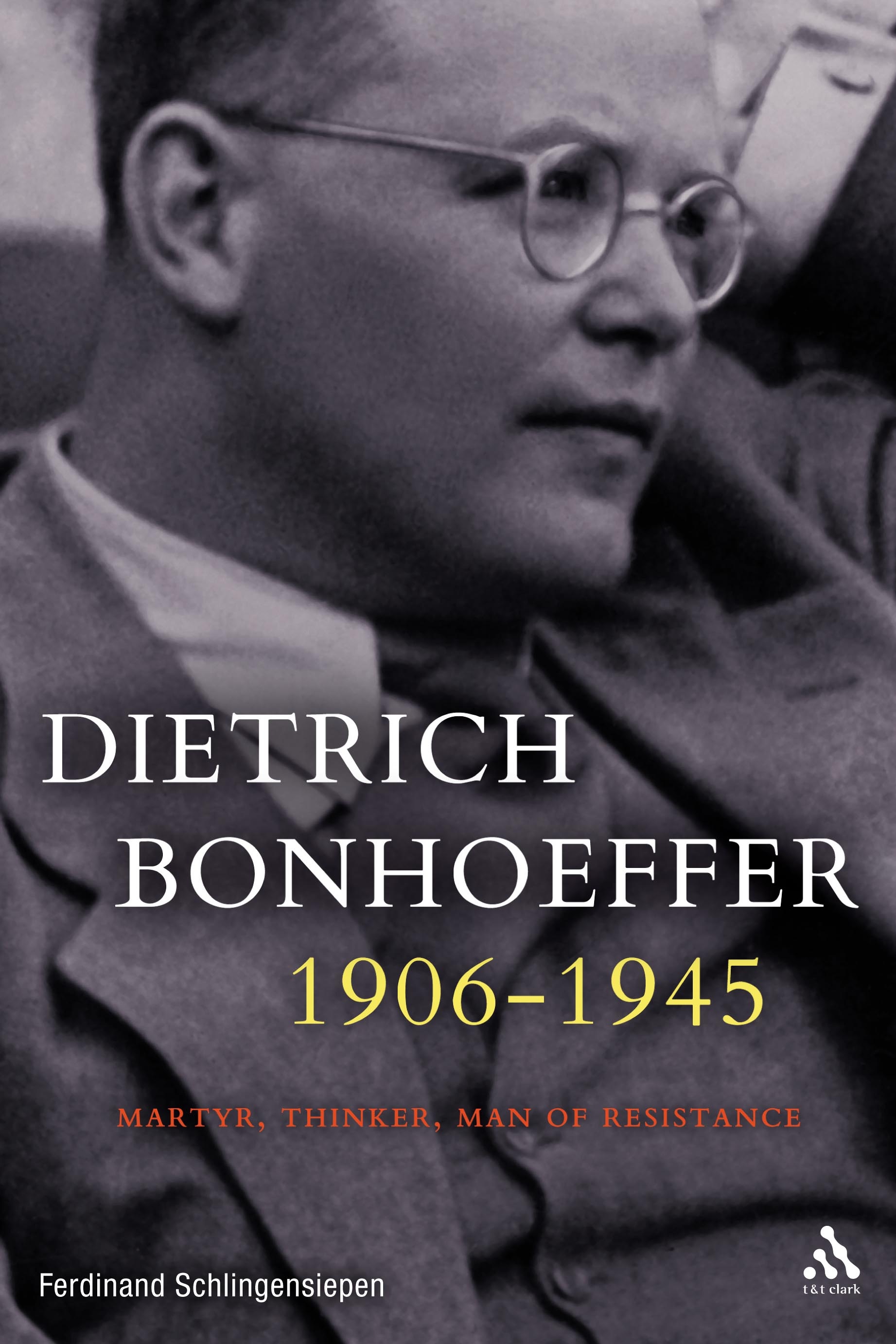
Eberhard Bethge, Dietrich Bonhoeffer: Man of Vision, Man of Courage (New York: Harper & Row, 1970).

Robert W. Brimlow, What About Hitler?: Wrestling with Jesus’s Call to Nonviolence in an Evil World (Grand Rapids: Brazos, 2006).

Martin Ceadel, Pacifism in Britain, 1914-45: Defining of a Faith (Oxford: Clarendon Press 1980).

*David L. Clough and Brian Stiltner, Faith and Force: A Christian Debate About War (Washington D.C.: Georgetown University Press, 2007).

Robert G. Clouse, ed., War: Four Christian Views (Downers Grove: InterVarsity Press, 1981).

James Denney, War and the Fear of God (London: Hodder and Stoughton, 1916).

Kim Fabricius, Ten Propositions on Peace and War (with a postscript)

Kim Fabricius, Ten Stations on My Way to Christian Pacifism

Gabriella Fiori, Simone Weil: An Intellectual Biography (trans. J.R. Berrigan; Athens/London: University of Georgia Press, 1989).

Peter T. Forsyth, The Christian Ethic of War (London: Longmans, Green, and Co., 1916).

Peter T. Forsyth, The Justification of God: Lectures for War-Time on a Christian Theodicy (London: Independent Press, 1957).

*Stanley Hauerwas, Against the Nations: War and Survival in a Liberal Society (Notre Dame: University of Notre Dame Press, 1992).

Stanley Hauerwas, Dispatches from the Front: Theological Engagements with the Secular (Durham: Duke University Press, 1994).

Stanley Hauerwas, September 11: A Pacifist Response. From remarks given at the University of Virginia, October 1, 2001.

Stanley Hauerwas, ‘No, This War Would Not Be Moral’, in Time (3 March, 2003).

Stanley Hauerwas and Paul Griffiths, ‘War, Peace & Jean Bethke Elshtain’, in First Things (October, 2003).

Stanley Hauerwas, Performing the Faith: Bonhoeffer and the Practice of Nonviolence (Grand Rapids: Brazos Press, 2004).

Stanley Hauerwas and Jean Vanier, Living Gently in a Violent World: The Prophetic Witness of Weakness (Downers Grove: IVP, 2008).

Eberhard Jüngel, Christ, Justice and Peace: Toward a Theology of the State in Dialogue with the Barmen Declaration (Edinburgh: T&T Clark, 1992).

Geoffrey A. Studdert Kennedy, Rough Rhymes of a Padre (Toronto: Hodder & Stoughton, 1918).

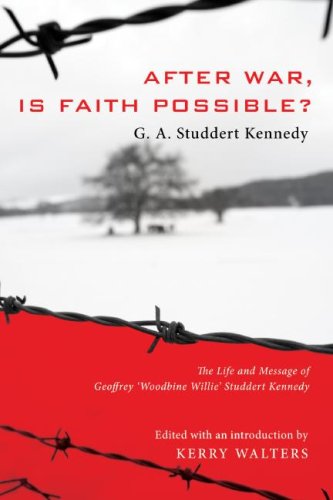
Geoffrey A. Studdert Kennedy, After War, Is Faith Possible?: The Life and Message of Geoffrey “Woodbine Willie” Studdert Kennedy (ed. Kerry Walters; Eugene: Cascade, 2008). [Reviewed here]

Jean Lasserre, War and the Gospel (London: James Clarke, 1962).

Philip Matthews and David Neville, ‘C.S. Lewis and Christian Pacifism’ in Faith and Freedom: Christian Ethics in a Pluralist Culture (Hindmarsh: ATF Press, 2004), 205-16.

Paul O’Donnell and Stanley Hauerwas, A Pacifist’s Look at Memorial Day: Duke University Divinity professor Stanley Hauerwas on nonviolence, Iraq and killing Hitler.

Oliver O’Donovan, In Pursuit of a Christian View of War (Bramcotte Notts: Grove Books, 1977).

*Oliver O’Donovan, The Just War Revisited (Cambridge: Cambridge University Press, 2003).

George Orwell, ‘Pacifism and the War’, Partisan Review August-September (1942).

Paul Ramsey, War and the Christian Conscience (Durham: Duke University Press, 1968).

Paul Ramsey, The Just War: Force and Political Responsibility (Lanham/Oxford: Rowman & Littlefield, 2002).

Alan Ruston, ‘Protestant Nonconformist Attitudes towards the First World War’, in Protestant Nonconformity in the Twentieth Century (ed. Alan P. F. Sell and Anthony R. Cross; Milton Keynes: Paternoster, 2003), 240-263. [The book is reviewed here]

*W. J. Sheils, ed., The Church and War: Papers read at the Twenty-first Summer Meeting and the Twenty-second Winter Meeting of the Ecclesiastical History Society (Oxford: Basil Blackwell, 1983).

Ronald J. Sider, Christ and Violence (Kitchener: Herald Press, 1979).

*Glen H. Stassen, ed., Just Peacemaking: The New Paradigm for the Ethics of Peace and War (Cleveland: Pilgrim Press, 2008).

John Stott, ed., The Year 2000AD (London: Marshalls, 1983), 27-71.

John Stott, Issues Facing Christians Today: New Perspectives on Social and Moral Dilemmas (London: William Collins Sons & Co., 1990), 82-112.

Helmut Thielicke, Theological Ethics Volume 2: Politics (Grand Rapids: Wm. B. Eerdmans, 1979).

Miroslav Volf, ‘Christianity and Violence’ (A paper presented at the Boardman Lectureship in Christian Ethics, Boardman Lecture XXXVIII, University of Pennsylvania, 1 March, 2002).

Alan Wilkinson, Dissent or Conform? War, Peace and the English Churches, 1900-1945 (London: SCM Press, 1986).

*John Howard Yoder, The Original Revolution: Essays on Christian Pacifism (Scottdale/Kitchener: Herald Press, 1971).

John Howard Yoder, When War is Unjust: Being Honest in Just-War Thinking (Minneapolis: Augsburg, 1984).

John Howard Yoder et al., What Would You Do?: A Serious Answer to a Standard Question (Scottsdale/Kitchener: Herald Press, 1983).

John Howard Yoder, Christian Attitudes to War, Peace, and Revolution (ed. Theodore J. Koontz and Andy Alexis-Baker; Grand Rapids: Brazos Press, 2009).

Supplementary Readings

Terry Eagleton, ‘Isaiah Berlin and Richard Hoggart’ in Figures of Dissent: Critical Essays on Fish, Spivak, Žižek and Others (London/New York: Verso, 2003), 104-8.

March bests …

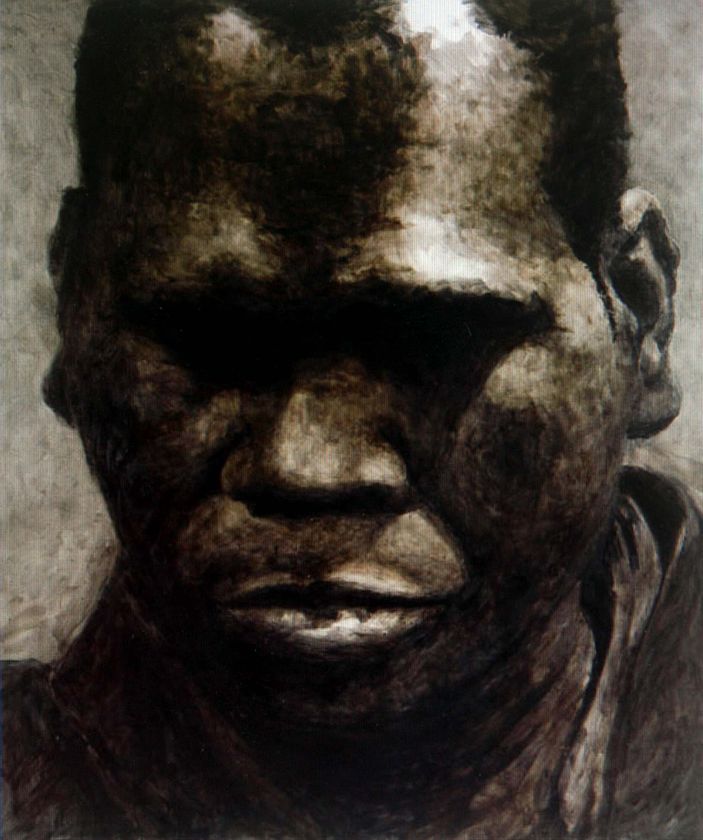
'Geoffrey Gurrumul Yunupingu', by Guy Maestri

'Geoffrey Gurrumul Yunupingu', by Guy Maestri

Best books: Geoffrey A. Studdert Kennedy, After War, Is Faith Possible?: The Life and Message of Geoffrey “Woodbine Willie” Studdert Kennedy (Eugene: Cascade Books, 2008). (Reviewed here)

Best music: Geoffrey Gurrumul Yunupingu, Gurrumul [2008: This is one of the best albums I’ve heard in a long time]; U2, No Line on the Horizon [2009]; Bob Dylan, The Bootleg Series, Vol. 8: Tell Tale Signs – Rare and Unreleased 1989-2006 [2008]; The Panics, Cruel Guards [2008]; Paul McCartney, Flaming Pie [1997].

Best films: The Reader [2008]

Best drink: 2007 Two Paddocks Pinot Noir

‘After War, Is Faith Possible?’: A Commendation


studdert-kennedyGeoffrey A. Studdert Kennedy, After War, Is Faith Possible?: The Life and Message of Geoffrey “Woodbine Willie” Studdert Kennedy (ed. Kerry Walters; Eugene: Cascade, 2008).
xii + 225 pages. ISBN: 978-1-55635-379-6. Review copy courtesy of Wipf and Stock.

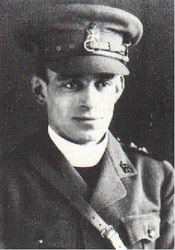
One the real delights of my research into the thought of PT Forsyth has been revisiting, and in some cases discovering for the first time, others who were writing around the same time, and often of the same events. To re-read James Denney, or James Baldwin Brown, or FD Maurice, is one of the best ways one could spend a month … or two. Another giant personality to add to that list would have to be Geoffrey A. Studdert Kennedy, better known as ‘Woodbine Willie’. (I posted on ) My copies of Studdert Kennedy’s work, which are all over 90 years old, form a truly valuable part of my library and one to which I return not infrequently. Collected Poetry (London: Hodder & Stoughton, 1927), The Hardest Part (London: Hodder & Stoughton, 1918), I Believe: Sermons on the Apostles Creed (New York: George H. Doran, 1921), Rough Rhymes of a Padre (Toronto: Hodder & Stoughton, 1918) and The Wicket Gate, or Plain Bread (London: Hodder & Stoughton, 1923) all constitute exceptional reading.

And so I was absolutely delighted to discover that Wipf & Stock decided to republish some Woodbine Willie excerpts, all well chosen and just enough to plant an appetite in those who will no doubt want to hear more from ‘the bloody parson!’ (p. 12). The collection was edited by Kerry Walters, who also contributed a very fine introduction on Studdert Kennedy’s life and message, and a helpful bibliography of the primary and secondary literature.

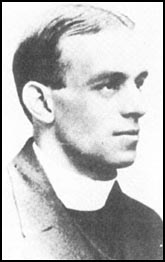
Woodbine Willie, (June 27, 1883 - March 8, 1929)

Woodbine Willie, (June 27, 1883 - March 8, 1929)

This WWI padre was, of course, one of the best-known and most-loved Christian pacifists of the early twentieth century. Unlike those theological yuppies who defend pacifism on purely ideological grounds and over a café latte in Lygon Street – informed by the Gospel or otherwise – Woodbine Willie’s commitment to pacifism was birthed in the trenches alongside frightened men and their dead mates. In all that he wrote, a number of questions incessantly occupied his thought: ‘Given the insanity and brutality of war (‘the universal disaster’; p. 14), what must the God who allows it be like? (p. 13); How is evil to be gotten rid of? (p. 3); What sort of universe ought an honest person believe in? (p. 15). His answer to these questions eventually led to the conviction that God is not sadistic, or indifferent to the world’s evil. Neither is God ‘Almighty’ enough to prevent such evils: ‘I see no evidence anywhere in nature of the Almighty Potentate Who guides and governs all things with His rod, and knows no failure and thwarting of His Will’ (p. 81). What God does do, Woodbine Willie insists (in Moltmannesque manner), is to suffer with and alongside humanity. This is love’s character – not raw despotic power but entering into the sorrows of the beloved. War then, which is evil in its most acute form, is ‘the test case for determining if Christianity can cope with evil’ (p. 21).

Against those who would ‘blather’ about the ‘glory of war’, or who would hold out hope for war being a converting ordinance, Woodbine Willie says that ‘war is pure undiluted, filthy sin. I don’t believe that it has ever redeemed a single soul – or ever will’ (p. 62):

War is only glorious when you buy it in the Daily Mail and enjoy it at the breakfast table. It goes splendidly with bacon and eggs. Real war is the final limit of damnable brutality, and that all there is in it. It’s about the silliest, filthiest, most inhumanly fatuous thing that ever happened. It makes the whole universe seem like a mad muddle. One feels that all talk of order and meaning in life is insane sentimentality. (p. 41)

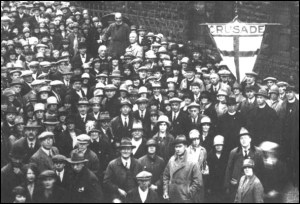
Geoffrey Studdert Kennedy speaking at Tredegar during an Industrial Christian Fellowship Crusade in 1928.

Geoffrey Studdert Kennedy speaking at Tredegar during an Industrial Christian Fellowship Crusade in 1928.

There are no words foul and filthy enough to describe war. Yet I would remind you that this indescribably filthy thing is the commonest thing in History, and that if we believe in a God of Love at all we must believe in the face of war and all it means. The supreme strength of the Christian faith is that it faces the foulest and filthiest of life’s facts in the crude brutality of the Cross, and through them sees the Glory of God in the face of Jesus Christ. (p. 49)

Waste of Muscle, waste of Brain,

Waste of Patience, waste of Pain,

Waste of Manhood, waste of Health,

Waste of Beauty, waste of Wealth,

Waste of Blood, and waste of Tears,

Waste of Youth’s most precious years,

Waste of ways the Saints have trod,

Waste of Glory, waste of God –

              War! (p. 50)

I cannot say that war, disease, pestilence, famine, and all the other characteristics of the process are good. If this word “Almighty” means that the Father could have made this world, and obtained the results He desires, in a thousand other ways, but that He deliberately chose this, that makes my gorge rise. Why in thunder choose this one? It is disreputable if He could have done it otherwise, without this cruelty and wrong. It is not commonly respectable. He must be an evil-minded blackguard, with a nasty disposition like a boy that likes pulling the wings off flies. I cannot get up any reverence for such a being. Why, bless my life, He tortures children, voluntarily tortures them to death, and has done so for thousands of years. I can’t stand that at all – it’s dirty; and when I am told that I must believe it, and that every detail of the process was planned out precisely as He wished, I begin to turn sick. Snakes, sharks, and blood-sucking vermin – what sort of a God is this? He chose this way because He gloried in it! That beats the band. It turns me clean up against the process. I cannot see its beauty for its brutality. I cannot hear the lark sing for the squealing of a rabbit tortured by a stoat, I cannot see the flowers for the face of a consumptive child with rotten teeth, the song of the saints is drowned by the groans of murdered men. (p. 75)

A soldier in time of war is not a person but a puppet, who moves when you pull strings. (p. 78)

… our armaments are symbols, not of our power, but of our weakness … Our military power is an exact index of our spiritual and moral impotence. (p. 79)

Life is one, from the single cell to the Savior in the flesh. I cannot separate swine from Shakespeare or Jellyfish from Jesus of Nazareth; they all are products of the process. So behind the process there must be a Spirit which is like the Spirit of man. (p. 81)

woodbine-willie-1I am not a pacifist (I’ve been too persuaded by Forsyth and Jüngel here), but reading Woodbine Willie continuously challenges me to ask myself whether I should be, whether our Lord’s command to ‘Love your enemies’ (Matt 5:44) really does, in Barth’s words, abolish ‘the whole exercise of force’. Either way, Barth is most certainly correct when he challenges: ‘In conformity with the New Testament, one can be pacifist not in principle but only in practice (praktisch Pazifist). But let everyone consider very carefully whether, being called to discipleship, it is possible to avoid – or permissible to neglect – becoming a practical pacifist!’ (Church Dogmatics IV/2, 549-50).

Faith does not mean that we cease from asking questions; it means that we ask and keep on asking until the answer comes; that we seek and keep on seeking until the truth is found; that we knock and keep on knocking until the door is opened and we enter into the palace of God’s truth. (p. 63)

Woodbine Willie dares us to keep on prayerfully asking the questions …

If the Church is to be a Church indeed, and not a mere farce – and a peculiarly pernicious farce, a game of sentimental make-believe – she must be filled to overflowing with the fire of the ancient prophets for social righteousness, with the wrath and love of the Christ. (p. 196)

The Church is not, and never can be, an end in itself; it is a means to an end; a means to the salvation of the world and the building of the Kingdom of God. It is not the Ark of Salvation for themselves, it is the Agent of Salvation for mankind. It is not a refuge of peace, but an army preparing for war. They seek in it, not security, but sacrifice. This is the infallible mark of the Church, the hallmark of the Cross. And if the sin of our modern slums, and the degradation that they cause; if the sin of our over-crowded, rotten houses, and the ugliness and vice they bring; if the sin of unemployment, with the damnation of body and soul that it means to men and women, boys and girls; if the sin of the heartless, thoughtless luxury at one end, standing out against the squalid and degrading poverty at the other; if the sin of commercial trickery and dishonesty, and wholesale defrauding of the poor; if the sin of prostitution, and the murder of women and children by venereal disease; if the sin of war, the very sin of sins, which is but the bursting into a festering sore of all the filth that the others have bred in years of miscalled peace; if all that is not laid upon the Church as a burden, and Christ’s members do not feel it as their own, then the Church is not a Church at all; and no amount of organization, propaganda, and evangelization can make it live. It has missed its vocation. (p. 167)

Around the traps …

dietrich-bonhoeffer

Thinking humanity, thinking family: Gary Deddo on Karl Barth’s Theology of Relations

gary-deddoGary Deddo‘s doctoral thesis, published as Karl Barth’s Theology of Relations: Trinitarian, Christological, and Human: Towards an Ethic of the Family (New York: P. Lang, 1999), fills a too-much neglected vista of Barth studies – the ethical implications of Barth’s theology for the family. Insofar as Deddo attends to this, his study carries Barth scholarship in a constructive direction, not only for ‘theologians’, but for all who determine to think theologically on issues germane to family life and ministry to/with/for families. Moreover, his essay is in itself a cogent and profitable introduction to the broader, fruitful and creative landscape of Barth’s theological anthropology – that human personhood is determined by and for the Word of grace. According to Deddo, this means at least the following six things:

A) Humanity’s being has the form of relationship to God which indicates that humanity is to, from and with God as Jesus himself has this form of relationship with God and so constitutes the form of relationship with God through Him in which humankind participates.

i) Humanity’s being has the form of a being from God and so a being united to God, but does not be without God, nor is to be confused with God. Because Jesus is both like humankind and yet unlike humankind, persons in general are united with Jesus but are not identical with him.

ii) Humanity’s being is in the form of being differentiated yet determined for communion with God. Because our Brother’s life is in esse koinonia and intra-relatio with the Father and Spirit, humankind too – to which in the incarnation the Father, Son and Spirit have determined to be for – is made to participate in the intra-trinitarian life of communion with the Father through the Son in the Spirit.

iii) Humanity’s being-in-relationship is a being of ordered correspondence of humanity with God and so humanity’s being is an image of and witness to God. Jesus corresponds in his being to God in that he is God’s presence with humanity, embodying in flesh – i.e. from the side of creation – God’s relationship with all humanity. Jesus is the enactment of the will and kingdom of God among us. Human being involves acting in a way which corresponds to who we are graciously made to be – God’s relations, the imago of the Imago, the daughters and sons of the Father of Jesus.

matisse-danceB) Humanity’s being in relation with God has also been given its covenantal content (action) and is so constituted in both form and content as a being for God. Thus, Jesus is not merely the revelation of who God and humanity are, but Jesus is by virtue of that relationship that God and humanity know. He is the one Mediator between God and humanity. He is the ontological reality of the divine-human relationship. Human being is constituted and maintained only by participation in the action of relation that the Son knows with the Father in the Spirit. There is no such thing as autonomy – for God or humans.

iv) Humanity’s relationship with God is a covenantal and so personal relationship of being for God. The life of Jesus – the divinely-elected Son who freely responds to God’s calling in and through the history of his relationship with God – is a life of thanksgiving, obedience, invocation, and freedom for God. The life of Jesus is true human personhood, and revelatory – unveiling for us that God is personal, and that humankind is established in Jesus and corresponds to Jesus who is the imago Dei.

v) Humanity’s being in relationship to God is a dynamic and eschatological history in which humanity becomes what humanity is graciously determined to be – for God. Humanity’s covenantal relationship with God is not intrinsic to human personhood qua human personhood (indeed, there is no such thing), but is the gift of divine grace enfleshed in Jesus Christ in whom – and in whom alone – humanity comes to exist and to exist in relation to God, and to have a future in relation to God. Humanity’s being is in becoming in relation to God.

vi) Humanity’s being in relationship means humanity’s being for God – transcending, proceeding and giving of humanity’s self in perpetual return. So Jesus – the Man for God – is God’s own self-giving and outgoing to humankind that humankind might be included in, and mirror, the inner Triune relations. The relations of God and humanity as revealed in Jesus are not external but internal relationships in which each participates in the life of the other. God’s action in Christ takes place so that humankind might participate in the Triune life – life itself. Humanity is not alien to God’s being, but of its essence.

Turning more specifically to the question of the family, Deddo proposes a ‘six-fold grammar of Relations’:

i. The God whom we worship in Jesus Christ is the Triune God who exists in loving covenantal communion and who has created, reconciled and redeemed us for participation in that very communion of Father and Son in the Spirit. The parent-child relationship is one unique context in which this communion may be communicated and reflected. But families find their true place not in conformity to society in general, but in communion within the Church, a family of families.

ii. As human beings we have our personhood only as a gift of being in covenantal communion with God which calls for our personal participation. This life of fellowship is to be manifested in lives of worship as the Church of Jesus Christ. It is in this context that each one of us, no matter what our family experience, hears and is reminded of our true identity as children of God and finds the norm for being parents and children in right relationship.

iii. The Church is a covenant community and as such can be understood as the household of God with God as our Father and Jesus as our Brother. It is the original ‘Family’ by which all other families are to operichoresisrder themselves in correspondence and witness to it. This is the true source for the renewal and healing of broken family relationships.

iv. Being parents is the divine gift of personal and covenantal participation in that ontological relationship of parent and child. Parents are those who in faith by grace beget and parent their children in terms of both promise and fulfilment. This constitutes a witness to, a correspondence to, an image of, God’s creation of us in promise with a view to our fulfillment. God does this by bringing us up by the Spirit to maturity according to the image of Jesus Christ and through His incarnation, crucifixion, resurrection, ascension, intercession and coming again.

v. Parents are those who order their domestic relations after the pattern of being members of the household of God, the Body of Christ, who acknowledge one Father and one Brother over them all. They see themselves as elder and younger brothers and sisters and all being the children of God, who belong together in a maturing communion with Him by the Spirit, thereby becoming conformed to Jesus Christ.

vi. They are those who, as individuals and as domestic families, are equipped and are sent out, who equip and send out their children to serve and extend their fellowship to others that they too might be included in this one family of God by that same Spirit.

Those already familiar with Ray Anderson’s work will find many echoes in Deddo’s, whose study I heartily comnmend.


January bests …

Best books: Wright, David F. and Gary D. Badcock, eds. Disruption to Diversity: Edinburgh Divinity, 1846-1996. Edinburgh: T&T Clark, 1996; Alec C. Cheyne, The Transforming of the Kirk: Victorian Scotland’s Religious Revolution. Edinburgh: The Saint Andrew Press, 1983.

Best music: Parachute Band, Roadmaps and Revelations [2007].

Best films: Oranges Are Not the Only Fruit [1990] ♦♦♦½ ; Ladri Di Biciclette [1948] ♦♦♦♦; and Gran Torino [2009] – a near-perfect film! ♦♦♦♦♦

Best drink: Monteith’s Rata Honey & Spice Flavoured Summer Ale (even Judy said it was OK!)

Around blogdom …

  1. “The Center of the Whole Bible” (Romans 3:21-26): audio | video
  2. “The Strange Triumph of a Slaughtered Lamb” (Revelation 12): audio | video
  3. “A Miracle Full of Surprises” (John 11): audio | video
  4. “Why Doubt the Resurrection of Jesus” (John 20:24-31)
  5. “The Ironies of the Cross” (Matthew 27:27-51)

December bests …

Best books: Giorgio Locatelli, Made in Italy: Food and Stories. New York: Ecco, 2007 (this one is easily among my favourite books of the year); Marcia JoAnn Bunge, ed. The Child in Christian Thought. Grand Rapids: Wm. B. Eerdmans, 2001; David H. Jensen, Graced Vulnerability: A Theology of Childhood. Cleveland: Pilgrim Press, 2005; and Ernest Hemingway, The Old Man and the Sea.

Best music: Malcolm Gordon, One Voice; and U2, The Golden Unplugged Album

Best films: Death Sentence (2007)

Best drink: Villa Maria Private Bin Merlot/Cabernet Sauvignon (2006)

November bests …

Best books: TF Torrance, Incarnation: The Person and Life of Christ [2008] (this is among the most exciting of publications to appear this year); Barack Obama, The Audacity of Hope: Thoughts on Reclaiming the American Dream.

Best music: Andrew Peterson, Clear to Venus; Sting, Songs from the Labyrinth [2006]

Best films: Black Gold [2007]

Best drink: Teeccino Herbal Coffee Almond Amaretto (also available in Australia from NTP Health Products)

[Apologies for the delay in posting this monthly bests. It’s been a hectic time. As a consolation, let me draw attention to an encouraging post by Richard Floyd on Forsyth and baptism].

Around the traps …


October bests …

Best books: The Rise of Neo-Kantianism: German Academic Philosophy between Idealism and Positivism, by Klaus Christian Köhnke; Theology in a Global Context: The Last Two Hundred Years by Hans Schwarz; and Theoria, by Peter Fuller.

Best music: Sons of Korah, Rain [2008]; Dar Williams, Cry Cry Cry [1998]

Best films: 10 Items or Less [2007]; An American Crime [2008]
 
Best drink: Heartland Directors’ Cut Shiraz 2006

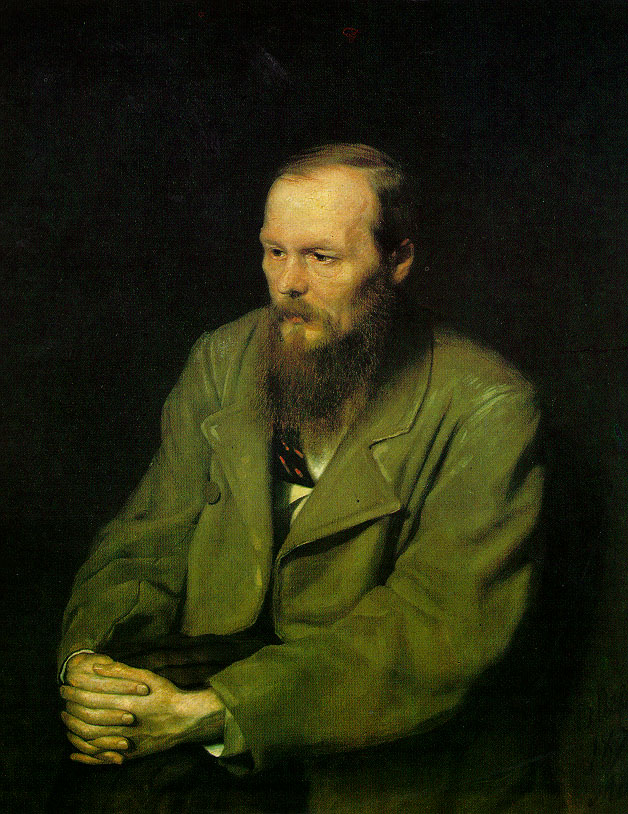
The Archbishop’s Dostoevsky: Why Rowan Williams is the best man for the job – of appreciating the greatness of Dostoevsky

This wonderful article by A.N. Wilson appeared in today’s The TimesOnline:

Fyodor Dostoevsky’s views on religion are notoriously hard to pin down with confidence. If you collected up the criticism devoted to Tolstoy, there could be no doubt about what he believed at any stage of his journey. Yet in the history of Dostoevsky criticism we find, for example, Henry Miller reading Dostoevsky as a great social revolutionary, whereas others have seen him as a diehard conservative. Rowan Williams, in his latest book, quotes (and rebuts) William Hamilton, who sought to enlist Dostoevsky as a forerunner of “Death of God” theology; Georges Florovsky, who saw Dostoevsky as an exemplar of Russian Orthodoxy; Malcolm Jones, who has linked him to “post-atheism” in contemporary Russia, and judged him to exemplify the workings of “minimal religion”. Clearly, all these contradictory readings cannot be right. Or can they? Is that precisely the nature of the difficulty?

We need a guide who combines the gifts of a literary critic and a trained theologian to work out how far the novels of Dostoevsky can be used as vehicles for such explorations. We also need a guide who is deeply versed in the ethos and spiritual traditions of the Russian Orthodox Church to place Dostoevsky, and the tormented exchanges of his characters, within some intelligible historical framework. Luckily, the Archbishop of Canterbury combines all these qualities, and more.

There are many insights in Dostoevsky: Language, faith and fiction which will illumine its subject’s novels, and which could only have come from this interpreter. Williams’s discussion of The Idiot, and the salience of Holbein’s painting “Christ in the Grave” (1521) for our understanding of the protagonist, is a case in point. “Holbein’s [deposition] shows (though this is not explicitly described in the novel) a corpse seen from alongside – not only a dead man fixed at a moment in the past (there are Orthodox depictions of the dead Christ and his entombment), but a dead man in profile, a double negation of the iconographic convention. In a fairly literal sense, this is a ‘diabolical’ image.” There will be few non-Orthodox readers who are aware of the fact, presented here by Williams, that in the tradition of icons, the only figures who normally appear in profile are demons or Judas Iscariot. This is a very pertinent addition to Williams’s accumulation of readings of the Idiot’s character. Far from seeing Myshkin as Christ-like, Williams alerts us to his “lethal weakness”: “the person who is presented as innocent and compassionate in Christ-like mode is in fact unwittingly a force of destruction”. With even greater precision, he hits the target with this paradoxical statement: “Myshkin is a ‘good’ person who cannot avoid doing harm” – about the neatest summary of The Idiot that has ever been written. In the conclusion to his book, Williams makes the striking claim that the fusion of incompatibilities in which so much of Dostoevsky’s work consists, creates something comparable to the traditions of icon-painting.

It is this fusion of a surrender to the claims of an independent truth and a surrender to the actual risks and uncertainties of asserting this truth in word and action that makes the entire enterprise of spiritual – and specifically Christian – life one that is marked by the decentring and critique of the unexamined self. What is so distinctive about Dostoevsky’s narrative art is that he not only gives us narratives in which this difficult fusion is enacted; he also embodies the fusion in his narrative method, in the practice of his writing, risking the ambitious claim that the writing of fiction can itself be a sort of icon.

As we read Williams’s discussion, and become absorbed not only in his enjoyment of Dostoevsky’s novels, but also in his own wide reading in the patristic literature and immersion in the Eastern traditions of Christianity, we begin to realize that ambiguities and downright contradictions which seem so startlingly “modern” in Dostoevsky’s pages are often matters that have always been inherent in theology. The book thereby combines a rereading of Dostoevsky with an attempt to confront, not merely the storm clouds of the nineteenth century, as Ruskin called the theological crisis of faith, but also our contemporary phenomenon of Darwinian revivalism which believes itself to have answered, or repeated, the destruction of theology’s claims to plausibility.

The book therefore begins where, one suspects, Dostoevsky himself would want a book published in 2008 to begin – if he were still with us and observing contemporary life. The author starts, not with the great Russian literature that is his theme, but with “the current rash of books hostile to religious faith”. “They treat religious belief almost as a solitary aberration in a field of human rationality; a set of groundless beliefs about matters resting on – at best – faulty and weak argumentation”. In contrast to these writers, whose work, it could be said (though the author does not quite say it), was all anticipated in the writings of the later Dostoevsky, Williams spells out the way in which religion actually operates in individual human lives. This was central to Dostoevsky’s work as a novelist. Williams’s book is a work of literary criticism, but it begins, therefore, as if it were one of theological apologetics.

If this causes some methodological problems as Williams goes along, they are certainly problems that Dostoevsky would have relished. Outside the Roman Catholic traditions represented by writers such as François Mauriac or the later Evelyn Waugh (both of whom Dostoevsky, with his horror of “the foul Roman God”, would have found morally and aesthetically repellent), the better Western novelists have tended to fight clear of theology. Their works might contain a religious element, but they are not vehicles, as Dostoevsky’s great novels are, for the presentation of raw metaphysical debate. It simply is not possible to read The Brothers Karamazov without becoming engaged with the God questions: Does he exist? If he exists, how can the suffering of a child even be thinkable? Is there an alternative to the seductive, and ultimately blasphemous allure of the Grand Inquisitor’s creation of a religion which offers mystery and authority? As we turn the pages of Karamazov, that monumental whodunnit, the question of who killed the brothers’ horrible father becomes inextricably tied up with theological matters. Is the novel the most Christian fictional work ever written, or the most damning indictment of religious faith, from which in fact no “realist” account of religious belief could ever be extrapolated? Or is it neither? Is it a book which enables the reader to wrestle with these questions, unshackled either by obedience to a tightly defined religious system, or by that equally limiting worship of science which the nineteenth century erected as a substitute?

Commentators on Dr Williams’s record as a church leader have sometimes observed his apparent capacity simultaneously to hold two totally incompatible beliefs. This debate need not concern us here, unless we find it irresistible in passing to reflect that Dostoevsky’s own views on female – let alone gay – bishops would be all too easily imaginable. Whether or not there is an advantage in doublethink when performing an Archbishop’s agonizing role of reconciling the ill-thought-out positions of American liberals and African conservatives, the capacity to hold opposite viewpoints on religious matters is precisely what Dostoevsky’s characters demonstrate again and again. Williams acknowledges from the outset his indebtedness to the great Russian critic-philosopher Mikhail Bakhtin, whose Problems of Dostoevsky’s Poetics has been essential reading since it was first published in 1929, and which has had such an immense effect on literary theory.

Bakhtin’s development of what he called “dialogism” perhaps reflected his own necessarily secret attitudes to Orthodoxy. The Party bullies were profoundly suspicious of his readings of Dostoevsky, and saw him as a religious subversive. As far as I know, Bakhtin’s religious position remains a mystery to this day. The 1920s in Russia was not an easy time to come clean about such matters, and this brutal historical fact probably explains some of the tortuousness of Bakhtin’s reflections on religion and literature. Nevertheless, it was Bakhtin who taught us – and Williams reinforces the message in innumerable bits of valuable close reading of the texts – that Dostoevsky is an essentially “polyphonic” writer. Read in this way, the novels do not reflect a divided mind, or a struggling existentialist doubter; they are themselves demonstrations of the areas which have to be explored if one is to make sense of any of the great questions of philosophical theology. If the doctrine of the incarnation is true, for example, it could never be settled by “scientific” analysis. Christians follow not a mere Logos, as the Platonists did, but an enfleshed Logos, a Logos crucified by involvement in human sin. Dietrich Bonhoeffer would probably not have much appealed to Dostoevsky, but the Russian would have seen the poignancy and potency of the German pastor-martyr’s declaration that the only God in whom he could believe was a suffering God. As Williams puts it:

Dostoevsky is not presenting us a set of inconclusive arguments about “the existence of God”, for and against, but a fictional picture of what faith and the lack of it would look like in the social and political world of his day – an assumption articulated by Bakhtin, and also one that shapes some of the most interesting philosophical discussion of Dostoevsky in recent decades.
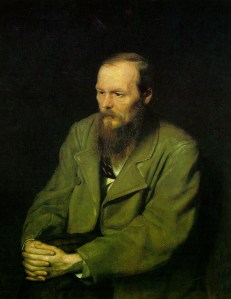
This is an attractive position to follow, and it certainly avoids falling into the crude trap of believing that the later novels are simply Slavophile or Christian manifestos. But there is a difficulty with it. And the difficulty is raised by the strange voice of Dostoevsky himself, not merely in the books but also in the journalism. If there is a lack in Williams’s rich book – and it will certainly be enjoyed by a wide audience and stimulate an eager rereading of Dostoevsky – it is not that it fails to refer to Dostoevsky’s journalism (there is plenty of ripe reference to A Writer’s Diary), but that it does not confront the problem which this journalism presents to the “polyphonic” reading of the novels. The novels are indeed polyphonic, and it is impossible to catch their essence unless they are read with the patience and the eye for detail that Williams repeatedly demonstrates. But Dostoevsky himself makes abundantly clear (in The Devils, for example) what he thinks of the pernicious influence of 1840s liberals; and the mockery heaped on the heads of old Verkhovensky or of Karmazinov (Turgenev) is precisely of the kind we should expect from Dostoevsky the journalist. Indeed this journalist, far from fading away as the novelist in him got into his stride, is ever-present. As if aware of the aesthetic, not to say philosophical, difficulty which this will present, Dostoevsky invents local narrators in The Devils and Karamazov who relate the strange events as if from the position of the town gossip. But even the use of the narrators cannot entirely blind us to the presence of Another – namely the violently intemperate journalist Dostoevsky who both is, and is not, a part of the dialogues which he constructs for his characters, and for the narratives of the shadowy storytellers. The hectoring satirist, the bombastic nationalist, the predictable anti-Semite who wrote the reams of journalism would not, one feels, have been capable of writing the great novels; and yet – this is the paradox and the proviso – Dostoevsky was not writing (to use the Miltonic metaphor) the novels with his right hand and the journalism with his left. The loud-mouthed Slavophile journalist is there in the very texture of the novels.

English novelists have often done time in their youth as journalists in some shape or form. Yet in almost all cases – whether you think of Marian Evans working on The Westminster Review, or Graham Greene as a sub-editor on The Times, or even of Martin Amis or Alan Hollinghurst on the TLS – the job has been seen as a way of making ends meet before they took wing as purely “creative” writers. The career of Dostoevsky (1821–81) unfolded in a different way. He was involved off and on throughout his career with Russian periodical literature; but far from shaking off the humiliating trappings of hack work, his trajectory rose towards it. He wrote for the St Petersburg Gazette in his youth, after the publication of Poor Folk (1846), and the novels thereafter are all laced with such reflections about the current state of the world as, in an English tradition, would more naturally be found in newspaper columns or other periodicals. The House of the Dead, written about his four years in a Siberian prison camp (from 1849 onwards), is journalism of the first degree. His marvellous travel sketches, Winter Notes on Summer Impressions (1863), are a superbly scornful, and accurate, picture of contemporary Europe. In his European wanderings, accompanied by his much younger second wife Anna, he had written The Idiot and, after the completion of Besy (The Devils, or, as it is called in a brilliant new Penguin translation by Robert A. Maguire, Demons), Dostoevsky returned from his European wanderings to take up the editorship of The Citizen (Grazhdanin). The articles that he himself wrote for this publication, now given the title of The Diary of a Writer and running to well over a thousand pages, must certainly be read alongside the great novels of the later period.

The repeated railing against the corruptions of the West, the defence of a belligerent and militaristic foreign policy against Austria and Turkey, and, above all, the reiteration of the belief that Russians are the God-bearers of history, are familiar Slavophile themes to anyone who has read the literature of the 1870s. “So please don’t tell me that I do not know the people! I know them; it was because of them that I again received into my soul Christ Who had been revealed to me in my parents’ home and Whom I was about to lose when, on my own part, I transformed myself into a ‘European liberal’”. There are endless such moments in this later journalism, when we find ourselves reminded of the more histrionic characters in his novels. No one could enlist the journalist Dostoevsky, as they have enlisted Dostoevsky the novelist, as an Ur-member of the Death of God school, nor even, one suspects, as a post-atheistic minimalist, whatever that is. But equally, only the insensitive could fail to see that it is essential to read the novels as narratives in which ideas repellent to Dostoevsky are given freedom to breathe. Indeed, in one of his finest chapters, Williams argues that this is central to Dostoevsky’s entire purpose as a writer, and as a religious thinker. Auden’s line about teaching the free man how to praise comes to mind. Williams’s Dostoevsky is cleverly constructing a rhetoric of freedom, discovering a language which can escape determinism. Brilliant as the Archbishop’s book is, however, neither he nor anyone else will ultimately solve the riddle, which is one of the reasons why Dostoevsky remains one of the most endlessly interesting writers who ever lived.

Was it Dostoevsky who thought that if man ceases to believe in his immortality and in God, then all is permitted? Or was it Ivan Karamazov, as filtered through his murderous half-brother Smerdyakov, as a feeble excuse for having killed his own father? Is it Dostoevsky, or the Devil, or Ivan Karamazov imagining the Devil, who says that he would rather give up everything and become a merchant’s wife lighting votive candles? It certainly seems very like the Dostoevsky who, in 1854, shortly after being released from prison, wrote to Natalya Fonvizinia, “if someone were to prove to me that Christ was outside the truth, and it was really the case that the truth lay outside Christ, then I should choose to stay with Christ rather than with the truth”. How does one interpret the self-dramatizing outbursts by Dostoevsky the journalist with the comparable, sometimes all but identical statements made in the novels by people who are on the verge of being unhinged? A good example, explored by Williams, is Marya Timofeevna Lebyadkina, the funny little crippled sister of the drunken captain in The Devils, one of the most Dickensian figures in the whole Dostoevskian oeuvre. (The casual slitting of her throat is surely one of the most unbearable events in the novel.) During a scene which begins as semi-farce, when she bursts into the respectable general’s widow’s drawing room after church, she makes the famous speech about watering the earth with tears which will bring forth joy. Williams cautiously tells his readers that the words have “been taken too hastily for an expression of Dostoevsky’s own spirituality”. Williams points out Marya Timofeevna’s heterodoxy, not to say heresy – “God and Nature are all one”, she says, and she identifies the Virgin, “the hope of the human race”, with “Sacred Mother Earth”. “She is in some sense a prophetic presence”, Williams comments, “but we are warned to read her words with care”. Her theological confusions have much in common, he adds, with those of others “who have turned their backs on transcendent reality”, including the key members of the revolutionary cell who cause all the diabolical catastrophes in the story.

His attempts to make sense of this passage for the reader perhaps demonstrate the limitations of any attempt to explain the novels, rather than give oneself up to them. At first it almost seems as if Williams the professional divine is marking the ravings of poor Marya Timofeevna for her theology Finals. Then, as if conscious that such an approach is inapposite, Williams changes gear. First comes a “lit crit” reading of the passage – Marya has a fantasy that she has given birth to a baby whom she has drowned in a pond, and this, Williams argues, perhaps reasonably, “anticipates” the murder of Shatov, to whom she is spinning the yarn, and whose body is eventually destined to be dumped in the pond; it also echoes the gospel narrative which gives the book its title – the cascading of the Gadarene swine into the sea. But having corrected her theology, Williams then turns in the opposite position where he does approve of it after all. When Shatov tells the wicked Stavrogin to repent and water the earth with his tears, “it is a sign of reconnecting with a reality Stavrogin is fleeing from, reconnecting with what is outside his head or his will . . . . Marya is right to the extent that reconciliation with God and with nature are inseparable”. Phew! So the poor lame grotesque perhaps gets her Upper Second after all.

At points such as this, one feels that the commentator is trying to represent Dostoevsky as a more coherent, and in a sense more respectable artist than he really was. It feels as though a gentle Western intellectual is bringing his great Russian friend forward to introduce to us. As Dostoevsky shouts something out, perhaps on the verge of an epileptic fit, or asking to borrow some money for the gambling tables or shouting an anti-Semitic insult, we imagine Williams rendering his comments as some subtly phrased compliment to the Dean and Chapter. But the moments when Williams’s pages give off this tone are rare. For the most part, we feel ourselves uncannily inside not merely the novels, but the mind that made them. There is something electrifying in Williams’s chapters on Dostoevsky’s treatment of the demonic, on his exploration of blasphemy and on the Russian’s incarnational profundity. Precisely because Dostoevsky was trying, in the face of nineteenth-century determinism, to free his characters, and his readers, from the deadness of systems, he took the risk of incoherence. For that reason, trying to extract sense from him is a delicate task.

Towards the end of his book, Williams quotes that quite extraordinary story which Dostoevsky tells in A Writer’s Diary for 1873. (It is Number 4 of The Citizen.) A young peasant pilgrim, for a dare, receives his Communion, but does not swallow it. Instead, to fulfil the dare, he must take the consecrated morsel, place it on a stick, and fire a gun at it. As he does so, he sees the crucified figure whom he is shooting, and he himself passes out of consciousness. Williams uses this story for a deft analysis of the way comparable blasphemous acts in the novels (Fedka placing a mouse in a glazed icon, for example, in The Devils) alert the reader to the manner in which religious truth can be envisioned. “The interwoven stories of Zosima, Markel, Alyosha and Mitya are his mature essay in imaging the holy – not simply in one ‘achieved’ character, despite the pivotal significance of Zosima, but precisely in the interaction and mutual mirroring in these lives.” The point is nicely made. But the shock of the story of the peasant shooting the eucharistic morsel is, as Dostoevsky insists, uniquely Russian: the young peasant with his gun, his defiance, his awful penitence. Only a man who believed in the ultimate reality of Christ in the Eucharist would have perpetrated the act of shooting.

Perhaps one of the deepest mysteries of our own times is not that Darwinian atheists, whom Dr Williams takes to task in his opening pages, have emerged from the milk-and-water post-Enlightenment religious traditions of England to mock simple-minded American-style Evangelicalism. It is that the Russian Orthodox faith, which Dostoevsky was right to see as something different in kind from the religion of other nations, has survived nearly a century of Marxist atheism, with civil war, massacre, starvation and a relentless attempt to eradicate it from the Russian soul by persecution and by programmes of materialist education. Whether a Western intellectual believes in it, or feels at home in it, is an irrelevance. No sooner had the Soviet Union imploded than there reappeared, in full view, the Church of Fr Zosima and Bishop Tikhon, seemingly strengthened by its torments – just as in Dostoevsky’s novels murders and drunkenness, child-molestations, suicides and blasphemies actually quicken the faith of indelibly drawn, mired but redeemed characters.
John Wilson’s Introduction to Modern Theology: A Review

John E. Wilson, Introduction to Modern Theology: Trajectories in the German Tradition (Louisville/London: Westminster John Knox Press, 2007). x+286 pages. ISBN: 978-0-664-22862-0

The work of the eighteenth-century Königsberg-born philosopher Immanuel Kant set a new direction for philosophical and theological enquiry up until our day. Because of Kant, theological behemoths like Fichte, Schelling, Hegel, Kierkegaard and Schleiermacher were able to propose new form to the increasingly important conversations between religion and reason, and revelation and experience. So attractive and dominating were these new forms that no Protestant theologian in nineteenth-century Germany could think without them. Moreover, late eighteenth- and nineteenth-century Germany witnessed one of the most creative and prodigious outputs in theological work in any period before or since.

In this introduction, Professor of Church History at Pittsburgh Theological Seminary John E. Wilson invites us on a survey of the German theological tradition beginning with Kant, and proceeding via Hegel, the Mediating Theologians and the Ritschlians, through to Bonhoeffer, the Niebuhr’s and Rahner, among others, purposing to demonstrate lines of continuity and trajectories in the German Protestant traditions since Kant.

Commencing with a useful historical overview of the political and social context from the French Revolution until those fertile decades following WWII, Wilson proceeds to devote chapters to many of the leading shapers of the German schools. Each chapter mostly stands alone and is given to introducing readers to the key writings, grammar (Wilson helpfully attends to key German words and explains them) and contributions of various theologians in an accessible though learned way. The chapter on post-liberal American theologian Paul Tillich was particularly helpful, not least because Tillich represents a revival in the basic pattern of nineteenth-century mediation theology (both in its method and in a return to its sources in German Idealism) but in a radically new context, but also because Tillich’s writing does not represent theological literature in its most reader-friendly form. One who provides help with reading Tillich’s map is never unwelcome.

While Wilson’s grasp of the literature is encyclopaedic in its scope, in not a few places the work is (over)dominated by questions of epistemology and on the relationship between religion and science. Other equally-important features of the tradition are all but ignored. For example, apart from the briefest of mentions in the context of Moltmann’s christology, there is an absence of discussion on nineteenth-century kenoticism. Another disappointment for this reviewer is that while Wilson traces the tradition’s tributary from Germany to the USA, the German tradition’s influence throughout other parts of the world is ignored. A concluding chapter which recapitulates the sweep undertaken, offers some critical reflection on the tradition and some suggestions for possible direction is also sadly lacking from this study (as is a bibliography). Consequently, the reader is left with the clear sense that while Hegel is (deservedly) no doubt the titan whose voice refuses to be silenced, she holds in her hands an unfinished manuscript.

These reservations aside, this volume is a valuable introduction to the theological landscape of nineteenth- and twentieth-century theology, not least for that burgeoning array of scholars undertaking work on Barth, Brunner, Bultmann, Ebeling, Bonhoeffer, or on those German theologians who emerged in the 1960’s and whose theological output remains underappreciated – Sölle, Moltmann, Pannenberg, Heidegger, Ott and Jüngel, in whom the tradition reaches its most satisfying evolution.