Author: Jason Goroncy

The Archbishop’s Dostoevsky: Why Rowan Williams is the best man for the job – of appreciating the greatness of Dostoevsky

This wonderful article by A.N. Wilson appeared in today’s The TimesOnline:

Fyodor Dostoevsky’s views on religion are notoriously hard to pin down with confidence. If you collected up the criticism devoted to Tolstoy, there could be no doubt about what he believed at any stage of his journey. Yet in the history of Dostoevsky criticism we find, for example, Henry Miller reading Dostoevsky as a great social revolutionary, whereas others have seen him as a diehard conservative. Rowan Williams, in his latest book, quotes (and rebuts) William Hamilton, who sought to enlist Dostoevsky as a forerunner of “Death of God” theology; Georges Florovsky, who saw Dostoevsky as an exemplar of Russian Orthodoxy; Malcolm Jones, who has linked him to “post-atheism” in contemporary Russia, and judged him to exemplify the workings of “minimal religion”. Clearly, all these contradictory readings cannot be right. Or can they? Is that precisely the nature of the difficulty?

We need a guide who combines the gifts of a literary critic and a trained theologian to work out how far the novels of Dostoevsky can be used as vehicles for such explorations. We also need a guide who is deeply versed in the ethos and spiritual traditions of the Russian Orthodox Church to place Dostoevsky, and the tormented exchanges of his characters, within some intelligible historical framework. Luckily, the Archbishop of Canterbury combines all these qualities, and more.

There are many insights in Dostoevsky: Language, faith and fiction which will illumine its subject’s novels, and which could only have come from this interpreter. Williams’s discussion of The Idiot, and the salience of Holbein’s painting “Christ in the Grave” (1521) for our understanding of the protagonist, is a case in point. “Holbein’s [deposition] shows (though this is not explicitly described in the novel) a corpse seen from alongside – not only a dead man fixed at a moment in the past (there are Orthodox depictions of the dead Christ and his entombment), but a dead man in profile, a double negation of the iconographic convention. In a fairly literal sense, this is a ‘diabolical’ image.” There will be few non-Orthodox readers who are aware of the fact, presented here by Williams, that in the tradition of icons, the only figures who normally appear in profile are demons or Judas Iscariot. This is a very pertinent addition to Williams’s accumulation of readings of the Idiot’s character. Far from seeing Myshkin as Christ-like, Williams alerts us to his “lethal weakness”: “the person who is presented as innocent and compassionate in Christ-like mode is in fact unwittingly a force of destruction”. With even greater precision, he hits the target with this paradoxical statement: “Myshkin is a ‘good’ person who cannot avoid doing harm” – about the neatest summary of The Idiot that has ever been written. In the conclusion to his book, Williams makes the striking claim that the fusion of incompatibilities in which so much of Dostoevsky’s work consists, creates something comparable to the traditions of icon-painting.

It is this fusion of a surrender to the claims of an independent truth and a surrender to the actual risks and uncertainties of asserting this truth in word and action that makes the entire enterprise of spiritual – and specifically Christian – life one that is marked by the decentring and critique of the unexamined self. What is so distinctive about Dostoevsky’s narrative art is that he not only gives us narratives in which this difficult fusion is enacted; he also embodies the fusion in his narrative method, in the practice of his writing, risking the ambitious claim that the writing of fiction can itself be a sort of icon.

As we read Williams’s discussion, and become absorbed not only in his enjoyment of Dostoevsky’s novels, but also in his own wide reading in the patristic literature and immersion in the Eastern traditions of Christianity, we begin to realize that ambiguities and downright contradictions which seem so startlingly “modern” in Dostoevsky’s pages are often matters that have always been inherent in theology. The book thereby combines a rereading of Dostoevsky with an attempt to confront, not merely the storm clouds of the nineteenth century, as Ruskin called the theological crisis of faith, but also our contemporary phenomenon of Darwinian revivalism which believes itself to have answered, or repeated, the destruction of theology’s claims to plausibility.

The book therefore begins where, one suspects, Dostoevsky himself would want a book published in 2008 to begin – if he were still with us and observing contemporary life. The author starts, not with the great Russian literature that is his theme, but with “the current rash of books hostile to religious faith”. “They treat religious belief almost as a solitary aberration in a field of human rationality; a set of groundless beliefs about matters resting on – at best – faulty and weak argumentation”. In contrast to these writers, whose work, it could be said (though the author does not quite say it), was all anticipated in the writings of the later Dostoevsky, Williams spells out the way in which religion actually operates in individual human lives. This was central to Dostoevsky’s work as a novelist. Williams’s book is a work of literary criticism, but it begins, therefore, as if it were one of theological apologetics.

If this causes some methodological problems as Williams goes along, they are certainly problems that Dostoevsky would have relished. Outside the Roman Catholic traditions represented by writers such as François Mauriac or the later Evelyn Waugh (both of whom Dostoevsky, with his horror of “the foul Roman God”, would have found morally and aesthetically repellent), the better Western novelists have tended to fight clear of theology. Their works might contain a religious element, but they are not vehicles, as Dostoevsky’s great novels are, for the presentation of raw metaphysical debate. It simply is not possible to read The Brothers Karamazov without becoming engaged with the God questions: Does he exist? If he exists, how can the suffering of a child even be thinkable? Is there an alternative to the seductive, and ultimately blasphemous allure of the Grand Inquisitor’s creation of a religion which offers mystery and authority? As we turn the pages of Karamazov, that monumental whodunnit, the question of who killed the brothers’ horrible father becomes inextricably tied up with theological matters. Is the novel the most Christian fictional work ever written, or the most damning indictment of religious faith, from which in fact no “realist” account of religious belief could ever be extrapolated? Or is it neither? Is it a book which enables the reader to wrestle with these questions, unshackled either by obedience to a tightly defined religious system, or by that equally limiting worship of science which the nineteenth century erected as a substitute?

Commentators on Dr Williams’s record as a church leader have sometimes observed his apparent capacity simultaneously to hold two totally incompatible beliefs. This debate need not concern us here, unless we find it irresistible in passing to reflect that Dostoevsky’s own views on female – let alone gay – bishops would be all too easily imaginable. Whether or not there is an advantage in doublethink when performing an Archbishop’s agonizing role of reconciling the ill-thought-out positions of American liberals and African conservatives, the capacity to hold opposite viewpoints on religious matters is precisely what Dostoevsky’s characters demonstrate again and again. Williams acknowledges from the outset his indebtedness to the great Russian critic-philosopher Mikhail Bakhtin, whose Problems of Dostoevsky’s Poetics has been essential reading since it was first published in 1929, and which has had such an immense effect on literary theory.

Bakhtin’s development of what he called “dialogism” perhaps reflected his own necessarily secret attitudes to Orthodoxy. The Party bullies were profoundly suspicious of his readings of Dostoevsky, and saw him as a religious subversive. As far as I know, Bakhtin’s religious position remains a mystery to this day. The 1920s in Russia was not an easy time to come clean about such matters, and this brutal historical fact probably explains some of the tortuousness of Bakhtin’s reflections on religion and literature. Nevertheless, it was Bakhtin who taught us – and Williams reinforces the message in innumerable bits of valuable close reading of the texts – that Dostoevsky is an essentially “polyphonic” writer. Read in this way, the novels do not reflect a divided mind, or a struggling existentialist doubter; they are themselves demonstrations of the areas which have to be explored if one is to make sense of any of the great questions of philosophical theology. If the doctrine of the incarnation is true, for example, it could never be settled by “scientific” analysis. Christians follow not a mere Logos, as the Platonists did, but an enfleshed Logos, a Logos crucified by involvement in human sin. Dietrich Bonhoeffer would probably not have much appealed to Dostoevsky, but the Russian would have seen the poignancy and potency of the German pastor-martyr’s declaration that the only God in whom he could believe was a suffering God. As Williams puts it:

Dostoevsky is not presenting us a set of inconclusive arguments about “the existence of God”, for and against, but a fictional picture of what faith and the lack of it would look like in the social and political world of his day – an assumption articulated by Bakhtin, and also one that shapes some of the most interesting philosophical discussion of Dostoevsky in recent decades.
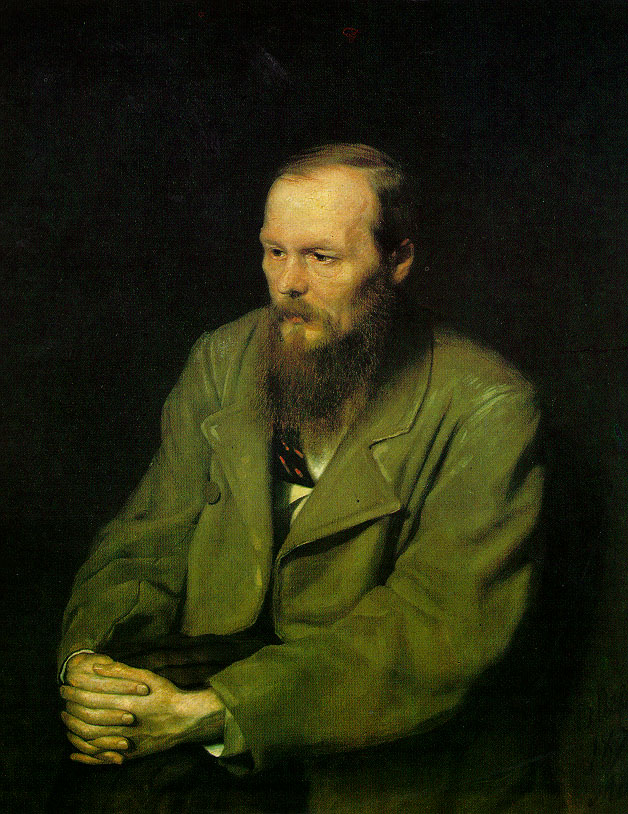
This is an attractive position to follow, and it certainly avoids falling into the crude trap of believing that the later novels are simply Slavophile or Christian manifestos. But there is a difficulty with it. And the difficulty is raised by the strange voice of Dostoevsky himself, not merely in the books but also in the journalism. If there is a lack in Williams’s rich book – and it will certainly be enjoyed by a wide audience and stimulate an eager rereading of Dostoevsky – it is not that it fails to refer to Dostoevsky’s journalism (there is plenty of ripe reference to A Writer’s Diary), but that it does not confront the problem which this journalism presents to the “polyphonic” reading of the novels. The novels are indeed polyphonic, and it is impossible to catch their essence unless they are read with the patience and the eye for detail that Williams repeatedly demonstrates. But Dostoevsky himself makes abundantly clear (in The Devils, for example) what he thinks of the pernicious influence of 1840s liberals; and the mockery heaped on the heads of old Verkhovensky or of Karmazinov (Turgenev) is precisely of the kind we should expect from Dostoevsky the journalist. Indeed this journalist, far from fading away as the novelist in him got into his stride, is ever-present. As if aware of the aesthetic, not to say philosophical, difficulty which this will present, Dostoevsky invents local narrators in The Devils and Karamazov who relate the strange events as if from the position of the town gossip. But even the use of the narrators cannot entirely blind us to the presence of Another – namely the violently intemperate journalist Dostoevsky who both is, and is not, a part of the dialogues which he constructs for his characters, and for the narratives of the shadowy storytellers. The hectoring satirist, the bombastic nationalist, the predictable anti-Semite who wrote the reams of journalism would not, one feels, have been capable of writing the great novels; and yet – this is the paradox and the proviso – Dostoevsky was not writing (to use the Miltonic metaphor) the novels with his right hand and the journalism with his left. The loud-mouthed Slavophile journalist is there in the very texture of the novels.

English novelists have often done time in their youth as journalists in some shape or form. Yet in almost all cases – whether you think of Marian Evans working on The Westminster Review, or Graham Greene as a sub-editor on The Times, or even of Martin Amis or Alan Hollinghurst on the TLS – the job has been seen as a way of making ends meet before they took wing as purely “creative” writers. The career of Dostoevsky (1821–81) unfolded in a different way. He was involved off and on throughout his career with Russian periodical literature; but far from shaking off the humiliating trappings of hack work, his trajectory rose towards it. He wrote for the St Petersburg Gazette in his youth, after the publication of Poor Folk (1846), and the novels thereafter are all laced with such reflections about the current state of the world as, in an English tradition, would more naturally be found in newspaper columns or other periodicals. The House of the Dead, written about his four years in a Siberian prison camp (from 1849 onwards), is journalism of the first degree. His marvellous travel sketches, Winter Notes on Summer Impressions (1863), are a superbly scornful, and accurate, picture of contemporary Europe. In his European wanderings, accompanied by his much younger second wife Anna, he had written The Idiot and, after the completion of Besy (The Devils, or, as it is called in a brilliant new Penguin translation by Robert A. Maguire, Demons), Dostoevsky returned from his European wanderings to take up the editorship of The Citizen (Grazhdanin). The articles that he himself wrote for this publication, now given the title of The Diary of a Writer and running to well over a thousand pages, must certainly be read alongside the great novels of the later period.

The repeated railing against the corruptions of the West, the defence of a belligerent and militaristic foreign policy against Austria and Turkey, and, above all, the reiteration of the belief that Russians are the God-bearers of history, are familiar Slavophile themes to anyone who has read the literature of the 1870s. “So please don’t tell me that I do not know the people! I know them; it was because of them that I again received into my soul Christ Who had been revealed to me in my parents’ home and Whom I was about to lose when, on my own part, I transformed myself into a ‘European liberal’”. There are endless such moments in this later journalism, when we find ourselves reminded of the more histrionic characters in his novels. No one could enlist the journalist Dostoevsky, as they have enlisted Dostoevsky the novelist, as an Ur-member of the Death of God school, nor even, one suspects, as a post-atheistic minimalist, whatever that is. But equally, only the insensitive could fail to see that it is essential to read the novels as narratives in which ideas repellent to Dostoevsky are given freedom to breathe. Indeed, in one of his finest chapters, Williams argues that this is central to Dostoevsky’s entire purpose as a writer, and as a religious thinker. Auden’s line about teaching the free man how to praise comes to mind. Williams’s Dostoevsky is cleverly constructing a rhetoric of freedom, discovering a language which can escape determinism. Brilliant as the Archbishop’s book is, however, neither he nor anyone else will ultimately solve the riddle, which is one of the reasons why Dostoevsky remains one of the most endlessly interesting writers who ever lived.

Was it Dostoevsky who thought that if man ceases to believe in his immortality and in God, then all is permitted? Or was it Ivan Karamazov, as filtered through his murderous half-brother Smerdyakov, as a feeble excuse for having killed his own father? Is it Dostoevsky, or the Devil, or Ivan Karamazov imagining the Devil, who says that he would rather give up everything and become a merchant’s wife lighting votive candles? It certainly seems very like the Dostoevsky who, in 1854, shortly after being released from prison, wrote to Natalya Fonvizinia, “if someone were to prove to me that Christ was outside the truth, and it was really the case that the truth lay outside Christ, then I should choose to stay with Christ rather than with the truth”. How does one interpret the self-dramatizing outbursts by Dostoevsky the journalist with the comparable, sometimes all but identical statements made in the novels by people who are on the verge of being unhinged? A good example, explored by Williams, is Marya Timofeevna Lebyadkina, the funny little crippled sister of the drunken captain in The Devils, one of the most Dickensian figures in the whole Dostoevskian oeuvre. (The casual slitting of her throat is surely one of the most unbearable events in the novel.) During a scene which begins as semi-farce, when she bursts into the respectable general’s widow’s drawing room after church, she makes the famous speech about watering the earth with tears which will bring forth joy. Williams cautiously tells his readers that the words have “been taken too hastily for an expression of Dostoevsky’s own spirituality”. Williams points out Marya Timofeevna’s heterodoxy, not to say heresy – “God and Nature are all one”, she says, and she identifies the Virgin, “the hope of the human race”, with “Sacred Mother Earth”. “She is in some sense a prophetic presence”, Williams comments, “but we are warned to read her words with care”. Her theological confusions have much in common, he adds, with those of others “who have turned their backs on transcendent reality”, including the key members of the revolutionary cell who cause all the diabolical catastrophes in the story.

His attempts to make sense of this passage for the reader perhaps demonstrate the limitations of any attempt to explain the novels, rather than give oneself up to them. At first it almost seems as if Williams the professional divine is marking the ravings of poor Marya Timofeevna for her theology Finals. Then, as if conscious that such an approach is inapposite, Williams changes gear. First comes a “lit crit” reading of the passage – Marya has a fantasy that she has given birth to a baby whom she has drowned in a pond, and this, Williams argues, perhaps reasonably, “anticipates” the murder of Shatov, to whom she is spinning the yarn, and whose body is eventually destined to be dumped in the pond; it also echoes the gospel narrative which gives the book its title – the cascading of the Gadarene swine into the sea. But having corrected her theology, Williams then turns in the opposite position where he does approve of it after all. When Shatov tells the wicked Stavrogin to repent and water the earth with his tears, “it is a sign of reconnecting with a reality Stavrogin is fleeing from, reconnecting with what is outside his head or his will . . . . Marya is right to the extent that reconciliation with God and with nature are inseparable”. Phew! So the poor lame grotesque perhaps gets her Upper Second after all.

At points such as this, one feels that the commentator is trying to represent Dostoevsky as a more coherent, and in a sense more respectable artist than he really was. It feels as though a gentle Western intellectual is bringing his great Russian friend forward to introduce to us. As Dostoevsky shouts something out, perhaps on the verge of an epileptic fit, or asking to borrow some money for the gambling tables or shouting an anti-Semitic insult, we imagine Williams rendering his comments as some subtly phrased compliment to the Dean and Chapter. But the moments when Williams’s pages give off this tone are rare. For the most part, we feel ourselves uncannily inside not merely the novels, but the mind that made them. There is something electrifying in Williams’s chapters on Dostoevsky’s treatment of the demonic, on his exploration of blasphemy and on the Russian’s incarnational profundity. Precisely because Dostoevsky was trying, in the face of nineteenth-century determinism, to free his characters, and his readers, from the deadness of systems, he took the risk of incoherence. For that reason, trying to extract sense from him is a delicate task.

Towards the end of his book, Williams quotes that quite extraordinary story which Dostoevsky tells in A Writer’s Diary for 1873. (It is Number 4 of The Citizen.) A young peasant pilgrim, for a dare, receives his Communion, but does not swallow it. Instead, to fulfil the dare, he must take the consecrated morsel, place it on a stick, and fire a gun at it. As he does so, he sees the crucified figure whom he is shooting, and he himself passes out of consciousness. Williams uses this story for a deft analysis of the way comparable blasphemous acts in the novels (Fedka placing a mouse in a glazed icon, for example, in The Devils) alert the reader to the manner in which religious truth can be envisioned. “The interwoven stories of Zosima, Markel, Alyosha and Mitya are his mature essay in imaging the holy – not simply in one ‘achieved’ character, despite the pivotal significance of Zosima, but precisely in the interaction and mutual mirroring in these lives.” The point is nicely made. But the shock of the story of the peasant shooting the eucharistic morsel is, as Dostoevsky insists, uniquely Russian: the young peasant with his gun, his defiance, his awful penitence. Only a man who believed in the ultimate reality of Christ in the Eucharist would have perpetrated the act of shooting.

Perhaps one of the deepest mysteries of our own times is not that Darwinian atheists, whom Dr Williams takes to task in his opening pages, have emerged from the milk-and-water post-Enlightenment religious traditions of England to mock simple-minded American-style Evangelicalism. It is that the Russian Orthodox faith, which Dostoevsky was right to see as something different in kind from the religion of other nations, has survived nearly a century of Marxist atheism, with civil war, massacre, starvation and a relentless attempt to eradicate it from the Russian soul by persecution and by programmes of materialist education. Whether a Western intellectual believes in it, or feels at home in it, is an irrelevance. No sooner had the Soviet Union imploded than there reappeared, in full view, the Church of Fr Zosima and Bishop Tikhon, seemingly strengthened by its torments – just as in Dostoevsky’s novels murders and drunkenness, child-molestations, suicides and blasphemies actually quicken the faith of indelibly drawn, mired but redeemed characters.

The Doctrine of Election in Evangelical Calvinism

The latest edition of the Irish Theological Quarterly is now out and includes an essay by Myk Habets on ‘The Doctrine of Election in Evangelical Calvinism: T. F. Torrance as a Case Study’. Here’s the abstract:

Representing what may be termed ‘evangelical Calvinism,’ Thomas Forsyth Torrance’s doctrine of election is, with critical modifications, recommended as a model worthy of contemporary acceptance. Torrance follows Barth’s christologically conditioned doctrine of election closely, but not slavishly, and presents a view of universal atonement and even universal pardon, but not universal salvation. Torrance contends that the word ‘predestination’ emphasizes the sovereign freedom of grace and so the ‘pre-‘ in predestination refers neither to a temporal nor to a logical prius, but simply to God Himself, the Eternal. For God, election is not an event of the past but rather an action internal to God (a se). Because Christ is the ground of election, and Christ came in space—time, election took on a temporal component. Election derives from the Divine initiative of grace and Torrance is highly critical of Arminian theology at this point, accusing it of being semi-Pelagian; he is equally critical of Roman Catholicism which, according to Torrance, is also semi-Pelagian if not Pelagian outright.

Around the traps …

John Wilson’s Introduction to Modern Theology: A Review

John E. Wilson, Introduction to Modern Theology: Trajectories in the German Tradition (Louisville/London: Westminster John Knox Press, 2007). x+286 pages. ISBN: 978-0-664-22862-0

The work of the eighteenth-century Königsberg-born philosopher Immanuel Kant set a new direction for philosophical and theological enquiry up until our day. Because of Kant, theological behemoths like Fichte, Schelling, Hegel, Kierkegaard and Schleiermacher were able to propose new form to the increasingly important conversations between religion and reason, and revelation and experience. So attractive and dominating were these new forms that no Protestant theologian in nineteenth-century Germany could think without them. Moreover, late eighteenth- and nineteenth-century Germany witnessed one of the most creative and prodigious outputs in theological work in any period before or since.

In this introduction, Professor of Church History at Pittsburgh Theological Seminary John E. Wilson invites us on a survey of the German theological tradition beginning with Kant, and proceeding via Hegel, the Mediating Theologians and the Ritschlians, through to Bonhoeffer, the Niebuhr’s and Rahner, among others, purposing to demonstrate lines of continuity and trajectories in the German Protestant traditions since Kant.

Commencing with a useful historical overview of the political and social context from the French Revolution until those fertile decades following WWII, Wilson proceeds to devote chapters to many of the leading shapers of the German schools. Each chapter mostly stands alone and is given to introducing readers to the key writings, grammar (Wilson helpfully attends to key German words and explains them) and contributions of various theologians in an accessible though learned way. The chapter on post-liberal American theologian Paul Tillich was particularly helpful, not least because Tillich represents a revival in the basic pattern of nineteenth-century mediation theology (both in its method and in a return to its sources in German Idealism) but in a radically new context, but also because Tillich’s writing does not represent theological literature in its most reader-friendly form. One who provides help with reading Tillich’s map is never unwelcome.

While Wilson’s grasp of the literature is encyclopaedic in its scope, in not a few places the work is (over)dominated by questions of epistemology and on the relationship between religion and science. Other equally-important features of the tradition are all but ignored. For example, apart from the briefest of mentions in the context of Moltmann’s christology, there is an absence of discussion on nineteenth-century kenoticism. Another disappointment for this reviewer is that while Wilson traces the tradition’s tributary from Germany to the USA, the German tradition’s influence throughout other parts of the world is ignored. A concluding chapter which recapitulates the sweep undertaken, offers some critical reflection on the tradition and some suggestions for possible direction is also sadly lacking from this study (as is a bibliography). Consequently, the reader is left with the clear sense that while Hegel is (deservedly) no doubt the titan whose voice refuses to be silenced, she holds in her hands an unfinished manuscript.

These reservations aside, this volume is a valuable introduction to the theological landscape of nineteenth- and twentieth-century theology, not least for that burgeoning array of scholars undertaking work on Barth, Brunner, Bultmann, Ebeling, Bonhoeffer, or on those German theologians who emerged in the 1960’s and whose theological output remains underappreciated – Sölle, Moltmann, Pannenberg, Heidegger, Ott and Jüngel, in whom the tradition reaches its most satisfying evolution.

Thomas Wyatt: ‘Ffrom depth off sinn’

Ffrom depth off sinn and from a diepe dispaire,
    Ffrom depth off deth, from depth off hertes sorow,
    From this diepe Cave off darknes diepe repayre,
The have I cald o lord to be my borow;
    Thow in my voyce a lord perceyve and here
    My hert, my hope, my plaint, my ouerthrow,
My will to ryse, and let by graunt apere

That to my voyce, thin eres do well entend.
    No place so farr that to the it is not nere;
No depth so diepe that thou ne maist extend
    Thin ere therto; here then my wofull plaint.
    Ffor, lord, if thou do observe what men offend
And putt thi natyff mercy in restraint,
    If just exaction demaund recompense,
    Who may endure o lord? who shall not faynt
At such acompt? dred, and not reuerence,
    Shold so raine large. But thou sekes rather love,
    Ffor in thi hand is mercys resedence,
By hope wheroff thou dost our hertes move.
    I in the, lord, have set my confydence;
    My sowle such trust doth euermore approve
Thi holly word off eterne excellence,
    Thi mercys promesse, that is alway just,
    Have bene my stay, my piller and pretence;
My sowle in god hath more desyrus trust
    Then hath the wachman lokyng for the day,
    By the releffe to quenche of slepe the thrust.
Let Israell trust vnto the lord alway,
    Ffor grace and favour arn his propertie;
    Plenteus rannzome shall com with hym, I say,
And shall redeme all our iniquitie.

– Thomas Wyatt, Ffrom depth off sinn’, in Collected Poems of Sir Thomas Wyatt (eds. Kenneth Muir & Patricia Thomson; Liverpool: Liverpool University Press 1969), 121-22.

Ratzinger on being human

In a fascinating discussion on praying for the dead, Ratzinger offers the following observation on what it means to be human being: ‘Yet the being of man is not, in fact, that of a closed monad. It is related to others by love or hate, and, in these ways, has its colonies within them. My own being is present in others as guilt or as grace. We are not just ourselves; or, more correctly, we are ourselves only as being in others, with others and through others. Whether others curse us or bless us, forgive us and turn our guilt into love – this is part of our own destiny. The fact that the saints will judge means that encounter with Christ is encounter with his whole body. I come face to face with my own guilt vis-à-vis the suffering members of the body as well as with the forgiving love which the body derives from Christ its Head … This intercession is the one truly fundamental element in their “judging.” Through their exercising of such judgment they belong, as people who both pray and save, to the doctrine of Purgatory and to the Christian practice which goes with it. As Charles Péguy so beautifully put it, “J’espère en toi pour moi”: “I hope in you for me.” It is when the “I” is at stake that the “you” is called upon in the form of hope’. – Joseph Ratzinger, Eschatology: Death and Eternal Life (ed. Aidan Nichols; trans. Michael Waldstein; Washington, D.C.: The Catholic University of America Press, 1988), 232.

Rowan Williams: ‘Being Disciples’

Discipleship is, as your title indicates, a state of being. Discipleship is about how we live; not just the decisions we make, not just the courses we attend, but a state of being. It’s very telling that at the very beginning of St John’s Gospel, a text to which unsurprisingly I’ll be coming back later (St John 1.38-39), when the two disciples of John the Baptist come to Jesus they say, ‘Rabbi, where are you staying?’, Jesus says, ‘Come and see’, and they remained with him that day. The Gospel teaches us that the bottom line in thinking about discipleship has something to do with staying.
No accident then that later in the same gospel the language of abiding is what is used to speak about the relation of the disciple to Jesus. In other words, what makes you a disciple is not turning up from time to time. Discipleship may be being a student in the strict Greek sense of the word, but it doesn’t mean turning up once a week for a course, or even a sermon. Discipleship is not an intermittent state; it’s a relationship that continues. In the ancient world being a student was rather more like that than it is these days. If you said to a modern student or prospective student that the essence of being a student was to hang on your teacher’s every word, to follow his or her steps, to sleep outside their door in case you missed any pearls of wisdom falling from their lips, to watch how they conducted themselves at the table, how they conducted themselves in the street, you might not get a very warm response.

But in the ancient world, it was a rather more like that. To be the student of a teacher was to commit yourself to living in the same atmosphere and breathing the same air; there was nothing intermittent about it. Discipleship in that sense is a state of being in which you’re looking and listening without interruption. It’s much more like, for instance, the state of the novice monks as they appear to us in the sayings of the Desert Fathers, who are just hanging around hoping that they’ll get the point, who occasionally say desperately to the older monks, ‘Give us a word, Father’, and the older monk says something really profound like, ‘Weep for your sins’ followed by about six weeks of silence. Or indeed the relationship between (even today) the Buddhist novice and the master in a Zen house, where something similar applies. You’re hanging around; you’re watching; you’re absorbing a way of being, and you yourself are in a state of being. You learn by sharing life; you learn by looking and listening. So “‘Rabbi where are you staying?’ … ‘Come and see.’ … They saw where he was staying and remained with him that day.” is quite a good beginning to think about discipleship. And, as I hinted, I don’t think it’s any accident that John puts it right at the beginning of his Gospel. If we’re going to understand what he has to say to us about discipleship, we have to understand about abiding and sharing, and this non-intermittent side of being a disciple.

I shall have a little more to say about in a while about that sharing a place, an atmosphere, a state of being. But let us just stay with what it involves for a moment and think about it in terms of discipleship as a state of awareness. The disciple is not there to jot down ideas and then go away and think about them. The disciple is where he or she is so that they’ll change – so that the way in which they see and experience the whole world changes. That great Anglo-Welsh poet David Jones wrote in one of his late poems of the poet’s relation to God: ‘It is easy to miss him at the turn of a civilization.’ And discipleship as awareness is trying to develop – to grow – into those skills that help you not to miss God – Jesus Christ – at the turn of a civilization, or anywhere else. Awareness is inseparable in this connection from a sort of expectancy, and I think that is one of the characteristics that most clearly marks the true disciple.

The true disciple is an expectant person, always taking it for granted that there is something about to break through from the master, something about to burst through the ordinary and uncover a new light on the landscape. The master is going to speak or show something; reality is going to open up when you’re in the master’s company and so your awareness (as has often been said by people writing about contemplative prayer) is a little bit like that of a bird-watcher, the experienced bird-watcher, who is sitting still, poised, alert, not tense or fussy, knowing that this is the kind of place where something extraordinary suddenly bursts into view.

I’ve always rather liked that image of prayer as bird-watching. You sit very still because something is liable to burst into view, and sometimes of course it means a long day sitting in the rain with nothing very much happening, and I suspect that most of us know that a lot of our experience of prayer is precisely that. But the odd occasions when you do see what T. S. Eliot called ‘the kingfisher’s wing flashing light to light’ make it all worthwhile. And I think that living in expectancy – living in awareness, your eyes sufficiently open and your mind sufficiently both slack and attentive to see that when it happens – has a great deal to do with discipleship, indeed with discipleship as the gospels present it to us. Interesting (isn’t it?) that in the gospels the disciples don’t just listen, they’re expected to look as well. They’re people who are picking up clues all the way through.

This is shown to us in very different ways in different gospels, different gospels which I think pick up those different keys and registers and styles of discipleship that all of us experience in different ways, so that we can recognize ourselves in very diverse modes. What I mean is that the gospel of St Mark on the whole portrays the disciples as incredibly stupid about picking up clues: they can’t do it. The kingfisher flashes past them and Peter, or someone (usually Peter), turns round and says ‘Oh, I missed that!’ Whereas in St John’s gospel, there’s a much more steady accumulation of moments of recognition and realization from the moment (right after the first sign in Cana of Galilee) when the disciples see his glory, and they pick up, moment by moment, and they see.

And that theme of seeing of course comes to its great climax when Peter and the Beloved Disciple stumble into the empty tomb and see the folded grave clothes. It’s an inexhaustibly wonderful text because it distinguishes so clearly between the first moment when Peter looks in and ‘notices’ and the other disciple comes in and ‘sees’. And you can draw up a chart of those words as they evolve through the whole of St John’s gospel. That ‘seeing’ – noticing and seeing – the noticing and seeing which is part of the disciple’s task. And although the disciples may still be a bit slow in St John’s accounts, they’re not nearly as dim-witted as they appear in St Mark. And that corresponds to dimensions of our own discipleship: those longish periods where, looking back, we feel ‘How could we have been so obtuse?’ and those periods where we think ‘Yes: I don’t see it all yet but it’s beginning to link up.’ And to me the excitement of reading St John’s gospel, in the context of trying to be a disciple of Jesus Christ, is something to do with watching that excitement of things linking up as the great narrative unfolds. And I’m sure that in reality, Peter and John and the rest of the disciples and the Twelve were actually not so very different from us: that is, they had their dim-witted days, and their bright days.

Disciples watch, they remain alert, attentive, watching symbolic acts as well as listening for words; watching the actions that give the clue to reality being re-organized around Jesus. Let me just remind you of the beginning of John’s story once again – the wedding at Cana (St John 2.11): Jesus performed this first miracle in Cana in Galilee. There he revealed his glory, he made his glory to be seen. And his disciples believed in him, his disciples trusted him. They see what’s going on and something connects.

Sometimes those signs are difficult or ambiguous. ‘What did you do that for?’ is a question that is occasionally hangs around the gospel narratives. There’s the occasion in the synoptic gospels of the cursing of the fig tree. Jesus goes to Jerusalem. The puzzlement of what’s going on there, a puzzlement which many modern readers share with the first disciples; but there it is, an action which Jesus so to speak offers to the disciples and says, ‘What do you make of that? Do you see what that’s about?’ Again, another strange exchange between Jesus and the disciples in the boat after the feeding of the multitude, ‘Do you see it yet? Do you understand what was going on yet? How many loaves? How many baskets of leftovers? What have you seen? Tell me.’ So, awareness and expectancy are very much around in the expectation that Jesus seems to have of the disciples. Watching the acts as well as listening to the words. Watching with a degree of inner stillness that allows the unexpected world-changing to occur.

And for us today, trying to be Christ’s disciples, awareness and expectancy are no less important. We are not precisely where those first disciples were. We are post-resurrection believers and, in theory at least, we ought to understand a little more than Christ’s first disciples in the gospels did. In theory at least. We have the Holy Spirit to direct and inform, to energize our awareness, to kindle our expectancy. But like those first disciples, we look as well as listen. We watch with expectancy the world in which live. We listen for the word to come alive for us in scripture. We look at the great self-identifying actions of the Church in the sacraments, asking the Spirit to make the connection come alive. We look, we listen – awareness, expectation. And (a point that I love to underline because it’s not always easy to hold to this in the Church) we look at one another as Christians with expectancy. It cannot be said too often, but the first thing we ought to think of when we are in the presence of another Christian is: what is Christ giving me through this person, this group? Given what we encounter in some of the other Christians we mix with much of the time, that can be hard work. But, none the less, that is the expectation of expectancy.

Jesus has brought us together precisely so that we look at one another with that degree of expectancy, which (as again I usually have to say) doesn’t mean that you will agree with everything the other Christian says. It simply means that you begin by saying, ‘What is Jesus Christ giving me here and now?’ Never mind the politics; never mind the policy; never mind anything, just ask that question and it does perhaps move you forward a tiny bit in discipleship. Can we live in a Church characterized by expectancy towards one another of that kind? It would be a very biblical experience of the Church.

But now, awareness, expectancy, discipleship as not something intermittent – all of this presupposes the category of following, which is so very basic in all the language about discipleship. This listening awareness, this expectancy, presupposes following because it presupposes that we are willing to travel to where the master is, to follow where the master goes. And, of course, in the gospels, where the master goes is very frequently not where we would have thought of going, or where we would have wanted to go. Hence, taking up the instrument of our execution – the cross – and walking his way.

Let me take you to St Luke 14 for a moment. In that chapter Jesus repeats insistently in what sort of lives cannot be lived by disciples. And they’re hard words. Those who come to me cannot be my disciples unless they love me more than they love father and mother, wife and children, brothers and sisters (14.26). And themselves as well: those who do not carry their own cross and come after me cannot be my disciples. ‘Cannot’: it repeats itself through that chapter in a very alarming way. But the point is that if you’re going to be where the master is, those things you think come naturally and comfortably are not necessarily going to be where you find yourself. The place where you’re going to be is always going to be defined by the master, not by you, because a disciple is not greater than his master, as both St Luke and St John in their different ways say.

Following so as to be in the same place as the master. There are two very interesting, rather different directions in which we can take this idea. First of all, a fairly obvious meaning, but one I think is quite important in thinking about discipleship in the New Testament. Being where Jesus is means finding yourself in the company of the people whose company Jesus seeks and keeps. So, when Jesus goes to be in the company of the excluded, the wretched, the self-hating, the poor, the diseased, that’s where you’re going to find yourself. If you are going to be where Jesus is, if your discipleship is not intermittent but a way of being, that’s where you are going to find yourself, in the same sort of human company that he is in. This is once again an important reminder that our discipleship is not about choosing our company beyond choosing the company of Jesus.

So that is indeed why so many great disciples across the history of the Christian Church, and indeed now, find themselves in the company of people they would never have imagined being with had they not been seeking to be where Jesus is. Those who have gone to the ends of the earth for the sake of the Gospel, and the spread of the Gospel; those who have found themselves in the midst of strangers wondering ‘How did I get here?’ – great figures like (one of my own personal heroes) Bishop Thomas French, a great CMS figure of the nineteenth century who spent almost his entire mission ministry as Bishop of the Persian Gulf at a time when there were (at a generous estimate) two Christians in the whole of the area he was looking after and who died alone of fever on a beach in Muscat. What took him there? The desire to be where Jesus was, Jesus waiting to come to birth – come to visibility – in all those souls whose lives he touched even though in the long years he worked in the Middle East he made barely one convert. He wasn’t there first to make converts, he was there first because he wanted to be in the company of Jesus Christ: Jesus Christ reaching out to and seeking to be born in those he worked with. It’s the very failure, and the drama of that failure, that draws me to his story now (not, I hasten to add, because I have any kind of affiliation to failure, though archbishops perhaps ought to get used to it) but because it just demonstrates the utter value of a discipleship that is concerned with being where Jesus is regardless of the consequences.

But then there’s another, deeper and I think more exciting direction to this, a dimension that comes again and again into visibility in the fourth gospel. ‘Where I am, there will my servant be also’, (St John 12). And where Jesus Christ is – St John has told us at the beginning of his gospel – is next to the Father’s heart. The Word of God in the bosom of the Father. And so, where he is we are to be also. We are to be not only where he is in terms of mission and outreach and service in the world, where he is in serving the outcast; we are also to be where he is in his closeness to the Father. We follow him, not simply to the ends of the earth, to do his work and echo his service; we follow him to be next to the heart of the Father.

As I was thinking about this I was struck by a thought that that had never really occurred to me before: that there’s a connection in St John’s gospel between the way in which disciples are to see and do what their master is doing, and what Jesus himself says about his relation to the Father. If you look at St John 5.19, you find the great affirmation of the Son doing what the Father is doing. The Son gazes on and absorbs the eternal action of the Father, and the acts it out in his own life, in eternity and in history. The Son, the Word of God, drinks in the everlasting act of the Father and then makes it real in another context. Does St John mean us to pick up a sort of echo of that in various places in his Gospel, where he speaks in similar terms about seeing and doing? Look too at St John 7:3: ‘Leave this place,’ say Jesus’s brothers, ‘and go to Judea, so that your followers will see the things that you are doing; for no one hides what he is doing if he wants to be well known.’ And then of course there are the great meditations of the farewell discourses (St John 17) where it seems very clear that the seeing and the doing are connected. The disciples see what Jesus is doing, and they also see that Jesus is doing what the Father is doing, they see the glory that Jesus and the Father give to each other, and that glory is given to them. But I suspect that we’re meant at least to make some connection there between the seeing and doing of Jesus in relation to the Father, and the seeing and doing that goes on between disciples and Jesus. This helps us again in thinking about what I called at the beginning the non-intermittent character of discipleship. The relationship of Jesus to the Father is not episodic. Jesus does not receive an occasional bit of instruction from the Father, his relationship is sustained, eternal and unbroken. He gazes into the mystery of the Father’s love and he does it, in heaven and on earth. And we in our discipleship are gazing into the mystery of that incarnate love and we are seeking to do that same will, to act that same action, on earth as it is in heaven, as the Lord’s prayer puts it.

So, that suggests the rather ambitious thought (but an ambition entirely justified by scripture) that the heart of discipleship is trinitarian; that it is as we understand more deeply the trinitarian life of God that’s uncovered for us in those wonderful passages of St John’s gospel that we understand more fully what it is that is the root and energy of our being disciples here and now. We see and we do, not just because that’s the way discipleship or studentship worked in the ancient world; we see and we do because that’s what the Father and the Son are involved in for all eternity.

Let me try to draw some of this together. What I’m suggesting is that to get some perspective on the biblical sense of the disciples’ identity means first and most obviously the simple willingness to be consistently in Christ’s company. What that means practically for the Christian today is being consistently in the company of other servants of Christ, in the company of the revelation of Christ in scripture, in the company of the Father and the Son in the Spirit in prayer, all of which will require of us a certain degree of inner stillness and, what I think I called earlier, a sort of poise: the attentiveness of the bird-watcher again. Attention and expectancy, an attitude of mind sufficiently free of the preoccupations of this or that business of the ego to turn itself with openness to what God in Christ is giving.

At the primary level, that will mean learning and deepening our attentiveness to the Bible, to the sacraments and to the life of the Body of Christ. And secondly, arising out of that, it means learning a level of attentiveness to all persons, places and things, looking at everything with the eye of expectancy, waiting for something of God to blossom within it. Being in Christ’s company, learning attentiveness and practicing that kind of still alertness that is looking and waiting for the light to break through. Then thirdly, it means being attentive to where Christ is going, keeping company with those he’s with. Among them we will find the most unexpected and unlikely characters, the kinds of people that Jesus seems to spend so much time with in the gospels and today. Most importantly we will find him keeping company with the Father, in whose company he eternally is.

Our attentiveness is not just a kind of aesthetic attitude, an appreciation of beauty. It is also a willingness to bring an active and transfiguring love into that situation of expectancy, to keep company so that an action and a relationship may come to being. So, being a disciple means being in his company, learning stillness and attentiveness, expectancy, being willing to go when Jesus is going and to be in the company of those he’s in company with, letting the action come through and the relation be made; letting his action come through us as the Father’s act comes through him. Finally what seems to be suggested by these reflections upon the biblical identity of the disciple is that our discipleship in the company of Jesus is a trinitarian mode of life that is imbedded in the relationship of the Father, the Son and the Holy Spirit: that is, it is a contemplative mode of life (not in the sense that we might all become Carthusian hermits, tempting as that often appears); but that we’ve all got to grow into what I’ll call a ‘mature stillness’, a poise and an openness to others and the world, so that thirdly, it can also be a transformative mode of living in which the act of God can come through so as to change ourselves, our immediate environment, our world.

A trinitarian living, a contemplative living, a transformative living: no opposition here (as there isn’t in the fourth gospel) between contemplation and action. (And we do need to say that: it’s one of the awful clichés that Christians have sometimes been trapped by: what matters more, contemplation or action? Perhaps the only answer to that is: just try and think of contemplation without action or action without contemplation, and you realize you’re drawing up a charter for really sterile, and potentially even destructive, human living.) Hold them together – contemplation as your openness to the real roots of transforming action – and maybe it doesn’t look like quite such a stand-off.

The greatest teachers of prayer and action have held those together in the most remarkable way, like the great St Teresa of Avila (1515-82) saying that when you have finally ‘progressed’ through all the hair-raising mystical experiences that she describes, what it’s all finally about is enabling you to do some very ordinary things a little bit better. As she says, when you’ve been through the seventh mansion of spiritual union with God you’re better at the washing-up. The habit of attentiveness and expectancy towards God and one another results, overflows, in modes of being and action in the world that – because it can be free from ego and anxiety – actually allows God-shaped change to take place around you. Not by effort and struggle, furrowed brows and tensed muscles, but by allowing something to rise up, something irresistible within your awareness that is God’s purpose coming through to make the difference that only God can make.

Finally then, discipleship is indeed about traveling, and about growing. You can’t begin to describe the life of the disciples in the New Testament without coming to grips with that dimension of traveling. Disciples were people called away from home because they must be where their master is. And that is never going to be comfortable; but perhaps it becomes intelligible when one realizes (something that again is writ large on every page of scripture) that the home where you will finally realize who and what you are is the home, the place prepared for you, by Jesus. And the disciple is engaged in a journey from a place that looks like a comfortable and manageable home towards a home that is eternal and that – as St Augustine says – doesn’t fall away or fall into non-existence because we don’t happen to be living in it at the moment. Discipleship is, paradoxically, a journey away from home, and a journey toward home. Just as the conversion that is the daily task of a disciple, is a break with what seems closest and dearest to us, and a cleaving to what is actually deepest and most natural in us.

[Source: Fulcrum]

The Cost of War: Funding International War Crimes

The National Priorities Project of Washington DC has introduced a timely new function to their site, CostOfWar.com. Through the Individual Cost of War Calculator, U.S. taxpayers can see what portion they owe of the $590 billion and counting on the Iraq war.

www.CostOfWar.com has long provided the most accurate tally of the budget expenditures on the Iraq war with their War Cost Calculator. They have also allowed users to break down that total cost to their state or local area.

Now CostOfWar.com shows what portion of that 1/2 a trillion dollars each individual is responsible for. Users simply (and anonymously) input their income or taxes over the course of the Iraq war to see how much they personally paid, and will continue to pay.

For households making $75,000 a year, their cost of Iraq equates to approximately $20,000 to be paid toward the Iraq war right out of that family’s check book. Considering the failing economy, eye-opening information like this is sure to be a major issue in the U.S. Presidential race.

These calculations were originally launched in 2007 as MyWarTax.org. The founders, Jim Cousins and Don Raleigh of Minnesota, recently donated it to the National Priorities Project’s site, CostOfWar.com. The intent was to provide this information to a mass audience, and CostOfWar.com receives more than 100K hits each month.

Democracy fails without an informed citizenry, and CostOfWar.com is now informing people of their financial contributions to the Iraq War on an individual level.

[Source: Scoop]

Trevor Hart: ‘God and the Artist: Human Creativity in Theological Perspective’

Trevor Hart recently gave the 22nd Annual New College Lectures at the University of New South Wales. The three (exceptional) talks are now available for MP3 download:

Tuesday 2nd September: ‘The lunatic, the lover and the poet’: divine copyright and the dangers of ‘strong imagination’

Wednesday 3rd September: The ‘heart of man’ and the ‘mind of the maker’: Tolkien and Sayers on imagination and human artistry

Thursday 4th September: Givenness, grace, and gratitude: creation, artistry and eucharist

September bests …

Best books: The Changing Shape of English Nonconformity, 1825-1925, by Dale A. Johnson; Karl Barth’s Theology of Relations: Trinitarian, Christological, and Human: Towards an Ethic of the Family, by Gary W. Deddo

Best music: Roby Lakatos, The Gypsy Violin – Live in Budapest (2003); Show of Hands, Witness (2006); Martin Simpson, The Bramble Briar (2001)

Best films: Rails & Ties (2007); Cassandra’s Dream (2007)

Best drink: Trade Winds from the Cairngorm Brewery

How do we get at the entire personality of Christ?

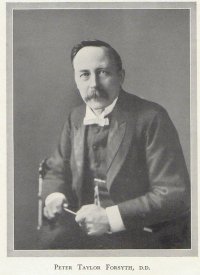
‘How do we get at the entire personality of Christ? The account in the Gospels is too meager for our purpose, and to many it has been made by criticism more or less unstable. With these data we are more successful in reaching the character than the person, though even the character cannot be depicted on modem, intimate, and psychological lines. The motivation, the pragmatism, cannot easily be traced, if at all. As we go into the Gospels it becomes clearer that they were not put there to depict a character, or to be a monument to a personality, but to lead up to the great crisis and victory which, for the first Christians, made Christ Christ before a Gospel was written, even in rudiment. The Gospels have a tendency. There is a movement in them. They hurry, with many a leap, to a dénouement, to a goal in which the movement “arrives,” where the deep fire flames. They make for a crisis where the center of gravity lies. And, as the interest concentrates, the treatment expands. They are more ample as they draw to the close. They spend a disproportionate space on the passion, and on all the precincts of the Cross. Their stream is never so broad as when it enters the sea and disappears. The Gospels have the work of Christ on the Cross for their goal, as the Epistles have it for their center. Redemption is their Leitmotiv.’ – P.T. Forsyth, ‘Christ’s Person and His Cross’. The Methodist Review 66 (1917), 9-10.

The Cross and Violence

Richard Floyd, author of a wonderful study called When I Survey the Wondrous Cross, and a Forsythian scholar, has posted some helpful reflections on the cross and violence:

James Baldwin Brown on the heart of it all

‘The world of earth is one great scene of spiritual strain and anguish, whose moans would drown the music of the morning stars, if there were not eternity to unfold the mystery, and to reveal that at the heart of it all there is ineffable and infinite love’. – James Baldwin Brown, The Doctrine of Annihilation in the Light of the Gospel of Love (London: Henry S. King & Co., 1875), 66.

Marilynne Robinson on The Art of Fiction

When Marilynne Robinson published her first novel, Housekeeping, in 1980, she was unknown in the literary world. But an early review in The New York Times ensured that the book would be noticed. “It’s as if, in writing it, she broke through the ordinary human condition with all its dissatisfactions, and achieved a kind of transfiguration,” wrote Anatole Broyard, with an enthusiasm and awe that was shared by many critics and readers. The book became a classic, and Robinson was hailed as one of the defining American writers of our time. Yet it would be more than twenty years before she wrote another novel.

In the interval, Robinson devoted herself to writing nonfiction. Her essays and book reviews appeared in Harper’s and The New York Times Book Review, and in 1989 she published Mother Country: Britain, the Welfare State, and Nuclear Pollution, a scathing examination of the environmental and public health dangers posed by the Sellafield nuclear reprocessing plant in England— and the political and moral corruption that sustained it. In 1998, Robinson published a collection of her critical and theological writings, The Death of Adam: Essays on Modern Thought, which featured reassessments of such figures as Charles Darwin, John Calvin, and Friedrich Nietzsche. Aside from a single short story—“Connie Bronson,” published in The Paris Review in 1986—it wasn’t until 2004 that she returned to fiction with the novel Gilead, which won the National Book Critics Circle Award and the Pulitzer Prize. Her third novel, Home, came out this fall.

In person, even when clad in her favorite writing attire—a pair of loose pants and a sweatshirt—Robinson carries herself with a regal elegance. While she is humble about her accomplishments and the acclaim they have brought her, the force of her intellect is apparent. In her nonfiction books, as well as in her recent novels, she passionately engages public policy as well as philosophical and theological scholarship. Her experience in academia—she wrote a Ph.D. dissertation on Shakespeare’s Henry VI, Part II at the University of Washington—made her a devout reader of primary texts, which remain the touchstones of her thought and conversation. Such intellectual pursuits clearly delight her. Her extemporizing on, say, Karl Marx’s Capital is often punctuated with laughter and blithe phrases such as “Oh, goody!” When a question gave her pause during our interview, she’d often shrug and say, “Calvin again,” and then look away as if the sixteenth-century Frenchman were standing in the room waiting to give her advice.

Robinson is a Christian whose faith is not easily reduced to generalities. Calvin’s thought has had a strong influence on her, and she depicts him in her essays as a misunderstood humanist, likening his “secularizing tendencies” to the “celebrations of the human one finds in Emerson and Whitman.”
Her novels could also be described as celebrations of the human—the characters that inhabit them are indelible creations. Housekeeping is the story of Ruth and her sister Lucille, who are cared for by their eccentric Aunt Sylvie after their mother commits suicide. Robinson dwells on how each of the three is changed by their new life together. Gilead is an even more intimate exploration of personality: the book is given over to John Ames, a seventy-seven-year-old pastor who is writing an account of his life and his family history to leave to his young son after he dies. Home borrows characters from Gilead but centers on Ames’s friend Reverend Robert Boughton and his troubled son Jack. Robinson returned to the same territory as Gilead because, she said, “after I write a novel or a story, I miss the characters—I feel sort of bereaved.”

Gilead and Home are both set in Iowa, where Robinson has lived for nearly twenty years, teaching at the Writers’ Workshop at the University of Iowa. For this interview, we met on six occasions over a five-month period. During that time, Iowa City seemed to experience every extreme of weather: two blizzards, frigid temperatures, hail, fog, spring rains, and severe thunderstorms. Shortly after our final meeting, the Iowa River reached record-setting flood levels.

Robinson leads a relatively solitary life. She is divorced, and her two sons are grown with families of their own. Her intellectual and creative ambitions leave little time for socializing. “I have this sense of urgency about what I want to get done and I discipline myself by keeping to myself,” she said. But she also has both a cell phone and a BlackBerry and during our conversations the world would occasionally intrude to interrupt her stream of thought. At one point her BlackBerry beeped to tell her she had an e-mail, and she said it was from a former student. “Blurbs,” she said. “I owe the world blurbs.”
Sarah Fay

INTERVIEWER Are there any unpublished Marilynne Robinson novels lying around that we don’t know about?

MARILYNNE ROBINSON In college, I was in a novel-writing class and I started a novel, which I loathed and detested the minute I graduated. It was as if worms had popped out of it or something. It was set in the Middle West, where I had never been—a little midwestern town with a river running through it. Isn’t that odd?

INTERVIEWER What eventually drew you to Iowa City?

ROBINSON The Workshop. I didn’t have any realistic conception of Iowa at all. I never expected to live in the Middle West because I had the same prejudices that other people have about the region. But when they invited me to teach here I thought it would be an interesting thing to do. So I came.

INTERVIEWER Were you told that it would compromise your creative energies to teach creative writing?

ROBINSON Yes, of course. But everything compromises your creative energies. Years ago I accepted a grant from the American Academy that was supposed to support me for five years without teaching. I lasted about a year and a half before I nearly went crazy. Teaching is a distraction and a burden, but it’s also an incredible stimulus. And a reprieve, in a way. When you’re trying to work on something and it’s not going anywhere, you can go to school and there’s a two-and-a-half-hour block of time in which you can accomplish something.

INTERVIEWER When you were little, what did you think you’d be when you grew up?

ROBINSON Oh, a hermit? My brother told me I was going to be a poet. I had a good brother. He did a lot of good brotherly work. There we were in this tiny town in Idaho, and he was like Alexander dividing up the world: I’ll be the painter, you’ll be the poet.

INTERVIEWER Is it true that Housekeeping started as a series of metaphors you wrote while you were getting your Ph.D. in English literature?

ROBINSON When I went to college, I majored in American literature, which was unusual then. But it meant that I was broadly exposed to nineteenth-century American literature. I became interested in the way that American writers used metaphoric language, starting with Emerson. When I entered the Ph.D. program, I started writing these metaphors down just to get the feeling of writing in that voice. After I finished my dissertation, I read through the stack of metaphors and they cohered in a way that I hadn’t expected. I could see that I had created something that implied much more. So I started writing Housekeeping, and the characters became important for me. I told a friend of mine, a writer named John Clayton, that I had been working on this thing, and he asked to see it. The next thing I knew, I got a letter from his agent saying that she would be happy to represent it.

INTERVIEWER Were you surprised?

ROBINSON I was, but these things always came with little caveats. She said, I’ll be happy to represent it but it could be difficult to place. She gave it to an editor at Farrar, Straus and Giroux, who wrote to me and said, We’d be very happy to publish it but it probably won’t be reviewed.

INTERVIEWER But then it was.

ROBINSON Anatole Broyard—God love him—reviewed it early because he thought no one would review it and he wanted to make sure it got attention.

INTERVIEWER How did you approach creating the characters of Ruthie and Sylvie in Housekeeping?

ROBINSON In the development of every character there’s a kind of emotional entanglement that occurs. The characters that interest me are the ones that seem to pose questions in my own thinking. The minute that you start thinking about someone in the whole circumstance of his life to the extent that you can, he becomes mysterious, immediately.

INTERVIEWER Was your family religious?

ROBINSON My family was pious and Presbyterian mainly because my grandfather was pious and Presbyterian, but that was more of an inherited intuition than an actual fact. We would talk more politics than anything else at the dinner table. And they were very Republican politics, I need hardly say. Or perhaps I do need to say.

INTERVIEWER What did your father do for a living?

ROBINSON He worked his way up in the lumber industry the old-fashioned way. The lumber industry was dominant in that part of Idaho. When you fly over the Rocky Mountains now, you see terrible clear-cutting, but back then there wasn’t the level of exploitation that there is now.

INTERVIEWER How did your family come to settle in the West?

ROBINSON We have a family legend about homesteading relatives in the nineteenth century—coming in covered wagons—dark forests, wolves, American Indians coming to ask for pie. My great grandmother was one of the first white people in a certain part of eastern Washington, and supposedly she would see an Indian standing outside the door, and she would go out, and he would say, Pie. That’s just a story, but the women in my family always bake pies. And they’re vain about it.

INTERVIEWER Do you bake pies?

ROBINSON I used to bake pies, when I had people to eat them. But I don’t any more.

INTERVIEWER What was your best pie?

ROBINSON Lemon meringue, which is a family tradition.

INTERVIEWER You’ve published only one short story, “Connie Bronson,” which appeared a few years after Housekeeping. Have you written others since then?

ROBINSON I wrote that story in college. I had a sort of fondness for it because it seemed to me to anticipate Housekeeping, though I had written it more than a decade earlier. So when The Paris Review asked me for something, I sent it off. I am actually interested by the fact that I never feel any impulse to write a short story. It is such an attractive form.
“Connie Bronson” has for me now the interest and charm of anyone’s juvenilia—that is, almost none at all.

INTERVIEWER In your second novel, Gilead, the protagonist is a pastor, John Ames. Do you think of yourself as a religious writer?

ROBINSON I don’t like categories like religious and not religious. As soon as religion draws a line around itself it becomes falsified. It seems to me that anything that is written compassionately and perceptively probably satisfies every definition of religious whether a writer intends it to be religious or not.

INTERVIEWER You said that Ames came to you as a voice. How did you know that it was your next novel?

ROBINSON I was at the Fine Arts Work Center in Provincetown at Christmas time. Some students had asked me to come to do a reading. I reserved several rooms at an inn in the sunniest part of Provincetown, so that my sons, neither of whom was married at the time, could spend Christmas there with me. But they got delayed, so I had several days there by myself in an otherwise empty hotel, in a little room with Emily Dickinson light pouring in through the windows and the ocean roaring beyond. I had a spiral notebook, and I started thinking about this situation and the voice. And I started writing. Frankly, I was happy for the company.
I ended up writing that book like a serial novel. I would write thirty pages or so and then send it to the editor, and then write thirty more pages and send it to the editor.

INTERVIEWER Do you write longhand normally, or on a computer, or both?

ROBINSON On Gilead I went back and forth. Housekeeping I wrote longhand. I didn’t have a computer, and I’ve always been distracted by the sound of a typewriter.

INTERVIEWER How long did it take you to write Gilead?

ROBINSON I wrote it in about eighteen months. I write novels quickly, which is not my reputation.

INTERVIEWER Ames says that in our everyday world there is “more beauty than our eyes can bear.” He’s living in America in the late 1950s. Would he say that today?

ROBINSON You have to have a certain detachment in order to see beauty for yourself rather than something that has been put in quotation marks to be understood as “beauty.” Think about Dutch painting, where sunlight is falling on a basin of water and a woman is standing there in the clothes that she would wear when she wakes up in the morning—that beauty is a casual glimpse of something very ordinary. Or a painting like Rembrandt’s Carcass of Beef, where a simple piece of meat caught his eye because there was something mysterious about it. You also get that in Edward Hopper: Look at the sunlight! or Look at the human being! These are instances of genius. Cultures cherish artists because they are people who can say, Look at that. And it’s not Versailles. It’s a brick wall with a ray of sunlight falling on it.
At the same time, there has always been a basic human tendency toward a dubious notion of beauty. Think about cultures that rarify themselves into courts in which people paint themselves with lead paint and get dumber by the day, or women have ribs removed to have their waists cinched tighter. There’s no question that we have our versions of that now. The most destructive thing we can do is act as though this is some sign of cultural, spiritual decay rather than humans just acting human, which is what we’re doing most of the time.

INTERVIEWER Ames believes that one of the benefits of religion is “it helps you concentrate. It gives you a good basic sense of what is being asked of you and also what you might as well ignore.” Is this something that your faith and religious practice has done for you?

ROBINSON Religion is a framing mechanism. It is a language of orientation that presents itself as a series of questions. It talks about the arc of life and the quality of experience in ways that I’ve found fruitful to think about. Religion has been profoundly effective in enlarging human imagination and expression. It’s only very recently that you couldn’t see how the high arts are intimately connected to religion.

INTERVIEWER Is this frame of religion something we’ve lost?

ROBINSON There was a time when people felt as if structure in most forms were a constraint and they attacked it, which in a culture is like an autoimmune problem: the organism is not allowing itself the conditions of its own existence. We’re cultural creatures and meaning doesn’t simply generate itself out of thin air; it’s sustained by a cultural framework. It’s like deciding how much more interesting it would be if you had no skeleton: you could just slide under the door.

INTERVIEWER How does science fit into this framework?

ROBINSON I read as much as I can of contemporary cosmology because reality itself is profoundly mysterious. Quantum theory and classical physics, for instance, are both lovely within their own limits and yet at present they cannot be reconciled with each other. If different systems don’t merge in a comprehensible way, that’s a flaw in our comprehension and not a flaw in one system or the other.

INTERVIEWER Are religion and science simply two systems that don’t merge?

ROBINSON The debate seems to be between a naive understanding of religion and a naive understanding of science. When people try to debunk religion, it seems to me they are referring to an eighteenth-century notion of what science is. I’m talking about Richard Dawkins here, who has a status that I can’t quite understand. He acts as if the physical world that is manifest to us describes reality exhaustively. On the other side, many of the people who articulate and form religious expression have not acted in good faith. The us-versus-them mentality is a terrible corruption of the whole culture.

INTERVIEWER You’ve written critically about Dawkins and the other New Atheists. Is it their disdain for religion and championing of pure science that troubles you?

ROBINSON No, I read as much pure science as I can take in. It’s a fact that their thinking does not feel scientific. The whole excitement of science is that it’s always pushing toward the discovery of something that it cannot account for or did not anticipate. The New Atheist types, like Dawkins, act as if science had revealed the world as a closed system. That simply is not what contemporary science is about. A lot of scientists are atheists, but they don’t talk about reality in the same way that Dawkins does. And they would not assume that there is a simple-as-that kind of response to everything in question. Certainly not on the grounds of anything that science has discovered in the last hundred years.
The science that I prefer tends toward cosmology, theories of quantum reality, things that are finer-textured than classical physics in terms of their powers of description. Science is amazing. On a mote of celestial dust, we have figured out how to look to the edge of our universe. I feel instructed by everything I have read. Science has a lot of the satisfactions for me that good theology has.

INTERVIEWER But doesn’t science address an objective notion of reality while religion addresses how we conceive of ourselves?

ROBINSON As an achievement, science is itself a spectacular argument for the singularity of human beings among all things that exist. It has a prestige that comes with unambiguous changes in people’s experience—space travel, immunizations. It has an authority that’s based on its demonstrable power. But in discussions of human beings it tends to compare downwards: we’re intelligent because hyenas are intelligent and we just took a few more leaps.
The first obligation of religion is to maintain the sense of the value of human beings. If you had to summarize the Old Testament, the summary would be: stop doing this to yourselves. But it is not in our nature to stop harming ourselves. We don’t behave consistently with our own dignity or with the dignity of other people. The Bible reiterates this endlessly.

INTERVIEWER Did you ever have a religious awakening?

ROBINSON No, a mystical experience would be wasted on me. Ordinary things have always seemed numinous to me. One Calvinist notion deeply implanted in me is that there are two sides to your encounter with the world. You don’t simply perceive something that is statically present, but in fact there is a visionary quality to all experience. It means something because it is addressed to you. This is the individualism that you find in Walt Whitman and Emily Dickinson. You can draw from perception the same way a mystic would draw from a vision.

INTERVIEWER How would one learn to see ordinary things this way?

ROBINSON It’s not an acquired skill. It’s a skill that we’re born with that we lose. We learn not to do it.

INTERVIEWER On occasion you give sermons at your church. How did that come about?

ROBINSON If we need someone to give a sermon because the pastor is ill or out of town then typically they ask someone from the congregation to give the sermon. Since I write about these things, often they ask me.

INTERVIEWER Do you ever get nervous being the sub?

ROBINSON Yes, I do. You’re talking within a congregation. They know the genre. There are many things that the sermon has to resonate with besides the specific text that is the subject of the sermon. In my tradition, there’s a certain posture of graciousness you have to answer to no matter what the main subject matter of the sermon is.

INTERVIEWER Graciousness?

ROBINSON The idea that you draw a line and say, The righteous people are on this side and the bad people are on the other side—this is not gracious.

INTERVIEWER Your new novel Home is set in the same time and place as Gilead and incorporates many of the same characters. Why did you decide to return to their story?

ROBINSON After I write a novel or a story, I miss the characters—I feel sort of bereaved. So I was braced for the experience after Gilead. Then I thought, If these characters are so strongly in my mind, why not write them? With Jack and old Boughton especially, and with Glory also, I felt like there were whole characters that had not been fully realized in Ames’s story. I couldn’t really see the point in abandoning them.
Then I had to make sure that the chronolog y clicked and certain phrases that occur in the first book occur in the second. For example, the dinner party—Ames is there but doesn’t say a word about it in Gilead. It’s completely consistent with Ames as a character that he would not choose to report a situation that he found painful or that he thought would reinforce unfortunate memories. But I wanted Home to be a freestanding book. I didn’t want it to be a sequel. I wanted it to be true that you could pick up either book first.

INTERVIEWER Whereas Gilead reads almost like a meditation—John Ames is writing it to his son—Home has a different personality.

ROBINSON So much of the novel is dialogue. I was really surprised. I kept thinking, I’ve got to stop doing this—it’s just one dialogue scene after another.

INTERVIEWER Do you plot your novels?

ROBINSON I really don’t. There was a frame, of course, for Home, because it had to be symbiotic with Gilead. Aside from that, no. I feel strongly that action is generated out of character. And I don’t give anything a higher priority than character. The one consistent thing among my novels is that there’s a character who stays in my mind. It’s a character with complexity that I want to know better.

INTERVIEWER The focus of the novel is Jack, but it’s told from Glory’s point of view. Did you ever consider putting it in his point of view?

ROBINSON Jack is thinking all the time—thinking too much—but I would lose Jack if I tried to get too close to him as a narrator. He’s alienated in a complicated way. Other people don’t find him comprehensible and he doesn’t find them comprehensible.

INTERVIEWER Is it hard to write a “bad” character?

ROBINSON Calvin says that God takes an aesthetic pleasure in people. There’s no reason to imagine that God would choose to surround himself into infinite time with people whose only distinction is that they fail to transgress. King David, for example, was up to a lot of no good. To think that only faultless people are worthwhile seems like an incredible exclusion of almost everything of deep value in the human saga. Sometimes I can’t believe the narrowness that has been attributed to God in terms of what he would approve and disapprove.

INTERVIEWER How do you write historical figures in your novels?

ROBINSON My unvarying approach to anything is to read the most primary and proximate material that I can find. I try to be discreet in my use of historical figures. My John Brown is only a voice heard in the darkness.

INTERVIEWER Does your faith ever conflict with your “regular life”?

ROBINSON When I’m teaching, sometimes issues come up. I might read a scene in a student’s story that seems—by my standards—pornographic. I don’t believe in exploiting or treating with disrespect even an imagined person. But at the same time, I realize that I can’t universalize my standards. In instances like that, I feel I have to hold my religious reaction at bay. It is important to let people live out their experience of the world without censorious interference, except in very extreme cases.

INTERVIEWER What is the most important thing you try to teach your students?

ROBINSON I try to make writers actually see what they have written, where the strength is. Usually in fiction there’s something that leaps out—an image or a moment that is strong enough to center the story. If they can see it, they can exploit it, enhance it, and build a fiction that is subtle and new. I don’t try to teach technique, because frankly most technical problems go away when a writer realizes where the life of a story lies. I don’t see any reason in fine-tuning something that’s essentially not going anywhere anyway. What they have to do first is interact in a serious way with what they’re putting on a page. When people are fully engaged with what they’re writing, a striking change occurs, a discipline of language and imagination.

INTERVIEWER Do you read contemporary fiction?

ROBINSON I’m not indifferent to contemporary literature; I just don’t have any time for it. It’s much easier for my contemporaries to keep up with me than it is for me to keep up with them. They’ve all written fifteen books.

INTERVIEWER What is your opinion of literary criticism?

ROBINSON I know this is less true than it has been, but the main interest of criticism seems to be criticism. It has less to do with what people actually write. In journalistic criticism, the posture is too often that writers are making a consumer product they hope to be able to clean up on. I don’t think that living writers should be treated with the awe that is sometimes reserved for dead writers, but if a well-known writer whose work tends to garner respect takes ten years to write a novel and it’s not the greatest novel in the world, dismissiveness is not an appropriate response. An unsuccessful work might not seem unsuccessful in another generation. It may be part of the writer’s pilgrimage.

INTERVIEWER Do you have any writing rituals, habits, or peculiarities?

ROBINSON I dress like a bum. John Cheever would wear a suit and a hat and go down from his apartment to the basement of his building with an attaché case. But that’s not me. I like to be as forgetful of my own physical being as I can be.

INTERVIEWER Do you write in your study or do you occupy every room of the house?

ROBINSON I do a lot in the study, but the couch also, and so on. It’s nice to be able to move around and not be completely bound to one place or another, the way some people are. Although I do stay inside my own house. That’s crucial.

INTERVIEWER Why is that crucial?

ROBINSON Because I can forget my surroundings. And I don’t get distracted by thinking, Who chose that painting? I know who chose that painting.

INTERVIEWER Does writing come easily to you?

ROBINSON The difficulty of it cannot be overstated. But at its best, it involves a state of concentration that is a satisfying experience, no matter how difficult or frustrating. The sense of being focused like that is a marvelous feeling. It’s one of the reasons I’m so willing to seclude myself and am a little bit grouchy when I have to deal with the reasonable expectations of the world.

INTERVIEWER Do you keep to a schedule?

ROBINSON I really am incapable of discipline. I write when something makes a strong claim on me. When I don’t feel like writing, I absolutely don’t feel like writing. I tried that work ethic thing a couple of times—I can’t say I exhausted its possibilities—but if there’s not something on my mind that I really want to write about, I tend to write something that I hate. And that depresses me. I don’t want to look at it. I don’t want to live through the time it takes for it to go up the chimney. Maybe it’s a question of discipline, maybe temperament, who knows? I wish I could have made myself do more. I wouldn’t mind having written fifteen books.

INTERVIEWER Even if many of them were mediocre?

ROBINSON Well, no.

INTERVIEWER Do you keep a journal or diary?

ROBINSON At various times in my life I’ve bought a little finely ornamented volume with a clasp, and written a couple of days’ worth of reflections. And then I come back to it and I think, What an idiot.

INTERVIEWER What about revision? Is it an intensive process or do you let the first draft stand?

ROBINSON If I write something and don’t like it, I basically toss it. And I try to write it again or I write something else that has the same movement. But as far as going back and working over something that I’ve already written—I really don’t do that. I know there’s a sentence that I need, and I just run it through my mind until it sounds right. Most of my revision occurs before I put words down on the paper.

INTERVIEWER Does that happen when you’re sitting at your desk or on the couch or do you write in your head all day long?

ROBINSON If I’m writing, I write in my head all the time. But as far as inventing, I try to do that only when I’m physically writing. If I get an idea while I’m walking home on the bridge, I think, Close that down, because if I think through a scene, I’ll wreck it by the time I get a pen in my hand.

INTERVIEWER Most people know you as a novelist, but you spend a lot of your time writing nonfiction. What led you to start writing essays?

ROBINSON To change my own mind. I try to create a new vocabulary or terrain for myself, so that I open out—I always think of the Dutch claiming land from the sea—or open up something that would have been closed to me before. That’s the point and the pleasure of it. I continuously scrutinize my own thinking. I write something and think, How do I know that that’s true? If I wrote what I thought I knew from the outset, then I wouldn’t be learning anything new.
In this culture, essays are often written for the sake of writing the essay. Someone finds a quibble of potential interest and quibbles about it. This doesn’t mean the writer isn’t capable of doing something of greater interest, but we generate a lot of prose that’s not vital. The best essays come from the moment in which people really need to work something out.

INTERVIEWER How do you decide on a topic for your essays?

ROBINSON It almost always comes as a surprise. I got to Marguerite de Navarre because I was reading a translation of Dante’s Inferno and I started looking into the context in which it was written. The Albigensian Crusades, which killed an enormous number of people, occurred just before Dante wrote Inferno. Whether Dante was influenced by Albigensianism or not I don’t know, but it was the Inferno that made me remember Albigensianism and made me start reading about the culture of southern France and discover Marguerite de Navarre, who was an older contemporary of Calvin.

INTERVIEWER Have you gotten to a point where you welcome that kind of indirectness?

ROBINSON I’ve learned to trust it. I worry about participating in the consensuses of opinion because frankly they don’t bear out very well. When I notice something that seems like an anomaly to me, I try to sort it out. It’s an impulse. I think, Gee, this might lead me to refurnish my mind in a certain way. I find the alternative undignified: you have your little life and live through it and trip along and fall into your grave.

INTERVIEWER In your essay “Facing Reality,” from The Death of Adam, you point out that many Americans have a poor sense of American history—or history in general.

ROBINSON We archaize Abraham Lincoln—he’s somehow premodern—at the same time that we use Marx to epitomize modernity. Yet the two of them were engaged in the same conversation. The slave economy and the industrial economy were interlocked. Marx is considered modern because he describes an ongoing phenomenon, industrialism, which once again is starting to resemble slavery—child labor and so on. You take a course as a sophomore in college called Modern Western Civilization and you get Marx and Nietzsche, but you don’t get Lincoln. The fact that they were all wearing frock coats and stovepipe hats doesn’t register.

INTERVIEWER You’ve also written that Americans tend to avoid contemplating larger issues. What is it that we’re afraid of?

ROBINSON People are frightened of themselves. It’s like Freud saying that the best thing is to have no sensation at all, as if we’re supposed to live painlessly and unconsciously in the world. I have a much different view. The ancients are right: the dear old human experience is a singular, difficult, shadowed, brilliant experience that does not resolve into being comfortable in the world. The valley of the shadow is part of that, and you are depriving yourself if you do not experience what humankind has experienced, including doubt and sorrow. We experience pain and difficulty as failure instead of saying, I will pass through this, everyone I have ever admired has passed through this, music has come out of this, literature has come out of it. We should think of our humanity as a privilege.

INTERVIEWER Do you suffer from anxiety?

ROBINSON I probably experience less anxiety than is normal. People who are literate and prosperous by world standards nevertheless choose anxiety. I consider that kind of anxiety to be unspent energy, energy that goes sour because it is not spent. Calvinism is supposed to induce emotional stoicism. One thing that comes with the tradition is the idea that you’re always being posed a question: what does God want from this situation? It creates a kind of detachment, but it’s a detachment that brings perception rather than the absence of perception. And at this point, my children are adults, established in life. They seem to know how to make themselves happy. When they were young I felt anxiety for them. It was a kind of animal alertness: what do I need to head off at the pass?

INTERVIEWER In your essay “Puritans and Prigs,” you reevaluate the idea that a good diet enhances our quality of life. You point out that although fish is purported to be healthier, overfishing is destroying the equilibrium of the ocean: “The sea has been raided and ransacked to oblige our new scruple.”

ROBINSON Europeans are one of the largest importers of fish and predatory fishing fleets are destroying the fish stock off of the west coast of Africa. As a result, the destruction of fishing villages has created a wave of migration from Africa into Europe. People say, Why do they go to France if they’re not happy there? Well, it’s better than starving.

INTERVIEWER Do you eat fish?

ROBINSON I’m generally a vegetarian of the ovo-lacto type, minus the ovo, yet I’m keenly aware of the fact that Hitler was a vegetarian. When he visited Mussolini in Italy he rejected the state dinner. He didn’t drink or smoke. I hold him up as an example of how an aversion virtue can be a negative sign.

INTERVIEWER How did you decide to write about Sellafield nuclear plant in Mother Country?

ROBINSON I didn’t really expect to write Mother Country—heaven knows. I was living in England, and it was all over the newspaper and all over television. I was surprised of course because it’s a terrible thing. Sellafield extracts plutonium239 and other salable isotopes of transuranic elements, very sloppily, and sends vast quantities of radioactive waste from the process into the sea. It’s a real disaster. They’ve been doing this since 1956. It’s amazing that people could have been up to this particular kind of mischief for fifty-two years, but they have.
When I came home from England, I didn’t even unpack my bags, I just sat down and wrote the article and sent it to my agent. And I said, You don’t have to deal with this if you don’t want to. But she sent it to Harper’s and they published it almost immediately. Then another publisher called and asked if I would write a book about it.

INTERVIEWER Mother Country was published in 1989. How do you view the book today?

ROBINSON If I could only have written one book, that would have been the book. It was a real education for me. It did as much as anything to undermine the education I brought with me when I started the project. It was as if I was writing a dissertation over again in my mind, trying to establish what would be the relevant thing to know and where to look next. Also, if I had not written that book, I would not have been able to live with myself. I would have felt that I was doing what we are all doing, which dooms the world.

INTERVIEWER Which is what?

ROBINSON Pretend we don’t know what we’re really up to. We know that plastic bags are killing animals in Africa at a terrific rate, but everybody still uses these things as if they just float away. We know that these new lightbulbs cut down on electricity, but where do they come from? China? Hungary? They have to be dealt with as toxic waste because they have mercury in them. So who’s being exposed to these chemicals when they’re manufactured and what are the environmental consequences in China or Hungary? What is the tradeoff in terms of shipping them long distances to save a little bit of electricity? I’m also partial to the Sellafield book because I think it exposes the ways in which we’re racist. We assume that Europeans are white and therefore more rational than other populations and to find something weird and unaccountable and inhumane we must go to a darker continent.

INTERVIEWER Did you ever worry about it coming across as a polemic?

ROBINSON Eh! Not among my worries. I was angry when I wrote that book. Nothing has happened to make me feel otherwise about the issues I raised in it. Sellafield is only larger now.

INTERVIEWER Mother Country appeared during the more than twenty-year gap between Housekeeping and Gilead. Why did it take you so long to return to writing fiction?

ROBINSON It was largely as a consequence of the experience of writing Mother Country that I began what amounted to an effort to reeducate myself. After all those years of school, I felt there was little I knew that I could trust, and I did not want my books to be one more tributary to the sea of nonsense that really is what most conventional wisdom amounts to. I am not so naive as to imagine that I have escaped that fate except in isolated cases and small particulars. But the research and criticism I have done have helped me to be of my own mind in some degree, and that was a feeling I had to achieve before I could enjoy writing fiction.

INTERVIEWER You once said that you “proceed from the assumption that the distinctions available to us in this world are not arrayed between good and bad but between bad and worse.” Do you ever worry that you’re too pessimistic?

ROBINSON I worry that I’m not pessimistic enough. My own life is full of profound satisfactions, and I’m distracted from the fact that the world is not in good shape. I cherish time, for instance, and for the most part I have control over my time, which is a marker of a very high standard of living as far as I’m concerned. At some point I created an artificial tropic for myself, where I could do exactly what I wanted to do and be rewarded for it. There’s a puritanical hedonism in my existence.

INTERVIEWER Puritanical hedonism?

ROBINSON I read books like The Idea of the Holy: An Inquiry into the Non Rational Factor in the Idea of the Divine. Oh, terrific. I’ve almost never done anything that I didn’t want to do. My life has been laid out to satisfy any aspiration of mine to the power of ten or a hundred. I can only make sense of my unaccountable good fortune by assuming that it means I am under special obligation to make good use of it.

INTERVIEWER As opposed to always wanting more or something else?

ROBINSON I don’t think I could want something else. For instance, I’m kind of a solitary. This would not satisfy everyone’s hopes, but for me it’s a lovely thing. I recognize the satisfactions of a more socially enmeshed existence than I cultivate, but I go days without hearing another human voice and never notice it. I never fear it. The only thing I fear is the intensity of my attachment to it. It’s a predisposition in my family. My brother is a solitary. My mother is a solitary. I grew up with the confidence that the greatest privilege was to be alone and have all the time you wanted. That was the cream of existence. I owe everything that I have done to the fact that I am very much at ease being alone. It’s a good predisposition in a writer. And books are good company. Nothing is more human than a book.

INTERVIEWER You were close with Frank Conroy before he passed away. Are you close with other writers?

ROBINSON The social life of the Iowa Workshop seems to have changed to a certain extent. It’s the quietest among us who are left now. It’s a wonderful faculty, a wonderful working environment, and I like the way that the students who come to me have been prepared by the people around me, but I have a sense of urgency about what I want to get done and I discipline myself by keeping to myself. It’s a nice opportunity to be able to know these people, but I have to do other things, which take hours, days, weeks.

INTERVIEWER Have you always felt that urgency or is this something new?

ROBINSON It’s a little new. Years ago, I was younger than I am now.

INTERVIEWER You’ve said that reading a footnote in Jonathan Edwards’s “The Great Christian Doctrine of Original Sin Defended” changed your consciousness. What was the footnote?

ROBINSON It’s not an attractive title for an essay, but in it he talks about the arbitrariness of “being” itself. He uses the metaphor of the reflected light of the moon, which we see as continuous light. Yet it is not intrinsic; it is continuously renewed as light. No physicist can tell you why things persist as they are, why one moment follows another. The reality we inhabit and treat like an old shoe is amazingly arbitrary.

INTERVIEWER Does that arbitrariness include the supernatural?

ROBINSON I’m not terribly persuaded by the word supernatural. I don’t like the idea of the world as an encapsulated reality with intrusions made upon it selectively. The reality that we experience is part of the whole fabric of reality. To pretend that the universe is somewhere else doing something is really not true. We’re right in the middle of it. Utterly dependent on it, utterly defined by it. If you read somebody like Wallace Stevens, he’s basically saying the same thing.

INTERVIEWER Do you believe in an afterlife?

ROBINSON I assume immortality, but religion doesn’t teach me to assume immortality. I assume immortality and this reinforces religion. But there’s a qualitative difference between actually confronting death and thinking about death in the abstract. By the grace of God, it has been an abstract concept to me up to this point.

INTERVIEWER It doesn’t keep you up at night?

ROBINSON No, I have benevolent insomnia. I wake up, and my mind is preternaturally clear. The world is quiet. I can read or write. It seems like stolen time. It seems like I have a twenty-eight-hour day. When I do think about death, the idea that life will be going on without me makes me melancholy. There’s so much to miss: history and architecture! But it won’t miss me.

INTERVIEWER Is religion a way to feel comforted in the face of death?

ROBINSON Faith always sounds like an act of will. Frankly, I don’t know what faith in God means. For me, the experience is much more a sense of God. Nothing could be more miraculous than the fact that we have a consciousness that makes the world intelligible to us and are moved by what is beautiful.

INTERVIEWER Someone once said that there has to be a problem with Christianity because four hundred denominations later they still can’t get it right.

ROBINSON People in the churches worry about that, but would we be richer for the loss of Catholicism? Would we be richer for the loss of the Quakers? Isn’t it true that every one of these traditions expresses Christianity in a way that the other traditions could not? It’s prismatic.
Religion, however, has presented itself in some extremely unattractive forms. It has recruited people into excitements that don’t look attractive to their neighbors. People seem to be profoundly disposed toward religion, yet they’re not terribly good at it.

INTERVIEWER Do you ever censor yourself in order to try to live up to a religious standard?

ROBINSON It’s not so much that I censor myself—I have to prod myself more often than not. I just get engulfed in whatever I’m thinking about, and I tend to forget that other people exist. I just don’t do right by people in every circumstance. It’s not that my religion inhibits me, it’s that my religion is not always sufficient to overcome certain failings of mine, which tend toward solipsism.

INTERVIEWER Do you feel like there’s something you’ve missed out on in life?

ROBINSON There’s always something that I feel I’ve missed. I should travel more, for instance. I went to Paris last fall, which was a great departure for me. I flew Air India, which in itself was quite remarkable. I had a lovely time in France and I thought, I should do this more often. But then I come home and I think, I have all of this work to do. Look at all of these books I haven’t read. Frankly, you get to a certain point in your life where you can do unusual things with your mind. So then, I think, do them.

[Source: The Paris Review]

A Q&A with Slavoj Žižek

When were you happiest?

A few times when I looked forward to a happy moment or remembered it – never when it was happening.

What is your greatest fear?

To awaken after death – that’s why I want to be burned immediately.

What is your earliest memory?

My mother naked. Disgusting.

Which living person do you most admire, and why?

Jean-Bertrand Aristide, the twice-deposed president of Haiti. He is a model of what can be done for the people even in a desperate situation.

What is the trait you most deplore in yourself?

Indifference to the plights of others.

What is the trait you most deplore in others?

Their sleazy readiness to offer me help when I don’t need or want it.

What was your most embarrassing moment?

Standing naked in front of a woman before making love.

Aside from a property, what’s the most expensive thing you’ve bought?

The new German edition of the collected works of Hegel.

What is your most treasured possession?

See the previous answer.

What makes you depressed?

Seeing stupid people happy.

What do you most dislike about your appearance?

That it makes me appear the way I really am.

What is your most unappealing habit?

The ridiculously excessive tics of my hands while I talk.

What would be your fancy dress costume of choice?

A mask of myself on my face, so people would think I am not myself but someone pretending to be me.

What is your guiltiest pleasure?

Watching embarrassingly pathetic movies such as The Sound Of Music.

What do you owe your parents?

Nothing, I hope. I didn’t spend a minute bemoaning their death.

To whom would you most like to say sorry, and why?

To my sons, for not being a good enough father.

What does love feel like?

Like a great misfortune, a monstrous parasite, a permanent state of emergency that ruins all small pleasures.

What or who is the love of your life?

Philosophy. I secretly think reality exists so we can speculate about it.

What is your favourite smell?

Nature in decay, like rotten trees.

Have you ever said ‘I love you’ and not meant it?

All the time. When I really love someone, I can only show it by making aggressive and bad-taste remarks.

Which living person do you most despise, and why?

Medical doctors who assist torturers.

What is the worst job you’ve done?

Teaching. I hate students, they are (as all people) mostly stupid and boring.

What has been your biggest disappointment?

What Alain Badiou calls the ‘obscure disaster’ of the 20th century: the catastrophic failure of communism.

If you could edit your past, what would you change?

My birth. I agree with Sophocles: the greatest luck is not to have been born – but, as the joke goes on, very few people succeed in it.

If you could go back in time, where would you go?

To Germany in the early 19th century, to follow a university course by Hegel.

How do you relax?

Listening again and again to Wagner.

How often do you have sex?

It depends what one means by sex. If it’s the usual masturbation with a living partner, I try not to have it at all.

What is the closest you’ve come to death?

When I had a mild heart attack. I started to hate my body: it refused to do its duty to serve me blindly.

What single thing would improve the quality of your life?

To avoid senility.

What do you consider your greatest achievement?

The chapters where I develop what I think is a good interpretation of Hegel.

What is the most important lesson life has taught you?

That life is a stupid, meaningless thing that has nothing to teach you.

Tell us a secret.

Communism will win.

[Source: The Guardian, Saturday August 9 2008. Interview by Rosanna Greenstreet]

The purification of the conscience

In his wonderful study, The Conscience – Conquering or Conquered? (Blackwood: New Creation, 1987), Geoffrey Bingham contends that a person ‘cannot displace the creational faculty of the conscience, so he must war with it. He must seek to control its elements which, not being allowed to help man, must now be enlisted – against God – to give him the peace which may only come from true obedience, i.e. true creational functioning. Man then, seeks to control his conscience and re-educate it, even to the point of being enlisted in idolatry’. (pp. 15-6).

Idolatry not only perverts God’s creation, but also demeans God and the idolater. For God to do nothing in the face of such perversion and demeaning is unthinkable. Just as Forsyth argued, for God to do nothing in the face of evil manifested in Germany in the early Twentieth Century would be unimaginable. Judgement is the only possible outcome. So it is on the personal level. Psalms 32:3-4 and 38:1-8 bear witness to the truth that the human conscience refuses to let us off the hook, despite our best efforts to pervert and appease it. Deeply down the nemesis is working. Only perfect obedience from the side of sin will satisfy God and purge the evil rampant in God’s creation. The conscience ever testifies to this, even if the human mind insists otherwise. Satisfaction is a must, and the conscience knows this. The cross alone satisfies the human conscience – and God’s.

So Bingham, this time from Everything in Beautiful Array:

‘The things of which I was deeply ashamed, the things that harrowed my spirit, and that burned their shamefulness into me, are now expending themselves upon this great High Priest who is the true Guilt-Offering, the true Holy Oblation. Into his pure self flow the sin and evil of me, only to be met by such utter purity that the evil dissolves in the pure, the darkness in the light. Pain it all is to him, but effective pain, for it destroys all my evil, all my guilt, and it destroys it wholly until not one fragment remains. There is nothing in me or about me which is evil: no sin remains, no guilt is in my conscience. That conscience has been wholly purified and so has given me the first true sight of the loving God whom now I desire to worship in my purified spirit.’ – Geoffrey C. Bingham, Everything in Beautiful Array (Blackwood: New Creation, 1999), 75.

PT Forsyth on satisfying the holiness of God

‘There is only one thing that can satisfy the holiness of God, and that is holiness – adequate holiness … Nothing, no penalty, no passionate remorse, no verbal acknowledgment, no ritual, can satisfy the claim of holy law – nothing but holiness, actual holiness, and holiness upon the same scale as the one holy law which was broken. The confession must be adequate … All your repentance, and all the world’s repentance, would not be adequate to satisfying, establishing the broken law of holy God. Confession must be adequate – as Christ’s was. We do not now speak of Christ’s sufferings as being the equivalent of what we deserved, but we speak of His confession of God’s holiness, his acceptance of God’s judgment, being adequate in a way that sin forbade any acknowledgment from us to be. For the only adequate confession of a holy God is perfectly holy man. Wounded holiness can only be met by a personal holiness upon the scale of the race, upon the universal scale of the sinful race, and upon the eternal scale of the holy God who was wounded. It is not enough that the eternal validity of the holy law should be declared as some prophet might arise and declare it, with power to make the world admire, as the great and sublime Kant did. It must take effect’. – PT Forsyth, The Work of Christ (London: Hodder & Stoughton, 1910), 126-7.

Why universities exist …

‘The university exists only by virtue of a faith that human beings are worthy of special attention; that the development of the human intellect is an end in itself; that the exercise of memory and reason is not a perversion of the nervous system; and that the scholar is somehow superior to the fool—all of them propositions that admit of no scientific proof; propositions that must, in fact, be maintained despite clear and cogent evidence that untroubled happiness is reserved for morons’. – Willmoore Kendall, from a speech at Harvard about disturbing trends in academic culture. Cited in Robert L. Paquette, ‘The world we have lost: a parable on the academy’, The New Criterion 26 (May 2008), 19.

Markus Barth on the triumph of God’s cause

‘A Christian hope that yearns only for the Christians’ own personal perfection, peace and happiness, looks deeply suspicious to all who crave for a hope in promises that are greater than those of egoistical and meritorial systems. Paul’s message in Ephesians is not one of individual perfection, wholeness or happiness. It rather is Jesus Christ “filling all in all (1:23; 4:10); it is the hope to attain to the stature of his fullness and perfection (4:13); it is the manifest triumph of God as Father “of all, over all, through all, and in all” (4:6). By the Spirit, a hope and a triumph are granted that go far beyond some egotist’s private concern. If God is “all in all” (1 Cor. 15: 28), there is no need to be anxious about individual post-existence. Ephesians does not promise heavenly pastures, but it promises the triumph of God’s cause. The Holy Spirit given now is the seal that cannot be removed’. – Markus Barth, The Broken Wall: A Study of the Epistle to the Ephesians (London: Collins, 1960), 63.