Author: Jason Goroncy

Why universities welcome theological colleges

Today’s Eureka Street includes a piece by Neil Ormerod on ‘Why universities welcome theological colleges’. He concludes with this warning:

The movement [of theological education] to the university sector of course restores the ancient place of theology as a discipline within a university. But there are dangers in such a move. Theological colleges should be under no illusion that the interest of most of these universities extends beyond the financial. The colleges bring student numbers, and their theologians contribute relatively well to research outputs with minimal investment from the university. Apart from ACU they have no particular interest in theology for its own sake. A decline in student numbers or changes in government funding formulae for research could lead to a colder relationship. The last twelve months has proved tumultuous in the theological sector. The future is not likely to be less so.

The whole piece is worth reading, but his conclusion in particular invites reflection on a host of issues, one of which concerns the relationship between theology and religious studies. And that conversation reminds me of Karl Barth who, in his more generous moments, acknowledged the importance of various facets of religious studies, even though for Barth these could be never more than a beginning, and often a false start at that. The growing trend towards names like ‘religious studies’, ‘philosophy of religion’, ‘phenomenology of religion’, would seem, in Barth’s eyes, to give the game away. For Barth makes a quite fundamental distinction between ‘religion’ and ‘theology’, and the two are not to be confused. For Barth, ‘religion’ is something entirely human and concerns a human being’s search for God, a search so entirely fruitless or perverted that it ends with another god. Theology, on the other hand, is ‘God-talk’: not talk about God, for God is not an object that can form the content of our discourse, but rather the human response to, and participation in, the theologia that has already addressed, undressed and redressed us in Jesus Christ.

And whatever his critics may say of him, Barth’s work can never be faulted at this point. From the beginning, he is constantly aware of the demands of the subject. During the first year of his first university teaching appointment, in the academic atmosphere of Göttingen, Barth wrote to a friend:

To make you acquainted with my spiritual condition I will report to you what Barthold von Regensburg (AD 1272) once said: ‘A man who looks directly into the sun, into the burning radiance, will so injure his eyes that he will see it no more. It is like this also with faith; whoever looks too directly into the holy Christian faith will be astonished and deeply disturbed with his thoughts.’ And then he went on: ‘Often it seems to me problematic to what extent it is both good and possible to spend the thirty-four years that still separate me from my retirement at that task ‘being deeply disturbed with thoughts’. To be a proper professor of theology one must be a sturdy, tough, insensitive lump who notices absolutely nothing … will I perhaps in time myself become such a blockhead? Or explode? If you can see any third possibility, tell me of it for my comfort’. – Barth and Thurneysen, Revolutionary Theology in the Making: Barth-Thurneysen Correspondence, 1914-1925, 92–3.

Grant us more insensitive lumps O Lord.
Slavoj Žižek on liberalism, fundamentalism and the true Left

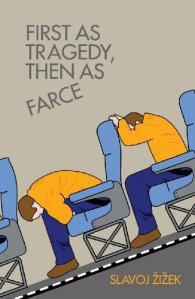
With my lectures for next two weeks (basically) written, I’ve turned to some fun reading: namely, Slavoj Žižek’s latest book, First As Tragedy, Then As Farce. It’s an unsurprisingly-passionate critique of contemporary capitalism post the recent so-called financial crash. While few will embrace every element of Žižek’s compassionate-Marxist panacea, his analyses of the big movements are very insightful, often compelling, and nearly always worth reflecting on – if for no other reason than that no-one quite says it like Žižek. Here he is on liberalism, fundamentalism and the true Left:

‘A true Left takes a crisis seriously, without illusions, but as something inevitable, as a chance to be fully exploited. The basic insight of the radical Left is that although crises are painful and dangerous they are ineluctable, and that they are the terrain on which battles have to be waged and won. The difference between liberalism and the radical Left is that, although they refer to the same three elements (liberal center, populist Right, radical Left), they locate them in a radically different topology: for the liberal center, the radical Left and the Right are two forms of the same “totalitarian” excess; while for the Left, the only true alternative is the one between itself and the liberal mainstream, the populist “radical” Right being nothing but the symptom of liberalism’s inability to deal with the Leftist threat. When today we hear a politician or an ideologist offering us a choice between liberal freedom and fundamentalist oppression, triumphantly asking (purely rhetorical) questions such as “Do you want women to be excluded from public life and deprived of their elementary rights? Do you want every critic or mocker of religion to be punishable by death?” what should make us suspicious is the very self-evidence of the answer – who would have wanted that? The problem is that such a simplistic liberal universalism long ago lost its innocence. This is why, for a true Leftist, the conflict between liberal permissiveness and fundamentalism is ultimately a false conflict – a vicious cycle in which two opposed poles generate and presuppose each other. Here one should take an Hegelian step backwards, placing in question the very measure from which fundamentalism appears in all its horror. Liberals have long ago lost their right to judge. What Horkheimer once said should also be applied to today’s fundamentalism: those who do not want to talk (critically) about liberal democracy and its noble principles should also keep quiet about religious fundamentalism. And, even more pointedly, one should emphatically insist that the conflict between the State of Israel and the Arabs is a false conflict: even if we will all come to perish because of it, it is a conflict which only mystifies the true issues.

How are we to understand this reversal of an emancipatory thrust into fundamentalist populism? In authentic Marxism, totality is not an ideal, but a critical notion-to locate a phenomenon in its totality does not mean to see the hidden harmony of the Whole, but to include within a system all its “symptoms:’ it antagonisms and inconsistencies, as integral parts. In this sense then, liberalism and fundamentalism form a “totality:’ for their opposition is structured so that liberalism itself generates its opposite. Where then do the core values of liberalism – freedom, equality, etc. – stand? The paradox is that liberalism itself is not strong enough to save its own core values from the fundamentalist onslaught. Its problem is that it cannot stand on its own: there is something missing in the liberal edifice. Liberalism is, in its very notion, “parasitic” relying as it does on a presupposed network of communal values that it undermines in the course of its own development. Fundamentalism is a reaction – a false, mystificatory reaction of course – against a real flaw inherent within liberalism, and this is why fundamentalism is, over and again, generated by liberalism. Left to itself, liberalism will slowly undermine itself – the only thing that can save its core is a renewed Left. Or, to put it in the well-known terms of 1968, in order for its key legacy to survive, liberalism will need the brotherly help of the radical Left’. – Slavoj Žižek, First as Tragedy, Then as Farce (London/New York: Verso, 2009), 75–77.

Slavoj Žižek on capitalism, communism and anti-Communism in Post-Wall Eastern Europe

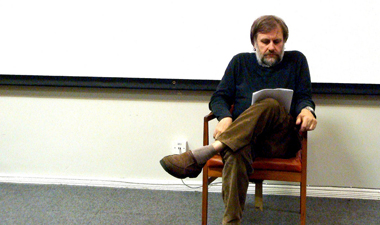
Zizek 2The latest LRB includes a fascinating reflection on capitalism, communism and anti-Communism in Post-Wall Eastern Europe by Slavoj Žižek. It’s well worth reading the whole piece, but here’s the conclusion:

… maybe post-Communist disappointment should not be dismissed as a sign of ‘immature’ expectations. When people protested against Communist regimes in Eastern Europe, most of them weren’t asking for capitalism. They wanted solidarity and a rough kind of justice; they wanted the freedom to live their own lives outside state control, to come together and talk as they pleased; they wanted to be liberated from primitive ideological indoctrination and hypocrisy. In effect they aspired to something that could best be described as ‘socialism with a human face’. Perhaps this sentiment deserves a second chance.

On a somewhat related issue, Jim posted recently on The Berlin Wall as symbol of the Gospel and I found this conversation on Germany, Guilt, Identity, and Memory really interesting.

The Answer? Richard Bauckham

BauckhamThanks to all who participated in our latest Who Said It? competition here at Per Crucem ad Lucem. There were definately some intriguing suggestions. The correct answer, however, is Richard Bauckham, and the quote comes from his book Moltmann: Messianic Theology in the Making (Basingstoke: Marshall Pickering, 1987), 100. While there were no winners this time, those who guessed Moltmann deserve an extra chocolate.

We shall play again soon.

You are where you read

Internet‘Too much internet usage fragments the brain and dissipates concentration so that after a while, one’s ability to spend long, focused hours immersed in a single subject becomes blunted. Information comes pre-digested in small pieces, one grazes on endless ready meals and snacks of the mind, and the result is mental malnutrition. The internet can also have a pernicious influence on reading because it is full of book-related gossip and chatter on which it is fatally easy to waste time that should be spent actualy paying close attention to the books themselves, whether writing them or reading them’. – Susan Hill, Howards End is on the Landing: A Year of Reading from Home (London: Profile Books, 2009), 2.

Who’s buying this?

[HT: Jim Gordon and Amazon Reader]

‘For myself I am an optimist – it does not seem to be much use being anything else’

invisible man

Vincent van Gogh on clergy

Letter from Vincent van Gogh to Theo van Gogh, Etten, September 1881

Letter from Vincent van Gogh to Theo van Gogh, Etten, September 1881

A few months ago, I happened across a most enjoyable wee read by Anton Wessels called Kind of Bible: Vincent Van Gogh as Evangelist. It was one of those wonderful finds that are ‘given’ to you when you’re eyes are scanning the library shelves for something else. Wessels’ basic thesis is that van Gogh’s work following his, so-called, fall into atheism, continued to ooze with evangelistic thrust. That that which spilled from his brush finds some continuum with that which flowed from his pen is evident in a number of his letters wherein he is – in fashion remarkably reminiscent of Kierkegaard – scathing of the clergy. One gains the clear impression that van Gogh thinks too highly of Jesus to take Christianity’s ‘men of the cloth’ too seriously. Many of the Dutch painters’ letters can now be read online and they really are a lot of fun to read. Anyway, here’s a few passing comments about clergy, written between 1881 (when Vincent was 28 years old) and 1884 (when he was a much-more mature 31 year old):

‘There really are no more unbelieving and hard-hearted and worldly people than clergymen and especially clergymen’s wives (a rule with exceptions). But even clergymen sometimes have a human heart under three layers of steel armour’. – Letter from Vincent van Gogh to Theo van Gogh (23 November 1881)

‘I do not remember ever having been in such a rage in my life. I frankly said that I thought their whole system of religion horrible, and just because I had gone too deeply into those questions during a miserable period in my life, I did not want to think of them any more, and must keep clear of them as of something fatal’. – Letter from Vincent van Gogh to Theo van Gogh (29 December 1881)

‘In case Father refers to my saying that, ever since I have acquired so much dessous les cartes, I haven’t given two pins for the morality and the religious system of the clergy and their academic ideas, then I absolutely refuse to take that back, for I truly mean it. It is just that when I am in a calm mood, I don’t talk about it, although it is a different matter when they try to force me to go to church, for instance, or to attach importance to doing so, for then I naturally tell them that it is completely out of the question’. – Letter from Theo van Gogh/Vincent van Gogh to Theo van Gogh (5–8 January 1882)

‘Clergymen often introduce “things of beauty” into a sermon, but it’s dismal stuff and dreadfully stodgy’. – Letter from Vincent van Gogh to Theo van Gogh (1–2 June 1882)

‘In point of fact, clergymen are among the most unbelieving people in society and dry materialists. Perhaps not right in the pulpit, but in private matters’. – Letter from Vincent van Gogh to Theo van Gogh (3 June 1883)

‘I believe you will approve of this feeling, even more so if you knew exactly what happened between him and me years ago, when I was very skeptical about the plan of studying, whether the promise to carry it through was sincere and well considered. I then thought that they had made the plan rashly and that I had approved of it rashly. And in my opinion it always remains an excellent thing that a stop was put to it then, which I brought about on purpose and arranged so that the shame of giving it up fell on me, and on nobody else. You understand that I, who have learned other languages, might have managed also to master that miserable little bit of Latin – which I declared, however, to be too much for me. This was a blind, because I then preferred not to explain to my protectors that the whole university, the theological faculty at least, is, in my eyes, an inexpressible mess, a breeding place of Pharisaism’. – Letter from Vincent van Gogh to Theo van Gogh (c. 22 September 1883)

‘Oh, I am no friend of present-day Christianity, though its Founder was sublime – I have seen through present-day Christianity only too well. That icy coldness hypnotized even me, in my youth – but I have taken my revenge since then. How? By worshipping the love which they, the theologians, call sin, by respecting a whore, etc., and not too many would-be respectable, pious ladies. To some, woman is heresy and diabolical. To me she is just the opposite’. – Letter from Vincent van Gogh to Theo van Gogh (October 1884)

And on theologians:

Today I have again been attacking a certain “bête noire” of mine, to wit, the system of resignation; I believe this “bête noire” is of the race of the hydra – that is to say the more serpent’s heads you cut off, the more spring up again. And yet there have been men who have succeeded in killing off such a “bête noir.” It is always my favorite occupation, as soon as I can find a spare half-hour, to resume the fight against this old “bête noir.” But perhaps you do not know that in theology there exists a system of resignation with mortification as a side branch. And if this were a thing that existed only in the imagination and the writings or sermons of the theologians, I should not take notice of it; but alas, it is one of those insufferable burdens which certain theologians lay on the shoulders of men, without touching them themselves with their little finger. And so – more’s the pity – this resignation belongs to the domain of reality, and causes many great and petites misères de la vie humaine. But when they wanted to put this yoke upon my shoulders, I said, “Go to hell!” And this they thought very disrespectful. Well, so be it. Whatever may be the raison d’être of this resignation, it – the resignation, I mean – is only for those who can be resigned, and religious belief is for those who can believe. And what can I do if I am not cut out by nature for the former, i.e. resignation, but on the contrary for the latter, i.e. religious belief, with all its consequences? – Letter from Vincent van Gogh to Anthon van Rappard (21 November 1881)

Life itself, too, is forever turning an infinitely vacant, dispiriting blank side towards man on which nothing appears, any more than it does on a blank canvas. But no matter how vacant and vain, how dead life may appear to be, the man of faith, of energy, of warmth, who knows something, will not be put off so easily. He wades in and does something and stays with it, in short, he violates, “defiles” – they say. Let them talk, those cold theologians. – Letter from Vincent van Gogh to Theo van Gogh (October 1884)

Resourcing Elders

TreeIt’s not unusual for me to be contacted about reading resources, and typically it’s not too difficult to recommend some appropriate text(s). Today, I was asked what resources there are for elders serving in the Presbyterian/Reformed tradition. After a quick scramble, here’s what I came up with:

  • Joan S. Gray, Spiritual Leadership for Church Officers: A Handbook (Louisville: Geneva Press, 2009).
  • Ken Lawson and Stewart Matthew, Caring for God’s People: A Handbook for Elders and Ministers on Pastoral Care (Edinburgh: Saint Andrew Press, 1995).
  • Ted A. Lester, ‘So, You’ve Been Elected an Elder …’ (Louisville: Congregational Ministries Publishing, 2001). This is a video/DVD.
  • Phil A. Newton, Elders in Congregational Life: Rediscovering the Biblical Model for Church Leadership (Grand Rapids: Kregel Publications, 2005). This is a Baptist perspective on eldership.
  • Colin H. Ray, ed., A Guide for Elders (Melbourne: Uniting Church Press, 1994).
  • Lester J. Reid, A Resource for Elders, Sessions & Parish Councils (Wellington: Presbyterian Church of New Zealand. Department of Parish Development and Mission, 1997).
  • Sheila Stephens, ‘Why Me?’ (Edinburgh: The Church of Scotland). This is a video and it comes with an accompanying 36 page handbook.
  • Thomas F. Torrance, ‘The Eldership in the Reformed Church’, Scottish Journal of Theology 37 (1984): 503–18.
  • Thomas F. Torrance, The Eldership in the Reformed Church (Edinburgh: Handsel Press, 1984).
  • Thomas F. Torrance, Royal Priesthood: A Theology of Ordained Ministry (Edinburgh: T&T Clark, 1993).
  • Tony Tucker, Reformed Ministry: Traditions of Ministry and Ordination in the United Reformed Church (London: United Reformed Church, 2003).
  • Lukas Vischer, ed., Eldership in the Reformed Churches Today: Report of an International Consultation held at John Knox Centre in Geneva from August 26–31, 1990 (Geneva: World Alliance of Reformed Churches, 1991).
  • Lukas Vischer, ed., The Ministry of the Elders in the Reformed Churches: Papers Presented at a Consultation held in Geneva in August 1990 (Berne: Evangelische Arbeitsstelle Oekumene Schweiz, 1992).
  • D. Newell Williams, ‘Consultation on the significance of Eldership in the Reformed Tradition’, Mid-Stream 30 (1991): 353–55.

Now the concerning thing is that I may have discovered today that my inkling is confirmed: that the pickings really are slim in this area. Of course, I’ve love to have my inkling swiftly murdered by others who know more about this stuff than I do. In other words, I would be really excited to hear of some other resources (booklets/videos/books/tapestries/etc.) that people have found helpful in this area (and those not only from the Pressie/Reformed tribe).

Of course, there’s also a serious book or two that it would be great for such elders to read. Among these I would include:

Who said it?

william-blake-sketch-of-the-trinity-2Time again for another ‘Who said it?’ competition. From whose mouth/pen did the following words come:

God’s trinitarian history for us makes him what he is for himself. There is no immanent Trinity supratemporally ‘behind’ God’s temporal, worldly history, so that he would be who he is independently of this history. This history is who he is.

Closing on Tuesday. No cheating.

[Note: I’ve had to repost this because for some strange reason the comments were off. Apologies to those who wanted to cast a vote but were unable. You can do so now. And I’ve extended the closing date: it’s now Tuesday.]

… and the answer is?

Sauntering through the week …

Taieri Gorge Railway

Along the Taieri Gorge Railway

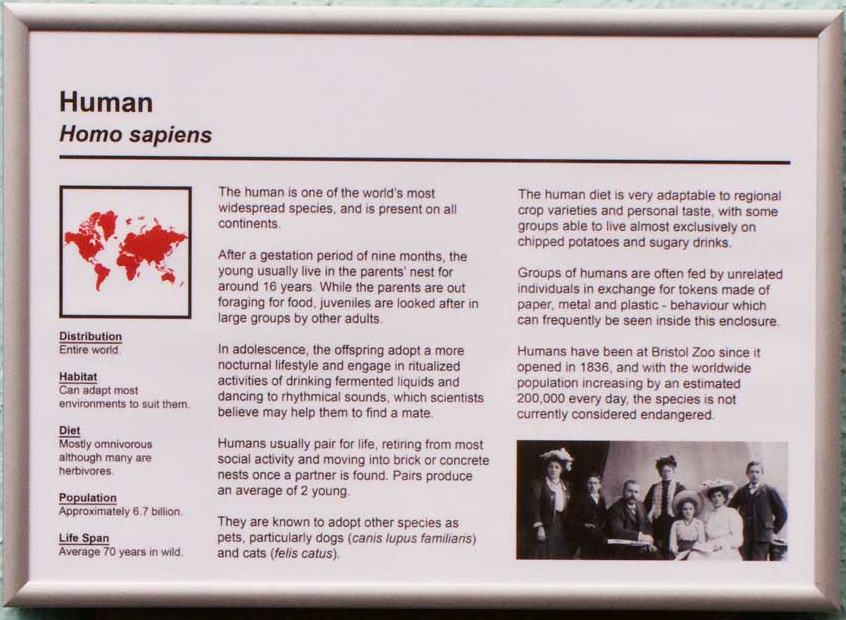
Humans


Jaroslav Pelikan on the need for creeds

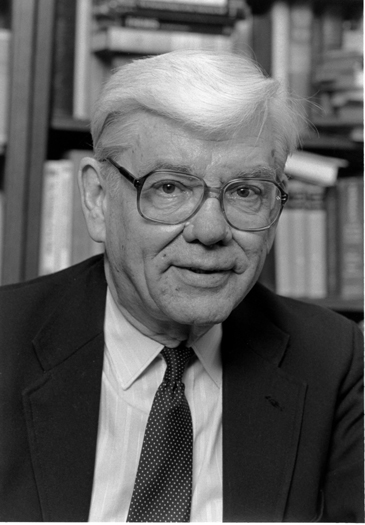
PelikanRecently, Speaking of Faith ran a repeat of an interview with Jaroslav Pelikan on the need for creeds wherein Pelikan argued that ‘strong statements of belief are not antithetical, but necessary, if 21st-century pluralism is to thrive’. It can be downloaded here or listened to here.

Of course, Pelikan (1923–2006) is best known for his wonderfully-helpful 5 volume work The Christian Tradition: A History of the Development of Doctrine. (Vols I, II, III, IV, V), but many have also benefited by drinking deeply from his many other books, including Jesus Through the Centuries: His Place in the History of Culture, Divine Rhetoric: The Sermon on the Mount As Message and As Model in Augustine, Chrysostom, and Luther, Credo: Historical and Theological Guide to Creeds and Confessions of Faith in the Christian Tradition, Acts (in the Brazos Theological Commentary on the Bible series), Fools for Christ: Essays on the Good, the True and the Beautiful, and Bach Among the Theologians.

Pelikan was ordained by the Lutheran Church, taught at Yale from 1962 until 1996, and in 1998 was received into the Orthodox Church in America. Those wanting to read more about Pelikan’s work can visit:

A Symposium: Aspects of Māori Christianity and Mission

Maori Church

Aspects of Māori Christianity and Mission

Historical, Theological and Contemporary Perspectives

A Symposium, November 18–19, 2009

Last year a number of University of Otāgo academics formed a research group, Te Whakapapa o te Whakapono: Lineages of Faith, in conjunction with Te Wānanga a Rangi (the Presbyterian Church’s Theological College for Māori ministers) in order to further research into Māori interactions with Christianity. This research is multi-disciplinary, with a strong emphasis on both theology and history. The project aims to examine the encounters between the Christian Church and the Tāngata Whenua in New Zealand, to trace the growth and development of Christian faith among the Māori people, and to consider the ways in which that development has contributed to the shaping of New Zealand identity and society. To further the aims of the research project a Symposium will be held at Salmond College, Dunedin from November 18-19, 2009.

Speakers/topics will include:

  • Kathie Irwin, ‘John and Hōriana Laughton’
  • Hirini Kaa, ‘Tīhei taruke!: Mohi Turei and Ngāti Porou Christianity’
  • Bernie Kernot, ‘Translating the Gospel in the Māori Art Tradition: the works of the late Rt Rev. Hāpai Winiata’
  • Robert Joseph, ‘1. Rangatiratanga in the American West – The Hirini Whaanga Whānau Migration to Utah in the 19th Century’ and ‘2. Are Mormons Maori? Doctrinal and Historical Parallels between Māoritanga and Mormonism’
  • Peter Lineham, ‘Is Destiny Church a Māori faith or a faith of Māori?’
  • Nathan Matthews, ‘Kaikatikīhama – Tō tātou taonga whakahirahira. The role of Māori Catholic Catechists in the Marist Mission 1870 -1900’
  • Simon Moetara, ‘Māori & the Pentecostal Churches in Aotearoa-NZ’
  • Hugh Morrison, ‘Presbyterian children, images of Māori and imperial sentiments’
  • Keith Newman, ‘Rātana, the Prophet. Mā te wa; the sign of the broken watch’
  • Lachy Paterson, ‘Race, gender and te ao Māori: Pākehā women field workers of the Presbyterian Māori Mission’
  • Murray Rae, ‘Rua Kēnana and the Iharaira’
  • Wayne Te Kaawa, ‘The Contribution of James MacFarlane’
  • Hone Te Rire, ‘Hīhita me ngā Tamariki o te Kohu’
  • Yvonne Wilkie, ‘The Presbyterian Women’s Missionary Union and their response to Māori Mission’

For more information or to register, contact Murray Rae (before 12 November).

Rick Floyd: Retired Pastor Ruminates

Rick Floyd is Pastor Emeritus of First Church of Christ in Pittsfield, Massachusetts, where he served for 22 years. He has authored A Course in Basic Christianity and When I Survey the Wondrous Cross: Reflections on the Atonement, a wonderful study which draws heavily upon the staurology of PT Forsyth (and which is all the better for doing so!)

He has a great nose (for theology that is) and his blog, Retired Pastor Ruminates, is one of my regular theo-blog stopping places. Many of Rick’s reflections bear witness to the sparks created at the intersection between pastoral ministry and theology, and draw sensibly on a lifetime of intimate and public engaging in both. To be sure, I never miss reading one of his posts, even those wherein he deliberates on things completely irrelevant like the Boston Red Sox. Regular readers of Per Crucem ad Lucem might consider adding Rick’s blog to your list and/or to your feed. Need a reason? Rick’s latest post on Karl Barth and preaching is all the reason you should require. He has also posted recently on Lesslie Newbigin, a Prayer for a Retired Pastor and a recipe for borscht.

On the writing of Reformed Confessions

pcanzIn recent times, the Presbyterian Church of Aotearoa New Zealand has been engaged in drafting a contemporary, indigenous confession of faith – Kupu Whakapono – with a view to it being accepted as a new subordinate standard. (You can read more about it here and here.) Among other things, the writing of this confession is evidence that while theology by committee is never easy – if not usually downright impossible – miracles still happen. The draft confession reads:

From this land of Aotearoa New Zealand
we confess that we believe in and belong to God
who is Father, Son and Holy Spirit.

We believe in God
the Father of Jesus Christ,
sender of the Holy Spirit;
Creator and Nurturer of all,
Love above all loves,
and Judge of all the earth.

We believe in Jesus Christ our Lord,
truly human and truly divine.
He lived among us full of grace and truth
and suffered death by human hand,
He was raised by God to new life,
setting us free from sin
and bringing to birth God’s new creation.
Now ascended, he calls us to repentance and faith,
and restores us to God and to one another.

We believe in God the Holy Spirit
who makes Christ known,
inspires the Scriptures,
transforms hearts and minds,
gathers us into the community of Christ
and sustains the Church in worship and in mission.

We belong to this triune God
who calls us to become what we are in Christ:
God’s own people, diversely gifted
witnesses to his love in word and in action,
servants of reconciliation,
and stewards of Creation.

Brought together in Christ,
women and men,
young and old,
tangata whenua and tauiwi,
we look forward in hope
to that fullness of life
in which justice and peace will flourish,
the reign of Christ will be complete,
and we shall forever sing praise to the glory of God.

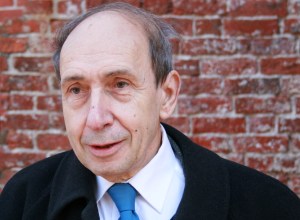
Eberhard BuschIt’s not perfect – there’s no mention of Israel for a start – but its very existence does recall something inherently built in to our DNA as those people of God who identify most strongly with the Reformed branch of the Church Catholic. I was reminded of this afresh recently while reading an essay by Eberhard Busch titled ‘Reformed Identity’ Reformed World 58/4 (2008): 207–218). In this essay, Busch recalls not only that being Reformed entails what he calls ‘the unconditional subordination of [our] own tradition and doctrine to the holy scripture’, and that the Reformed consciously confess that they are members of ‘one, ecumenical church’, but also that the arrangement of the Reformed denominations occurs ‘in the travel of God’s people’. To be Reformed, in other words, means to affirm (as the Basis of Union of the Uniting Church in Australia would have it) that we belong ‘to the people of God on the way to the promised end’. It is the taking serious of this on-the-wayness – that the community is a participant in God’s eschatological liveliness – that calls for fresh expressions of the ancient faith. So Busch:

In every shape the Church is only on its way, – following the aim which is determined and brought about by Him alone. Therefore the life of the congregations and their members is essentially a pilgrimage, not fleeting life on earth, and not being obsessed by it. It is like the way of Israel through the desert. It is being on the way, in restlessness, in uneasiness, in fights, in sighs, and in thirst, but always with the motto: let’s go! Calvin indicated this direction: ‘After we have accepted the testimony of the gospel about the free-gracious love of God, we are waiting, till God will show that, what is still hidden below the hope’. For the Confessio Belgica (1561) or the Confessio Scotica (1560) this goal is clearer in the visible appearance of the rule and the realm of Christ, which had already begun when He rose to heaven. And the Heidelberg Catechism formulates that the coming judge is no one else than the already appeared redeemer. Therefore, we walk towards him ‘in all [our] sorrows and persecutions, with uplifted head’ … In this context it becomes clear that the Reformed are not so much interested in the possession of a confession, but more in the determination to confess. The Reformed acknowledge – in line with the ancestors – that we do not always have to say and do the same as they said and did. It is possible that we will be asked new questions, to which we will have to give new answers. It is possible that other insights become the focus of attention, inviting us to decide whether we confess or deny Jesus Christ. Certain biblical sentences speak particularly at different times. In 1942 the long forgotten words ‘Salvation is from the Jews’ (John 4:22) began to be heard in the Swiss churches in favour of the Jews. Monopolisation of biblical words is beyond such an experience. The Reformed denomination reminds us that we have to reckon with the Holy Spirit who wants to lead us in all truths. We have to be open to His concrete, new instructions. It is the Spirit, who allows us to think, say and do what is necessary now. The same Spirit urges us to get on the way from our own denomination to what is more than our and all other denominations.

Busch then proceeds to speak about the ‘gratitude of the Reformed Church’, recalling that when the freedom of the Spirit of Jesus in the Gospel does not exist in a denomination, then that denomination becomes inflexible. Busch believes that this danger is no longer a particular issue for the Reformed churches today (I’m not so sure about this), and he cites another danger which is ‘far more of a menace’:

That is the threat of a certain kind of liberalism: the danger that they gamble away the talent of a church, Reformed according to the Word of God, which has been handed over to them for safekeeping and for passing on to their neighbours. It is the danger of selling this talent for a small profit. Maybe they seem to be ‘Reformed’, but they have the title without the ‘Word of God’. That is the danger of wrongly interpreting the formula ‘The Reformed Church is always to be reformed’, so that they think they are Reformed because they are doing their work in a different way than the Reformers. They do not understand the true sense of that formula that we have to turn again and again to the fountain of faith, love, and hope. It is dangerous for the Reformed to store their legacy in a museum, which is visited occasionally, but not used in the daily life. In short, there is the danger that present-day Reformed Christians live in the church, as if it were not true that God is not the God of the dead but of the living. Therefore, our ancestors can not really join in our conversation today and are not allowed to have a say in our decisions. There is no space for their questioning whether we still really are Reformed Christians. When we think in this way, an unspiritual arbitrariness will appear in the church.

For the contemporary Reformed who live in Aotearoa New Zealand and who are seeking to carve out what it means to be faithful to God’s good news in Jesus Christ in this land, these words from Professor emeritus Busch are both timely and imperative. It is, after all, Reformation Day.

October bests …

Draw the LineFrom the reading chair: Celtic Christianity: Making Myths and Chasing Dreams by Ian Bradley; The Quest For Celtic Christianity by Donald E. Meek; Banner in the West: A Spiritual History of Lewis and Harris by John Macleod; Why Study The Past?: The Quest For The Historical Church by Rowan Williams; Loving God With Our Minds: The Pastor As Theologian edited by Michael Welker and Cynthia A. Jarvis; Why Your World Is About to Get a Whole Lot Smaller: Oil and the End of Globalization by Jeff Rubin; Liberating Reformed Theology, Christianity and Democracy: A Theology for a Just World Order and Theology & Ministry in Context & Crisis: A South African Perspective by John W. de Gruchy; Witness to the World: The Christian Mission in Theological Perspective by David J. Bosch; Black and Reformed: Apartheid, Liberation, and the Calvinist Tradition by Allan A. Boesak; Praying with Paul by Thomas A. Smail.

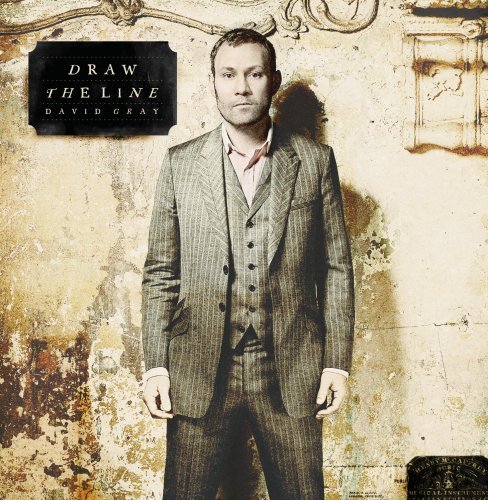
Through the iPod: Kind of Blue (50th Anniversary) by Miles Davis; Looking for Butter Boy by Archie Roach; Daughtry and Leave This Town by Daughtry; Draw the Line by David Gray (this is easily in my top 10 for 2009); X&Y by Coldplay; Christmas In the Heart by Bob Dylan (Judy says that it won’t be being played in ‘our’ house this Christmas, so does anyone want me over for lunch).

By the bottle: Mt Difficulty Long Gully Pinot Noir 2007; Carrick Josephine Riesling 2007.

The Poetry of Care and Loss

davisDoing the rounds this week:

  • Ellen Davis presented her inaugural lecture as the Amos Ragan Kearns Distinguished Professor of Bible and Practical Theology on October 27, 2009, at Duke Divinity School. The title of the lecture was ‘The Poetry of Care and Loss’. It is available via iTunes.
  • The Thailand Burma Border Consortium compares Eastern Burma to Darfur.
  • Julian Bell reviews Vincent van Gogh – The Letters (now we just need Thames & Hudson to review the price!).
  • A fascinating interview with Slavoj Žižek: ‘… it’s very easy to have a radical position which costs you nothing and for the price of nothing it gives you some kind of moral superiority. It also enables them to avoid the truly difficult questions’.
  • Andrew Brower Latz continues his note sharing on Alan Torrance’s 2009 Didsbury Lectures (Parts I, II and III).
  • Jim Gordon reminds us why reading Bonhoeffer is ‘like engaging in a theological detox programme’.
  • Kyle Strobel writes about Evangelical Idolatry.
  • Rick Floyd posts on Lesslie Newbigin’s The Gospel in a Pluralist Society.
  • W. Travis McMaken, on his way into his final qualifying exam in systematic theology, shares a quote from TF Torrance on modern preaching and the god named ‘existentialist decision’.