Author: Jason Goroncy

Thinking baptism

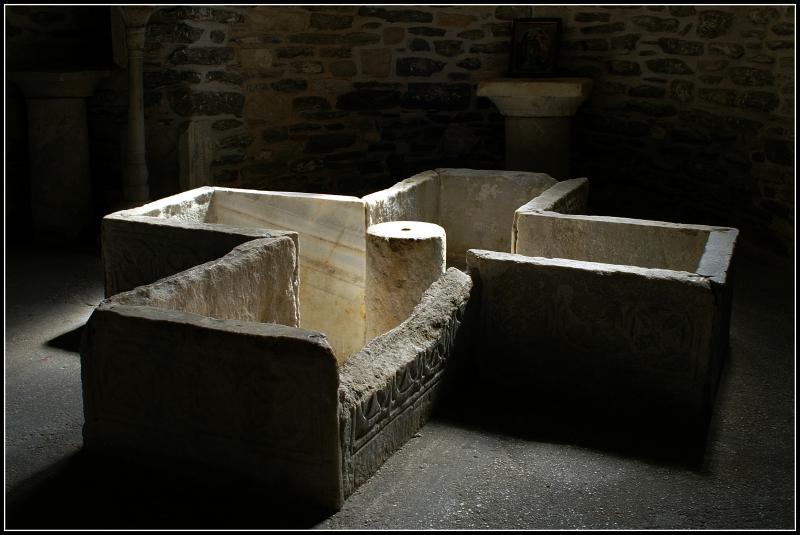
Since the birth of his daughter Aurora, Byron Smith has been posting some great little reflections on baptism, on whether to dunk, dip, douse or dribble?, and his latest on timing and why parents should not wait:


… when it comes to baptism, church family trumps blood family. No waiting until great aunt Gertrude can make it up from the farm; the child is welcomed immediately by and into the congregational family at their next major gathering. And this makes good sense. If children are to be welcomed into the household of God so that they are always raised within the Christian faith (as the practice of baptising infant baptism implies), then to be consistent, this baptismal welcome should occur as soon as possible …

Therefore, resolve to make your arrangements for a baptismal celebration prior to the birth. Expectant parents often spend hours researching prams and selecting nursery colours. Why not also (instead?) put some time into making preparations for the child’s spiritual growth? Settle your conscience on the good gift of infant baptism. Meet with your priest or minister to discuss any concerns and to ensure you understand what baptism means and how it will work. Think about godparents early (and remember, godparenting is not primarily a chance to honour your closest friends, but a responsibility for those who will be faithful in prayer and example, taking the lead in discharging the duty and privilege of the whole church family in raising a new child in the faith and love of Christ). Check your church has a font or pool large enough for the infant to be dipped into. Have your child baptised at the first service available after their birth. And read your prayer book.

Great stuff Byron.

New Sidebar Category: Pastoralia

I’m starting to pull together some new sidebar items under the subject of Pastoralia. Really happy to hear of any suggestions, but here’s what I’ve linked to thus far:

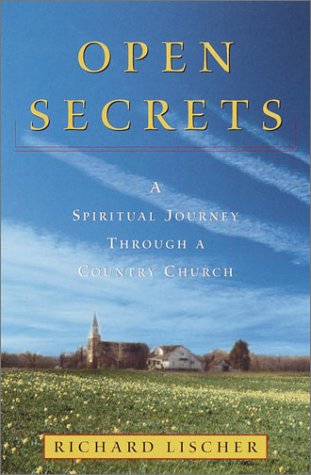
Richard Lischer’s Open Secrets: Part V, On Symbols and National Flags

First Church, Dunedin

‘It all begins with the symbols. They capture primal relations, like water and death, fire and purification, seeds and hope. The stories do not come before the symbols, but they emerge from them and bring them to life. The stories explain the symbols, and the symbols make the stories worth remembering and telling. The window in the Lumbee church said, “See, under this sign of suffering, we will accept one another as brothers and sisters.” A congregation lives most deeply by its symbol-bearing stories. They tell us who we are.

Any cultural anthropologist would have warned me not to rearrange the furniture in our church. Of course, there were no cultural anthropologists in New Cana. Had there been, they would have reminded me that the physical focus of worship symbolically “freezes” the community’s story into a sacred universe. Therefore, to shuffle the furniture in the chancel or to alter the ritual, say, by moving the flag or changing the music, is to offend against the stories and derange the universe itself.

Who knew?

I should have known not to try to remove the American flag from the chancel. To me, the national flag represented an intrusion into the sacred space of the congregation, an obvious symbol of civil religion. Theologically, the flag has no business beside the altar.

At one of our congregational “town meetings” I patiently explained that I had nothing against patriotism but that it was a short step from “God and country” to “God equals country”. These were the last hours of Vietnam and the early days of Watergate. How can Christians minister prophetically to the country, I asked, if we embrace the nation’s chief symbol and admit it into our sanctuary’. – Richard Lischer, Open Secrets: A Memoir of Faith and Discovery, 89–90.

I’ve blogged on this theme before too. See Aliens in the Church: A Reflection on ANZAC Day, National Flags and the Church as an Alternative Society

Howard Zinn on prostituting God, history, democratic education, and patriotism

Saddened to read today of the death of Howard Zinn, author of A People’s History of the United States: 1492 to Present, You Can’t Be Neutral on a Moving Train: A Personal History of Our Times, Howard Zinn on Democratic Education, Passionate Declarations: Essays on War and Justice, The Politics of History, Marx in Soho: A Play on History, Emma, A Power Governments Cannot Suppress and a host of other books. James Carroll’s assessment of this ex-air force bombardier is spot on, that ‘Howard had a genius for the shape of public morality and for articulating the great alternative vision of peace as more than a dream’. Typically provocative, and always timely, I don’t always agree with Zinn, but I’ve appreciated everything I’d read from his engaging pen and the gentle courage with which he said it.

For those unfamiliar with Zinn’s thought, here are a few tasters:

‘It is interesting that God is brought into the picture when the government is doing great violence. Maybe it’s when you are doing great violence that you desperately need some support. You’re not going to get any moral support from any thinking person, but since God isn’t thinking at the moment, maybe you can pull out God to support you’. – Howard Zinn, Terrorism and War (New York: Seven Stories Press, 2002), 94.

‘History is always a good entity to call upon if you are hesitant to call upon God because they both play the same role. They are both ab­stractions; they are both actually meaningless until you invest them with meaning. I’ve noticed that President Bush calls upon God a lot. I think he’s hesitant to call upon history because I think the word history throws him; he’s not quite sure what to do with it, but he’s more familiar with God. History is invoked because nobody can say what history really has ordained for you, just as nobody can say what God has ordained for you. It’s an empty vessel, which you can fill in whatever way you can. So you can say that history has decided that the United States will be the great leader of the world and that American values, values being another empty vessel that you can fill with anything you want, will be transmitted to the rest of the world. So you can fill history, that ab­straction history, with anything you want, use it whenever you want. Political leaders, I guess, suppose that the population is as mystified by the word history as they are by the word God, and that therefore they will accept whatever interpretation of history is given to them. So the political leaders feel free to declare that history is on their side, and the way is open for them to use it in whatever manner they want’. Howard Zinn and David Barsamian, Original Zinn: Conversations on History and Politics (Pymble: HarperCollins, 2006), 131–2.

‘To me, a democratic education means many things: It means what you learn in the classroom; it means what you learn outside the classroom; it means not only the content of what you learn, but it means the atmosphere in which you learn it; it refers to the relation­ship between teacher and student. All of these elements of educa­tion can be democratic or undemocratic.

And so for the content of education to be democratic, it must take its cue from the idea of democracy, the idea that people will determine their own destiny. And therefore, it means students have a part in this. Students as human beings, as citizens in a democracy, have the right to determine their lives, have a right to play a role in the society. And therefore, a democratic education gives students the kind of information that will enable them to have a power of their own in the society.

And what that means is really to give the students a kind of education that, going into history, suggests to the students that historically there have been many, many ways in which ordinary people – people as ordinary as the student feels as he or she is sitting in the classroom – can play a part in the making of history, in the development of their society. So that a democratic education in that sense is an education that gives the student examples in history of where ordinary people have shown their power and their energy in not only reshaping their own lives but playing a part in how society works. That would be the substance of a democratic education, or part of the substance of a democratic education.

And then the relationship of the student to the teacher. There is democracy in the classroom. The understanding given to the stu­dent that the student has a right to challenge the teacher, that the student has a right to express ideas of his or her own. That educa­tion is an interchange between the experiences of the teacher, which may be far greater than the student in certain ways, and the experiences of the student, which are unique, since every student has a unique life experience, one which a teacher has not had, and therefore the student is in a position to throw into the educational reservoir of the class the student’s own experience. So the inter­change between student and teacher, the free inquiry that is pro­mulgated in the classroom, a spirit of equality in the classroom, to me that is part of a democratic education’. – Howard Zinn and David Barsamian, Original Zinn: Conversations on History and Politics (Pymble: HarperCollins, 2006), 132–3.

‘Patriotism is being used today the way patriotism has always been used, and that is to try to encircle everybody in the nation into a common cause, the cause being the support of war and the advance of national power. Patriotism is used to create the illusion of a com­mon interest that everybody in the country has. I just mentioned the necessity to see society in class terms, to realize that we do not have a common interest in our society, that people have different inter­ests. What patriotism does is to pretend to a common interest. And the flag is the symbol of that common interest. So patriotism plays the same role that certain phrases in our national language play, and that is to create the illusion of common interest. The words that are used are national security, pretending that there is only one se­curity for everybody, one kind of security for everybody; national interest, pretending that there is one interest for everybody; national defense, pretending that the word defense applies equally to all of us. So patriotism is a way of mobilizing people for causes that may not be in the people’s interest’. Howard Zinn and David Barsamian, Original Zinn: Conversations on History and Politics (Pymble: HarperCollins, 2006), 148–9.

Richard Lischer’s Open Secrets: Part IV, On the Trinity

‘God is persons and nothing else. There is no waxy residue of divinity that is not wrapped up in these three persons, Father, Son, and Holy Spirit. That’s who God is. God is (est) each of these three persons, but the persons are distinct from one another (non est). God is both: alone in majesty and at the same time forever radiating love through each person of the Trinity … We are only able to love each other because the Father loves the Son through the Holy Spirit. We want to be with one another as friends, lovers, and neighbors for the same reason. That’s not an argument that would appeal to most theologians, but that’s what the Trinity meant for us’. – Richard Lischer, Open Secrets: A Memoir of Faith and Discovery, 81.

Richard Lischer’s Open Secrets: Part III, On Homiletical Gridlock

‘Like most preachers, I grossly overestimated the importance of my part in the sermon. When I thought of preaching, I did not consider it to be a congregation’s reception of the word of God, but a speaker’s command of the Bible’s hidden meanings and applications, which were served up in a way to showcase the authority and skill of the preacher. In those days the gospel lived or died by my personal performance. My preaching was a small cloud of glory that followed me around and hung like a canopy over the pulpit whenever I occupied it. How ludicrous I must have appeared to my congregation.



In my first sermon I explained the meaning of an epiphany, not the Epiphany of God in the person of Jesus – no, that would have been too obvious – but the category of epiphanies in general. To this end, I drew at length on the depressing short stories of James Joyce in Dubliners. “Each of these stories has one thing in common,” I said. “In each the central character comes to a deeper and more disturbing understanding of himself. Nothing really happens in these stories except that in the midst of the daily routine a character is unexpectedly exposed to the predicaments of estrangement in his own life. One man realizes that his wife has never loved him. Another recognizes that he is trapped in his vocation. Another finds himself to be a hopeless failure. The human condition is full of such epiphanies …”

Before I could talk about Jesus, I apparently found it necessary to give my farmers a crash course in the angst-ridden plight of modern man. With the help of clichés from Joyce, Heidegger, Camus, and even Walker Percy, I first converted them to existential ennui so that later in the sermon I could rescue them with carefully crafted assurances of “meaning” in a meaningless world. Along the way I defiantly refuted Marx’s view of religion as an opiate that permits us to escape the hard realities of existence. It didn’t concern me that the problem of meaninglessness had not occurred to my audience or that Marx’s critique of religion rarely came up for discussion at the post office.

It’s not that I minimize the importance of the major themes of modernity. No doubt my parishioners would have understood themselves better had they opened their eyes to the intellectual context of their lives. But they did not and could not. The giants of modern thought – Darwin, Marx, Nietzsche, Freud, Sartre – and the movements they unleashed, would never touch New Cana. My parishioners lived in a prison whose view was limited to the natural world and the most obvious technologies of the twentieth century. Aside from formulaic complaints about Communists, perverts, and radicals, they did not engage the modern world.

But then I did not bother to engage their world either. It did not occur to me that I needed a new education. I treated the rural life as an eccentric experience in ministry. I was a spectator once again, as I had been in college, watching a slide show of interesting scenes and odd characters. And since I was the viewer and they were the viewees, I was in control. When I preached, I always stood above my parishioners and looked down upon them.

Consequently, my sermons carried too many prerequisites to be effective. About 90 percent of my listeners had not graduated from high school; the majority of that group had not attended high school. There was no one with a four-year college degree in the church with the exception of a regular visitor named Darryl Sheets, our Lone Intellectual, who was principal of the high school in nearby Cherry Grove. Darryl regularly cornered me in long and fruitless conversations on the possible meanings of the Hebrew word for “young woman” in Isaiah 9:14 and how they all pointed to “Virgin.” But the truth is, Darryl and his wife Marvel didn’t drive all the way to Cana because of my expertise in Hebrew or the intellectual content of my sermons. Darryl was a tongue-speaking, fire-anointed charismatic who for some reason suspected that I might be one, too. It didn’t take him long to figure out he was wrong, and then we saw quite a bit less of Darryl and Marvel.

My audience paid a heavy price for the gospel. The farmers had to swallow my sixties-style cocktail of existentialism and psychology before I served them anything remotely recognizable. I implicitly required them to view their world and its problems through my eyes. All I asked of them was that they pretend to be me.

The only person who appreciated my sermons was my wife, who, like me, lived from books. Tracy was completing her course work for a Ph.D. in English and, therefore, considered poetry and literary allusions to be the most natural of all forms of communication. What’s a sermon without, “Perhaps Milton said it best when he wrote …” But among the rest of the congregation my preaching produced a standoff of sensibilities: If the idea for a sermon did not come from a book, I was not interested in pursuing it. If it did not emerge from life, my parishioners were not interested in hearing about it. In a few short months we had achieved homiletical gridlock’. – Richard Lischer, Open Secrets: A Memoir of Faith and Discovery, pp. 73–5.

Richard Lischer’s Open Secrets: Part II, On Theological Education 2

We continue on with citations from Richard Lischer’s Open Secrets: A Memoir of Faith and Discovery, and with another on theological education:

‘The congregation and I were insignificant figures in a larger and older pattern. The church has always identified its potential leaders, indoctrinated them, and then rudely inserted them in some setting or other where they almost never belong. At seminary we brooded over the mysteries of God for four years only to turn up later as chaplains to covered-dish suppers and car washes with the youth. One part of the church goes to great expense in order to prepare a theologian for another part of the church that wants a guitar player. Like misshelved books, we are there waiting to be used, but will anyone ever find us? As partners in an arranged marriage, my congregation and I might fall madly in love, which, in this creaky old church already seemed unlikely to me, or we could accommodate ourselves to what, if we were honest, each of us knew to be a mismatch’. (pp. 48–9)

Myanmar’s empty promise to free Aung San Suu Kyi

There’s been a lot of hype in recent days about the announcement that Aung San Suu Kyi is ‘to be freed in November’. But Mark Farmener, from Burma Campaign UK, wisely cautions that celebrations arising from this news are premature and we have in fact every reason to belive that the junta’s words are ‘hollow and that the 64 year-old Nobel Laureate will remain in detention’:

‘They [Myanmar’s government] know this will get the media interested. They know this this will get lots of positive publicity and that will give the excuse to governments like Germany and Spain and others that have been wanting to relax the pressure on Burma’s generals’.

‘The regime has made it really clear in their actions that they are not interested in releasing Aung San Suu Kyi. They have doubled the number of political prisoners since the monks’ uprising in 2007. While they’re very good at this kind of spin, the reality on the ground is very different … We need to look at what’s actually going on not the constant lies of the generals’.

This interview (00:05:24) with Farmener on Radio Netherlands Worldwide is well worth listening to.

Richard Lischer’s Open Secrets: Part I, On Theological Education

As one whose vocation concerns the formation of ministers, I am for ever on the lookout for resources that assist in this task. One such book is Richard Lischer’s Open Secrets: A Memoir of Faith and Discovery. Rather than write a review of it (Want a review? Just read the book! Repeat: Read the book! There you go), I thought I’d simply post a few of my favourite sections of it over the next week or so. It won’t and it can’t substitute for reading the book, and isolating snippets out of a novel and its narrative is frightfully problematic, but it may at least help to introduce the book to those unfamiliar with it, and, even without wider narrative-bearings, encourage some fruitful thought. So here we go:

‘Exactly why I had arrived at my first call with such a developed sense of entitlement, I’m not sure’. (p. 12)

‘I didn’t ride through eight years of education on a crisis, nor did my co-travelers in the System. We put one foot ahead of another as if following snowprints through a Wisconsin woods, but with no horizon in view. Some of us emerged from the journey open to new learning and experience, and some fancied ourselves as completed ministers of the gospel. But all of us were missing something. Our education taught us to speak the System’s language, but it did not disclose the language that “speaks us” by possessing our spirit and shaping us as human beings. It is not a question of how did we survive the voyage. Surely, at one time or another every boy in that school must have fought through a crisis as quietly as I did mine. The real question is, how did those long years open a path to ministry?

There’s a New Yorker cartoon in which a pompous-looking doctor hands a prescription to his patient and says, “Take this. It will either cure you or kill you.” I’m afraid my education was something like that. It didn’t attend to the gifts of the Spirit, such as love, joy, peace, patience, and long-suffering. It did not help me develop Jesus’ instinct for compassion toward the outsider or outrage toward injustice. Our professors didn’t invite us into the agony of race or war; they never intimated that God could grieve over the poor or that Jesus really cared about the fate of women. Perhaps it was the substructure of Greek humanism that kept us to the middle way, which caused us to overlook God’s grief and anger and the essential excesses of Christianity.

The spirituality imparted to us was the safe spirituality of structure but not of passion or abandonment. The theological categories we memorized would either stifle true spirituality for the rest of our lives or provide the skeleton for a growing and adapting organism.”We’ve given you a vocabulary,” my teachers seemed to say, “Now, what are you going to do with it?

Likewise, the enforced chapel services into which we dutifully filed morning and evening could either kill you or make you well. If you paid too much attention to the sermons of Dean Axelmann and others, you might die in the spirit. But we also sang Matins every morning, and four hundred male voices chanting the Te Deum couldn’t be wrong:

To You all angels cry aloud,
The heavens and all the powers therein.
To You cherubim and seraphim continually do cry,
Holy, holy, holy, Lord God of Sabaoth!

Take that prescription five mornings a week for eight years, and it just might save your life’. (pp. 36–7)

95 Theses Rap

Yale is not only about Harold Attridge, Adela Yarbro Collins, Bruce Gordon, John Hare, Denys Turner, Miroslav Volf, and a host of other great scholars. It’s also home to Bulldog Productions, a student-run film company who are producing some really great stuff. Here a clever wee clip from 2007 on Luther’s 95 Theses:

If you havin’ Church problems then don’t blame God, son …
I got ninety-five theses but the Pope ain’t one.

VERSE 1

Listen up, all my people, it’s a story for the telling
’bout the sin and injustice and corruption I been smelling:
I met that homie Tetzel, then I started rebelling
Once I seen the fat Indulgences that he been selling.
Now the Cath’lics of the world straight up disgracin’ me
Just because I waved my finger at the papacy.
My people got riled up over this Reformation …
That’s when Leo threatened me with Excommunication.
I warned y’all that Rome best agree to the terms.
If not, then you can eat my Diet of Worms!
You think you done something spectacular?
I wrote the Bible in the vernacular!
A heretic! [What?] Someone throw me a bone.
You forgot salvation comes through faith alone.
I’m on a mission from God. You think I do this for fun?
I got ninety-five theses but the Pope ain’t one.
Save me!

CHORUS

Ninety-five theses but the Pope ain’t one.
If you havin’ Church problems then don’t blame God, son …
I got ninety-five theses but the Pope ain’t one.

VERSE 2

One Five One Seven… that’s when it first went down.
Then the real test was when it started spreading around.
Sixty days to recant what I said? Father, please!
You’ve had, what? Goin’ on fifteen centuries?
“Oh snap, he’s messin’ with the holy communion.”
But I ain’t never dissed your precious hypostatic union!
“One place at one time.” Well, thank you Zwingli.
Yeah, way to disregard that whole “I’m God” thingy!
Getting’ all up in my rosary … you little punk.
Your momma shoulda told you not to mess with no monk.
What you bumpin’ me for? Suddenly you sore.
Keep that up, you’ll have yourself another Peasant War.
You blame common folk for the smack they talkin’ …
You ain’t even taught them proper Christian doctrine.
With my hat, my Bible, and my sexy little nun,
I got ninety-five theses but the Pope ain’t one.
Save me!

CHORUS

VERSE 3

When I wrote the ninety-five, haters straight up assailed ’em.
Now they only care whether or not I nailed ’em or mailed ’em.
They got psychoanalytic. Now everyone’s a critic,
And getting on my case just because I’m anti-Semitic.
I’ve come back from obscurity to teach y’all a lesson,
Cuz someone here still ain’t read their Augsburg Confession.
I said Catholicism brings a life of excess,
And we all remember what went down with Philip of Hesse!
But you forgot about me and my demonstration?
Like you can just create your own denomination?
“We don’t like this part, so we’ll just add a little twist.”
Now we Anglican, Amish, and even Calvinist.
I gave you the power, you gone and abused it.
I gave you God’s truth, you just confused it.
Don’t you never underestimate the s*** that I done …
I got 95 theses but the Pope ain’t one.
Save me!

CHORUS

Shout out to Johann Gutenberg … I see you baby.

Weekly wanderings

Lindis Pass

Seamus Heaney: ‘Death of a Naturalist’

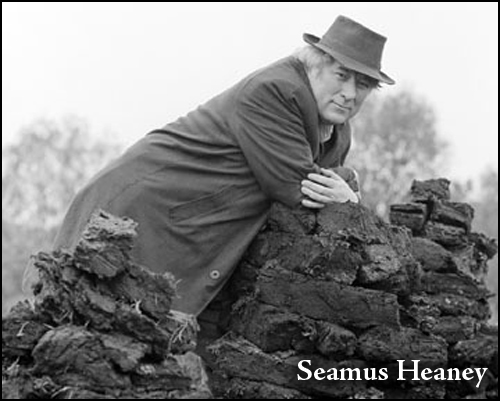
I’m really looking forward to spending this weekend with the St Martin Island Community and with Cilla McQueen, a Bluff-based poet who is New Zealand’s Poet Laureate for 2009-2011. (Some of her work can be read here). It will, unsurprisingly, be a weekend of poetry and a celebration of place. Here’s one of two poems that I hope to share:

Death of a Naturalist

All the year the flax-dam festered in the heart
Of the townland; green and heavy headed
Flax had rotted there, weighted down by huge sods.
Daily it sweltered in the punishing sun.
Bubbles gargled delicately, bluebottles
Wove a strong gauze of sound around the smell.
There were dragon-flies, spotted butterflies,
But best of all was the warm thick slobber
Of frogspawn that grew like clotted water
In the shade of the banks. Here, every spring
I would fill jampots full of the jellied
Specks to range on the window-sills at home,
On shelves at school, and wait and watch until
The fattening dots burst into nimble-
Swimming tadpoles. Miss Walls would tell us how
The daddy frog was called a bullfrog
And how he croaked and how the mammy frog
Laid hundreds of little eggs and this was
Frogspawn. You could tell the weather by frogs too
For they were yellow in the sun and brown
In rain.

Then one hot day when fields were rank
With cowdung in the grass the angry frogs
Invaded the flax-dam; I ducked through hedges
To a coarse croaking that I had not heard
Before. The air was thick with a bass chorus.
Right down the dam gross-bellied frogs were cocked
On sods; their loose necks pulsed like snails. Some hopped:
The slap and plop were obscene threats. Some sat
Poised like mud grenades, their blunt heads farting.
I sickened, turned, and ran. The great slime kings
Were gathered there for vengeance and I knew
That if I dipped my hand the spawn would clutch it.

– Seamus Heaney

Gifted to serve the Lord

So I’m wondering if God’s doing a bit of a post-suffering Job thing on me. You know, the bit where ‘the LORD blessed the latter part of Job’s life more than the first. He had fourteen thousand sheep, six thousand camels, a thousand yoke of oxen and a thousand donkeys’ (Job 42:12). I say this because I’m kicking on to middle age now (seriously, how many people do you know who live past 100!) and I get this email today from a Mrs. Mellisa Lewis, a 59 year old sister who was two years ago diagnosed with cancer. She writes:

‘I will be going in for an operation later today. I decided to WILL/donate the sum of (Fourteen Millions Two Hundred Fifty Eight Thousand United States Dollars) to you for the good work of the lord. Contact my lawyer with this email: Name: Mr Jay Mchenry Email:(jmchenry@rcweb.net) (+44 792 435 0212) Tell him that I have WILLED 14.258M to you by quoting my personal reference number JJ/MMS/953/5015/GwrI/316us/uk’. As soon as you contact him with this details quoted above, he should be able to recognize you and help in claiming this amount from my Bank. Be informed also that i have paid for the state tax on this money to be transferred to you. Meanwhile you are advised to keep this mail and it contents confidential as i really want my wish accomplish at the end of the day. Please do pray to God for my recovery. God Bless Regards, Mrs. Mellisa Lewis’.

Now here’s where I need your help faithful readers: While I’m a little gutted that I’m not the only recipient of Mrs Lewis’ generosity, and while it’s somewhat refreshing to get an email (in my spam box) from someone who’s not convinced that Viagra is the answer to all my problems, and while straight moola is (I assume) considerably more easy for me to bank than is six thousand camels, and while I’m not one to break such sincere confidences (especially when so much greenback is at stake for the Lord’s work), I’m not sure yet what ‘good work of the lord’ might be birthed or encouraged with this gift. I mean, ‘Fourteen Millions Two Hundred Fifty Eight Thousand United States Dollars’ can buy a lot of love.

So, all suggestions considered.

And yeah, don’t forget to join me in praying for Mrs. Lewis’ recovery.

Create challenging learning environments

It could be that we need to spend less time writing lectures and more time thinking about springing surprise tests on our students; that is, at least, if Nate Kornell and Sam Kornell are right:

‘… errors are not necessarily the enemy of learning; they can, in fact, enhance it. Likewise, the widely held belief that testing serves no purpose other than assessing performance is built on a similar misconception. In reality, testing — whether self-testing or testing in the classroom — can, under the right conditions, better promote learning than can studying … We tend to assume that the best way to consume and remember information is through the application of rigorous, extended study. What we fail to see, however, is that the process of trying to work through a problem to which we don’t know the answer focuses our attention on it in a way that simply studying it does not. The desire to get the answer right, and the frustration of failure, is partly to account … Create challenging learning environments, make mistakes and then learn from them’. – Nate Kornell and Sam Kornell, A Really Hard Test Really Helps Learning.

Either way, the spoon-feeding days are over.

Hypochondria and the pain of fame

Here’s an adapted taster from Brian Dillon’s forthcoming  book The Hypochondriacs: Nine Tormented Lives:

‘Doesn’t the hypochondriac—anxious, death- and age-obsessed, hypersensitive and self-absorbed—sound suspiciously familiar? Pumped into lumpy strangeness at the gym, filleted and stitched by the surgeon, embalmed in Botox, our contemporary celebrities look more like survivors than people who are going places.

In the 18th century, hypochondria became almost fashionable, and was thought to be a symptom of excess luxury and ease. Today we appear to have excelled the hypochondriac cultures of the past by elevating the morbidly self-involved to the level of paragon. Hollywood has long been the land of fixed teeth and busts, blurred hairlines and effaced waistlines. But fame increasingly consists in a state of almost constant near-collapse.

Howard Hughes seems to have set the standard for today’s hypochondriac celebrities’ tics and reclusion. The grim scenography of Hughes’s decline—his solitary, twilit self-neglect, combined with elaborate prophylactic rituals against the outside world—is a familiar warning about the potential price of power and fame. His biographers have conjectured that Hughes’s hypochondria began in childhood, with his mother’s excessive concern for his health. This tempting and no doubt simplistic explanation has been suggested too in the case of Glenn Gould. The pianist’s manifold eccentricities on the concert stage—playing in coat and scarf, humming along to his own renditions of Bach—were matched in private by his horror of physical contact and habit of keeping a sedulous record of his (largely imaginary) symptoms.

With Gould and Hughes, hypochondria was mostly a matter of keeping the world at bay. Today’s celebrities seem to advertise their fears and symptoms. The most obvious precursor of our present hypochondriac culture was Andy Warhol, who lived most of his life in a state of anxiety regarding the ailments and imperfections of his “bad body.” The artist’s diaries record an array of obsessions, including acne, baldness, weight loss, weight gain, aging, cancer, AIDS and brain tumors.

Warhol seems to predict the fate of the figure that best exemplifies the hypochondria at the heart of contemporary celebrity. At the time of his death in June 2009, the depredations Michael Jackson had visited on his own body had perhaps been overshadowed by his 2005 trial and, latterly, his worsening finances. In the decades since his surgery and skin-bleaching first made us wonder about his mental state, a fretful attitude about one’s body has become an essential requisite for the vocation of modern fame. As the abject circumstances of Jackson’s death began to emerge, one was reminded again of the sheer weirdness of the physical refashioning that he seems to have pioneered for the rest of the culture.

Even conservative estimates suggest that Jackson’s ruined nose was the result of at least 10 operations. The bleaching of his skin seemed intended not so much to make him look like a white person as to ensure that he vanished altogether, a classic hypochondriac fantasy. Beyond a certain point of success, it seems he lived in a welter of bodily and mental pain. If Jackson’s problem was a sort of hypochondria, it was on an ambitious and Gothic scale.

The medical catastrophes suffered by contemporary celebrities are often, of course, the result of (or deliberate covers for) drug dependence. Yet even here a species of hypochondria is at work. It is no accident that prescription painkillers have featured so tragically in recent celebrity deaths, such as those of Heath Ledger and, allegedly, Brittany Murphy. It seems somehow normal to us now that success brings with it agonies that can only be treated with opiates.

Having studied the case histories of various historical hypochondriacs—from Charles Darwin to Marcel Proust—I can only surmise that there is a point of crisis beyond which excessive concern with one’s body turns into an actually dangerous or even lethal pathology in itself. It seems that for some sufferers hypochondria is a way of guaranteeing inviolable privacy; consider Proust laboring in his cork-lined room. An inward-tending obsession with one’s own body, whether expressed as illness or an excessive urge to improvement, can guarantee certain advantages in the outside world. Unstopped, however, it will tend to the morbid, and few, historically, have had such resources or occasions for self-mutilation as the rich and famous in our century.

We tend to think of hypochondria as a kind of selfishness. The hypochondriac remains a disreputable figure, solipsistic and even immune to the real suffering of others. But psychologists tell us that hypochondria is often also part of a group or family dynamic; the patient acts out the expectations of others who somehow need him or her to be sick. What better description could there be of our attitude—at once awed and repelled, envious and disproving—to the bodies of certain celebrities? What better image of our grisly concern when the heroic patient takes an Icarus fall? The professionally adored may toil to stay youthful and fit. They will be doing it for us, and our morbidly projected fears for our own bodies’.

[Source: Wall Street Journal]

The Body of Christ

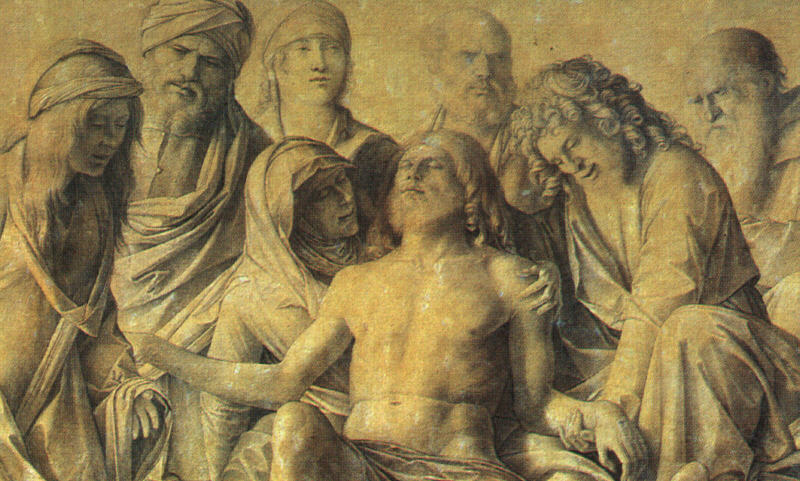
Giovanni Bellini, 'The Lamentation over the Body of Christ', c.1500

‘The church likes to refer to itself as the “Body of Christ”. But it behaves as if it thought it could be the Body of Christ painlessly, as if it could be the Body without having to be stretched, almost torn apart, as if it could be the Body of Christ without having to carry its own cross, without having to hang up on that cross in the agony of conflict. In thinking that it could be thus painlessly the church has made a lie out of the expression the “Body of Christ”’. – M. Scott Peck, The Different Drum: Community-Making and Peace (London: Rider & Co., 1987), 300.

‘What’s Right with the Prosperity Gospel?’

The word ‘content’ occurs three times in the Pauline corpus in my NRSV:

‘Therefore I am content (eudokō) with weaknesses, insults, hardships, persecutions, and calamities for the sake of Christ; for whenever I am weak, then I am strong’. (2 Corinthians 12:10)

‘Not that I am referring to being in need; for I have learned to be content (autarkēs) with whatever I have’. (Philippians 4:11)

‘… but if we have food and clothing, we will be content (arkesthēsometha) with these’. (1 Timothy 6:8)

In each case, a different Greek word is translated with the same English word. In each case, we are given an introduction to how Paul understands the basic posture of the gospel-soaked heart. And in each case, Paul bears witness, albeit not explicitly, to the faithfulness and generosity of God that he points to more explicitly elsewhere (Rom 10:12; 1 Cor 1:9; 10:13; 2 Cor 1:18; 8:9; 1 Thess 5:24; 2 Thess 3:3; 2 Tim 2:13).

All of which brings me to something else. James K.A. Smith, who blogs at fors clavigera (a great blog), has a wee 2-page piece in Forum (a publication of Calvin Theological Seminary) titled ”What’s Right with the Prosperity Gospel?’ wherein he writes:

‘[I]mplicit in the prosperity gospel—and buried under all its perversions and distortions—is a lingering testament that God is concerned with the material conditions of the poor. And God’s economy does not just envision some “bare minimum”  survival, but a flourishing, thriving abundance. The New Jerusalem is not some spartan, frugal space but rather a city teeming with downright luxury—a luxury enjoyed by all. In a similar way, the marriage supper of the Lamb doesn’t have to observe the frugality of a downsized corporate lunch policy! Creation’s abundance is mirrored and expanded in the new creation. Prosperity has a biblical ring to it’. — James K.A. Smith, ‘What’s Right with the Prosperity Gospel?’, Forum 13/3 (Fall, 2009), 9.

Smith avoids falling into the trap of being a ‘preacher with an economic hobby’, a crime of which Forsyth warned us. He also avoids trumpeting a divine preference for middle-classness. And he notes the tension explicit in the biblical narrative itself: that we are presented with ‘a picture of abundance and overflowing generosity as part of the warp and woof of God’s creation’ and that ‘in our fallen, broken world, the prophets consistently denounce those economic systems which concentrate wealth and abundance in the hands of the few, and often at the expense of the many’. Rejecting the habits of ‘ascetics who are just waiting for an abundance to come’, Smith proposes a response which revolves around how we inhabit time: ‘An intentional asceticism or abstinence which voluntarily chooses to forego abundance attests to the persistent injustice of current economic systems, expressing solidarity with the poor and refusing the idolatry of materialism’. But such an approach, he writes, ‘can run the risk of spurning God’s abundance and can unwittingly fall prey to a logic of scarcity. On the other hand, an absolute enjoyment of abundance in the present almost inevitably lives off the exploitation of others and is prone to idolatry’, and he cites Colossians 3:5 in support.

Drawing upon the kind of ‘rhythm of fasting and feasting’ underguirding the church’s own time economy – and given shape to in the liturgical calendar – Smith contends that the ‘two problematic options’ with which it seems we are confronted by in the Bible’s own witness is ‘not either/or if we think about this dynamically with respect to time … The rhythm of fasting and feasting calls the people of God to bear witness to both of these realities at different times and in different seasons: we rightly celebrate and enjoy God’s abundance, but we also rightly lament and resist injustice and poverty. During days or seasons of fasting—which, in a way, should be the “default” habit of the church’s sojourn—we say “no” to abundance as a witness to the fact that so many lack not only abundance but what’s needed just to survive. [Presumably there are other reasons too for why we ‘say “no” to abundance’]. But during days and seasons of feasting, we enjoy a foretaste of the abundance of the coming kingdom’. I found Smith’s way of speaking here very helpful, not least because of the way it helps us to bear witness to the impregnable relationship between ethics and worship.

Still, while he alludes to it, and while it is only a short piece, one might hope that Smith had devoted (or might subsequently devote) — not least given Forum‘s readership — some more ink in this piece to what it might mean, what it might look like, for those who claim to be Jesus’ disciples to pull their boats up on shore, leave everything and follow him (Luke 5:11), to be those whose very being is reconstituted by their participation in the way of the cross, and whose joyful anticipation of the ‘abundance of the coming kingdom’ is described in terms of the blind receiving sight, the lame walking, those who have leprosy cured, the deaf hear, the dead raised, and the good news is preached to the poor’ (Matthew 11:5//Luke 7:22). (To be sure, Smith gives some indication near the conclusion of the piece about the shape that such a life may take, naming regular fasting, the observation of a ‘Sabbath rest from global economic systems and local markets’ and the restoration of a Sunday feast), but I wanted to hear more. This is an indication of my apprecaition for what Smith is trying to do, and an invitation to him to say some more.) This is not to ‘fall prey to a logic of scarcity’ so much as to recognise that the currency of the divine economy still remains unaccepted at all of this world’s foreign currency exchange depots, and not merely on regular non-Sabbath days. Still, Smith’s argument betrays a confidence in One who is both the abundantly-generous fountainhead of every blessing and creation’s just Sovereign, and calls us to faithful stewardship unencumbered by the paralyses of shame and motivated fully by the holy love of God — themes hard-wired into Smith’s (and my own) Reformed DNA. Again I was reminded of Forsyth’s words:

‘[Jesus] discarded a piety like Judaism, which had become one of the professions, and which must be a religion for the well-to-do, because it was so expensive to keep up, owing to the amount of alms, observances, and attention it required. He had no sympathy with wealth which was not inwardly rich toward God. A plutocracy would find nothing in Him; and it finds Him now a tutelary God only by editing and perverting Him. Riches were to Him no sign of God’s favour. God did not exist to secure property, the existing order, and the county families. And “between modern comfort and the comfort of the gospel there is little in common but the name.” He despised wealth that was secured to the conscience of its possessor by a doctrine of “ransom”; wealth which was settled by God absolutely on its owner in tail, on condition of a tax paid out of it for alms; wealth which was entirely a man’s own except the portion earmarked as a toll to God in philanthropic uses. He held no terms with property consecrated to a man’s selfish use by a bargain with God on the basis of a fraction devoted to religious or charitable purposes. Of his whole wealth a man was but steward. She who gave all she had gave more than all the large benefactions. That was the class of poor that caught Christ’s eye and moved His speech. On the other hand, His blessing on poverty was not on poverty as such, but only because of the facilities poverty offered in His day for the true wealth of the kingdom. If Christ had said blessed are the merely poor, then the poorer the more blessed; and the paupers would be either saints in being or saints in the making. But with a poor democracy, set upon soup and circuses, beer and football, He could have no more in common than with a plutocracy whose tastes are at heart the same’. (Socialism, the Church and the Poor, 60—1)

Finally, Smith’s (and Forsyth’s) piece reminded me of a sermon preached early last century by E.A. Burroughs wherein the very reverend gentleman noted that ‘Prosperity has always been an excellent passport, and well-doing often seems to weigh less with one’s next-door neighbour than an obvious ability to do oneself well. But that is only in life. The advent of death forces even shallow contemporary judgment to take up the measuring-rod of eternity to see the man we consorted with yesterday as posterity will see him, should his name survive’.

So, content with the status quo? No way! Content to trust myself to a ‘faithful Creator and continue to do good’ (1 Pet 4:19)? I’m trying! Enjoy all that this faithful Creator has given us so ungrudgingly to enjoy. Unequivocally yes! Understand that at least part of such doing good means joining in with the prophets who ‘consistently denounce those economic systems which concentrate wealth and abundance in the hands of the few’. Definitely!

[BTW: If you’re into this stuff, you might like to check out Andrew Denton’s interview with Hillsong attendee Tanya Leven about her experiences of Pentecostalism, charismania and the prosperity gospel]

International Journal for Religious Freedom

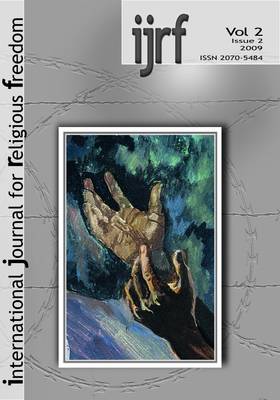
The latest issue of the International Journal for Religious Freedom 2/2, (December 2009), produced by the International Institute for Religious Freedom, is out and freely available online (can be downloaded as pdf) for a few weeks. Articles include:

  • ‘Thinking twice about the minaret ban in Switzerland’, by Thomas K Johnson
  • ‘Christian suffering and martyrdom: An opportunity for forgiveness and reconciliation’, by Richard Howell
  • ‘The role of government and judicial action in defining religious freedom: A Sri Lankan perspective’, by Roshini Wickremesinhe
  • ‘The religious other as a threat: Religious persecution expressing xenophobia – a global survey of Christian-Muslim convivience’, by Christof Sauer
  • ‘Christianity and democracy’, by Thomas Schirrmacher
  • ‘Agonizing for you: Christian responses to religious persecution’, by Charles L Tieszen

As the professor snips the richest bud for his lapel, his scalpel of reason lies on the tray: some weekly wanderings

Slavoj Žižek on Haiti

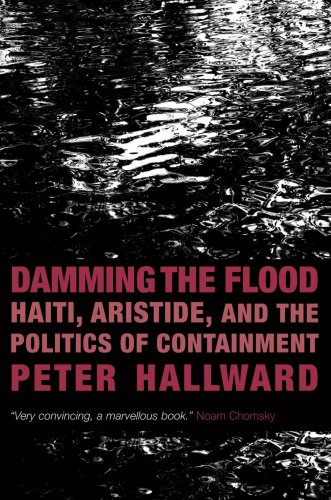
Back on 14 August 2008, Slavoj Žižek reviewed Peter Hallward’s Damming the Flood: Haiti, Aristide and the Politics of Containment, a review I thought worth reposting, particurlarly in light of recent tragedies effecting a country which otherwise hardly rates a mention in public discourse and the subsequent rhetoric of victimhood.

‘Noam Chomsky once noted that “it is only when the threat of popular participation is overcome that democratic forms can be safely contemplated”. He thereby pointed at the “passivising” core of parliamentary democracy, which makes it incompatible with the direct political self- organisation and self-empowerment of the people. Direct colonial aggression or military assault are not the only ways of pacifying a “hostile” population: so long as they are backed up by sufficient levels of coercive force, international “stabilisation” missions can overcome the threat of popular participation through the apparently less abrasive tactics of “democracy promotion”, “humanitarian intervention” and the “protection of human rights”.

This is what makes the case of Haiti so exemplary. As Peter Hallward writes in Damming the Flood, a detailed account of the “democratic containment” of Haiti’s radical politics in the past two decades, “never have the well-worn tactics of ‘democracy promotion’ been applied with more devastating effect than in Haiti between 2000 and 2004”. One cannot miss the irony of the fact that the name of the emancipatory political movement which suffered this international pressure is Lavalas, or “flood” in Creole: it is the flood of the expropriated who overflow the gated communities that protect those who exploit them. This is why the title of Hallward’s book is quite appropriate, inscribing the events in Haiti into the global tendency of new dams and walls that have been popping out everywhere since 11 September 2001, confronting us with the inner truth of “globalisation”, the underlying lines of division which sustain it.

Haiti was an exception from the very beginning, from its revolutionary fight against slavery, which ended in independence in January 1804. “Only in Haiti,” Hallward notes, “was the declaration of human freedom universally consistent. Only in Haiti was this declaration sustained at all costs, in direct opposition to the social order and economic logic of the day.” For this reason, “there is no single event in the whole of modern history whose implications were more threatening to the dominant global order of things”. The Haitian Revolution truly deserves the title of repetition of the French Revolution: led by Toussaint ‘Ouverture, it was clearly “ahead of his time”, “premature” and doomed to fail, yet, precisely as such, it was perhaps even more of an event than the French Revolution itself. It was the first time that an enslaved population rebelled not as a way of returning to their pre-colonial “roots”, but on behalf of universal principles of freedom and equality. And a sign of the Jacobins’ authenticity is that they quickly recognised the slaves’ uprising – the black delegation from Haiti was enthusiastically received in the National Assembly in Paris. (As you might expect, things changed after Thermidor; in 1801 Napoleon sent a huge expeditionary force to try to regain control of the colony).

Denounced by Talleyrand as “a horrible spectacle for all white nations”, the “mere existence of an independent Haiti” was itself an intolerable threat to the slave-owning status quo. Haiti thus had to be made an exemplary case of economic failure, to dissuade other countries from taking the same path. The price – the literal price – for the “premature” independence was truly extortionate: after two decades of embargo, France, the old colonial master, established trade and diplomatic relations only in 1825, after forcing the Haitian government to pay 150 million francs as “compensation” for the loss of its slaves. This sum, roughly equal to the French annual budget at the time, was later reduced to 90 million, but it continued to be a heavy drain on Haitian resources: at the end of the 19th century, Haiti’s payments to France consumed roughly 80 per cent of the national budget, and the last instalment was only paid in 1947. When, in 2003, in anticipation of the bicentenary of national independence, the Lavalas president Jean-Baptiste Aristide demanded that France return this extorted money, his claim was flatly rejected by a French commission (led, ironically, by Régis Debray). At a time when some US liberals ponder the possibility of reimbursing black Americans for slavery, Haiti’s demand to be reimbursed for the tremendous sum the former slaves had to pay to have their freedom recognised has been largely ignored by liberal opinion, even if the extortion here was double: the slaves were first exploited, and then had to pay for the recognition of their hard-won freedom.

The story goes on today. The Lavalas movement has won every free presidential election since 1990, but it has twice been the victim of US-sponsored military coups. Lavalas is a unique combination: a political agent which won state power through free elections, but which all the way through maintained its roots in organs of local popular democracy, of people’s direct self-organisation. Although the “free press” dominated by its enemies was never obstructed, although violent protests that threatened the stability of the legal government were fully tolerated, the Lavalas government was routinely demonised in the international press as exceptionally violent and corrupt. The goal of the US and its allies France and Canada was to impose on Haiti a “normal” democracy – a democracy which would not touch the economic power of the narrow elite; they were well aware that, if it is to function in this way, democracy has to cut its links with direct popular self-organisation.

It is interesting to note that this US-French co-operation took place soon after the public discord about the 2003 attack on Iraq, and was quite appropriately celebrated as the reaffirmation of their basic alliance that underpins the occasional conflicts. Even Brazil’s Lula condoned the 2004 overthrow of Aristide. An unholy alliance was thus put together to discredit the Lavalas government as a form of mob rule that threatened human rights, and President Aristide as a power-mad fundamentalist dictator – an alliance ranging from ex-military death squads and US-sponsored “democratic fronts” to humanitarian NGOs and even some “radical left” organisations which, financed by the US, enthusiastically denounced Aristide’s “capitulation” to the IMF. Aristide himself provided a perspicuous characterisation of this overlapping between radical left and liberal right: “Somewhere, somehow, there’s a little secret satisfaction, perhaps an unconscious satisfaction, in saying things that powerful white people want you to say.”

The Lavalas struggle is exemplary of a principled heroism that confronts the limitations of what can be done today. Lavalas activists didn’t withdraw into the interstices of state power and “resist” from a safe distance, they heroically assumed state power, well aware that they were taking power in the most unfavourable circumstances, when all the trends of capitalist “modernisation” and “structural readjustment”, but also of the postmodern left, were against them. Constrained by the measures imposed by the US and International Monetary Fund, which were destined to enact “necessary structural readjustments”, Aristide pursued a politics of small and precise pragmatic measures (building schools and hospitals, creating infrastructure, raising minimum wages) while encouraging the active political mobilisation of the people in direct confrontation with their most immediate foes – the army and its paramilitary auxiliaries.

The single most controversial thing about Aristide, the thing that earned him comparisons with Sendero Luminoso and Pol Pot, was his pointed refusal to condemn measures taken by the people to defend themselves against military or paramilitary assault, an assault that had decimated the popular movement for decades. On a couple of occasions back in 1991, Aristide appeared to condone recourse to the most notorious of these measures, known locally as “Père Lebrun”, a variant of the practice of “necklacing” adopted by anti-apartheid partisans in South Africa – killing a police assassin or an informer with a burning tyre. In a speech on 4 August 1991, he advised an enthusiastic crowd to remember “when to use [Père Lebrun], and where to use it”, while reminding them that “you may never use it again in a state where law prevails”.

Later, liberal critics sought to draw a parallel between the so-called chimères, ie, members of Lavalas self-defence groups, and the Tontons Macoutes, the notoriously murderous gangs of the Duvalier dictatorship. The fact that there is no numerical basis for comparison of levels of political violence under Aristide and under Duvalier is not allowed to get in the way of the essential political point. Asked about these chimères, Aristide points out that “the very word says it all. Chimères are people who are impoverished, who live in a state of profound insecurity and chronic unemployment. They are the victims of structural injustice, of systematic social violence [. . .] It’s not surprising that they should confront those who have always benefited from this same social violence.”

Arguably, the very rare acts of popular self- defence committed by Lavalas partisans are examples of what Walter Benjamin called “divine violence”: they should be located “beyond good and evil”, in a kind of politico-religious suspension of the ethical. Although we are dealing with what can only appear as “immoral” acts of killing, one has no political right to condemn them, because they are a response to years, centuries even, of systematic state and economic violence and exploitation.

As Aristide himself puts it: “It is better to be wrong with the people than to be right against the people.” Despite some all-too-obvious mistakes, the Lavalas regime was in effect one of the figures of how “dictatorship of the proletariat” might look today: while pragmatically engaging in some externally imposed compromises, it always remained faithful to its “base”, to the crowd of ordinary dispossessed people, speaking on their behalf, not “representing” them but directly relying on their local self-organisations. Although respecting the democratic rules, Lavalas made it clear that the electoral struggle is not where things are decided: what is much more crucial is the effort to supplement democracy with the direct political self-organisation of the oppressed. Or, to put it in our “postmodern” terms: the struggle between Lavalas and the capitalist-military elite in Haiti is a case of genuine antagonism, an antagonism which cannot be contained within the frame of parliamentary-democratic “agonistic pluralism”.

This is why Hallward’s outstanding book is not just about Haiti, but about what it means to be a “leftist” today: ask a leftist how he stands towards Aristide, and it will be immediately clear if he is a partisan of radical emancipation or merely a humanitarian liberal who wants “globalisation with a human face”‘.

[Source: New Statesman]

For those who may wish to do more than just read an old book review, here’s a wee list of (mostly American) groups seeking to respond to the needs of Haitians at the moment, all of whom would be pleased to have your support:

And for those of us who pray, Rose Marie Berger has penned the following ‘Prayer for Haiti (January 2010)’ to help us:

Most Holy Creator God, Lord of heaven and earth,
we bring before you today your people of Haiti.
It is you who set in motion the stars and seas, you who
raised up the mountains of the Massif de la Hotte and Pic La Selle.
It is you who made her people in your very image:
Their gregarious hearts, generous spirits,
their hunger and thirst for righteousness and liberty.
It is you, O Lord, who planted the rhythms of konpa, Twoubadou,
and zouk in the streets of Cite-Soleil. You who walk the paths
outside of Jacmel and Hinche. Your people, O Lord, cry out to you.

Haiti, O Haiti: the world’s oldest black republic,
the second-oldest republic in the Western world.
You are a God who answers the cries of the suffering.
You are a God who sees, frees, and redeems your people.
“I too have heard the moaning of my people,” you spoke to Moses. Now, Lord, speak to Chanté, Agwe, Nadege, and Jean Joseph.
Speak now, O Lord, and comfort Antoine, Jean-Baptiste,
Toto, and Djakout. Raise up your people from the ash heap
of destruction and give them strong hearts and hands,
shore up their minds and spirits. Help them to bear this new burden.

As for us, Lord, we who are far away from the rubble and the dust, the sobbing and the moans, but who hold them close in our hearts, embue us with the strength of Simon the Cyrene.
Help us to carry the Haitian cross; show us how to lighten the yoke with our prayers, our aid, our resources. Teach us to work harder
for justice in our own country and dignity in Haiti,
so that we may stand with integrity when we hold our Haitian families in our arms once again. We ask this in the name of Jezikri, Jesus Christ. Amen.