In the dream, Clarrie Dunn
sits naked with many thousands
in the muddy trench. He is saying
The true god gives his flesh and blood.
Idols demand yours off you.
– Les Murray, ‘The Muddy Trench’, in Collected Poems (Melbourne: Black Inc., 2006), 554.
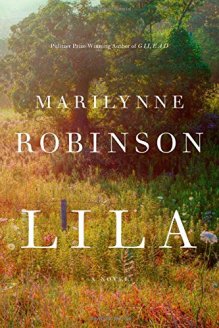
“‘Then the reasons that things happen are still hidden, but they are hidden in the mystery of God.’ I can’t read my own writing. No matter. ‘Of course misfortunes have opened the way to blessings you would never have thought to hope for, that you would not have been ready to understand as blessings if they had come to you in your youth, when you were uninjured, innocent. The future always finds us changed.’ So then it is part of the providence of God, as I see it, that blessing or happiness can have very different meanings from one time to another. ‘This is not to say that joy is a compensation for loss, but that each of them, joy and loss, exists in its own right and must be recognized for what it is. Sorrow is very real, and loss feels very final to us. Life on earth is difficult and grave, and marvelous. Our experience is fragmentary. Its “parts don’t add up. They don’t even belong in the same calculation. Sometimes it is hard to believe they are all parts of one thing. Nothing makes sense until we understand that experience does not accumulate like money, or memory, or like years and frailties. Instead, it is presented to us by a God who is not under any obligation to the past except in His eternal, freely given constancy.’ Because I don’t mean to suggest that experience is random or accidental, you see. ‘When I say that much the greater part of our existence is unknowable by us because it rests with God, who is unknowable, I acknowledge His grace in allowing us to feel that we know any slightest part of it. Therefore we have no way to reconcile its elements, because they are what we are given out of no necessity at all except God’s grace in sustaining us as creatures we can recognize as ourselves.’ That’s always seemed remarkable to me, that we can do that. That we can’t help but do it. ‘So joy can be joy and sorrow can be sorrow, with neither of them casting either light or shadow on the other.’” – Marilynne Robinson, Lila (New York: Farrar, Straus and Giroux, 2014), 223–24.
I recently attended a gathering called Surrender. It gathers around a common Christian faith that calls us to seek justice in our world. The host partners put it on each year, and each of them have their own understanding of what this means and how it is done. A range of denominations, theological positions, cultures, and speakers make up this diverse community. I have a number of friends that have been instrumental in pulling together this unlikely coalition of people and know it is at times a challenge holding these differences together. I’m sure it would be tempting, in our economically-rational society, to reign this in and restrict it to a group that was more ‘on message’, particularly if this voice was willing to bankroll the event, but Surrender has worked hard to keep these differing voices in conversation. In doing so this gathering is a rich, diverse, and passionate meeting of people that, for me, is a unique practical expression of the Body of Christ that I have not experienced in many other expressions of Christian community.
One significant aspect of this expression is the way they take the words of St Paul seriously, that ‘the members of the body that seem to be weaker are indispensable’ (1 Cor 12.22). This is embodied in their commitment, ensuring that many of the voices that are ignored or silenced in our society are heard.
Each year the majority of the people leading sessions over the weekend are on the ground practitioners who are part of small local communities. Room is made for people who are struggling with a range of challenges with their physical and mental health to not only be included in what is happening but are also given opportunities to lead. Stories are shared from communities in the developing world that encourage and challenge my western understandings of faith. And, critically, there is also a significant effort to engage indigenous Australians in respectful ways. This is much more than a tokenistic acknowledgement of country but a commitment to sit at the feet of the elders of this country to learn what it means to be a person of faith in our land. This is done through bible studies led by indigenous elders, a welcome to country which includes responses that last for over an hour (and routinely reduce me to tears), and the Saturday night programme dedicated to hearing from Australia’s first people as they lead us in worship and teaching.
What Surrender is able to achieve with a lot of hard work and persistence is something that I deeply value as both a community development worker as well as a Baptist. It is the creation of an inclusive community that is able to hold together a variety of expressions and ideas. This is not in a narrow, politically-correct ideal but a hard fought practical glimpse of the kingdom of God that Jesus spoke of. I am convinced that it is only when we struggle with the complexities, and at times the pain, of the holding together of differences within groups like this that we are indeed able to ‘have the mind of Christ’ (1 Cor 2.16).
My invitation to participate in the Body of Christ calls me to discover and express my own gifts within the community but it also requires me to ensure there is space for the unique offerings of my brothers and sisters. This at times requires the relinquishing of my comfort or control to allow those whose voices are often overlooked to be present and heard.
It is when I commit to working with others in this way that I resonate with the sentiments of Douglas Adams’ character, Dirk Gently, when he says, ‘I rarely end up where I was intending to go, but often I end up somewhere I needed to be’.
For the culturally-Jewish philosopher Theodor Adorno, the traumas of Auschwitz mean that ‘we can no longer affirm the immutability of truth and the transience of materiality’. It’s not, he insists, a case of an impossibility of distinguishing between eternal truth and temporary appearances (Plato and Hegel showed us how that could be done); it’s just that one cannot do so post-Auschwitz without making a sheer mockery of the fact:
After Auschwitz, our feelings resist any claim of the positivity of existence as sanctimonious, as wronging the victims: they balk at squeezing any kind of sense, however bleached, out of the victims’ fate. And these feelings do have an objective side after events that make a mockery of the construction of immanence as endowed with a meaning radiated by an affirmatively posited transcendence.
It was this conviction too which led Adorno to state famously that ‘the task of art today is to bring chaos into order’, and that ‘to write poetry after Auschwitz is barbaric’.
Our emotional responses to horrors of such magnitude ought to outweigh all our attempts to explain them. The line between explanation and intelligibility has been severed. In the wake of such, we are left with the possibility of what Jay Bernstein referred to as Adorno’s ‘negative theodicy’, a kind of theodicy in which the old intellectual and philosophical distance was possible. If we are to make any headway at all in recognizing ‘how the camps succeeded in the destruction of biographical life, and reorientate our thinking in response, Adorno argues, we must learn how to regard Auschwitz as the culmination of a trajectory embedded in the history of western culture in the wake of the Enlightenment. There can be no genuine acknowledgement of the Holocaust that does not begin with the realization that ‘“we did it”, that it was done by people whose lives and culture is so proximate to our own that the attempt to make “them” somehow wildly different from us can be accomplished only by self-deception’.
To go on with business as usual in the aftermath of Auschwitz would be not only an affront to the victims but also ‘to conceal the full extent of our inhumanity and to suppose, absurdly, that we could make amends’. Whatever else we might attempt saying about evil and suffering, we cannot and must not bypass the brute fact that we are responsible. But that responsibility is not, however, Adorno’s final word on the matter. In his book Minima Moralia: Reflections on Damaged Life, Adorno argues that
The only philosophy which can be responsibly practiced in face of despair is the attempt to contemplate all things as they would present themselves from the standpoint of redemption. Knowledge has no light but that shed on the world by redemption: all else is reconstruction, mere technique. Perspectives must be fashioned that displace and estrange the world, reveal it to be, with its rifts and crevices, as indigent and distorted as it will appear one day in the messianic light. To gain such perspectives without velleity or violence, entirely from felt contact with its objects – this alone is the task of thought.
Redemption, the ‘messianic light’, exposes the incongruity between the world as it appears now and the world as it might be. And that exposure serves as a judgement upon all forms of institutionalized and ‘normalized’ violence; and, more critically, it serves as a critique of the Enlightenment itself apart from which theodicy would be a largely unsponsored project.
Last Sunday, my daughter and I marched, together with a reported 15,000, in Melbourne’s Palm Sunday Walk for Justice4Refugees. Many thousands of others across the country were doing likewise. For a number of reasons I won’t name here, it was at once emboldening and disheartening.
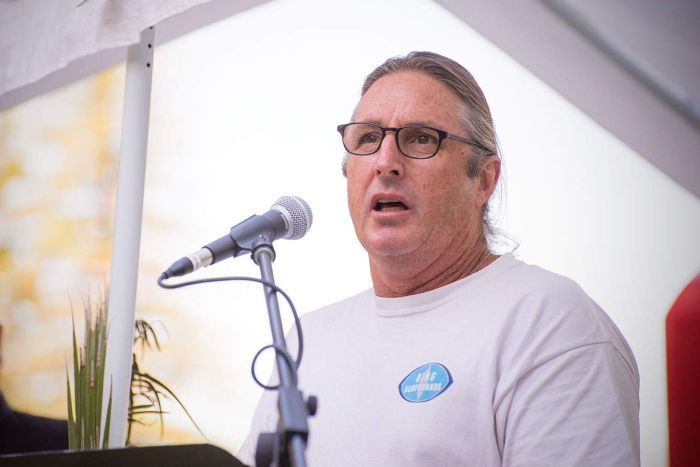
And over in Perth, Tim Winton offered a great speech. It bears reposting, both in its written and spoken forms:
Palm Sunday commemorates the day an itinerant prophet spoke truth to power. Jesus of Nazareth arrived at the gates of Jerusalem in a parody of imperial pomp. But he was a nobody. Instead of a stallion, he rode up on a borrowed donkey. In place of an army, he had a bunch of lily-livered misfits throwing down their cloaks and palm branches as if he was a big shot. Street theatre, if you like. And a week later he was dead. He was there to challenge the commonsense of the day. Armed with only an idea.
Jesus used to say things like this. If a child asks you for bread, will you give him a stone? Awkward things like that.
His followers called his idea The Way. Many of us are here today because the idea has stuck. We try to follow the Way of Peace and Love. Just another bunch of lily-livered misfits.
For generations, in communities all over the globe, Palm Sunday has been a day when people walk for peace and reconciliation. And not just Christians. People of every faith and of no faith at all come together as we have today in solidarity. To express our communal values and yearnings, the things that bind us rather than those that separate us.
We belong to a prosperous country, a place where prosperity and good fortune have made us powerful. Yes, whether we feel it or not, we are exceptionally powerful as individuals and as a community. We have the power of safety. We’re richer, more mobile, with more choices than most of our fellow citizens worldwide. Not because we’re virtuous, but because we’re lucky. But we don’t come here to gloat. We’re here to reflect. To hold ourselves to account. We didn’t come here today to celebrate power or to hide in its privileged shadow. We’re here to speak for the powerless. We’re not here to praise the conventions of the day, but to examine them and expose them to the truth. We’re not here to reinforce the status quo. We gather to dissent from it. To register our dismay at it. We’re here to call a spade a spade, to declare that what has become political common sense in Australia over the past 15 years is actually nonsense. And not just harmless nonsense; it’s vicious, despicable nonsense. For something foul is festering in the heart of our community, something shameful and rotten.
It’s a secret we don’t want to acknowledge. We hide it from ourselves. At times, it seems we’re content to have others hide it from us and for us. But we hide this dark secret at great cost. To faceless strangers. To innocent people. To powerless children. We hide this dirty secret at a terrible cost to ourselves as individuals and as a community.
What secret are we hiding? Well, it’s awkward, and kind of embarrassing. You see, we’re afraid. Terrified. This big, brash wealthy country. We have an irrational phobia. We’re afraid of strangers. Not rich strangers. No. The ones who frighten us out of our wits are the poor strangers. People displaced by war and persecution. We’re even scared of their traumatised children. And if they flee their war-torn countries in boats, well, then, they’re twice as threatening. They send us into wild-eyed conniptions. As if they’re armed invaders. But these people arrive with nothing but the sweat on their backs and a crying need for safe refuge. Yet, they terrify us. So great and so wild is our fear, we can no longer see them as people, as fellow humans. First, we criminalised them. Then, we turned them into faceless objects. Cattle. Well, maybe that’s not quite right. You see we’re sentimental about cattle. Especially cattle on boats. We have values, you see, standards of decency. We hate to see suffering. We’re moved to pity.
But for someone seeking asylum, someone arriving by boat, this special species of creature called a “boat person”, the pity isn’t there. Pity is forbidden. All the usual standards are overturned. Their legal right to seek asylum is denied. They’re vilified as “illegals”. And their suffering is denied. As if they’re not our brothers and sisters. Yes, we hate suffering. But apparently their kind of suffering is no longer legitimate. And therefore, it’s no longer our problem. Our moral and legal obligations to help them are null and void.
Since August 2001, Australians have gradually let themselves be convinced that asylum seekers have brought their suffering and persecution and homelessness and poverty on themselves. Our leaders have taught us we need to harden our hearts against them. And how obedient we’ve been, how compliant we are, this free-thinking, high-minded egalitarian people.
We’re afraid. But the government has made them go away. They have stopped the boats. And spirited the victims away. Now, we don’t have to see their suffering. In fact, we’re not allowed to see it. They’re out of sight, and out of mind. And here at home, all is well, all is calm again. For the past few years, as traumatised people have fled towards safety, towards what they believed was a civilised and compassionate haven, our national peace of mind has been built upon the hidden, silent suffering of others.
And that, my friends, is what our elected representatives have done. Using the military, using warships. Using spin and deception in Parliament. Shielding its deeds from media scrutiny. With the collusion of our poorer neighbours, the client states of Nauru and PNG. The political slogans have ground their way into our hearts and minds. The mantras of fear have been internalised. We can sleep at night because these creatures are gone. It wasn’t enough to turn these people away. We had to make them disappear.
So. All is well. Nothing to be afraid of any more. Until we find other poor people to be afraid of. Folks who are here already. Australians who are poor and powerless and, therefore, somehow troublesome, embarrassing, even dangerous. Because that’s the thing. Once you start the cycle of fear, there’s always someone new and different to be afraid of, some new group to crack down on.
But will we ever sleep easy? I wonder. Because there’ll always be the creeping suspicion that some poor person could be white-anting our prosperity, our privilege, our Australian specialness. Or maybe we won’t sleep because, deep in the back of our heads, somewhere in our spirit, we’ll feel a flicker of shame, a twinge of conscience. Maybe I caught a glimpse of a child’s face behind the wire. For a second, I saw a resemblance. Could have been my kid, my grandkid, the little girl next door. Just a kid. A face behind the wire.
My friends, we weren’t always this scared. We used to be better than this. I remember because I was a young man when we opened our arms and hearts to tens of thousands of Vietnamese. Australians were poorer then, more awkward, less well travelled as a people. And yet, we took pity on suffering humans. No cages, no secret gulags. We had these people in our homes and hostels and halls and community centres. They became our neighbours, our schoolmates, our colleagues at work. I was proud of my country, then, proud of the man who made it happen, Malcolm Fraser, whose greatness shames those who’ve followed him in the job. Those were the days when a leader drew the people up and asked the best of them and despite their misgivings, Australians rose to the challenge. And I want to honour his memory today.
It breaks my heart to say it, but fear has turned us. In the past 15 years, it’s eaten into our public spirit and made a travesty of our most sacred values, the very things we thought we stood for as a society: our sense of decency, fairness, justice, compassion, openness. In our own time, we have seen what is plainly wrong, what is demonstrably immoral, celebrated as not simply pragmatic but right and fair. It’s no accident that both mainstream political parties have pursued asylum seeker policies based on cruelty and secrecy. First, pandering to irrational public fear and then at the mercy of it. Because these policies are popular. I don’t deny it. It hurts me to acknowledge it. But it’s a fact. A hard-hearted response to the suffering of others has calcified and become the common sense of our day.
We used to be better than this. I still believe we’re better than this.
So what’s happened to this country? I’m confused. I read the news. But as events unfold, I don’t always recognise my own people. This still looks like the country I was brought up in but it doesn’t always feel like it. You think mining royalties have had a dip? Well, spare a thought for the Fair Go. Because that currency has taken a flogging. There’s a punitive spirit abroad, something closer to Victorian England than the modern, secular, egalitarian country I love.
In the days of Charles Dickens, child labour was acceptable, respectable. It was common sense. So was the routine degradation of impoverished women. Charity was punitive. Until Victorian reformers like Dickens exposed the common sense of his era as brutal nonsense, the suffering of children was inconsequential. The poor were human garbage. They were fuel. Victorian England extracted energy and sexual pleasure from the faceless bodies of the poor. When they became a nuisance, they were exported, “offshored”. In chains. Some of these faceless, degraded people were our ancestors. Mine was an unaccompanied minor, a little boy. A boy consigned to oblivion. A boy without a face. I’ve been thinking of him lately. Public events have made it unavoidable.
And yet from this brutish convention, this hellish common sense, we made something new here in this country, something better. Where Jack was as good as his master. We turned away from the callous feudalism of the Old World and made this place a haven for decency. We granted everyone a face. Some, to our shame, later than others.
The face is the window of the soul. It’s the means by which we make ourselves known. To those of us of religious faith, it’s the means by which we recognise the Divine spark in each other, the presence of God. To those who aren’t religious, it’s the way we apprehend the sacred dignity of the individual. We present ourselves to one another face-to-face, as equals. When you rob someone of their face, of their humanity, you render them an object.
In this country, a nation built upon people fleeing brutes and brutality for 200 years, we have a tradition of fairness and decency and openness of which we’re rightly proud. Whether we’re inspired by the Christian parable of the Good Samaritan, the universal dignity of humankind, or the sanctity of the individual, we’ve always thought it low and cowardly to avert our gaze from someone in trouble or need, to turn our face from them as though they did not exist. When I was a kid, there were a few salty names for people like that. You didn’t want to be called out as one of those. That’s where our tradition of mateship comes from. Not from closing ranks against the outsider, but from lifting someone else up, helping them out, resisting the cowardly urge to walk by. It distinguished this country from the feudalism and patronage of the Old World. When the first boat people arrived in the late ’70s, we looked into their traumatised faces on the TV and took pity despite our misgivings.
Now, of course, we don’t see faces. And that’s no accident. The government hides them from us. In case we feel the pity that’s only natural. Asylum seekers are rendered as objects, creatures, cargo, contraband, and criminals. And so, quite deliberately, the old common sense of human decency is supplanted by a new consensus. Built on hidden suffering, maintained by secrecy. Cordoned at every turn by institutional deception. This, my friends, is the new common sense. According to this new dispensation, Australia does not belong to the wider world. We’re nobody’s fool. We have no obligations to our fellow suffering humans. Unless it suits us. Because we are exceptional. And beyond reproach. It seems we are set to distinguish ourselves by our callousness, by our unwavering hardness of heart. We will not be lectured to by outsiders. Or, come to think of it, by insiders, either. Not about human rights, not about torture, not about the incarceration of children. We will bully critics and whistleblowers into silence. We will smear them. We will shirtfront them.
Which is to say that we live now as hostages to our lowest fears. But to assent to this newly manufactured common sense is to surrender things that are sacred: our human decency, our moral right, our self-respect, our inner peace. To passively assent to this is to set out together on a road that leads to horrors, a path from which we must turn back before we lose our way entirely.
To those in power who say they’re exiling and caging children for their own good, I say we’ve heard that nonsense before. So, don’t do it in my name.
To those who say they’re prolonging misery to save life, I say I’ve heard that nonsense before. You don’t speak for me; I don’t recognise your perverse accountancy.
To those in power who say the means will justify the end, I say I’ve heard that nonsense before. It’s the tyrant’s lie. Don’t you dare utter it in my name.
To those who say this matter is resolved, I say no. For pity’s sake, no. For the love of God, no. A settlement built on suffering will never be settled. An economy built on cruelty is a swindle. A sense of comfort built upon the crushed spirits of children is but a delusion that feeds ghosts and unleashes fresh terrors.
If current refugee policy is common sense, then I refuse to accept it. I dissent. And many of my countrymen and women dissent alongside me. I don’t pretend to have a geopolitical answer to the worldwide problem of asylum seekers. Fifty million people are currently displaced by war and famine and persecution. I don’t envy those who make the decisions in these matters, those who’ve sought and gained the power to make decisions in this matter. I’m no expert, no politician. But I know when something’s wrong. And what my country is doing is wrong.
Prime Minister, forget the boats for a moment. Turn back your heart. Turn back from this path to brutality. Turn back from piling trauma upon the traumatised. Because it shames us. It grinds innocent people to despair and self-harm and suicide. It ruins the lives of children. Give these people back their faces, their humanity. Don’t avert your gaze and don’t hide them from us.
Because the secret won’t hold. It’s out already. There are witnesses. There will be testimony. We will remember. In another time, and very soon, I think, our common sense will be nonsense. And you’ll have to ask yourself, was it worth it? This false piece of mind, this stopping of the boats. Was it worth the price paid in human suffering? You’re not alone; the rest of us will have to face it, too.
Jesus said: “What shall it profit a man to gain the whole world only to lose his soul?” And I wonder: What does it profit a people to do likewise, to shun the weak and punish the oppressed, to cage children, and make criminals out of refugees? What about our soul as a people?
We’re losing our way. We have hardened our hearts. I fear we have devalued the currency of mercy. Children have asked for bread and we gave them stones. So turn back. I beg you. For the children’s sake. For the sake of this nation’s spirit. Raise us back up to our best selves. Turn back while there’s still time.


 jasongoroncy.com