 ‘When people say (as they do, it seems, with increasing frequency) that they are more interested in “spirituality” than in “religion”, they usually seem to mean that they prefer the balm of private fantasy, the aromatherapy of uplifting individual sentiment, to the hard work of thought and action, the common struggle to make sense of things, to redeem and heal the world. When church leaders are exhorted to concentrate on “spiritual” affairs, the implication sometimes seems to be that these things are different from, and loftier than, such mundane matters as proclaiming good news to the poor and setting at liberty those who are oppressed’. – Nicholas Lash, Holiness, Speech and Silence: Reflections on the Question of God (Aldershot: Ashgate, 2004), 92–3.
Month: August 2012
August stations …
 Reading:
- Les Murray: A Life in Progress by Peter F. Alexander.
- Go the F**k to Sleep by Adam Mansbach.
- Remain in Your Calling: Paul and the Continuation of Social Identities in 1 Corinthians by J. Brian Tucker.
- Gospel, Church, and Ministry by Thomas F. Torrance.
- Intruding Upon the Timeless: Meditations on Art, Faith and Mystery by Gregory Wolfe.
- Cain by Jose Saramago.
- Icon: Studies in the History of An Idea by Moshe Barasch.
- A Wounded Innocence: Sketches for a Theology of Art by Alejandro R. Garcia-Rivera.
- Wolf Hall: A Novel by Hilary Mantel.
- Freedom & Limit: A Dialogue Between Literature and Christian Doctrine by Paul S. Fiddes.
- Tranquil Moments: The Poetry of Prayer by Brian Hardie.
- The Art of Healing: Painting for the Sick and the Sinner in a Medieval Town by Marcia A. Kupfer.
- The Re-enchantment of the World: Art versus Religion by Gordon Graham.
- The Promised End: Eschatology in Theology and Literature by Paul S. Fiddes.
- The Crucifixion of Ministry: Surrendering Our Ambitions to the Service of Christ by Andrew Purves.
- Crying for a Vision and Other Essays: The Collected Steve Scott Vol. One edited by Gord Wilson.
- Faithful Performances: Enacting Christian Tradition edited by Trevor A. Hart and Steven R. Guthrie.
- Rabbit Redux by John Updike.
Listening:
- Through the Smoke of Innocence by Roaring Jack.
Watching:
Position vacant: Director, Presbyterian Church Schools Office
Applications are invited for the position of Director of the Presbyterian Church Schools Office.
The purpose of the position is to:
- serve and strengthen the relationship between the Presbyterian Church of Aotearoa New Zealand and those church schools which are affiliated to and associated with it;
- develop and coordinate the provision of resources in keeping with the Christian and Presbyterian/Reformed character of those schools;
- provide support and encouragement to those engaged in the provision of Religious Education and Chaplaincy in Presbyterian Church Schools;
- engage with the leaders of Presbyterian Church Schools about what it means to have this special character
This is a part-time position commencing in February 2013.
Enquiries, including requests for a copy of the Job Description, can be directed to the Principal of the Knox Centre for Ministry and Leadership.
The successful applicant will be theologically trained, have a background in education, and be familiar with the Presbyterian and Presbyterian Church School contexts.
Applications can be emailed to the Principal of the Knox Centre for Ministry and Leadership, Graham Redding. The deadline for applications is 30 September 2012.
Mission and the Priesthood of Christ
On Friday night, I had the privilege and joy of addressing the elders of the Southern Presbytery at their AGM in Invercargill. The topic that I was asked to speak about was mission and the priesthood of Christ. (Two other speakers would reflect on the other two classic offices – prophet and king.) A number of people have asked me for a copy of my talk. Here it is:
‘The Vernacularies’, by Brian Turner
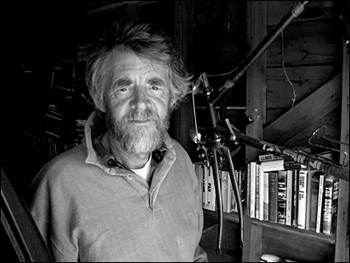
Beware of strangers, the children are told.
In other words, just about everyone,
the message being it’s not worth
trying to find a saint
among the legions of sinners,
time’s too precious.
…………………………..Or so the old joker
who lives in the shack up the road reckons,
says he’s in the dark most of the time
though he’s working on it. ‘I’m
up with the vernacularies,’ he says
with a grin like a crack in schist.
‘I’m trying to shed some light
on the meaning of life.’
…………………………..My mother
would have approved of his manners,
said there’s a lesson for you
and reminded me of the need to
take people as you find them
and don’t go looking for the dark side
for that’s where the spiders are.
She could have said light and dark
go together like sweet and sour,
but she didn’t. You can put her
tact down to her age
and a certain intrinsic female poise
that goes with being a good woman
all her life, someone
unspectacularly spectacular.
You can make a pact
with someone like that
though there’s no guarantee
it will get you to heaven.
Kashmiri Butter Chicken

I’ve been making my way through Sara Lewis’ recipes in her attractively-produced book Ultimate Slow Cooker. (Technically, I purchased this book for my partner, but it was in much the same spirit as when I, as a ten-year-old or so, bought my babcia a cricket set; old habits die hard.) By far the best grub to come out of this collection thus far is the Kashmiri Butter Chicken. Here’s the low down, slightly modified from Lewis’ directions:
Serves 4
Preparation time: 30 mins
Cooking time: 5–7 hours
Cooking temperature: Low
Ingredients
2 onions, quartered
4 garlic cloves
6cm fresh root ginger, peeled
1 large red chilli, halved and de-seeded
8 boneless, skinless chicken thighs
1 tbsp canola oil
25g butter
1 tsp cumin seeds, crushed
1 tsp fennel seeds, crushed
4 cardamom pods, crushed
1 tsp paprika
1 tsp ground turmeric
1/4 tsp ground cinnamon
300ml chicken stock
1 tbsp light muscovado sugar
3 tbsp tomato purée
7 tbsp cream (or 5 tbsp of double cream)
salt
rice and/or naan bread
To garnish
2 tbsp flake almonds, toasted
sprigs of coriander
Method
1) Preheat the slow cooker.
2) Blend the onions, garlic, ginger and chilli in a food processor (or chop very finely).
3) Cut each chicken thigh into 4 pieces. Heat the oil in a large frying pan and add the chicken, a few pieces at a time, until all the meat has been added. Cook over a high heat until evenly browned. Lift the chicken pieces out of the pan with a slotted spoon and transfer to a plate.
4) Add the butter to the frying pan and, when it (i.e., the butter, not the pan) has melted, add the onion paste. Cook over a more moderate heat until it is just beginning to colour. Stir in the crushed seeds, cardamom seeds and pods and ground spices. Cook for 1 minute, then mix in the stock, sugar, tomato purée and salt. Bring to the boil, stirring.
5) Transfer the chicken to the slow cooker pot, pour the onion mixture and sauce over the top and press the chicken below the surface of the liquid. Cover and cook for 5–7 hours.
6) Stir in the cream and serve garnished with toasted flaked almonds, sprigs of coriander, and plain steamed rice and/or warm naan bread.
Stuck for a partnering beer? Try Kingsfisher or Kalyani Black Label or Kings Black Label premium pilsner.
[Note: the image is from Lewis’ book. I’m yet to learn the art of good food photography (which is something that today’s cookbook authors/publishers seem more interested in than in the actual recipes). Furthermore, after I’ve cooked and served, the last thing I feel like doing is farting around trying to take photos while dinner gets cold.]
Hearing and responding to Jesus Christ
 So what is happening when a person hears and responds to Jesus Christ? Two things strike me. The first thing to say is that someone is not acting out on their own bat, so to speak. Every movement towards God is a movement that is already happening inside the triune life, and so it’s a kind of prayer, a listening and participation in the divine conversation. Here I am reminded of a recent sermon by Rowan Williams in which he writes:
When I pray, I ask God to bring me into that mystery of love, to bring me into that pouring out and pouring back of love between the Father, the Son and the Holy Spirit. I ask to be dropped into that ocean and carried along with its energy, its life.
Out of that, of course, come all sorts of other bits of praying. If you start there it makes sense to acknowledge that you have got things wrong, to acknowledge that you have failed – as in that wonderful song we sang earlier, ‘I am free to fail’, one of the most important messages any Christian can have. If I know that I am dropped into the ocean of God’s love, then I am not afraid to acknowledge just how much I have got wrong, just how much growing I still need to do. As I drop into that mystery I can say, ‘There is no comparison. Your goodness, your love, your abundance, your generosity are so immense that I cannot hold a light to them – I know how awful it must look. But hey, here I am in the ocean anyway. Let it come in, let it flood me through’. That is how our prayer includes confession.
And then in the context of that dropping into the love of God, we can also say to God, ‘You, God, must be passionate for the healing and the peace of my neighbours. You must care for their life, their openness to love and forgiveness. So I bring them to you knowing what you want for them. I put them in your hands because I know you want their life’. That is how we pray for one another, how we pray for peace in the world, and how we pray for our fellowship as a Church. Saying to God, ‘We know what you want for us and our neighbours’. That is the prayer of intersession, as we pray for each other.
The second thing to note is that a miracle has taken place; specifically, a miracle about the nature of Christian preaching itself. As one theologian put it, ‘No one has ever heard the gospel from the lips of a human being’; i.e., from the lips of a human being other than Jesus. If I have heard the gospel, then the who that I have heard is not the preacher but Jesus Christ. This reality describes both the possibility and the impossibility of preaching.
So when a person hears and responds to Jesus Christ (who is the Father’s right hand) one is gathered up by the Spirit (the Father’s left hand) to share in the inner relations of God’s own life and love with Christ by the Spirit in such a way that the very life of God is made to reverberate in us, and our very life is brought to reverberate in the spaciousness of God’s. This is sheer gift. As this happens, the Church recognises her true nature and purpose as centered with Christ in God in such a way that all her faith and obedience is a joyful and thankful sharing in and with the actual mission and ministry of the living Christ.
Live blog: women’s 200 metre final, London Olympics
 0800: I’m waiting for the final of the women’s 200-metre race to begin. I’m watching it on free-to-air tv. I have a mug of earl grey tea and an empty breakfast bowl. I’m liking the look of Shelly-Ann Fraser-Pryce and wishing that I had her hair.
0801: They’re off!
0801: They seem to be running faster than I could. This will not be a surprise to many.
0801: Allyson Felix has won. Her hair is definitely not as cool.
0802: Not sure the live blog format quite works for these events.
0810: I’m still thinking about Shelly-Ann Fraser-Pryce’s hair. Time for a shower and to get ready for work.
‘A preacher’s morning hours’
 God doesn’t seem to be too
interested in keeping office hours
and very few sermons are written
when the sun is up.
When it comes, the divine speech
almost always comes sometime during
the third watch. The sermons are
almost always long and taxing;
these are no homilies or ‘thoughts
for the day’. I ebb,
beaten, taken again to the lynching
tree; am wrenched once more
asunder.
© Jason Goroncy
7 August, 2012
On the art of disassociation
 ‘When the Catholic novelist closes his own eyes and tries to see with the eyes of the Church, the result is another addition to that large body of pious trash for which we have so long been famous’. So penned Flannery O’Connor in Mystery and Manners. In such ecclesiolatrous gogglesness, the Christian artist, O’Connor believes, sacrifices reality birthed and fostered through extra-ecclesial but no-less graced experience in favour of a sole voice very likely to soon sing out of key. And O’Connor calls for an end to what she understands to be a false dichotomy while drawing attention to a genuine tension which is neither false nor one typically handled with due care. O’Connor’s concern, however, is not here to dissolve this tension between what the church sees and what the artist sees; rather, she wishes to understand the nature of the Catholic artist’s responsibility to look with both eyes, as it were. The real vocation of (prophetic) artists, she argues, is to achieve and communicate a wholeness of vision, and to take a stand on such a vision rather than engage in enterprises about which side in the conflict is more correct or more fitting. This can only be done through the artist’s willingness to look at what is there to see – and further, to what is not yet seen. Either way, we are talking about activities of hope. (Here, too, the artist and the preacher have much in common.)
It seems to me that Jacques Maritain is trumpeting an analogous (though not the same) melody in Art and Scholasticism and the Frontiers of Poetry when he writes:
Do not make the absurd attempt to disassociate in yourself the artist and the Christian. They are truly one, if you are truly Christian, and if your art is not isolated from your soul by some system of aesthetics. But apply only the artist to the work; precisely because the artist and the Christian are one, the work will derive wholly from each of them.
To press even further, or perhaps to press backwards, I would still want to argue (with Paul Ricœur and others) for a more pronounced expression of and commitment to communal (ecclesial and other) existence; that the Christian artist – whether a prophet or not – does not carve out her own story ex nihilo, as it were, but rather works both at different levels of consciousness in the streams and side pools of narratives – and of that most basic of all Narratives – into which her existence and vocation have been gathered up and formed, and in a network of relationality in which her existence and vocation find the kind of meaning that is both healing and abiding. There is an acute difference, it seems to me, between disregarding one’s own eyes in favour of those of others alone (so O’Connor’s concern), and abandoning the cloud of witnesses altogether. The former posture is, among other things, a denial of our being-as-responsible. The latter is a performance (understood in its positive sense) of proper humility, hope and love, and an act of faith born of the conviction that whenever Jesus comes to us he always tends to bring his friends along with him as well. In like vein, there is no art without community.
Steve Hely on book reviewers
 Most writers, from time to time, elect to set aside a little ink in order to get a few things off their chest. And it’s not uncommon for writers – and here I’m thinking of the likes of Charlotte Brontë, Dorothy Sayers and Kurt Vonnegut, to name just a few – to blow off a little steam about book reviewers (Brontë, for example, referred to them as ‘Astrologers, Chaldeans, and Soothsayers’). But in his very unextraordinary book, How I Became a Famous Novelist, Steve Hely takes the most sustained and pathetic shot at book reviewers that I’ve encountered:
I try not to hate anybody. ‘Hate is a four-letter word,’ like the bumper sticker says. But I hate book reviewers.
Book reviewers are the most despicable, loathsome order of swine that ever rooted about the earth. They are sniveling, revolting creatures who feed their own appetites for bile by gnawing apart other people’s work. They are human garbage. They all deserve to be struck down by awful diseases described in the most obscure dermatology journals.
Book reviewers live in tiny studios that stink of mothballs and rotting paper. Their breath reeks of stale coffee. From time to time they put on too-tight shirts and pants with buckles and shuffle out of their lairs to shove heaping mayonnaise-laden sandwiches into their faces, which are worn in to permanent snarls. Then they go back to their computers and with fat stubby fingers they hammer out ‘reviews.’ Periodically they are halted as they burst into porcine squeals, gleefully rejoicing in their cruelty.
Even when being ‘kindly,’ book reviewers reveal their true nature as condescending jerks. ‘We look forward to hearing more from the author,’ a book reviewer might say. The prissy tones sound like a second-grade piano teacher, offering you a piece of years-old strawberry hard candy and telling you to practice more.
But a bad book review is just disgusting.
Ask yourself: of all the jobs available to literate people, what monster chooses the job of ‘telling people how bad different books are’? What twisted fetishist chooses such a life? (pp. 146–47)
Certainly, it’s difficult to take this vitriol seriously. Perhaps it’s tongue in cheek, or satire. Yes, many reviewers are little more than poorly paid hookers for publishing companies or newspapers. Yes, many reviewers betray little evidence of actually having read the book under consideration, or of knowing its location in and contribution to the wider canon. Yes, many reviewers do appear to be ‘condescending jerks’. But Hely seems to have some seriously unresolved issues here, perhaps the most serious of all is that he appears to be entirely unfamiliar with John Updike who, as far as I am aware, never in all his days shoved a heaping mayonnaise-laden sandwich into his face.
They’ve arrived!
 There I was, enjoying a few hours with the kids at New Zealand’s first botanic garden, when all of a sudden it seemed that we were joined by a fleet of daleks.
‘They Have Threatened Us With Resurrection’
 There is something here within us
Which doesn’t let us sleep,
Which doesn’t let us rest,
Which doesn’t stop pounding
Deep inside,
It is the silent, warm weeping
of Indian women without their husbands,
it is the sad gaze of the children
fixed there beyond memory,
in the very pupil of our eyes
which during sleep,
though closed, keep watch
with each contraction
of the heart,
in every wakening
Now six of them have left us,
And nine in Rabinal,
And two, plus two, plus two,
And ten, a hundred, a thousand.
a whole army
witnesses to our pain,
our fear,
our courage,
our hope!
What keeps us from sleeping
is that they have threatened us with Resurrection!
Because every evening
though weary of killings,
an endless inventory since 1954,
yet we go on loving life
and do not accept their death!
They have threatened us with Resurrection
Because we have felt their inert bodies,
and their souls penetrated ours
doubly fortified,
because in this marathon of Hope,
there are always others to relieve us
who carry the strength
to reach the finish line
which lies beyond death.
They have threatened us with Resurrection
because they will not be able to take away from us
their bodies,
their souls,
their strength,
their spirit,
nor even their death
and least of all their life.
Because they live
today, tomorrow, and always
in the streets baptized with their blood,
in the air that absorbed their cry,
in the jungle that hid their shadows,
in the river that gathered up their laughter,
in the ocean that holds their secrets,
in the craters of the volcanoes,
Pyramids of the New Day,
which swallowed up their ashes.
They have threatened us with Resurrection
because they are more alive than ever before,
because they transform our agonies
and fertilize our struggle,
because they pick us up when we fall,
because they loom like giants
before the crazed gorillas’ fear.
They have threatened us with Resurrection,
because they do not know life (poor things!).
That is the whirlwind
which does not let us sleep,
the reason why sleeping, we keep watch,
and awake, we dream.
No, it’s not the street noises,
nor the shouts from the drunks in the “St. Pauli,”
nor the noise from the fans at the ball park.
It is the internal cyclone of kaleidoscopic struggle
which will heal that wound of the quetzal
fallen in Ixcán,
it is the earthquake soon to come
that will shake the world
and put everything in its place.
No, brother,
it is not the noise in the streets
which does not let us sleep.
Join us in this vigil
and you will know what it is to dream!
Then you will know how marvelous it is
to live threatened with Resurrection!
To dream awake,
to keep watch asleep,
to live while dying,
and to know ourselves already
resurrected!
– Julia Esquivel, ‘They Have Threatened Us With Resurrection’ in Threatened with Resurrection: Prayers and Poems from an Exiled Guatemalan (Elgin: The Brethren Press, 1982), 59–61.
 jasongoroncy.com