 ‘Apologetic, then, as I conceive it, is a preparer of the way of faith, an aid to faith against doubts whencesoever arising, especially such as are engendered by philosophy and science. Its specific aim is to help men of ingenuous spirit who, while assailed by such doubts, are morally in sympathy with believers. It addresses itself to such as are drawn in two directions, towards and away from Christ, as distinct from such as are confirmed either in unbelief or in faith. Defence presupposes a foe, but the foe is not the dogmatic infidel who has finally made up his mind that Christianity is a delusion, but anti-Christian thought in the believing man s own heart “A man’s foes shall be they of his own household.” The wise apologist instinctively shuns conflict with dogmatic unbelief as futile. He desiderates and assumes in those for whom he writes a certain fairness and openness of mind, a generous spirit under hostile bias which he seeks to remove, a bias due to no ignoble cause, animated even in its hostility by worthy motives. But, on the other hand, with equal decision he avoids partisanship with dogmatic belief. He regards himself as a defender of the catholic faith, not as a hired advocate or special pleader for a particular theological system. He distinguishes between religion and theology, between faith and opinion, between essential doctrines and the debateable dogmas of the schools. There are many special views held by believers, of which, whether true or false, he takes no cognisance; many controversies internal to faith, such as that between Calvinists and Arminians, with which he does not intermeddle’. – Alexander Balmain Bruce, Apologetics; or, Christianity Defensively Stated (Edinburgh: T&T Clark, 1892), 37.
Year: 2009
Blood on Our Hands: An Interview with Sister Helen Prejean

The latest issue of The Other Journal includes Shannon Presler’s interview with Sister Helen Prejean. Along the way, they discuss rejection, state executions, victims’ feelings, the ‘guilt in being middle class’, and embodying love. Here’s what Sister Prejean says about assisted suicide in the elderly:
‘Whenever life is at a vulnerable point, from the very beginning of life to the very end of life, we have to really watch when the state code of law allows the ending of human life, and we make it legal, because we need to build moats around the castle of life, especially with older people. Now, so many elderly people are put into homes and other places where very quickly the right to die can become the duty to die. There is just not the discernment, care, and presence that goes into that decision. There should be pain management but anyone in chronic pain, anyone who cries to die, it’s tempting to want to bring their death. The Roman soldiers used to break the legs of the people being crucified to hasten their deaths, not exactly a painless death.
Of course, with the management of pain you also have some qualifiers. You can have people strapped into wheelchairs, their heads bent over because they’re so drugged, they’re already in half-life, and then it becomes an easy, easy step to just take it all away. Just give them enough so that it finishes people off, simply because the person is old, or the person is sick—those stages where other people are in charge of those decisions, or where the dignity of the self has lost all agency.
Killing them destroys us. It deteriorates us as a society. We have to uphold the dignity of the human person. Pain management, especially with the drugs that are possible now, morphine and so forth, is possible in almost all instances. Things are always complex, but the bedrock is the dignity of human life. Once you put something into law that says “Well, you know, this person is asking to die, so here are our steps,” it can never codify all the possibilities and situations of human life; it never can. So once we codify certain conditions that allow for someone to take drugs that can kill them, at the patient’s request or at the family’s request, I think we have to be abhorrent of that’.
Read the entire interview here.
Supporting young musicians
 Some encouraging news: Starting from 2009, the Knox Centre for Ministry and Leadership is pleased to offer six annual music scholarships. Their purpose is to encourage and equip young musicians in the conduct of public worship. Each scholarship will consist of an expenses-paid two-day workshop on music and worship at the Knox Centre, plus a $500 cash grant. Applicants should be under 30 years of age. The first music and worship workshop will be held on the 2nd and 3rd of October 2009. See here for more information.
Mike Grimshaw on Aussie and Kiwi secularism
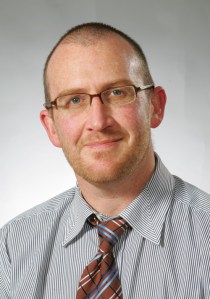 This week, Radio NZ aired an informative interview with Mike Grimshaw (Senior Lecturer in Religious Studies at the University of Canterbury) on the subject of Australian and New Zealand secularism. Among his claims is that ‘Religion in Australia is much stronger, and much more public, and much more of a political force than it is in New Zealand’.
And on cultural diversity: ‘Australia is struggling with a different type of diversity than New Zealand, and I think the residual Christianity in Australia (that is sitting there) and the rise of conservative Christianity in both the Catholic church and the Anglican church in Australia, and then the rising Pentecostal churches in Australia, makes it quite different, makes it more similar in many ways to America, than to New Zealand’.
And on rugby as New Zealand’s religion: ‘… [New Zealanders] get the sense that rugby is all consuming but it actually hasn’t been. What we lack is the balance of culture and tradition – other forms of celebration and identity; … [rugby] is more for Pākehā than anyone else; Maori have a whole culture that balances the role of rugby … But for secular Pākehā in New Zealand there seems to be this sort of thing that rugby is sitting there as an alternative institution; and often the claims of rugby being New Zealand’s religion are often [made] by those who are either celebrating the fact, or those who are opposed to the fact because they feel it is all-consumming. But the trouble is that it is only all-consumming in that there seems to be nothing to balance it …’.
Around the traps … [updated]
 Bernard Weiner on Obama and Gaza: Exiting the Vortex of Violence
- Naomi Klein on Israel: Boycott, Divest, Sanction
- Michael Jensen posts on Marilynne Robinson on sermons
- Cynthia Nielsen posts Part III (the final post) on Begbie on Re-Sounding God’s Truth in the World of Music. Here for Part I and Part II.
- David W. Congdon posts a wonderful hymn by Kim Fabricius: Praise to Jesus in the kitchen
- Jim Gordon thinks out loud about the lectionary and being a ‘liturgically alert Baptist’
- Robert Manne essays on ‘What is Rudd’s Agenda?’
American Theological Inquiry is out
The latest edition (2:1) of American Theological Inquiry (ATI) has been released and is available free here. For more information about this newish journal (sponsored by our friends at Wipf and Stock), visit here. It’s a great journal and deserves our support.
The edition includes the following articles:
- ‘The Theology of Gerald O’Collins and Postmodernism’, by Craig Baron
- ‘Late have I left thee: a reflection on Augustine the Manichee and the logic of belief adoption’, by Charles Natoli
- ‘Jesus On The Big Screen’, by Stephen Nichols
- ‘Lutheran Puritanism? Adiaphora in Lutheran Orthodoxy and Possible Commonalities in Reformed Orthodoxy’, by Daniel Hyde
- ‘A Rose By Any Other Name: Attempts At Classifying North American Protestant Worship’, Lester Ruth
- ‘Twin Parables Of Stewardship In Luke’, by J. Lyle Story
- ‘Death, Killing And Personal Identity’, by Todd Bindig
There’s also book reviews on the following:
- Philippe Sellier. Port-Royal et la littérature, Vol. II., by Charles Natoli
- John R. Muether. Cornelius Van Til: Reformed Apologist and Churchman, by Ryan McIlhenny
- Bryan Spinks (ed.). The Place of Christ in Liturgical Prayer: Trinity, Christology, and Liturgical Theology, by James R. A. Merrick
- Edwin Christiaan van Driel. Incarnation Anyway: Arguments for Supralapsarian Christology, by Myk Habets
- Charles Natoli. Fire in the Dark: Essays on Pascal’s Pensées and Provinciales, by Trent Dougherty
- Karl Barth; Kurt Johanson (ed.); Christopher Asprey (trans). The Word in This World: Two Sermons by Karl Barth, by Benjamin Myers
- Timothy George (ed). God the Holy Trinity: Reflections on Christian Faith and Practice, by Benjamin Myers
- Christopher Hitchens; Douglas Wilson. Is Christianity Good for the World?, by Ian Clary
- D. A. Carson. Becoming Conversant With The Emerging Church: Understanding a Movement and Its Implications, by Tim Challies
- Stephen Nichols. Jesus Made in America: A Cultural History from the Puritans to The Passion of the Christ, by Tim Challies
- David Wells. The Courage To Be Protestant: Truth-lovers, Marketers, and Emergents in the Postmodern World, by Tim Challies
- Thomas Fowler; Daniel Kuebler. The Evolution Controversy: A Survey of Competing Theories, by Tim Challies
Hans Frei: Unpublished Pieces
Mike Higton has generously made available for pdf download Hans W. Frei, Unpublished Pieces: Transcripts from the Yale Divinity School archive. Great stuff. More information here.
It sounded reasonable at the time …
 ‘I think there is a world market for maybe five computers’. – Thomas Watson, Chairman of IBM, 1943
‘[Television] won’t be able to hold on to any market it captures after the first six months. People will soon get tired of staring at a plywood box every night’. – Darryl F. Zanuck, Head of 20th Century-Fox, in 1946
‘We don’t like their sound. Groups of guitars are on the way out’. – Decca Records, rejecting The Beatles, in 1962
‘640K should be enough for anybody’. – Bill Gates, 1981
‘Some of the pharisees said, “Obviously, this man can’t be from God. He doesn’t keep the Sabbath”‘. – St John’s Gospel
Around blogdom …
- Trevor Cairney (who is always worth reading) on why online reading is different
- Byron on leaving the dying in the dark
- Cynthia R. Nielsen does a guest post on Rowan Williams on Dostoevsky’s Faith and Ivan’s Inquisitor and posts Part I of Begbie on Resounding Truth
- Mike Bird on Tom Wright reads Humpty Dumpty
- Andy Naselli draws attention to five sermons that Don Carson recently preached in Seattle:
Requisiat En Pace: Father Richard John Neuhaus
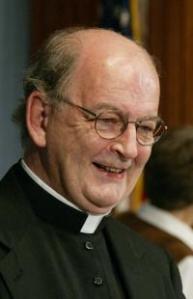 The National Catholic Reporter reports that Fr. Richard John Neuhaus, the founder of First Things and ‘a leading voice of Catholic conservatism in America, and one of those rare theologians and spiritual leaders whose influence vastly exceeded the boundaries of their religious community, has died at 72’.
Related stories can found be at:
- Remembering Fr. Neuhaus
- ‘A Second Brother Dies’: Remembrance by Michael Novak
- ‘The Two Neuhauses’: Remembrance by Damon Linker
- Remembrance by National Review Editors
- Remembrance by Ross Douthat, The Atlantic
Where to blog?
 Some time ago, I made the decision to blog occasionally at two additional sites – Civicus (a blog dedicated to issues broadly related to human rights and with a particular interest in Burma), and Paternal Life (a very occasional blog concerned with issues pertaining to being a dad). The decision to blog at various places was not made lightly. At the time I felt that the different foci could best be served by separating them out (much like the direction that biblical scholarship took in the last century). This would mean, I felt, that readers who were interested in the particular focus of the blog would be less likely to have to wade through copious posts that they were not particularly interested in. A downside of this decision has been that these three of my many passions – theology, human rights and fathering – have, as far as blogging goes, been kept separate, and do not share the perichoretic (probably an inappropriate word to use in this context) existence that they know in my own being. Consequently, I’m (inadvertently) sponsoring the idea that theology, human rights and parenting have little to do with each other, a notion which is of course utter baloney. The other downside, though significantly less important than those already stated, is that maintaining three blogs takes more work.
So, I’ve been wondering about merging Civicus and Paternal Life with Per Crucem ad Lucem (the blog that I pour most of my energy into and which recieves the most hits); and the point of this post is to invite some comment about how you – my readers – and those who may have journeyed down a similar track feel about this proposal. Do you have a preference? What sorts of questions ought such a decision be required to consider? Would such a merger of interests be unduly isolationist for too many readers? Your thoughts?
Two interesting pieces … and one cause for celebration
1. William Pfaff on Should the Torturers Go on Trial?
‘The most effective way to prevent future war crimes is not to threaten elected leaders with punishment that probably will not be imposed. It is to convince civilian and military officials at all levels of government that if they commit or participate in war crimes, as clearly defined in international law and the Uniform Code of Military Justice, even under orders of their superiors, the serious possibility will exist that (in another administration?) they will be appropriately punished’.
2. Jay Feldman reviews ‘Concentration Camps on the Home Front’
Pilger on Gaza
John Pilger has posted on ‘Gaza Under Fire’:
‘… what happens in Gaza is the defining moment of our time, which either grants war criminals impunity and immunity through our silence, while we contort our own intellect and morality, or it gives us the power to speak out’.
Full article here.
Knowing, Toleration, Mythology and the Disturbance of Christian Faith
 ‘Knowledge of God in the sense of the New Testament message, the knowledge of the triune God as contrasted with the whole world of religions in the first centuries, signified, and still signifies, the most radical “twilight of the gods,” the very thing which Schiller so movingly deplored as the de-divinisation of the “lovely world.” It was no mere fabrication when the Early Church was accused by the world around it of atheism, and it would have been wiser for its apologists not to have defended themselves so keenly against this charge. There is a real basis for the feeling, current to this day, that every genuine proclamation of the Christian faith is a force disturbing to, even destructive of, the advance of religion, its life and richness and peace. It is bound to be so. Olympus and Valhalla decrease in population when the message of the God who is the one and only God is really known and believed. The figures of every religious culture are necessarily secularised and recede. They can keep themselves alive only as ideas, symbols, and ghosts, and finally as comic figures. And in the end even in this form they sink into oblivion. No sentence is more dangerous or revolutionary than that God is One and there is no other like Him. All the permanencies of the world draw their life from ideologies and mythologies, from open or disguised religions, and to this extent from all possible forms of deity and divinity. It was on the truth of the sentence that God is One that the “Third Reich” of Adolf Hitler made shipwreck. Let this sentence be uttered in such a way that it is heard and grasped, and at once 450 prophets of Baal are always in fear of their lives. There is no more room now for what the recent past called toleration. Beside God there are only His creatures or false gods, and beside faith in Him there are religions only as religions of superstition, error and finally irreligion’. – Karl Barth, Church Dogmatics II.1 (ed. G.W. Bromiley and T.F. Torrance; trans. T.H.L. Parker, et al.; Edinburgh: T&T Clark, 1957), 444.
Forsyth on measuring sin
 ‘Sin … is not measured by a law, or a nation, or a society of any kind, but by a Person. The righteousness of God was not in a requirement, system, book, or Church, but in a Person, and sin is defined by relation to Him. He came to reveal not only God but sin. The essence of sin is exposed by the touchstone of His presence, by our attitude to Him. He makes explicit what the sinfulness of sin is; He even aggravates it. He rouses the worst as well as the best of human nature. There is nothing that human nature hates like holy God. All the world’s sin receives its sharpest expression when in contact with Christ; when, in face of His moral beauty, goodness, power, and claim, He is first ignored, then discarded, denounced, called the agent of Beelzebub, and hustled out of the world in the name of God’. – PT Forsyth, Missions in State and Church: Sermons and Addresses (London: Hodder & Stoughton, 1908), 56-7.
Howard Zinn on ‘War and Social Justice’
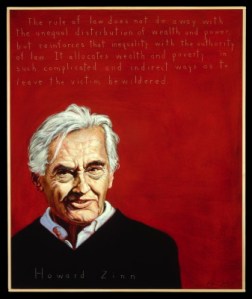 I appreciate reading and listening to American historian and playwrite Howard Zinn. Democracy Now recently posted a wonderful speech by Zinn which he gave at Binghamton University a few days after the 2008 presidential election. The speech is entitled ‘War and Social Justice’. It’s also available as Real Video Stream, Real Audio Stream or MP3, as well as via iTunes for thoser who subscribe to the DN podcast (audio) or (video).
Christus Victor and a request for help
 Help! I need somebody. Help! Not just anybody. Help! You know I need someone. Help!
When I was younger so much younger than today,
I found this awesome quote the page number of which I forgot to write down because I never thought I’d need it …
But now these days are gone
I’m not so self assured
Now I find I’ve changed my mind …
So now … I’m trying to chase up a page reference to a passage from Jaroslav Pelikan’s ‘Foreword’ (pp. xi-xix) to Gustaf Aulén’s Christus Victor: An Historical Study of the Three Main Types of the Idea of the Atonement (New York: Macmillan, 1969). Unfortunately, I no longer seem to be able to lay my hands on a copy of this edition. If anyone has access to this edition, I’d be really keen to hear from you (via email is fine if you prefer).
I really want to be able to sing the next verse:
And now my life has changed in oh so many ways
My independence seems to vanish in the haze
The way by which God brings about reconciliation
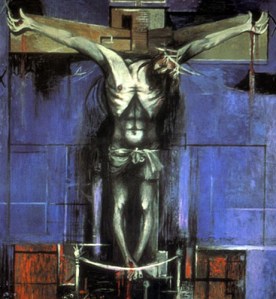 ‘[W]hat Christ did on the Cross was in no way intended to spare us death but rather to revalue death completely. In place of the “going down into the pit” of the Old Testament, it became “being in paradise tomorrow”. Instead of fearing death as the final evil and begging God for a few more years of life, as the weeping king Hezekiah does, Paul would like most of all to die immediately in order “to be with the Lord” (Phil 1:23). Together with death, life is also revalued: “If we live, we live to the Lord; if we die, we die to the Lord” (Rom 14:8).
But the issue is not only life and death but our existence before God and our being judged by him. All of us were sinners before him and worthy of condemnation. But God “made the One who knew no sin to be sin, so that we might be justified through him in God’s eyes” (2 Cor 5:21).
Only God in his absolute freedom can take hold of our finite freedom from within in such a way as to give it a direction toward him, an exit to him, when it was closed in on itself. This happened in virtue of the “wonderful exchange” between Christ and us: he experiences instead of us what distance from God is, so that we may become beloved and loving children of God instead of being his “enemies” (Rom 5:10).
Certainly God has the initiative in this reconciliation: he is the one who reconciles the world to himself in Christ. But one must not play this down (as famous theologians do) by saying that God is always the reconciled God anyway and merely manifests this state in a final way through the death of Christ. It is not clear how this could be the fitting and humanly intelligible form of such a manifestation.
No, the “wonderful exchange” on the Cross is the way by which God brings about reconciliation. It can only be a mutual reconciliation because God has long since been in a covenant with us. The mere forgiveness of God would not affect us in our alienation from God. Man must be represented in the making of the new treaty of peace, the “new and eternal covenant”. He is represented because we have been taken over by the man Jesus Christ. When he “signs” this treaty in advance in the name of all of us, it suffices if we add our name under his now or, at the latest, when we die.’ – Hans Urs von Balthasar, A Short Primer for Unsettled Laymen (trans. Michael Waldstein; San Francisco: Ignatius Press, 1985), 85-7.
Robert Fisk: The self delusion that plagues both sides in this bloody conflict
 During the second Palestinian “intifada”, I was sitting in the offices of Hizbollah’s Al-Manar television station in Beirut, watching news footage of a militiaman’s funeral in Gaza. The television showed hordes of Hamas and PLO gunmen firing thousands of rounds of ammunition into the air to honour their latest “martyr”; and I noticed, just next to me, a Lebanese Hizbollah member – who had taken part in many attacks against the Israelis in what had been Israel’s occupation zone in southern Lebanon – shaking his head.
What was he thinking, I asked? “Hamas try to stand up to the Israelis,” he replied. “But…” And here he cast his eyes to the ceiling. “They waste bullets. They fire all these bullets into the sky. They should use them to shoot at Israelis.”
His point, of course, was that Hamas lacked discipline, the kind of iron, ruthless discipline and security that Hizbollah forged in Lebanon and which the Israeli army was at last forced to acknowledge in southern Lebanon in 2006. Guns are weapons, not playthings for funerals. And Gaza is not southern Lebanon. It would be as well for both sides in this latest bloodbath in Gaza to remember this. Hamas is not Hizbollah. Jerusalem is not Beirut. And Israeli soldiers cannot take revenge for their 2006 defeat in Lebanon by attacking Hamas in Gaza – not even to help Ms Livni in the Israeli elections.
Not that Hizbollah won the “divine victory” it claimed two years ago. Driving the roads of southern Lebanon as the Israelis smashed the country’s infrastructure, killed more than a thousand Lebanese – almost all of them civilians – and razed dozens of villages, it didn’t feel like a Hizbollah “victory” to me, theological or otherwise. But the Israelis didn’t win and the Hizbollah were able to deploy thousands of long-range rockets as well as a missile which set an Israeli warship on fire and almost sank it. Hamas have nothing to match that kind of armoury.
Nor do they have the self-discipline to fight like an army. Hizbollah in Lebanon has managed to purge its region of informers. Hamas – like all the other Palestinian outfits – is infected with spies, some working for the Palestinian Authority, others for the Israelis. Israel has successively murdered one Hamas leader after another – “targeted killing”, of course, is their polite phrase – and they couldn’t do that without, as the police would say, “inside help”. Hizbollah’s previous secretary general, Sayed Abbas Moussawi, was assassinated near Jibchit by a missile-firing Israeli helicopter more than a decade ago but the movement hasn’t suffered a leader’s murder in Lebanon since then. In the 34-day war of 2006, Hizbollah lost about 200 of its men. Hamas lost almost that many in the first day of Israel’s air attacks in Gaza – which doesn’t say much for Hamas’ military precautions.
Israel, however – always swift to announce its imminent destruction of “terrorism” – has never won a war in a built-up city, be it Beirut or Gaza, since its capture of Jerusalem in 1967. And it’s important to remember that the Israeli army, famous in song and legend for its supposed “purity of arms” and “elite” units, has proved itself to be a pretty third-rate army over recent years. Not since the 1973 Middle East conflict – 35 years ago – has it won a war. Its 1978 invasion of Leb anon was a failure, its 1982 invasion ended in disaster, propelling Arafat from Beirut but allowing its vicious Phalangist allies into the Sabra and Chatila camps where they committed mass murder. In neither the 1993 bombardment of Lebanon nor the 1996 bombardment of Lebanon – which fizzled out after the massacre of refugees at Qana – nor the 2006 war was its performance anything more than amateur. Indeed, if it wasn’t for the fact Arab armies are even more of a rabble than the Israelis, the Israeli state would be genuinely under threat from its neighbours.
One common feature of Middle East wars is the ability of all the antagonists to suffer from massive self-delusion. Israel’s promise to “root out terror” – be it of the PLO, Hizbollah, Hamas, Islamic Jihad, Iranian or any other kind – has always turned out to be false. “War to the bitter end,” the Israeli defence minister, Ehud Barak, has promised in Gaza. Nonsense. Just like the PLO’s boast – and Hamas’ boast and Hizbollah’s boast – to “liberate” Jerusalem. Eyewash. But the Israelis have usually shown a dangerous propensity to believe their own propaganda. Calling up more than 6,000 reservists and sitting them round the Gaza fence is one thing; sending them into the hovels of Gaza will be quite another. In 2006, Israel claimed it was sending 30,000 troops into Lebanon. In reality, it sent about 3,000 – and the moment they crossed the border, they were faced down by the Hizbollah. In some cases, Israeli soldiers actually ran back to their own frontier.
 These are realities. The chances of war, however, may be less easier to calculate. If Israel indefinitely continues its billion dollar blitz on Gaza – and we all know who is paying for that – there will, at some stage, be an individual massacre; a school will be hit, a hospital or a pre-natal clinic or just an apartment packed with civilians. In other words, another Qana. At which point, a familiar story will be told; that Hamas destroyed the school/hospital/pre-natal clinic, that the journalists who report on the slaughter are anti-Semitic, that Israel is under threat, etc. We may even get the same disingenuous parallel with a disastrous RAF raid in the Second World War which both Menachem Begin and Benjamin Netanayahu have used over the past quarter century to justify the killing of civilians.
And Hamas – which never had the courage to admit it killed two Palestinian girls with one of its own rockets last week – will cynically make profit from the grief with announcements of war crimes and “genocide”.
At which point, the deeply despised and lame old UN donkey will be clip-clopped onto the scene to rescue the Israeli army and Hamas from this disgusting little war. Of course, saner minds may call all this off before the inevitable disaster. But I doubt it.
Source: The Independent, Wednesday, 31 December 2008
 jasongoroncy.com