Need a good laugh? Need some advice on your PowerPoint presentations?
[HT: Scot McKnight]
Need a good laugh? Need some advice on your PowerPoint presentations?
[HT: Scot McKnight]
 Thorwald Lorenzen, Toward a Culture of Freedom: Reflections on the Ten Commandments Today (Eugene: Cascade, 2008), viii + 253 pages. ISBN: 978 1 55635 296 6. Review copy courtesy of Wipf and Stock.
Some years ago I took a fascinating (for many reasons) course on resurrection. One of the principle teachers was Thorwald Lorenzen, who was at that time a Baptist pastor serving in Canberra but now serves as Professor of Theology at Charles Sturt University. Dr Lorenzen is an erudite and [com]passionate NT scholar and theologian who brings to the task of doing theology a wide horizon of international experiences which inform his particular concern for human rights, expressed in a deep respect for the United Nations bill on The Universal Declaration of Human Rights. A key text for the resurrection course was Lorenzen’s Resurrection and Discipleship, a book deserving of a wide readership and one which helped to open at least one undergraduates eyes to a plethora of issues about the nature and role of NT narrative, about the value (and over-value) of tradition, and particularly about the relationship between resurrection faith and justice.
While nowhere near as carefully researched as Resurrection and Discipleship, and even at times offering surprisingly sloppy and unfair caricatures [eg. ‘Calvinist Christians expect God to plan and enact every detail in life’ (p. 1)], Lorenzen’s latest book continues to bring together his passions for justice, human rights, ethics and biblical exegesis in the service of the people of God and their witness to God’s good news in the world. Lorenzen properly resists interpreting the Ten Words moralistically or in abstraction from their deep rootedness in the covenant life and history of a people in communion (however seemingly fragile at times) with their God. He is also concerned at every point to let these Words speak to our world – and address our questions – in light of the wider sweep of the Scriptures’ metanarrative, and particularly in light of the final Word of God’s revelation – Jesus Christ. The chapter on adultery is a case in point, wherein Lorenzen does not shy away from the complex issues that continue to challenge the Church in its faithfulness to the Word of God and to compassionate witness to that Word in the world. On the question of gay and lesbian marriages, for example, he proffers the following:
‘Civil contracts in which gay and lesbian couples make a legal pledge to each other before the law are in order. They provide security and fairness for a committed and long-term relationship. Marriage, however, is another matter because it entails the desire for family. I think that every child has the right to experience the life-shaping presence of a mother and a father. The rights of a child precede the rights of gays and lesbians because the child is the more vulnerable part in the relationship’. (p, 129)
For those looking to rethink some implications of the Decalogue in a contemporary and increasingly politically-aware context, for those looking for helpful ideas for pulpit ministry, or for those looking for a book to work through in small study groups, Towards and Culture of Freedom might be a good place to consider stopping awhile. Not all will agree will every conclusion Lorenzen reaches, or even with the way he gets there; but to my mind, that’s one more reason why reading the book is worthwhile.
Here’s a few more tasters:
‘Each of us has, or rather is, a conscience. Conscience is the centre of our personhood. It makes us who we are. It shapes our identity. It is worth understanding and caring for’. (p. 20)
‘Deeds of liberation call for structures of liberation. God does not liberate people so that they can fall into the hands of false gods. Freedom therefore needs discipline and structures to ensure that it remains grounded in its author. The “ten words”, but also the statutes and ordinances, the cult and the prophets were all intended to preserve, protect and guide the ongoing journey of freedom’. (p. 24)
‘When some reformers in the sixteenth century took down the pictures and removed the statues from the churches, they wanted to make room for the living voice of the gospel. They wanted to celebrate Jesus as the one word that we need to hear, trust and obey in life and in death. But soon others, lesser minds and lesser hearts, came along and put a book where the pictures had been. So for many Christians the living voice of the gospel has been frozen into a book, the Bible. And around the world there are many Christians who spend more time and energy fighting about the Bible than in worshipping and obeying the Christ to whom the Bible points’. (p. 52)
‘A generation that ignores the wisdom and errors, achievements and failures of its predecessors is ill-prepared to face the future. Would the revolutions of Germany’s youth in the 1960s and of America’s youth in the 1970s have happened if their parents had talked about their war experiences and the associated horror and guilt and doubts?’ (p. 86)
 ‘The relevance of feelings. [Defenders of hell often] do not enter at any length into how bad horrendous sufferings are…. [They] imply that those who are offended [by the doctrine of eternal torment] will be motivated by understandable feelings, which are nevertheless not relevant to a rational consideration of the subject.
I want to close with a contrary methodological contention…: namely, that feelings are highly relevant to the problem of evil and to the problem of hell, because they are one source of information about how bad something is for a person. To be sure they are not an infallible source. Certainly they are not always an articulate source. But they are a source. Where questions of value are concerned, reason is not an infallible source either. That is why so-called value calculations in abstraction from feelings can strike us as “cold” or “callous”. I do not believe we have any infallible faculties at all. But our best shot at valuations will some from the collaboration of feelings and reason, the latter articulating the former, the former giving data to the latter.
Personally, I am appalled at [the] valuations of defenders of eternal torment, at levels too deep for words (although I have already said many). I invite anyone who agrees with [them] – that the saved can in good conscience let their happiness be unaffected by the plight of the damned because the destruction of the latter is self-willed – to spend a week visiting patients who are dying of emphysema or of the advanced effects of alcoholism, to listen with sympathetic presence, to enter into their point of view on their lives, to face their pain and despair. Then ask whether one could in good conscience dismiss their suffering with, “Oh well, they brought it in themselves!”
I do not think this is sentimental. Other than experiencing such suffering in our own person, such sympathetic entering into the position of another is the best way we have to tell what it would be like to be that person and suffer as they do, the best data we can get on how bad it would be to suffer that way. Nor is my thesis especially new. It is but an extension of the old Augustinian-Platonist point, that where values are concerned, what and how well you see depends not simply on how well you think, but on what and how well you love (a point to which Swinburne seems otherwise sympathetic). I borrow a point from Charles Hartshorne when I suggest that sensitivity, sympathetic interaction, is an aspect of such loving, one that rightfully affects our judgment in ways we should not ignore’. – Marilyn McCord Adams, ‘The Problem of Hell: A Problem of Evil for Christians’, in Reasoned Faith: Essays in Philosophical Theology in Honor of Norman Kretzmann (ed. Eleonore Stump; Ithaca: Cornell University Press, 1993), 326.
A note: I’ve come across too few who have made the invaluable point that McCord Adams makes here (whether or not one agrees with her conclusions on universalism is another matter). Of course, the implications of her words reach well beyond conversations concerning apokatastasis – they reach to how we think about all of life. BTW: She really needs to update her homepage.
The 2008 Annual Conference for the Evangelical Philosophical Society is now taking registrations. Conference details here.
 ‘We have placed too much hope in political and social reforms, only to find out that we were being deprived of our most precious possession: our spiritual life. In the East, it is destroyed by the dealings and machinations of the ruling party. In the West, commercial interests tend to suffocate it. This is the real crisis. The split in the world is less terrible than the similarity of the disease plaguing its main sections.
If humanism were right in declaring that man is born to be happy, he would not be born to die. Since his body is doomed to die, his task on earth evidently must be of a more spiritual nature. It cannot unrestrained enjoyment of everyday life. It cannot be the search for the best ways to obtain material goods and then cheerfully get the most out of them. It has to be the fulfillment of a permanent, earnest duty so that one’s life journey may become an experience of moral growth, so that one may leave life a better human being than one started it. It is imperative to review the table of widespread human values. Its present incorrectness is astounding. It is not possible that assessment of the President’s performance be reduced to the question of how much money one makes or of unlimited availability of gasoline. Only voluntary, inspired self-restraint can raise man above the world stream of materialism’.
– Alexander Solzhenitsyn, ‘A World Split Apart’ (A paper presented at the Harvard Class Day Afternoon Exercises, Harvard University, Thursday, 8 June, 1978).
 All wise people have long known that there are few things better to do on a Friday night than sit down with a cup of tea and read some Erskine:
‘God created man that he might be a partaker in His own holiness, as the only right and blessed state possible for him. If I truly apprehend this if I truly apprehend that righteousness and blessedness are one and the same thing, and just the very thing I most need I shall rejoice to know that God desires my righteousness; and if I further know that He will never cease to desire it and to insist upon it, and that all His dealings with me are for this one end, then I can have an entire confidence in Him, as desiring for me the very thing I desire for myself. I shall feel that I am perfectly safe in His hand, that I could not be so safe in any other hand; for that, as He desires the best thing for me, so He alone knows and can use the best means of accomplishing it in me’. – William Hanna, ed., Letters of Thomas Erskine of Linlathen (Edinburgh: David Douglas, 1884), 428-9.
 There’s a challenging reflection by John Pilger in today’s Guardian on the USA’s murder of Japanese people in 1945:
‘The atomic bombing of Hiroshima and Nagasaki was a criminal act on an epic scale. It was premeditated mass murder that unleashed a weapon of intrinsic criminality. For this reason its apologists have sought refuge in the mythology of the ultimate “good war”, whose “ethical bath”, as Richard Drayton called it, has allowed the west not only to expiate its bloody imperial past but to promote 60 years of rapacious war, always beneath the shadow of The Bomb … Catching war criminals is fashionable again. Radovan Karadzic stands in the dock, but Sharon and Olmert, Bush and Blair do not. Why not? The memory of Hiroshima requires an answer’.
The full article is re-posted at Civicus.
 A book commendation: Some years ago now, I read the inspiring biography of Takashi Nagai, a Japanese victim of terminal radiation disease, a peace activist, a physician, and a convert to Christianity. The book, A Song for Nagasaki, recounts the horrors of atomic devastation, the ironies of the bomb’s dropping on one of Japan’s few Christian communities, Nagai’s struggle to find meaning in suffering, and the power of the word of forgiveness and reconcilation. The book is written by Paul Glynn, an Australian Marist Brother who served over 20 years in Japan.
 ‘When I first went to Hiroshima in 1967, the shadow on the steps was still there. It was an almost perfect impression of a human being at ease: legs splayed, back bent, one hand by her side as she sat waiting for a bank to open. At a quarter past eight on the morning of August 6, 1945, she and her silhouette were burned into the granite. I stared at the shadow for an hour or more, then walked down to the river and met a man called Yukio, whose chest was still etched with the pattern of the shirt he was wearing when the atomic bomb was dropped.
He and his family still lived in a shack thrown up in the dust of an atomic desert. He described a huge flash over the city, “a bluish light, something like an electrical short”, after which wind blew like a tornado and black rain fell. “I was thrown on the ground and noticed only the stalks of my flowers were left. Everything was still and quiet, and when I got up, there were people naked, not saying anything. Some of them had no skin or hair. I was certain I was dead.” Nine years later, when I returned to look for him, he was dead from leukaemia.
In the immediate aftermath of the bomb, the allied occupation authorities banned all mention of radiation poisoning and insisted that people had been killed or injured only by the bomb’s blast. It was the first big lie. “No radioactivity in Hiroshima ruin” said the front page of the New York Times, a classic of disinformation and journalistic abdication, which the Australian reporter Wilfred Burchett put right with his scoop of the century. “I write this as a warning to the world,” reported Burchett in the Daily Express, having reached Hiroshima after a perilous journey, the first correspondent to dare. He described hospital wards filled with people with no visible injuries but who were dying from what he called “an atomic plague”. For telling this truth, his press accreditation was withdrawn, he was pilloried and smeared – and vindicated.
The atomic bombing of Hiroshima and Nagasaki was a criminal act on an epic scale. It was premeditated mass murder that unleashed a weapon of intrinsic criminality. For this reason its apologists have sought refuge in the mythology of the ultimate “good war”, whose “ethical bath”, as Richard Drayton called it, has allowed the west not only to expiate its bloody imperial past but to promote 60 years of rapacious war, always beneath the shadow of The Bomb.
 The most enduring lie is that the atomic bomb was dropped to end the war in the Pacific and save lives. “Even without the atomic bombing attacks,” concluded the United States Strategic Bombing Survey of 1946, “air supremacy over Japan could have exerted sufficient pressure to bring about unconditional surrender and obviate the need for invasion. Based on a detailed investigation of all the facts, and supported by the testimony of the surviving Japanese leaders involved, it is the Survey’s opinion that … Japan would have surrendered even if the atomic bombs had not been dropped, even if Russia had not entered the war and even if no invasion had been planned or contemplated.”
The National Archives in Washington contain US government documents that chart Japanese peace overtures as early as 1943. None was pursued. A cable sent on May 5, 1945 by the German ambassador in Tokyo and intercepted by the US dispels any doubt that the Japanese were desperate to sue for peace, including “capitulation even if the terms were hard”. Instead, the US secretary of war, Henry Stimson, told President Truman he was “fearful” that the US air force would have Japan so “bombed out” that the new weapon would not be able “to show its strength”. He later admitted that “no effort was made, and none was seriously considered, to achieve surrender merely in order not to have to use the bomb”. His foreign policy colleagues were eager “to browbeat the Russians with the bomb held rather ostentatiously on our hip”. General Leslie Groves, director of the Manhattan Project that made the bomb, testified: “There was never any illusion on my part that Russia was our enemy, and that the project was conducted on that basis.” The day after Hiroshima was obliterated, President Truman voiced his satisfaction with the “overwhelming success” of “the experiment”.
Since 1945, the United States is believed to have been on the brink of using nuclear weapons at least three times. In waging their bogus “war on terror”, the present governments in Washington and London have declared they are prepared to make “pre-emptive” nuclear strikes against non-nuclear states. With each stroke toward the midnight of a nuclear Armageddon, the lies of justification grow more outrageous. Iran is the current “threat”. But Iran has no nuclear weapons and the disinformation that it is planning a nuclear arsenal comes largely from a discredited CIA-sponsored Iranian opposition group, the MEK – just as the lies about Saddam Hussein’s weapons of mass destruction originated with the Iraqi National Congress, set up by Washington.
 The role of western journalism in erecting this straw man is critical. That America’s Defence Intelligence Estimate says “with high confidence” that Iran gave up its nuclear weapons programme in 2003 has been consigned to the memory hole. That Iran’s president Mahmoud Ahmadinejad never threatened to “wipe Israel off the map” is of no interest. But such has been the mantra of this media “fact” that in his recent, obsequious performance before the Israeli parliament, Gordon Brown alluded to it as he threatened Iran, yet again.
This progression of lies has brought us to one of the most dangerous nuclear crises since 1945, because the real threat remains almost unmentionable in western establishment circles and therefore in the media. There is only one rampant nuclear power in the Middle East and that is Israel. The heroic Mordechai Vanunu tried to warn the world in 1986 when he smuggled out evidence that Israel was building as many as 200 nuclear warheads. In defiance of UN resolutions, Israel is today clearly itching to attack Iran, fearful that a new American administration might, just might, conduct genuine negotiations with a nation the west has defiled since Britain and America overthrew Iranian democracy in 1953.
In the New York Times on July 18, the Israeli historian Benny Morris, once considered a liberal and now a consultant to his country’s political and military establishment, threatened “an Iran turned into a nuclear wasteland”. This would be mass murder. For a Jew, the irony cries out.
The question begs: are the rest of us to be mere bystanders, claiming, as good Germans did, that “we did not know”? Do we hide ever more behind what Richard Falk has called “a self-righteous, one-way, legal/moral screen [with] positive images of western values and innocence portrayed as threatened, validating a campaign of unrestricted violence”? Catching war criminals is fashionable again. Radovan Karadzic stands in the dock, but Sharon and Olmert, Bush and Blair do not. Why not? The memory of Hiroshima requires an answer.’
Source: John Pilger, writing for The Guardian
 ‘ … in early democracies, as in American democracy at the time of its birth, all individual human rights were granted because man is God’s creature. That is, freedom was given to the individual conditionally, in the assumption of his constant religious responsibility. Such was the heritage of the preceding thousand years. Two hundred or even fifty years ago, it would have seemed quite impossible, in America, that an individual could be granted boundless freedom simply for the satisfaction of his instincts or whims. Subsequently, however, all such limitations were discarded everywhere in the West; a total liberation occurred from the moral heritage of Christian centuries with their great reserves of mercy and sacrifice. State systems were becoming increasingly and totally materialistic. The West ended up by truly enforcing human rights, sometimes even excessively, but man’s sense of responsibility to God and society grew dimmer and dimmer. In the past decades, the legalistically selfish aspect of Western approach and thinking has reached its final dimension and the world wound up in a harsh spiritual crisis and a political impasse. All the glorified technological achievements of Progress, including the conquest of outer space, do not redeem the Twentieth century’s moral poverty which no one could imagine even as late as in the Nineteenth Century’.
– Alexander Solzhenitsyn, ‘A World Split Apart’ (A paper presented at the Harvard Class Day Afternoon Exercises, Harvard University, Thursday, 8 June, 1978).
 Invisible mending
This is the place where souls come
To be mended where
Tatty ends of unfinished business
Or business unravelled
Are drawn together and tenderly
Made new.
Nimble stitches
Seen only by the weaver
Whose loving fingers
Repair the frangible fabric of lives.
– Annie Villiers, ‘Mended’, in Parallel Lines: Riding the Central Otago Rail Trail (ed. Annie Villiers and John Z. Robinson; Dunedin: Longacre Press, 2007).
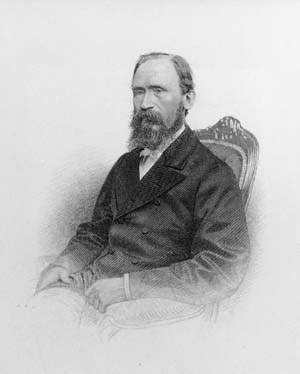 Andrew Martin Fairbairn (1838–1912), Congregational minister and college head, was born at Inverkeithing, Fife, on 4 November 1838. He came of covenanting stock and received strict religious training. He was the second son of John Fairbairn, a miller, and a leader in the United Secession church, and his wife, Helen, daughter of Andrew Martin, of Blainslie, near Lauder. He had very little regular schooling, and began to earn his own living before he was ten. A voracious reader with a retentive memory, he prepared himself for Edinburgh University, where he afterwards studied, though he took no degree.
Meanwhile Fairbairn had become an adherent of the Evangelical Union founded by James Morison, under whose influence Fairbairn decided to become a minister. He entered the theological college of the union in Glasgow in 1857, and in 1860 was ordained and inducted to the Evangelical Union pastorate in Bathgate. While in that post he visited Germany, where he studied at Berlin from 1865 to 1866 under Dorner, Tholuck, and Hengstenberg, and from that time onwards the advocacy of a freer and broader theology than that prevalent in the Scotland of his day became the passion of Fairbairn’s life. He married in 1868 Jane, youngest daughter of John Shields of Byres, Bathgate. They had two sons and two daughters.
Fairbairn wrote, preached, and lectured with untiring persistence, and did not shrink from controversy. He was chairman of the Evangelical Union in 1870. From Bathgate he moved in 1872 to St Paul’s Congregational Church, Aberdeen, where he won a great reputation as a preacher and as a lecturer on philosophical and theological subjects. His first book, Studies in the Philosophy of Religion and History (1876), at once called attention to him as a forceful religious teacher. In 1877 Fairbairn became principal of Airedale College, Bradford, thus transferring his religious allegiance to English Congregationalism. He soon showed his quality as a religious leader, and while at Airedale became chairman of the Congregational Union of England and Wales in 1883.
During the same period Fairbairn set himself to a task which absorbed him for many years, namely the reform and development of theological education among the free churches. When, therefore, it was proposed in 1886 to establish a Congregational theological college in Oxford, Fairbairn was marked out as the best man to lead the enterprise. He was made principal of the new foundation, Mansfield College, and its early success was largely due to his sagacity, industry, and tact. Its standing (and Fairbairn’s) was recognized when Gladstone dined there on 5 February 1890. Fairbairn’s wide learning and liberal spirit, the rugged eloquence of his style, and his deep insight into human nature made him a most attractive and stimulating teacher; his students responded with loyalty and devotion.
The substance of Fairbairn’s teaching was published in 1893 in the volume entitled Christ in Modern Theology, which its author described as ‘an endeavour, through a Christian doctrine of God, at a sketch of the first lines of a Christian theology’. The book speedily passed through twelve editions. It was followed by The Philosophy of the Christian Religion (1902), and the two together gave a fairly complete presentation of a theological position, strongly influenced by Hegelian idealism, which proved both stimulating and constructive at a time of stress and uncertainty. The theology is of a mediating type and, since it expresses the reaction of Fairbairn’s own mind to the intellectual conditions of his day, it now seems dated.
Among Fairbairn’s other writings are two volumes of sermons—The City of God (1882), hailed in its day as a real contribution to apologetics, and Catholicism, Roman and Anglican (1899), the substance of which had been the occasion of a sharp controversy with Cardinal Newman—and also a volume of Studies in Religion and Theology (1910). He also wrote two chapters, ‘Calvin’ and ‘Tendencies of European thought in the age of the Reformation’, for the second volume of the Cambridge Modern History (1903). His Gifford lectures on comparative religion were delivered in Aberdeen but, owing to adverse criticism of the sections on Chinese religion, were not published as they stood, and were never revised.
All this literary work was done in the intervals of an exceedingly busy life. A trusted leader of the free churches, Fairbairn was in demand all over the country as a preacher and lecturer. He paid several visits to America and lectured in many university centres. In 1898 he went as Haskell lecturer to India. Keenly interested in educational questions, he served on a royal commission on education (1894–5); was consulted by the University of Manchester concerning the establishment of its non-sectarian faculty of theology; played a leading part on the Welsh Theological Board, which devised regulations governing the teaching and examining of theology in the fledgeling University of Wales; and participated in the education controversy of 1902.
Fairbairn died at 112 St James’s Court, Buckingham Gate, London, on 9 February 1912. He was loved and honoured by a wide circle of friends. He was devoted to his family and never so happy as when in his hospitable home. He was a keen conversationalist, a little dogmatic and assertive in manner; W. B. Glover less deferentially described him as ‘a pompous windbag’. But he always had a sense of humour, and a sensitive appreciation of human needs and failings. His wide knowledge of people, books, and affairs made him a most entertaining companion. Above all he was deeply religious. Fairbairn was a DD of Edinburgh, Yale, Wales, Manchester, and Göttingen; a DLitt of Leeds; an LLD of Aberdeen; and a founder and fellow of the British Academy. A collection of Mansfield College Essays (1909), which includes a sonnet to him by Edward Shillito and a bibliography of his writings, was presented to him on his seventieth birthday. His monument is the college that he founded, which became a full college of Oxford University in 1995.
Sources
Oxford Dictionary of National Biography · W.B. Selbie, The life of Andrew Martin Fairbairn (1914) · A.P.F. Sell, ‘An Arminian, a Calvinist and a liberal’, Dissenting thought and the life of the churches: studies in an English tradition (1990) · A.M. Fairbairn, ‘Experience in theology: a chapter of autobiography’, Contemporary Review, 91 (1907), 554–73 · R.S. Franks, ‘The theology of Andrew Martin Fairbairn’, Transactions of the Congregational Historical Society, 13 (1937–9), 140–50 · J.W. Grant, Free churchmanship in England, 1870–1940 [1955] · W.B. Glover, Evangelical nonconformists and higher criticism in the nineteenth century (1954) · M.D. Johnson, The dissolution of dissent, 1850–1918 (1987) · E. J. Price, ‘Dr Fairbairn and Airedale College: the hour and the man’, Transactions of the Congregational Historical Society, 13 (1937–9), 131–9 · K.W. Wadsworth, Yorkshire United Independent College (1954), 127–32 · H. Escott, A history of Scottish Congregationalism (1960) · Congregational Year Book (1913), 165–6 · W.D. McNaughton, The Scottish Congregational ministry, 1794–1993 (1993), 45–6 · R. Tudur Jones, Congregationalism in England, 1662–1962 (1962) · A.P.F. Sell, A reformed, evangelical, Catholic theology: the contribution of the World Alliance of Reformed Churches, 1875–1982 (1991) · A.P.F. Sell, Saints: visible, orderly and Catholic: the Congregational idea of the church (1986) · A.P.F. Sell, Theology in turmoil: the roots, course and significance of the conservative–liberal debate in modern theology (1986) · J. Ross, A history of Congregational independency in Scotland (1900) · Gladstone, Diaries · E. Kaye, Mansfield College, Oxford: its origin, history and significance (1996)
Wealth at death
£3462 6s. 2d.: probate, 5 June 1912, CGPLA Eng. & Wales
Note: Additional dictionary content from The Oxford Dictionary of National Biography can be obtained free in the UK from public libraries thanks to a national deal with the MLA.
See here for more biographies in the Introducing Series.
‘But should someone ask me whether I would indicate the West such as it is today as a model to my country, frankly I would have to answer negatively. No, I could not recommend your society in its present state as an ideal for the transformation of ours. Through intense suffering our country has now achieved a spiritual development of such intensity that the Western system in its present state of spiritual exhaustion does not look attractive. Even those characteristics of your life which I have just mentioned are extremely saddening.
A fact which cannot be disputed is the weakening of human beings in the West while in the East they are becoming firmer and stronger. Six decades for our people and three decades for the people of Eastern Europe; during that time we have been through a spiritual training far in advance of Western experience. Life’s complexity and mortal weight have produced stronger, deeper and more interesting characters than those produced by standardized Western well-being. Therefore if our society were to be transformed into yours, it would mean an improvement in certain aspects, but also a change for the worse on some particularly significant scores. It is true, no doubt, that a society cannot remain in an abyss of lawlessness, as is the case in our country. But it is also demeaning for it to elect such mechanical legalistic smoothness as you have. After the suffering of decades of violence and oppression, the human soul longs for things higher, warmer and purer than those offered by today’s mass living habits, introduced by the revolting invasion of publicity, by TV stupor and by intolerable music.
All this is visible to observers from all the worlds of our planet. The Western way of life is less and less likely to become the leading model.
There are meaningful warnings that history gives a threatened or perishing society. Such are, for instance, the decadence of art, or a lack of great statesmen. There are open and evident warnings, too. The center of your democracy and of your culture is left without electric power for a few hours only, and all of a sudden crowds of American citizens start looting and creating havoc. The smooth surface film must be very thin, then, the social system quite unstable and unhealthy.
But the fight for our planet, physical and spiritual, a fight of cosmic proportions, is not a vague matter of the future; it has already started. The forces of Evil have begun their decisive offensive, you can feel their pressure, and yet your screens and publications are full of prescribed smiles and raised glasses. What is the joy about?’
– Alexander Solzhenitsyn, ‘A World Split Apart’ (A paper presented at the Harvard Class Day Afternoon Exercises, Harvard University, Thursday, 8 June, 1978).
 This Friday, 8 August, marks the 20th anniversary of Burma’s biggest ever democracy uprising when hundreds of thousands of people across Burma bravely marched through the streets demanding an end to military dictatorship. Soldiers fired on crowds of unarmed protesters, killing thousands. Today there remain over 2000 political prisoners in Burma, many subjected to brutal torture and denied medical care.
There are a number of events being organised around London for Friday to mark this anniversary and to continue the voice of protest:
Demonstration outside the Burmese Embassy
1-2pm Friday 8 August
19A, Charles Street,
London W1J 5DX
Nearest tube: Green Park
Monument to Political Prisoners
Opening ceremony to unveil a glass monument to political prisoners in Burma.
Time: 10.30am to 12:00
Venue: Peace Garden
Imperial War Museum
St George’s Road, London SE1 6ER
Nearest Tube: Elephant & Castle
Exhibition on Political Prisoners in Burma
Time: 18:00 to 22:00
Venue: Rooms G-50, 51, 52
School of Oriental and African Studies
University of London, Thornhaugh Street, Russell Square, London WC1H 0XG
Free entrance. Refreshments will be provided.
Nearest Tube: Russell Square
And on Saturday 9 August …
Bike Ride for Burma
To commemorate 8th August 1988, the Burmese community has organised a bike ride in London from Queen Anne’s Gate, St James’s Park to Speakers Corner, Hyde Park Corner.
Details: Meet at 1200 at Queen Anne’s Gate entrance of St James’s Park. Nearest tube: St James’s Park (District & Circle). The ride will conclude at Hyde Park Corner at 1400.
If you cannot take part in the bike ride, you’re welcome to come along for a picnic in Hyde Park, near Speakers Corner at 2pm. For more details of the route and other information, see
www.burmapoliticalforum.org
 ‘Destructive and irresponsible freedom has been granted boundless space. Society appears to have little defense against the abyss of human decadence, such as, for example, misuse of liberty for moral violence against young people, motion pictures full of pornography, crime and horror. It is considered to be part of freedom and theoretically counter-balanced by the young people’s right not to look or not to accept. Life organized legalistically has thus shown its inability to defend itself against the corrosion of evil.
And what shall we say about the dark realm of criminality as such? Legal frames (especially in the United States) are broad enough to encourage not only individual freedom but also certain individual crimes. The culprit can go unpunished or obtain undeserved leniency with the support of thousands of public defenders. When a government starts an earnest fight against terrorism, public opinion immediately accuses it of violating the terrorists’ civil rights. There are many such cases’.
– Alexander Solzhenitsyn, ‘A World Split Apart’ (A paper presented at the Harvard Class Day Afternoon Exercises, Harvard University, Thursday, 8 June, 1978).
 ‘Western society has given itself the organization best suited to its purposes, based, I would say, on the letter of the law. The limits of human rights and righteousness are determined by a system of laws; such limits are very broad. People in the West have acquired considerable skill in using, interpreting and manipulating law, even though laws tend to be too complicated for an average person to understand without the help of an expert. Any conflict is solved according to the letter of the law and this is considered to be the supreme solution. If one is right from a legal point of view, nothing more is required, nobody may mention that one could still not be entirely right, and urge self-restraint, a willingness to renounce such legal rights, sacrifice and selfless risk: it would sound simply absurd. One almost never sees voluntary self-restraint. Everybody operates at the extreme limit of those legal frames. An oil company is legally blameless when it purchases an invention of a new type of energy in order to prevent its use. A food product manufacturer is legally blameless when he poisons his produce to make it last longer: after all, people are free not to buy it.
I have spent all my life under a communist regime and I will tell you that a society without any objective legal scale is a terrible one indeed. But a society with no other scale but the legal one is not quite worthy of man either. A society which is based on the letter of the law and never reaches any higher is taking very scarce advantage of the high level of human possibilities. The letter of the law is too cold and formal to have a beneficial influence on society. Whenever the tissue of life is woven of legalistic relations, there is an atmosphere of moral mediocrity, paralyzing man’s noblest impulses.
And it will be simply impossible to stand through the trials of this threatening century with only the support of a legalistic structure’.
– Alexander Solzhenitsyn, ‘A World Split Apart’ (A paper presented at the Harvard Class Day Afternoon Exercises, Harvard University, Thursday, 8 June, 1978).

Apart from having a vodka or two, giving thanks to God, and spending some time today reading Solzhenitsyn, I wanted to find some other way to honour the life of a man who has taught me so much and with whose story I have journeyed so intimately. [The fact that my paternal grandmother is Russian and has lived under some of the same conditions as Solzhenitsyn brings his words just a little closer to home for me.] So over the next few days, I will post some excerpts from Solzhenitsyn’s famous lecture – ‘A World Split Apart’ – delivered at Harvard University in 1978. The entire lecture can be downloaded here. Here’s Solzhenitsyn on courage:
‘A decline in courage [. . .] may be the most striking feature which an outside observer notices in the West in our days. The Western world has lost its civil courage, both as a whole and separately, in each country, each government, each political party and of course in the United Nations. Such a decline in courage is particularly noticeable among the ruling groups and the intellectual elite, causing an impression of loss of courage by the entire society. Of course there are many courageous individuals but they have no determining influence on public life. Political and intellectual bureaucrats show depression, passivity and perplexity in their actions and in their statements and even more so in theoretical reflections to explain how realistic, reasonable as well as intellectually and even morally warranted it is to base state policies on weakness and cowardice. And decline in courage is ironically emphasized by occasional explosions of anger and inflexibility on the part of the same bureaucrats when dealing with weak governments and weak countries, not supported by anyone, or with currents which cannot offer any resistance. But they get tongue-tied and paralyzed when they deal with powerful governments and threatening forces, with aggressors and international terrorists. Should one point out that from ancient times decline in courage has been considered the beginning of the end?’ – Alexander Solzhenitsyn, ‘A World Split Apart’ (A paper presented at the Harvard Class Day Afternoon Exercises, Harvard University, Thursday, 8 June, 1978).
 What an enormously courageous and prophetically-astute witness Solzhenitsyn has been to those with ears to hear. Appropriately, tributes are appearing all over the place to honour his life and work. He passed away today at the age of 89:
 The obituary in the Chicago Tribune reads: MOSCOW (AP) — Alexander Solzhenitsyn, the Nobel Prize-winning author whose books chronicled the horrors of the Soviet gulag system, died Sunday. He was 89.
His son, Stepan Solzhenitsyn, said his father died of heart failure.
Solzhenitsyn’s unflinching accounts of torment and survival in the Soviet Union’s slave labor camps riveted his countrymen, whose secret history he exposed. They earned him 20 years of bitter exile but international renown and the Nobel Prize for Literature in 1970.
Beginning with the 1962 short novel “One Day in the Life of Ivan Denisovich,” Solzhenitsyn devoted himself to describing the human “meat grinder” that had caught him and millions of other Soviet citizens: capricious arrests, often for trifling and absurd reasons, followed by sentences to slave labor camps where cold, starvation and punishing work crushed inmates physically and spiritually.
His “Gulag Archipelago” trilogy of the 1970s shocked readers by describing the savagery of the Soviet state under dictator Josef Stalin. It helped erase sympathy for the Soviet Union among many leftist intellectuals.
But his account of that secret system of prison camps was also inspiring in its description of how one person — Solzhenitsyn himself — survived, physically and spiritually, in a penal system of soul-crushing hardship and injustice.
The West offered him shelter and accolades. But Solzhenitsyn’s refusal to bend despite enormous pressure, perhaps, also gave him the courage to criticize Western culture for what he considered its weakness and decadence.
Here’s some excerpts from his works:
‘We have to condemn publicly the very idea that some people have the right to repress others. In keeping silent about evil, in burying it so deep within us that no sign of it appears on the surface, we are implanting it, and it will rise up a thousandfold in the future. When we neither punish nor reproach evildoers, we are not simply protecting their trivial old age, we are thereby ripping the foundations of justice from beneath new generations. It is for this reason, and not because of the ‘weakness of indoctrinational work,’ that they are growing up ‘indifferent.’ Young people are acquiring the conviction that foul deeds are never punished on earth, that they always bring prosperity’. – The Gulag Archipelago, 1973
‘Standing there to be counted through the gate of an evening, back in camp after a whole day of buffeting wind, freezing cold and an empty belly, the zek longs for his ladleful of scalding hot watery evening soup as for rain in time of drought. He could knock it back in a single gulp. For the moment that ladleful means more to him than freedom, more than his whole past life, more than whatever life is left to him’. – One Day in the Life of Ivan Denisovich, written 1959, published 1962
 ‘He had drawn many a thousand of these rations in prisons and camps, and … he knew no way of standing up for his rights, he, like every other prisoner, had discovered long ago that honest weight was never to be found in the bread-cutting. There was short weight in every ration. The only point was how short. So every day you took a look to soothe your soul – today, maybe, they haven’t snitched any’. – One Day in the Life of Ivan Denisovich, 1962
‘And all of a sudden the fateful gate swings quickly open, and four white male hands, unaccustomed to physical labor but nonetheless strong and tenacious, grab us by the leg, arm, collar, cap, ear, and drag us in like a sack, and the gate behind us, the gate to our past life, is slammed shut …’. – The Gulag Archipelago, 1973
‘On top of everything, the cancer wing was Number 13. Pavel Nikolayevich Rusanov had never been and could never be a superstitious person, but his heart sank when they wrote ‘Wing 13′ on his admission card. They should have had the ingenuity to assign number 13 to some kind of prosthetic or intestinal department’. – Cancer Ward, 1968
‘Sending ‘Gulag’ would be a rash, a very risky, business, but opportunities were few … Right, I would send it. The heart had surfaced from one anxiety only to plunge into another … Two novels of mine appearing simultaneously in the West? A double? I felt like the Hawaiian surf riders described by Jack London, standing upright on a smooth board … on the crest of the ninth wave …’. – The Oak and the Calf, 1980
‘Until I came to the West myself and spent two years looking around, I could never have imagined to what an extreme degree the West had actually become a world without a will, a world gradually petrifying in the face of the danger confronting it…All of us are standing on the brink of a great historical cataclysm, a flood that swallows up civilization and changes whole epochs’. – Testimony to the U.S. Congress, July 8 1975.
And in speech delivered at Harvard in June 8, 1978, he described the problems of both East and West as ‘a disaster’ rooted in agnosticism and atheism. They are ‘the calamity of an autonomous, irreligious humanistic consciousness … It has made man the measure of all things on earth—imperfect man, who is never free of pride, self-interest, envy, vanity, and dozens of other defects. We are now paying for the mistakes which were not properly appraised at the beginning of the journey. On the way from the Renaissance to our days we have enriched our experience, but we have lost the concept of a Supreme Complete Entity which used to restrain our passions and our irresponsibility’.

Der Spiegel have published this absolutely fascinating interview with Aleksander Solzhenitsyn [who, sadly, died today]:
SPIEGEL: Alexander Isayevich, when we came in we found you at work. It seems that even at the age of 88 you still feel this need to work, even though your health doesn’t allow you to walk around your home. What do you derive your strength from?
Solzhenitsyn: I have always had that inner drive, since my birth. And I have always devoted myself gladly to work — to work and to the struggle.
SPIEGEL: There are four tables in this space alone. In your new book “My American Years,” which will be published in Germany this fall, you recollect that you used to write even while walking in the forest.
Solzhenitsyn: When I was in the gulag I would sometimes even write on stone walls. I used to write on scraps of paper, then I memorized the contents and destroyed the scraps.
SPIEGEL: And your strength did not leave you even in moments of enormous desperation?
Solzhenitsyn: Yes. I would often think: Whatever the outcome is going to be, let it be. And then things would turn out all right. It looks like some good came out of it.
SPIEGEL: I am not sure you were of the same opinion when in February 1945 the military secret service arrested Captain Solzhenitsyn in Eastern Prussia. Because, in his letters from the front, Solzhenitsyn was unflattering about Josef Stalin, and the sentence for that was eight years in the prison camps.
Solzhenitsyn: It was south of Wormditt. We had just broken out of a German encirclement and were marching to Königsberg (now Kaliningrad) when I was arrested. I was always optimistic. And I held to and was guided by my views.
SPIEGEL: What views?
Solzhenitsyn: Of course, my views developed in the course of time. But I have always believed in what I did and never acted against my conscience.
 SPIEGEL: Thirteen years ago when you returned from exile, you were disappointed to see the new Russia. You turned down a prize proposed by Gorbachev, and you also refused to accept an award Yeltsin wanted to give you. Yet now you have accepted the State Prize which was awarded to you by Putin, the former head of the FSB intelligence agency, whose predecessor the KGB persecuted and denounced you so cruelly. How does this all fit together?
Solzhenitsyn: The prize in 1990 was proposed not by Gorbachev, but by the Council of Ministers of the Russian Soviet Federative Socialist Republic, then a part of the USSR. The prize was to be for “The Gulag Archipelago.” I declined the proposal, since I could not accept an award for a book written in the blood of millions.
In 1998, it was the county’s low point, with people in misery; this was the year when I published the book “Russia in Collapse.” Yeltsin decreed I be honored the highest state order. I replied that I was unable to receive an award from a government that had led Russia into such dire straits.
The current State Prize is awarded not by the president personally, but by a community of top experts. The Council on Science that nominated me for the award and the Council on Culture that supported the idea include some of the most highly respected people of the country, all of them authorities in their respective disciplines. The president, as head of state, awards the laureates on the national holiday. In accepting the award I expressed the hope that the bitter Russian experience, which I have been studying and describing all my life, will be for us a lesson that keeps us from new disastrous breakdowns.
Vladimir Putin — yes, he was an officer of the intelligence services, but he was not a KGB investigator, nor was he the head of a camp in the gulag. As for service in foreign intelligence, that is not a negative in any country — sometimes it even draws praise. George Bush Sr. was not much criticized for being the ex-head of the CIA, for example.
SPIEGEL: All your life you have called on the authorities to repent for the millions of victims of the gulag and communist terror. Was this call really heard?
Solzhenitsyn: I have grown used to the fact that, throughout the world, public repentance is the most unacceptable option for the modern politician.
SPIEGEL: The current Russian president says the collapse of the Soviet Union was the largest geopolitical disaster of the 20th century. He says it is high time to stop this masochistic brooding over the past, especially since there are attempts “from outside,” as he puts it, to provoke an unjustified remorse among Russians. Does this not just help those who want people to forget everything that took place during the county’s Soviet past?
Solzhenitsyn: Well, there is growing concern all over the world as to how the United States will handle its new role as the world’s only superpower, which it became as a result of geopolitical changes. As for “brooding over the past,” alas, that conflation of “Soviet” and “Russian,” against which I spoke so often in the 1970s, has not passed away either in the West, or in the ex-socialist countries, or in the former Soviet republics. The elder political generation in communist countries was not ready for repentance, while the new generation is only too happy to voice grievances and level accusations, with present-day Moscow a convenient target. They behave as if they heroically liberated themselves and lead a new life now, while Moscow has remained communist. Nevertheless, I dare hope that this unhealthy phase will soon be over, that all the peoples who have lived through communism will understand that communism is to blame for the bitter pages of their history.
SPIEGEL: Including the Russians.
 Solzhenitsyn: If we could all take a sober look at our history, then we would no longer see this nostalgic attitude to the Soviet past that predominates now among the less affected part of our society. Nor would the Eastern European countries and former USSR republics feel the need to see in historical Russia the source of their misfortunes. One should not ascribe the evil deeds of individual leaders or political regimes to an innate fault of the Russian people and their country. One should not attribute this to the “sick psychology” of the Russians, as is often done in the West. All these regimes in Russia could only survive by imposing a bloody terror. We should clearly understand that only the voluntary and conscientious acceptance by a people of its guilt can ensure the healing of a nation. Unremitting reproaches from outside, on the other hand, are counterproductive.
SPIEGEL: To accept one’s guilt presupposes that one has enough information about one’s own past. However, historians are complaining that Moscow’s archives are not as accessible now as they were in the 1990’s.
Solzhenitsyn: It’s a complicated issue. There is no doubt, however, that a revolution in archives took place in Russia over the last 20 years. Thousands of files have been opened; the researchers now have access to hundreds and thousands of previously classified documents. Hundreds of monographs that make these documents public have already been published or are in preparation. Alongside the declassified documents of the 1990’s, there were many others published which never went through the declassification process. Dmitri Volkogonov, the military historian, and Alexander Yakovlev, the ex-member of the Politburo — these people had enough influence and authority to get access to any files, and society is grateful to them for their valuable publications.
As for the last few years, no one has been able to bypass the declassification procedure. Unfortunately, this procedure takes longer than one would like. Nevertheless the files of the country’s most important archives, the National Archives of the Russian Federation (GARF), are as accessible now as in the 1990’s. The FSB sent 100,000 criminal- investigation materials to GARF in the late 1990s. These documents remain available for both citizens and researchers. In 2004-2005 GARF published the seven-volume “History of Stalin’s Gulag.” I cooperated with this publication and I can assure you that these volumes are as comprehensive and reliable as they can be. Researchers all over the world rely on this edition.
 SPIEGEL: About 90 years ago, Russia was shaken first by the February Revolution and then by the October Revolution. These events run like a leitmotif through your works. A few months ago in a long article you reiterated your thesis once again: Communism was not the result of the previous Russian political regime; the Bolshevik Revolution was made possible only by Kerensky’s poor governance in 1917. If one follows this line of thinking, then Lenin was only an accidental person, who was only able to come to Russia and seize power here with German support. Have we understood you correctly?
Solzhenitsyn: No, you have not. Only an extraordinary person can turn opportunity into reality. Lenin and Trotsky were exceptionally nimble and vigorous politicians who managed in a short period of time to use the weakness of Kerensky’s government. But allow me to correct you: the “October Revolution” is a myth generated by the winners, the Bolsheviks, and swallowed whole by progressive circles in the West. On Oct. 25, 1917, a violent 24-hour coup d’etat took place in Petrograd. It was brilliantly and thoroughly planned by Leon Trotsky — Lenin was still in hiding then to avoid being brought to justice for treason. What we call “the Russian Revolution of 1917” was actually the February Revolution.
The reasons driving this revolution do indeed have their source in Russia’s pre-revolutionary condition, and I have never stated otherwise. The February Revolution had deep roots — I have shown that in “The Red Wheel.” First among these was the long-term mutual distrust between those in power and the educated society, a bitter distrust that rendered impossible any compromise, any constructive solutions for the state. And the greatest responsibility, then, of course falls on the authorities: Who if not the captain is to blame for a shipwreck? So you may indeed say that the February Revolution in its causes was “the results of the previous Russian political regime.”
But this does not mean that Lenin was “an accidental person” by any means; or that the financial participation of Emperor Wilhelm was inconsequential. There was nothing natural for Russia in the October Revolution. Rather, the revolution broke Russia’s back. The Red Terror unleashed by its leaders, their willingness to drown Russia in blood, is the first and foremost proof of it.
SPIEGEL: Your recent two-volume work “200 Years Together” was an attempt to overcome a taboo against discussing the common history of Russians and Jews. These two volumes have provoked mainly perplexity in the West. You say the Jews are the leading force of global capital and they are among the foremost destroyers of the bourgeoisie. Are we to conclude from your rich array of sources that the Jews carry more responsibility than others for the failed Soviet experiment?
Solzhenitsyn: I avoid exactly that which your question implies: I do not call for any sort of scorekeeping or comparisons between the moral responsibility of one people or another; moreover, I completely exclude the notion of responsibility of one nation towards another. All I am calling for is self-reflection.
You can get the answer to your question from the book itself: “Every people must answer morally for all of its past — including that past which is shameful. Answer by what means? By attempting to comprehend: How could such a thing have been allowed? Where in all this is our error? And could it happen again? It is in that spirit, specifically, that it would behoove the Jewish people to answer, both for the revolutionary cutthroats and the ranks willing to serve them. Not to answer before other peoples, but to oneself, to one’s consciousness, and before God. Just as we Russians must answer — for the pogroms, for those merciless arsonist peasants, for those crazed revolutionary soldiers, for those savage sailors.”
SPIEGEL: In our opinion, out of all your works, “The Gulag Archipelago” provoked the greatest public resonance. In this book you showed the misanthropic nature of the Soviet dictatorship. Looking back today, can you say to what extent it has contributed to the defeat of communism in the world?
Solzhenitsyn: You should not address this question to me — an author cannot give such evaluations.
SPIEGEL: To paraphrase something you once said, the dark history of the 20th century had to be endured by Russia for the sake of mankind. Have the Russians learned the lessons of the two revolutions and their consequences?
Solzhenitsyn: It seems they are starting to. A great number of publications and movies on the history of the 20th century — albeit of uneven quality — are evidence of a growing demand. Quite recently, the state-owned TV channel “Russia” aired a series based on Varlam Shalamov’s works, showing the terrible, cruel truth about Stalin’s camps. It was not watered down.
And, for instance, since last February I have been surprised and impressed by the large-scale, heated and long-lasting discussions that my previously written and now republished article on the February Revolution has provoked. I was pleased to see the wide range of opinions, including those opposed to mine, since they demonstrate the eagerness to understand the past, without which there can be no meaningful future.
 SPIEGEL: How do you assess the period of Putin’s governance in comparison with his predecessors Yeltsin and Gorbachev?
Solzhenitsyn: Gorbachev’s administration was amazingly politically naïve, inexperienced and irresponsible towards the country. It was not governance but a thoughtless renunciation of power. The admiration of the West in r eturn only strengthened his conviction that his approach was right. But let us be clear that it was Gorbachev, and not Yeltsin, as is now widely being claimed, who first gave freedom of speech and movement to the citizens of our country.
Yeltsin’s period was characterized by a no less irresponsible attitude to people’s lives, but in other ways. In his haste to have private rather than state ownership as quickly as possible, Yeltsin started a mass, multi-billion-dollar fire sale of the national patrimony. Wanting to gain the support of regional leaders, Yeltsin called directly for separatism and passed laws that encouraged and empowered the collapse of the Russian state. This, of course, deprived Russia of its historical role for which it had worked so hard, and lowered its standing in the international community. All this met with even more hearty Western applause.
Putin inherited a ransacked and bewildered country, with a poor and demoralized people. And he started to do what was possible — a slow and gradual restoration. These efforts were not noticed, nor appreciated, immediately. In any case, one is hard pressed to find examples in history when steps by one country to restore its strength were met favorably by other governments.
SPIEGEL: It has gradually become clear to everyone that the stability of Russia is of benefit to the West. But there is one thing that surprises us in particular: When speaking about the right form of statehood for Russia, you were always in favor of civil self- government, and you contrasted this model with Western democracy. After seven years of Putin’s governance we can observe totally the opposite phenomenon: Power is concentrated in the hands of the president, everything is oriented toward him.
Solzhenitsyn: Yes, I have always insisted on the need for local self-government for Russia, but I never opposed this model to Western democracy. On the contrary, I have tried to convince my fellow citizens by citing the examples of highly effective local self-government systems in Switzerland and New England, both of which I saw first-hand.
In your question you confuse local self-government, which is possible on the most grassroots level only, when people know their elected officials personally, with the dominance of a few dozen regional governors, who during Yeltsin’s period were only too happy to join the federal government in suppressing any local self-government initiatives.
Today I continue to be extremely worried by the slow and inefficient development of local self-government. But it has finally started to take place. In Yeltsin’s time, local self-government was actually barred on the regulatory level, whereas the state’s “vertical of power” (i.e. Putin’s centralized and top-down administration) is delegating more and more decisions to the local population. Unfortunately, this process is still not systematic in character.
SPIEGEL: But there is hardy any opposition.
Solzhenitsyn: Of course, an opposition is necessary and desirable for the healthy development of any country. You can scarcely find anyone in opposition, except for the communists, just like in Yeltsin’s times. However, when you say “there is nearly no opposition,” you probably mean the democratic parties of the 1990s. But if you take an unbiased look at the situation: there was a rapid decline of living standards in the 1990s, which affected three quarters of Russian families, and all under the “democratic banner.” Small wonder, then, that the population does not rally to this banner anymore. And now the leaders of these parties cannot even agree on how to share portfolios in an illusory shadow government. It is regrettable that there is still no constructive, clear and large-scale opposition in Russia. The growth and development of an opposition, as well as the maturing of other democratic institutions, will take more time and experience.
SPIEGEL: During our last interview you criticized the election rules for State Duma deputies, because only half of them were directly elected in their constituencies, whereas the other half, representatives of the political parties, were dominant. After the election reform made by president Putin, there is no direct constituency at all. Is this not a step back?
Solzhenitsyn: Yes, I think it is a mistake. I am a convinced and consistent critic of “party-parliamentarism.” I am for non-partisan elections of true people’s representatives who are accountable to their regions and districts; and who in case of unsatisfactory work can be recalled. I do understand and respect the formation of groups on economical, cooperative, territorial, educational, professional and industrial principles, but I see nothing organic in political parties. Politically motivated ties can be unstable and quite often they have selfish ulterior motives. Leon Trotsky said it accurately during the October Revolution: “A party that does not strive for the seizure of power is worth nothing.” We are talking about seeking benefit for the party itself at the expense of the rest of the people. This can happen whether the takeover is peaceful or not. Voting for impersonal parties and their programs is a false substitute for the only true way to elect people’s representatives: voting by an actual person for an actual candidate. This is the whole point behind popular representation.
SPIEGEL: In spite of high revenues from oil and gas exports, in spite of the development of a middle class, there is a vast contrast between rich and poor in Russia. What can be done to improve the situation?
Solzhenitsyn: I think the gap between the rich and the poor is an extremely dangerous phenomenon in Russia and it needs the immediate attention of the state. Although many fortunes were amassed in Yeltsin’s times by ransacking, the only reasonable way to correct the situation today is not to go after big businesses — the present owners are trying to run them as effectively as they can — but to give breathing room to medium and small businesses. That means protecting citizens and small entrepreneurs from arbitrary rule and from corruption. It means investing the revenues from the national natural resources into the national infrastructure, education and health care. And we must learn to do so without shameful theft and embezzlement.
SPIEGEL: Does Russia need a national idea, and what might it look like?
Solzhenitsyn: The term “national idea” is an unclear one. One might think of it as a widely shared understanding among a people as to the desired way of life in their country, an idea that holds sway over the population. A unifying concept like that can be useful, but should never be created artificially or imposed top-down by the powers-that-be.
Over the latest historical periods these concepts have been developed in France, for example after the eighteenth century, in the United Kingdom, the United States, Germany, Poland etc. When the whole discussion of “developing a national idea” hastily began in post-Soviet Russia, I tried to pour cold water on it with the objection that, after all the devastating losses we had experienced, it would be quite sufficient to have just one task: the preservation of a dying people.
SPIEGEL: But Russia often finds itself alone. Recently relations between Russia and the West have gotten somewhat colder, and this includes Russian-European relations. What is the reason? What are the West’s difficulties in understanding modern Russia?
Solzhenitsyn: I can name many reasons, but the most interesting ones are psychological, i.e. the clash of illusory hopes against reality. This happened both in Russia and in West. When I returned to Russia in 1994, the Western world and its states were practically being worshipped. Admittedly, this was caused not so much by real knowledge or a conscious choice, but by the natural disgust with the Bolshevik regime and its anti-Western propaganda.
This mood started changing with the cruel NATO bombings of Serbia. It’s fair to say that all layers of Russian society were deeply and indelibly shocked by those bombings. The situation then became worse when NATO started to spread its influence and draw the ex-Soviet republics into its structure. This was especially painful in the case of Ukraine, a country whose closeness to Russia is defined by literally millions of family ties among our peoples, relatives living on different sides of the national border. At one fell stroke, these families could be torn apart by a new dividing line, the border of a military bloc.
So, the perception of the West as mostly a “knight of democracy” has been replaced with the disappointed belief that pragmatism, often cynical and selfish, lies at the core of Western policies. For many Russians it was a grave disillusion, a crushing of ideals.
At the same time the West was enjoying its victory after the exhausting Cold War, and observing the 15-year-long anarchy under Gorbachev and Yeltsin. In this context it was easy to get accustomed to the idea that Russia had become almost a Third World country and would remain so forever. When Russia started to regain some of its strength as an economy and as a state, the West’s reaction — perhaps a subconscious one, based on erstwhile fears — was panic.
SPIEGEL: The West associated it with the ex-superpower, the Soviet Union.
 Solzhenitsyn: Which is too bad. But even before that, the West deluded itself — or maybe conveniently ignored the reality — by regarding Russia as a young democracy, whereas in fact there was no democracy at all. Of course Russia is not a democratic country yet; it is just starting to build democracy. It is all too easy to take Russia to task with a long list of omissions, violations and mistakes.
But did not Russia clearly and unambiguously stretch its helping hand to the West after 9/11? Only a psychological shortcoming, or else a disastrous shortsightedness, can explain the West’s irrational refusal of this hand. No sooner did the USA accept Russia’s critically important aid in Afghanistan than it immediately started making newer and newer demands. As for Europe, its claims towards Russia are fairly transparently based on fears about energy, unjustified fears at that.
Isn’t it a luxury for the West to be pushing Russia aside now, especially in the face of new threats? In my last Western interview before I returned to Russia (for Forbes magazine in April 1994) I said: “If we look far into the future, one can see a time in the 21st century when both Europe and the USA will be in dire need of Russia as an ally.”
SPIEGEL: You have read Goethe, Schiller and Heine in the original German, and you have always hoped that Germany would be something of a bridge between Russia and the rest of the world. Do you believe Germans can still play this role?
Solzhenitsyn: I do. There is something predetermined in the mutual attraction between Germany and Russia. Otherwise, this attraction would not have survived two ghastly World Wars.
SPIEGEL: Which German poets, writers and philosophers have influenced you the most?
Solzhenitsyn: Schiller and Goethe were very much present in my childhood and adolescence. Later I was drawn by Schelling. I highly appreciate the great German musical tradition. I can’t imagine my life without Bach, Beethoven and Schubert.
SPIEGEL: The West knows nearly nothing about modern Russian literature. What is, in your opinion, the situation in Russian literature today?
Solzhenitsyn: Periods of rapid and fundamental change were never favorable for literature. Significant works, not to mention great works, have nearly always and everywhere been created in periods of stability, be it a good or a bad stability. Modern Russian literature is no exception. The educated reader today is much more interested in non-fiction — memoirs, biographies, and documentary prose. However, I do believe that justice and conscience will not be cast to the four winds, but will remain in the foundations of Russian literature, so that it may be of service in brightening our spirit and enhancing our comprehension.
SPIEGEL: The idea of the influence of Orthodox Christianity on the Russian world can be traced throughout your works. What is the moral qualification of the Russian church? We think it is turning into a state church today, just like it was centuries ago — an institution that in practice legitimizes the head of Kremlin as the representative of God.
Solzhenitsyn: On the contrary, we should be surprised that our church has gained a somewhat independent position during the very few years since it was freed from total subjugation to the communist government. Do not forget what a horrible human toll the Russian Orthodox Church suffered throughout almost the entire 20th century. The Church is just rising from its knees. Our young post-Soviet state is just learning to respect the Church as an independent institution. The “Social Doctrine” of the Russian Orthodox Church, for example, goes much further than do government programs. Recently Metropolitan Kirill, a prominent expounder of the Church’s position, has made repeated calls for reforming the taxation system. His views are quite different from those of government, yet he airs them in public, on national television. As for “legitimizing the head of Kremlin,” do you mean the funeral service for Yeltsin in the main cathedral and the decision not to hold a civil funeral ceremony?
SPIEGEL: That too.
 Solzhenitsyn: Well, it was probably the only way to keep in check public anger, which has not fully subsided, and avoid possible manifestations of anger during the burial. But I see no reason to treat the ceremony as the new protocol for the funerals of all Russian presidents in the future. As far as the past is concerned, our Church holds round-the-clock prayers for the repose of the victims of communist massacres in Butovo near Moscow, on the Solovetsky Islands and other places of mass burials.
SPIEGEL: In 1987 in your interview with SPIEGEL founder Rudolf Augstein you said it was really hard for you to speak about religion in public. What does faith mean for you?
Solzhenitsyn: For me faith is the foundation and support of one’s life.
SPIEGEL: Are you afraid of death?
Solzhenitsyn: No, I am not afraid of death any more. When I was young the early death of my father cast a shadow over me — he died at the age of 27 — and I was afraid to die before all my literary plans came true. But between 30 and 40 years of age my attitude to death became quite calm and balanced. I feel it is a natural, but no means the final, milestone of one’s existence.
SPIEGEL: Anyhow, we wish you many years of creative life.
Solzhenitsyn: No, no. Don’t. It’s enough.
SPIEGEL: Alexander Isayevich, we thank you for this interview.
Interview conducted by Christian Neef and Matthias Schepp.
Source: Der Spiegel

 jasongoroncy.com