On William Stringfellow’s homosexuality

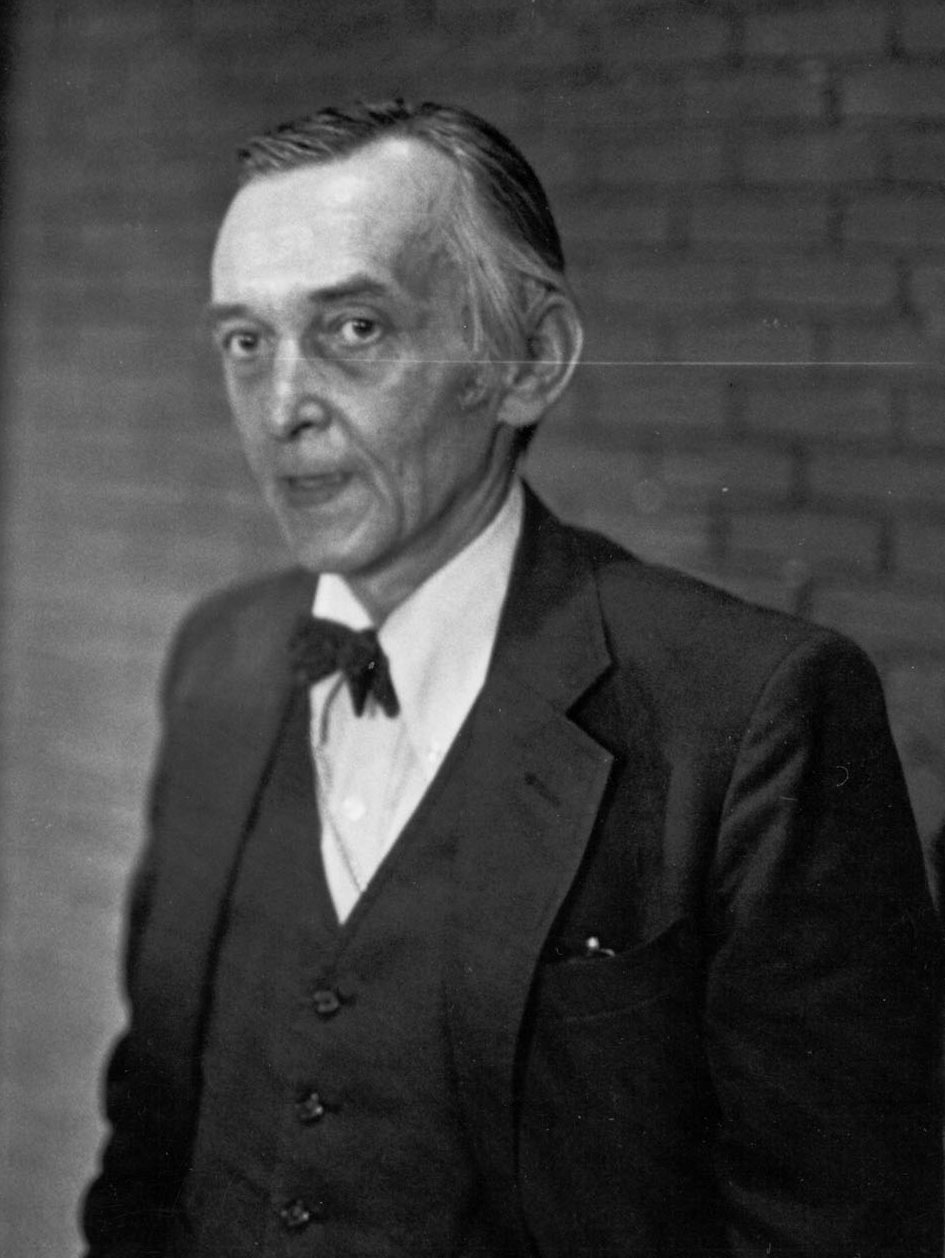
Since I started posting on William Stringfellow, I’ve received a significant number of emails asking if I might comment on Stringfellow’s homosexuality, and how, if anything, such might undermine or affirm his authority to speak to the Church on other issues. My initial reaction to these requests was largely one of dismissal, partly because I do not think that the blogosphere is the best place to have this discussion, and partly because this question should not dominate any of our thinking about what Stringfellow (or anyone else for that matter) has to offer us. I still believe both of these factors are true. That said, I have decided that some things can be said, and even that some things may be of help for our thinking about, and reading of, Stringfellow’s work.

There are a minimal number of references in Stringfellow’s own work to the question of homosexuality. That Stringfellow says abundantly more about Jesus Christ than he does about himself is, I think, significant in itself. One place where Stringfellow does speak to the question of homosexuality is in his essay ‘Loneliness, Dread and Holiness’, published in The Christian Century on 10 October 1962. Significantly, the essay is a reflection on 2 Corinthians 12:8–9a, ‘Three times I besought the Lord about this, that it should leave me; but he said to me, “My grace is sufficient for you, for my power is made perfect in weakness”‘.

In that essay, Stringfellow begins by recalling the loneliness which is ‘as intimate and as common to men as death’, and ‘the void [which] may be mere boredom’, and then proceeds to note all the places that exploit and profit from that transient loneliness and boredom ‘promising that time will be consumed for those who pay the price’ – whether it be a dance studio, a club, a bar, with ‘prostitutes or homosexuals or whatever one wants’  – even if it means relieving the loneliness in lust. ‘These are’, he writes,

‘establishments often populated by those who realize that loneliness is more than the burden of time and who are beguiled by another fiction: that loneliness can be conquered by erotic infatuation. Here are folk, whether men or women, whether looking for the same or the other sex, for whom seduction becomes a way of life, who insist on the importance of what meets the eye – physique, clothes, the appearance of youth. Here are the lonely whose search for a partner is so dangerous, so stimulating and so exhausting that the search itself provides an apparent escape from loneliness. But when a partner is found for an hour or a night or a transient affair, the search immediately resumes, becomes compulsive. And while erotic companionship seems more appealing – and more human – than resignation to boredom, while touching another may be more intimate and more honest than watching another, no one may really find his own identity in another, least of all in the body of another. Perhaps this is the most absurd fiction of them all: the notion that is present, primitively, in erotic partnerships but also very often in other relationships – between parents and children, in friendship, in marriage – that one’s own identity must be sought and can be found in another person’.

Later in the essay, Stringfellow exposes his own cards: namely, that the issue is not primarily about sexuality but is about our hope in Christ who alone fills the vacuum of the human heart. There is no attempt here to justify, nor to call that which many name evil good. There is only one man’s witness to him who in subjecting to death takes the dread out of loneliness and who calls us to love, to abandon our idols and to worship God above all else, and to enjoy God’s love not just for ourselves but for all, ‘including those who do not yet enjoy God’s love for themselves or for anyone or anything else’. This posture of enjoyment of God is, Stringfellow insists, ‘the estate of holiness’. ‘Holiness’, he writes, ‘does not mean that you are any better than anyone else. Holiness is not about goodness; holiness is not common pietism. Holiness is not about pleasing God, even less about appeasing God. Holiness is about enjoying God. Holiness is the integrity of greeting, confessing, honoring and trusting God’s presence in all events and in any event, no matter what, no matter when, no matter where’.

The question of Stringfellow’s sexuality has been taken up by Marshall Ron Johnston in his fascinating PhD thesis entitled ‘Bombast, Blasphemy, and the Bastard Gospel: William Stringfellow and American Exceptionalism’ (Baylor University, 2007). In his thesis, Johnston notes that ‘while it is true that fundamentalists and many evangelicals would have rejected Stringfellow’s thought outright in light of his homosexuality, he seemed to have managed to keep that fact of his life private, identifying himself in many forums as “celibate by vocation”’.

Johnston recalls Stringfellow’s thorough engagement in his two passions – religion and politics. He writes that Stringfellow’s interest in issues of faith were transformed from one of intellectual absorption to one of existential centrality, and that Stringfellow credited this transformation to the awareness that while religion must be intellectually respectable, it ‘must also provide the core and motivation of one’s whole life’. While Stringfellow does refer to an ‘unusually close relationship with another fellow’ (i.e. Anthony Towne, whom he would later refer to as ‘my sweet companion for seventeen years’. A Simplicity of Faith, 115. This was, in Anthony Dancer’s words, the ‘closest Stringfellow ever came to becoming uncloseted’), he also confesses their decision that their friendship would not endure if it were self-centered, but only if it were God-centered.

Johnston contends that Stringfellow never openly declared his homosexuality, and recounts Andrew McThenia’s observation that ‘the taking up of joint residency with Anthony Towne was Stringfellow’s “first and only ‘public’ acknowledgement” of his sexual orientation’. Of course, those who have read Stringfellow’s Instead of Death will recall his description of himself as vocationally committed to celibacy (p. 10). As for Stringfellow’s relationship with Towne, in a memorial address entitled ‘The Felicity of Anthony Towne’, Stringfellow stated that Towne’s ‘vocation – as that may be distinguished from his occupation – was, in principle, monastic, as is my own’ (A Simplicity of Faith, 52). Parenthetically, he added, ‘That is the explanation of our relationship’ (A Simplicity of Faith, 52).

Johnston (on pp. 57ff.) later recalls that while Stringfellow was never public about his own homosexuality, he was not reticent about identifying with those devoted to homosexual advocacy. Stringfellow served for several years as the general counsel for the George W. Henry Foundation, an organisation established to help homosexuals and others who were, in the words of the time, ‘by reason of their sexual deviation … in trouble with themselves, the law, or society’. This association apparently afforded Stringfellow opportunities to speak about homosexual advocacy to various groups. For example, in 1965 he delivered an address at Christ Church Cathedral in Hartford, Connecticut, entitled ‘The Humanity of Sex’. In that address, Stringfellow offered a brief comment on the theology and ethics of homosexuality before turning most of his attention to various legal issues surrounding the gay lifestyle. He framed his address in the context of a Christian’s identification with the marginalised in American society. In his introductory remarks Stringfellow noted that ‘according to the ethics of American society’, homosexuals ‘are not respectable’. Identifying himself as ‘a Christian, not a moralist’, Stringfellow referred to Christ’s care for the outcasts as one reason for interest in their legal situation. He stated, ‘If homosexuals in this society are orphans or prisoners, for a Christian that is itself enough reason to be concerned with them’. Beyond his interest as a Christian, Stringfellow was also concerned with the legal situation of the homosexual from the constitutional perspective of equal treatment. He noted that he was ‘bred in’ a legal tradition ‘which believes that if anyone is not represented or cannot secure representation before the law, whatever his cause and whatever the popularity or social approval of his cause, the whole society is imperiled’. Later, in the same address, Stringfellow suggested an association between legal cases involving homosexuals and civil rights cases associated with the ‘present racial crisis’. So, Johnston continues, for Stringfellow the justification for an interest in the issue of homosexuality and the advocacy for homosexuals was based upon a sense of Christian responsibility to identify with the outcast and upon a sense of legal responsibility to provide equal treatment under the United States Constitution.

Johnston proceeds to suggest that Stringfellow’s ethic of homosexuality is best understood in light of his overall theological framework. Certainly, Stringfellow assumed a certain ‘givenness’ to homosexuality that was associated with his overall view of the diversity of sexuality, complaining in a 1979 address to the national convention of the group Integrity, Gay Episcopalians and their Friends, that ‘[the] matter of sexual proclivity and the prominence of the sexual identity of a person, are both highly overrated’. Consequently, he continued, ‘the issue is not homosexuality but sexuality in any and all of its species [because] there are as many varieties of sexuality as there be (sic) human beings’.

Here’s Johnston:

In light of that understanding of sexuality, Stringfellow explained that at Christian conversion ‘all that a particular person is, sexuality along with all else, suffers the death in Christ which inaugurates the new (or renewed) life in Christ’. This new life does not mean the sublimation of sexuality in any of its forms. Instead, according to Stringfellow, conversion means that Christians ‘have exceptional freedom to be who [they] are, and, thus, to welcome and affirm [their] sexuality as a gift, absolved from guilt or embarrassment or shame’. Stringfellow’s understanding of Christian conversion is important here, because it was essentially anthropocentric. In the address at Christ Church in Hartford in 1965, he had explained it: ‘To become and to be Christian is to become utterly vulnerable to God’s own affirmation of one’s existence . . . and, as it were, to participate in God’s affirmation of one’s self and of all things’. Based upon such a perspective of homosexuality and Christianity, Stringfellow asked rhetorically, ‘Can a homosexual be a Christian?’ He answered with further questions: ‘Can a rich man be a Christian? Can an infant be a Christian? Or one who is sick, or insane, or indolent, or one possessed of power or status or respectability? Can anybody be a Christian?’ He considered such questions ‘theologically absurd’, since ‘[nothing] . . . familiar to the human experience, including all the varieties of sexuality deprives any man of God’s love’. Consequently, Stringfellow answered, ‘Can a homosexual be a Christian? Yes: if his sexuality is not an idol’.

In light of the anthropocentric description of conversion, Stringfellow’s view of idolatry logically follows. An idol is something that hinders a person ‘from accepting himself in a way which means loving the whole world just as it is and thereby following Christ’. Thus, in Stringfellow’s view homosexuality, which is inherently morally neutral, is paradoxically acceptable for a Christian as long as the homosexual accepts him or herself in Christ, acknowledging and receiving God’s love …

Anthony Dancer, in his dissertation on Stringfellow, devotes a section to the nexus of the latter’s homosexuality, his work, and his thought. Dancer notes that as a homosexual Stringfellow certainly had a personal point of identification with the marginalized, which ‘put him in touch with reading the gospel from “below”’. I would agree with Dancer’s assessment and add further clarifying comments … Stringfellow, as a gay man, remained for his lifetime outside of the traditional family structures that have in many cases characterized the so-called ‘American dream’. Arguably, as an outsider he was more capable of observing the various hypocrisies of ‘family values’ as they have been promoted by various conservative groups. By the same token, however, his critique of the notion of American exceptionalism, a concept which depends in part on the centrality of family values, could likely be dismissed as the rantings of an angry man, excluded from much of the promise of American society. Perhaps, paradoxically, both are the case. Ultimately, his exclusion from the essentials of the American dream helped fuel his critique, substantively and motivationally, of America’s claims to moral superiority.
One of the emails that I received recently came from someone who is ‘working in a very conservative theological context’, but is also ‘very happy to learn from Stringfellow’. This person suggested that ‘there is something about Stringfellow’s insights as a lay theologian of the highest order (along with Ellul) that … transcends the “suitability for teaching office” question – although’, he adds, ‘I do take those concerns seriously’. He continues: ‘From my last decade or so working and living in community – as an Anglican non-layperson – in the inner-city Sydney areas of Darlinghurst, Kings Cross and Glebe, I’ve found that Stringfellow is more than qualified to speak into such contexts. More so than many others who might “tick all the right boxes”. Not that I mean to glorify brokenness or make it “the” qualification that trumps all others … But Stringfellow’s struggle alongside the forgotten ones, personal illness and grief (and I suspect being gay) combine to afford him insight and practical wisdom that is a pearl of great price in the types of contexts I’m used to and somewhat rare in the scholarly circles I am now “playing house” with’. I think there is much wisdom here.

I also think that Mike Higton, summarising Rowan Williams’ essay ‘The Body’s Grace’, has outlined a very helpful beginning point for this conversation to take place. It certainly seems to me to be consonant with Stringfellow’s own approach. Higton writes:

  1. The gospel, the good news spoken by God to the world in Jesus Christ – is God’s command. To put it the other way around, the command of God is not extraneous to the gospel, as if God, while saving us in Christ by the Spirit, said, ‘Oh, and there’s another, unrelated thing I wanted to talk to you about’.
  2. The connection between gospel and command is intelligible. That is, it is possible for us by attending to the Gospel to understand how and why we are commanded and such understanding is the fundamental task of Christian ethics.
  3. The gospel so understood provides the criterion by which we discover what truly is a binding command upon us. Faced, for instance, with a range of biblical commands about slavery, women, usury, polygamy, and sexual relationships, the fundamental theological question is not, ‘Which of these is culturally conditioned?’ but ‘How, if at all, do these matters relate to the gospel?’ Theological ethics is a matter, we might say, of taking every thought captive to Christ.
  4. Because this attention to the gospel is the fundamental task of Christian ethics, any approach that simply stops with the apparent demands we find in Scripture, without asking whether and how they connect to the gospel, fails to take the command of God seriously.
  5. If there is some intelligible connection between the gospel and sexual relationships, there would be a binding Christian sexual ethic (a command of God regarding sexual behaviour) even if there were no passages in Scripture that explicitly treated sexual matters.

In his book Worship, Community and the Triune God of Grace, James Torrance recounts an experience that a colleague of his, Roland Walls (who was a member of the Community of the Transfiguration in Roslin village, a few miles out of Edinburgh) had. One day, James noticed in his garden a piece of sculpture he had not seen before. Roland told him about it. A young sculptor, brought up among the Exclusive Brethren, one day confessed to the fellowship that he was gay. As a result, he was asked to leave the Assembly. In his distress, he found his way to the Roslin Community, where Roland found him on his knees in prayer in the chapel. The young man poured out his story and unburdened his heart. At the end of their conversation, Roland simply put his arms around him and gave him a hug! That hug symbolised everything for the man. He knew he was loved, accepted, forgiven. He went back, found a block of sandstone and carved out a figure of the two Adams. They are kneeling, embracing one another. Christ lays his head on the right shoulder of fallen Adam, and fallen Adam lays his head on the right shoulder of Christ the second Adam. The only way in which one can distinguish between the two Adams is by the nail prints in the hands of Christ. That sculptor saw himself in fallen Adam, and in that symbolic hug he saw himself accepted in Christ, the second Adam. There one sees the Pauline theology of an Irenaeus – that what was lost in Adam has been restored in Christ. That is the biblical concept of ‘the one and the many’ – that we, the many, can see ourselves accepted by grace in Christ, the one Mediator, who fulfils God’s purpose – to gather together all things in Christ, the head – the doctrine of ‘recapitulation’.

Irenaeus used the metaphor of ‘the two hands of God’ in his criticism of Marcion. God our Father has ‘two hands’ – the Word and the Spirit – by whom he created and redeemed the world. Marcion had taught that the Creator God of the Old Testament was different from the Redeemer God of the New Testament. No, according to Irenaeus, the God who created this world (and Adam) has redeemed this world (with Adam) by the same Word and the same Spirit. The one by whom and for whom all things were created has taken our humanity upon himself in order to redeem us, i.e. ‘to bring many sons and daughters to glory’. It is by these ‘two hands’ that God gives himself to us in love to bring us to intimate communion. We can extend that metaphor further. Think of a hug! When we hug somebody whom we love there is a double movement. We give ourselves to the beloved, and in the same act by putting our arms around the other, we draw that person close to our heart! That is a parable of the double movement of grace, the God-humanward and the human-Godward movement, that takes place in the hypostatic union and in which we participate through the ministry of the Spirit. In Christ, the Word made flesh, and in the Holy Spirit – his ‘two hands’ – God our Father in grace gives himself to us as God. But in Jesus Christ, the Word made flesh, and in the Spirit we are led to the Father by the intercessions of Christ and the intercessions of the Spirit. We are lifted up by ‘the everlasting arms’. As in the mediatorial ministry of Christ, the Spirit is the interceding Spirit, through whom Jesus Christ our ascended High Priest presents us to the Father.

One of the reasons that I found Ray Anderson’s posts on Homosexuality and the Church so encouraging is because Anderson is at least wanting to allow the gospel and its shape to determine our ethics, rather than some vague commitment to natural theology or to so-called Christian moralism. Regardless of whether one agrees or otherwise with his conclusions, this is the right ordering. He also takes sin seriously enough, and the tragic condition of human fallenness seriously enough, and the gift of Holy Scripture seriously enough, that he is not prepared to simply dismiss those texts in the Bible which speak to this issue.

In response to a recent comment on my blog, I wrote that ‘if I was at some stage to try and articulate a theologically-robust reflection on the issues of sexuality, sin and ministry, I think that I would try to explore the relationship between these issues twofold: (i) in light of an ethic determined by eschatology, i.e. by the coming of God in Jesus Christ, and (ii) in light of the Church’s two sacraments – namely the Baptism by which we are put to death and inaugurated into a new humanity, and the Table at which sinners feast in anticipation of the great banquet which is to come. Clearly, it is christology that must determine a Christian response to these questions. If the word one of us is given to speak during this time-between-the-times comes via something of a contradiction in one’s own personhood, then this, it seems to me, does not abrogate the message. Clearly I have no problem with learning from Stringfellow’. I do not think that one’s sexual orientations disqualify or qualify one from being heard, nor from being ordained.

NT scholar Richard Hays devotes a chapter to homosexuality in his excellent book The Moral Vision of the New Testament. While that particular chapter is in some ways among the least satisfying in the book, his response to the question ‘Should persons of homosexual orientation be ordained?’ is worth recalling here in the context of thinking about Stringfellow’s own life and witness. He writes:

‘I save this question deliberately for last, where it belongs. It is unfortunate that the battle line has been drawn in the denominations at the question of ordination of homosexuals. The ensuing struggle has had the unfortunate effect of reinforcing a double standard for clergy and lay morality; it would be far better to articulate a single set of moral norms that apply to all Jesus’ followers. Strictures against homosexuality belong in the church’s moral catechesis, not in its ordination requirements. It is arbitrary to single out homosexuality as a special sin that precludes ordination. (Certainly, the New Testament does not do this.) The church has no analogous special rules to exclude from ordination the greedy or the self-righteous. Such matters are left to the discernment of the bodies charged with examining candidates for ordination; these bodies must determine whether the individual candidate has the gifts and graces requisite for ministry. In any event, a person of homosexual orientation seeking to live a life of disciplined abstinence would clearly be an appropriate candidate for ordination’ (p. 403).

There is, of course, much more to be said, not least on the relationship between Christians who are non-celibate homosexuals and the Church’s teaching ministry. But this post is about Stringfellow, and what I’ve written will have to do for now.
Thinking about Anglicanism

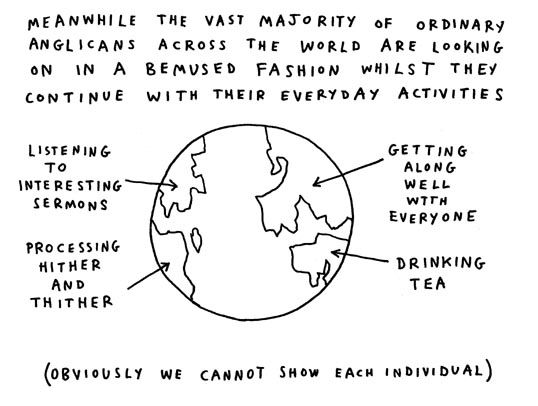
I have a deep and abiding appreciation for Anglicanism, and for Anglican theology, fostered in no small part by a year that I spent as an undergrad studying at Ridley Theological College. But it is no news to anyone that Anglicanism finds itself in hard times. Not uniquely hard, nor uniquely for this time, but still hard. And it may be fair to say that the Anglican communion needs all the friends it can get at the moment. So I was struck by these stinging words from Thomas Merton:

‘The Church of England depends, for its existence, almost entirely on the solidarity and conservativism of the English ruling class. Its strength is not in anything supernatural, but in the strong social and racial instincts which bind the members of this caste together; and the English cling to their Church the way they cling to their King and to their old schools: because of a big, vague, sweet complex of subjective dispositions regarding the English countryside, old castles and cottages, games of cricket in the long summer afternoons, tea-parties on the Thames, croquet, roast-beef, pipe-smoking, the Christmas panto, Punch and the London Times and all those other things the mere thought of which produces a kind of a warm and inexpressible ache in the English heart’. – Thomas Merton, The Seven Storey Mountain (San Diego: Harcourt Brace, 1988), 72.

Let’s just pretend for a moment that Merton is not completely off the page here, and that most Anglicans really are like Jane Austen’s Mr Collins; is this all that we might want to – even feel compelled to – say about our Anglican sisters and brothers, few of whom I know enjoy ‘tea-parties on the Thames’ or anywhere for that matter, and about Anglicanism itself?

Forsyth’s assessment of Anglicanism has significantly more currency than that of Merton’s and, in true Forsyth style, he goes to the bottom of things. Forsyth locates the enigma and scandal of Anglicanism in the schism which occured at the time of the Reformation. Painfully aware that he may cause offense, and that he is stepping on toes long blistered, some of which like it so, Forsyth, addressing a British audience from the Free Church camp, recalls that it is the judgement of the chief branch of the Catholic family that Anglicanism is guilty of sponsoring (ongoing) schism in the church:

‘If it is denied that there was a schism, how is it that the put with so much learning (whatever insight) fails to convince? It fails to convince, on one side, Rome and the Greek Church (which know a good deal about schisms), and, on the other hand, ourselves (who are not ignorant of them). If the Anglican Church did not owe its existence to a schism from the Pope and, in connection therewith, to a schism from the great Church of the West, at least it came out there. By its detachment from European Christianity it acquired much of the insular spirit, which in a Church is the sectarian note. It seems extravagant, not to say harsh, to speak thus of a Church so great and even glorious. But I am only speaking the language it has taught us. Of course, it is a true Church and a noble, with a great glory both in past and future. Historically it is the mother of us all. And we should differ as Churches – respectfully, and not bitterly, like political parties or petty heretics. But, if it will insist on treating as sectaries and schismatics those outside itself in virtue of a succession now more than shaky to its own scholars – it must not be grieved if we interrogate its own history and explore it with the torch of the Gospel. It is a schism and a sect, which abjures the name because of its greatness just as the Norman raid is dignified as the Conquest, and claims to be the beginning of the true England and of English nobility. But it is not size that parts a Church from a sect. Indeed, the larger the Church the greater is the risk of corruption into a sect, by the spirit of ascendancy; while quite small “sects” may be full of the faith and love that make a Church. Most of the sects were, in their inception, nearer the actual conditions of the New Testament churches than the Churches were which they left. And, if the actual form, practice, and precedent of the New Testament Churches, as distinct from their Gospel, were decisive for all time, it is the sects that would be in the true succession, the true Churches. But, if a sect is the debasement of a Church, and if a Church is really debased only by moral faults, then the egoism, the pride, the spirit of ascendancy that gather these up is more likely to beset a great institution with a prerogative, a history, and vested interests. A Church becomes a sect when it develops the egoism which for the Church is moral marasmus and when it sees in its size, its splendour, and its domination the chief sign of its calling’. – The Church and the Sacraments, pp. 41–2.

‘The Musician’, by R. S. Thomas

A memory of Kreisler once:
At some recital in this same city,
The seats all taken, I found myself pushed
On to the stage with a few others,
So near that I could see the toil
Of his face muscles, a pulse like a moth
Fluttering under the fine skin,
And the indelible veins of his smooth brow.

I could see, too, the twitching of the fingers,
Caught temporarily in art’s neurosis,
As we sat there or warmly applauded
This player who so beautifully suffered
For each of us upon his instrument.

So it must have been on Calvary
In the fiercer light of the thorns’ halo:
The men standing by and that one figure,
The hands bleeding, the mind bruised but calm,
Making such music as lives still.
And no one daring to interrupt
Because it was himself that he played
And closer than all of them the God listened.

– R. S. Thomas, ‘The Musician’ in Tares (Chester Springs: Dufour Editions, 1961), 19.

‘To My Father’s Violin’, by Thomas Hardy

Does he want you down there
In the Nether Glooms where
The hours may be a dragging load upon him,
As he hears the axle grind
Round and round
Of the great world, in the blind
Still profound
Of the night-time? He might liven at the sound
Of your string, revealing you had not forgone him.

In the gallery west the nave,
But a few yards from his grave,
Did you, tucked beneath his chin, to his bowing
Guide the homely harmony
Of the quire
Who for long years strenuously –
Son and sire –
Caught the strains that at his fingering low or higher
From your four thin threads and eff-holes came outflowing.

And, too, what merry tunes
He would bow at nights or noons
That chanced to find him bent to lute a measure,
When he made you speak his heart
As in dream,
Without book or music-chart,
On some theme
Elusive as a jack-o’-lanthorn’s gleam,
And the psalm of duty shelved for trill of pleasure.

Well, you can not, alas,
The barrier overpass
That screens him in those Mournful Meads hereunder,
Where no fiddling can be heard
In the glades
Of silentness, no bird
Thrills the shades;
Where no viol is touched for songs or serenades,
No bowing wakes a congregation’s wonder.

He must do without you now,
Stir you no more anyhow
To yearning concords taught you in your glory;
While, your strings a tangled wreck,
Once smart drawn,
Ten worm-wounds in your neck,
Purflings wan
With dust-hoar, here alone I sadly con
Your present dumbness, shape your olden story.

– Thomas Hardy, ‘To My Father’s Violin’, in Selected Poems (New York: Penguin, 1998), 116–7.

A hopeful vision

‘In the final chapters of John’s vision, we might expect to discover that the sinners, who clearly do not escape the apocalyptic judgment described in 18:1–20:15,59 are either in the lake of fire or have now been annihilated by it. But instead, we actually find them outside the city (Rev 22:15). Furthermore, this “exclusion” is one that must be read in the light of the fact that there is still a mission to the nations (Rev 21:24; 22:2). John’s vision reveals that because sin has no future in God’s world, the impure may not enter the city (Rev 21:27). Yet this provides no ammunition for those who want to preach the “final” judgment of hellfire and damnation as “On no day will [the] gates [of the New Jerusalem] ever be shut” (Rev 21:25). Against the openness of God, the evil that would annihilate God’s creation, close down history and shut the world off from its Creator, does not have a hope in hell’. – Bradley Jersak, Her Gates Will Never Be Shut: Hell, Hope, and the New Jerusalem (Eugene: Wipf and Stock, 2009), 210.

A pay rise for divinity teachers

Scotland in the 1560s:

‘Discussion of university faculty salaries highlighted their concern that a primary aim of the proposed national school system be the development of the preaching pastorate. Teachers of mathematics, physics, and philosophy were to receive 100 pounds a year; teachers of medicine and law 133 and 1/3 pounds; but teachers of Hebrew, Greek, and divinity were to be paid 200 pounds, the salary of a college principal’. – Robert M. Healey, ‘The Preaching Ministry in Scotland’s First Book of Discipline’. Church History 58, no. 3 (1989), 347.

Now there’s a society with the right priorities! There were, of course, less favourable features, but we shall not dwell on these here …

William Stringfellow, Free in Obedience – Part V

The final chapter in Free in Obedience is a reflection on the freedom of God, which the opening paragraph describes thus:

‘The freedom of God in his ruling love for this world in this world is not at all coincident with, contingent upon, nor captive of the Church, much less so of the churches or of individual Christians. If the Church or those within the churches do not see and honor the freedom of God, if they will not thus acknowledge and worship God, if they persist in vain commendations of themselves instead of in gladness in the Word of God, if they indulge in boasting witness to themselves rather than bragging of their weakness to explain and attest God’s grace and strength, if they conceive of salvation as in part attributable to themselves and not wholly the gift of God’s initiative in this world, then God, as has been the case before, in his terrible and magnificent generosity with himself in the world, will simply find his own way of working his will and do without the churchly institutions and those who profess to be Christians and, so to speak, take over wholly himself the ministry of the Church’ (pp. 107–8).

This is a chapter written with Bonhoeffer-like boldness, where the demarcation often made (by pietists and moralists) between ‘being’ and ‘doing’ is erased, as is the case in love. So what then is the believer’s task in the world? It is, Stringfellow contends, ‘to so enjoy the Word in the world as to attest the veracity of the Word of God for all men in any and every event’ (p. 117), it is to witness to the one Word of God in the gospel, an action which is always an ‘inherently sacramental event’ (p. 117) and as such is a ‘festival of the event of reconciliation already taking place in the midst of history’ (p. 118). He warns that where the sacraments fail to represent the unity of being and doing in the Church then they become idols, ‘no different from the other principalities of tradition and institution in the world’ (p. 119) and their use then becomes idolatrous. He also warns that ‘when the forms of the sacraments become idols and the sacraments become radically secularized, the world is misled about the meaning and grandeur of God’s work and bewildered about the scope and substance of the Christian faith’ (p. 119). He writes about church offerings, about the daily work and witness of God’s people in the world, and about how Christian freedom consists of the acceptance of the fact of one’s own justification as the work of divine freedom which relieves believers of the anxieties over how God judges us. The believer can therefore live and act, whatever the circumstances, without fear of, or bondage to, either their own death or the works of death in the world. The believer is both enabled and authorised by the gift of the Spirit in baptism to ‘expose all that death has done and can do, rejoicing in the freedom of God which liberates all men, all principalities, all things from bondage to death’ (p. 128). He continues:

‘That being so, the Christian is free to give his own life to the world, to anybody at all, even to one who does not know about or acknowledge the gift, even to one whom the world would regard as unworthy of the gift. He does so without reserve, compromise, hesitation, or prudence, but with modesty, assurance, truth and serenity. That being so, the Christian is free, within the freedom of God, to be obedient unto his own death’. (p. 128)

Don’t forget Wipf & Stock’s offer to readers of Per Crucem ad Lucem of 40% off the retail price of any of the Stringfellow volumes. To obtain the 40% discount, just include the coupon code STRINGFELLOW with your order.

William Stringfellow, Free in Obedience – Part IV

‘The Church is born and lives … in the gift of Pentecost’ (p. 101). It is Pentecost, Stringfellow reminds us in Free in Obedience, that births the Church into the ‘awful freedom’ of Christ’s victory, a freedom from death, a freedom which empowers the people of God to live jubilantly ‘during the remaining time of death’s apparent reign, without escaping or hiding or withdrawing from the full reality of death’s presence … It is the freedom to live anywhere, any day, in such a way as to expose and confound the works of death and at the same time to declare and honor the work of Christ’ (pp. 75–6). This freedom is not given for God’s sake, or for the sake of the Church, but in order that the world may ‘recover wholeness and completion of life’ (p. 76). It represents, therefore, an act of divine generosity which gathers up in its ek-static movement a people called to witness to the grace, truth and power of Christ’s resurrection. Those so gathered are called into an ‘ethics of obedience’ (p. 76), a calling which involves a loosening of the grip on the principalities of race, class, ideology, commerce, status, etc., that hold the Church captive:

‘The principality of the nation is served by the silence of the Church on issues confronting society; the nation willingly tolerates a silent, uncritical, uninterfering Church concerned only with such esoteric things of religion as public worship’. (p. 85)

On the whole, the Church – largely confused about the freedom given in the gospel and ‘in which it was constituted at Pentecost’ (p. 88) – has been a faithful chaplain and ‘handmaiden’ (p. 95) to the State, dutifully blessing the State’s causes and idolatrous claims with a ‘dignity of allegiance that ought to be given only to God’ (p. 86). Those already familiar with Yoder’s and Kerr’s critiques of Constantinianism’s project of the politicisation of the church according to the terms of the state, the civil sovereigns, powers and principalities of this world, will find echoes here in Stringfellow.

After a discussion on the legitimacy and necessity of civil disobedience (though the Church is never to engage in civil disobedience as anarchists but only in order to affirm the nation’s true vocation), Stringfellow brilliantly outlines the proper relation between church and state (neither of which are ‘exempt from the fall’ (p. 98)) under God’s authority. He argues that ‘the Church vis a vis the nation is always in the position of standing against the nation in the nation’s bondage to death; at the same time, the Church is always in the position of standing for the nation in a most profound way that recalls the vocation for the nation in the service of God … The Church reminds the nation, as it is does any other principality, of the origin of its life, of the service it owes to God, and of the accountability of the nation to God in ruling the common life of men in society’ (pp. 92, 93). He also identifies the void in Protestant moral theology which fails to account for the way that those church bureaucrats who think that they control the institution are themselves slaves to the principalities of death.

‘This does not mean that Christians should be loath to work in churchly institutions, but it does mean that those who do should be aware of the reality which confronts them and should not be romantic about it because the principality bears the name “church.” Above all, they should be prepared to stomach the conflict which will surely accompany their use of the freedom from idolatry of even churchly principalities which Christ himself has secured’. (p. 99)

Stringfellow then engages with a wonderfully-helpful reflection of the ongoing power and significance of Pentecost (and of the authority present in Christian baptism) for shaping and determining Christian witness in a world in which King Jesus, possessed of the Holy Spirit, triumphantly encounters the powers and principalities of death – and death itself. ‘The Church, in the gratuity of Pentecost, is enabled to witness to God’s authority over the principalities in his victory over death by its knowledge of death, its discernment of the powers of death, and by unveiling and laying bare the works of death in this world’ (p. 102).

Don’t forget Wipf & Stock’s offer to readers of Per Crucem ad Lucem of 40% off the retail price of any of the Stringfellow volumes. To obtain the 40% discount, just include the coupon code STRINGFELLOW with your order.

‘After A Mockingbird’, by Robert Cording

At my open window—the lurching runs

Of mews and whistles, mechanical arias,
Whirligigs of a robin’s snatched cheerily, cheerily, cheerily.

Too much, too much
Isn’t music, but this mocking-
Bird will not get down from its high perch,

Will not quit calling out, there’s no milk, no milk, no milk;
The car needs gas, the car needs gas;
Hurry, hurry, hurry; that tie? that tie? that tie?

Until the bird seems legion,
And mockingbirds look down
From the lilac’s every branch, dismantling me

One moment at a time. Yet after
It flies off, no more than the briefest incarnation,

I step away from my desk,
From the hallway clock ticking off the silence,

And, at the window, sunlight shouts in the grass,
Irises guzzle clear blue air down their throats,
The lilac’s purple honeycombs buzz with sweetness.

– Robert Cording, Common Life: Poems (Fort Lee: CavanKerry Press, 2006), 88.

William Stringfellow, Free in Obedience – Part III

In his chapter, ‘Christ and the powers of death’, Stringfellow continues to identify and speak to the principalities and powers, what moderns call ‘ideologies’, ‘institutions’ and ‘images’, the latter  being a variety of angelic power manifest in the cultus of celebrity and exists independently of actual persons . So when someone like Marilyn Monroe, James Dean or Adolph Hitler dies, the image does not die but goes on to ‘a new and, some would say, more vigorous life’ (p. 53), and those who pay homage to the image are literally possessed by it.

The principalities of institution – corporations, government agencies, ecclesiastical organisations, unions and universities – demand uncompromised worship no less than do the images: ‘Everything else must finally be sacrificed to the cause of preserving the institution, and it is demanded of everyone who lives within its sphere of influence … that they commit themselves to the service of that end, the survival of the institution’ (p. 56). The principalities of institution offer invitations to bondage.

Having named the idolatrous powers of personality cult and principalities, Stringfellow then turns to the ideologies – totalitarian, democratic and capitalistic – all of which are given to nation-survival at all cost, all of which claim a person’s ‘loyalty, service and worship’ (p. 60), and all of which live in conflict not only with one another but as enemies of human being and flourishing. Indeed, ‘the separation from life, the bondage to death, the alienation from God which the fall designates’ (p. 62) is manifest in humanity’s bondage to the principalities and turn to them for salvation:

‘When a principality claims moral pre-eminence in history or over a man’s life, it represents an aspiration for salvation from death and a hope that service to the idol will give existence a meaning somehow transcending death’ (p. 64).

These are the very principalities and powers – ‘the awesome and manifold powers of death’ (p. 71) – that are confronted and overcome by Jesus Christ in his resurrection victory, ‘not for himself, but for us … His resurrection means the possibility of living in this life, in the very midst of death’s works, safe and free from death’ (p. 72). In his cross, Jesus bears the full brunt of the hostility of the principalities and powers towards him, submitting to their condemnation, accepting their committal of himself to death, and, in his resurrection, exposing, undoing and bringing to nought the false lords of history and the powers they represent.

Don’t forget Wipf & Stock’s offer to readers of Per Crucem ad Lucem of 40% off the retail price of any of the Stringfellow volumes. To obtain the 40% discount, just include the coupon code STRINGFELLOW with your order.

William Stringfellow, Free in Obedience – Part II

Stringfellow continues to expose the deathliness of the principalities and powers in his second study, ‘The Scandal of Palm Sunday’, which is based on Hebrews 2:18.

‘Men live in the city of death. All the cities and societies of the world are places of death’ (p. 31). The temptation that death holds out to us, Stringfellow avers, is to save us from death: ‘that is how cruel and vain and filled with guile death is’ (p. 31). Plato, Constantine, Rousseau, Jefferson and Marx are all authors of societal forms by which we are solicited, enticed and/or coerced into death’s service. But God is about planting and building a free society, and God does so among the dead. The foundation of this society can only rest on one who exercises freedom and authority over the machinery of death; namely Jesus Christ, who forgives the idolators of death, and who in his cross makes us members of his body. But,

Men hate the Cross because it means a salvation which is unearned, undeserved, unmerited. Men would much prefer God to punish them than to forgive them because that would mean that God is dependent upon men and needed their obedience to be their God. Then God would be in fact no different from an idol of race, nation, family, or whatever, and a man would feel justified either by his obedience to the idol or by the punishment of his disobedience. (p. 33)

Stringfellow believes that Palm Sunday is not a day of triumph but of dramatic temptation for Christ, and ‘profound frustration’ for the disciples. Moreover, it is for us moderns a ‘symbol of the terrific confusion which burdens the Church as to the meaning and manner of the Christian witness in society … If only Palm Sunday were the outcome of Christ’s ministry, Christians would be rid of the gospel and free from all that distinguishes them as Christians from the rest of the world’ (p. 34). If Christ’s ministry ended here among palm branches and civic celebration, we could be spared the embarrassment of Judas’ betrayal, the apathy and cowardice of the remaining eleven, the mystery of the Last Supper, Gethsemane’s sweat and agony, the accusations of the authorities, the ridicule of the crowd, the cross and the descent into hell, the embarrassment of the resurrection and the ‘awful gift of Pentecost’ (p. 35).

But here the wilderness tempter enters the city to tempt Christ, the embodiment of Israel in one person, with the same offer of worldly power, only this time he uses Messiah’s disciples to do the work. And again, Jesus is victorious over the temptations of death. ‘Palm Sunday is no day of triumph; for Christians it is a day of profound humiliation’ (p. 37).

Stringfellow believes that Palm Sunday represents an invitation to the Church to enter into the depths of the world’s existence with nothing to offer but their own lives. We can be so given to the world that we are, in Christ, secure from every threat that death may make. This givenness is the exercise of our ultimate freedom, and represents a sacramental rather than a moralistic witness. It means the Church’s involvement rather than distance, realism rather than withdrawal, knowledge rather than ignorance: ‘The ethics of witness to redemption are sacramental ethics of grace, rather than of prudence or of law’ (p. 39). This calls for being at the full disposal of the world with no strings attached and empirically free from the threat of death.

That is where the irony and confusion of so much of what is asserted to be Christian witness in society nowadays comes in. The mission to the city and specifically to the slums, the decrepit and depressed regions of the city, has been engineered by bodies, councils, committees, and commission who neither individually nor corporately are seriously or radically involved, and certainly not to the point of risking possession or reputations, much less death itself. Instead these ecclesiastical engineers ponder statistics of urban development, of the migration of races and nationalities, of the topography of the churches of the city; then they decide that a church building is needed here or a settlement house must be constructed there (p. 40).

I lost count of how many times Stringfellow talks in this chapter about ‘the ethics of witness’, but his point is in your face, and deserves to be.

Don’t forget Wipf & Stock’s offer to readers of Per Crucem ad Lucem of 40% off the retail price of any of the Stringfellow volumes. To obtain the 40% discount, just include the coupon code STRINGFELLOW with your order.

John Knox: An Introduction to His Life and Works: a wee review

Richard G. Kyle and Dale W. Johnson, John Knox: An Introduction to His Life and Works (Eugene: Wipf & Stock, 2009). xi + 208 pages. ISBN: 978-1606080900. Review copy courtesy of Wipf and Stock.

This volume, co-penned by two scholars well published on the book’s subject, traces the life and thought of John Knox. It does so not via an attempt at what we might call ‘straight biography’ but rather through a chronological examination and interpretation of his writings. The interpretation of Knox offered here is sympathetic but fair, helpfully introduces some secondary literature on Knox, avoids an over-romanticised reading of the preacher whom Stewart Lamont described as ‘a cross between Ian Paisley and the Ayatollah Khomeini’, and avoids the temptation succumbed to by many contemporaries biographers of judging too harshly the personalities of the past against the values of the present.

A very accessible and (apart from some editorial oversights and typos, for e.g., an incomplete bibliography, and who is T.F. ‘Torrence’?, on p. 21) well-researched introduction to a complicated yet decisive period in Scottish history, and that via the life and thought of one of its great saints. John Knox: An Introduction to His Life and Works is an easy book to commend, and those looking for a genuine entrée on the life and thought of a volcanic prophet with ‘the courage of a lion’ could do little better. Those hungry enough to also want a main course would be well served in the devouring of John Knox by Rosalind K. Marshall too.

Lectures by T.F. Torrance, Interview with Trevor Hart

Grace Communion International have made available for download T.F. Torrance’s lectures on the Ground And Grammar Of Theology. These were given in 1981 at Fuller Theological Seminary.

They have also uploaded a recent interview with Dr. Trevor Hart, in which Trevor (who was my Doktorvater) talks with characteristic clarity about the theology of Karl Barth, and about the vicarious humanity of Jesus Christ.

You can watch the interview here.

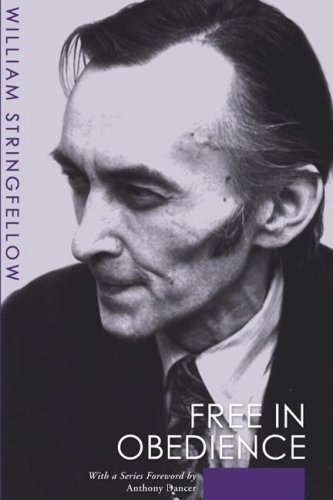
William Stringfellow, Free in Obedience – Part I

I like how Anthony Dancer describes reading Stringfellow:

Despite the polemic and rhetoric, Stringfellow’s writing is neither a fanciful manual nor some early type of Google search engine for the Christian life. Instead he rewards sustained and quiet engagement, offering us an ethic that is at once simple but never easy; he reminds us of the need to be vulnerable to the world and God, and to be obedient to the call to authenticity just where we are. He reminds us of the politically and totally transformative significance of the fact that the reign of the power of Death is over, and that we are no longer bound by fear, but can once again live truly, and wondrously, in freedom. In short, he reminds us who and where, in the Word of God, we are called to be. (Free in Obedience, xiii).

Free in Obedience, which takes its theme from the Letter to the Hebrews, began life as a book for Lenten study. Importantly for his presentation, Stringfellow discerns no real distance between the original recipients of the letter and the church today – ‘the Christians today are the Hebrews’ (p. 7). And just like the original recipients,

The modern churches and the present-day Christians must, if they are to qualify to address and act in this world amid all the technologies, institutional powers, dehumanizing threats, frightful dangers of extermination, and ruthless idols which encompass men, trust the gospel. They must trust it enough to rely upon the discernment of those of the people of God who in preceding ages spoke and acted in their times and in the world as they knew it in the confidence that the Word which they heard and celebrated is the same Word present, uttered, and received in the world as it is now. (p. 8)

That ‘Christ is crucified in the freedom of the resurrection’ (p. 15) means that ‘the people and the things with which an ordinary Christian comes into contact from day to day are the primary and most profound issues of his faith and practice’ (p. 16). Stringfellow charges that the reason that moderns do not appear to pay attention to the Christian faith or to take the Church seriously is because churches have too often given men and women the impression that ‘they do not care about [people] or the world. They have misled [people] into supposing that the Christian faith has nothing to do with the ordinary issues of daily life’ (p. 18). They have, as Nathan Kerr too observes, missed the fact that God’s interruption of history in Jesus Christ is unintelligible apart from its operativity within the ongoing contingencies and complexities of history, that the lived embodiment of Christ’s lordship as a sign of the Spirit’s ongoing conversion of history to God’s coming reign involves, in the freedom of the missio dei, the creation of ecclesial witness to the centres of earthly power. And they have, Stringfellow insists, escaped the reality and decadence of the cities and ‘moved to the suburbs – only to find out that the same problem of the mission of the Church still plagues them, since the suburbs are satellites of the city’ (p. 20). Those who have remained in the city have been hiding out. Clearly, it is the missio ecclesiae for which this Harlem-based lawyer concerned about the immobility of the city’s poor confined to their ghettos – existing in ‘subjection to the principalities that rule the city’ (p. 24) – is troubled by here:

The rudiment of mission is knowledge of the city because the truth and grace of the Incarnation encompasses in God’s care all that is the city. Mission in the city for the Church, and hence for Christians, means a radical intimacy with every corner and every echelon of the city’s actual life in order to represent and honor God’s concern for each fragment of the city’ (p. 22)

Stringfellow suffers from no illusion that the modern cities which have emerged from industrialization and urbanisation are places neither of freedom nor of society. Rather than being cities of salvation, they are places where feudalism survives, kept alive by the propaganda machines of industrial and commercial powers, and by the moral theologies of Protestantism. ‘Medieval demons are not dead … They were not exorcised in the building of the city. They still exist there. The city is their present realm and their plunder’ (p. 26).

This is the situation that the Church must weigh accurately, and not suppress or flinch at, if it is to cease its blushing and turn towards the city in love that risks all reputation and possession. In order to do so, it must make the traumatic move of getting out bed with the heretical ideology of the industrial revolution (which supposes that we might save ourselves) and into bed with the gospel. Here Stringfellow is calling for ‘the renewal of the sacramental integrity of the churches’ (p. 29).

Don’t forget Wipf & Stock’s offer to readers of Per Crucem ad Lucem of 40% off the retail price of any of the Stringfellow volumes. To obtain the 40% discount, just include the coupon code STRINGFELLOW with your order.

Reading William Stringfellow

When someone of Rowan Williams’ calibre (and there are few of those) describes one of his contemporaries as ‘probably the most creative and disturbing Anglican theologian’ of the twentieth-century, we ought to sit up and take notice. Williams was talking about William Stringfellow, the exposer of our culture’s idols.

Over the next month or so, I hope to make my way through Stringfellow’s work (some of which I’ve read before, and some of which will be new), and to post some of my scribbles along the way. My agenda is two-fold: (i) to introduce you to the thought of a brilliant though still-too-under-appreciated twentieth-century theologian; (ii) to encourage you to pick up and read his work for yourself, whether on your own or – as may well be preferable – in small groups. But if the latter, you ought to heed Mary Perkins Ryan’s warning (in her ‘Introduction’ to Imposters of God) about Stringfellow and group reading: ‘no group, young or old, that [reads Stringfellow] as the basis for discussion will find its meetings dull. They might even become too exciting for comfort – and so might the lives of those who take seriously what this book has to say’.

Our friends over at Wipf & Stock have republished most of Stringfellow’s published material, an act for which we can be deeply grateful. They have kindly offered readers of Per Crucem ad Lucem 40% off the retail price of any of the Stringfellow volumes. This represents a fantastic opportunity to avail yourself of some of the most perceptive theological literature of the twentieth century, and all at a great price. To claim the 40% discount, just include the coupon code STRINGFELLOW with your order.

Here’s a list of the available Stringfellow titles:

‘My Uncle’s Parrot’, by Robert Cording

It’s the voice I hear, the one that comes
When my talk suddenly becomes preachy,
And my class of freshmen begin to nod
Their heads in assent as I’m delivering
Some grand moral claim for Wordsworth’s
Leech-gatherer, or declaring there is a way
To live out our lives hopeful and happy.
Or it comes when my wife, stepping
From a bath, her neck and belly and legs
Diamonded in the bathroom light, stands
Before me like some St. Agnes Eve vision,
And I believe that, yes, our bodies are
For climbing that ladder from pleasure
To pleasure upwards to the sublime.
Or when I see on the late night news
How a whole town, businesses included,
Turns out to re-erect a block of
Tornado-tossed houses and think we could
Learn to live in just that state of love,
The beginning of what could be
Endlessly multiplying loaves and fish.
Or even when late at night, alone,
Reading a good book and listening to
Vivaldi’s oboes, a cup of tea warming
My hands, I suddenly think, then and there,
That everything in my life has only had
The illusion of significance, that
The truth is absolute meaninglessness.
At all those times and more, I hear
The point-blank voice of my uncle’s parrot
Say, bullshit, the only word he could
Ever teach it, though the parrot possessed
An unerring sense of timing,
A pitch-perfect ear for the exact moment
In the conversation when its shrill trumpet
Was required: bullshit, it blared again
And again with the authority of a god
Who knew, as Pascal said, how to keep faith
And doubt off balance as he went on
Balancing both sides of every equation.

– Robert Cording, Common Life: Poems (Fort Lee: CavanKerry Press, 2006), 43–4.

Undergrad schmundergrad

I’ve been reading a very fine essay by James Kirk on ‘The Religion of Early Scottish Protestants’ in Humanism and Reform: The Church in Europe, England, and Scotland, 1400-1643, wherein I was struck by the following:

‘In St Andrews University, too, humanist impulses and Erasmian evangelism are detectable in the creation of St Mary’s College, licensed by papal bull in 1538, to reinvigorate Catholic teaching and refute heresy, and in repeated efforts to erect a trilingual college, as advocated by the nephew of Cardinal Beaton, Archibald Hay, first as regent in Paris and then as Principal of St Mary’s. His dream was of a college not just for the study of the humanist disciplines of poetry, rhetoric, history and ethics, but for advanced training in theology by promoting the biblical tongues. Chaldaic and Arabic, he argued, ought to be taught as well as Greek, Hebrew, and Latin. More tangibly, in recommending the Scots humanist teacher at the College des Presles in Paris, John Douglas, for a post in St Andrews, Hay helped secure the services of a Paris bachelor of medicine (and probably also a doctor of theology) who, as Provost of St Mary’s, chose the Protestant path at the Reformation and as a contributor to the Reformers’ Book of Discipline in 1560 shared responsibility for the detailed discussion on reorganizing the universities. Douglas’s own arrival in St Andrews was followed with the appointment by 1556 of another Paris scholar, John Rutherford, to St Mary’s (later to head St Salvator’s), to teach philosophy, Greek, and Latin, a step which (despite his neo-Aristotelianism) helped strengthen the advance of the humanities within the University, for Rutherford (who also had medical interests) was well travelled in Europe, having lived in Bordeaux, Montaigne, Coimbra, Périgord, and Paris; and with the Reformation, he became a convert to Calvinism, owning copies of Calvin and Beza (and also Wolfgang Musculus, the reformer at Augsburg, on the Psalms)’. (p. 364)

As an ex-student of St Mary’s College, I was very interested to read this, and was led to wonder just how easy those undergrads – who manage to get a theology degree without having to read any Augustine or even having to master Chaldaic – have it these days. C’mon Steve, lift your teams’ game!

Holy Spirit in the World Today Conference talks

Most of the talks from the recent Holy Spirit in the World Today Conference, a two day conference jointly sponsored by St Paul’s Theological College and St Mellitus College, are now available for download:

A word from the East on Yoder and Jenson

Brad East has posted some helpful notes on the similiarities and differences between the theology of Yoder and Jenson. It’s worth reading the whole thing, but here’s a taster on the question of the nature of the church:

‘Yoder sees the church as a minority people in exilic sojourn among the nations, a servant community sent on behalf of others and therefore unwilling to exercise coercion for any reason, but just so socially responsible insofar as cruciform servanthood is the grain of the cosmos and the only truly transformative power in human community. In other words, the life of the church is defined by Spirit-enabled apocalyptic discipleship to the concrete sociopolitical life and teachings of Jesus of Nazareth, crucified and risen.

Jenson sees the church … differently. Somewhere he says that the entire mission of the church is “the saying of the gospel.” Elsewhere he claims that the community of the church over time is literally the body of the risen Christ on the earth. He also states that, when Constantine asked the bishops to help run the empire, they had nothing else to say but “yes.” He believes with Augustine that the only truly just society is one that worships the true God, and that just war is possible in a legitimately Christian society. Finally, he is able to articulate and is energized by the vision and history of a (high) Christian culture, and speaks to American governance in the hopes that a Christian politics – namely, the right ordering of heterosexual marriage and the consequent protection of the unborn – might both win the day and lead to the formation of a more coherent society.

Moreover, of course, the church catholic for Yoder is the free church: dogma, creed, papal bull, ecumenical council – none of it is binding or revelatory for God’s people. And for Jenson, dogma is either always and everywhere true and binding for the church, or the church is not the same community as that of Peter and Paul. And to be sure, in a church divided, God may act for unity tomorrow – in the restoration of communion with Rome. Not so much for Yoder’.