- Davey Henreckson on Charles Taylor and on Calvinists and disenchantment.
- Beth Doherty on Haiti and the best and worst of Christianity.
- Bruce Simpson asks (hopefully) whether the whole Google and China thing might be the thin end of the wedge.
- Thomas Bartlett on why ‘Google needs to realise that China is simply being China’.
- American VI: Aint No Grave by Johnny Cash – it’s a coming soon!!!
- Michael Wood reviews Avatar.
- Jessa Crispin, the editor and founder of Bookslut, on ‘the predictable American response to translated literature’.
- Mike Bird on ‘What is happening to Intervarsity?’
- Andrew Errington posts 10 reasons on ‘why I believe in infant baptism’.
- Robert Fisk on the never-ending exodus of Christians from the Middle East.
- C. Baxter Kruger on why Paul Young (author of The Shack) and Athanasius are singing from the same song sheet.
- The Karen Human Rights Group has produced a 98-page photo album containing 125 images of life in rural Karen State. The book is called Patterns of Abuse: Photographs of rural life in a militarized Karen State. It’s a fundraiser for a very worthwhile group, so please join me in buying a copy – or more – if you can.
Theology
The Triune God and the stratification of truth
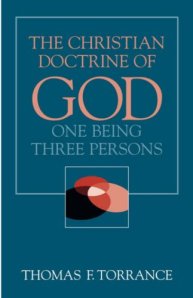
My previous two posts invite some reflection on where theological thought begins. Here I want to suggest (taking my cues from TF Torrance, and drawing heavily on McGrath’s less-than-brilliant biography on Torrance) that theological reflection, or theological science, begins by immersion within the Christian community and its practices of worship and prayer. Here the believer absorbs the grammar of Christian faith, shares what Torrance calls its ‘evangelical and doxological’ experience, and begins to appreciate the ‘evangelical pattern or economy of the redeeming acts of God in Jesus Christ’ (The Christian Doctrine of God, One Being Three Persons, 98, 91). In other words, the basis upon which Christian theological reflection takes place concerns ecclesiology, christology and soteriology.
Consider the following statements about levels – or layers – of truth in the natural sciences:
… knowledge is gained not in the flat, as it were, by reading it off the surface of things, but in a multi-dimensional way in which we grapple with a range of intelligible structures that spread out far before us. In our theoretic constructions we rise through level after level of organized concepts and statements to their ultimate ontological ground, for our concepts and statements are true only as they rest in the last resort upon being itself. – Thomas F. Torrance, Reality and Scientific Theology (Theology and Science at the Frontiers of Knowledge; Edinburgh: Scottish Academic Press, 1985), 136.
We start with our ordinary experience in which we operate already with some sort of order in our thought which is essential for our understanding of the world around us and for rational behaviour within it. We assume that the world is intelligible and accessible to rational knowledge … we operate on the assumption that by means of thought we can understand in some real measure the relations between events and grasp their orderly sequence and consistent structure. – Reality and Scientific Theology, 147.
This initial perception of orderedness and structure, however, turns out, for Torrance, to be a starting point for a more penetrating and discerning investigation in which successive layers of truth are identified and uncovered, and their inner relationships established. One of the most helpful areas explored by Torrance concerns how our knowing God differs from how we know anything else. Consider this (lengthy) quote:
[When it comes to our knowledge of God] we have to reckon with a considerable difference between the kind of knowledge that obtains in physical science, for the created universe does not disclose or declare itself to us as God does – otherwise it would not be the creaturely or contingent reality that it is. The universe does reveal itself to our inquiries in its own limited reality, in correspondingly limited ways, but it is quite unable to explain itself or to yield any final account of the fact of its astonishing intelligibility, and so at these limits the universe by its finite nature simply turns a blank face to our questions. In contrast, God opens himself to us and informs us of himself in a way that no created being can. Even though he retains behind a veil of ineffability the infinite mystery of his uncreated Being, he nevertheless unveils himself to us as the transcendent Source and sustaining Ground of all created being and created intelligibility, and therefore of all our knowing of him as well as of the universe he has made.
Moreover, the Being of God is made known to us as Subject-being, not just as Object-being over against us. As Subject-being he is the Creator and Ground of all other subject-beings, who sustains them in relation to himself as personal rational agents enabled to have communion with him. That is to say, God interacts personally and intelligibly with us and communicates himself to us in such a personalising or person-constituting way that he establishes relations of intimate reciprocity between us and himself, within which our knowing of God becomes interlocked with God’s knowing of us. In fact our knowledge of God thus mediated is allowed to share in God’s knowledge of himself. An ellipse of knowing, so to speak, is set up within which God’s uncreated Intelligibility and our creaturely intelligibility, God’s self-witness and our human understanding, are correlated, so that there arises among us within the conditions of our earthly and temporal existence authentic knowledge of God in which God’s self-revealing is met by human acknowledgment and reception, and in such a way that our knowing of him, however inadequate, is made to repose ultimately on the free creative ground of God’s own Subject-being.
Nevertheless when all this is admitted it still remains the case that God confronts and interacts with us as he who is utterly transcendent over all our knowing of him, infinitely inexhaustible in the Truth and Intelligibility of his own eternal Being. As such the Reality of God ever remains the Source of all our authentic concepts of him and the unchanging Ground of all our faithful formalisations of his revelation. God himself does not change, and in his unchanging Being is open to ever deepening understanding on our part, while our forms of thought and speech in which we articulate our knowledge of him are ever open to further clarification, fuller amplification, and change. The Truth of the divine Being cannot be enclosed within the embrace of our finite conceptualisations. In that God admits of recognition and understanding on our part we may indeed grasp him in some real measure, but we cannot contain him in the forms of our grasping. We may apprehend God but we cannot comprehend him. In so far as our concepts of God derive from him and terminate upon his Being, there is much more to them than the concepts themselves, more than the formal truths of conception, for the Reality conceived transcends conceptual control. Before the Reality and Majesty of the divine Being whom we are graciously allowed to know, we know that all our knowledge of him is at a comparatively elementary level, and all our articulation or formulation of divine revelation is a relatively insignificant reflection of its Truth. The knowledge and understanding of God, however, which we are allowed to have, and which in some measure we may bring to systematic expression, are what they are in their lowly forms because, in spite of their utter inadequacy, as the human end of the ellipse of knowing established by God and maintained between us and himself, they are locked into an infinite range of truth and intelligibility grounded finally in God’s own eternal Being.
The development of our knowledge of God evidently involves a multi-levelled structure in which our thought moves through various levels of concepts and statements, to the levels of created being through which God makes himself known to us in space and time, and then through them ultimately to the supreme level where God is the transcendent Source of all truth in the Truth of his own uncreated Being. Each lower level is governed by reference beyond itself to the level with which it is immediately coordinated, so that together the lower levels constitute a coherent semantic frame of reference through which we are directed to the ultimate Truth that God is in himself. Thus every lower level, in so far as it is true, must have the character of an open structure pointing us away from its own limited and relative status to its ontological ground in God who is ‘the norm for the truth of all beings’ [Clement of Alexandria]. In clarifying and deepening theological knowledge, therefore, we must learn to penetrate through the various levels of rational complexity that arise in the process of inquiry to the ultimate ground upon which they rest in the Being of God. Just as we do not think statements or even normally think thought but think things through them or by means of them, so the structures of the reason which arise in the process of gaining knowledge have to be treated as refined conceptual instruments through which we let reality shine across to us, in order that its own truth of being and inherent intelligibility can operate creatively in our understanding of it.
What are we to understand by ‘truth’ in a context like this? – Torrance, Reality and Scientific Theology, 138–40.
What are the implications of this for the task of theological reflection? At the very least, it means that our knowledge of God is dependent upon God’s gracious self-unveiling, i.e. epistemology is grounded in the divine economy and particularly in Jesus Christ who comes to us ‘clothed in the gospel’ (Calvin). Jesus Christ is the ‘cornerstone of all authentically Christian theological reflection’. But this process of reflection, like all scientific enquiry, is also is multi-levelled. Torrance identifies three levels: (i) evangelical and doxological level; (ii) theological level; and (iii) higher theological level.
The first level is the evangelical and doxological level. (Torrance, Doctrine of God, 88–90). This might be thought of as the basic level of Christian experience and living, ‘the level of our day-to-day worship and meeting with God in response to the proclamation of the Gospel’. At this level, God is apprehended intuitively, ‘without engaging in analytical or logical process of thought’ (Torrance, Doctrine of God, 89). At this level, the Christian believer has an experience of the reality of God as a ‘basic undefined cognition which informally shapes our faith and regulates our trinitarian understanding of God’ (Torrance, Doctrine of God, 89). The Christian experience of worship, reading of Scripture, and an intuitive awareness of the reality of God constitute the point of departure for further theological reflection.
From the very start of our believing experience and knowledge of the incarnate economy of redemption undertaken by Jesus Christ for our sakes, form and content are found fused together both in what we are given to know and in our experience and knowing of it. A child by the age of five has learned, we are told, an astonishing amount about the physical world to which he or she has become spontaneously and intuitively adapted – far more than the child could ever understand if he or she turned out to be the most brilliant of physicists. Likewise, I believe, we learn far more about God as Father, Son and Holy Spirit, into whose Name we have been baptised, within the family and fellowship and living tradition of the Church than we can ever say: it becomes built into the structure of our souls and minds, and we know much more than we can ever tell. This is what happens evangelically and personally to us within the membership of the Church, the Body of Christ in the world, when through the transforming power of his Word and Spirit our minds become inwardly and intuitively adapted to know the living God. We become spiritually and intellectually implicated in patterns of divine order that are beyond our powers fully to articulate in explicit terms, but we are aware of being apprehended by divine Truth as it is in Jesus which steadily presses for increasing realisation in our understanding, articulation and confession of faith. That is how Christian theology gains its initial impetus, and is then reinforced through constant reading and study of the Bible within the community of the faithful (Torrance, Doctrine of God, 89).
The second stage that Torrance identifies in this process of engagement is what he calls the theological level. This secondary level of engagement involves moving on from the primary level of ‘experiential apprehension’ of God, and towards discerning the structures which lie within it.
By forming appropriate intellectual instruments with which to lay bare the underlying epistemological patterns of thought, and by tracing the claims of connection throughout the coherent body of theological truths, [theologians] feel their way forward to a deeper and more precise knowledge of what God has revealed of himself, even to the extent of reaching a reverent and humble insight into the inner personal relations of his Being. Our concern at this secondary level, however, while distinctly theological, is not primarily with the organic body of theological knowledge, but with penetrating through it to apprehend more fully the economic and ontological and trinitarian structure of God’s revealing and saving acts in Jesus Christ as they are presented to us in the Gospel (Torrance, Doctrine of God, 91).
In the third level (or higher theological level) our thinking ‘enters more deeply into the self-communication of God in the saving and revealing activity of Christ and in his one Spirit’. At this level, Torrance continues, ‘we are explicitly concerned with the epistemological and ontological structure of our knowledge of the Holy Trinity, moving from a level of economic trinitarian relations in all that God is toward us in his self-revealing and self-giving activity to the level in which we discern the trinitarian relations immanent in God himself which lie behind, and are the sustaining ground of, the relations of the economic Trinity’. In other words, this level involves a move from ‘a level of economic trinitarian relations’ to ‘what [God] is ontically in himself’ (Torrance, Doctrine of God, 93, 98–107).
We might map Torrance’s trajectory of trinitarian theological reflection and formulation thus:
Experience of God → Economic Trinity → Essential Trinity
To be sure, Torrance’s distinguishing of different levels of reality must not be taken to mean that he is sponsoring their independence so that one or other may be dispensed with or treated as redundant or superseded. Rather, as McGrath notes, the ontological Trinity cannot be regarded as independent of the economic Trinity, nor of Christian trinitarian experience. Nor is Torrance suggesting that lower levels within the stratification of truth are to be regarded as false or redundant; they are all to be regarded as interconnected responses to their object. A failure to recognise the mutual interconnectedness of these levels of discourse can lead to theological reflection becoming divorced from Christian experience on the one hand, or from its proper ontological foundations on the other (McGrath, Torrance, 174).

‘For myself I am an optimist – it does not seem to be much use being anything else’
- St John’s Nottingham are developing a very exciting project – Interactive Multimedia Timeline: Exploring Christian theology and intellectual history.
- Rick Floyd offers a good defence of blogging in response to Stefan McDaniel’s case against it.
- A new journal to keep an eye on.
- A new must-have from Moltmann’s pen.
- Robert Fisk on America performing its familiar role of propping up a dictator.
- And check out the amazing Liu Bolin … The Invisible Man.
- Any apostrophe problems?
- Halden Doerge is on[to] something about the divine attributes.
- Ben Myers shares two splendid excerpts from his forthcoming AAR paper on J. Louis Martyn’s Galatians Commentary.
- Finally, a few years back I posted 12 wee reflections for Advent. I [probably] won’t be repeating this practice again this year but these Advent Reflections are still available online for those who might like to use them.
- And yeah, don’t forget to cast your vote in our Who said it? competition.
Who said it?
Time again for another ‘Who said it?’ competition. From whose mouth/pen did the following words come:
God’s trinitarian history for us makes him what he is for himself. There is no immanent Trinity supratemporally ‘behind’ God’s temporal, worldly history, so that he would be who he is independently of this history. This history is who he is.
Closing on Tuesday. No cheating.
[Note: I’ve had to repost this because for some strange reason the comments were off. Apologies to those who wanted to cast a vote but were unable. You can do so now. And I’ve extended the closing date: it’s now Tuesday.]
… and the answer is?
Sauntering through the week …
- To blog or not to blog?: See Reverence for Words: A Case Against Blogging by Stefan McDaniel. Contra McDaniel, Rick Floyd gives us a wonderful defense of blogging. As usual, Rick’s right on the money!
- Obama and the Lama and The Poetry of Autumn by David Bentley Hart
- Gardner Taylor on preaching and pastoral ministry
- Jeremy Begbie on theology through the arts
- Jean Vanier on belonging and bonding and on Christian leadership
- A tribute to Isaiah Berlin and a conversation with Isaiah Berlin
- Marilyn McCord Adams on Evil
- Anglican Episcopal House of Studies at Duke Divinity School recently hosted a conversation by Stanley Hauerwas and David Crabtree on the theme of living faithfully amid the social, political, and financial challenges of our day
- James Merrick on why most modern academic theology is ‘inane and absurb’
- H. Hoogerbrugge on modern living
- Ben Myers has a good round-up of some other stuff from the past week
- And check this out:
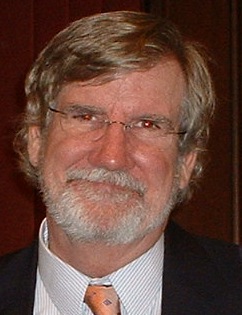
Rick Floyd: Retired Pastor Ruminates
Rick Floyd is Pastor Emeritus of First Church of Christ in Pittsfield, Massachusetts, where he served for 22 years. He has authored A Course in Basic Christianity and When I Survey the Wondrous Cross: Reflections on the Atonement, a wonderful study which draws heavily upon the staurology of PT Forsyth (and which is all the better for doing so!)
He has a great nose (for theology that is) and his blog, Retired Pastor Ruminates, is one of my regular theo-blog stopping places. Many of Rick’s reflections bear witness to the sparks created at the intersection between pastoral ministry and theology, and draw sensibly on a lifetime of intimate and public engaging in both. To be sure, I never miss reading one of his posts, even those wherein he deliberates on things completely irrelevant like the Boston Red Sox. Regular readers of Per Crucem ad Lucem might consider adding Rick’s blog to your list and/or to your feed. Need a reason? Rick’s latest post on Karl Barth and preaching is all the reason you should require. He has also posted recently on Lesslie Newbigin, a Prayer for a Retired Pastor and a recipe for borscht.
The Poetry of Care and Loss
- Ellen Davis presented her inaugural lecture as the Amos Ragan Kearns Distinguished Professor of Bible and Practical Theology on October 27, 2009, at Duke Divinity School. The title of the lecture was ‘The Poetry of Care and Loss’. It is available via iTunes.
- The Thailand Burma Border Consortium compares Eastern Burma to Darfur.
- Julian Bell reviews Vincent van Gogh – The Letters (now we just need Thames & Hudson to review the price!).
- A fascinating interview with Slavoj Žižek: ‘… it’s very easy to have a radical position which costs you nothing and for the price of nothing it gives you some kind of moral superiority. It also enables them to avoid the truly difficult questions’.
- Andrew Brower Latz continues his note sharing on Alan Torrance’s 2009 Didsbury Lectures (Parts I, II and III).
- Jim Gordon reminds us why reading Bonhoeffer is ‘like engaging in a theological detox programme’.
- Kyle Strobel writes about Evangelical Idolatry.
- Rick Floyd posts on Lesslie Newbigin’s The Gospel in a Pluralist Society.
- W. Travis McMaken, on his way into his final qualifying exam in systematic theology, shares a quote from TF Torrance on modern preaching and the god named ‘existentialist decision’.
Free: Scottish Journal of Theology papers
The Scottish Journal of Theology has made available the following ‘classic papers from the last six decades’, hand-picked by the Editor, Iain Torrance. The articles will remain free to access until December 31st 2009.
- Georges Florovsky, ‘The Lamb of God’, SJT 4/1 (1951): 13–28.
- John Macmurray, ‘Prolegomena to a Christian Ethic’, SJT 9/1 (1956): 1–13.
- Brian A. Gerrish, ‘Biblical Authority and the Continental Reformation’, SJT 10/4 (1957): 337–360.
- Dan O. Via, ‘Darkness, Christ, and the Church in the Fourth Gospel’, SJT 14/2 (1961): 172–193.
- C. Ewing, ‘Kant’s View of Immortality’, SJT 17/4 (1964): 385–395.
- Rowan A. Greer, ‘The Use of Scripture in the Nestorian Controversy’, SJT 20/4 (1967): 413–422.
- Kai Nielsen, ‘Truth-Conditions and Necessary Existence’, SJT 27/3 (1974): 257–267.
- John D. Zizioulas, ‘Human Capacity and Human Incapacity: A Theological Exploration of Personhood’, SJT 28/5 (1975): 401–447.
- Edward W. Fasholé-Luke, ‘The Quest for African Christian Theologies’, SJT 29/2 (1976): 159–176.
- Kenneth Surin, ‘The Impassibility of God and the Problem of Evil’, SJT 35/2 (1982): 97–115.
- T.F. Torrance, ‘The Deposit of Faith’, SJT 36/1 (1983): 1–28.
- M. LaCugna, ‘Re-conceiving the Trinity as the Mystery of Salvation’, SJT 38/1 (1985): 1–23.
- Frances M. Young, ‘Understanding Romans in the Light of 2 Corinthians’, SJT 43/4 (1990): 433–446.
- Michael Goulder, ‘Nicodemus’, SJT 44/2 (1991): 153–168.
- John Webster, ‘Locality and Catholicity: Reflections on Theology and the Church’, SJT 45/1 (1992): 1–18.
- David F. Ford, ‘What Happens in the Eucharist?’, SJT 48/3 (1995): 359–381.
- George Hunsinger, ‘The Politics of the Nonviolent God: Reflections on René Girard and Karl Barth’, SJT 51/1 (1998): 61–85.
- Harriet A. Harris, ‘Should We Say that Personhood Is Relational?’, SJT 51/2 (1998): 214–234.
- Elaine Graham, ‘Pastoral Theology: Therapy, Mission or Liberation?’, SJT 52/4 (1999): 430–454.
- Rowan D. Williams, ‘Eugene F. Rogers’s Sexuality and the Christian Body: Their Way into the Triune God’, SJT 56/1 (2003): 82–88.
Dietrich by the path …
- Jim Gordon on Bonhoeffer and ‘fellowship’
- Speaking of brother Dietrich, Ben Myers reviews Who am I? Bonhoeffer’s theology through his poetry
- Bruce Hamill on Metaphor and Theology
- Bobby Grow posts a Post-Reformation Lament by Myk Habets
- Halden Doerge has way too much time on his hands. The boy needs a wife! Any suggestions?
- A fascinating interview with Paul Tillich (in 12 parts)
- Robin Parry invites us to read Lamentations from a different position
- Speaking of Robin, Authentic Media is now employing YouTube to promote its books. Is this what the future looks like Robin?
- A new journal – Ecclesia Reformanda – to keep an eye on
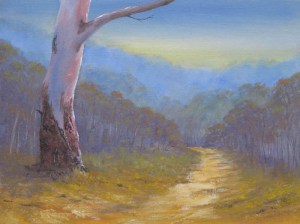
[Image: Colin Webb, ‘Last Light’]
Michael Mullins on ‘Black Faces’ and the Chaser
Michael Mullins posts an insightful commentary on the recent ‘Black Faces’ performance on Hey Hey It’s Saturday. Towards the end of the piece, Mullins draws a comparison with The Chasers ‘Make a Wish Foundation’ routine:
The ABC’s own review processes approved the segment before it went to air, though management and the Chaser failed to anticipate the public response. The Chaser team maintains to this day that it was misunderstood by the public. It was intended as a parody against unthinking charity. The withdrawal of the segment, and the ABC’s apology for it, was a capitulation to the public outcry. The socially constructive statement was lost, and unthinking charity won the day.
Want to read more? Ben posted a good piece on this back in June.
Who said it?
Time for a wee competition. From whose mouth/pen did the following words come:
‘For not only has the darkness of foolishness and ignorance so blinded our mind that it can neither sense nor utter anything divine, but also conscience has convicted it of all sins, so that even if our mind may have some light, still it conceals it’.
Closing on Friday. No cheating.
Convictions, Principles, Opinions and the proper task of Christian theology
Saturday morning is always about coffee. Not only about coffee, to be sure, but never anything apart from coffee. In fact, my vision of hell is being locked in a house devoid of beans for an eternal Saturday morning. Sometimes, Saturday morning is also about reading. But if that’s going to happen, then Saturday-morning reading really needs to be something decent. Well, James McClendon’s Biography as Theology: How Life Stories Can Remake Today’s Theology is a worthy contender for the much-coveted Saturday morning slot. Here he is on the distinction between convictions, principles and opinions:
Convictions may be distinguished from principles, in that the latter are the product of reflective thinking, have often a rather academic flavor, and are perhaps more often weapons for attacking others than guides for ourselves (most of us have at some time served on committees with ‘men of principle’); while convictions are very often particular and immediate in form, and may not be consciously formulated by their holders at all, yet when we do find our convictions, we find the best clue to ourselves. Convictions may be distinguished from opinions: people stake money on opinions, whether of lawyers or of handicappers, but they have been known to stake their lives on their convictions; opinions are argued, but convictions are the hidden agenda in every argument, the unseen weight on even the most honest set of moral scales. Now it must be that an ethics of character will be concerned with convictions, for to have convictions is to have at least that much character; moreover, convictions, unlike traits of character such as justice or mercy, may, if known, be expressed in propositional form, so they may evince the particularity of character as the more general ‘traits’ cannot … For as men or women are convinced so will they live. And similarly with convinced communities. What is noteworthy, however, is that the realm of convictions is just the realm with which theology, too, is concerned. The best way to understand theology is to see it, not as the study about God (for there are godless theologies as well as godly ones), but as the investigation of the convictions of a convictional community, discovering its convictions, interpreting them, criticizing them in the light of all that we know, and creatively transforming them into better ones if possible … Theologians, then, are concerned with convictions, not merely in themselves, but in relation to the persons and communities that embrace these convictions, and they are interested in what those convictions are about. The Christian theologian cares not only to know that there is a belief in God, not only to know that that belief is the conviction of the Christian community, but also to know whether there be such a God and what difference God’s being (as well as the belief in it) makes to the women and men who believe or disbelieve. – James Wm. McClendon Jr., Biography as Theology: How Life Stories Can Remake Today’s Theology (Philadelphia: Trinity Press International, 1990), 19–21.
McClendon proceeds to name the relationship between ‘adequate ethic’ and what he calls theology’s ‘proper work’:
Ethics may have to acknowledge that the only truly universal ethical judgments are purely formal, providing little guidance for the formation of moral character, and may have to learn to attend afresh to the way of life of particular communities and individuals, though without sacrificing its yearning for universalizability. Theology may have to acknowledge that a theology of revelation or of reason, or a theology of secularity or of religiosity, if it does not enter into the actual shape of the lives of the people in its community of concern, is after all irrelevant to these lives. (p. 21)
The reconciliation of this relationship, he argues, is found is biography where the tension between ‘what is and what ought to be believed and lived by all’ is enfleshed, and that in community. To engage in such reflection, he argues, is ‘the proper task of Christian theology’.
By recognizing that Christian beliefs are not so many ‘propositions’ to be catalogued or juggled like truth-functions in a computer, but are living convictions which give shape to actual lives and actual communities, we open ourselves to the possibility that the only relevant critical examination of Christian beliefs may be one that begins by attending to lived lives. Theology must be at least biography. If by attending to those lives, we find ways of reforming our own theologies, making them more true, more faithful to our ancient vision, more adequate to the age now being born, then we will be justified in that arduous inquiry. Biography at its best will be theology. (p. 22)
This relates to another important thesis of McClendon’s essay; namely, that the locale for the formation of one’s character is community. As Edmund Pincoffs reminds, ‘Aristotle did not give open lectures; St. Paul did not write open letters. When they used the word “we”, they spoke from within a community of expectations and ideals: a community within which character was cultivated’. This, of course, is one of the weaknesses of so-called ‘situation ethics’, or what James McClendon refers to as ‘decisionism’. McClendon argues that decisionism is ‘ill equipped to understand and shed light upon those dark struggles of our selves in which, confronted with imponderables, we do flounder about, sometimes conscientiously, sometimes self-deceived, sometimes locked in the struggle that classical Christian theology calls temptation’. He contrasts this with what he calls the ‘classic view’, the notion that a person’s life is ‘a journey, a pilgrimage, in which one’s self is not mere datum, nor an electronic calculator reading “decisions” off new “situations”, but a soul in the making, a self which can become itself only as the weight of sin is fully recognized and the self recognizes a center of meaning and source of power beyond itself, forgiving and remaking that self’ (p. 9). Such recognition, I concur, requires being-in-community. There is no stand-alone ‘I’. The journey inwards cannot be made apart from the journey outwards. Learning, maturation and character are perichoretically-determined activities.
Anyway, time to grind …
Pre-School Theology – 1
I live with a three-year-old theologian many of whose questions beg in vain for an answer from her theologian-father. Recent months have seen us doing some exegesis on the Lord’s Prayer (apparently one of the funniest prayers ever written), and we’ve also discussed the Nicene Creed together (apparently it’s unnecessarily long: ‘it doesn’t need to be that long’). Here’s a few of her recent pronouncements:
- ‘Because Jesus is God raised from the dead, then God must have a penis’.
- ‘God is exactly like Jesus. There is no other God’.
- ‘The cross means that God is a wonderful boy … but God’s not really a boy or a girl’.
- ‘It’s OK when we don’t know how to pray because Jesus can pray for us’.
- ‘I don’t understand the Spirit’.
Makes me seriously excited about being a father, and about discovering together with my daughter the wonderful life of the God made known in Jesus.
Modernity’s incurious muffling of theology
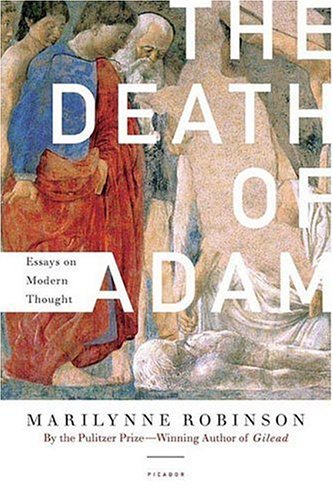
‘This great project, theology, which for so many centuries was the epitome of thought and learning, the brilliant conceptual architecture of western religious passion, entirely worthy of comparison with any art which arose from the same impulse, has been forgotten, or remembered only to be looted for charms and relics and curiosities. We are forever drawing up indictments against the past, then refusing to let it testify in its own behalf – it is so very guilty, after all. Such attention as we give to it is usually vindictive and incurious and therefore incompetent’. – Marilynne Robinson, The Death of Adam: Essays on Modern Thought (New York: Picador, 2005), 182.
Trevor Hart on Science, Faith, the Arts, God and the Imagination
The Centre for Public Christianity has made available four short video conversations filmed with Trevor Hart when Trevor was in Sydney last year to deliver the 22nd Annual New College Lectures at the University of New South Wales. (These talks are available for MP3 download here). Trevor is always worth listening too, and the videos are available here:
Forsyth on the current claptrap against theology
‘It is doubtful if anywhere so much ability is going to seed as in the pulpit, if so much toil, ingenuity, intelligence, and feeling are being wasted anywhere as in the thousands of sermons that go to their drawers as to their last cradle and long home, week by week, to haunt as feckless ghosts the preacher’s soul. Hence the restlessness that is observable in the ministry in various quarters, the sense of ineffectiveness, the desire to try a new soil with the same seed, in the hope that the Spirit may at last reward the effort and bring back His sheaves with Him. But it is not a change of sphere that is required most. That may but foment the unquiet, or else become the soul’s narcotic, It is a change of note that is needed, and a change that no new place can bring. If the lack is power, the cause of the lack is the absence of a definite, positive, and commanding creed which holds us far more than we hold it, holds us by the conscience, founds and feeds us on the eternal reality, and, before we can do anything with it, does everything with us. Every Church and every preacher is bound to run down without such a creed, and no amount of humane sympathy or vivid interests can avert the decline. In every direction, the Church is suffering from the inability to know its own spiritual mind, or to strike a stream from its own rock, and from its indisposition to face the situation or its impotence to fathom it. For a generation now we have been preaching that experience is the great thing, and not creed; till we are losing the creed that alone can produce an experience higher than the vagaries of idiosyncrasy, or the nuances of temperament, or the tradition of a group, or the spirit of the age … The current claptrap against theology is only an advertisement of the lack in religion of that passion of spiritual radicalism and mental veracity which will settle nowhere but at the very roots of things, and must draw its strength from the last realities of the soul’s intelligent life. The result of the defect is a vague sense of insecurity as to foundations and an insidious dubiety which, unconsciously to the preacher, conveys itself to his flock, and generates a malaise that nobody can explain’. – PT Forsyth, ‘Veracity, Reality, and Regeneration’, London Quarterly Review 123 (1915), 194, 195.
Forsyth: ‘Christianity and Society’
Regular readers of Per Crucem ad Lucem can gear themselves up for some more Forsyth in the next few posts. Here’s a few nuggets from his 1914 essay, ‘Christianity and Society’ (Methodist Review Quarterly):
‘The Church’s true attitude and action in the world is Christ’s. It is that of him whose indwelling makes it a Church The question, therefore, of the Church’s relation to Society is really the whole question of Christology’. (pp. 3-4)
‘Christ is God by his eternal personal relation to the divine holiness, rather than by his essential relation to the divine substance’. (p. 4)
‘The Church is not simply the superlative of religious society. It is not spiritual Humanity coming to its own. Christianity is not the republication of the lex naturæ with supreme éclat. Grace is not a mere reēnforcement of nature. There is a new Creation. That is the vital thing’. (p. 5)
‘The principle of the Church is thus the antithesis of the world; and yet it is in constant and positive relation with it. They co-exist in a vital paradox which is the essence of all active religion. The Gospel can neither humor human nature nor let it alone. That is the grand collision of history, however its form may vary … Hence the first business of the Church is not to influence man but to worship and glorify God, and to act on man only in that interest. All its doctrine, preaching, culture, and conduct is a confession and glorification of the Saviour. The Church does not save; it only bears living witness and makes humble confession, in manifold ways, of a God who does. It is not a company for the promotion of goodness, but a society for the honor of God’. (p. 6)
‘The evil neglect of the theologian by the public today is in a measure his own fault. His truth has not kept pace with the growth of social interest. It has been too idealogical, and not enough social. His doctrine has not remained a living expression even of his own society of the Church. He has failed to show how necessary it is for the social interest itself. And he has not so construed the Gospel as to force a social regeneration on the Christian conscience. He has been often occupied with a God of substance, process, or ideas, instead of a God of act, life, and the Kingdom’. (p. 7)
‘Christianity has more and more to face a dechurched civilization. The circumstances are thus quite different from the mediæval state of things. The traditional civilization is turned more and more upon its own resources. Can they save it from anarchy? It is on its trial’. (p. 14)
‘… our eyes are being purged today to see many things. We feel the effects of a modernized Pelagianism, the effect of worshiping (if it is worship) a God whose revelation is too little of a moral crisis and re-creation of human nature, and too much of its glorification. We inherit a Christianity which allows too much to human nature, and therefore is conquered by it’. (p. 17)
Tony Kelly on the ‘saturated phenomena’ of the child
I have posted earlier on the theologies of childhood proffered by Calvin, Schleiermacher, Barth and Jensen (all Reformed perspectives), and on that of Karl Rahner. In this post, I turn to Australian Roman Catholic theologian Anthony Kelly on the ‘saturated phenomena’ of the child[1]. In his essay, ‘Spirituality and the Child’, Kelly identifies five phenomena of the child:
1. A unique ‘revelation’. The child comes in the form of a unique ‘revelation’, breaking into the experience of human community as the ‘occurrence of the new, at once a gift and a promise given into the heart of life’. In this way, the child is a ‘focus of wonder at the generativity of the universe’. The child calls the whole human family to a ‘new responsibility, if parents and relatives are to receive this gift of a new beginning in reverence and care. Consequently, the child invites certain questions: In a child, what new thing is being given and revealed?
2. An ‘event’. The child is an ‘event’. Despite the vulnerability of both the child and parent, the event or advent of a child has the potential to affect the lives and thinking of all around it. It evokes a new sense of both the past and the as-yet-undetermined future. Consequently, the arrival of a child is ‘an open-ended, transformative event. It is no fait accompli in terms of assignable causes and predictable effects, but an advent whose significance overflows as a unique new presence within the constitution of family, society and even world-history. To this degree, it is in the nature of such an event to resist calculated prediction of outcomes, but to inspire waiting, fidelity and hope, if what is given is to be received in its incalculable significance’.[2] The event – or advent – of the child also poses a number of questions:
- What has really happened in this coming?
- What might be its effect on parents, siblings, wider family, society, creation?
- How might the Church wait with couples in pregnancy?
- How might the gift of child be played out in church, family and in event of creation itself?
- What is the nature of hope?
3. A gift and event. Kelly writes:
Despite the possibilities of violence and exploitation inherent in a grossly sexual objectification of relationships, the child is a witness to something else. He embodies, within the intimacy, ecstasy and generativity of our incarnate existence, a distinctively personal order of relationships. For she implicitly demands to be received as something more than a biological product of two sexual agents, and so to provoke a larger sense of life.[3]
This invites further questions:
- What is this larger sense of life?
- To what mystery/ies of life does the event of child point?
- How, in the Christian phenomenology of life centred in the Incarnation, is the child related to the Word who is himself made flesh, given into creation from the eternal generativity of God?
4. Something akin to a work of ‘art’. Like any work of art, the phenomenon of the child resists one-dimensional interpretations, resists detainment, resists ‘pre-designed space’. Instead, ‘its power is to command its own space and change the place given it’.[4] Kelly cites the poem, ‘Five Days Old’, by Australian poet Francis Webb (1925-1973). For most of his life Webb suffered with mental depression and was diagnosed with schizophrenia in the 1950s. ‘He spent most of his adult life in and out of psychiatric hospitals, writing poetry against terrible odds’.[5] In England during the war, he was being treated by a young Canadian doctor who had invited him home around Christmastime. The young parents put their five day old Christopher John in the poet’s arms, and left him alone for a while. This poem was the result:
Christmas is in the air.
You are given into my hands
Out of quietest, loneliest lands.
My trembling is all my prayer.
To blown straw was given
All the fullness of Heaven.
The tiny, not the immense,
Will teach our groping eyes.
So the absorbed skies
Bleed stars of innocence.
So cloud-voice in war and trouble
Is at last Christ in the stable.
Now wonderingly engrossed
In your fearless delicacies,
I am launched upon sacred seas,
Humbly and utterly lost
In the mystery of creation,
Bells, bells of ocean.
Too pure for my tongue to praise,
That sober, exquisite yawn
Or the gradual, generous dawn
At an eyelid, maker of days:
To shrive my thought for perfection
I must breathe old tempests of action
For the snowflake and face of love.
Windfall and word of truth.
Honour close to death.
O eternal truthfulness, Dove,
Tell me what I hold –
Myrrh? Frankincense? Gold?
If this is man, then the danger
And fear are as lights of the inn,
Faint and remote as sin
Out here in the manger.
In the sleeping, weeping weather
We shall all kneel down together.[6]
- In what ways is a child like/unlike a work of art?
- How does the coming of such vulnerability change/disrupt the life of a family? Of a faith community?
- How does the coming of such vulnerability call for new vision and ecclesiological modus operandi?
- How does the coming of such vulnerability call for ‘reconciliation among those whose murderous demands have foreclosed on new possibilities and made the world a dangerous place for children’?
- How might childhood point to the open-endedness of life?
- How might childhood resist calls to shut down eschatological hope?
5. The ‘face’ of an other. So Kelly:
The face of the other is not a projection on one’s part of the other as an object, useful, exploitable or ignored … It stands for the totality of the reality of the other as given, calling me to responsibility. To allow oneself to be ‘faced’ by the other in this way, is to be called out of oneself, to make room for this other, however unsettling this may prove.[7]
Again this raises a series of challenges:
- Children are often easy to ignore in our communities. How might the children in our communities pose a challenge that we cannot afford to set aside or to palm off onto others?
- What does the child call those engaged in Christian ministry to?
[1] The phrase ‘saturated phenomena’ is taken from Jean-Luc Marion, De Surcroît: Études sur les phénomènes saturées (Paris: Presses Universitaires de France, 2001).
[2] Anthony J. Kelly, ‘Spirituality and the Child’ in Children, Adolescents and Spirituality (ed. Marian de Souza and Winifred Wing Han Lamb; Adelaide: ATF Press, 2008), 14. Italics mine.
[3] Ibid., 15.
[4] Ibid., 15.
[5] Carol Treloar, ‘Poetic Australians’, The Advertiser, 7 September 1991.
[6] Francis Webb, ‘Five Days Old’ in The Oxford Book of Australian Religious Verse (ed. Kevin Hart; Oxford/New York: Oxford University Press, 1994), 225. Italics mine.
[7] Kelly, ‘Spirituality and the Child’, 17.
ITIA Conference: Reversed Thunder: The Art of the Psalms
The Institute for Theology, Imagination and the Arts is hosting an international conference at which artists, biblical scholars, historians, theologians and others will explore the shaping impact of the Psalter on western imagination.
Robert Jenson: Burns Lecture 6 – Genesis 1:1 and Luke 1:26–38
For his grand finale Robert Jenson offered a practical demonstration of what had been argued for in the first five lectures, namely, a creedal critical exegesis of Scripture. Due to time limitations Jenson took as his text Genesis 1:1-3 only. The joy of hearing him on this text was that it touched on many of the key themes of Jenson’s thought and gave us a kind of overview of his doctrine of creation and time.
His starting point was the observation that, although the two well-known translations of Genesis 1:1 are both grammatically possible, the shift in the NRSV to the temporal subordinate clause (‘when God created the heavens and the earth’) is a move from the most straightforward and default translation to something that more closely reflects the religiosity of ancient paganism. (There is no reason, Jenson contends, to abandon the LXX and KJV here) It is a departure from radical Judaism to a view of the universe in which chaos is antecedent to and coeval with God’s creating. Jenson noted that if in the beginning there is both God and chaos then both God and chaos are involved – at least at one level – in our creation. Creedal criticism, where the creed provides the lens for our suspicion of appearances, makes us immediately alert to this reading which assimilates YHWH to the anthropomorphic gods of religion. Even if it is only chaos it is a foothold outside God – a point of independence – something other than the absolute beginning of the Christian faith. It challenges our faith in the world’s ‘self-founded timeless being’. It is, says Jenson, Scripture’s scandalous ‘metaphysical put-down’ that we try and avoid. Interestingly, Jenson notes this same impulse in the cosmologist’s attempt to avoid creatio ex nihilo by means of positing multiple universes – a totally untestable and therefore unscientific hypothesis, which has nothing other than the conviction of ‘no absolute beginning’ as its basis.
With an eye on the creed Jenson continues: ‘Who is this God who tolerates no antecedents of his work?’ Creedal criticism assumes it to be obvious that it is the Father of the Son, Jesus Christ. It thus justifies the gloss ‘In the beginning the Father of Jesus created the heavens and the earth’. Thus we may conclude that ‘the contingency of the world is founded on the contingency of the life of Jesus’.
Jenson cites Westermann to claim that Genesis 1:1 is a caption summary for the whole story that follows. This then leads on to 1:2, which is where the creation narrative properly begins. Jenson claims that the best scholarship locates this verse in the post-exilic editing of a priestly savant in the second temple and then poses the question of whether this scholar was (a) thinking paganly or (b) using pagan language of Near Eastern mythology to serve the purposes of 1:1. Under the guidance of the creed, Jenson choses to read it the second way. His account of 1:2 is something like this. Given the unavoidable sequentiality of the narration of events, the writer wields the language of subsistent nothingness as a place-marker to indicate an absence. There can be no question about before. In Jenson’s phraseology, ‘To ask what was God doing before he created the world is a dumb question.
Again in verse 3 Jenson’s creedally-suspicious mind spots ideology at work in the NRSV’s translation of ‘a wind from God’ where in every other instance of the phrase ruach elohim is translated ‘Spirit of/from God’. What’s more, because Genesis 1:3 is a late text the tradent knew this title. Jenson’s creedal reading thus concludes ‘The Holy Spirit agitated the empty possibility posited when God begins to create and there is nothing’. What’s more, this suggests that there is an ‘inner liveliness in God’ which is directed towards making something when there is nothing.
At this point Jenson offered asides on the Nicene concept of the Holy Spirit as ‘enlivener’ and the folly of continuing to insist on the filoque which was after all an illegal addition.
From here the story of creation begins: (a) God said let there be light; (b) God saw that the light was good; (c) God separated the light from the darkness. The world simply is an affirmative response to God’s command: ‘That’s all there is to it’! And this explosion of energy (light) is good (for something). Here Jenson explores all the non-creedal and non-trinitarian puzzlements surrounding this text. A monotheistic/Unitarian/Aristotelian God cannot speak. For such a god eternity is necessarily silent. At best, if a god like Aristotle’s did speak it would be an act of condescension. Moreover, for such a god to speak presupposes a polytheistic pantheon. However the creedal critic knows that not only can the Triune God speak, but God can be conceived as a conversation. ‘God is a conversation’. Only the Triune God who is a conversation can issue a command to creation before creation existed because the second person of the Trinity is himself a creature – Jesus of Nazareth. At this point Jenson talked of a conversation in which the Son, as the creature Jesus Christ, hears and speaks. ‘In what language does God speak?’, Jenson provocatively asks. In the language of Spirit – that universally self-translating language heard by the prophets, and which at Pentecost all the nations heard as their own.
And God saw that the light was good. Was it good because he saw it so, or did he discover it to be good? Jenson responds that there is ‘no humanly ascertainable difference’. However the key question Jenson moves quickly on to is, ‘Good for what?’ And here he refers us to the second and third articles of the creed – that is, that creation is the good stage for the drama of Jesus Christ. Moreover, this 78-year old ‘unreliable’ Lutheran affirms with Barth that creation is the ‘outer basis’ or ground for the covenant and its events, and that covenant is the inner ground of creation.
What about darkness? Does God create a non-good. Jenson accepts Augustine’s reading of darkness as absence, where light runs out. Evil is the ‘running out’ of being in its finitude. Thus like the dimming of light an apparent necessity (or at least an actuality) of created finitude. The creation of life includes within it ‘death on an enormous scale.’
The story moves from the creation of life (‘energy’ in (post-)modern parlance) to its endless differentiation. Jenson comments: ‘Never rest too much on agreement between science and theology’ precisely because science is constantly changing and it is inherent in its claim to be science that it is open to such change. So Jenson argues, our priestly savant used the best science of his day to tell of God’s creation of the world – ‘what other science was there?’ We ought to emulate his courage?
Question time followed. The first question in the gladiatorial fray went to the heart of Jenson’s theology asking whether the creatureliness of the Son (no logos asarkos) implied the eternity of creation (pantheism?). Jenson, clearly familiar with the need to defend this ‘novelty’ in his thought, was surprisingly brief in his response. It was two-fold: (a) his Ockham’s razor saw no need for a pre-incarnate logos (begging some prima facie questions posed by John’s prologue, of the Word’s becoming) and (b) a pre-incarnate logos becoming flesh presupposes a common timeline in divine and human history. This doesn’t correspond to Jenson’s view of the relation between time and eternity, and is a nonsense. However, he didn’t feel the need to defend this claim here. No doubt time did not permit.
Further questions focused on theodicy. In different ways, Jenson’s succinct conclusion was that ‘we can’t get God off the hook for evil. We can’t do it, but we have confidence that God can do it!’ Jenson mentioned in passing the open theist theodicy which diminishes the notion of omnipotence so that God is not morally responsible for all that happens. Jenson is not personally happy with this, but was not completely dismissive either.
The lecture was a powerful presentation of Christian reading/exegesis which depends on the premises of his previous lectures (see I, II, III, IV and V). One might reasonably be not entirely convinced by Jenson’s radically post-modern/pre-modern scepticism with respect to objective meaning in texts (see Lecture 5) and therefore have some doubts about the pathway Jenson takes to a theological interpretation. Are authorial intentions really as private as Jenson suggests (and Vanhoozer, for example, denies)? A comment Jenson made to post-graduates at a seminar on Wednesday morning about the infinite malleability of texts makes one wonder about the distinction between reading a text and projecting onto the text – if this distinction is lost the proposal of a creedal exegesis seems to have a certain kind of arbitrariness. However, even if Jenson is wrong about hermeneutics, it does not follow that his theological reflections on the text of Genesis 1 are wrong, just that its relation to something one might call ‘the meaning of Genesis 1’ is different from how he conceives it.
One might also think that Jenson’s suggestion that the contingent creaturely life of Jesus is part of the eternal life and conversation which is the Triune God requires considerably more unpacking than Jenson is want to do. Might Jenson’s formulation suggest that this creature who is also creator might be in fact self-creating? Might Ockham be cutting himself shaving?
A final thought: however one arrives, one never leaves a Jenson lecture unchanged. Whether he is lecturing on theology proper, on eschatology, on the Trinity, on culture, on anthropology, on ecumenism or on the relationship between Holy Scripture and the Church’s Creeds, Jenson is undoubtedly one of the most original and erudite theologians of our time. Certainly, as one commentator noted, ‘Jenson’s mind makes stimulating company’. One comes away from this series of Burns Lectures with a renewed love for Scripture, with a new appreciation of the abiding witness and value of the Church’s Creeds, and with a lively sense of doxological fervour for the Triune God. At the end of the day, isn’t that what all theology exists to be about?
Past Lectures:
1. Creed, Scripture, and Their Modern Alienation
2. The Tanakh as Christian Scripture
3. The New Testament and the Regula Fidei
5. The Creed as Critical Theory of Scripture
Notes by Bruce Hamill and Jason Goroncy