Theology and the Arts

Two conferences to note

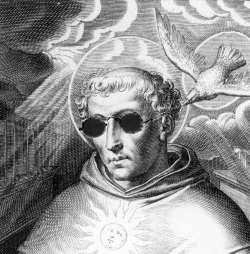
AquinasThe department of theology at Durham University is hosting a one-day colloquium (13 June) on Ecumenical Readings of Aquinas. It will include presentations by Andrew Davison, Christopher Insole, Marcus Plested and Lewis Ayres. Details here.

The Australian Catholic University is organising a conference titled ‘Addressing the Sacred through Literature and the Arts’ (2-3 August). The conference will aim to ‘address acts of creation and co-creation and encourage a dialogue between artists, scholars and audiences in a mutual exploration of the sacred’. Keynote speakers are Amanda Lohrey, Kevin Hart and Rosemary Crumlin. Details here.

For details about other theology conferences, visit here.

On having triple vision

MirrorWhile their respective projects are not always as divorced from one another as is sometimes suggested, it would be fair to say that theologians and artists do not always share the same concerns. That said, I suspect that every reader of the Book of Psalms will have sensed something germane to the vocation of both theologian and artist. Both are concerned, it seems to me, with a deep commitment to fostering and sharpening a triple vision—to take seriously what has been, what will be, and what is contemporary. (Another way of thinking about this is to simply take the journey with St Paul through Romans 5 to 8.) And theology, like art, responds to that triple awareness, resists the temptation to dissect the tri-part vision, and keeps asking—in its own particular way and with its own particular tongue—the foundational questions for all being; namely, who is Jesus Christ, and what has God done, what is God doing, and what has God promised to do in him?

Put otherwise, both art and theology properly seek to speak about what our eyes have seen, about what our ears have heard, about what our lips have tasted, and about what our hands have touched. And both are equally concerned with the matter of hope—about what our eyes hope to see, our ears hope to hear, our lips hope to taste, and our hands hope to touch. And both are concerned too to be attentive to the immediate, to what is, to those realities contemporary to our senses. So art and theology are fixed on a triple vision—of attention to what is behind and before and over the horizon—a vision grounded in the history of God’s own past, future and contemporaneity.

Theatrical Theology: Conversations on Performing the Faith

The Institute for Theology, Imagination, and the Arts (University of St Andrews) is hosting a conference on the theme Theatrical Theology: Conversations on Performing the Faith, held in St Andrews on 15-17 August 2012. Here’s the blurb:

Influenced and inspired by Hans Urs von Balthasar’s seminal work in The Theo-Drama, a growing number of contemporary scholars in various theological disciplines are discovering the potential for interdisciplinary conversation between theology and theatre. From a theological perspective, there are several reasons why drama and theatre present themselves as particularly fitting conversation partners, including the inherently dramatic form of God’s revelation in word and deed, the role of Scripture as a text which invites performance rather than passivity, faithful action as both the goal and means of theological understanding, the public and communal nature of theology, and the indeterminacy, provisionality, and ‘improvised’ nature of the theological task. For its part, theatre has always been compelled to acknowledge a debt to its ancient and longstanding entanglements with religious and theological perspectives, and may have much to gain from the process of revisiting and responding to these, not least in their present-day Christian form.

The task of pursuing a serious and constructive interdisciplinary exchange between theatre and theology, however, is one that has only just begun. Furthermore, suspicions persist in some theological quarters regarding the value of interdisciplinary approaches to theology as such, and towards theatre in particular which, among the arts, has experienced a particularly volatile relationship with the Church across the centuries. In response to all of this, Theatrical Theology: Conversations on Performing the Faith will seek to demonstrate the fruitfulness for constructive Christian theology and theatre alike of pursuing the conversation further, tracing some of the advances that have already been made, and identifying new challenges and opportunities still to be reckoned with as the interaction continues and develops further.

Our plenary speakers are among those whose work has already embarked upon the conversation between theology and theatre, including Shannon Craigo-Snell (Louisville Seminary), David Cunningham (Hope College), Jim Fodor (Bonaventure) Timothy Gorringe (Exeter), and Ivan Khovacs (Canterbury Christ Church). In addition to these plenary presentations, there will be several short paper sessions on the conference theme. Furthermore, it is expected that the conference programme will include conversations with theatre practitioners and a specially staged theatrical performance.

Short papers proposals are invited on the conference theme, including the following topics:

      • Theatrical models and metaphors in Christian theology
      • Character formation for life and the stage
      • Ethics, improvisation, and performative wisdom
      • Christian practices and theatrical skills
      • Scripture as dramatic text
      • Liturgy, worship, and performance
      • Theodramatic ecclesiology and company life
      • Mission and audience participation
      • Stage, place and contextual theology
      • Embodiment and performing the faith

Proposals should be for 20-minute papers to be followed by 10 minutes for questions. Please include in the proposal your name, institution, paper title, and abstract (not exceeding 200 words). Paper proposals will be considered immediately, and please send submissions by email to Theatrical.Theology@st-andrews.ac.uk before the deadline 15 June, 2012. More information regarding conference proceedings and registration will be available soon at www.theatricaltheology.co.uk.

To Mend the World: gratitude

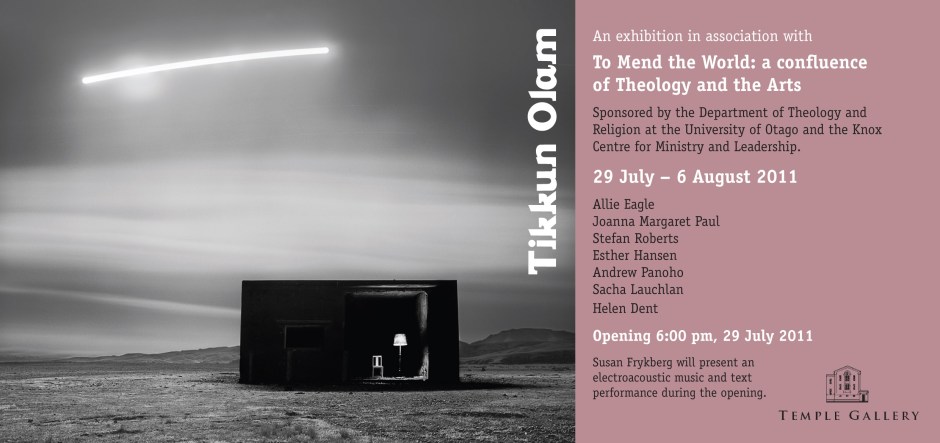
Those for whom Per Crucem ad Lucem is a regular stopping place will know that recent months have seen me involved in birthing a twin project called To Mend the World. With the exhibition now in full swing (at the Temple Gallery) and the conference furniture packed away, it’s good to be able to pause a while, to claim some space to do an initial reflection. It has been a wonderful and wonderfully-full two days.

It has certainly been a privilege to be part of a small band who together envisioned the conference, whose energy made it possible, and whose commitment to the conversation between art and theology is long and outstanding. We had a great line up of speakers who, via some wonderfully-stimulating presentations, modelled what the organisers of the conference had hoped – a humble and respectful but no less critical and intelligent conversation by artists and theologians around the conference theme of ‘Tikkun olam’. We were overwhelmed by the number of people who registered for the conference – around double what we had initially anticipated – plus a number of welcomed-walk ins too, all of whom engaged in the conversations with enthusiasm and grace. Like every conference of which I’ve been a part, this one too provided opportunity to re-connect with friends, to finally put some faces to names, and to meet in-the-flesh those with whom one has only ever ‘met’ in e-land. Of this latter category, it was really great to finally meet Paul Fromont, with whom I enjoyed a very rewarding conversation and my first pint of Moe Methode.

An event of this kind is an all-too-rare thing, and its happening has been both a real joy and a long-time goal for me personally. I hope that all who attended left the event as encouraged, challenged and enriched as I was by the encounter.

Speaking of theology and the arts, here’s a few recent links of interest:

‘To Mend the World’: conference and exhibition

I want to give the ‘To Mend the World’ conference and exhibition one final plug. The conference runs from 29–30 July, and the exhibition from 29 July through to 6 August. It really is shaping up to be a very exciting twin-project, with an impressive line-up of speakers and artists. Registration for the conference has exceeded expectation, and is still open if you’re keen to attend.

Dunedin to host two theology conferences

There can be little doubt that the 5-month delay of the parousia (until 21 October) is principally so that Dunedin – the global centre for theology, semi-decent coffee, and steep streets – can serve as host to two planned theological conferences.

The first, from July 29–30, is a conference on theology and art titled ‘To Mend the World’. The keynote speaker will be Professor Bill Dyrness from Fuller Theological Seminary and the conference will include an exhibition on the conference theme at the Temple Gallery, and a special screening of ‘The Insatiable Moon’ followed by discussion with the writer Mike Riddell. Further details here.

The second conference, to be held from September 2–3, will offer a Christian response to the phenomenon of  ‘The New Atheism’ as represented by writers like Richard Dawkins and Christopher Hitchens. This conference, ‘The New Atheism: A Christian Response’, will be jointly hosted by the Faraday Institute at Cambridge University and the University of Otago. Further details here.

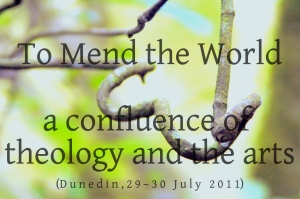
To Mend the World: a confluence of theology and the arts

The sixteenth-century Jewish mystic, Isaac Luria, made much of the notion of tikkun olam, a phrase which we might translate as ‘to mend the world’. Luria believed that the Creator of all things, in deciding to create a world, drew in – contracted – the divine breath in order to make room for the creation coming into being. In this enlarged space, the Creator then set vessels and poured into them the radiance of the divine light. But the light was too brilliant for the vessels, causing them to shatter and scatter widely. Since then, the vocation given to human person has consisted of picking up and to trying to mend or refashion the shards of creation.

Tikkun olam is also the theme of a conference and exhibition that I’m involved in organising, and which will take place in Dunedin this July. It is shaping up to be a very exciting twin-project, with an impressive line-up of speakers and artists. Registration for the conference has exceeded expectation for this stage so far out from the date, is still open, and there’s still some time to get in on the ‘early-bird’ rate.

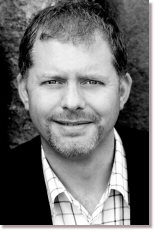
Trevor Hart on Science, Faith, the Arts, God and the Imagination

trevor-hartThe Centre for Public Christianity has made available four short video conversations filmed with Trevor Hart when Trevor was in Sydney last year to deliver the 22nd Annual New College Lectures at the University of New South Wales. (These talks are available for MP3 download here). Trevor is always worth listening too, and the videos are available here:

Around blogdom …

  1. “The Center of the Whole Bible” (Romans 3:21-26): audio | video
  2. “The Strange Triumph of a Slaughtered Lamb” (Revelation 12): audio | video
  3. “A Miracle Full of Surprises” (John 11): audio | video
  4. “Why Doubt the Resurrection of Jesus” (John 20:24-31)
  5. “The Ironies of the Cross” (Matthew 27:27-51)

Trevor Hart: ‘God and the Artist: Human Creativity in Theological Perspective’

Trevor Hart recently gave the 22nd Annual New College Lectures at the University of New South Wales. The three (exceptional) talks are now available for MP3 download:

Tuesday 2nd September: ‘The lunatic, the lover and the poet’: divine copyright and the dangers of ‘strong imagination’

Wednesday 3rd September: The ‘heart of man’ and the ‘mind of the maker’: Tolkien and Sayers on imagination and human artistry

Thursday 4th September: Givenness, grace, and gratitude: creation, artistry and eucharist

Faith in the Frame

On Sunday 31 August, the UK TV station ITV will air the first in a 10-part series on religious art. The series is called Faith in the Frame. The TimesOnline have also run a story on it.

Each each episode will focus on one painting. The ten chosen are:

The Resurrection, Cookham, by Stanley Spencer

The White Crucifixion, by Marc Chagall

The Massacre Of The Innocents, by Pieter Breughel

The Wenhaston Doom, Anonymous

The Crucifixion In The Isenheim Altarpiece, by Matthias Grünewald

The Arezzo Frescoes, by Piero della Francesca

The Garden of Earthly Delights, by Hieronymous Bosch

The Upper Room, by Chris Ofili [The NT Times ran an interesting article on this piece here]

Lux Eterna, by Ana Maria Pacheco

The Mystic Nativity, by Botticelli

Alongside presenter Melvyn Bragg,  each programme will involve two or three invited guests who will offer their own refections on the work. These guest include:

Jonathan Jones – art critic for The Guardian

Tim Marlow – writer and broadcaster

Antony Sutch – Franciscan monk and broadcaster

Imtiaz Dharker – poet and artist

Richard Harries – former bishop of Oxford

Sarah Dunant – novelist and broadcaster

Howard Jacobson – novelist

Jackie Wullschlager – art critic for the Financial Times

Rowan Williams – Archbishop of Canterbury

Andrew Graham-Dixon – art expert, broadcaster and writer

Joanna Woodall – expert on Northern Renaissance art at The Courtauld Institute

Martin Kemp – Professor of Art History at Oxford University

Michael Berkeley – composer and broadcaster

Eamon Duffy – Professor of Divinity at Cambridge University

Ekow Eshun – Artistic Director of the Institute of Contemporary Arts

John Harvey – Professor of Art at the University of Wales


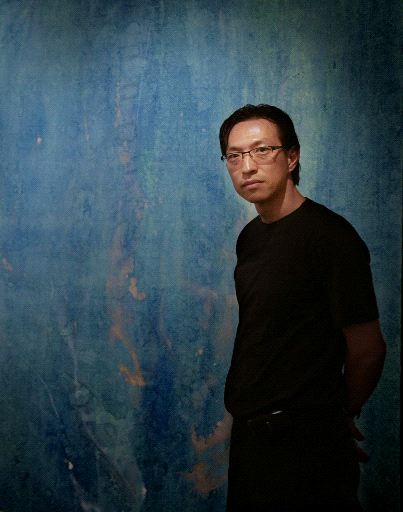
Makoto Fujimura on art, evil and hope

‘… I find that the theological answer for suffering is not really an answer at all. Rather, the Bible is about looking at evil square in the face and calling it “evil.” All of my work inevitably comes to the questions of wrestling with the question of evil and hope. Of the different ways to address the problem, I think the most effective approach is through the arts, because the question itself is not, fundamentally, a rational question. You need the world of imagination – the language of art – in order to be convincing in wrestling with it. Lamentations is a path to understanding this issue. We in the West don’t know how to lament … I see my art as part of the river of God, made up of God’s tears, which I have in common with a broken world. Rather than offering an idealized landscape for people to look to as an escape from reality, I paint in the ashes. Out of the ashes. From the ashes. And I’m not offering false hope, nor am I offering a nihilistic spiral of despair. Rather, I’m interpreting a longing that is deeply hopefully [sic] and real’. – Wresting With Evil and Hope‘.

I’ve long revered In a (so-far) four-part interview (i, ii, iii, iv) in which he reflects on the significant impact of Nick Wolterstorff’s wonderful work – Art in Action: Toward a Christian Aesthetic observes how Wolterstorff’s work is concerned with issues of justice, and with the world’s brokenness. He suggests that art is a fitting medium for mediating conversation about these things. Insofar as art might serve in this capacity, it is, he says, ‘a means for rehumanizing the world’.

In response to the question of what might be the artists’ responsibility towards this end of repairing and rehumanising human culture and the world, and whether Wolterstorff places any such responsibility on artists themselves, he says ‘Yes, and no. Nick is one of the few people who talks about an artist’s responsibility as not the opposite of freedom, but rather that an artist’s freedom is connected to his responsibility in society. To Nick, they’re not disjointed’. he world is drawn to that work which seeks to transform culture’, and to speak of our need to ‘love offensively’.

While it’s certainly not always the case thatto seek those things which transform culture, I thank God for those moments (even in me) when such a reality is realised; for this too is a sign that the kingdom of God is among us, the kingdom which indeed confronts us with an offensive love.

Hart on God and human artistry

Those anywhere near Sydney ought not want to miss this year’s New College Lectures (2-4 September) at the University of New South Wales. The three lectures will be delivered by the brilliant Trevor Hart. His theme is God and the Artist: human creativity in theological perspective and his lecture titles are:

  • 1. ‘The lunatic, the lover and the poet’: divine copyright and the dangers of ‘strong imagination’
  • 2. The ‘heart of man’ and the ‘mind of the maker’: Tolkien and Sayers on imagination and human artistry
  • 3. Giveness, grace and gratitude: creation, artistry and Eucharist

Art, Religion, Identity: An interdisciplinary symposium

In conjunction with an art exhibition at Glasgow University Chapel celebrating the 100th anniversary of the birth of Glasgow Jewish artist Hannah Frank, the Graduate School of Arts and Humanities and the Department of Theology and Religious Studies at the University of Glasgow are planning a two-day symposium on Art, Religion and Identity for 23-24 September 2008

Keynote speakers are Professor Melissa Raphael-Levine (University of Gloucestershire), Professor Shulamit Reinharz (Brandeis University) and Dr. Laura Levitt (Temple University).

Organisers have issued a call for papers on any topic relating to the conference theme, with a focus on the 19th and 20th centuries, although they are open to proposals dealing with other periods. They welcome papers from any discipline, including but not limited to theology, art history, museum and archive studies, cultural studies, history, psychology, sociology, anthropology and literature. Abstracts of 150-300 words, for papers not exceeding 20 minutes in length, or proposals for posters (A1 size) should be addressed to Julie Clague and Alana Vincent no later than 20 July.

Topics may include, but are not limited to:

  • Art as (auto)biography
  • Borrowing and appropriation of imagery
  • Contested (religious) identities
  • Hermeneutics, textuality, and ‘reading’ images
  • Intersections between mythology and religion in visual culture
  • Imagination and the fantastic
  • Material memory and culture making
  • Theological and/or religious aesthetics
  • Tensions, transgressions, heresies, and idolatries
  • Religious uses of art: devotion, illustration, midrash, protest
  • Artistic uses of religion: themes, symbolism, tradition, power
  • Visual markers of religious identity
  • Gender in relation to any of the above

Further information is available here.

2008 Gifford Lectures: ‘Religion and Its Recent Critics’

Professor David Fergusson (Professor of Divinity, The University of Edinburgh) will deliver the 2008 Gifford Lectures on the topic ‘Religion and Its Recent Critics’. The program for the 2008 Gifford Lectures is available here, and it looks impressive.

Tuesday 8 April
The new atheism: historical roots and contemporary context.

Thursday 10 April
The implausibility of religious belief: claims and counter-claims.

Tuesday 15 April
The genesis of religion: can Darwinism explain it away?

Wednesday 16 April
Religion, morality and art: invention or discovery?

Tuesday 22 April
Is religion bad for our health? Saints, martyrs and terrorists.

Thursday 24 April
Sacred texts: how should we treat them?

Sounds like something in there for everyone. The lectures will be held at the Sir Charles Wilson Lecture Theatre, University Avenue/Gibson Street, Glasgow @ 18.00. They are free and open to the public. Registration to Clare Laidlaw (0141 330 4978)

Jeremy Begbie moves to Duke

Professor Jeremy Begbie will be concluding his role as Associate Director of the Institute for Theology, Imagination and the Arts (St Andrews)  in order to take up an appointment as Thomas A. Langford Research Professor at Duke Divinity School, Duke University from July 1st 2008.

I’ve been informed that he’ll continue to teach half time at Ridley Hall, Cambridge,  until December, while also starting his work for Duke half time from July, and then he’ll be resident at Duke for their Spring Semester from January 2009. He is not moving permanently to the United States but will be resident at Duke for part of the time, and then residing in Cambridge for most of the year. Although the UK will lose him as a full time teacher, he plans to remain theologically active in the UK, doing research, and also planning and running some new theology and the arts ventures. I wish Jeremy all the best as he undertakes this juggle.

For a taste of what Duke is in for, check out this lecture from my vodpod.

Introducing Alfonse Borysewicz

The artist Alfonse Borysewicz has already received mention in a number of my articles (including this one). Now, America: The National Catholic Weekly has published an article on Alfonse entitled ”An Ordinary Mystic’: The faith and art of Alfonse Borysewicz’. Because I’m such a fan of Alfonse’s work I thought it worth reproducing the article by Maurice Timothy Reidy here. There’s also an audio slide show of his work that you might want to check out (I recommend doing so before you read the article).

The relationship between the art world and the Catholic Church in recent years has been, to say the least, strained. To pick two prominent examples, Andres Serrano’s photograph “Piss Christ” was condemned by Catholic leaders when it was first shown in 1989, as was Chris Ofili’s elephant-dung-covered Madonna, “The Holy Virgin Mary,” when it was unveiled at the Brooklyn Museum 10 years later. While these works have their Catholic defenders, the controversies that erupted around them are a sign of a wide gap that has opened up between art—specifically the visual arts—and religion. Once the foremost patron of the arts, the church is now more circumspect about contemporary painting. The art world, meanwhile, seems glad to be rid of the church’s influence, exercising its own kind of censorship on material it deems tainted by sentimental piety.

Trying to bridge the gap between these two spheres is not for the faint of heart, and one is hard-pressed to find many artists who have the courage to try. One painter who is both a committed Catholic and a serious artist is Alfonse Borysewicz (pronounced Bor-uh-CHEV-itz), a Brooklyn-based former seminarian whose work has been shown both in Chelsea and in a Catholic church in Brooklyn, N.Y.

Gregory Wolfe, an editor at Image, a quarterly review of arts and religion, calls Borysewicz one of the most important religious artists since the French Catholic Georges Rouault. When first encountering Borysewicz’s work, Wolfe felt “he was in the presence of something sacred.” He sensed that the art was “almost being offered up, instead of saying ‘Look at me.’”

Yet despite his strong desire to exhibit his work in “sacred spaces,” Borysewicz has received little attention from the church. His work is currently on display at the Oratory Church of St. Boniface in Brooklyn and has appeared in a few liturgical art magazines, but he has failed to break through to the next level. His difficulties as a Catholic trying to make it in the art world—and an artist trying to make in the Catholic world—say much about the state of religion and art in our era.

‘Separated’ From New York

Borysewicz is an avid reader of theology. He likes to sprinkle his conversation with quotes from Karl Rahner (“Every act has eternal consequences”) or René Girard (a historian who has written on violence and religion), and recently he has been working his way through the writings of Bernard Lonergan. While he does not claim to understand it all, Borysewicz hopes that certain parts seep into his consciousness and find their way into his paintings. In the past he has found inspiration in homilies. In one, his pastor compared the outstretched arms of Jesus to an open embrace. That idea is reflected in his three-panel painting “Cross I & II and Blessing,” which shows the two outstretched arms of Jesus, as well as a hand held in a gesture of blessing.

Borysewicz lives in Bay Ridge, a traditionally Italian section of Brooklyn, with his wife and two children, ages 20 and 14. A tall man approaching 50 who still favors the clothes of a Brooklyn hipster, Borysewicz paints in a walk-up studio apartment in the shadow of the Brooklyn Bridge, in a neighborhood known as Dumbo. Down the street is the storied River Café, and in the distance the skyline of Lower Manhattan. When he was young, Borysewicz enjoyed success across the river, where his work was exhibited in galleries in Chelsea.

Borysewicz now considers himself “separated” from the New York art scene. He sees theology and art as “one continuum,” but as of late, he says, he has been forced to choose between the two. Asked to pinpoint the moment when his fortunes changed, he recalls a show in the late 1990s. (It is a sign of Borysewicz’s liturgical-mindedness that the show was meant to mark the last Advent of the millennium.) The centerpiece of the exhibit was “Your Own Soul,” a small chapel he constructed from paintings and collages. The title, taken from Simeon’s words to Mary in Luke’s Gospel (“a sword will pierce your own soul”) was suggested by Michael Paul Gallagher, S.J., a professor at the Gregorian University in Rome, who first met Borysewicz in 1993.

“It took the form of a four-sided small chapel,” Gallagher recalled in an e-mail interview, “with symbols of tears on the outside, and one had to enter the interior on one’s knees. Inside you first saw a large, dark figure suggesting a dead body, and as the eyes became used to the dim light, one discovered smaller gold hints of resurrection.”

As a Catholic, Borysewicz had always been interested in religious themes, but in early paintings, like “River Rouge and Grace” (1993-96) or in his “Strata” series (1992), the imagery was more abstract. In such works as “Your Own Soul,” his art became more representational, which, he says, was “the beginning of my undoing.” Curators and collectors were “comfortable with [his faith] in the abstract, but not in the flesh.” That may seem like a broad indictment, but Wolfe thinks it is particularly difficult for a religious painter to make his way in the contemporary art world. “Of all the different art forms, the one that is the most hostile, the most hermetically sealed against religion in any kind of dimension…is the visual arts,” he says.

In 1995 at least one critic recognized the spiritual dimension of Borysewicz’s painting. “One look around the gallery tells you that Alfonse Borysewicz is a person of tremendous spiritual intensity,” Pepe Karmel wrote in a 1995 review in The New York Times. “The problem is getting this intensity onto canvas in a convincing way.” Borysewicz, not surprisingly, disagrees with Karmel’s implied criticism—where else could the critic sense the intensity except from the canvas?—but tries to take a detached approach to criticism. What is most important to him now, he says, is “not so much how I changed painting but how painting changed me.” His goal is no longer to mount a show in New York, but to present his art in churches and to help younger artists to do so as well.

“Sacred spaces have to inspire again,” he told me during an interview at his studio. “So many churches rest on what they’ve been given. There’s a younger generation out there who want to authentically give their voice to it.”

Finding a Vocation and a Home

Borysewicz was raised in a working-class neighborhood in Detroit when the city was undergoing tumultuous change. As a boy, he learned about the importance of faith from his parents, who were still mourning the loss of his older sister, who had died two years before he was born. Every week the family would go to the graveyard, and his parents often spoke about her. That experience gave him a sense that “you were always breaking bread with your past, that the past was present…and the vehicle for that was faith,” he says.

Borysewicz attended college for two years before entering the seminary, where he met Bishop Kenneth Untener of Saginaw, Mich., who encouraged him to paint. In 1981, he left the seminary and moved to Boston, where he taught in a Catholic high school while taking art classes at night.

He describes his work from that period as “Otto Dix meets Marc Chagall.” In a few years he was showing his paintings in New York and Boston. The twin tragedies of his father’s death in 1983 and the outbreak of the AIDS pandemic, which took the lives of many friends and colleagues, gave him a sense that suffering and death were very much a part of life.

In his essay in Image (No. 32), Borysewicz wrote that he was also struggling with “guilt over my choice of vocation.” He wrote:

Given my family’s working-class ethic, what I was doing seemed strange. At times it was construed as lazy, arrogant or sissy, but the charge that hurt me the most, and still does, was that what I was doing was indulging in artifice. People make that accusation because they don’t see art as part of the real world, which they see as made up of bread-and-butter issues like building a solid career; they do not see how the struggle of faith and its representations connects with all of our lives.

Borysewicz has found an artistic home at the Oratory Church of St. Boniface. He was encouraged to paint for the church when the parish moved from its former home a few miles away to its current site in downtown Brooklyn. The Rev. Mark Lane, the pastor, coordinated the redesign of the old church of St. Boniface with the goal of bringing together “the old and the new.” He recruited Borysewicz, a parishioner, to contribute to the project.

Two of Borysewicz’s paintings are displayed behind statues in the church’s vestibule. Borysewicz would prefer the art to stand on its own, rather than behind more traditional works of art, but Lane gave serious thought to the decision. He believes the older statues—like one of St. Philip Neri—will help lead the worshipers to the more modern, challenging work.

“We’ve never had any negative comments from anyone,” says Lane. “Although sometimes you hear, ‘I don’t understand what it means’—the sort of standard response to contemporary modern art.”

The most challenging piece of art at St. Boniface is not in the sanctuary, but in the priests’ private chapel. Known as “Cor Unum,” Borysewicz’s four-paneled canvas covers an entire wall of the room. The center panel depicts a bee hive of activity; the right panel shows Jesus peering from behind a honeycomb. The images are scattered about, some difficut to discern. It is difficult to imagine “Cor Unum” displayed on the wall of your local parish, but unlike many pieces of conventional liturgical art, it provokes contemplation. When showing off the piece, Lane pointed to the honeycomb motif, which he interprets as a symbol of how, in John’s Gospel, the early church viewed life through the lens of the community.

“It’s actually quite accurate, theologically,” Lane says.

Borysewicz finds it frustrating that he cannot place his art in more churches. Too many churches are unimaginative, he says, adding that while parishes have experimented with modern music, architecture, even dance, they seem less willing to embrace modern visual art.

Why? “A cautious piety seems safer,” says Father Gallagher. “I suppose there is a fear that people will find [modern art] too strange, difficult or different. Caravaggio got something of the same reaction in his day. One of Alfonse’s favorite theologians, Bernard Lonergan, once quipped that the church always arrives on the scene a little breathless and a little late.”

A Difficult Choice

Making the choice to be a painter has been a difficult one for Borysewicz. He has struggled financially and has done teaching on the side to provide for his family. “I feel like I’ve taken a vow with painting,” he says. At a conference for young evangelicals in New York in March, Borysewicz told the crowd that he is often approached by people who say they intend to devote their lives to painting when they retire. “No you won’t,” he tells them. “This life is not a dress rehearsal.”

“Alfonse is very down to earth,” says Gallagher, “often surprising audiences with his emphasis on art as hard work [and] daily waiting.” He tells them it is “not as romantic as people imagine.”

Gregory Wolfe, a fan and friend, suggested that Borysewicz has suffered some “emotional fallout” as a result of separating himself from the contemporary art scene. In our conversations, Borysewicz also suggested that he was emerging from a dark time. When pressed, he noted enigmatically, “I’ve taken hostages on this journey—my kids and my wife.”

After meeting with Borysewicz several times, I was struck by the ways he describes himself. He often identifies himself as an “ordinary mystic”—an allusion to Rahner’s comment that all modern believers are in some ways mystics. In professional circles he has taken to calling himself an “icon painter,” although more traditional icon painters might take exception to that description. It is obvious that he sees himself as part of an artistic religious tradition that stretches back centuries.

Identifying himself so clearly as a religious painter has had its consequences, but Borysewicz does not seem to regret his choice. He likes to say that the purpose of the religious image is twofold: to “tell us what happened and to remind us what was promised.” Finding new ways to present the Gospel story may be a rare artistic endeavor today, but Borysewicz’s work is a reminder that it is still fertile soil for those willing to till it.
The Catholic Fantastic of Chesterton and Tolkien

Ralph Wood has a good article on Chesterton and Tolkien in today’s First Things in which he praises Alison Milbank’s Chesterton and Tolkien As Theologians: The Fantasy of the Real. Here’s a taste:

Unlike Coleridge and the Romantics, however, Tolkien and Chesterton never grant godlike status to artists and thinkers as having the power to invent their own self-enclosed universe. On the contrary, they share a deep Thomistic regard for the primacy of being: for things as they are perceived by the senses. Like Kant, they confess the difficulty of moving from the phenomenal to the noumenal realm of things-in-themselves. Yet, unlike him, they do not despair over the seemingly impassable gap between the inner and the outer, the mental and the natural; instead, they reveal that the world is not dreadfully dead (as we have believed since Descartes and Newton) but utterly alive and awaiting our free transformation of it. The universe that has been made dissonant also requires reenchantment, therefore, in order for us to participate in an otherness that is not finally cacophony but symphony, a complex interlocking of likenesses and differences that form an immensely complex but finally redemptive Whole. The doubleness of all things is cause for rejoicing, it follows, rather than lamentation.

As readers we are able to experience Treebeard at two levels: On the one hand, he is patently an aesthetic invention, a fictional creature. Both Chesterton and Tolkien constantly draw attention to the created character of their work, reminding us that it belongs to secondary and not primarily reality: it is a constructed thing to be enjoyed as such. Yet having encountered this fantastic tree with human features, readers can no longer look upon real trees as mere objects meant only for our manipulation. On the contrary, we can now envision all trees as analogical actualities, as transcendent symbols that participate in the reality that they signify, as having likenesses to us despite their differences from us, and thus as linking natural things with both human and divine things—and perhaps also with things demonic. It is not a long leap, for instance, from Treebeard to the trees in the Garden of Eden.

Chesterton and Tolkien have not autonomously invented their own imaginative worlds so much as they have reordered the existing world in accordance with their fundamentally Aristotelian/Thomistic perception of it. Their common conviction is that everything has its own entelechy, its own end within itself that pushes it toward completion and fulfillment within a larger, indeed a final telos.

You can read the full article here.