Poetry

‘David: Psalm 51’, by Geoffrey Bingham

Thou requirest truth
In the inward parts:
Not merely on the lips,
Where man may mutter anything,
And seal his subterfuge,
Making it truth for him
And those who hear.

Thou requirest truth
When man is truly man:
Down in the depths beneath,
Where You alone may see:
Man senses but he does not know
That truth is the truth
That You require.

I, David, was a man of joy,
Of pleasant power,
Of daily purity.
True, I too was tempted,
But should I fall
Would know I fell
And cry to You for help.

When then I fell
And said I did not fall,
When kept within
The hellish sin I did
And made it joy, not sin,
The fires began
That ran into my soul.

At nights they burned,
By day they flamed,
Hot coals that dried
Or sweated me
Until the power had gone,
That once I knew
In doubtless joy.

When Nathan came
His piercing eyes
Looked to the depths
(His eyes were Yours);
The holy flame
Burned even more.
I was undone.

The mercy cried
Was mercy come,
The lava fled
Its burning core,
And I was freed—
The flame was gone
By mercy’s love.

The truth required
In inward parts,
The purity
Within the heart
Have come again.
No greater gift
Was ever given.

Here then I weep
For grace and sin,
The wasted hour,
The splendid grace:
Both show me truth
Is what I need,
With wisdom.

Teach me, then, Lord,
Of sin’s deceit,
The sludge of sin
That full defiles.
Give me the love
Of purity,
The only truth.

Now sings my heart,
The heart so pure
The miracle of love
Has made again.
The man destroyed
Is made anew
For purity.

I know, dear Lord,
The cost is Yours.
Sin’s suffering
Is mine alone,
But Yours the pain
Messiah takes
Unto the death.

Broken I go,
Though healed.
Wisdom I know,
Though foolish.
You have unmasked
The sin that binds,
And set me free.

Freedom thus bought
Is freedom prized
And holiness
Is gift most high.
Man breathes eternity
In holiness
And knows You true.

This is the wisdom required:
This is the gift of God
Set in the inward parts,
True purity in peace
And holiness in joy.

– Geoffrey C. Bingham, The Spirit of All Things (Blackwood: Troubadour Press, 1992), 72–4.

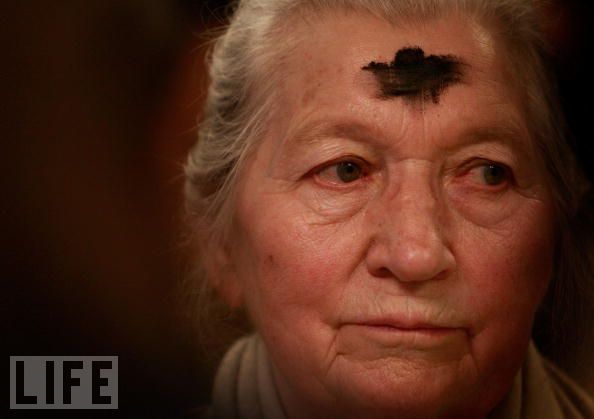
Ash Wednesday: poems and prayers

Lent darkness

Dragons lurk in desert spaces
Penetrating the mind with evil claw.
Serpent’s teeth seek out the chinks
insidiously, relentlessly, gnawing on the bone;
searching out the interstices of muscle and sinew.

Such is the pain of the wilderness.
Alone, alone, alone,
Christ sits
in the waste place of abandoned pleas and questions
until exhausted
finally
at last
the realisation
comes
that in the end
there is only
God.

In the night-time of our fears
in the present reality of abandonment
when family and friends
turn and run,
be present, ever present God.
Be present with those
camped out in the fields of hopelessness
with refugees and homeless,
those who live lives of quiet desperation.
Be present until the desert places
blossom like the rose
and hope is born again.

– Kathy Galloway (ed.), The Pattern of Our Days: Liturgies and Resources for Worship (Glasgow: Wild Goose Publications, 1996), 130.

◊◊◊

Ash Wednesday

I
Because I do not hope to turn again
Because I do not hope
Because I do not hope to turn
Desiring this man’s gift and that man’s scope
I no longer strive to strive towards such things
(Why should the agèd eagle stretch its wings?)
Why should I mourn
The vanished power of the usual reign?

Because I do not hope to know
The infirm glory of the positive hour
Because I do not think
Because I know I shall not know
The one veritable transitory power
Because I cannot drink
There, where trees flower, and springs flow, for there is nothing again

Because I know that time is always time
And place is always and only place
And what is actual is actual only for one time
And only for one place
I rejoice that things are as they are and
I renounce the blessèd face
And renounce the voice
Because I cannot hope to turn again
Consequently I rejoice, having to construct something
Upon which to rejoice

And pray to God to have mercy upon us
And pray that I may forget
These matters that with myself I too much discuss
Too much explain
Because I do not hope to turn again
Let these words answer
For what is done, not to be done again
May the judgement not be too heavy upon us

Because these wings are no longer wings to fly
But merely vans to beat the air
The air which is now thoroughly small and dry
Smaller and dryer than the will
Teach us to care and not to care Teach us to sit still.

Pray for us sinners now and at the hour of our death
Pray for us now and at the hour of our death.

II
Lady, three white leopards sat under a juniper-tree
In the cool of the day, having fed to sateity
On my legs my heart my liver and that which had been contained
In the hollow round of my skull. And God said
Shall these bones live? shall these
Bones live? And that which had been contained
In the bones (which were already dry) said chirping:
Because of the goodness of this Lady
And because of her loveliness, and because
She honours the Virgin in meditation,
We shine with brightness. And I who am here dissembled
Proffer my deeds to oblivion, and my love
To the posterity of the desert and the fruit of the gourd.
It is this which recovers
My guts the strings of my eyes and the indigestible portions
Which the leopards reject. The Lady is withdrawn
In a white gown, to contemplation, in a white gown.
Let the whiteness of bones atone to forgetfulness.
There is no life in them. As I am forgotten
And would be forgotten, so I would forget
Thus devoted, concentrated in purpose. And God said
Prophesy to the wind, to the wind only for only
The wind will listen. And the bones sang chirping
With the burden of the grasshopper, saying

Lady of silences
Calm and distressed
Torn and most whole
Rose of memory
Rose of forgetfulness
Exhausted and life-giving
Worried reposeful
The single Rose
Is now the Garden
Where all loves end
Terminate torment
Of love unsatisfied
The greater torment
Of love satisfied
End of the endless
Journey to no end
Conclusion of all that
Is inconclusible
Speech without word and
Word of no speech
Grace to the Mother
For the Garden
Where all love ends.

Under a juniper-tree the bones sang, scattered and shining
We are glad to be scattered, we did little good to each other,
Under a tree in the cool of day, with the blessing of sand,
Forgetting themselves and each other, united
In the quiet of the desert. This is the land which ye
Shall divide by lot. And neither division nor unity
Matters. This is the land. We have our inheritance.

III
At the first turning of the second stair
I turned and saw below
The same shape twisted on the banister
Under the vapour in the fetid air
Struggling with the devil of the stairs who wears
The deceitul face of hope and of despair.

At the second turning of the second stair
I left them twisting, turning below;
There were no more faces and the stair was dark,
Damp, jaggèd, like an old man’s mouth drivelling, beyond repair,
Or the toothed gullet of an agèd shark.

At the first turning of the third stair
Was a slotted window bellied like the figs’s fruit
And beyond the hawthorn blossom and a pasture scene
The broadbacked figure drest in blue and green
Enchanted the maytime with an antique flute.
Blown hair is sweet, brown hair over the mouth blown,
Lilac and brown hair;
Distraction, music of the flute, stops and steps of the mind
over the third stair,
Fading, fading; strength beyond hope and despair
Climbing the third stair.

Lord, I am not worthy

but speak the word only.

IV
Who walked between the violet and the violet
Who walked between
The various ranks of varied green
Going in white and blue, in Mary’s colour,
Talking of trivial things
In ignorance and knowledge of eternal dolour
Who moved among the others as they walked,
Who then made strong the fountains and made fresh the springs

Made cool the dry rock and made firm the sand
In blue of larkspur, blue of Mary’s colour,
Sovegna vos

Here are the years that walk between, bearing
Away the fiddles and the flutes, restoring
One who moves in the time between sleep and waking, wearing

White light folded, sheathing about her, folded.
The new years walk, restoring
Through a bright cloud of tears, the years, restoring
With a new verse the ancient rhyme. Redeem
The time. Redeem
The unread vision in the higher dream
While jewelled unicorns draw by the gilded hearse.

The silent sister veiled in white and blue
Between the yews, behind the garden god,
Whose flute is breathless, bent her head and signed but spoke no word

But the fountain sprang up and the bird sang down
Redeem the time, redeem the dream
The token of the word unheard, unspoken

Till the wind shake a thousand whispers from the yew

And after this our exile

V
If the lost word is lost, if the spent word is spent
If the unheard, unspoken
Word is unspoken, unheard;
Still is the unspoken word, the Word unheard,
The Word without a word, the Word within
The world and for the world;
And the light shone in darkness and
Against the Word the unstilled world still whirled
About the centre of the silent Word.

O my people, what have I done unto thee.

Where shall the word be found, where will the word
Resound? Not here, there is not enough silence
Not on the sea or on the islands, not
On the mainland, in the desert or the rain land,
For those who walk in darkness
Both in the day time and in the night time
The right time and the right place are not here
No place of grace for those who avoid the face
No time to rejoice for those who walk among noise and deny the voice

Will the veiled sister pray for
Those who walk in darkness, who chose thee and oppose thee,
Those who are torn on the horn between season and season, time and time, between
Hour and hour, word and word, power and power, those who wait
In darkness? Will the veiled sister pray
For children at the gate
Who will not go away and cannot pray:
Pray for those who chose and oppose

O my people, what have I done unto thee.

Will the veiled sister between the slender
Yew trees pray for those who offend her
And are terrified and cannot surrender
And affirm before the world and deny between the rocks
In the last desert before the last blue rocks
The desert in the garden the garden in the desert
Of drouth, spitting from the mouth the withered apple-seed.

O my people.

VI
Although I do not hope to turn again
Although I do not hope
Although I do not hope to turn

Wavering between the profit and the loss
In this brief transit where the dreams cross
The dreamcrossed twilight between birth and dying
(Bless me father) though I do not wish to wish these things
From the wide window towards the granite shore
The white sails still fly seaward, seaward flying
Unbroken wings

And the lost heart stiffens and rejoices
In the lost lilac and the lost sea voices
And the weak spirit quickens to rebel
For the bent golden-rod and the lost sea smell
Quickens to recover
The cry of quail and the whirling plover
And the blind eye creates
The empty forms between the ivory gates
And smell renews the salt savour of the sandy earth

This is the time of tension between dying and birth
The place of solitude where three dreams cross
Between blue rocks
But when the voices shaken from the yew-tree drift away
Let the other yew be shaken and reply.

Blessèd sister, holy mother, spirit of the fountain, spirit of the garden,
Suffer us not to mock ourselves with falsehood
Teach us to care and not to care
Teach us to sit still
Even among these rocks,
Our peace in His will
And even among these rocks
Sister, mother
And spirit of the river, spirit of the sea,
Suffer me not to be separated

And let my cry come unto Thee.

– Thomas S. Eliot, ‘Ash Wednesday’ in The Waste Land and Other Poems (ed. Helen Hennessy Vendler; New York: Signet Classic, 1998), 66–76.

◊◊◊

A Prayer on Ash Wednesday

Most gracious and loving God, I seek this day to remember that I am dust and to dust I shall return.

God, why do I fear being mortal? Perhaps I think it diminishes me in your sight.

And yet …

the flower that is here today and gone tomorrow is no less precious to you simply because it is transitory.

the sparrow that falls to the ground is no less precious to you simply because of its frailty.

So with me. I am precious to you even though all too soon my body will be food for the worms.

Thank you, Lord, for assuring me of my infinite worth.

I can now face the real truth about myself – namely, that I am dust, and to dust I shall return. And after … the resurrection of the dead!

Amen.

– Richard Foster, Prayers from the Heart/Celebration of Discipline/Money, Sex & Power (London: Hodder & Stoughton, 1995), 22.

◊◊◊

Vision and mirage

Lord Jesus, you have faced temptation;
you know how difficult it can be
to distinguish between vision and mirage,
between truth and falsehood.

Lord, help us when we are tempted:
And save us when we fall.

Help us in the church:
when we confuse absence of conflict with the peace of God;
when we equate the shaping of ecclesiastical structures with serving you in the world;
when we imagine that our task is to preserve rather than to put at risk;
when we behave as though your presence in life were a past event rather than a contemporary encounter.

Lord, help us when we are tempted:
And save us when we fall.

Help us in the world:
when we use meaningless chatter to avoid real dialogue;
when we allow the image presented by the media to blind us to the substance that lies behind it;
when we confuse privilege with responsibility, and claim rights when we should acknowledge duties;
when we allow high-sounding reasons to cover evil actions.

Lord, help us when we are tempted:
And save us when we fall.

We pray for all who have been brought to the edge of their endurance;
for those whose pain is unending;
for those for whom the earth is a cruel desert and existence a constant struggle against overwhelming odds;
for those who suffer through their own folly or through the malice or folly of others.

Lord, help us when we are tempted:
And save us when we fall.

Lord Jesus, you have passed through the test of suffering,
and are able to help those who are meeting their test now.

Lord, help us when we are tempted:
And be with us to the end.

– Terry C. Falla, ed., Be Our Freedom Lord: Responsive Prayers and Readings for Contemporary Worship (Adelaide: OpenBook Publishers, 1994), 306–7.

◊◊◊

Marked by Ashes

Ruler of the Night, Guarantor of the day …
This day – a gift from you.
This day – like none other you have ever given, or we have ever received.
This Wednesday dazzles us with gift and newness and possibility.
This Wednesday burdens us with the tasks of the day, for we are already halfway home
halfway back to committees and memos,
halfway back to calls and appointments,
halfway on to next Sunday,
halfway back, half frazzled, half expectant,
half turned toward you, half rather not.

This Wednesday is a long way from Ash Wednesday,
but all our Wednesdays are marked by ashes –
we begin this day with that taste of ash in our mouth:
of failed hope and broken promises,
of forgotten children and frightened women,
we ourselves are ashes to ashes, dust to dust;
we can taste our mortality as we roll the ash around on our tongues.

We are able to ponder our ashness with
some confidence, only because our every Wednesday of ashes
anticipates your Easter victory over that dry, flaky taste of death.
On this Wednesday, we submit our ashen way to you –
you Easter parade of newness.
Before the sun sets, take our Wednesday and Easter us,
Easter us to joy and energy and courage and freedom;
Easter us that we may be fearless for your truth.
Come here and Easter our Wednesday with
mercy and justice and peace and generosity.
We pray as we wait for the Risen One who comes soon.

– Walter Brueggemann, Prayers for a Privileged People (Nashville: Abingdon, 2008), 27–8.

And, finally, because, like Luther, I’m exhausted from all the pious and sentimental and non-christologically-determined navel-gazing dribble that is so-often associated with Lent, here’s one of my favourite prayers. It comes from Stanley Hauerwas:

Free Us from Self-Fascination

Lord Almighty, we say we want to serve you, we say we want to help others less fortunate than ourselves, we say we want justice. But the truth is, we want power and status because we so desperately need to be loved. Free us from our self-fascination and the anxious activity it breeds, so that we might be what we say we want to be – loved by you and thus capable of unselfish service. Amen.

– Stanley Hauerwas, Prayers Plainly Spoken (Downers Grove: InterVarsity Press, 1999), 49.

You may also like to check out some previous posts on Lent, there’s a great reflection on Ash Wednesday here, and Garry Deverell has a helpful post here too.
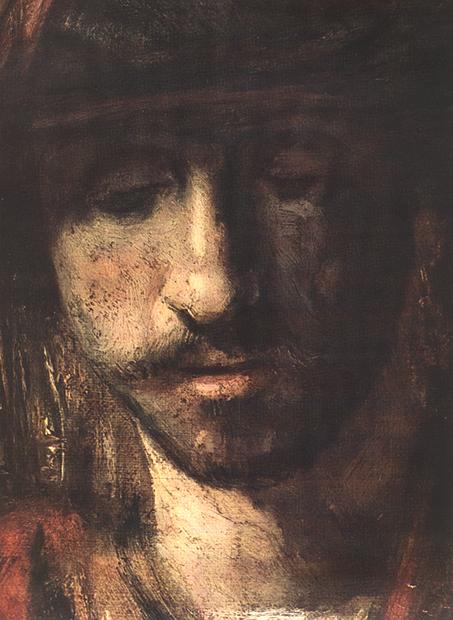
‘Prayer’, by Francisco X. Alarcón

I want a god
as my accomplice
who spends nights
in houses
of ill repute
and gets up late
on Saturdays

a god
who whistles
through the streets
and trembles
before the lips
of his lover

a god
who waits in line
at the entrance
of movie houses
and likes to drink
café au lait

a god
who spits
blood from
tuberculosis and
doesn’t even have
enough for bus fare

a god
knocked
unconscious
by the billy club
of a policeman
at a demonstration

a god
who pisses
out of fear
before the flaring
electrodes
of torture

a god
who hurts
to the last
bone and
bites the air
in pain

a jobless god
a striking god
a hungry god
a fugitive god
an exiled god
an enraged god

a god
who longs
from jail
for a change
in the order
of things

I want a
more godlike
god

– Francisco X. Alarcó, ‘Prayer’ in Body in Flames/Cuerpo En Llamas (trans. Francisco Aragón; San Francisco: Chronicle Books, 1990), 96–99.

[HT: Rose Marie Berger]

‘Love Is the True Pain’, by Geoffrey Bingham

Love is the true pain: true pain is the love
That lives not for itself, but for the love
Which has come to it. In God is pain.
God’s pain is not the anguish that destroys
The searing harshness that comes to Him
From the rebel spirit of Man
And celestials become demonic,
Leaving their first estate.
It is not the pain of jealousy
Made bitter by holy lips that press
Or teeth divine that bite
On acrid aloes of Man’s sin.
It is not the irrational anger
Against gods destroying the beauty
Of the original Man.
This is not pain divine,
But pain Man reads upwards from himself
Into the Eternal Love—Himself Who’s love,
As Love Himself.

Love is the true pain that searches out
The beleaguered spirit of lost Man,
That reaches out to where sin has confused,
Where will in its acrid anger—
Misplaced against the Deity—
Burns in its own acidic rage
Baffling its inward search and outward reaching
To what is the image in itself
Of the Divine Real—the true God,
The Being that is love Himself
Who in His heart implores all day
And into the reaches of eternal night
That Man return to Him, come home
To the Divine love that gives itself
On the timbers twisted by Man’s hate
Into Cross shape and Cross rages,
And Cross rejection.

On the Cross is the true pain, yet it began
Before even the creation of the
Purposed peerless Man, and the utter glory
Of the commanded creation. It always was
Without beginning, as it always is
Without cessation. Futurity
Is love come to the now-time,
And love taking what it loves
To the eternal time of love.
Love is the pain that kills
Forever all pain that brings to birth anew
That which had died to love—the spirit loved,
Breathed into Man until he glowed
As the living image, destined to become
The palpable glory of the Living God
From time into all eternity.

Was it that Man saw in the Reality—
In the One Whom he imaged—
The impossibility of no-pain,
The essential nature of the essential love
That must inevitably—though of free choice—
Reveal the mystery of its Being
In the timbered Cross, in the love-pain
That redeems the created beloved? Did Man
Know the full Nature when the serpent moved
To beguile the woman and entice through her
The knowledgeable man who chose
The path that would never know pain?
Was it rejection of love that is pain
Until that love brings through to no-pain
What it has created? If this be so
Then deception was deceived.

Love is a mystery—love that has pain—
And pain is a sad sorrow where love is refused,
When sharing in the divine Nature is rejected,
When Man seeks to kill pain out of his own sources
And turn the earth to manufactured anodynes
And tranquillising measures. Man fears pain,
But—deeper—fears the love that loves
Man in his pain, his deep distress self-wrought
And making spirit all awry in the matchless beauty
Of the granted gift—the joyous creation.

Faith leaves it there, even when the brain
Ponders the great imponderable;
Ruminates in the cud of the mind
The mystery that veils itself until it’s seen
On Calvary’s peerless hill. Here the true anger
Burns against evil, is a high furnace
That dissolves the dross: is a raging wrath
That knows love’s hate against the dread evil
Of the love-rejecters—both celestial and mundane—
Until all evil’s judged; until the pain
That wracks Man’s spirit is forever gone,
Banished into no-being and no-pain.
This is the love that is the true pain.

We then, who love, dare not escape—
Nor would we—from the heart of love.
This only moves us to the perpetual giving,
The never asking in return. Rageless we range
The hurts and haunts of men with the Divine balm
That brings its healing salve
To the lost and helpless spirits
He once encapsulated within his heart
That suffered the eternal pain
In the infinite compassing within the finite time,
All that was human lostness, human death
And human unknowing of the love that’s pain.

– Geoffrey C. Bingham, ‘Love Is the true pain’, in All Things of the Spirit (Blackwood: New Creation Publications, 1997), 106–08.

‘Staying Awake’, by Robert Cording

I’ve spent one third of my life asleep,
I read, and so I considered
how the drag and suck of Everyday
conspires against my waking—
jobs, meetings, grocery shopping,
house repairs and mortgages.

After I’d added on the dread of everything
I should have done but didn’t, or did,
and had things turn out the very way
I’d feared, I just wanted to lie back
and dream, but I made myself sit up
in my chair, which brought to mind

my grandmother who liked to tell me
at family dinners, if I didn’t sit up
straight, I’d become a hunch-back
as an old man, and now I was one,
at least in part, my shoulders slumping
forward, too heavy to hold up.

By then I was living in the past,
those dinners when all my grandparents
were alive, and my great-grandparents
on my mother’s side and all my aunts
and uncles. I was saying their names—
Anna, Henry, Eleanor, Emma, George—

when, of course, I fell asleep and dreamed
that someone was whispering,
Wake up! Wake up! in a room
that the afternoon sun had warmed,
but now was running out of light.
And still I did not wake up.

– Robert Cording, ‘Staying Awake’, in Walking with Ruskin: Poems (Fort Lee: Cavankerry, 2010), 7–8.

Jack Clemo, ‘On the Death of Karl Barth’

He ascended from a lonely crag in winter,
His thunder fading in the Alpine dusk;
And a blizzard was back on the Church,
A convenient cloak, sprinkling harlot and husk –
Back again, after all his labour
To clear the passes, give us access
Once more to the old prophetic tongues,
Peak-heats in which man, time, progress
Are lost in reconciliation
With outcast and angered Deity.

He has not gone silenced in defeat:
The suffocating swirl of heresy
Confirms the law he taught us; we keep the glow,
Knowing the season, the rhythm, the consummation.

Truth predicts the eclipse of truth,
And in that eclipse it condemns man,
Whose self-love with its useful schools of thought,
Its pious camouflage of a God within,
Is always the cause of the shadow, the fall, the burial,
The smug rub of hands
Amid a reek of research.

The cyclic, well-meant smothering
Of the accursed footprints inside man’s frontier;
The militant revival,
Within time and as an unchanged creed,
Of the eternal form and substance of the Word:
This has marked Western history,
Its life’s chief need and counter-need,
From the hour God’s feet shook Jordan.

We touched His crag of paradox
Through our tempestuous leader, now dead,
Who ploughed from Safenwil to show us greatness
In a God lonely, exiled, homeless in our sphere,
Since his footfall breeds guilt, stirs dread
Of a love fire-tongued, cleaving our sin,
Retrieving the soul from racial evolution,
Giving it grace to mortify,
In deeps or shallows, all projections of the divine.

– Jack Clemo, ‘On the Death of Karl Barth’ in The New Oxford Book of Christian Verse (ed. Donald Davie; Oxford/New York: Oxford University Press, 1988), 291–2.

Why poetry?

Tucked away in one of last year’s editions of Christian Century – an edition I picked up largely to read articles by John de Gruchy on Bonhoeffer, Clifford Green on Metaxas’ version of Bonhoeffer, and Stanley Hauerwas’ review of Peter Leithart’s Defending Constantine – is a delightful review (pp. 62–5) by Brian Doyle, of Mink River fame, on three books of poetry: Every Riven Thing by Christian Wiman, Swan by Mary Oliver and Walking Papers by Thomas Lynch. Doyle begins by ‘tiptoeing’ towards an answer to the question, ‘Why poetry?’ As someone who reads, and posts, a goodly number of poems, I thought his answer worth repeating:

‘Poetry is “memorable speech,” said the (great) poet Wystan Hugh Auden, “about birth, death, the Beatific Vision.” Or, in less lovely words: good poetry, great poetry, is the distilled salt and song of the way we speak; it is espresso speech, perhaps; it pierces and penetrates and illuminates, it makes us see fresh.

Poetry is crucial to us as human beings, for speaking memorably and listening ferociously is perhaps how we best evolve and pray powerfully and stutter toward grace and peace and joy, toward a world where no child weeps and violence is a dark memory. If we do not, as a species, speak memorably and listen ferociously, we have no horizon, no map, no theme. Think, for example, of a world in which the thin Jewish man Yeshua ben Joseph did not speak so colorfully and memorably of forgiveness and grace. Would we have come even this far toward the Light?

I know there are some among us who court silence as their prayer, but I cannot imagine a world shorn of the music of language, the dance of words, the mysterious ways that lines and sentences and images conspire to awaken and elevate and inspire us. Yes, inspire; how very many times have we been lifted by songs and poems, chants and litanies, a twist of words that exactly caught the way we felt but could not say? More times than we can ever count, yes?

So, if we are serious about attentiveness – which is to say, if we are hard at work spiritually – we read poetry on the chance that it might move and startle and illuminate us, that it might be memorable in ways that other written (and sung) language is not. This is why we are so often left cold by lesser poetry, because many poems are merely precious, allusive, self-conscious and self-absorbed without being memorable, moving, startling or accessible. Sometimes I think that great poetry is the highest literary art because it has to claw past such an ocean of terrible muck’.

‘Epiphany’, by R.S. Thomas

Three kings? Not even one
any more. Royalty
has gone to ground, its journeyings
over. Who now will bring

gifts and to what place? In
the manger there are only the toys
and the tinsel. The child
has become a man. Far

off from his cross in the wrong
season he sits at table
with us with on his head
the fool’s cap of our paper money.

– RS Thomas, ‘Epiphany’, in Collected Poems, 1945–1990 (London: Dent, 1993), 363.

‘First of January’, by Günter Eich

Only a calendar would start the day by talking about a new year,
the walls know damn well this isn’t the start of anything new.
Outside, as ever, the clouds blow past, light as hair,
and the wind rattles the windows with the same hands.

March and April will come, and eventually
a day will fill you with its endless hours;
along with the sky and the blown clouds
it will fall into your hands and your house.

Sometimes you catch your face at night in a mirror
obscurely filled with aging—
a faded envelope with unbroken seal,
stuffed always with the same script.

Every day is new and a jubilee,
but pain is a long way off ,
and of the celestial trophies
the only one in your possession is the evening star.

– Günter Eich, Angina Days: Selected Poems (trans. Michael Hofmann; Princeton/Oxford: Princeton University Press, 2010), 13.

2010: ‘It was the best of times …’

‘It was the best of times, it was the worst of times, it was the age of wisdom, it was the age of foolishness, it was the epoch of belief, it was the epoch of incredulity, it was the season of Light, it was the season of Darkness, it was the spring of hope, it was the winter of despair, we had everything before us, we had nothing before us, we were all going direct to heaven, we were all going direct the other way – in short, the period was so far like the present period, that some of its noisiest authorities insisted on its being received, for good or for evil, in the superlative degree of comparison only’. – Charles Dickens, A Tale of Two Cities.

Best books

Theology

Biography

Ministry

History

Cooking

Poetry

Best albums

1. Officium Novum by Jan Garbarek & The Hilliard Ensemble.
2. The Age of Miracles by Mary-Chapin Carpenter.
3. Foundling by David Gray.
4. Scratch My Back by Peter Gabriel.
5. Sacrificium by Cecilia Bartoli.
6. Women and Country by Jakob Dylan.
7. 100 Miles From Memphis by Sheryl Crow.
8. Great and Small by Butterflyfish.
9. Downtown Church by Patty Griffin.
10. No Better Than This by John Mellencamp.

Honorable mentions: All Delighted People by Sufjan Stevens; The Age of Adz by Sufjan Stevens; Leave Your Sleep by Natalie Merchant; Go by Jónsi; April Uprising by The John Butler Trio; The Promise by Bruce Springsteen; The Astounding Eyes of Rita by Anouar Brahem; American VI: Aint No Grave by Johnny Cash; San Patricio by The Chieftains & Ry Cooder; In Person & On Stage by John Prine; How I Learned to See in the Dark by Chris Pureka.

Best films

1. How I Ended This Summer
2. Winter’s Bone
3. Abandoned
4. The Infidel
5. Shutter Island
6. Boy

Overrated films

Worst films

Best TV shows

1. An Idiot Abroad (Series 1)
2. Rev

Some Personal Highlights

Les Murray on the Kingdom and limits of prose

‘… the Kingdom of God, which is not solely of this world, is slowly coming closer to being more clearly figured in this world … we who are not saints are caught up, not by God but by the logic of our choosing to delay sainthood, in a combat we keep thinking is new (or even Modern) because of the novel shapes and pressures it keeps presenting, a physiognomic struggle between those who somehow accept grace and those who bear the distorting strain of trying to block it off, to act without it or against it. This, I think, rather than the usual superficial divisions between Right and Left, Black and White, religious and irreligious etc, is where the real lines are drawn … But when I come to meditate on topics such as grace, I don’t finally trust myself to talk about them in prose. For the important stuff, I need the help of my own medium of poetry, which can say more things’. – Les A. Murray, A Working Forest: Selected Prose (Sydney: Duffy & Snellgrove, 1997), 146–7.

‘Hill Christmas’, by RS Thomas

They came over the snow to the bread’s
purer snow, fumbled it in their huge
hands, put their lips to it
like beasts, stared into the dark chalice
where the wine shone, felt it sharp
on their tongue, shivered as at a sin
remembered, and heard love cry
momentarily in their hearts’ manger.

They rose and went back to their poor
holdings, naked in the bleak light
of December. Their horizon contracted
to the one small, stone-riddled field
with its tree, where the weather was nailing
the appalled body that had asked to be born.

– RS Thomas, ‘Hill Christmas’, in Collected Poems, 1945–1990 (London: Dent, 1993), 290.

Advent VIII: ‘Advent’, by Trygve David Johnson

I am told that just before dawn,
there is a moment
when it is neither dawn nor night.
It is a blink after the dark
and a flash before the light.

It is promise of life held in an instant;
moving but not yet ours to see;
suspended between what was,
and what is yet to be.

We exist in this holy interregnum,
for the old is past, and behold a new day,
but not yet. Not yet.
In this moment between movements,
we strain and ache for the promised
joy that comes with the morning.

This is time between time,
a breath between days;
the rupture of epochs:
marking a border between the inauguration
and the consummation of all things.

Here, the Word whispers softly,
disturbing our sleep,
so that we might awaken
in the embrace of the son,
whose life is the light
that illuminates the world.

This is the moment when all is quiet
before creations sings.
A stillness heard so deeply
it is barely heard at all.

It is advent,
the silence
between notes.

Behold!

Trygve David Johnson, ‘Advent’. A Poem written for Hope College Vespers 2010, Dimnent Chapel.

[Image: Flandrum Hill]

Advent VII: ‘The Man Who Was a Lamp’, by John Shea

Legend says,
the cave of Christmas
where the child of light
burns in the darkness
is hidden
in the center of the earth.

Access is not easy.
You cannot just amble to a mantle,
note the craft of the crib child,
and return to the party for more eggnog.
You may see a figurine in this way,
but you will not find the child of light.
The center of the earth is not the surface.
You must journey
and, wayfarer,
you need a guide.

Even the Wise Men had to risk
the treacherous courts of Herod
to consult the map of Scripture.
They knew that a star, no matter how bright,
could not take them all the way
It is true
that sometimes angels hover in the sky
and sing directions,
but they cannot be counted on
to appear.
Besides, you are not one
to keep watch over a flock by night.

There is another pointer of the way,
a map of a man,
who when you try to read him,
reads you.
Unexpected angels are pussycats
next to this lion,
a roar that once overrode Judea.
You may not heed
but you will hear
his insistent,
intruding,
unsoothing voice.
Some say this thunder is because his father
stumbled mute from the Holy of Holies,
tongue tied by an angel who was peeved
by the old man’s stubborn allegiance to biological laws.
The priest was silenced in the temple
because he thought flesh could stop God.
The son of the priest shouted in the wilderness
because he feared God would stop flesh.
His open mouth was an open warning.

His name is John,
a man who was a lamp,
at least that is what Jesus said,
“a burning and shining lamp.”
The implication is clear:
The lamp is a torch through the darkness
to find the Light of the World.
As the lamp comes closer to the Light,
its radiance is overwhelmed.
It is in the presence of a stronger shining.
It decreases as the Light increases.
Yet there is no comparison.

The child cannot be found by competition.
The lamp and the Light meet
in the mystery of communion.
The two become one
while remaining two.
Follow John and find Jesus.
Find Jesus and find the Illness of John.

But John is not so easy to follow.
He is no toady
He lacks senility
and does not work for pay
In truth,
he is more guardian than guide,
more dragon at the gate than porter at the door,
more fire on the earth than lamp on a stand.
Opposite of the sought-after child in every way
The child is round,
this one has edges;
the child nurses on virgin’s milk,
this one crunches locusts;
the child is wrapped in swaddling clothes,
this one is rubbed raw by camel hair.
Yet they know one another
even exchange smiles.
They share a mystery,
this hairy man and smooth child.

Jesus came out of John
as surely as he came out of Mary.
John was the desert soil
in which the flower of Jesus grew.
John was the voice in the wilderness
who taught Jesus to hear the voice from the sky.
John would push sinners beneath the water
and Jesus would resurrect them on the waves.
John was the fast
who prepared for Jesus the feast.

No man ever less a shepherd than John,
yet loved by one.
If you are surprised that Jesus came from John,
imagine John’s prophetic puzzle
when the predicted “wrath to come” came
and he said, “Let’s eat!”
John expected an ax to the root of the tree
and instead he found a gardener hoeing around it.
He dreamt of a man with a winnowing fan and a fire
and along came a singing seed scatterer.
He welcomed wrathful verdicts,
then found a bridegroom on the bench.
When John said, “There is one among you
Whom you do not know,”
he spoke from experience.

So from prison
John sent his disciples to Jesus.
He will send you too.
Despite his reputation,
he is best at introductions.
It is simply who he is,
preparer, primer, pointer,
a tongue always on the verge of exclaiming,
“Behold!”

His question was, “Are you the One Who Is to Come
or should we look for another)”

This arrow of a question was sent from prison
but the bow was bent in the desert
by “none greater born of woman”
who was awake before the sun,
waiting,
watching the vipers flee before the morning
his eyes welcomed.

“Are you the One Who Is to Come”
is the question of John highway,
his road under construction,
hammer and pick and hardhat song,
“I have leveled a mountain
and raised a valley
to make even the path of the Lord!”

You
are the mountain
his sunburnt muscles
are slamming to cracked rock.
You
are the valley
his tattooed arms
are filling with broken earth.
He will trowel you to smooth,
and when there is no impediment,
when there is nothing in you
which would cause a child to trip,
you will yearn for someone to arrive
and ask the question
that guards the cave of Christmas,
“Are you the One Who Is to Come?”
So do not go fearfully
into John’s wilderness,
beaten from civilization by others
or driven by your own self-loathing.
Go simply because it is the abode
of wild beasts and demons
and, given all you are,
you will most certainly feel at home.
Wrestle with the rages of the soul,
talk to the twistedness.

Try no tricks on him.
Parade no pedigree.
Who you know will not help you.
If the children of Abraham and stones
have equal standing in his eyes,
you will not impress him
with anything you pull from your wallet.

Also do not ready your brain for debate.
He is not much for talk.
He has washed his mind with sand.
Injunctions are his game.
If you have two coats or two loaves of bread,
share them.
Do not bully,
do not exploit,
do not falsely accuse.
Do not object that these actions are
economically naive,
culturally inappropriate,
insufficiently religious.
Just do them.
Afterwards,
you will be unencumbered,
yet lacking nothing,
freer to move, to bend.
The entrance to the cave is low.

John’s desert is the place between slavery and promise,
out of Egypt but not yet in the waters of the Jordan,
Your sojourn there will burn away
the last marks of the shackles
and you will stand unfettered.
You will be between the castle and the crowd,
between fine garments and reeds shaken by the wind.
You will not lord it over others
and you will not be pushed around.
Prophet?
Yes, and more.
But in the thrill of freedom
it will take you a moment to notice
what that more is.
In the emptiness of John’s desert
you will find yourself waiting,
like a bowl that waits for wine,
like a flute that waits for breath,
like a sentinel that waits for the dawn.
You are a highway ready for traffic,
and here comes One
who seems also to have been waiting,
waiting for the construction to be complete.
The more is arriving,
and there is only one question,
“Are you the One Who Is to Come?”

Jesus answered,
“Go and tell John
what you see and hear.”

So they did.
The disciples of John returned on the night of Herod’s birthday
The music and laughter of the celebration
twisted down the stairs to the dungeon
beneath the earth.
They talked to John through the bars.
They could barely make him out
in the shadows.

“We saw a blind woman staring at her hand,
first the palm, then the back,
over and over again,
twisting it like a diamond in the sun,
weeping all the time and saying,
“I can see through tears! I can see through tears!”

We saw a lame man
bounce his granddaughter
on his knee.

We saw a leper
kiss her husband.

We saw a deaf boy
snap his fingers
next to his ear
and jump.

We saw a dead girl
wake and stretch
and eat breakfast.

The poor we saw
were not poor.

They paused.
Although there was no light in the dungeon,
there was a glow around John.
It softened the fierceness of his face
yet took no strength away
When he had preached on the banks of the Jordan,
they could not take their eyes off his fire.
Now this new light made them look down.
“Jesus said
we would be blest
if these sights did not scandalize us.

John was silent.
When he spoke,
the words had no urgency.
There was no strain in his voice.
It was no longer
the voice in the wilderness.
“The guards tell me that Herod,
panting,
has promised Salome
half a kingdom
if she will dance for him.
Surely she will ask for me
for I am half a kingdom.
I can denounce a king
but I cannot enthrone one.
I can strip an idol of its power
but I cannot reveal the true God.
I can wash the soul in sand
but I cannot dress it in white.
I devour the Word of the Lord like wild honey
but I cannot lace his sandal.
I can condemn the sin
but I cannot bear it away
Behold, the lamb of God
who takes away the sin of the world!

Yet he came to me
to go beyond me.
He entered the water
to rise out of it.
He knew I would know him when he came
even though I did not know him before he came.
The fulfillment is always more than the promise,
but if you hunger and thirst in the promise,
you will welcome the One Who Is Not You
as All You Are,
and more.
Go back
and tell Jesus
what you see and hear –
John,
not scandalized but fulfilled,
witness to his coming.

When you told me
what you saw and heard,
I knew who I was:
the cleanser of eyes but not the sight that fills them,
the opener of ears but not the word that thrills them.
A prophet?
Yes, and more.
Friend of the Bridegroom.
And more.
It was love in the desert and I did not know it.
It was love by the river and I did not know it.
It is love in this cave and now I know it.
Bridegroom myself!”

The guards clattered down the stairs,
their impotent swords drawn.
They pushed aside the disciples
and unlocked a dungeon of light
to find John dancing,
his feet moving to the long-ago memory
of womb kicks.
Who was about to lose his head to Herod
had lost his mind to God.

The cave of Christmas
is hidden
in the center of the earth.
You will need a lamp for the journey
A man named John
is a step ahead of you.
His torch sweeps the ground
so that you do not stumble.
He brings you,
at your own pace,
to the entrance of the cave.
His smile is complete,
perfect,
whole,
lacking nothing.

Inside
there is a sudden light,
but it does not hurt your eyes.
The darkness has been pushed back by radiance.
You feel like an underwater swimmer
who has just broken the surface of the Jordan
and is breathing in the sky
John is gone.
Notice
from whom the light is shining,
beloved child.

– John Shea, Starlight: Beholding the Christmas Miracle All Year Long (New York: Crossroad, 1993), 174–83.

Advent VI: ‘Gift’ by Marion Armstrong

Not then; and never since
Have we quite reached the stable, King and Prince,

Nor clearly seen the manger
As shepherd saw it, and as money-changer,

Nor worshiped with our hearts the small
Body which bore the weight of miracle;

But stand, have stood forever in our night
While the beloved Baby made of light

Sleeps in the stillness that his Father sent
Where animals’ eyes are eloquent.

And if (O God) I move from my self and come
And call the stable suddenly heaven and home

And bend my scarred unvirgin knee:

Receive, O Word, dumbstricken me.

– Marion Armstrong. ‘Gift’, The Christian Century, 22 December 1965, 1575.

‘A Small Ode on Mixed Flatting’, by James K. Baxter

Elicited by the decision of the Otago University authorities to forbid this practice among students

Dunedin nights are often cold
(I notice it as I grow old);
The south wind scourging from the Pole
Drives every rat to his own hole,
Lashing the drunks who wear thin shirts
And little girls in mini-skirts.
Leander, that Greek lad, was bold
To swim the Hellespont raging cold
To visit Hero in her tower
Just for an amorous half-hour.
And lay his wet brine-tangled head
Upon her pillow – Hush! The dead
Can get good housing – Thomas Bracken,
Smellie, McLeod, McColl, McCracken,
A thousand founding fathers lie
Well roofed against the howling sky
In mixed accommodation – Hush!
It is the living make us blush
Because the young have wicked hearts
And blood to swell their private parts.
To think of corpses pleases me;
They keep such perfect chastity.
O Dr Williams, you were right
To shove the lovers out of sight;
Now they can wander half the night
Through coffee house and street and park
And fidget in the dripping dark,
While we play Mozart and applaud
The angel with the flaming sword!
King Calvin in his grave will smile
To know we know that man is vile;
But Robert Burns, that sad old rip
From whom I got my Fellowship
Will grunt upon his rain-washed stone
Above the empty Octagon,
And say – ‘O that I had the strength
To slip yon lassie half a length!
Apollo! Venus! Bless my ballocks!
Where are the games, the hugs, the frolics?
Are all you bastards melancholics?
Have you forgotten that your city
Was founded well in bastardry
And half your elders (God be thankit)
Were born the wrong side of the blanket?
You scholars, throw away your books
And learn your songs from lasse’s looks
As I did once – ‘Ah, well; it’s grim;
But I will have to censor him.
He liked to call a spade a spade
And toss among the glum and staid
A poem like a hand grenade –
And I remember clearly how
(Truth is the only poet’s vow)
When my spare tyre was half this size,
With drumming veins and bloodshot eyes
I blundered through the rain and sleet
To dip my wick in Castle street.
Not on the footpath – no, in a flat,
With a sofa where I often sat,
Smoked, drank, cursed, in the company
Of a female student who unwisely
Did not mind but would pull the curtain
Over the window – And did a certain
Act occur? It did. It did.
As Byron wrote of Sennacherib –
‘The Assyrian came down like a wolf on the fold
And his cohorts were gleaming in purple and gold’ –
But now, at nearly forty-two,
An inmate of the social zoo,
Married, baptized, well heeled, well shod,
Almost on speaking terms with God,
I intend to save my moral bacon
By fencing the young from fornication!
Ah, Dr Williams, I agree
We need more walls at the Varsity;
The students who go double-flatting
With their she-catting and tom-catting
Won’t ever get a pass in Latin;
The moral mainstay of the nation
Is careful, private masturbation;
A vaseline jar or a candle
Will drive away the stink of scandal!
The Golden Age will come again –
Those tall asthenic bird-like men
With spectacles and lecture notes,
Those girls with wool around their throats
Studying till their eyes are yellow
A new corrupt text of Othello,
Vaguely agnostic, rationalist,
A green banana in each fist
To signify the purity
Of educational ecstasy –
And, if they marry, they will live
By the Cardinal Imperative:
A car, a fridge, a radiogram,
A clean well-fitted diaphragm,
Two-and-a-half children per
Family; to keep out thunder
Insurance policies for each;
A sad glad fortnight at the beach
Each year, when Mum and Dad will bitch
From some half-forgotten itch –
Turn on the lights! – or else the gas!
If I kneel down like a stone at Mass
And wake my good wife with bad dreams,
And scribble verse on sordid themes,
At least I know man was not made
On the style of a slot-machine arcade –
Almost, it seems, the other day,
When Francis threw his coat away
And stood under the palace light
Naked in the Bishop’s sight
To marry Lady Poverty
In folly and virginity,
The angels laughed – do they then weep
Tears of blood if two should sleep
Together and keep the cradle warm?
Each night of earth , though the wind storm
Black land behind, white sea in front,
Leander swims the Hellespont;
To Hero’s bed he enters cold;
And he will drown; and she grow old –
But what they tell each other there
You’ll not find in a book anywhere.

1967


– James K. Baxter, ‘A Small Ode on Mixed Flatting’ in Collected Poems (ed. John Edward Weir; Wellington: Oxford University Press, 1979), 396–99.

‘Change of Address’

Recently, I participated in a group reading of Luke’s account of Jesus’ death. I was struck by the change in tone and of heart of the second criminal crucified with Jesus. One moment, he was with the crowds in their hurls of abuse; the next he was questioning the justice associated with his own death and asking Jesus to remember him when Jesus came into his kingdom.

What brought about this incredible change in the criminal? I wondered if it might be simply the first word that Jesus spoke in the interim – the word ‘Father’, and the fact that in that simple address this man was given a glimpse into the deepest truth of all reality.

Perhaps like many prisoners, this man too had a lousy relationship with his earthly father. Perhaps like all of us, to hear (i.e., to really hear, and so to be overcome by the crisis that comes in that hearing) that we are forgiven even though we don’t know what we are doing cuts right through all our defenses. (So PT Forsyth: ‘The greatest, last, humanest, passion is the passion to be forgiven’). Perhaps we will never know. And perhaps that doesn’t matter. What does matter, though, is the transformation experienced in this briefest of exchanges. A wee poem attempts to capture something of this transformation:

Change of Address

The mob, by this time, was blood-crazed,
choler coupled with the shame of betraying ‘innocent blood’,
tempestuous with fury against a God way too human.

And two brigands – one on his right and one on his left –
were also there, their antisocial terror
flaring into blasphemous howls.

They joined the rest – sibilating the fruit of irrational rage:
‘If you are the Son of God, come down from the cross’. But a night in
the garden had closed that possibility.

And now, lifted up on the mob’s violent altar,
amid swells of vengeance fueled by power’s lusts
a prayer: ‘Father, forgive them …’.

Abruptly, and with all the violence of a different nature
one neighbour fell silent. His ire ended;
his soft confession birthed.

Could it be that something in that cry – ‘Father’ –
untwisted his tangled self,
broke open the truth of all things?

Father?
Father?
Father?

Where am I?

© Jason A. Goroncy
17 November 2010

Advent III: ‘Advent Calendar’, by Rowan Williams

He will come like last leaf’s fall.
One night when the November wind
has flayed the trees to bone, and earth
wakes choking on the mould,
the soft shroud’s folding.

He will come like frost.
One morning when the shrinking earth
opens on mist, to find itself
arrested in the net
of alien, sword-set beauty.

He will come like dark.
One evening when the bursting red
December sun draws up the sheet
and penny-masks its eye to yield
the star-snowed fields of sky.

He will come, will come,
will come like crying in the night,
like blood, like breaking,
as the earth writhes to toss him free.
He will come like child.

– Rowan Williams, The Poems of Rowan Williams (Grand Rapids: Wm. B. Eerdmans, 2004), 31.

Advent II: ‘The Waiting’, by RS Thomas

Are there angels or only
the Furies? We sleep
on a stone pillow
and the troubles of Europe
are the molecules that
compound it. Where is
the ladder or that heavenly
traffic that electrified Jacob?

We wrestle with somebody,
something which withholds its name.
How is the anonymous
disposed? The enemy is without
number; is there an infiltration
of its forces by one not
indifferent to the human?
Though genes have their war,

yet the smiling goes on
from cradle to cradle.
Our experiments are repeatable,
but what is love the precipitate
of? We have eaten of a tree
whose foliage is radioactive
and the autumn of
its fall-out is upon our children.

Why, then, of all possible
turnings do we take
this one rather than that,
when the only signs discernible
are what no one has erected?
Is it because, at the road’s
ending, the one who is as a power
in hiding is waiting to be christened?

– RS Thomas, Collected Later Poems (Highgreen: Bloodaxe, 2004), 268.

‘Lord of the molecule’, by R.S. Thomas

Lord of the molecule and the atom
are you Lord of the gene, too?

An ancestor mingled his sperm
with the ovum and here is a warped life.

Were they so wrong who thought, when
it thundered, you were in a rage?

What is it, when the sky twitches
with lightning, but mimicry of your grimace?

I have seen the jay, that singer
out of tune, helping itself

to a morsel out of the lark’s nest,
and you beamed down imperturbably as the sun.

We are used by the bacteria.
I have known the Chattertons and the Keats’

acting as porters of their obscene luggage.
What makes you God but the freedom

you have given us to bellow our defiance
at you over the grave’s maw, or to let

silence ensue so deliberately
as to be taken for an Amen.

– R.S. Thomas, Counterpoint (Newcastle upon Tyne: Bloodaxe Books, 1990), 51.