Poetry

‘A Poem For the End of the Century’, by Czesław Miłosz

When everything was fine
And the notion of sin had vanished
And the earth was ready
In universal peace
To consume and rejoice
Without creeds and utopias,

I, for unknown reasons,
Surrounded by the books
Of prophets and theologians,
Of philosophers, poets,
Searched for an answer,
Scowling, grimacing,
Waking up at night, muttering at dawn.

What oppressed me so much
Was a bit shameful.
Talking of it aloud
Would show neither tact nor prudence.
It might even seem an outrage
Against the health of mankind.

Alas, my memory
Does not want to leave me
And in it, live beings
Each with its own pain,
Each with its own dying,
Its own trepidation.

Why then innocence
On paradisal beaches,
An impeccable sky
Over the church of hygiene?
Is it because that
Was long ago?

To a saintly man
–So goes an Arab tale–
God said somewhat maliciously:
“Had I revealed to people
How great a sinner you are,
They could not praise you.”

“And I,” answered the pious one,
“Had I unveiled to them
How merciful you are,
They would not care for you.”

To whom should I turn
With that affair so dark
Of pain and also guilt
In the structure of the world,
If either here below
Or over there on high
No power can abolish
The cause and the effect?

Don’t think, don’t remember
The death on the cross,
Though everyday He dies,
The only one, all-loving,
Who without any need
Consented and allowed
To exist all that is,
Including nails of torture.

Totally enigmatic.
Impossibly intricate.
Better to stop speech here.
This language is not for people.
Blessed be jubilation.
Vintages and harvests.
Even if not everyone
Is granted serenity.

– Czesław Miłosz, ‘A Poem For the End of the Century’, in Provinces (trans. Robert Hass; Manchester: Carcanet, 1993), 42–44.
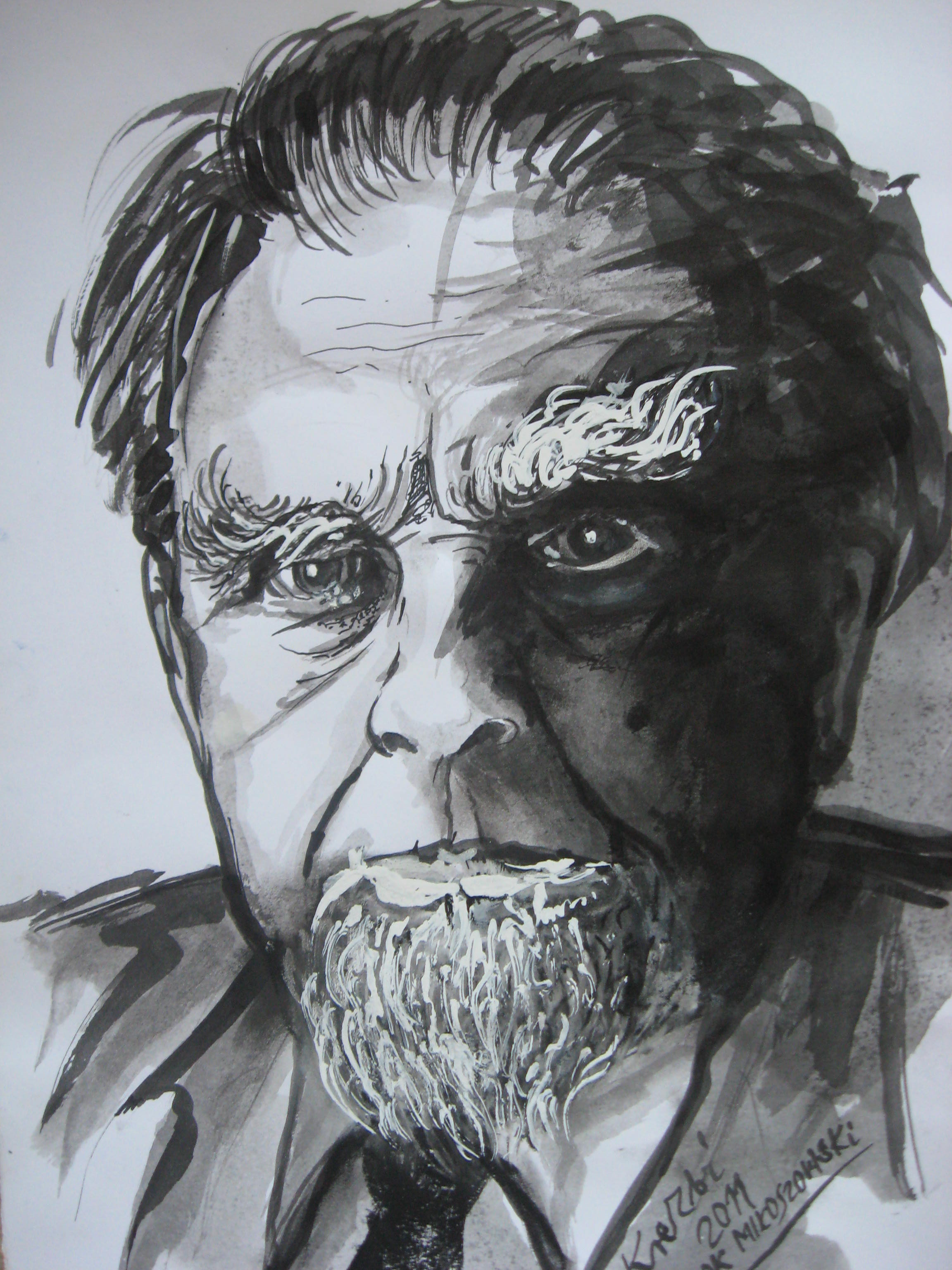
‘A Song On The End Of The World’, by Czesław Miłosz

On the day the world ends
A bee circles a clover,
A fisherman mends a glimmering net.
Happy porpoises jump in the sea,
By the rainspout young sparrows are playing
And the snake is gold-skinned as it should always be.

On the day the world ends
Women walk through the fields under their umbrellas,
A drunkard grows sleepy at the edge of a lawn,
Vegetable peddlers shout in the street
And a yellow-sailed boat comes nearer the island,
The voice of a violin lasts in the air
And leads into a starry night.

And those who expected lightning and thunder
Are disappointed.
And those who expected signs and archangels’ trumps
Do not believe it is happening now.
As long as the sun and the moon are above,
As long as the bumblebee visits a rose,
As long as rosy infants are born
No one believes it is happening now.

Only a white-haired old man, who would be a prophet
Yet is not a prophet, for he’s much too busy,
Repeats while he binds his tomatoes:
There will be no other end of the world,
There will be no other end of the world.

– Czesław Miłosz, ‘A Song On The End Of The World’, in Czesław Miłosz, ed., Postwar Polish Poetry: an anthology (Berkeley/Los Angeles: University of California Press, 1983), 76–77.

≈≈≈≈

Need more Miłosz? Here’s a video of him reading some of his poetry, and talking about the poetry of Blake and Ginsberg:

‘Dictionaries of National Biography’, by Brian Turner

My father’s father, quirky
and inquisitive till the end,
was the first to tell me

you never stop learning.
Well, I don’t know about you
but this fine December morrning

I learnt that Krishna Menon
was deemed devastatingly’
attractive to women, Jane Austen

showed few signs of having
much of a sense of humour,
Florence Nightingale, the Lady

with the Lamp, was ‘a good mimic’
and Thomas Batty, the first man
to train an elephant to stand

on its head, died in a lunatic
asylum. Also, the not always grand
Duke of York succumbed

to dropsy. So what about me,
then, as 62 approaches?
As my father caustically said

each time he saw me
for months before he died,
I need a haircut.

‘Presbyterian Support Services’, by Brian Turner

It seems a wan place to be
perhaps because you’re surrounded by discards
and you’re aware that some would say
you could do with sprucing up yourself …
which, by certain standards of the day –
what others are there? – is true.

The down-at-heel often seem
stripped of pride in their appearance
was what your spic father intoned,
asserting they lacked that cluck of self-esteem,
and though money’s sure as hell
not everything, what do you do
when you haven’t got much of it
except rummage about in an op shop
where there’s more hush than hurrah?

You guess there’s no pat answer
and while most of the clothes
have a lot of life left in them
they are dulled by their failure
to disclose the dramas
they were party to. Not only that,
you’re nagged by the thought
that the last time
you bought a pair of jeans here
a female friend wondered if you knew
they were really a woman’s
and you ought to have known that
by the waist measurement
and the size of the arse.

‘July, Carey’s Bay’, by Brian Turner

(visiting Cilla)

A storm was forecast but had not arrived
by the time I had to leave. You said, surprised,
What a beautiful night. You said it twice
as we stood on your verandah and listened

to the sou’wester gusting in the trees,
watched it burring the silver waters
of the harbour all the way from Carey’s Bay
to Taiaroa and reaches beyond my comprehension;

the light on the sea sounding (if one can
hear
light) like cow bells tinkling
across a white field. In the oil-stained bay
yachts swung on their moorings, straining,

and I hoping to be home
before the first wild shower of rain.

– from Listening to the River (Dunedin: McIndoe, 1983).

‘From Bracken’s Lookout, Dunedin’, by Brian Turner

…Who ever saw
The limit in the given anyhow?
 – Seamus Heaney

Just what you’d expect of a lookout
named after a poet
whose best-known phrase is ‘Not understood’,

the carpark on the first step of the hill
to Opoho is sited so we sit
with backs to the cemetery,

where Bracken’s remains are buried,
facing the city that’s encircled
by sea and high hills.

We’re in between here, and so much
that’s past and present is taut
with a longing for permanence,

immortality seeming out of the question,
though I’m old enough to know
there are ghosts yet to be laid to rest

in the shadowed streets below.
What we have here’s random selection,
the language of hereafter and begetting,

and what’s given is what we sense
and nothing else. Extravagance
is not part of a southern legacy

and all know what ‘for better or worse’
means, and the phrase
‘what goes up must come down’

always raises a smile, is oddly regenerative.
I loiter, lost and found,
and watch the birds – for whom

everything depends on the given –
swing back and forth in the late sun
scribing arcs of a pendulum.

– Brian Turner, ‘From Bracken’s Lookout, Dunedin’, in Taking Off (Wellington: Victoria University Press, 2001), 84–5.

‘Semi-Kiwi’, by Brian Turner

The barn roof needs painting
and the spouting is ruined.
Likewise the roof of this house
in which we live, borer here,
rot there. I’m neither handy
in the great Kiwi DIY tradition,
nor monied, which rather leaves
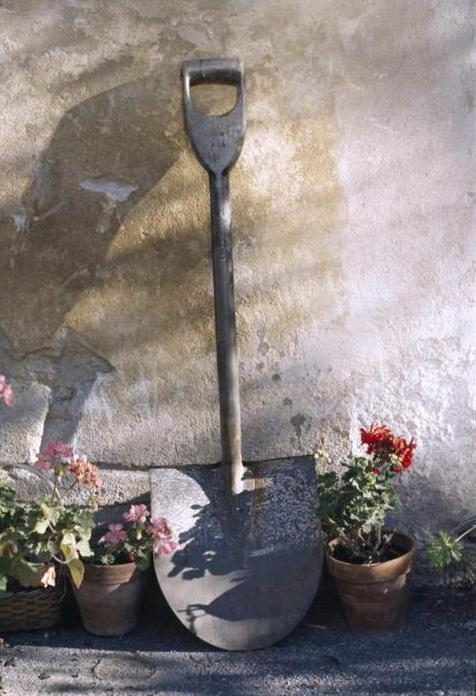
us up shit creek without a shovel.
I grub to find what Stevens called
the ‘plain sense of things’
and come up empty-handed
more often than not, but
I’m a dab-hand at recognising,
if not suppressing, self-pity,
and I can back a trailer
expertly, so all is not lost.

– Brian Turner, ‘Semi-Kiwi’, in Taking Off (Wellington: Victoria University Press, 2001), 17.

‘Some reasons why I got this job’, by Brian Turner

Because I’m charming, elegant, gracious.
Cultivated, strapping, and look good on the box.
Because I haven’t appeared on
This Is Your Life.
Because I don’t sit up late
and watch sad movies on TV.
Because I’ve given the effigies to charity
and thrown away the pins.
Because I’m fast on the bike
and cast very nicely when standing
in ripples in high country streams.
Because footie’s no more important than art.
Because there’s love in a cool climate.
Because I accept that we just have to live with sandflies.
Because, when Americans began talking loudly
outside the motel window at 6:15 this morning
they weren’t threatened with weapons of mass destruction.
Because I’ve been surprised by what I’ve written
and perseverance isn’t to be sneezed at
except when caught in the middle of a bull paddock.
Because there’s no good reason to give up trying
to do the decent thing, now and again.
Because annoyance or irritation
make more sense than anger and outrage.
Because there’s room to do better.
Because we’re not yet lost nor found.
Because my grandmother was scared I was drawn
to depravity, and her husband told me
if I wasn’t careful I’d become an anathema.
Because … because this is not the sort of poem
I’m said to write. Or is it?

– Brian Turner, ‘Some reasons why I got this job’. New Zealand Listener, March 15, 2003.

‘On Top of the World’, by Brian Turner

‘On Top of the World’
(for Kila Hepi)

The days seem longer all of a sudden
now that August’s here
and inventions become realities
ingrained.

Riding between Wedderburn
and Hills Creek we’re on top
of the world, my young friend Kila
and I, the clouds like white drapery
spilling down the mountains,
and the sun’s like acclamation
strobing the downs. And the angels
in their white dresses
kick their bangled heels
and dabble their feet
in the ever blue blue.

It seems that the purer
the air the greater one’s ardour.
We stop and listen for the songs
of air and water and I swear
I heard the rapt sounds
of angels singing, not of Paradise lost
but Paradise now.

[Image: Tony Bridge]

‘Place’, by Brian Turner

Once in a while
you may come across a place
where everything
seems as close to perfection
as you will ever need.
And striving to be faultless
the air on its knees
holds the trees apart,
yet nothing is categorically
thus, or that, and before the dusk
mellows and fails
the light is like honey
on the stems of tussock grass,
and the shadows are mauve birthmarks
on the hills.

– Brian Turner, All That Blue Can Be (Dunedin: John McIndoe, 1989).

‘Sadness and Shadow’, by Brian Turner

Few would doubt that New Zealand punches well above its weight in a number of areas, not least of which is poetry. Since arriving in this land, I have made a concerted effort to better understand its story. And while reading some the significant and lesser-known histories has been indispensable to that end, no less so has been familiarising myself with this land’s painters, sculptors, musicians, novelists and poets. Of the latter, I have particularly enjoyed work by Ursula Bethell, Glenn Colquhoun, C.K. Stead, Cilla McQueen and, of course, James K. Baxter. Recently, I also discovered the work of Dunedin-born poet Brian Turner, who was just conferred with an honorary doctorate by the University of Otago. Anyway, I’ve decided that this week here at Per Crucem ad Lucem I’ll be posting poems by Turner. Enjoy. Here’s the first:

Sadness and Shadow

The one known as The Leader said
If we can discern the difference
Between sadness and shadow
we’ll have unlocked the doors to peace.

So they trooped off into the hills
to a hut at the head of a tussocky valley
with snarls of matagouri in the gulleys
and vast shields of scree like grey-blue tunics
on the mountains all round.

And there they stayed. The sun shone
without libation, the wind blew whoo
under the edges of the roofing iron.
On nights when the moon was bright
mica sparkled in schist by the river.

In winter they went to be early
leaving the fire to burn sIowly
through the night, a dervish,
and the river muttered and shrank.
Mice scurried along rafters and squeaked.

Weeks went by. No one wanted to be first
to say it was time to go home. One
by one they died forlorn, unenlightened,
wondering where, exactly, they’d
come from, and if anyone was still there
wittering on about free trade
and indigenous rights, prostitution,
rugby and the demise of Friday Flash.

Bewildereds couldn’t understand why
technological advances hadn’t solved
age-old questions, removed dilenmma,
or why even the brightest people stumbled
when faced with the conflict between
personal expression and social obligation.

Eventually the sole survivor
walked out of the hills
but couldn’t find one familiar face,
so she returned to the hut
in the mountains and buried
the remains of her friends,
and she lay down beside sadness
and shadow and waited to hear
the lilting sounds of peace on the wind.


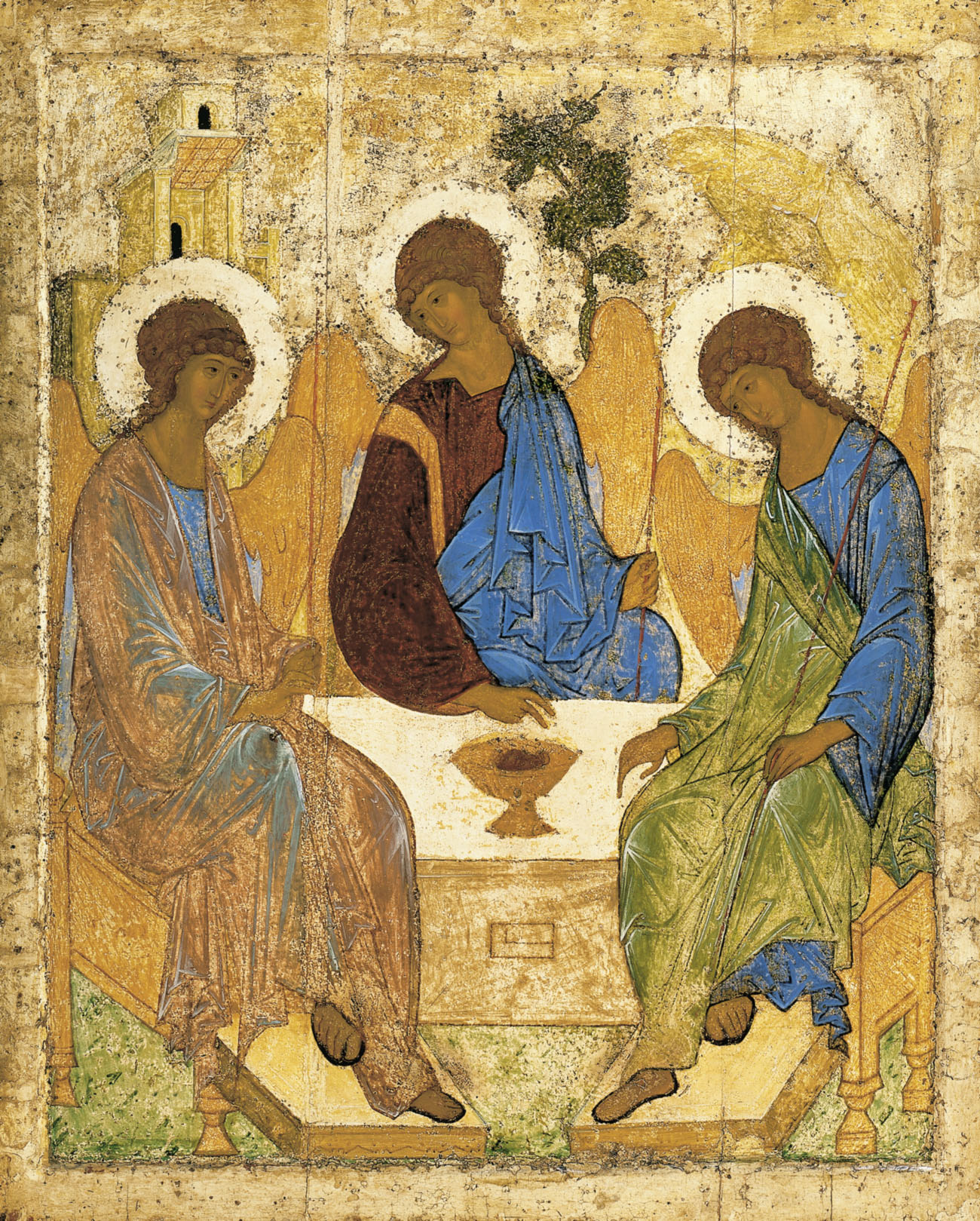
‘Rublev’, by Rowan Williams

One day, God walked in, pale from the grey steppe,
slit-eyed against the wind, and stopped,
said, Colour me, breathe your blood into my mouth.

I said, Here is the blood of all our people,
these are their bruises, blue and purple,
gold, brown, and pale green wash of death.

These (god) are the chromatic pains of flesh,
I said, I trust I shall make you blush,
O I shall stain you with the scars of birth

For ever, I shall root you in the wood,
under the sun shall bake you bread
of beechmast, never let you forth

To the white desert, to the starving sand.
But we shall sit and speak around
one table, share one food, one earth.

– Rowan Williams, ‘Rublev’ in After Silent Centuries (Oxford: The Perpetua Press, 1994).

‘My Novices: late 1950s’, by Brother Paul Quenon

Young men came
looking for
–don’t know what–
Left the place
looking for
–don’t know what–
Of these I had no regrets.

Some came, seemed like
looking–
heard some talk about
–what–
stayed awhile
and left
talking like– Well,–
like somewhat.

Serious young men came looking.
took up talk about,
–don’t know what,
stayed long and left
talking
about everything what-not.

Some came completely
clear and sure about
what–
Those I sent away.

Silent young men, a few,
came looking for–
don’t know what–
stayed
and kept on looking
stayed and never got to
what–
wore out,
died,
had never stopped looking for
what–
For these I have no regrets.

All of these I loved, but
seems the part I loved the best
was–
don’t know what–

[HT: PBS Religion & Ethics]

‘Emmaus’, by Bruce Prewer

We walked into the sunset
brooding our deep loss,
sure that the best days of our lives
lay dead behind us.

We talked around the rumours
spread by our small group,
but feared to embrace the good news
lest it be false hope.

A stranger then overtook us,
travelling our road,
he unfolded the truths and loves
our grief had betrayed.

Our hearts trembled within us
for the faith we’d lost,
we reached an inn at sundown
wanting to break fast.

We sat at table together
to share cheese and bread,
he took up the loaf and broke it
and out danced the dead!

– Bruce Prewer, ‘Emmaus’ in Beyond Words: Reflections on the Gospel of Luke (Melbourne: The Joint Board of Christian Education, 1995), 62.

‘How To Kill’, by Keith Douglas

Under the parabola of a ball,
a child turning into a man,
I looked into the air too long.
The ball fell in my hand, it sang
in the closed fist: Open Open
Behold a gift designed to kill.

Now in my dial of glass appears
the soldier who is going to die.
He smiles, and moves about in ways
his mother knows, habits of his.
The wires touch his face: I cry
NOW. Death, like a familiar, hears

And look, has made a man of dust
of a man of flesh. This sorcery
I do. Being damned, I am amused
to see the centre of love diffused
and the wave of love travel into vacancy.
How easy it is to make a ghost.

The weightless mosquito touches
her tiny shadow on the stone,
and with how like, how infinite
a lightness, man and shadow meet.
They fuse. A shadow is a man
when the mosquito death approaches.

– Keith Douglas, ‘How To Kill’ in Keith Douglas: The Complete Poems (ed. Desmond Graham; London: Faber & Faber, 2000), 119.

‘Not the empty tomb’, by R.S. Thomas

Not the empty tomb
but the uninhabited
cross. Look long enough
and you will see the arms
put on leaves. Not a crown
of thorns, but a crown of flowers
haloing it, with a bird singing
as though perched on paradise’s threshold.

We have over-furnished
our faith. Our churches
are as limousines in the procession
towards heaven. But the verities
remain: a de-nuclearised
cross, uncontaminated
by our coinage; the chalice’s
ichor; and one crumb of bread
on the tongue for the bird-like
intelligence to be made tame by.

– R.S. Thomas, Counterpoint (Newcastle upon Tyne: Bloodaxe Books, 1990), 37.

‘Lines to Dr Walter Birk on his Retiring from General Practice’, by W.H. Auden

When you first arrived in Kirchstetten, trains had
long been taken for granted, but electric
light was still a surprise and as yet no one
had seen a tractor.

To-day, after forty-five years, as you leave us,
autobahns are a must, midwives are banished
and village doctors become museum pieces
like the horse-and-buggy.

I regret. The specialist has his function, but
to him we are merely banal examples of
what he knows all about. The healer I have faith in is
someone I’ve gossipped

and drunk with before I call him to touch me,
someone who admits how easy it is to misconsider
what our bodies are trying to say, for each one
talks in a local

dialect of its own which can alter during
its lifetime: so children run high fevers on
slight provocation, while the organs of old men
suffer in silence.

When summer plumps again, our usual sparrows
will phip in the eaves of the patulous chestnuts
near your old home, but none will ask: “Is Dr.
Birk around to hear me?”

For nothing can happen to birds that has not
happened before: we though are beasts with a sense of
real occasion, of beginnings and endings,
which is the reason

we like to keep our clocks punctual, as Nature’s
never is. Seasons she has, but no Calendar:
thus every year the strawberries ripen
and the autumn-crocus

flares into blossom on unpredictable
dates. Such a Schlamperei cannot be allowed an
historian: with us it’s a point of honor
to keep our birth-days

and wedding-days, to rejoice or to mourn, on
the right one. Henceforth the First of October
shall be special for you and us, as the Once when
you quit the Public

Realm to private your ways and snudge in a quiet
you so deserve. Farewell, and do not wince at
our sick world: it is genuine in age to be
happily selfish.

– Wystan Hugh Auden, ‘Lines to Dr Walter Birk on his Retiring from General Practice’, in Epistle to a Godson, and Other Poems (New York: Random House, 1972), 10–11.