 ‘It is the business of a poet, I think, to be destitute as well as honest. He may have money; but he should recognise that it is dirt. He may have prestige; but let him hate it and wear it like an old filthy coat. Then he may be able to stay awake a little better. Love will not harm him, though. It will slice him open like a fish, and hang him by the heels, and let the sun into his private bag of dreams and idiot ambitions. He will think he is dying when he is just beginning to wake up’. – James K. Baxter, cited in Paul Millar, Spark to a Waiting Fuse: James K. Baxter’s Correspondence with Noel Ginn (Wellington: Victoria University Press, 2001), 72.
Poetry
James K. Baxter: ‘Rocket Show’
 ‘Rocket Show’
As warm north rain breaks over suburb houses,
Streaming on window glass, its drifting hazes
Covering harbour ranges with a dense hood:
I recall how eighteen months ago I stood
Ankle-deep in sand on an Otago beach
Watching the fireworks flare over strident surf and bach,
In brain grey ash, in heart the sea-change flowing
Of one love dying and another growing.
For love grows like the crocus bulb in winter
Hiding from snow and from itself the tender
Green frond in embryo; but dies as rockets die
(White sparks of pain against a steel-dark sky)
With firebird wings trailing an arc of grief
Across a night inhuman as the grave,
Falling at length a dull and smouldering shell
To frozen dunes and the wash of the quenching swell.
There was little room left where the crowd had trampled
Grass and lupin bare, under the pines that trembled
In gusts from the sea. On a sandhillock I chose
A place to watch from. Then the rockets rose,
O marvellous, like self-destroying flowers
On slender stems, with seed-pods full of flares,
Raining down amber, scarlet, pennies from heaven
On the skyward straining heads and still sea-haven.
Had they brought death, we would have stood the same,
I think, in ecstasy at the world-end flame.
It is the rain streaming reminds me of
Those ardent showers, cathartic love and grief.
As I walked home through the cold street by moon-light,
My steps ringing in the October night,
I thought of our strange lives, the grinding cycle
Of death and renewal come to full circle,
And of man’s heart, that blind Rosetta stone,
Mad as the polar moon, decipherable by none.
– James K. Baxter, Collected Poems (ed. John Edward Weir; Oxford: Oxford University Press, 1981), 81.
James K. Baxter: ‘A Pair of Sandals’
 A Pair of Sandals
A pair of sandals, old black pants
And leather coat – I must go, my friends,
Into the dark, the cold, the first beginning
Where the ribs of the ancestor are the rafters
Of a meeting house – windows broken
And the floor white with bird dung – in there
The ghosts gather who will instruct me
And when the river fog rises
Te ra rite tonu te Atua –
The sun who is like the Lord
Will warm my bones, and his arrows
Will pierce to the centre of the shapeless clay of the mind.
Hemi.
James K. Baxter
‘Painting the fall’
 His canvases sagged with decay,
.
each a small shrine to imperfection, dereliction
infecting its seams and squares, left brittle
.
and opens, oils a fecund messenger.
a chorus if sores in line. It had to fester, like
.
damaged flesh, and drink from this corrupt well.
All the world was simply vaudeville.
*
His bankruptcy was inevitable.
What market is there for such things?
Ruin is not a commodity so much
.
as a global condition. Unnecessary
to be so reminded, ruin arriving for each of us.
Set aside for sufficient time.
*
There is a poetry of despair, a paean
to blotched faces and rotten meat.
.
That was not his style.
He sought the itch of existence, the very point
.
where life went off, irretrievably,
and lost its balance.
.
What he thought of as the honesty of disintegration.
.
– Tom Weston, ‘Painting the fall’, in Small Humours of Daylight (Wellington: Steele Roberts & Associates, 2008).
Redressing an ancient land
 I was encouraged to read in the latest edition of The Expository Times a wee reflection on Australia’s recent apology to the stolen generations (which I have posted about here, here, and here) by William Loader (Murdoch University, Perth) on ‘Australia’s Day of Apology to the Stolen Generations of its Indigenous Peoples (13th February 2008)’. The article begins with this moving poem:
The tears touch the red dust beneath our feet
changing the colour of our land.
The cries of children forcibly removed
and mothers running behind parting cars
echo today in Australia’s parliament.
The drought of denial is broken,
the stories heard at the highest level.
Old men and women, first peoples
– and some still in their thirties –
who bear the wounds, respond to heal the nation,
embracing the bipartisan apology,
bringing a coolamon, cradle for newborns,
container of nourishment,
to the heart of government,
a symbol of new beginning.
Rejoice, peoples of the world, in our tears!
Celebrate our pain, our being born again to new hope!
Watch over our grief and our setting out afresh
to bring justice and hope,
to walk and work with the ancient peoples of this land,
to rebuild a nation with reconciliation
and engagement which brings seeds to life,
sees the deserts bloom,
and builds firm trunks and mighty trees across our land.
The tears will dry.
The pain will always remain.
No equation can right the wrongs.
No need to fear or deny memory,
but only to welcome new possibilities,
let life burst from the burning,
fresh shoots from charred remains,
and the beauty of diversity and change
redress our ancient land.
Loverd, thou clepedest me
Loverd, thou clepedest me, [Lord, you called me]
And ich noght ne answarede thee [ich I]
Bute wordes slow and slepye: [Bute except]
“Thole yet! Thole a litel!” [Thole wait]
Bute “yet” and “yet” was endelis,
And “thole a litel” a long way is.
– Anonymous, ‘Loverd, thou clepedest me’, in Aspetti della letteratura latina nel secolo XIII (ed. Anastasia Pasquinelli; Firenze: La Nuova Italia, 1986), 317.
DH Lawrence: ‘Song of a Man Who Has Come Through’
 Not I, not I, but the wind that blows through me!
A fine wind is blowing the new direction of Time.
If only I let it bear me, carry me, if only it carry me!
If only I am sensitive, subtle, oh, delicate, a winged gift!
If only, most lovely of all, I yield myself and am borrowed
By the fine, fine wind that takes its course through the chaos of the
world
Like a fine, an exquisite chisel, a wedge-blade inserted;
If only I am keen and hard like the sheer tip of a wedge
Driven by invisible blows,
The rock will split, we shall come at the wonder, we shall find the
Hesperides.
Oh, for the wonder that bubbles into my soul,
I would be a good fountain, a good well-head,
Would blur no whisper, spoil no expression.
What is the knocking?
What is the knocking at the door in the night?
It is somebody wants to do us harm.
No, no, it is the three strange angels.
Admit them, admit them.
– David Herbert Lawrence, ‘Song of a Man Who Has Come Through’, in Complete Poems (ed. Vivian de Sola Pinto and F. Warren Roberts; New York: Penguin Classics, 1994), 250.
Goodfriday, 1613. Riding Westward
Let man’s Soule be a Spheare, and then, in this,
Th’intelligence that moves, devotion is,
And as the other Spheares, by being growne
Subject to forraigne motions, lose their owne,
And being by others hurried every day,
Scarce in a yeare their naturall forme obey:
Pleasure or businesse, so, our Soules admit
For their first mover, and are whirld by it.
Hence is’t, that I am carryed towards the West
This day, when my Soules forme bends toward the East.
There I should see a Sunne, by rising set,
And by that setting endlesse day beget;
But that Christ on this Crosse, did rise and fall,
Sinne had eternally benighted all.
Yet dare I’almost be glad, I do not see
That spectacle of too much weight for mee.
Who sees God’s face, that is selfe life, must dye;
What a death were it then to see God dye?
It made his owne Lieutenant Nature shrinke,
It made his footstoole crack, and the Sunne winke.
Could I behold those hands which span the Poles,
And tune all spheares at once, peirc’d with those holes?
Could I behold that endlesse height which is
Zenith to us, and to’our Antipodes,
Humbled below us? or that blood which is
The seat of all our Soules, if not of his,
Make durt of dust, or that flesh which was worne
By God, for his apparell, rag’d, and torne?
If on these things I durst not looke, durst I
Upon his miserable mother cast mine eye,
Who was God’s partner here, and furnish’d thus
Halfe of that Sacrifice, which ransom’d us?
Though these things, as I ride, be from mine eye,
They’are present yet unto my memory,
For that looks towards them; and thou look’st towards mee,
O Saviour, as thou hang’st upon the tree;
I turne my backe to thee, but to receive
Corrections, till thy mercies bid thee leave.
O thinke mee worth thine anger, punish mee,
Burne off my rusts, and my deformity,
Restore thine Image, so much, by thy grace,
That thou may’st know mee, and I’ll turne my face.
– John Donne (1572-1631) –
[HT: Andrew for alerting me to this poem]
Marie Magdalen’s complaint at Christ’s death
 Sith my life from life is parted:
Death come take thy portion.
Who survives, when life is murdred,
Lives by meere extortion.
All that live, and not in God:
Couch their life in deaths abod.
Seely starres must needes leave shining,
When the sunne is shaddowed.
Borrowed streames refraine their running,
When head springs are hindered.
One that lives by others breath,
Dieth also by his death.
O true life, sith thou hast left me,
Mortall life is tedious.
Death it is to live without thee,
Death, of all most odious.
Turne againe or take me to thee,
Let me die or live thou in mee.
Where the truth once was, and is not,
Shaddowes are but vanitie:
Shewing want, that helpe they cannot:
Signes, not salves of miserie.
Paynted meate no hunger feedes,
Dying life each death exceedes.
With my love, my life was nestled
In the sonne of happinesse:
From my love, my life is wrested
To a world of heavinesse.
O, let love my life remove,
Sith I live not where I love.
O my soule, what did unloose thee
From thy sweete captivitie?
God, not I, did still possesse thee:
His, not mine, thy libertie.
O, too happie thrall thou wart,
When thy prison, was his hart.
Spitefull speare, that breakst this prison,
Seate of all felicitie,
Working thus, with double treason,
Loves and lifes deliverie:
Though my life thou drav’st away,
Maugre thee my love shall stay.
Robert Southwell (1561?-1595)
Image: ‘Mary Magdalene’, by Anthony Frederick Augustus Sandys; ca. 1860
Holding On

Seven days since the storm
snowed itself out and moved east, and still
the fat clots of white lodge themselves
in the twig forks. How cold holds!
This snow fruit crotched in place
by the black dogwood, snared by
a relentless frost that won’t
let go, won’t give in, even to the sun.
I fixed it in my camera’s eye.
On my dining table, in a wood
bowl, wait the five dried pomegranates
I saved for a friend. Decay has
forgotten them, their red skin
dried to tough brown leather,
the little teeth of sepals crimped
in a crown of sharp kisses that guards
the secret seeds, dark purses
for a blood that will never be spilled.
– Luci Shaw
Rowan Williams on Writing
 Anyone who has read Grace and Necessity, or On Christian Theology, or Tokens of Trust will know that Rowan Williams is one of the most creative and mature writers of our time; and in this recent talk, he offered some reflections on the craft:
‘I started out as a theologian thinking that it would be fairly straight forward to write large books about Christian doctrine. I’d spent quite a few years reading them as a student and, you know, it looked fairly straight forward. You started at page one and you went on until you stopped and in some cases, as with the work of the great Karl Barth, it was a very long time between the beginning and the end. And somewhere along the line, I suppose, I wouldn’t say I lost my nerve as that’s not it, but I began to realise some of the dangers of writing large books about Christian doctrine is in the risk of supposing that when you have done it you might think that you’ve done it. My doctoral research was on Vladimir Losky, the great 20th century Russian émigré theologian who lived in Paris, and Losky was somebody who instilled in his readers and his students a very strong conviction that you needed to be restrained in what you aimed to say about God. There was always going to be more that you could be saying and you needed to be very keenly and very acutely aware of that “more”, and if that meant that you said less, well, good. And as the years went by, I found myself, yes, writing a fair bit about theology but never really being able to go very much beyond writing relatively short essays on the subject because of this – I hope its a – godly fear of rabbiting on too much with the fantasy of thinking you’ve got it wrapped up.
… the action of writing is an action of discovery. The very look of a word, sometimes, when you have got it down, will tell you something about what you can and can’t do. The very look of a line will tell you what you can and can’t do and of course that other act which is reading what you have written out loud will tell you something about what you can and can’t do …
With poetry obviously you don’t write a poem just to flex the muscles. You write it because something is asking to be said and that doesn’t happen in quite the same way when you are writing prose but I have found writing some theological essays and lectures and short books that there may be at some early stage a very strong sense that there is one thing here, which I have got to get over somehow or got to get in somewhere. When I used to take sermon classes in the days gone by for theological students, having listened to some apprentice sermons, I’d say, “Perhaps what you need to do is ask yourself: what would you say in a burning house? What would you say if you had forty-five seconds? What do you absolutely have to say about this text or this subject or this festival? Start there and work around it, rather than starting by saying: I’ve got to fill up twelve minutes. And you just keep pouring and mixing and the sludge slowly stirs around but start with “Is there one thing” and sometimes – not always – but sometimes when I’m writing an essay or a lecture there may be one thing like that which I feel I need to say, so yes there is an element of compulsion there’.
Full post here.
Poetry and Religion
Religions are poems. They concert
our daylight and dreaming mind, our
emotions, instinct, breath and native gesture
into the only whole thinking: poetry.
Nothing’s said till it’s dreamed out in words
and nothing’s true that figures in words only.
A poem, compared with an arrayed religion,
may be like a soldier’s one short marriage night
to die and live by. But that is a small religion.
Full religion is the large poem in loving repetition;
like any poem, it must be inexhaustible and complete
with turns where we ask Now why did the poet do that?
You can’t pray a lie, said Huckleberry Finn;
you can’t poe one either. It is the same mirror:
mobile, glancing, we call it poetry,
fixed centrally, we call it a religion,
and God is the poetry caught in any religion,
caught, not imprisoned. Caught as in a mirror
that he attracted, being in the world as poetry
is in the poem, a law against its closure.
There’ll always be religion around while there is poetry
or a lack of it. Both are given, and intermittent,
as the action of those birds – crested pigeon, rosella parrot –
who fly with wings shut, then beating, and again shut.
Les Murray
Carrying: A Poem
 Judas
Judas
He went away alone to die, into
the nothingness. Carrying sins
his own
Gave up his spirit in despair.
Jesus
He went away alone to die, into the
nothingness. Carrying sins
not his own … and Judas,
Gave up his spirit in hope.
© Jason Goroncy, 2008
Regained: A Poem
Light
Not overcome
Good gifts taken
Naked – unashamed they were
Could it ever be regained?
Stripped, bearing shame vicariously
Holy wrath extinguished
Father’s love
New
New
© Jason Goroncy, 2008
PT Forsyth on Walter Scott and Robert Burns
 During March 1878, Forsyth gave a lecture on the Scottish poet, Robert Burns, a lecture he repeated the following year to a well-attended audience in the Town Hall, Cottingley. Both were recorded in the Shipley and Saltaire Times. In the course of his lecture, Forsyth offered the following remarks:
‘Scotland is not a land of artists. Perhaps it has only produced one really great artist in the true sense of the word. I mean Scott. If the artist is one who sets himself with all his power to please in a noble and lofty way – one whose chief thought is not self-revelation, but the revelation of something above and beyond self; if he is the interpreter of the vast and varied physical and moral and spiritual world, I say Scott is probably the only Scotchman in the highest sense worthy of that name. But, perhaps our dearest poets are not our highest artists. Burns was much that was bad. He was always true – true to humanity, true to his own class, true with himself. You have him as he really was, painted with his own brush with rare skill, much fineness of line, great firmness of touch, great range and depth of colour. You do not find him so much of an artist as to paint for you the thing he would wish to be considered, and offer you that as a portrait of himself. The first influence that woke Burns’s poetic fire was Scotland, the second was woman, the third was nature, the fourth was religion, the fifth was man. Of course, I do not mean that these followed one another in exactly that order. The soul of genius does not grow up in that orderly way. It has a perplexing way of mixing the courses in its spiritual diet … His attitude to women was at once his glory and his shame. Here he rises to his best and here he sinks to his worst. His worst was very bad … It was not humanity that touched him. It was the men and women around him; especially the women. Do not forget that Burns belonged to a country where, I am ashamed to say, a high idea of purity is not the rule in his class of society … Burns, in his fine and fresh fidelity to nature … taught us that nothing can be really beautiful which is not also fundamentally true. And truthful is the one word we can most fully apply to Burns, whether in poetry or in his life. He did many things he ought not to have done. One thing he did not do: he never lied. And he never distorted the voice of nature … [On religion], except in the hour of passion, or in the time of revolt from the horrible religion around him, Burns himself was a pious man, almost a godly man. He strove to pierce to the heart of the matter when everybody round him was feeding on the husks …[Burns] is one of the very foremost of the apostles and apologists of human nature. It was because he could not stand the wholesale denunciation of it, preached by men holding the Calvinistic and unscriptural dogma of total depravity, that he revolted so fiercely from the ecclesiastical conception of man. He saw a dignity, a tenderness, a goodness, a manliness in the men and women round him which did not seem to spring from their having been converted. He saw loving and faithful hearts among those whom the Church called reprobate and non-elect. He felt in himself, along with sins he never blinked, something more and better which the religious world of his day would give him no credit for… And write what you will against him, hang, draw, and quarter him on the moral rack, yet you must say this, that the most compassionate of human hearts was his, that his pity covered all the world except a liar; that it ranged tearfully from daisies and field mice, dogs and old mares, through little children and fond foolish women to heroic souls in their dire adversity, and their conflict with death’.
Where, Then, Is the Sting?
 Oh death! Where is thy sting?
Dread venom of lowest hell,
Brewed in the bitterness of hatred,
Where is thy sting,
Distilled from violence of rebellion,
Compounded of saddest separation?
This is death’s sting, and yet
Where, oh where, death, is thy sting?
Where does the sting incise,
Where pour out its poison,
Ghastly, grisly, doom-dealing, deadly?
In it the shame and pain of
Fruitless remorse, dull anguish,
Dry tongue cleaving, tears destroyed
In lethal cynicism, passion against God,
Rustlings of memories bringing horror,
And the incoming, ravaging darkness-
This is death’s sting.
Yet where, oh death, is thy sting?
How then the irrevocable loss
Of the holy, heavenly being-
Man brilliantly lit by God,
Pulsing in glory? How, where, is this loss?
Down in the mocking strata of death,
The leering, gaping grin of the grave,
The stench of corruption, glory-failure
And no-being in God. This is the sting.
Yet, oh death, where, where is thy sting?
The sting is in him. Look up
(All ye that pass by). Look and see.
Do not let the divine drama pass over you,
Be over you, be gone. Look up!
There, writhing with the sting. Oh yes,
Human enough to suffer and divine
Enough to bear. Look up and see,
All ye who pass by. See where death’s sting
Was and is no more.
If a man stay and look, he will see.
If he pass by, then in a moment
He will pass by love, and will never see.
He will miss the miracle
Hid in the grim gallows. He will bypass
Love reaching out with cool arms
To embrace the sin-fevered.
He will pass by, not knowing
Where the sting has gone.
Where is death’s sting? In him:
Annulled and made void: nothing.
Its poison absorbed, destroyed.
Death tried to conquer. This it could not.
This sting in man is death, fiery,
Anguish and flame of hell,
But in him-after the suffering-
Exploded myth of destruction.
In him the fire of death
Blazed to expending, and expended.
Then death, where is your sting?
Ask not, ‘Where is the deathly sting?’
For it is destroyed, absorbed into nothingness
By love’s holy power. Now
It is only life, life flowing,
Life in quality replete, surging up
Out of the empty tomb. Christ’s grave,
Empty through grace, is the wide room
Of man’s new spirit. Man is in life.
Man is enthroned in the heavens,
Having entered into his glory
Through man’s suffering. Man is high.
Gone then is death’s sting.
Void in the victory-the ancient
Annulled victory of the grave.
Oh, death, where is thy sting?
Geoffrey Bingham, 1991
Scott Cairns, ‘Into Hell and Out Again’

 Scott Cairns once quipped, ‘I’m seeking to articulate a faith that isn’t eclipsed by a meager expression of that faith’. This, I’m sure, is precisely one the reasons his poems summon us; that this one who is so adept at playing games with poetry itself, is able also to put away his toys and allow speech – unveiling – to happen … to poet and reader, to all who have ears to hear. Here’s his poem ‘Into Hell and Out Again’:
In this Byzantine-inflected icon
of the Resurrection, the murdered Christ
is still in Hell, the chief issue being
that this Resurrection is of our agéd
parents and all their poor relations. We
find Him as we might expect, radiant
in spotless white, standing straight, but leaning
back against the weight of lifting them. Long
tradition has Him standing upon two
crossed boards—the very gates of Hell—and He,
by standing thus, has undone Death by Death,
we say, and saying nearly apprehend.
This all—the lifting of the dead, the death
of Death, His stretching here between two realms—
looks like real work, necessary, not pleasant
but almost matter-of-factly undertaken.
We witness here a little sheepishness
which death has taught both Mom and Dad; they reach
Christ’s proffered hands and everything about
their affect speaks centuries of drowning
in that abysmal crypt. Are they quite awake?
Odd—motionless as they must be in our
tableau outside of Time, we almost see
their hurry. And isn’t that their shame
which falls away? They have yet to enter bliss,
but they rise up, eager and a little shocked
to find their bodies capable of this.
– Scott Cairns, ‘Into Hell and Out Again’, Philokalia: new and selected poems, p. 163.
Scott Cairns: ‘The Entrance of Sin’
 Yes, there was a tree, and upon it, among the wax leaves, an order of fruit which hung plentifully, glazed with dew of a given morning. And there had been some talk off and on—nothing specific—about forgoing the inclination to eat of it. But sin had very little to do with this or with any outright prohibition.
For sin had made its entrance long before the serpent spoke, long before the woman and the man had set their teeth to the pale, stringy flesh, which was, it turns out, also quite without flavor. Rather, sin had come in the midst of an evening stroll, when the woman had reached to take the man’s hand and he withheld it.
In this way, the beginning of our trouble came to the garden almost without notice. And in later days, as the man and the woman wandered idly about their paradise, as they continued to enjoy the sensual pleasures of food and drink and spirited coupling even as they sat marveling at the approach of evening and the more lush approach of sleep, they found within themselves a developing habit of resistance.
One supposes that, even then, this new taste for turning away might have been overcome, but that is assuming the two had found the result unpleasant. The beginning of loss was this: Every time some manner of beauty was offered and declined, the subsequent isolation each conceived was irresistible.
– Scott Cairns, Philokalia: new and selected poems, p. 52.
Edwin Muir – ‘The Transfiguration’
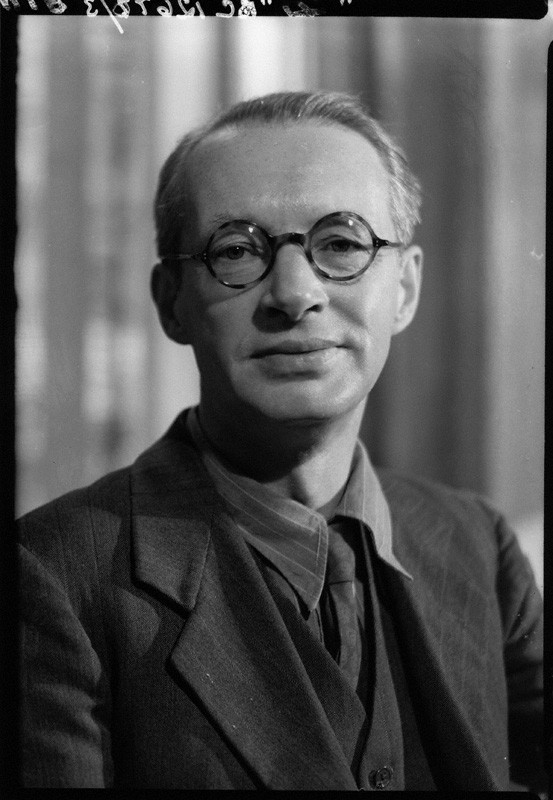 I’ve been reading some poems by the Orkney writer Edwin Muir (1887-1959). In 1901, when Muir was 14, Muir’s family was forced to move to Glasgow after loosing the family farm, ‘The Bu’. This move from the peaceful Orkney to industrialised Glasgow was significantly traumatic for Muir, and he would later describe it as a descent from the innocence of a rural Eden into Hell. Not only was the Glasgow environment hard, but within a few years two of his brothers and both his parents were dead.
One particular poem that I keep returning to is ‘The Transfiguration’. In this poem, Muir describes visionary experiences he had while undergoing analysis. The result is one of the most theologically-rich visions I’ve ever read, with not a few similarities to Barth’s Church Dogmatics IV/1.
So from the ground we felt that virtue branch
Through all our veins till we were whole, our wrists
As fresh and pure as water from a well,
Our hands made new to handle holy things,
The source of all our seeing rinsed and cleansed
Till earth and light and water entering there
Gave back to us the clear unfallen world.
We would have thrown our clothes away for lightness,
But that even they, though sour and travel stained,
Seemed, like our flesh, made of immortal substance,
And the soiled flax and wool lay light upon us
Like friendly wonders, flower and flock entwined
As in a morning field. Was it a vision?
Or did we see that day the unseeable
One glory of the everlasting world
Perpetually at work, though never seen
Since Eden locked the gate that’s everywhere
And nowhere? Was the change in us alone,
And the enormous earth still left forlorn,
An exile or a prisoner? Yet the world
We saw that day made this unreal, for all
Was in its place. The painted animals
Assembled there in gentle congregations,
Or sought apart their leafy oratories,
Or walked in peace, the wild and tame together,
As if, also for them, the day had come.
The shepherds’ hovels shone, for underneath
The soot we saw the stone clean at the heart
As on the starting-day. The refuse heaps
Were grained with that fine dust that made the world;
For he had said, ‘To the pure all things are pure.’
And when we went into the town, he with us,
The lurkers under doorways, murderers,
With rags tied round their feet for silence, came
Out of themselves to us and were with us,
And those who hide within the labyrinth
Of their own loneliness and greatness came,
And those entangled in their own devices,
The silent and the garrulous liars, all
Stepped out of their dungeons and were free.
Reality or vision, this we have seen.
If it had lasted but another moment
It might have held forever! But the world
Rolled back into its place, and we are here,
And all that radiant kingdom lies forlorn,
As if it had never stirred; no human voice
Is heard among its meadows, but it speaks
To itself alone, alone it flowers and shines
And blossoms for itself while time runs on.
But he will come again, it’s said, though not
Unwanted, unsummoned; for all things,
Beasts of the field, and woods, and rocks, and seas,
And all mankind from end to end of the earth
Will call him with one voice. In our own time,
Some say, or at a time when time is ripe.
Then he will come, Christ the uncrucified,
Christ the discrucified, his death undone,
His agony unmade, his cross dismantled –
Glad to be so – and the tormented wood
Will cure its hurt and grow into a tree
In a green springing corner or young Eden,
And Judas damned take his long journey backward
From darkness into light and be a child
Beside his mother’s knee, and the betrayal
Be quite undone and never more be done.
Scott Cairns: ‘To Himself’

Lately, I’ve really been enjoying the work of North American poet Scott Cairns whose journey from Baptist to Presbyterian to Orthodox finds voice in poetic word. I’ve been reading his Philokalia: new and selected poems and thought I’d post just a few poems from this fantastic work which really is well worth buying. Here’s his poem entitled ‘To Himself’.
When in scripture we first meet God,
apparently He is talking to Himself,
or to that portion in His midst
which He has only lately quit
to avail our occasion.
In prayer, therefore, we become
most like Him, speaking what no one
else, if not He, will attend.
A book I borrowed once taught me
how in the midst of attendant
prayer comes a pause when The Addressed
requires nothing else to be said. Yes,
I witnessed once an emptying
like that; though what I saw was not
quite seen, of course. I suspected
nonetheless a silent Other
silently regarding me as if He
still might speak, but speak as to Himself.
That was yesterday, or many
years ago, and if it profit
anyone to imitate the terms
of that exchange, let the prior
gesture be extreme hollowing
of the throat, an inclination
to articulate the trouble
of a word, a world thereafter.
 jasongoroncy.com