Poetry

Philip Larkin, ‘Church Going’

St Andrews CathedralOnce I am sure there’s nothing going on
I step inside, letting the door thud shut.
Another church: matting, seats, and stone,
And little books; sprawlings of flowers, cut
For Sunday, brownish now; some brass and stuff
Up at the holy end; the small neat organ;
And a tense, musty, unignorable silence,
Brewed God knows how long. Hatless, I take off
My cycle-clips in awkward reverence.

Move forward, run my hand around the font.
From where I stand, the roof looks almost new –
Cleaned, or restored? Someone would know: I don’t.
Mounting the lectern, I peruse a few
Hectoring large-scale verses, and pronounce
‘Here endeth’ much more loudly than I’d meant.
The echoes snigger briefly. Back at the door
I sign the book, donate an Irish sixpence,
Reflect the place was not worth stopping for.

Yet stop I did: in fact I often do,
And always end much at a loss like this,
Wondering what to look for; wondering, too,
When churches will fall completely out of use
What we shall turn them into, if we shall keep
A few cathedrals chronically on show,
Their parchment, plate and pyx in locked cases,
And let the rest rent-free to rain and sheep.
Shall we avoid them as unlucky places?

Or, after dark, will dubious women come
To make their children touch a particular stone;
Pick simples for a cancer; or on some
Advised night see walking a dead one?
Power of some sort will go on
In games, in riddles, seemingly at random;
But superstition, like belief, must die,
And what remains when disbelief has gone?
Grass, weedy pavement, brambles, buttress, sky,

A shape less recognisable each week,
A purpose more obscure. I wonder who
Will be the last, the very last, to seek
This place for what it was; one of the crew
That tap and jot and know what rood-lofts were?
Some ruin-bibber, randy for antique,
Or Christmas-addict, counting on a whiff
Of gown-and-bands and organ-pipes and myrrh?
Or will he be my representative,

Bored, uninformed, knowing the ghostly silt
Dispersed, yet tending to this cross of ground
Through suburb scrub because it held unspilt
So long and equably what since is found
Only in separation – marriage, and birth,
And death, and thoughts of these – for which was built
This special shell? For, though I’ve no idea
What this accoutred frowsty barn is worth,
It pleases me to stand in silence here;

A serious house on serious earth it is,
In whose blent air all our compulsions meet,
Are recognized, and robed as destinies.
And that much never can be obsolete,
Since someone will forever be surprising
A hunger in himself to be more serious,
And gravitating with it to this ground,
Which, he once heard, was proper to grow wise in,
If only that so many dead lie round.

– Philip Larkin, ‘Church Going’, in Englische und amerikanische Dichtung 3: Von R. Browningbis Heaney (ed. Horst Meller and Klaus Reichert; München: C.H. Beck, 2000), 343–346.

‘Poems for the Pastor’

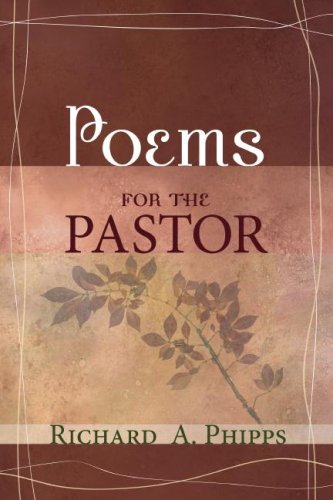
Poems for the PastorSøren Kierkegaard, in Either/Or, once stated that a poet is ‘an unhappy person who conceals profound anguish in his heart but whose lips are so formed that as sighs and cries pass over them they sound like beautiful music’. He may well be right, and that not only of poets; I think too of pastors, for the years have taught me to be less surprised that poetry is one of God’s greatest gifts to pastors. Because happy or otherwise, there remains something about pastoral realities which well echoes Kierkegaard’s description.

I’ve just finished reading Poems for the Pastor: The Reflections and Poetry of Richard A. Phipps (2008), another book from our friends at Wipf and Stock. Phipps is certainly no Les Murray or Jack Kerouac or James K. Baxter – nor does he claim to be – but one is hard-pressed to know why many of these poems deserve to be in print (especially under a publishing label which is deservedly earning a stellar reputation). I love the idea of a collection of poems penned by a pastor for pastors, for those who ‘struggle for the words to express our deepest desires, hurts, expectations, counsel, and prayers for our beloved flock of sinners saved by grace’ (p. ix), but very few lines in this wee volume (74 pages!) quite cut it for me.

If you’re into sentimental, this volume might be your thing. But in my experience, sentimental never gets near to cutting it in pastoral ministry. Am I missing something here?

‘Without’, by C.K. Stead

A View of Cape Stephens in Cook's Straits (New Zealand) with Waterspout, 1776Without

Crossing Cook Strait
going home to be
ordained in the

parish of his
father, while seas wished
by and the wind

had its say in the
wires, it came to
him there was no

God. Not that
God was sulking or had
turned His back—that

had happened
often. It was that God
wasn’t there, was

nowhere, a Word
without reference or
object. Who was

God? He was the
Lord. What Lord was
that? The Lord God. Back

and forth it went while
stern lifted, screw
shuddered, stars glowed

and faded. The
universe was losing
weight. It was

then he threw his
Bible into the
sea. He was a

poet and would
write his own. Happiness
was nothing

but not being
sad. It was your
self in this one and

only moment
without grief or
remorse, without God

or a future—sea,
sky, the decks
rolling underfoot.

– Christian Karlson Stead, ‘Without’ in The Red Tram (Auckland: Auckland University Press, 2004), 52–3.

[Image: William Hodges, ‘A View of Cape Stephens in Cook’s Straits (New Zealand) with Waterspout, 1776’, 1776.]

Geoffrey C. Bingham (6 January 1919 – 3 June 2009): ‘Beyond Despair’s Beyond’

Geoffrey BinghamGeoffrey Bingham – a man who I’ve often referred to as ‘my grandfather in the faith’ – has died. Geoff was one of Australia’s ablest theologians and gifted teachers. He was also a prolific writer of books, (long) hymns and poetry. Thanks be to God for such an inspiring and encouraging servant.

Geoff had a ministry throughout six States of Australia and in a number of countries overseas. An Anglican minister trained at Moore Theological College, he had pastored one church before going to Pakistan with his family under the aegis of the Church Missionary Society. There he was the Founder-Principal of the Pakistan Bible Training Institute at Hyderabad Sindh. He saw revival break out along with his ministry and had a wide coverage on the Indian sub-continent and beyond.

In 1966, he and the family returned to Australia and in 1967 he began as the Principal of the Adelaide Bible Institute (ABI, now Bible College of South Australia, BCSA). He left the college in 1973. Shortly after, New Creation Teaching Ministry was formed.

In 2005, he was honoured by being made a Member of the Order of Australia ‘for service to the community through Christian ministry, encouraging cross-cultural theological education and as an author’ (The Advertiser, January 26, 2005, 10).

Here’s one of Geoff’s poems, entitled ‘Beyond Despair’s Beyond’:

I have been born
Into a world
Strong with despair,
Tensing with fear,
Alert to the evil and calamity,
Straining and pawing at the birth,
With the tensed mother
Waiting the articulate cry
Of the new indignant,
Or protesting, flesh.

Out of the cover
Of the dark cavernous womb,
Into a larger womb,
The still confining world,
The wider prison
Of the engulfing cosmos.

Listening I hear the sounds,
The murmured opposition,
The muttered protest,
The first ripples of indignation
That will grow to the anger
Bursting in a surfing roar,
The battering protest
That first invades, then crashes
On the unassailable shore.

Of what am I speaking?
What is my astoundment about
But the inherent, the innate
Rise to the justified anger
Of the beleaguered humanity
Beleaguering the vindictive world,
The harsh weight
Of the unavoidable circumstances,
The poor jokes on the holy venom
Of the indestructible God.
This the understood Fate,
Inexorable and not comprehensible,
Fearful and vengeful,
Implanting the guilt faculty
That the imagination may twist
The knife of failure, the sharp edge
Of intolerable finitude
And human helplessness.

I am a man, one such
Of whom I speak,
I too have scanned and felt
The inexorable God and His fate,
The unpassioned, the uncanny action
Of His devastating wars, the destructible,
The shattering spears of pain
Piercing, evoking the inner stress,
Causing the fear of dreaded doom.
With other men—the other angry—
I am the warrior of despair,
The vagrant marine of anguish,
The flighting airman of the cavernous skies,
The doomed terrestrial of the Holy bloodiness,
Clenching my fist at the Uncaring,
The calloused and unfeeling One
Indifferent to His earthlings,
Of the flesh that knows beauty,
And the heart that hates
When confined concepting
And intense intellecting
Breaks into the wider sphere
And ranges round its God,
Raging and raging, scaling,
Eagling the higher realm,
Unmantling the supernal Majesty,
Unmasking the Ineffable,
Unclothing and revealing
The Eternal Failure,
The incompetent Deity.

I have lived where men and women
Crouch in the cabins of despair,
Freighted with the contemporary burden,
The massive accumulation
Of the unending sorrow, the suffering
Of the unending race, the timeless
And the angry passing on
Of the caravans of their past,
Weighted with bewilderment
And loaded with the bric-a-brac
Of useless anguish. I have lived
Where the hot and hasty anger
Compounded itself;
Shrieking at the Inexorable,
Little wonder that the puny fists
Beat in their hatred, hammered in wrath
And unmagnificent despair
On the stolid gates, the impassive
And pillared doors, silent as sentinels
Of the heedless Eternal.

Not for all time can man thus live,
Pitting his wits, securing his weak wisdom
Against the silent Celestial.
He must act. He must hate.
He must rage until the inner fires
Commit their own holocaust,
The self-destructing of the savage soul
Until it withers down
To muttering inanity, mouthing
The incomprehensible gloom
Of his dark nether regions.
Not for long, not for ever
Can the galled spirit sustain itself;
The rushing and receding tides
Of its stimulating but suddenly
Sterile adrenalin. The Object must enlarge,
Expanding into the Gloomy and the Vengeful,
Old Inexorable with His relentless grasping
Of the poor prideful flesh, the befuddled
He once initiated and now
Sustains for its self-wrought orgies
Of justful pride and bloody indignation.

Give us the heights to soar, discovering;
The depthful depths to plummet,
Uncovering the dimensions that we did not know—
If they be there (they must be there)—
Or wholly annihilate, compress
Into ultimate nothing the wounded
And the angry, or else
Make us the creatures who can comprehend
The fool futility, and know
Despair’s dimensions are but tragedy,
That justful anger is but baneful pride,
Hubris above the true Celestial,
Idiocy of the self-appointed judge,
The earthly fleshling soaring high
Beyond his rightful realm.
Show us the guilt is but the good,
The gift of God, communicating,
The prodding of the conscience,
The awakening power
Of the new sensitivity.

Not in the ultimate is despair;
Not in the outcome is the fear;
And not the terror is the true telos:
But in the gentle spirit, meek in face,
Of the Inexplicable. Knowing is there
For the finally humbled,
The consummated simple one
Who no longer batters at
The serene Celestial.
His is no bitter wrath. Not one is justified
Who has not hung on the same Tree
As that of the Authentic Sufferer.
None has entered into the true anguish,
The embracing love, the universal agape
That answers only the proliferating query,
That brings the ignorant questionnaire
To its own and obvious end.
Nerveless hands cease their trembling,
The baffled spirit its eternal questing,
And the angry muttering
Dies to a painful silence
Where the constant steady dripping
Of love’s clotted gouts
Strike answers on the desolate rocks
And the dry and dreary stones
Of more desolate Golgotha.

Not in the brilliant concepting,
Nor in the peerless logic
Of immaculate man—the justified one—
Lies the answer. Not in the burning quest
For cosmic and anthropothic justice
Lies the healing, the final peace
Of the embattled and embattling
Humanity. Justice brings nought
Of itself. No peace ineffable,
Or serenity ensconced; not
Until the love itself
Justifies the unjust, the prideful,
In the vast and swirling vortex,
The incredible complex
Of the Ineffable, suffering.

Down there in the dark maelstrom,
The inexplicable anguish, the strong tides
Of the simple suffering lies the complete.
There alone is the living solution,
The unknowable revelation made known,
The outworking actuation of the love
That dooms death to death,
Tails dread mortality and its evoked anger
To its inevitable extinction.
Incomprehensible is love’s comprehensible
Until the astounded spirit grasps the hem
Of the Celestial suffering.

The dark tides of the self-compounded anger
Still rage in the multifarious madness
Of the enraged humanity. The crazed surf
Still breaks with its booming
On the barriers of seeming fate.
The roar, however, is the lie
And the sneering sophistication
Of the unwise, the smooth, superficial
And blasé creature, cynical and joyless,
The ungrateful man, unknowing yet knowing
He must cast the Eternal love in gloomed garments
Of the Inexorable, the ruthless, relentless
And painfully pitiless, the darkly Inexplicable;
Else would his own unempathy
Be unmasked, and his fierce tides
Protesting in hypocrisy his own primal purity
Appear as the sewage of the heart,
The pathetic litter of his own wayside
Strewn from eternity to eternity;
The graffiti of his own mind
Inscribed in furtive secrecy
Against the kindly Eternal
Who gave him birth in love.

Beyond the despair lies No-despair;
Beyond the gloom, the doom, and justful rage
Of the unjust imagination
Lies the serenity, the peaceful persistence
Of the generative love. Think not then
The high indignation upthrust from authentic truth,
The true purpose, the living telos:
Know, rather, that its rebel pride
Rears back from the true submission,
The functional fullness
Of the primal creation. Lordship is lost
When the prideful spirit reaches to take
And grasp the Celestial initiative
And its high prerogatives.

Believe not the brilliant artistry,
The cunning sophistry, the conniving,
Portraying the stark, deifying despair,
Giving grandeur to its indignation
At massed cruelty, divine ruthlessness,
And feeding the impassioned spirit
With fuel for its indignation.
Come, dethrone the judge within;
Let him stand under judgement,
Bowed in the dock of God, accepting the verdict
And the Divine execution, the true edict
Of the holy Judge; then let him say
If ever he saw such vindication,
Such fiat of acquittal, such liberation
Of the darkful doomed humanity,
Such glory of liberty imposed
By holy Love, in the empathic motions
Of the eternal crucible, the Cross
Crucial to man and God, the pitted hate
The Ineffable endured in the paling flesh
Of his ceaseless suffering. Anger not only dies
But with it the despair and the doom;
The gloom dissolves in the brilliant blaze
Of the Sun of righteousness
Who breaks on the ebullient day,
Emancipating the purified spirit,
Delivering it to its true destiny,
Thrusting it forward resistlessly
To the Divine delights, the endless banquet
Of the eternal Love. Pleasures are prodigal
At His right hand, everlastingly.

Here, where the new humanity
Breaks into transforming truth,
The lie is doomed to die, the light to flow
And the new un-anger and un-rage
To gladly justify the God who justifies,
And for ever to explore
The stately and stretching dimensions
Of the authentic, the promised peace
And the eternal serenity.

– Geoffrey C. Bingham, ‘Beyond Despair’s Beyond’, in The Spirit of All Things (Blackwood: Troubadour Press, 1991), 65–72.

‘The Double Rainbow: James K. Baxter, Ngāti Hau and the Jerusalem Commune’: A Review

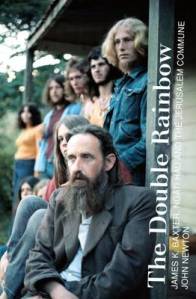
the-double-rainbowJohn Newton, The Double Rainbow: James K. Baxter, Ngāti Hau and the Jerusalem Commune (Wellington: Victoria University Press, 2009). 224 pages. ISBN: 9780864736031. Review copy courtesy of Victoria University Press.

John Newton’s engaging book, The Double Rainbow: James K. Baxter, Ngāti Hau and the Jerusalem Commune, examines the Ngāti Hau community that Aotearoa’s best-known poet James K. Baxter was instrumental in establishing at Hiruhārama, on the Whanganui River – ‘the country’s first and most influential experiment in “hippie” communalism’ (p. 38). As Newton notes in his Introduction:

The double rainbow is Baxter’s symbol for a mutually regenerative bicultural relationship. He recognised that the Pākehā majority ignored Māori culture, not just to the cost of Māori … but also to its own detriment. Pākehā, he wrote in 1969, a few months before he first moved to Jerusalem, ‘have lived alongside a psychologically rich and varied minority culture for a hundred years and have taken nothing from it but a few place-names and a great deal of plunder’. Pākehā culture’s material dominance was accompanied by an arrogance and ethnocentrism which left it spiritually impoverished.

He cites Baxter:

‘Ko te Maori te tuakna. Ko te Pakeha te teina …’ The Maori [sic] is indeed the elder brother and the Pakeha [sic] the younger brother. But the teina has refused to learn from the tuakana. He has sat sullenly among his machines and account books, and wondered why his soul was full of bitter dust …

And then offers the following commentary:

The cost was everywhere to be seen, but nowhere more plainly than among urban youth. For Baxter, their wholesale disaffection was a realistic verdict on the society they had inherited, a mainstream culture whose spiritlessness and meanness – to say nothing of its arrogance towards its neighbours – deserved no better. In the Māori world, by contrast, and particularly in Māori communalism, he believed he could see an alternative to this atomised majority culture – a system of values that answered to the longings and frustrations that he recognised, both in himself and in the young people around him. To establish an alternative Pākehā community that could ‘learn from the Maori side of the fence’ was to help restore, symbolically, the mana of the tangata whenua and to begin to resuscitate a Pākehā culture that was choking to death on its own materialism. (pp. 11–12)

Such constitutes the earth from which a functioning intentional community at Hiruhārama budded, a community made up largely of those for whom mainstream Aotearoan society meant fatherlessness.

While concerned to not diminish Baxter’s part in the formation of the Ngā Mōkai community but rather to place it in the context of a larger ‘utopian experiment’ (p. 88) he initiated, Newton seeks to ‘offer a stronger account of what Baxter achieved at Jerusalem by bringing into focus its collaborative dimension’ (p. 16). He properly contends that what the 41-year-old Baxter set in motion, and towards which the baby-boomer ‘orphanage’ of the damaged which was his living poetry bore witness to, was something considerably bigger than Baxter himself, and that the unique cohabitation and set of cultural negotiations which was embodied in the Whanganui River communities (particularly Ngāti Hau, Ngā Mōkai, the church – which was ‘threaded through the life of the river’ (p. 59) – and the Sisters of Compassion) draw attention to implications far beyond both Baxter or to the communities themselves. This, of course, is of the essence of Baxter himself, that before he was a hippie, he was ‘a Catholic, a Christian humanist, and an aspiring Pākehā-Māori’ (p. 36), he was a poet-prophet charged not simply with interpreting the social environment which he inhabited, but of actively improving it, of giving material shape to it. The book is loosely divided into three main sections: an introductory phase that addresses the pre-history of the community and Baxter’s first year of residence; a middle section that covers its heyday; and a downstream phase that describes the community’s various offshoots, and considers its legacy. The result – for the reader prepared to follow the narrative – is the stripping away of ‘cultural safety’.

Newton details further upon what we know of Baxter from other places while eloquently introducing us to a host of other equally-fascinating characters – Father Wiremu Te Awhitu, pā women Dolly, Alice, Lizzie and Wehe (who are often remembered as ‘substitute’ mothers (p. 89)), Aggie Nahona, and Denis O’Reilly among them. He also highlights Baxter’s visionary kinship with French-born nun Marie Henriette Suzanne Aubert with whom he shared ‘a staunch commitment to Māori, and to spiritual love as the first principle of a hands-on social mission’ (p. 45). Newton argues that this part of Baxter’s history ‘doesn’t get acknowledged in Baxter’s rhetorical point-scoring at the expense of the mainstream church. Without it, however, his own Jerusalem “orphanage” would never have eventuated. In one sense the debt is symbolic or poetic: the presence of the church at Jerusalem draws te taha Māori into dialogue with the other key spiritual driver of his later career, namely his Catholic faith … Baxter brought his showmanship, and his personal (some might argue, narcissistic) sense of mission. But he also brought with him – embodied, or enacted – the self-interrogation and social radicalisation that had seized hold of the Catholic Church globally in the wake of Vatican II. After the Berrigans and the draft card burnings, after liberation theology, what did the Christian mission imply in the context of ongoing colonial injustice?’ (pp. 46, 47)

Jerusalem was Baxter’s riposte to all those Pākehā institutions – the churches, the university, the nuclear family and so on – whose lack of heart and small-minded materialism were now failing Pākehā youth in the same way that Pākehā culture had always failed Maori. In looking for a remedy for the failings of Pākehā society, he found his prime inspiration in the communitarian virtues that he saw among Māori: aroha, mahi, kōrero, manuhiritanga. This was ‘learn[ingJ from the Maori side of the fence’: his community was to be modelled on the marae. Of course, in offering this open door the commune depended entirely on the hospitality of Ngāti Hau … But the commune was not just a place to live – a material shelter for whomever happened to be there … it was also a piece of political theatre. And the commune’s significance as a political intervention depended for its fullest expression on publicity: it was intended, at least in part, to be a spectacle, a City on a Hill! At the same time, it was integral to the kaupapa that it be open to all comers. This was the paradox that Baxter was confronted by: the more effectively this vision was communicated, the more would it lead to a pressure of numbers that would overwhelm the commune’s own capacity to provide for itself, and which eventually must wear out the patience of the local community. (p. 65)

Yet Newton is at pains to point out throughout his study that Hiruhārama is bigger than Baxter. Indeed, the bulk of the book is given to defending and illustrating this thesis, that Hiruhārama after Baxter entered into a period of unforeseen maturity, and particularly the maturity of its relationship with the pā. Community life under Greg Chalmers’ leadership may have been less eventful, but those years from 1972 do more to fulfil Baxter hopes of regenerative partnerships than those prior.

Two chapters are concerned with articulating the events birthed following the final closure of the community at Hiruhārama, and to highlighting that while a distinctive phase of the Ngā Mōkai narrative had reached its end, its impulse didn’t die with the community itself. Newton draws attention to a network of loosely affiliated houses – from flats and private homes, to crashpads and urban shelters, to far-flung intentional communities – which functioned as homes-away-from-home for a diasporic Ngā Mōkai whānau, a ‘network of initiatives which imported the Jerusalem kaupapa back into urban contexts’ (p. 154), and there ‘offering a dispersed community the chance of reconnection, reaffirmation and renewal’ (p. 164). He recalls Hiruhārama’s various germinations at Reef Point, Wharemanuka and Whenuakura. ‘With the shutting of the original commune, these “shoots of the kumara vine” [became] the focus of the Ngā Mōkai story. It’s here, in this ramshackle archipelago, that those who had been touched by Jerusalem attempted to keep alive the kaupapa’ (p. 131).

The penultimate chapter, ‘Baxter’s Wake’, re-spotlights Baxter, and is given to argue that Baxter’s literary legacy and his social legacy are ‘shoots of the same vine’ (p. 169):

‘Jerusalem’ was never an alternative to the poetry; it was part of it, its logical destination, even its most vivid accomplishment. In his burial on the river we find Baxter the poet and the Baxter the activist inextricably entwined. This integration was precisely his ambition, and the fact he achieved it is what makes these events still resonate. (p. 171)

So Newton appropriately accentuates Baxter’s formulation of the poet’s ethical task to be no mere interpreter of society but one who endeavours to make society more just. ‘It is this sense of embodied ethics … which leaps into focus when we think about Jerusalem’ (p. 179).

The Double Rainbow is the fruit of an incredibly-impressive amount of extensive and laborious research. Newton commendably resists romanticising Baxter, Baxter’s vision, or the Ngāti Hau ‘classroom’ itself. Those engaged in Baxter’s work and who want to better understand his Jerusalem Daybook or are interested in his biography, those seeking to understand, assess and inform Aotearoa’s multi-cultural, historical and spiritual landscape, those wanting to listen and to speak intelligently into contemporary debates about the relationship between government authorities and badge-wearing gangs carving out their own neo-tribal identity, and, more broadly, to a nation fascinated with re-carving a new national identity which buries settler mono-culturalism in its wake, and those devoted to the challenging work of inspiring, creating, leading, building, replanting and closing local and grassroots communities will be well-served to have Newton’s essay in hand. An invaluable and timely record, it is also certain to inform, impress and inspire.

James K. Baxter: ‘Song to the Holy Spirit’

Wild Goose

Lord, Holy Spirit,
You blow like the wind in a thousand paddocks,
Inside and outside the fences,
You blow where you wish to blow.

Lord, Holy Spirit,
You are the sun who shines on the little plant,
You warm him gently, you give him life,
You raise him up to become a tree with many leaves.

Lord, Holy Spirit,
You are the mother eagle with her young,
Holding them in peace under your feathers.
On the highest mountain you have built your nest,
Above the valley, above the storms of the world,
Where no hunter ever comes.

Lord, Holy Spirit,
You are the bright cloud in whom we hide,
In whom we know already that the battle has been won.
You bring us to our Brother Jesus
To rest our heads upon his shoulder.

Lord, Holy Spirit,
You are the kind fire who does not cease to burn,
Consuming us with flames of love and peace,
Driving us out like sparks to set the world on fire.

Lord, Holy Spirit,
In the love of friends you are building a new house,
Heaven is with us when you are with us.
You are singing your songs in the hearts of the poor
Guide us, wound us, heal us. Bring us to the Father.

– James K. Baxter, ‘Song to the Holy Spirit’, in Collected Poems (ed. John Edward Weir; Oxford: Oxford University Press, 1979), 572.

James K. Baxter: ‘Letter from the Mountains’

Hemi at Jerusalem

Hemi at Jerusalem

Letter from the Mountains

There was a message. I have forgotten it.
There was a journey to make. It did not come to anything.
But these nights, my friend, under the iron roof
Of this old rabbiters’ hut where the traps
Are still hanging up on nails,
Lying in a dry bunk, I feel strangely at ease.
The true dreams, those longed-for strangers,
Begin to come to me through the gates of horn.

I will not explain them. But the city, all that other life
In which we crept sadly like animals
Through thickets of dark thorns, haunted by the moisture of women,
And the rock of barren friendship, has now another shape.
Yes, I thank you. I saw you rise like a Triton,
A great reddish gourd of flesh,
From the sofa at that last party, while your mistress smiled
That perfect smile, and shout as if drowning—
‘You are always—’
                        Despair is the only gift;
When it is shared, it becomes a different thing; like rock, like water;
And so you also can share this emptiness with me.

Tears from faces of stone. They are our own tears.
Even if I had forgotten them
The mountain that has taken my being to itself
Would still hang over this hut, with the dead and the living
Twined in its crevasses. My door has forgotten how to shut.

James K. Baxter: ‘Shalimar’

baxter-1

Shalimar 
Guava slices pierced by a straw
Eaten with rough salt and lemon;
This orchard where the trees have made
Stadium, refectory, high tent
For water carrier and camel boy. 
The mind’s great door is swinging now.
  
The musical water washes
From mouth and hands and heart
Memory of the peine forte et dure
Experienced in life. With balls of clay
The bearded guardian scatters birds.
  
Long waiting, brief illumination:
Outside the grass hut rustles on the ground
An empty snakeskin. Characters of fire
Without origin, without curb,
On the soul’s narrow walls
Blaze, as the sun strides in a broken house.
  
I AM THE CUP THAT HOLDS YOUR PAIN,
JANUA COELI, STAR OF TRUTH.
I AM THE ARK, THE STRONGHOLD OF THE KING,
I AM THE VOID WHERE LIGHT IS BORN.

Franz Rosenzweig on poetry and prose

franz-rosenzweig‘Before and beyond it [poetry] there was prose, and it was non-poetry; it was non rhythmical, unbound but not disengaged speech, unmeasured but not extravagantly fulsome (masslos übermässiges) word. All poetry which has since come into being within the circle of its light is inspired by its prose spirit. Since that time in the dark silence that surrounded the beginnings of mankind the door which separates each from every other and all from the Outside and the Beyond has been broken and never again will it be altogether closed: the door of the Word’. – Franz Rosenzweig, cited in Kornelis Heiko Miskotte, When the Gods are Silent (trans. John W. Doberstein; London: Harper and Row, 1967), 204.
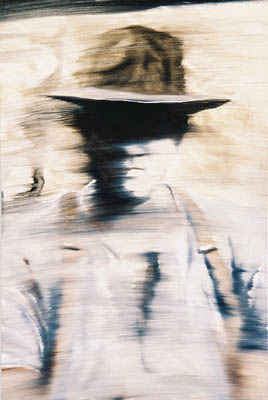
‘The C.O’s’, by Donald Baxter

archibald-baxterAfter something of a blogging hiatus, I thought I’d kick off again with a poem by Donald Baxter, written while in detention (26 July, 1917). ”The C.O’s’ refer to ‘conscientious objectors’. Donald was the brother of Archibald and uncle of James K. Baxter, New Zealand’s best-known poet.
Their names are writ in every Clink –
This small but steafast band
Who for themselves have dared to think
And firmly take their stand.

The tyrants’ boast to crush and kill
And this proud spirit bend
Does only strengthen each man’s will
To conquer in the end

Although to-night in prison cell
‘Neath Mammon’s lock and key.
It only holds the earthly shell –
The mind and soul are free.

The Brotherhood of Man’s their aim ;
So come whate’er betide
They’ll bear it all in Freedom’s name.
Their conscience is their guide,

Though each should fill a Martyr’s grave,
What grander end could be ?
Their death will only help to pave
The road to Liberty

Baxter’s poem was originally published in Harry Holland’s Armageddon or Calvary: The Conscientious Objectors and ‘The Process of their Conversion’ (1919).

The poem raises questions for me about what differences (if any, at least on one level) might exist between those imprisoned or executed or carry out horrific crimes because of commitments to various convictions about reality, and about the relationship between reality and claims of truth. What might be the relationship between ‘bear[ing] it all in Freedom’s name’ and employing conscience as guide?

[Painting: ‘Portrait of Archibald Baxter’, by Bob Kerr, 2007. For more in this series see here]

Robert Bly, ‘Call and Answer’

Tell me why it is we don’t lift our voices these days
And cry over what is happening. Have you noticed
The plans are made for Iraq and the ice cap is melting?

I say to myself: “Go on, cry. What’s the sense
Of being an adult and having no voice? Cry out!
See who will answer! This is Call and Answer!”

We will have to call especially loud to reach
Our angels, who are hard of hearing; they are hiding
In the jugs of silence filled during our wars.

Have we agreed to so many wars that we can’t
Escape from silence? If we don’t lift our voices, we allow
Others (who are ourselves) to rob the house.

How come we’ve listened to the great criers—Neruda,
Akhmatova, Thoreau, Frederick Douglass—and now
We’re silent as sparrows in the little bushes?

Some masters say our life lasts only seven days.
Where are we in the week? Is it Thursday yet?
Hurry, cry now! Soon Sunday night will come.

– Robert Bly, ‘Call and Answer’, August 2002.

Alfred Lord Tennyson: ‘Vastness’

I.

Many a hearth upon our dark globe sighs

after many a vanish’d face,

Many a planet by many a sun may roll

with the dust of a vanish’d race.


II. 

Raving politics, never at rest – as this poor

Earth’s pale history runs, –

What is it all but a trouble of ants in the

gleam of a million million of suns?


III. 

Lies upon this side, lies upon that side,

truthless violence mourn’d by the Wise,

Thousands of voices drowning his own in a

popular torrent of lies upon lies; 


IV. 

Stately purposes, valour in battle, glorious

annals of army and fleet,

Death for the right cause, death for the wrong cause,

trumpets of victory, groans of defeat;


V. 

Innocence seethed in her mother’s milk,

and Charity setting the martyr aflame;

Thraldom who walks with the banner of Freedom,

and recks not to ruin a realm in her name.


VI. 

Faith at her zenith, or all but lost in the

gloom of doubts that darken the schools;

Craft with a bunch of all – heal in her hand,

follow’d up by her vassal legion of fools;


VII. 

Trade flying over a thousand seas with her

spice and her vintage, her silk and her corn;

Desolate offing, sailorless harbours, famishing

populace, wharves forlorn;


VIII. 

Star of the morning, Hope in the sunrise;

gloom of the evening, Life at a close;

Pleasure who flaunts on her wide downway

with her flying robe and her poison’d rose;


IX. 

Pain, that has crawl’d from the corpse of

Pleasure, a worm which writhes all day, and at night

Stirs up again in the heart of the sleeper,

and stings him back to the curse of the light;


X. 

Wealth with his wines and his wedded harlots;

honest Poverty, bare to the bone;

Opulent Avarice, lean as Poverty; Flattery

gilding the rift in a throne;


XI. 

Fame blowing out from her golden trumpet

a jubilant challenge to Time and to Fate;

Slander, her shadow, sowing the nettle on

all the laurel’d graves of the Great;


XII. 

Love for the maiden, crown’d with marriage,

no regrets for aught that has been,

Household happiness, gracious children,

debtless competence, golden mean;


XIII. 

National hatreds of whole generations, and

pigmy spites of the village spire;

Vows that will last to the last death-ruckle,

and vows that are snapt in a moment of fire;


XIV. 

He that has lived for the lust of the minute,

and died in the doing it, flesh without mind;

He that has nail’d all flesh to the Cross, till

Self died out in the love of his kind;


XV. 

Spring and Summer and Autumn and Winter,

and all these old revolutions of earth;

All new-old revolutions of Empire –

change of the tide – what is all of it worth?


XVI. 

What the philosophies, all the sciences,

poesy, varying voices of prayer?

All that is noblest, all that is basest, all

that is filthy with all that is fair?


XVII. 

What is it all, if we all of us end but in

being our own corpse-coffins at last,

Swallow-d in Vastness, lost in Silence,

drown’d in the deeps of a meaningless Past?


XVIII. 

What but a murmur of gnats in the gloom,

or a moment’s anger of bees in their hive? –

.      .      .      .      .      .      .      .      .     

Peace, let it be! for I loved him, and love

him forever: the dead are not dead but alive.

The [best] poet is the true prophet

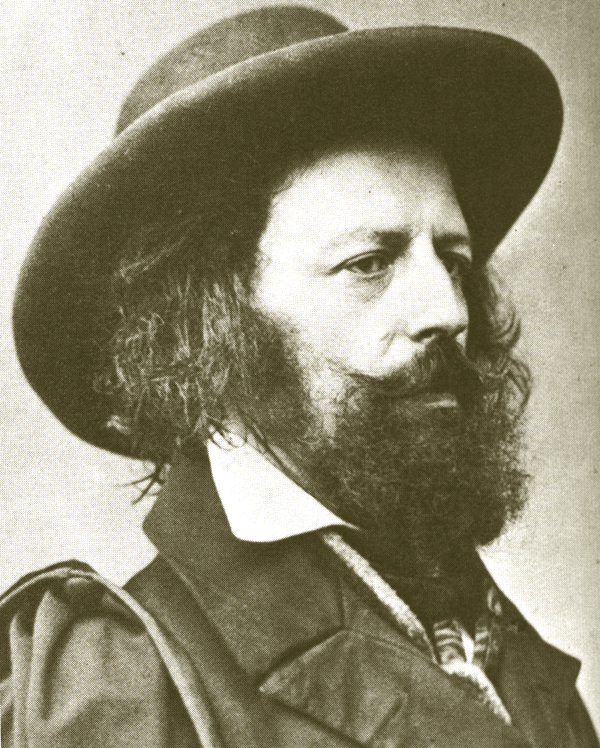
‘It has often been said that the teachers of the age’s religion are to be sought rather among its poets than its preachers. But it seems as if we must look for our noblest theology also to our poets, rather than to our clerical schools … The age is deeply theological, and does not know it. It is like the man who was amazed to find that all his life he had been talking prose without being aware of it. We are theological, and don’t know it. Hence part of our unhappiness. It is like the sorrow of some young Werther who bears in his bosom the ferment of a genius not yet apprehended, and the germ of a revolution not yet realised. Our atheology belies our true deep selves, and our great poets are in this but prophets. They steal upon our less aggressive hours, and reveal our soul and future to ourselves. They fore-shadow our destiny, and they tell us that, in spite of all the savants say about the impossibility of a theology, it is the passion for a theology which is at the root of our mind’s unrest, and the possession of a theology which alone can lay our mind’s anarchy’. – PT Forsyth, ‘The Argument for Immortality Drawn from the Nature of Love: A Lecture on Lord Tennyson’s “Vastness”’. Christian World Pulpit, 2 December 1885, 360.

[Image: John Everett Millais, Alfred Tennyson 1881. Oil on canvas. Tate Gallery. Lent by National Museums Liverpool, Lady Lever Art Gallery]

In Memoriam: Ernst Cassirer

This is the locust season of our days
When the ripe meadows of the mind are bare,
This is the month of the never-born maize
Upon whose golden meats we shall not fare.
This is the week of the stunted stalk
And fruit that is dust on the bones of rock,
This is the day of the hungry hawk
And the songbirds dead by the fallen flock.
This is the noon of our derelict plain,
The sun-parched hour of most desolate pain.

Yet there is a valley where sweet grain grows
In strong-rooted stands, in tall splendid rows.
Here toiled in the meadows a man wise and serene,
And the meadows bore fruit and the meadows are green.

– Edward Murray Case, ‘In Memoriam: Ernst Cassirer’, in The Philosophy of Ernst Cassirer (edited by Paul Arthur Schilpp; Library of Living Philosophers, 6. Evanston: George Banta Publishing Company, 1949), 40.

Thomas Wyatt: ‘Ffrom depth off sinn’

Ffrom depth off sinn and from a diepe dispaire,
    Ffrom depth off deth, from depth off hertes sorow,
    From this diepe Cave off darknes diepe repayre,
The have I cald o lord to be my borow;
    Thow in my voyce a lord perceyve and here
    My hert, my hope, my plaint, my ouerthrow,
My will to ryse, and let by graunt apere

That to my voyce, thin eres do well entend.
    No place so farr that to the it is not nere;
No depth so diepe that thou ne maist extend
    Thin ere therto; here then my wofull plaint.
    Ffor, lord, if thou do observe what men offend
And putt thi natyff mercy in restraint,
    If just exaction demaund recompense,
    Who may endure o lord? who shall not faynt
At such acompt? dred, and not reuerence,
    Shold so raine large. But thou sekes rather love,
    Ffor in thi hand is mercys resedence,
By hope wheroff thou dost our hertes move.
    I in the, lord, have set my confydence;
    My sowle such trust doth euermore approve
Thi holly word off eterne excellence,
    Thi mercys promesse, that is alway just,
    Have bene my stay, my piller and pretence;
My sowle in god hath more desyrus trust
    Then hath the wachman lokyng for the day,
    By the releffe to quenche of slepe the thrust.
Let Israell trust vnto the lord alway,
    Ffor grace and favour arn his propertie;
    Plenteus rannzome shall com with hym, I say,
And shall redeme all our iniquitie.

– Thomas Wyatt, Ffrom depth off sinn’, in Collected Poems of Sir Thomas Wyatt (eds. Kenneth Muir & Patricia Thomson; Liverpool: Liverpool University Press 1969), 121-22.

James K. Baxter: ‘Song to the Lord God on a Spring Morning’

The guitar is playing in the morning
And the tame goat browses on heads of grass
Close to the sawing block. I hear the voices
Of many friends on this spring day
Like music to me, because God has lifted
A mountain from my soul, and the winter has gone.

Alleluia. Adonai.

I need not complain that youth has gone
Or that the sins of morning
Haunt me at noonday. Whoever has lifted
The burden of Christ will find that an armful of dry grass
Is the same weight as the cross. Man only lives for a day
Yet he can hear the singing of strong voices.

Alleluia. Adonai.

Love is the answer to the dark voices
Of the demons that trouble us when youth has gone,
Saying, “You fool, you have had your day
And wasted it.” The spirit of a spring morning
When the wind moves gently over the grass
Is enough to tell us that the stone at the door of the tomb has
been lifted.

Alleluia. Adonai.

I have seen the boulder lifted
From the back of the tribe. I have heard their singing voices.
I have felt their hands like the wind on the grass
Stroking my cheek, when it seemed all hope had gone,
“Piki to ora ki a koe. The morning
Has come. E koro, be glad and eat a kai with us today.”

Alleluia. Adonai.

Therefore, whatever another day
May hold for meexile, darkness, and the rod of Pharoah lifted
to scourge my backthis brightness of morning
Cannot die. The murmur of many voices
Will stay with me when the light has gone
And my days are like an acre of burnt grass.

Alleluia. Adonai.

So small a price to pay! The Maori bones beneath the grass
Of the graveyard sing of the resurrection day
When chains of darkness will be gone
And the yoke of sorrow will be lifted
From the necks of the poor. A choir of many voices
Goes with me into the blood-red morning.

Alleluia. Adonai.

The light of a new morning is bright on the grass
And the voices of the poor are welcoming the day
When the cloud of night will be lifted and Pharoahs kingdom gone.

Alleluia. Adonai.

– James K. Baxter, ‘Song to the Lord God on a Spring Morning’ [1972]

James K. Baxter: ‘Air Flight to Delhi’

Air Flight to Delhi

In Thailand, song of water dwellers,
Rivers like lizards spreading
Brown silt into the sea.
Moisture in the hollow of a hand.
The old ideograph of peace
Tempted me, with card-playing
On a hard mattress, light between
Bamboo slats. Such love is contraband.

In a room taken for the night
Sluicing the chest and thighs. Dressed
In loose pyjamas. Lying
Insomniac under the giant fan.
I knew the undesired accomplice
Some sky or water demon
Twisting the locks of the mind.

Light will come at length to the dark room
Where the blind soul to its own incubus
Murmurs, ‘I am.’ The Goan shepherd
Sleeping at noon below the pepper vine
Is held alive in Xavier’s smile,
Has diamonds to lose: but here
Egyptian darkness staggers in the sun.

Seven plagues. Black beaks of crows.
Vultures in grey dinner suits.
Nepotism and the leper’s stump.
The stone of Sisyphus rolled on the heart.
These wounds that I must understand:
This country of the banyan and the ape.

The homeless in the Mogul tombs
Cannot despair because they do not hope,
On the great star wheel pulled apart
Show the disastrous innocence
Of one who murders in his sleep.

The cross is clouded here with market dust.

Luci Shaw: ‘Recognition’

Who on earth saw him first, knowing
truly who he was? Belly to belly, when
John, prophet in utero, distinguished
in the natal soup the fetal bones, the body
curled like a comma, eyes tight, skull
packed with universal wisdom,
this unborn cousin began to dance.

And when she, birth-giver—
her ordinary vision arrowing down between
her legs through pain and straw to her son’s dark,
slime-streaked hair, to his very skin, red with
the struggle of being born—she lifted him
to her breast, kissed the face of God,
and felt her own heart leap.

– Luci Shaw, ‘Recognition’

Annie Villiers: ‘Mended’

Invisible mending

This is the place where souls come

To be mended                               where

Tatty ends of unfinished business

Or business                              unravelled

Are drawn together and tenderly

Made new.

Nimble stitches

Seen                           only by the weaver

Whose loving                                 fingers

Repair the frangible fabric of lives.

– Annie Villiers, ‘Mended’, in Parallel Lines: Riding the Central Otago Rail Trail (ed. Annie Villiers and John Z. Robinson; Dunedin: Longacre Press, 2007).

James K. Baxter: ‘He Waiata o Hemi’

He Waiata o Hemi

I came to Hiruharama
With a leather coat;
Now the coat is cloth
but the cuffs are still leather.

Kua timata te mahi –
The work has begun.
There are beans growing
And Karl planted them;
There are pumpkins growing
And Heto dug the ground;
There are eels in the pot
And Peter caught them – Yes,
Kua timata te mahi–
The work has begun.

Ka whakaiti taku mana,
Ka whakanui te aroha –
As I shrink down to death
The love will grow greater.
The old kumara has to rot
For the young ones to get life –
When the hangi is ready
They dig them out of the ground,
The young ones red and strong,
but the old one is pulpy –
They throw him over the fence
With mildew round his neck.

He parapara iti,
The little seed in the ground
The all-but-nothing thing –
The soul that sleeps naked
In the arms of Te Atua –
No good at all if the seed
Was wrapped in cellophane.

Because our God is dark
The blindness does not matter –
Because our God is silent
The deaf man gets no blame.

What can I do in the morning?
I can put on my coat;
I can make a cup of coffee;
And light a cigarette;
I can kneel down like a camel
On the grass beside the fence;
I can eat and walk and sleep;
I can pray for those I love –
Ko te aroha, i te Ariki –
When we love, it is the Lord –
And this dead man is permitted
To give with empty hands.

When we share our fags and blankets
Christ begins to shine –
Our flesh becomes the bread;
Our blood becomes the wine –
I am cowshit in the garden
So that the crops can grow –
Ko Ihu taku wai,
The Lord is my drink –
Ko Ihu taku kai,
The Lord is my food –
Ko Ihu taku moni,
The lord is my bank account –
Ko Ihu taku mana,
The Lord is my good name –
Ko Ihu taku aroha,
The Lord is my heart –
Ko Ihu taku mate,
The Lord is my death pain.

To be a dead goat
That the flies gather on –
The sun in his mercy
Can make the teeth shine.
Even our sins are His
Let the new pain begin.