Music

January bests …

Best books: Wright, David F. and Gary D. Badcock, eds. Disruption to Diversity: Edinburgh Divinity, 1846-1996. Edinburgh: T&T Clark, 1996; Alec C. Cheyne, The Transforming of the Kirk: Victorian Scotland’s Religious Revolution. Edinburgh: The Saint Andrew Press, 1983.

Best music: Parachute Band, Roadmaps and Revelations [2007].

Best films: Oranges Are Not the Only Fruit [1990] ♦♦♦½ ; Ladri Di Biciclette [1948] ♦♦♦♦; and Gran Torino [2009] – a near-perfect film! ♦♦♦♦♦

Best drink: Monteith’s Rata Honey & Spice Flavoured Summer Ale (even Judy said it was OK!)

Supporting young musicians

knoxSome encouraging news: Starting from 2009, the Knox Centre for Ministry and Leadership is pleased to offer six annual music scholarships. Their purpose is to encourage and equip young musicians in the conduct of public worship. Each scholarship will consist of an expenses-paid two-day workshop on music and worship at the Knox Centre, plus a $500 cash grant. Applicants should be under 30 years of age. The first music and worship workshop will be held on the 2nd and 3rd of October 2009. See here for more information.

Around blogdom …

  1. “The Center of the Whole Bible” (Romans 3:21-26): audio | video
  2. “The Strange Triumph of a Slaughtered Lamb” (Revelation 12): audio | video
  3. “A Miracle Full of Surprises” (John 11): audio | video
  4. “Why Doubt the Resurrection of Jesus” (John 20:24-31)
  5. “The Ironies of the Cross” (Matthew 27:27-51)

December bests …

Best books: Giorgio Locatelli, Made in Italy: Food and Stories. New York: Ecco, 2007 (this one is easily among my favourite books of the year); Marcia JoAnn Bunge, ed. The Child in Christian Thought. Grand Rapids: Wm. B. Eerdmans, 2001; David H. Jensen, Graced Vulnerability: A Theology of Childhood. Cleveland: Pilgrim Press, 2005; and Ernest Hemingway, The Old Man and the Sea.

Best music: Malcolm Gordon, One Voice; and U2, The Golden Unplugged Album

Best films: Death Sentence (2007)

Best drink: Villa Maria Private Bin Merlot/Cabernet Sauvignon (2006)

November bests …

Best books: TF Torrance, Incarnation: The Person and Life of Christ [2008] (this is among the most exciting of publications to appear this year); Barack Obama, The Audacity of Hope: Thoughts on Reclaiming the American Dream.

Best music: Andrew Peterson, Clear to Venus; Sting, Songs from the Labyrinth [2006]

Best films: Black Gold [2007]

Best drink: Teeccino Herbal Coffee Almond Amaretto (also available in Australia from NTP Health Products)

[Apologies for the delay in posting this monthly bests. It’s been a hectic time. As a consolation, let me draw attention to an encouraging post by Richard Floyd on Forsyth and baptism].

October bests …

Best books: The Rise of Neo-Kantianism: German Academic Philosophy between Idealism and Positivism, by Klaus Christian Köhnke; Theology in a Global Context: The Last Two Hundred Years by Hans Schwarz; and Theoria, by Peter Fuller.

Best music: Sons of Korah, Rain [2008]; Dar Williams, Cry Cry Cry [1998]

Best films: 10 Items or Less [2007]; An American Crime [2008]
 
Best drink: Heartland Directors’ Cut Shiraz 2006

September bests …

Best books: The Changing Shape of English Nonconformity, 1825-1925, by Dale A. Johnson; Karl Barth’s Theology of Relations: Trinitarian, Christological, and Human: Towards an Ethic of the Family, by Gary W. Deddo

Best music: Roby Lakatos, The Gypsy Violin – Live in Budapest (2003); Show of Hands, Witness (2006); Martin Simpson, The Bramble Briar (2001)

Best films: Rails & Ties (2007); Cassandra’s Dream (2007)

Best drink: Trade Winds from the Cairngorm Brewery

New sounds, great sounds: Jakob Dylan’s Seeing Things … and Tom Waits

It’s taken me awhile, but I’ve finally ditched my unreliable cheap and nasty mp3-player and purchased an iPod for myself, upon which I’ve been enjoying some new sounds. A mate introduced me to Kiwi artists AJ Bell, Dave Dobbyn, Charmaine Ford, Don McGlashaan, and Hollie Smith – all wonderfully-talented songwriters. I’ve also discovered that Bruckner’s ninth symphony sounds just as good while mowing the lawn as it does laying on the couch.

Now I’m eagerly awaiting the release on Monday of Jakob Dylan‘s (son of Bob) new acoustic album – Seeing Things. I’ve already heard a few tracks from it online; great sounds. TimesOnline have run an interview with Jakob Dylan about his upcoming album, and Newsweek have published a review of it. Both worth reading.

While I’m on music and interviews, The Telegraph are running a fascinating piece on the magnificently warped world of Tom Waits. A snippert:

Listening to the beautiful, fluid tones of Waits’s singing voice on 1974’s The Heart of Saturday Night, I wonder: has any other musician done quite so much deliberate damage to his vocal cords while actually building a career on it? At times, he squeaks and squawks in search of notes that are no longer there, and yet Waits’s painful growl has become such a trademark that he has had to sue to protect it … By his own admission, Waits is a notoriously unreliable narrator. Apparently even when talking to himself. He launched his current tour with a funny and intriguing interview with himself, effectively cutting out the media middle-man. “My reality needs imagination like a bulb needs a socket,” he told himself. “My imagination needs reality like a blind man needs a cane.” It is in this straddling of imagination and reality that Waits forges something truly special. For all the antiquarian texture of his music and the comical flourishes of his persona, he remains vital and contemporary because of his full-blooded commitment to artistic truth, and his ability to articulate the human condition. There is nothing shy or lily-livered about a Tom Waits song. This is music to laugh and cry to, a whole world to lose yourself in.

Enjoy this video of Waits’ ‘Hold On’:

Richard Maegraith Band, Free Running: A Review

The great Canadian jazz pianist and vocalist Oscar Peterson once observed about jazz, ‘It’s the group sound that’s important, even when you’re playing a solo. You not only have to know your own instrument, you must know the others and how to back them up at all times. That’s jazz’.

He is right, of course; and that is one of the reasons why I’ve really enjoyed listening to Richard Maegraith‘s debut album, Free Running. Richard is a Sydney-based jazz musician – a gifted tenor saxophonist – who has pulled together a small group of equally talented artists – Gary Daley (keyboards), Kristin Berardi (vocals), Jonathon Zwartz (bass) and Tim Firth (drums) – to produce not just a bunch of great songs but, more impressively, a whole story which is, powerfully, an echo of the Story and in which no voice is drowned in the crowd.

The opening track, ‘Whisper’, is a playful, unencumbered explosion of colour, and a fitting prelude to the second track, ‘Eden’s Story’, with which one is invited, even thrown, into a story that will carry the listener through the whole album, Kristin Berardi’s haunting vocals promising that this is only the beginning, and that there’s something more significant to come.

By the time we get mid-way through the album – with tracks ‘The Journey’, ‘Propitiation’, and ‘Duet For Tenor Sax and Double Bass’ – we’ve all warmed up and we are given to see not just the boldness of a talented saxophonist, but a sensitivity to, and respect for, each other among all the players. You don’t get the sense that anyone is trying to show off unduly, and there’s certainly no sense of competing egos at work here.

The final two tracks, ‘Expectantly Waiting For You’, and ‘Highland Cathedral’, betray the joy and release of those who have been taken into and through the Propitiation, those ‘felons not to hopelessness’ and ‘free to love’. There is playfulness … at last.

Returning again to Oscar Peterson. He once suggested that ‘Some people try to get very philosophical and cerebral about what they’re trying to say with jazz. You don’t need any prologues, you just play. If you have something to say of any worth then people will listen to you’. Free Running deserves to be listened to not just because it plays but because of what it says. You can check out more about the album here or on Richard’s Myspace page.

Buchanan or Dylan?

I’m facing a potential crisis with my soon-to-be-two-year-old daughter. She prefers Colin Buchanan’s Follow the Saviour to Bob Dylan’s Highway 61 Revisited. Now it’s not that I don’t like Colin; in fact, I reckon the guy (and his music, and his theology) is awesome. But I’m trying to introduce my daughter to the classics, the greats of music, like Dylan and Bach. (For the record, she really likes Bach; it’s just Dylan, and Iris DeMent she won’t listen to for more than a track or two. She definitely takes after her mother here!). I sometimes go the bribe compromise and play some of Colin’s more adult albums, like Hard Times or Edge of the Kimberley.

My questions to fellow parents are: 1. ‘Is this a crisis I really need to avert?’ 2. Is Colin part of the necessary diet of milk (albeit milk of the best quality) through which one must progress in order to get to the meat (like Bach)? 3. If so, are there other flavours of milk that your kids (and you) are enjoying at the moment?

[This is a repost from Per Crucem ad Lucem]

Buchanan or Dylan?

I’m facing a potential crisis with my soon-to-be-two-year-old daughter. She prefers Colin Buchanan’s Follow the Saviour to Bob Dylan’s Highway 61 Revisited. Now it’s not that I don’t like Colin; in fact, I reckon the guy (and his music, and his theology) is awesome. But I’m trying to introduce my daughter to the classics, the greats of music, like Dylan and Bach. (For the record, she really likes Bach; it’s just Dylan, and Iris DeMent she won’t listen to for more than a track or two. She definately takes after her mother here!)

My questions to fellow parents are: 1. ‘Is this a crisis I really need to avert?’ 2. Is Colin part of the necessary diet of milk (albeit milk of the best quality) through which one must progress in order to get to the meat (like Bach)? 3. If so, are there other flavours of milk that your kids (and you) are enjoying at the moment?

Arnold Schoenberg, atonality and God

There’s a worthwhile – and short – piece in today’s National Post on the father of atonality, Arnold Schoenberg.

Today, Schoenberg’s genius (if not his saleability) is questionable only to insincere people, though Schoenberg himself had doubts. He said that God was telling him to say something new, but that his mortal ears couldn’t absorb God’s message. So instead of being pleased with having a few bona fide masterpieces under his belt, Schoenberg was often depressed, complaining that his music was derivative of the human condition, rather than accurately recording what God was telling him to say. This artistic quandary, both aesthetic and moral, didn’t exist before Schoenberg. He wasn’t a showman or an opportunist like Beethoven, who used his influence to sway court judges, or to charge fans money to watch him eat in restaurants. Schoenberg was the sort of guy who publicly affirmed his Judaism the day Hitler assumed the Chancellorship. The composer even travelled to Berlin just to do that. His absolute courage and sincerity extended to all things … Schoenberg believed that he was closer to God’s message now, and he never went back to tonality. His conviction influenced generations of composers who felt that a return to tuneful tonality was a backward tendency, fascistic even. A century of avant-garde music was thus born. Academics and connoisseurs really appreciated the results, though the general public assumed a thousand years of music just stopped being made. The closest thing we have to a recent mainstream compositional hero was the grinning deconstructionist John Cage, who was, incidentally, also Schoenberg’s student. The performance arm of classical has successfully kept the tradition breathing, but its pendulum remains stuck to the populist end of the artistic spectrum. Now we just keep playing the old favourites while, hopefully, new composers figure something out.

Read the whole piece here.

Around …

Ben has reminded us that it’s Milton’s 400th birthday.

Byron continues his great series on Jesus and climate change.

Jim reflects on what Courage for truth as an act of witness might mean.

New talks from the New Creation Teaching Ministry – Summer School 2008 have been added.

There’s also an interesting piece in today’s Washington Post on Brahms by Anne Midgette. She writes:

My antipathy for Brahms was never a matter of strong conviction: rather, a gradual observation that his music was not “taking” in the same way as the works of Beethoven, Bruckner or Mahler. Where as a teenager I delved repeatedly into the Beethoven symphonies, finding new treasures and obsessions on each hearing, the Brahms set remained curiously opaque, as impervious to my repeated essays as the monolith in the movie “2001,” so that I kept forgetting, each time I approached it, that the music was actually familiar.

Looking back, I think this naive perception was reacting against the same thing that Brahms lovers invoke when they say you can listen to his music over and over and never get tired of it. Brahms certainly offers more ideas per square inch than many other composers, deconstructing fragmentary themes or rhythmic patterns with sophistication and nuance. As soon as Brahms puts an idea on the table, he begins playing with it in a process that Arnold Schoenberg dubbed “developing variation,” merging two classical forms in a long process of aural working-out. It is no accident that some of his best and most popular works are variations: the Op. 24 Variations and Fugue on a Theme by Handel, for piano, or the beloved Variations on a Theme by Haydn, Op. 56a, which Mahler called “an enchanted stream.”

But there is not always a lot of room, in these intense perforations, for air to get in. I have tended to respond to the compulsive part of Brahms, the composer who took 14 years to complete his first symphony, and wrote 20 string quartets before allowing one to see performance. To me, I think, it has communicated some of the aura of the cult of classical music: an intense self-satisfaction, an overworked, even overstuffed quality that reflects both the composer and the period in which it was written. And I am certainly not alone in finding the best Brahms performances to be those that let in some light — like the piano concertos with Leon Fleisher and George Szell, a staple of the repertory.

It had not struck me, until I read Jan Swafford’s excellent Brahms biography, that this overwork was part of an act of deliberate concealment (even variations, after all, are a process of concealment as well as transformation). As Brahms chewed over his pieces, he was also deliberately creating a facade to present to the world — and trying to conceal traces of his own human fallibility. As a result, I think I have had trouble finding him over the years. Even his own instrument, the piano, is seldom allowed to stand alone in his works; it is often veiled by other instruments, however essential its role.

Finally, a reflection on Why we travel…

The Musical Mystique: Defending classical music against its devotees

‘He played Bach at a subway door and failed. She played Bach on a subway platform with success. What does this say about Bach? Subways? Classical music?’

In the latest edition of The New Republic, Richard Taruskin – author of The Oxford History of Western Music and the revised edition of Music in the Western World: A History in Documents (with Piero Weiss) – gives us a really engaging (and lengthy) review of three books:

Who Needs Classical Music? Cultural Choice and Musical Value, by Julian Johnson (Oxford University Press),

Classical Music, Why Bother? Hearing the World of Contemporary Culture Through a Composer’s Ears, by Joshua Fineberg (Routledge), and

Why Classical Music Still Matters, by Lawrence Kramer (University of California Press).

Taruskin recounts Joshua Bell’s sublime music-making in different locations:

1. Outside a burning building (not one fireman stopped to listen!)

2. At a car crash site (one paramedic actually pushed him aside!)

3. During a graduation exam (shushed by the invigilators!)

4. At a school play (thrown out by angry parents!)

5. On an airport runway (passing jet liners seemed oblivious!)

Taruskin’s response: ‘In one respect … the caper was instructive. It offered answers to those who wonder why classical music now finds itself friendless in its moment of self-perceived crisis – a long moment that has given rise in recent years to a whole literature of elegy and jeremiad’.

He proceeds to suggest that German romanticism is the ‘veritable mummy’ that still ‘reigns in many academic precincts, for the academy is the one area of musical life that can still effectively insulate its transient denizens (students) and luckier permanent residents (faculty) from the vagaries of the market’.

In a world (and blogoshere) of far too many positive book reviews, Taruskin’s criticism of Johnson’s book are refreshing – whether or not it is fair. He describes it as ‘a sort of Beyond the Fringe parody of a parish sermon in some Anglican backwater, [that] will convince no one but the choir. To have such a voice advocating one’s own cause is mortifying’.

My favourite quote of the review, however, is reserved for Fineberg:

Art is not about giving people what they want. It’s about giving them something they don’t know they want. It’s about submitting to someone else’s vision; forcing your aesthetic sense to assimilate the output of someone else’s … All art demands a surrendering of your vision in submission to the artist’s or at least the museum or concert curator’s.

The Theology of Sinéad O’Connor

The latest CT has two articles/interviews with Sinéad O’Connor in the wake of her latest – and brilliant – album Theology (I have posted about the album here). The articles are a generous touch on the corny side (North American evangelicals trying to claim another as theirs or make it clear why she’s not) but well worth reading, whether you like O’Connor’s latest album or not. The two articles are: Sinéad O’Connor’s Theology and ‘Theology’, and Jesus Is ‘Like an Energy’.

She says about Theology, ‘
I hope this record would make someone think that perhaps God is not an angry, punishing, war-making God and is in fact a gentle and compassionate God who actually is upset at the loss of us’.

Life’s Songs

One of my favourite artists is the folk musician Eric Bogle. In one of his songs, he reflects about the hump-back whale, and what it might be like to be at the sharp end of the harpoon:

The saddest sound I’ve ever heard
Is the song of the hump-back whale
His moans and sighs and his eerie cries
Sing a sad familiar tale
For he sighs and blows as if he knows
His race is nearly run
And that soon with all of his kind he’ll fall
Before the whaler’s gun

For every living thing on earth
Nature made a space
Each a living strand of a fragile plant
That can never be replaced
And not from need but from want and greed
Man’s torn down nature’s web
With greed possessed he will not rest
Till the last of the whales is dead

In my mind’s eye I can see them die
As the whaler finds his mark
Hear the muffled boom of a cruel harpoon
As it blasts their lives apart
I see the flood of the rich dark blood
As it stains the ocean red
That bloody green will not wash clean
Till the last of the whales is dead

I’ve never heard a hump-back’s song, of even seen the creature. But I have heard not a few injured dogs yelp, and it’s a song which cuts and offers no healing.

Bogle’s song reminds me that life of full of songs, and not all of them happy, or human. Sinead reminds me of that too, only her songs are mostly of joy and uncompromising playfulness which too is part of life’s symphony. She loves to sing. And the different tones and meters of her tunes reflect the different moods that she is in. To parody Bogle,

The sweetest sound I’ve ever heard
Is the song of this alluring girl
Her moans and sighs and her joyous accents
Tell of life, hope, and of a disciplined carelessness.

The sound of a river scurrying over rocks while you’re standing in the middle casting a fly is like nothing else in the world. The sound of a child singing simply for pleasure is also like nothing else in the world. Logan Pearsall Smith once said, ‘What music is more enchanting than the voices of young people, when you can’t hear what they say?’

W H Auden was on to something: ‘No opera plot can be sensible, for people do not sing when they are feeling sensible’.

Fiery Dove, what are You doing here?

A hymn by Martin Bleby

1. Fiery Dove, what are You doing here?
Is it love, or do You come with fear?
Have You come to unsettle our soul?
Are we done? Or can You make us whole?

2. We are lost in a hell of our own.
We are tossed, weather-beaten, wind-blown:
Will You sink us, so we are no more?
Will You bring us safe home to the shore?

3. ‘I have come to convict you of sin
And to run all the unrighteous in;
Let you know that the judgement is past,
And to show you the kingdom at last.

4. ‘There is He, who has suffered your shame!
Come and see how He wore all your blame!
He’s now Lord, with the Father above—
I’m outpoured to fill you with His love.’

5. Holy Dove, come and set us on fire:
With that love, burn up all wrong desire!
Let us rest in the Father and Son,
In the best, that their victory has won!

6. In Your praise let us take up our part
All our days, with clean hands and pure heart!
For Your comfort has settled our soul—
We were done for, and now are made whole.

7. Fiery Dove, what are You doing here?
Is it love, or do You come with fear?
Have You come to unsettle our soul?
Are we done? Or can You make us whole?

Princeton Theological Review – Theology and the Arts

The latest issue of The Princeton Theological Review – this edition put together by David Congdon, Chris TerryNelson, and others – is out. Commendably, it is dedicated to the discussion between theology and the arts. It can be read online here or download as a pdf here.

Articles include the following:

A Vacation for Grünewald: On Karl Barth’s Vexed Relationship with Visual Art
by Matthew Milliner

Call Forwarding: Improvising the Response to the Call of Beauty
by Bruce Benson

Theology and Church Music
by Gordon Graham

“A Pre-Appearance of the Truth”: Toward a Christological Aesthetics
by D.W. Congdon

The Beautiful as a Gateway to the Transcendent: The Contributions of the Decadent Movement in 19th Century Literature and the Theological Aesthetics of Hans Urs von Balthasar
by Walter Kedjierski

Fighting Troll-Demons in Vaults of the Mind and Heart – Art, Tragedy, and Sacramentality: Some Observations from Ibsen, Forsyth, and Dostoevsky
by Jason Goroncy

Sinéad O’Connor – ‘Theology’ – A Review

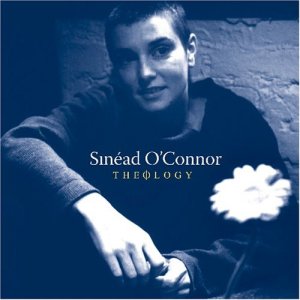
TheologyAfter recently giving birth to Yeshua in December, the iconic Irish artist Sinéad O’Connor is about to release her new album. Recorded in London and Dublin, and due out 22 June, ‘Theology’ is a 2 CD collection of deeply moving reflections based on the Hebrew Scriptures – Samuel, Song of Songs, Job, Isaiah, Jeremiah and numerous Psalms (33, 91, 130, 137) – songs which give voice to the passion, love, spirituality, rage and grace of these ancient prophets and address them to a new situation: Today. She says of the album, ‘I wanted to create a place of peace in a time of strife and conflict. ”Theology” is my own personal response to the times we find ourselves living in’. She also covers Curtis Mayfield’s brooding ‘We People Who Are Darker Than Blue’, Andrew Lloyd Webber’s & Tim Rice’s ‘I Don’t Know How To Love Him’, and the traditional ‘Rivers Of Babylon’ (with some new lyrics).

In a music-making career spanning over twenty-five years, beginning with fronting Dublin band In Tua Nua at the age of 14, O’Connor went on in 1987 to record her debut solo album ‘The Lion And The Cobra’, an album that raised the eyebrow of no lesser magazine than Rolling Stone who referred to it as ‘easily one of the most distinctive debut albums of the year’.

1990 saw the release of her second album, ‘I Do Not Want What I Haven’t Got’, with its haunting rendition of Prince song, ‘Nothing Compares 2 U’ – the song for which she is perhaps best known. It was also the year in which she won a Grammy for ‘Best Alternative Music Performance’. In an industry littered with boring and repetitious clones, and ignoring the marketing expectations of the international music industry, O’Connor continued, as she always has, to pave her own path. The result of the paving: her orchestral album ‘Am I Not Your Girl?’ which included a memorable rendering of the classic, ‘Don’t Cry For Me Argentina’.

Since then, she has in protest torn up a picture of Pope John Paul II on NBC’s ‘Saturday Night Live (in 1992), and released a number of albums of increasing maturity: ‘Universal Mother’ (1995), ‘Gospel Oak’ (1997), ‘Faith And Courage’ (1997), ‘Sean Nos Nua’ (2002), ‘She Who Dwells in the Secret Place of the Most High Shall Abide Under the Shadow of the Almighty’ (2003) and ‘Throw Down Your Arms’ (2005).

Her eighth, latest (and best yet) full-length album, ‘Theology’, is a double. Produced by Rubyworks, Disc 1, the ‘Dublin Sessions’, offers stripped down acoustic versions of the songs, while Disc 2, the ‘London Sessions’, offers mostly the same songs with full band. The acoustic disc was produced (with Sinéad) by noted trad guitarist Steve Cooney (known for his work with The Chieftains), Disc 2 by London-based producer Ron Tom.

It’s the kind of album you can listen to all week. Honest, challenging, thoughtful, mature, wonderfully timely … it is, quite simply, one of the best albums I’ve heard in years.