Australia

The Ledger of Our Lives: The Hobsons Bay Blues

In the halls of Hobsons Bay, they’ve drawn their battle lines,
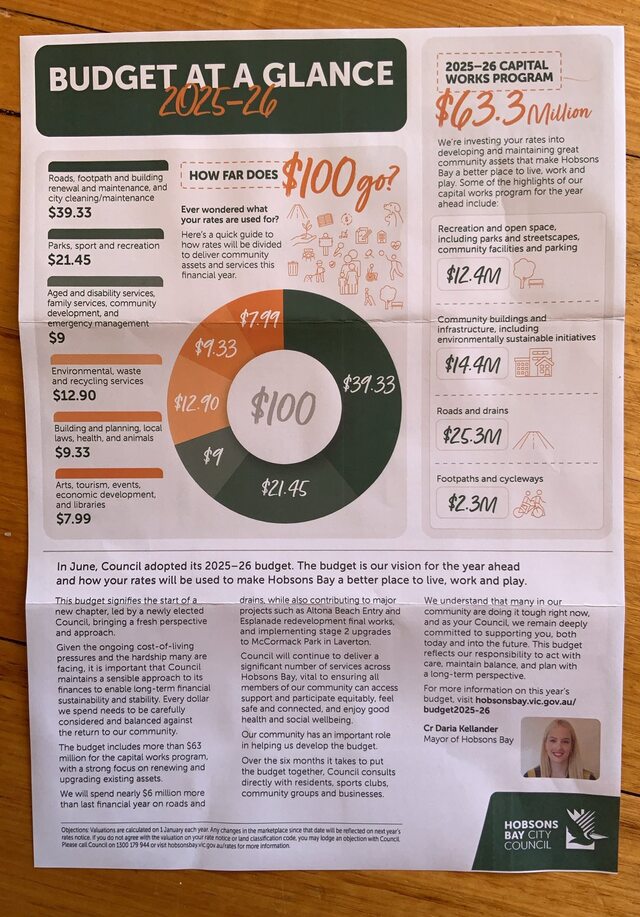
There’s squillions for the roads, while community declines.
Seven dollars ninety-nine for art, for books, for dreams –
Tell me what this says about our values, plots, and schemes.

Thirty-nine for every road, twenty-one for parks and play,
Nine dollars for the aged, the faint, the ones who’ve lost their way.
These numbers tell a story of a community that’s lost,
Where concrete speaks much louder, and compassion pays the cost.

Sixty-three million for the monuments we’ve planned,
While the homeless sleep in doorways throughout this promised land.
Where is the friendly shelter when the rain falls cold and hard?
Where is that stubborn hope when kindness seems forever barred?

Twenty-five million dollars flows beneath our very feet in drains,
While struggling families break apart under crushing financial strains.
No food banks in the budget, no refuge for the poor,
Just the thunder of construction shaking every weary door.

A mother reads to children by the light of shopping malls,
An artist paints on cardboard in abandoned bathroom stalls.
The programs fade to nothing while the asphalt spreads like flame –
These are the quiet victims of our civic spending game.

Twelve-ninety for the fragile earth that cradles all our dreams,
While thirty-nine pours concrete over rivers, fields, and streams.
The warming earth sends warnings through each rising tide and flame,
Yet still we pave our children’s paths with poison, steel, and shame.

Just pennies for the saplings that could clean our poisoned air,
While toxins flood our waterways without a cent of care.
No funds to plant the forests that our children’s lungs will need,
As chemicals keep flowing from our profit-driven greed.

Disability gets nine dollars in this cold arithmetic,
While millions fund the monuments to progress smooth and slick.
The numbers tell our story of a community grown numb –
Fine roads for all to travel, but life has been struck dumb.

Is this the cost of progress?
Is this what we are for?
At least the ledger’s balanced
though humanity’s no more.

*****

This wee poem, first published in Star Weekly, my local paper, was my response to the Hobsons Bay Council 2025–26 budget, which was mailed out to residents as a mode of positive promotion.

‘Blessed are the cracked, for they shall let in the light’ (Julius Henry Marx)

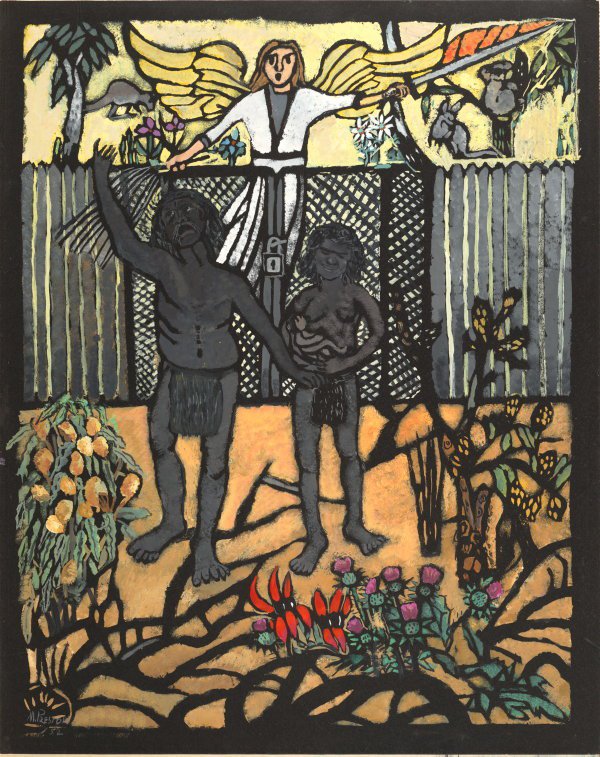
Christ as Strange(r)

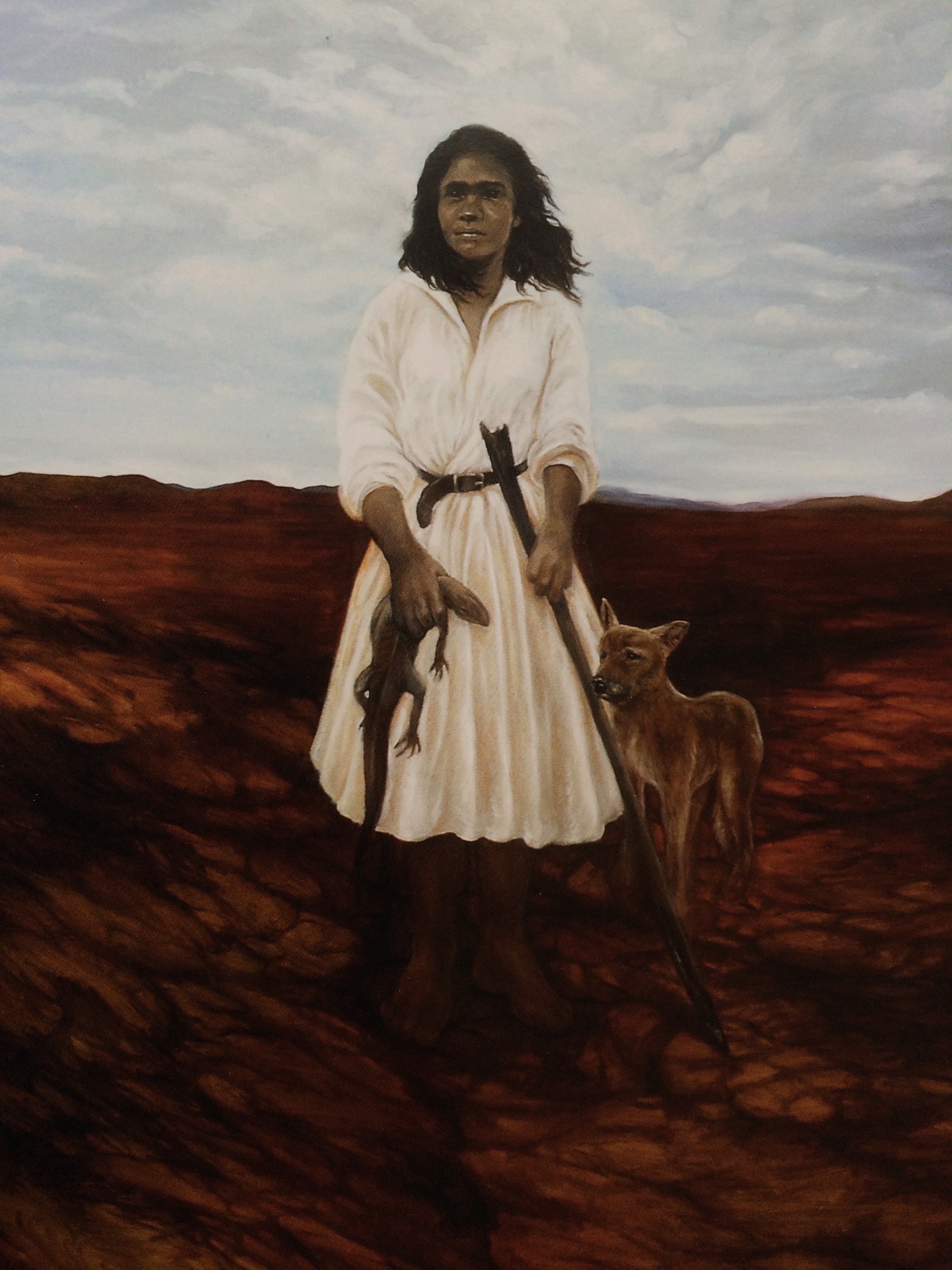
Julie Dowling, Mary, 2001. Oil on linen, 150 x 120 cm. State Art Collection, The Art Gallery of Western Australia, Perth, Australia.

I have a new essay out: ‘Christ as Strange(r): The Elusiveness of Jesus in the Work of Nick Cave and Julie Dowling’. In Seeing Christ in Australia Since 1850, edited by Kerrie Handasyde and Sean Winter, 149–66. Cham: Palgrave Macmillan, 2024.

The Abstract reads:

Strangely, Australian theologians have mostly been quite uninterested in pursuing the question of what an Australian Jesus might be like. This suggests an investment in a theological methodology at odds with the disruptive and inverting character of the presentations of Jesus offered in the Second Testament, wherein questions arising from particular contexts were considered basic for responsible theological work. Conversely, the figure of Jesus has occupied an endearing and idiosyncratic place in the broader Australian imagination. This essay represents an effort to listen to what two contemporary Australian artists—Nick Cave and Julie Dowling—make of Jesus and to consider some implications of their contributions for doing theology in Australia. Their work recognises that the question of Jesus’ identity and the countless cultures in which Jesus is woven cannot be unbraided, however interruptive and strange such a reality may prove to be. In testing the claim that it is only as a stranger that Jesus is ever a sign of the divine life among us, the essay is also an invitation to relinquish efforts to domesticate or homogenise Jesus. To experience this stranger is to experience one who ‘appears only in the moment in which we are dispossessed’ (Judith Butler) of them. This is the event that disrupts, disorients, and dissolves any sense one may enjoy of history’s continuity or possession. Recognition of this stranger is only ever the measure of our failure.

Wes Campbell: Disturbing Illusions of Peace

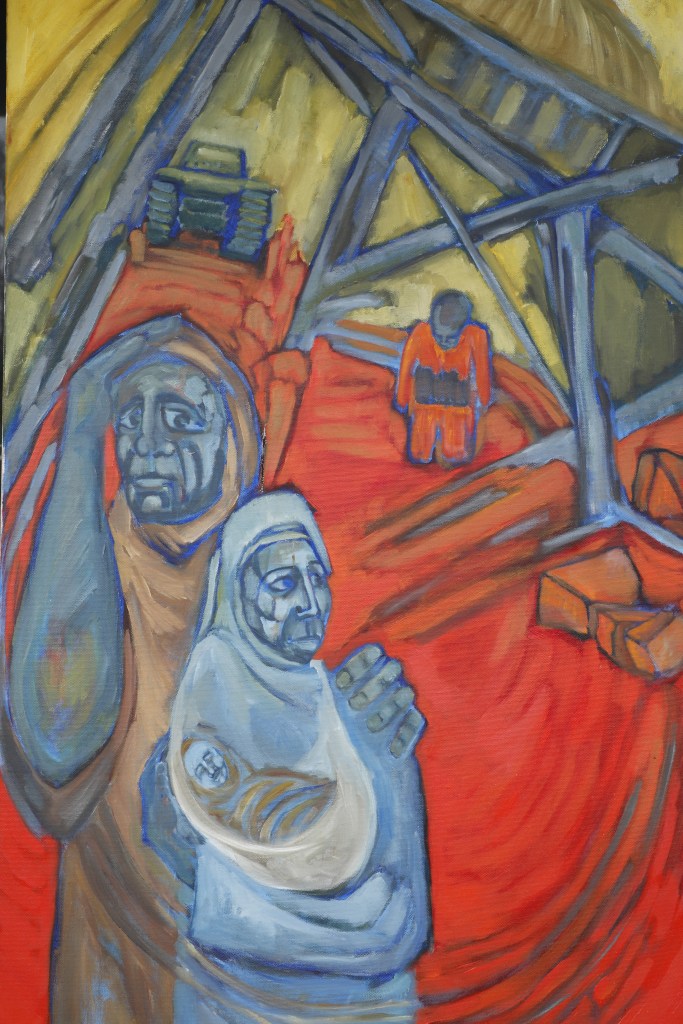
Wes Campbell, Encroaching Salt, nd.

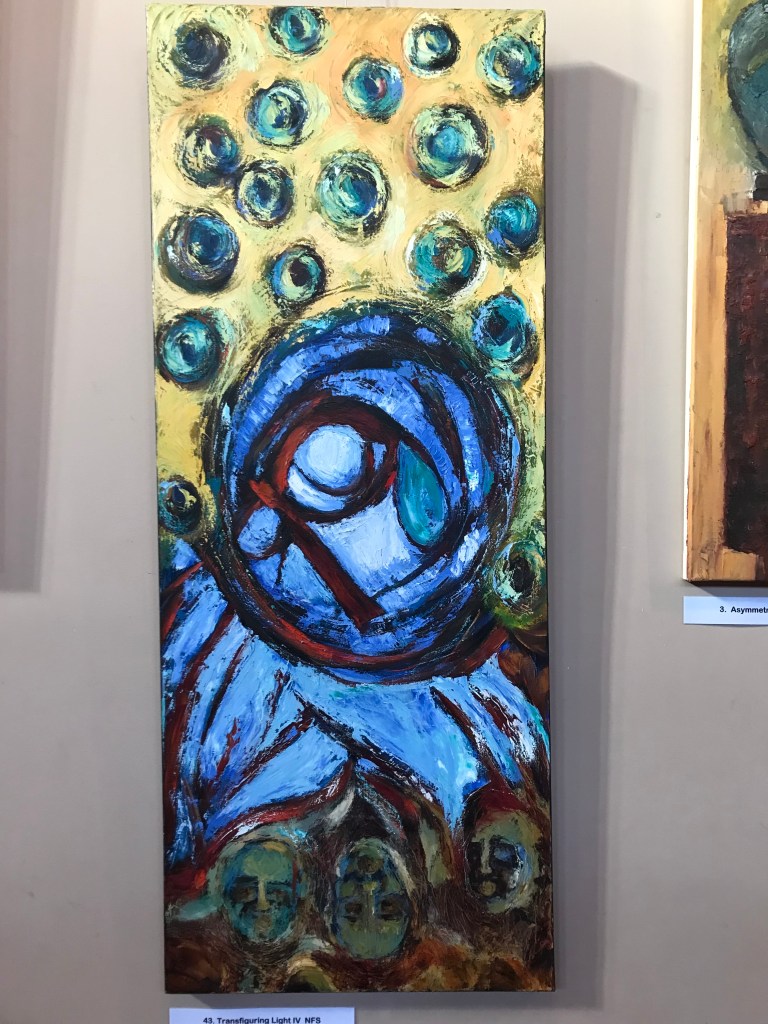
Last month, I had the immense pleasure and honour of speaking at the opening of an exhibition of Wes Campbell’s artwork. Wes is a theologian, artist, and (retired) Minister of the Word in the Uniting Church in Australia. An edited version of my talk is now available on the ABC’s Religion and Ethics portal.

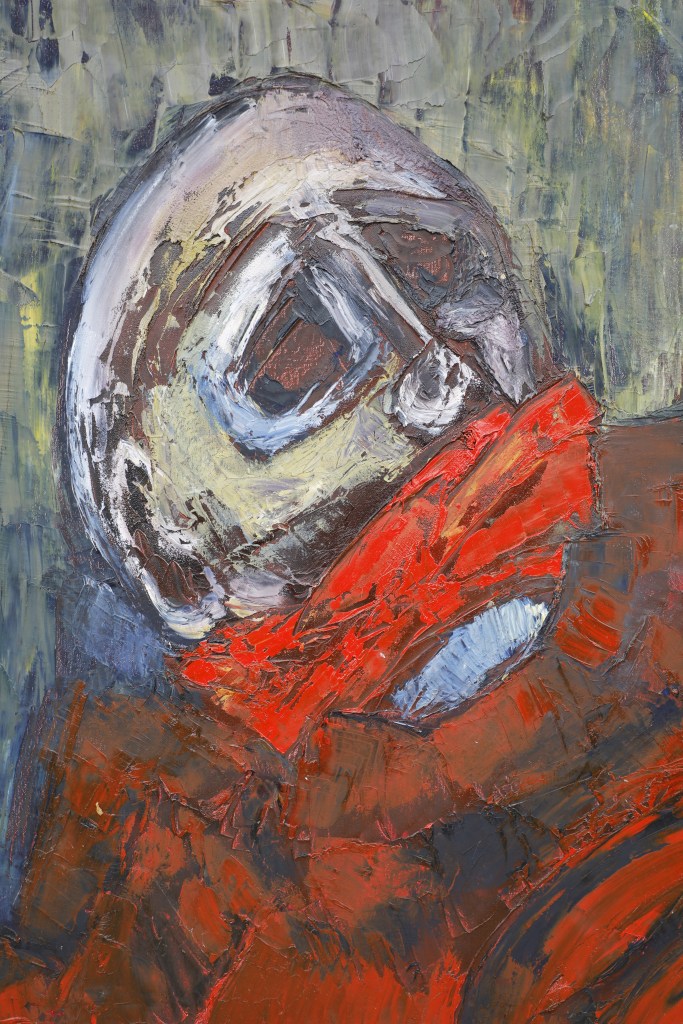
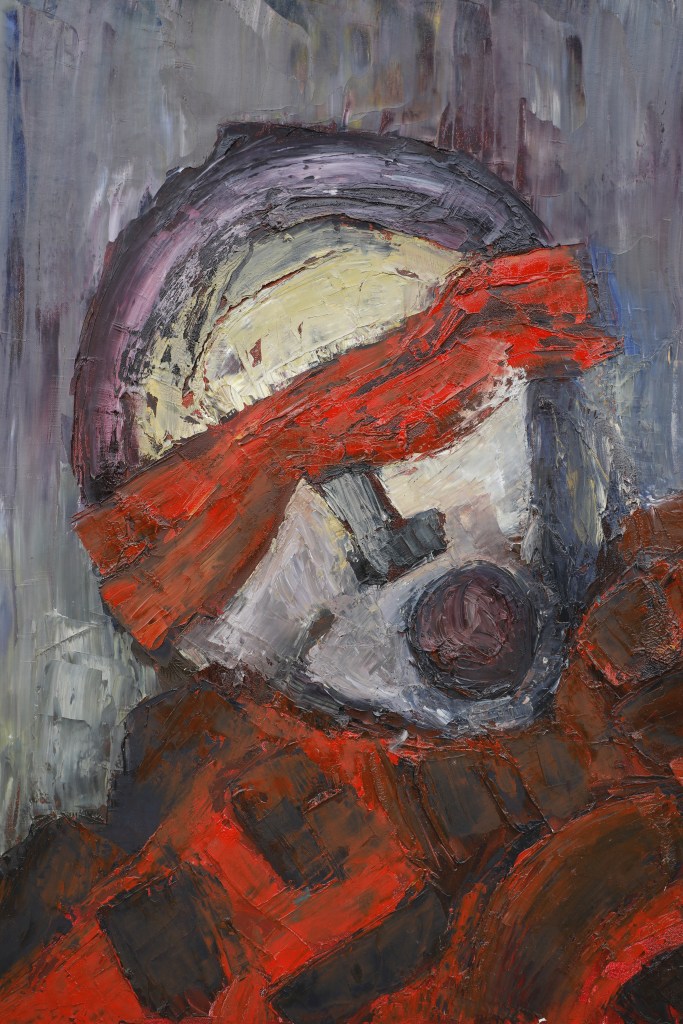
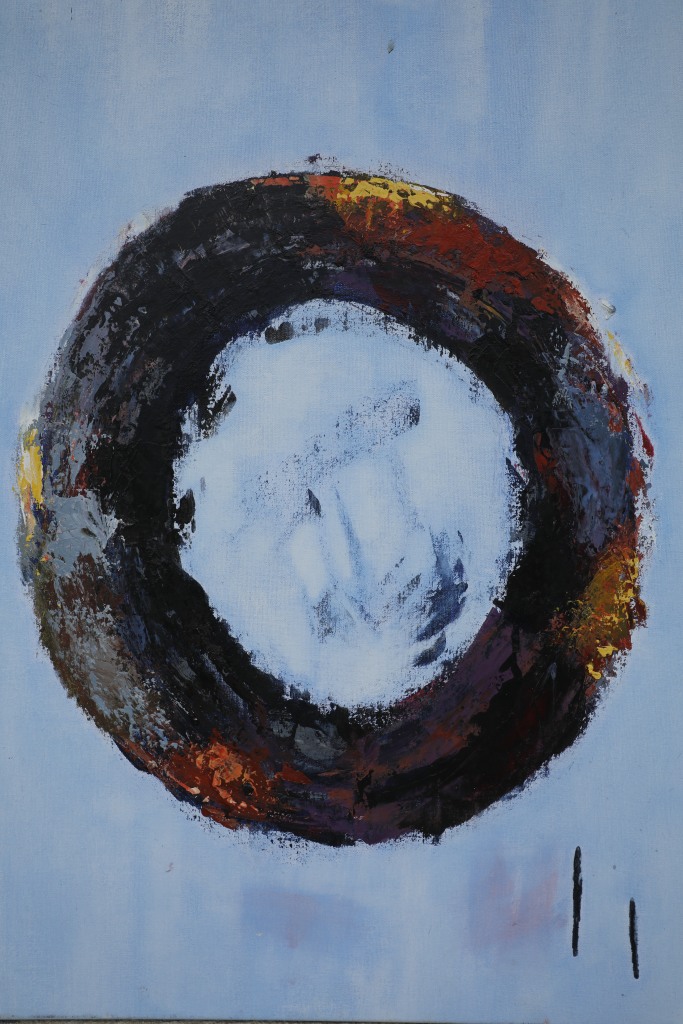
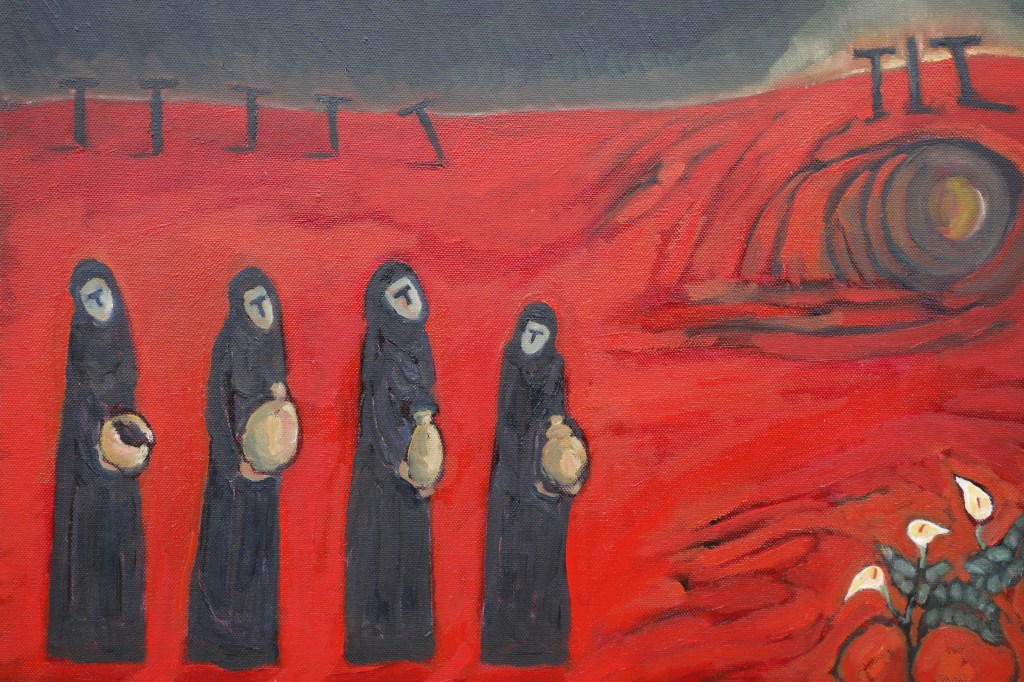
Below are a few more photos of Wes’ work – 1. Nativity; 2. Silence I; 3. Silence II; 4. Three Crucified Shirts; 5. Banksias and Leucadendrons; 6. Transfiguration of Christ; 7. Transfiguring Light IV; 8. Wholeness; and 9. Women Visiting the Tomb.

Race and Christianity in Australia

Vernon Ah Kee, 'Austracism', 2003. Prints, digital print, printed in colour inks, from digital file, 120.0 x 180.0 cm. National Gallery of Australia, Canberra
Vernon Ah Kee, Austracism, 2003. Prints, digital print, printed in colour inks, from digital file, 120 x 180 cm. National Gallery of Australia, Canberra.

I have a new essay out: ‘Race and Christianity in Australia’, Post-Christendom Studies 4 (2019–2020): 25–74.

The opening paragraph reads:

The thesis of this essay is that racism in Australia has explicitly Christian roots. In particular, these roots find their beginnings in the European story of Christendom. To defend that claim, the essay does three things. First, it traces the history of racism in Australia, mapping how immigration policies and practices regarding assimilation following the Second World War expose longstanding commitments to the idea of an Australia that is both “white” and “Christian.” Second, it explores how the roots of such racism intersect with and are sponsored by the “biological heresy” of Christendom and its practice of both politicizing and making “barbarians” of “the other.” Finally, it offers three brief theological reflections on the possibilities of an alternative Christian witness amidst the conditions mapped in the first two sections. Here the concerns are with conceptions of power, with what it means to speak of the Christian community as “the body of Christ,” and with the theological task itself.

You can read the rest here.

‘“A Pretty Decent Sort of Bloke”: Towards the Quest for an Australian Jesus’


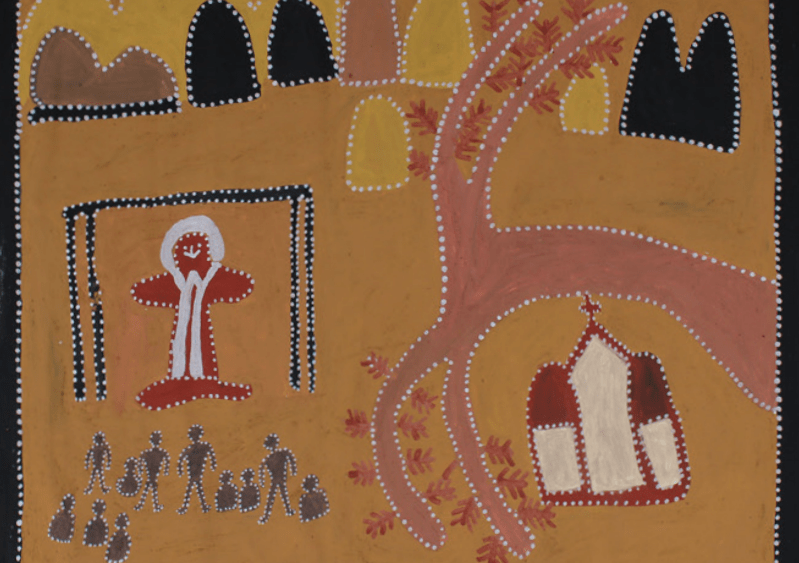
Queenie McKenzie, People talking to Jesus in the Bough Shed, 1995.png

Queenie McKenzie, People talking to Jesus in the Bough Shed, 1995. Christof Collection of the Diocese of Broome. This painting was the theme image for Catholic celebrations of NAIDOC Week 2019.

HTS Teologiese Studies / Theological Studies, a South African-based open-access journal, has just published a little piece that I wrote:

‘“A Pretty Decent Sort of Bloke”: Towards the Quest for an Australian Jesus’. HTS Teologiese Studies/Theological Studies 75, no. 4 (2019), e1–e10. (HTMLEPUB | PDF)

Abstract

From many Aboriginal elders, such as Tjangika Napaltjani, Bob Williams and Djiniyini Gondarra, to painters, such as Arthur Boyd, Pro Hart and John Forrester-Clack, from historians, such as Manning Clark, and poets, such as Maureen Watson, Francis Webb and Henry Lawson, to celebrated novelists, such as Joseph Furphy, Patrick White and Tim Winton, the figure of Jesus has occupied an endearing and idiosyncratic place in the Australian imagination. It is evidence enough that ‘Australians have been anticlerical and antichurch, but rarely antiJesus’ (Stuart Piggin). But which Jesus? In what follows, I seek to listen to what some Australians make of Jesus, and to consider some theological implications of their contributions for the enduring quest for an Australian Jesus.

The article can be accessed here.

#Manus

Asylum-seekers look through a fence at the Manus Island detention centre in Papua New Guinea

Richard Flanagan writes:

So this is what we have come to as a nation.

The wretched of the earth, because they were no longer safe where they lived, sought to come here. With a determined cruelty, we kidnapped and imprisoned them in Pacific lagers. These lagers became synonymous with the idea of hellholes because it was important to our government that they be – ­and be known as – hellholes.

On this policy of deterrence, as it was called, which had as its declared purpose to make innocent human beings suffer indefinitely, we spent billions of dollars. To this end we had truck with vile regimes such as Sri Lanka’s. And to this end we began forsaking our democratic rights.

In the camps the refugees were made to answer to numbers given to them as their new identity. Denied their names they were not even allowed their stories. Every attempt that could be made was made by the Australian government, from the petty to the disturbing, to deny journalists access to the Pacific lager. When it came to imprisoned refugees free speech became a crime: for some years any doctor, nurse or social worker in the camps who publicly reported on the many instances, now well-documented, of rape, murder, suicide and sexual abuse of refugees was liable to two years’ imprisonment.

And why?

Because evil was being done to the innocent, and to that truth there is finally no justification that even the most powerful could make. And so it mattered that Australians not know of the mounting crimes for which all Australians will be finally accountable.

All this too was done in our name by our governments, of both left and right. And, more or less, if we didn’t tacitly agree, few of us disagreed enough. And perhaps we didn’t really want to know.

Once we Australians had led the world in democratic reform. Once it seemed possible that we might overcome the violence of our wars of invasion and reconcile with our Indigenous brothers and sisters. Once it seemed that we might make of ourselves a beacon for freedom and tolerance, a country of many peoples that welcomed the newly dispossessed as we had in turn once been welcomed. We were a nation born out of the evils of invasion and convictism. It was not that we saw ourselves as infinitely perfectible. It was rather that we were aware of what the alternatives were.

Now we are seen globally as the inventors of a particularly vile form of 21st century repression, in which the innocent are subjected to suffering in a prison where the crime is never named, no sentence is ever passed, and punishment is assured. For this achievement Australia now enjoys the praise of European neo-fascists and American white supremacists.

Some praise. Some achievement.

It is hard to say what is most horrifying in this long saga but the intent of the Australian government to now abandon the refugees it kidnapped, scattering them across an impoverished and corrupt country with a notorious reputation for violence, is an affront to any notions of humanity or decency.

When, out of fear for what might befall them should they leave, some hundreds of refugees refused to move from the Manus compound, there began a protest in which the refugees used the only thing left to them: their bodies.

Over the years we had taken away their rights, their future, even their hope. Three weeks ago we cut off their water, food and medical supplies. Risking starvation, dysentery, cholera and violence, some hundreds of refugees asserted with their flesh the one thing which Australia could not steal: their human dignity.

On Wednesday the UNHCR described what was now unfolding on Manus as a humanitarian crisis that was entirely preventable and a “damning indictment of a policy meant to avoid Australia’s international obligations”.

On Thursday 12 Australians of the Year signed an open letter calling on the government to restore water, food supplies, electricity and medical services to the refugees, warning it was a “human disaster that was unfolding” and that “it was inevitable that people will become sick and die”.

Instead of this moderate course of action, on the same day police in Papua New Guinea began clearing the Manus compound. According to witnesses, refugees were beaten with sticks to forcibly relocate the remaining hundreds of protesting men. This violence against the most powerless and weak was supported and promoted by the Australian government, as it has previously supported and sanctioned the poisoning of the refugees’ water collected in from sumps and rainwater, the destruction of the few pieces of property they possess, and the destruction of their scant remaining food and medicine supplies.

And then there came the news the Iranian journalist and refugee Behrouz Boochani had been taken away by PNG’s much-feared mobile squad, a notorious paramilitary police unit which, according to a report in the Age in 2013, is “allegedly responsible for rapes, murders and other serious human rights abuses” and funded by Australia’s immigration department “to secure the Manus Island detention centre”.

Behrouz Boochani was targeted for one reason and one reason only: he has been the voice of truth speaking from the appalling reality of the Pacific lagers.

It is difficult to believe that all this is not being masterminded – if the word is not too grand for such thuggery – at the highest levels of the Australian government.

Released some hours later, Boochani tweeted that he had been left handcuffed for two hours while he was “pushed several times”, had his belongings destroyed by the police, and was yelled at by the police commander that he “was reporting against us”. Boochani knows now, more than ever, that he is a marked man.
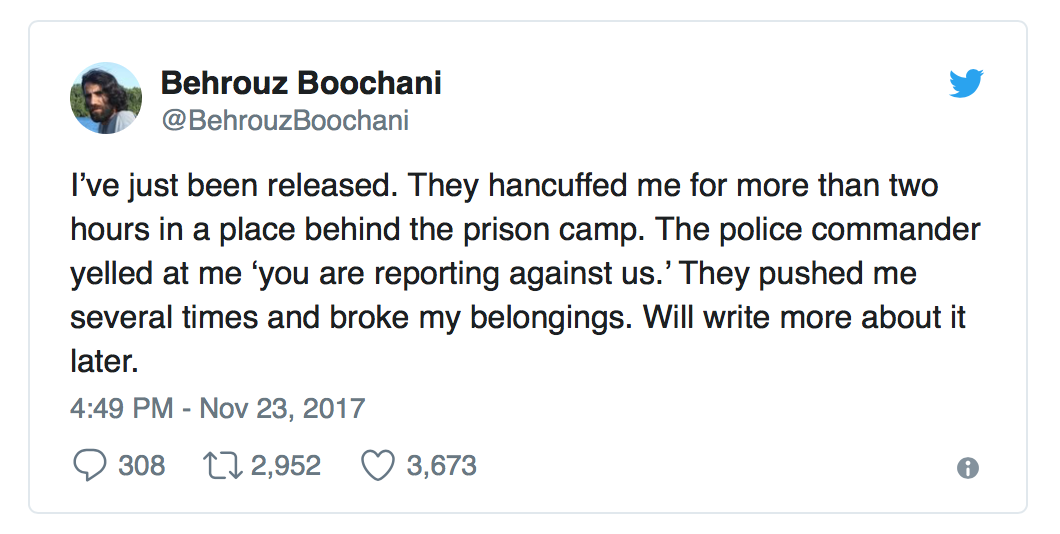
Screen Shot 2017-11-24 at 1.32.03 pm

And in these circumstances he has, in characteristic fashion, continued to report.

His courage over the four years of his internment in the face of the horror of Manus – a hell of repression, cruelty, and violence – has been of the highest order. Behrouz Boochani kept on smuggling out his messages of despair in the hope we would listen.

It’s time we did.

All states commit criminal and sometimes wicked acts. The necessary mark of a democracy is the freedom to tell the truth about these crimes so that they can be ended and the guilty punished.

To be a writer is not to simply believe in freedom but to practise it every day with your words. Each word allows us to find ourselves in others, and in others to know we are not alone.

In the vacuum of reportage that the Australian government created one man kept getting the truth out. Behrouz Boochani’s words found me as they found so many others.

Now I hope mine find him.

We choose whether we live or whether we wait for death. Through his words Behrouz chose to live. His words showed that while our government had jailed his body, his soul remained that of a free man.

I am not sure if I would have had his courage were I to find myself in his situation. Perhaps that is why I admire it deeply.

Behrouz Boochani reminded Australia of what it had become. We should thank him and honour him for his warnings of what was happening to our country. Instead we enabled his imprisonment, and who can say what this marked man’s fate may yet be?

His detainment yesterday highlights the moral bankruptcy of the Pacific solution, its essentially criminal nature, and the growing dangers it presents to our democracy.

The shame of this time will outlive us all. Our children and grandchildren will have to remake the broken trusts, the sacred freedoms, the necessary liberties, that we traded away in our ignorance and our gullible fear. They must rekindle as necessary national virtues kindness and compassion to the weakest.

But we must begin the work now, with urgency, with determination, of rebuilding our nation’s honour, and our collective dignity. Because if we don’t, if we think it doesn’t affect us, the alternative is that what is happening on Manus will begin to happen here.

At the time of writing, Manus remains in crisis, with 300 refugees still in the compound. Who knows what fresh onslaught of violence is awaiting them? While outside wait the paramilitary thugs, inside the refugees search in the darkness for drinkable water, they scrounge for what little food was not destroyed, these 300 men who now face the determination of our government that they vanish from the face of the earth, and with them their terrible story that shames us all.

But that story demands investigation, not obliteration.

There must be a royal commission into the Pacific camps, the grotesque amounts of money wasted on them, the lies, the deceit and undemocratic practices used to ensure their ongoing existence, to determine the extent of Australian involvement in the PNG police’s latest acts, and to ascertain and if necessary prosecute those responsible for the many well-documented cases of the abuses of human rights on both Manus and Nauru.

If we can muster no feeling for the starving, sick and thirsty refugees waiting in the ruins of their prison for the next attack, spare a thought for what our future might look like if Peter Dutton begins persecuting journalists here with his newly acquired secret police powers. We should not forget the plans in 2015 for Dutton’s newly militarised Border Force officials to patrol Melbourne streets checking people’s papers, abandoned only in the face of overwhelming public anger.

Behrouz Boochani may be the first journalist to be detained for revealing the evil of our Pacific gulags. But how can we be confident he will be the last, and who knows what new government folly will need a repressive cloak of secrecy to safeguard its many failings?

In Boochani’s writings is a spirit Australia has lost: brave, honest, generous and free. Once he wanted to come here. Now we need him and all that he stands for more than ever.

And if, in these next few days any harm should come to Behrouz Boochani, for whose safety many now fear, the responsibility for that crime will not fall to PNG government or its police. It will be Peter Dutton’s.

[Reprinted with permission from The Guardian]

[Image: Reuters]
What to do with your Australian Marriage Law Postal Survey form: a 5-step guide

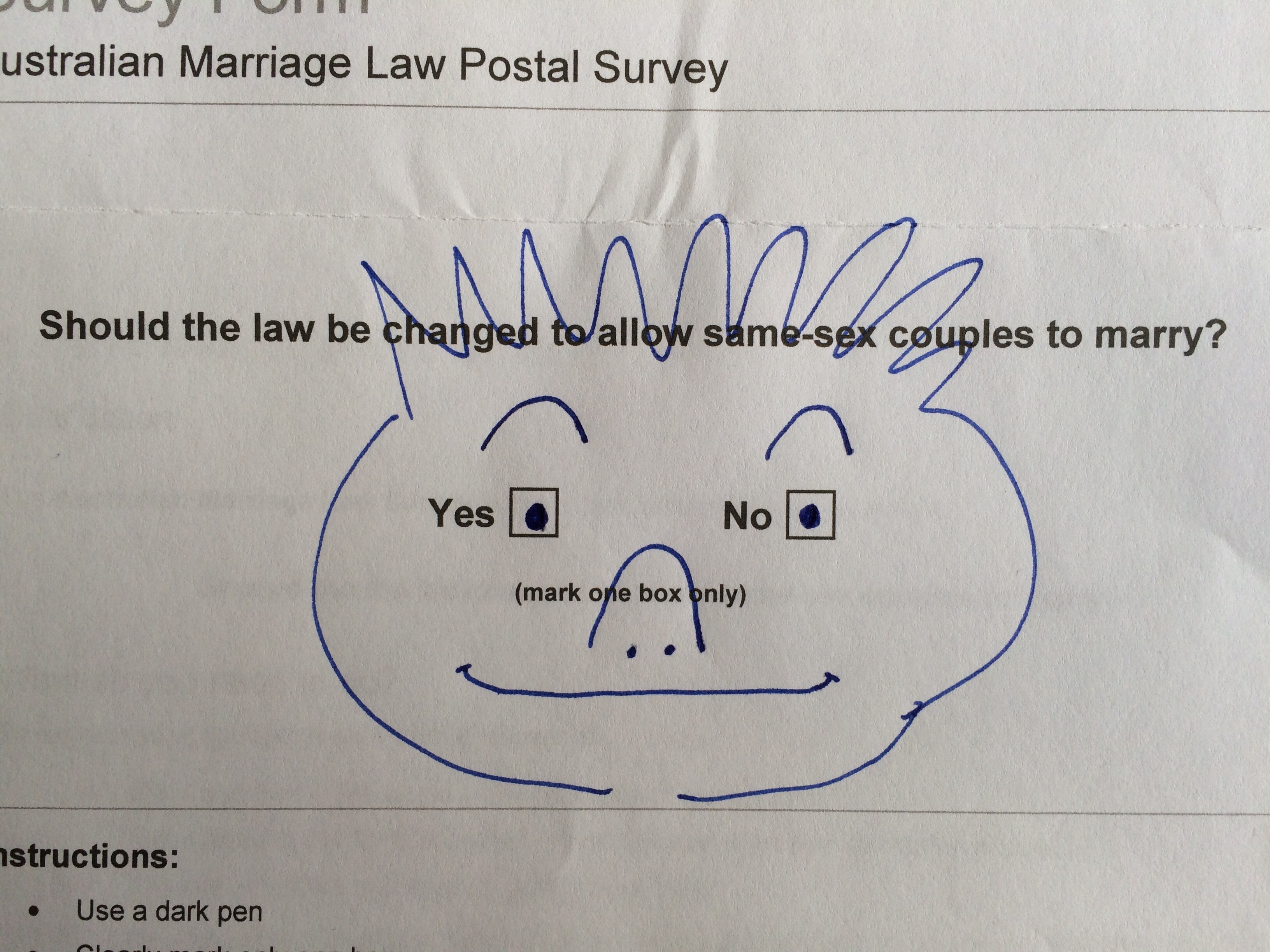
Step 1. Draw a pretty picture of yourself on the form. Claim it as ‘yours’.

FullSizeRender.jpg

Step 2. Add some style.

IMG_8578.JPG

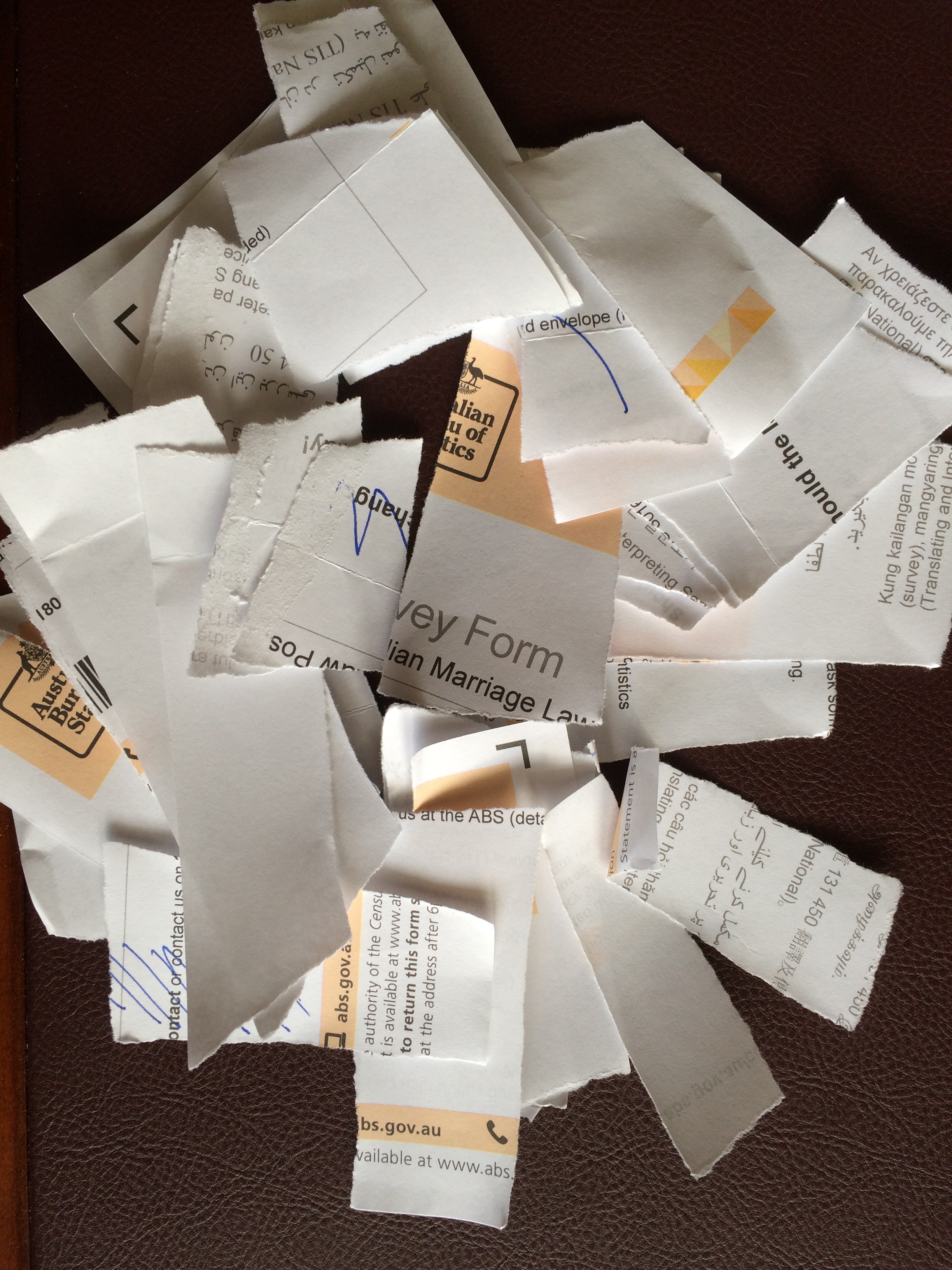
Step 3. Create a little jigsaw. Be sure to ‘lose’ a couple of pieces too. That way, your form can serve as a kind of parody of the process itself.

IMG_8579.JPG

Step 4. Help the little bastard find its way to the recycle bin. The ‘lost’ pieces should be placed in the regular rubbish.

IMG_8581.JPG

Step 5. Brew yourself a nice cup of tea.

IMG_8598.JPG

Note: In my view, the postal survey is an insane and destructive process that undermines the integrity and responsibility of the federal parliament, and in so doing weakens a key mechanism whereby human rights are legislated and implemented. While I certainly welcome a change in law (something I’ve written about here) the ends do not, in my view, justify the means. On this, I agree with Michael Kirby v.1. That said, I am open to the possibility that time will prove me wrong about that. In the short term, at least, the process will, one hopes, assist No voters to accept the outcome less painfully than they might have otherwise.

AG Lionel Bowen on the principles for an Australian Human Rights Bill

Hear, hear:

‘A strategy of compliance with international human rights standards which does not involve legislative definitions of rights must be half-hearted and hollow, if not suspect. Those who argue that our existing legal and social institutions make a Bill of Rights unnecessary, overlook that the common law does not offer clear or wide-ranging statements of an individual’s freedoms and liberties; at best, the common law offers remedies in a haphazard and incidental way often only after satisfying complex procedural requirements; the power of the Parliament to confine or withdraw totally common law “rights” – this may occur unintentionally and even unnoticed by the public at large; the fragility of community attitudes and pressures on which so many of what are popularly regarded as individual freedoms rely. In the light of this, the Government does not believe that it is sufficient or appropriate to rely on administrative measures alone and those aspects of our common law or general culture which recognise rights here and there. Furthermore, the enactment of a Bill of Rights has a vital educative function. It has the capacity to inspire respect for fundamental freedoms and liberties by setting out rights in positive, declaratory form. It is a broadly based declaration drafted in Australia for Australians, in conformity with international standards. Alternatives whether reliance on the common law, particular legislation or administrative mechanisms and programs without more do not spell out and proclaim key rights and concepts in the same way as does the Bill of Rights’.

– Lionel Bowen, via Frank Brennan

On class (et al.)

HBT.jpgEvery now and then – and more ‘then’ than ‘now’ – public discourse concerns itself with the question of class. (This happened briefly, for example, after the recent, although it doesn’t feel that way, presidential elections in the USA. At the time, some good commentary appeared in the US, and some people even wondered for a moment if Bernie wasn’t as mad as previously thought.)

A recent essay titled ‘In Defence of the Bad, White Working Class’, written by Shannon Burns and published in Meanjin, opens up similar questions for our context here in Australia, although the implications of its judgements and insights remain clearly wide in scope. It discusses racism, multiculturalism, class values, social and political discourse, tribalism, and more.

Burns believes that ‘progressives’ – among whom are the kind of chardonnay socialists who read Meanjin – ‘might benefit from considering lower class points of view, and the experiences that forge them, at least once in a while. They might also find that addressing those sensibilities, instead of ignoring or deriding them, opens up new pathways to mutual understanding and cooperation’.

As a taster, here are three snippets: the first on political discourse, the second on grievance as a sign of middle-class privilege, and the third on politically-correct speech:

The habits of progressive social and political discourse almost seem calculated to alienate and aggravate lower class whites.

….

Indeed, the willingness to expose your wounds is another sign of privilege. Those for whom injury has a use-value will display their injuries; those for whom woundedness is a survival risk, won’t. As a consequence, middle-class grievances now drown out lower class pain. This is why the wounded lower classes come to embrace conservative discourses that ridicule middle-class anguish. Those who cannot afford to see themselves as disadvantaged are instinctively repulsed by those who harp on about disadvantage.

….

Consider who determines the standards of so-called politically correct speech. Are they primarily negotiated across classes and social groups, or are they determined from above? If the latter is the case, then it would be senseless to deny that political correctness, as it stands, is a form and expression of elitism. When rules of expression are forced on people who have their own peculiar relationship to speech, and who can reasonably be expected to struggle with the constraints, it is not a fair imposition. Political correctness is hardly the evil that conservative commentators make it out to be, but as a moral burden it is clearly weighted against the lower classes, who are smart enough to recognise when they are being set up to fail.

Read the full essay here.

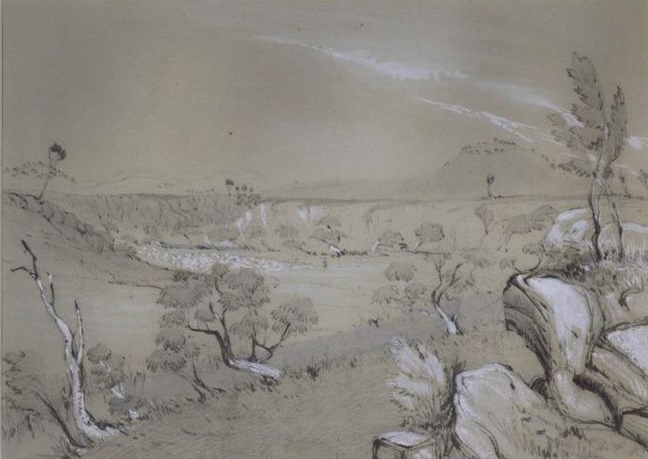
When Footscray had a beach, and the Maribyrnong River flowed through ‘grassy country’

George Gilbert, Maribyrnong River (c. 1850)

George Gilbert, ‘Maribyrnong River’ (c. 1850)

It’s a cold day here in Melbourne, perfect weather for catching up on a bit of reading. So I’ve been reading a few little books on local history, particularly on the Wurundjeri and the Yalukit-willam people. At the moment, I’m particularly enjoying Isabel Ellender and Peter Christiansen’s beautifully-produced book People of the Merri Merri: The Wurundjeri in Colonial Days. And a cup of tea or so ago, I was struck by these words by Gary Presland from his little booklet The First Residents of Melbourne’s Western Region. I imagine that this was partly because I grew up on the Maribyrnong River, and still travel along its banks on most days:

When Europeans first settled in the Port Phillip district, they saw a landscape which looked vastly different to that we see today. But that landscape itself was a result of long processes of change, some of which had been going on for hundreds of thousands of years. There is some evidence to show that people were living in the Maribyrnong River [sic] valley, near present-day Keilor, about 40,000 years ago. Since that time there have been enormous changes to the landscape – all of which Koories [sic] must have witnessed and lived through.

Many of the most spectacular and significant changes to the countryside have been to the Maribyrnong-Yarra River system.

Ten thousand years ago the valley of the Yarra River was more than thirty-five metres deeper than it is today and the river flowed at the bottom of a deep canyon. At that time the world’s sea level was considerably lower because a great deal of water was locked up in the ice sheets covering Europe. So there was no water in Port Phillip Bay, and instead of flowing through the flat land in West Melbourne the Yarra turned to the south and flowed down the eastern side of a large grassy plain. At this time the Maribyrnong River flowed more directly to the south east and joined up with the Yarra near what is now Williamstown.

In the long period that Koories have lived in the Melbourne area, the Maribyrnong and Yarra River system has deposited a great deal of mud and silt in the river valleys, and as a result the ground level has been raised by hundreds of metres.

From about 10,000 years ago, the sea started to rise, as the Ice Age came to an end. As the ice sheets in the northern hemisphere melted, the water flowed back into the sea and the level slowly rose. By about 8,500 years ago Bass Strait was flooded, and the gradually-rising sea had reached Port Phillip Heads and began to fill the area of Port Phillip. The sea continued to rise until about 7,000 years ago, by which time the level of water in the Bay was much higher than it is today. The top of the Bay then stretched as far north as Flemington and water covered the area of Flemington Racecourse and many of the inner city areas such as the lower parts of West Melbourne, Port and South Melbourne, and St Kilda. At this time Footscray was a beach-side area and the Maribyrnong River was affected by tides as far north as Braybrook.

When the sea level stabilized at its present height, about 5,000 years ago, the waters of the Bay retreated a little. During the previous 2,000 years a new land surface had been built up by the accumulation of silt in the bay water. The ground surface in the flat area where Victoria, Swanston and Appleton Docks were later constructed, and through which Footscray Road and Dynon Road now run, is a result of this build-up of silt. [ed. – You can read more about that here.]

When Europeans first arrived, they were attracted by the sweeping grasslands to the west of the Maribyrnong River. The wide volcanic plain, the edge of which is now covered by the western suburbs, presented rich pastures for the colonists’ sheep. There was a thick covering of native grasses, with a few trees growing along the major water courses, such as Kororoit Creek.

Those ‘sweeping grasslands’ were elsewhere described thus by George Robinson when he visited the Port Phillip settlement in December 1836:

Saw nothing but grassy country, open forest, plenty gum and wild cherry. Saw where the natives had encamped, plenty of trees notched where they had climbed for opossums …. There are herds of forest kangaroo immensely large, a short distance from the settlement, also flocks of emus on the western plains fifty and sixty in a drove …. The country through which I travelled to the Salt Water (Maribyrnong) River had a park-like appearance, kangaroo grass being the principal, the trees she-oak, wattle, honeysuckle. Saw a blue flower, thorny appearance. Numerous old native huts.

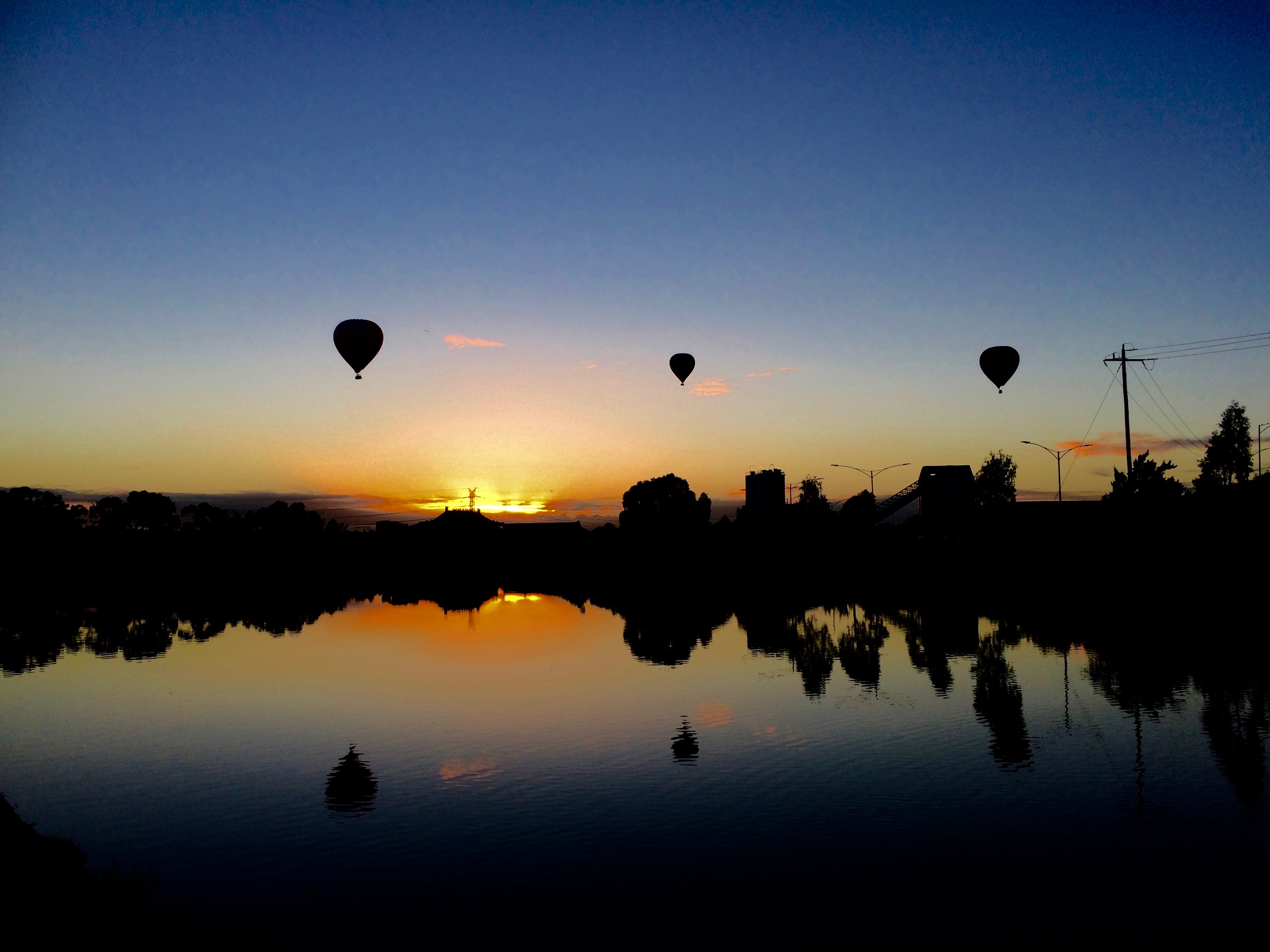
IMG_8442

Maribyrnong River, Sunrise. 15 July 2017.

On religion (and theological education) in Australia

Australian religion

Another little thought provoker from an old edition of Meanjin, this time from around 40 years ago (although most of it could have been written last week, or next week):

Unlike those in Britain, Europe or America, our universities have never taken the study of religious thought seriously (Melbourne in fact explicitly excluded Divinity in 1890), and there are no great theological colleges in Australia; until recently the churches imported rather than bred their theologians. The Anglicans and the Romans in particular have had a fractured system of small-time colleges, each with its own emphasis, which are only now being rationalised; all theological colleges are heavily oriented towards the vocational training of clergy, rather than the intellectual critique of the church’s language about God. The last few years have seen the beginnings of substantial theological scholarship and discussion, but each publication is overwhelmingly a contribution to a debate centred in Europe. It may be objected that Australian religion is vastly wider than what goes on in theological colleges, and so it is. But I submit that the failure so far to spawn a tradition of self-sustaining theological scholarship and debate tells us something significant about Australian religion.

There is a second point here as well. Religion in Australia has been, and to a large extent is still, very derivative. The Irish consciousness of the Catholics needs no elaboration, and has caused considerable difficulties to continental Catholics who have come here in the past 30 years; the Anglicans are still in the process of dropping the name ‘Church of England’; Scottish accents have always commanded especial respect in Presbyterian Assemblies. More recently, the ‘evangelical’ Protestants have turned to America to import business models and techniques.

From the early days of the colony, there were groups – the emancipists, the larrikins, the battlers – who thought of themselves as Australians and scorned the ‘new chums’. But these were precisely the groups who were little affected by religion, whether in the formal guise of the churches or through the missions of the evangelists. This striking disjunction is marvellously illustrated by the uncultivated youth in a magistrate’s court about 1840 who, when asked his religion, replied ‘I am a Native’. The foreignness of the Australian Churches, whatever their denominational allegiance, was indeed foreshadowed in the First Fleet; the Church arrived here ‘on the wrong side’, in the presence of an officially-appointed chaplain.

Nationalistic self-identity had, therefore, little effect on religious consciousness: Australia has not even produced its own analogues of the off-beat American sects. All the ‘way-out’ religious groups appearing here with significant impact have been imported. And, of course, in this very paper I have had to take ‘Australian religion’ with the implicit gloss ‘white’: the mythological structure of the Aboriginal ‘dreaming’ has contributed nothing to white religious thought here, however much it has intrigued anthropologists. There has been remarkably little indigenisation.

The picture I am painting may change. In the last year or so one can detect what might prove to be the first stirrings of a genuinely contextual articulation of an Australian religious outlook. (It will be interesting to see whether the new Uniting Church of Australia inaugurated in July can rise to the challenge.) More characteristic has been the short life of Charles Strong’s Australian Church, with its simple Unitarianism, which never really got off the ground.

For the moment, the essentially derivative nature of Australian religion remains more striking. The way post-war migrants have brought their own churches with them, be they Gereformeerdekerk or Serbian Orthodox, has only accentuated this fact. And if we add to that the manner in which the population from the beginning, even if mainly falling under the general classification ‘British’, owned different national and ecclesiastical allegiances with none predominant, then it follows that the Australian church scene is characteristically sectarian ….

The sectarianism of Australian religious life has, of course, had an enormous influence on social and political affairs. The centralised and bureaucratic shape of our education systems was the direct outcome of bitter religious rivalry and distrust last century; State aid for church schools remained the principal issue of religious-political interaction until the Whitlam government established the Schools Commission to defuse the issue.

More generally, the role of the churches in Australian political life has been to reinforce our pervasive conservatism. This role has been accomplished in two ways: precisely by emphasising their derivativeness, the churches have provided symbols of famililiar security in a strange, unsettling environment, and by underpinning a vague liberal-humanism the churches have provided a stable value-system within which personal and political questions can be discussed without serious clash between church and state …. Yet while Christianity has served this conservative role in these ways, it has made no clear doctrinal contribution to the sense of national identity of the kind we noted in America. Insofar as that identity has been articulated in terms of the Anzac tradition, its religious motifs are more reminiscent of a Mithraic blood sacrifice of immortal youth than of the Cross ….

This brings me to the next point: there are regional differences which talk about Australian religion should not obscure. South Australia … has a different denominational mix from the national average; Methodists, Congregationalists and Lutherans have been more numerous there. But denominations aside, there is a striking difference between Sydney and Melbourne right across the religious board. Let me remind you of some facts. It was in Melbourne that the Catholic National Civic Council had its base and Santamaria’s groupers were most influential. It is in Melbourne that the predominantly Anglican Brotherhood of St. Laurence operates. It was in N. S. W. that the Presbyterian Church split right down the middle over church Union. Melbourne Baptists tend to look to English Baptists for guidance [ed. – If anyone knows of such a gang, then do please introduce me]; Sydney Baptists to American Southern Baptists. Melbourne has its College of Divinity in which Presbyterians, Methodists, Congregationalists, Anglicans and Jesuits now work closely together …. Religious life in Melbourne has always been more urbane, more ecumenical, more catholic in its social vision, more Tory in its conservatism, whereas Sydney has been more assertive, more sectarian-fundamentalist …, a tendency which becomes stronger the further north one goes ….

Insofar as Australian religion is derivative from Europe, it has inherited the theological problematic of Western Christianity. But our situation here is different; the very fact of migration has altered what comes as historically given. The problem of how to overcome nihilism, I want to suggest, likewise requires a different response here …. [We Australians] know ourselves to be thrown into a world in which we are not at home. (Indeed many generations of Australians referred to Britain as ‘home’, and we still cringe around the southern and eastern seaboard.) Hence also the conservative, derivative character of church life; caught up as Australians are in the rapidity of modern social change, before any deep cultural traditions could have become established, the churches can provide rare havens of familiar security. Seen in this perspective, it is no longer surprising that the churches which are, by secular measures, most ‘successful’, are precisely those which appear aggressively old-fashioned, and offer simple assurance.

Further, the tranquillised self-assurance which [Martin] Heidegger takes to characterise inauthentic Being-at-home is highly manifest in contemporary Australia. Unlike people in other countries, we know in our hearts that the rhetoric of public life is largely phoney, even as we continue to invoke it. Our overwhelmingly suburban life-style, it seems to me, has to be explained in terms of an obsession to gather material possessions into the supposed security of one’s own home as a compensating reaction to our corporate lack of natural community. Heidegger could be describing Patrick White’s Sarsaparilla ….

The relevance of all this for our character-sketch is that our cultural heritage is not rooted here. Our form of estrangement is not the European one of a culture which has collapsed in on itself to find nullity at the heart of its being. But neither are we at home; in their different ways, the banality and crudity of our everyday Ocker, the strident assertiveness of our churchly behaviour, the haunting elusiveness of the quest for wholeness which pervades our best literature, all testify to this ….

Perhaps we need to ask ourselves more deeply why it is that the Outback still figures so forcefully in our imagery, even though we flee from its untameable emptiness into the seeming security of suburbia. Our consciousness is shot through with that sort of ambiguity: ambiguity about authority, which is reviled and yet conformed to; ambiguity about the land, which is shamelessly exploited and yet cannot be domesticated; ambiguity about ourselves, as a people oriented towards the future yet clinging obsessively to old, familiar forms of thought and social action.

My suggestion, made with great tentativeness and temerity, is that we stand out into emptiness. There is none of Heidegger’s typically European rootedness (Bodenständigkeit) here, and that, I submit, is what unifies the traits of Australian religion I have noted into a single character.

But emptiness is not nothing; it is the uncanny limit of our self-assertion, a beyond, an ‘outback’ which indwells our existence, curbing any pretensions to absolute knowledge or authority. This deep, inarticulate sense of a limit is the correlative of the recognition of the contingency of our being-in-the-world. Practically, it means that we are driven back into our situation, to grapple with the recalcitrant nature of what is given – our so-called materialism and pragmatism. Theologically, it means that the absence of God is not nothing; it is the particular mode of his presence. At one level, the conservative-assertive style of the churches can be explained as a curious refraction of that theological situation within a derivative culture. At a deeper level, a more positive articulation of how we know ourselves to be contingent beings ‘thrown’ into a reality which transcends us and defies our efforts at domestication, might yet provide a basis for an authentic religious consciousness in this country.

– Richard Campbell

Some Recent Watering Holes

croft-shutmouthscream-detail-2016

Brenda L. Croft, ‘shut/mouth/scream’ (detail), 2016. Source


I haven’t posted one of these for a while. Here are a number of pages I’ve appreciated visiting this past week or so:

And this:

On making a submission to the Senate Select Committee on the Exposure Draft of the Marriage Amendment (Same-Sex Marriage) Bill

screen-shot-2017-01-07-at-3-30-18-pmOn 30 November 2016, the Senate of the Australian Federal Parliament resolved to establish a Select Committee to inquire into the Commonwealth Government’s exposure draft of the Marriage Amendment (Same-Sex Marriage) Bill. The Committee is due to report on or by 13 February this year.

The Committee is looking into religious views on amending the Marriage Act, and is using Attorney-General George Brandis’ Exposure Draft Bill on Marriage as a reference point. To be clear, the committee is not asking whether the law should change. Rather, it is asking what, assuming a change of law, might be the implications of such a change, including implications for religious bodies and organisations.

The background to this inquiry is in part the suggestion from many religious leaders and religious lobby groups that legalising same-sex marriage threatens to undermine religious freedoms and communities. This concern, almost always poorly expressed, is possibly the highest hurdle still to be passed if there is to be a change in law. Yet it is not at all an argument against same-sex marriage itself. At most, it is merely a claim that amendments to the law should safeguard religious interests, some cultural geography, and the rights of religious communities to mark marriage in ways consistent with their particular ‘doctrines, tenets or beliefs’.

Submissions from a variety of religious perspectives are welcome and vital at this stage. The Committee is receiving submissions by email and online only until next Friday 13 January.

The Committee invites short submissions, written in one’s own words (pro forma submissions, in other words, will be disregarded), from all sections of faith groups. It will also accept submissions from those who wish their names not to be publicly disclosed. This is an important safeguard so that all views can be freely expressed.

The Committee has provided some general advice here on preparing submissions. In addition, a friend of mine has provided a helpful framework for making a submission on this particular inquiry:

Guidelines for Submission

Address to: Committee Secretary, Select Committee on the Exposure Draft of the Marriage Amendment (Same-Sex Marriage) Bill, Department of the Senate, PO Box 6100, Canberra ACT 2600.

Heading: Submission to Select Committee on the Exposure Draft of the Marriage Amendment (Same-Sex Marriage) Bill

Your Name, Title & Contact Details
(+ if you wish: ‘I do not wish my name to be disclosed publicly’.)

Reason for Writing – who you represent
Give the Committee an insight into who you represent. For ordained members of religious bodies, this is mostly self-evident. For others, however, it is suggested that you sketch some background of your involvement in your religious organisation. In particular, mention any leadership roles that you have fulfilled, such as committees, volunteer roles, etc., as well as the length and extent of your involvement. Your age too may be added – young people’s views are typically under-represented. Clergy should include positions held and all titles.

Reason for Writing – your interest in this issue
A personal connection to the issue is relevant. For example, your engagement with or in the LGBTIQ community, your conversations with friends, relatives, and religious communities, and your involvement in public discourses around this matter can be mentioned here. Mention also any previous submissions that you have been involved in, if and where you have written on the topic, and ways that you have been involved in advocacy in any form.

Your Views on the Terms of Reference (*)
Many legal experts will be giving advice on the technicalities of the legislation – you don’t need to do that. More important here is to convey views of people of faith ‘on the ground’. For example:

‘I remember when the Church changed its position on divorce by accepting divorcees for re-marriage. The law didn’t need to be changed during that major change. Some ministers refuse to remarry divorcees and I don’t see the need for any extra powers to refuse same sex couples’. [add a personal anecdote to illustrate]

Or,

‘I have same-sex friends who wish to marry. They would never contemplate “forcing” an unwilling minister to marry them against his/her wishes. What kind of wedding would that be?’

(*) It’s often helpful to highlight the Terms of Reference (ToR) addressed. You can put the ToR as a sub-heading or simply put ‘Term of Reference (a)’ – they’re numbered (a)–(d).

The Committee’s advice here is clear:

Please read the terms of reference carefully before making your submission. The committee has resolved that it will only accept submissions strictly addressing its terms of reference, with a particular focus on the following areas:

  • the proposed exemptions in the Exposure Draft for ministers of religion, marriage celebrants and religious bodies and organisations to refuse to conduct or solemnise marriages, and the extent to which those exemptions prevent encroachment upon religious freedoms; 
  • the nature and effect of the proposed amendment to the Sex Discrimination Act 1984;
  • whether there should be any consequential amendments to this bill, or any other Act, and, if so, the nature and effect of those consequential amendments. 

Substantive submissions that explore the technical aspects of the terms of reference will be published, however the committee does not have the resources or time to consider short statements expressing support either for or against same-sex marriage.  As such, these statements will be treated as correspondence and not published.

As mentioned, claims about the denial of religious freedom are central. Fears being raised include ministers being forced to officiate at same-sex weddings, churches being forced to hold same-sex weddings in their buildings, and religious bodies being forced to provide commercial goods and services to same-sex weddings. The draft Bill aims to address these fears by adding multiple means for faith groups to refuse involvement in same-sex weddings. But many think these new measures go too far. The Bill singles out same-sex couples as the paramount concern of religious people. It also provides brand new, potentially sweeping, powers for refusal by religious groups – and even civil celebrants.

Analysis of the draft Bill by Australians for Equality is here and here. For a different perspective, see the Australian Christian Lobby’s analysis here.

Personal stories have great value. Just keep them clear, concise, and relevant to the Terms of Reference (remembering that this inquiry is not about if the law should change but about what effects would result from the change). Don’t worry about making lots of points. One well-made point serves best.

Closing
Conclude with a statement on the effect of legalising same-sex marriage on your faith community, and a recommendation. A conclusion + recommendation might be:

‘The existing Marriage Act already gives my religious body/ministers sufficient power to refuse to officiate at, or participate in, same sex weddings.

Recommendation: A law that recognises marriage irrespective of gender should retain and not exceed these powers’.

Remember, the closing date is Friday 13 January. You can make a submission by either emailing it or uploading it online.