Art

‘The Young Lutheran’s Guide to the Orchestra’

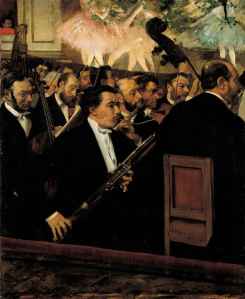
Degas- l'orchestre‘To each person, God gives some talent, such as writing, just to name one, and to many persons He has given musical talent, though not as many as think so. For the young Lutheran, the question must be: Do I have a genuine God-given musical talent, or do I only seem gifted in comparison to other Lutherans?

If your talent is choir or organ, there’s no problem. Choir members and organists can be sure their gift is from God because who else but God would be interested? Just like nobody gets fat on celery, nobody goes into church music for the wrong motives.

But for a Lutheran who feels led to play in an orchestra, the first question must be: Are you kidding? An orchestra?

In the Bible, we read about people singing and playing musical instruments, the harp, trumpet, psaltery, but always in praise of the Lord, not for amusement. We do not read that our Lord Himself ever played an instrument or enjoyed hearing others play theirs. The apostles did not attend concerts or go to dances. Are you sure this is what you want? Do you know what you’re getting into? Opera. Is that anyplace for a Christian? Don Juan and Mephistopheles and Wagner and all his pagan goddesses hooting and hollering, and the immorality – I mean, is anybody in opera married? You play in an orchestra, you’re going to wind up in opera, and the next thing you know, you’re going to be skipping Sunday mornings.

If you steer clear of opera and stick to orchestral concert music, where are the Christian composers? Modern ones are existentialists, the Romantics were secular humanists, the eighteenth century was all rationalists, and the seventeenth was Italians, except for Bach, and you can’t make a living playing Bach. You go in an orchestra, you’re going to be devoting your life to a lot of music that sort of swirls around in spiritual mystery searching for answers that people could find in the Bible if someone showed them where to look.

But if you’re determined to play in an orchestra, then you ought to ask yourself: Which instrument is the best one for a Lutheran to play? If our Lord had played an instrument, which one would he have chosen? Probably not a French horn. It takes too much of a person’s life. French horn players hardly have the time to marry and have children. The French horn is practically a religion all by itself. Should a Lutheran play the bassoon? Not if you want to be taken seriously. The name says it all: bassoon. Maybe you’d do it for a hobby (“Let’s go bassooning this weekend, honey!”) but not as your life occupation.

Many Lutherans start out playing clarinets in marching band and think of the clarinet as a Christian instrument, clear and strong and almost human, but a symphonic clarinet is different from the band clarinet: it’s sardonic, skeptical and definitely worldly. The English horn sounds Christian, maybe because we think of it as the Anglican Horn, but it’s so mournful, so plaintive. And so are English Horn players. They all have incredibly complicated problems, they’re all depressed, especially at night, which is when the concerts are. The oboe is the sensualist of the woodwind section, and if there’s ever a wind a Lutheran should avoid, it’s this one. In movie soundtracks, you tend to hear the oboe when the woman is taking off her clothes, or else later, when she asks the man for a cigarette. The flute is the big shot of the wind section. Jean-Pierre Rampal, James Galway, both millionaires (how many millionaire bassoonists are there?), because everyone knows it’s the hardest to play. To spend your life blowing across a tiny hole – it’s not really normal is it? The flute is a temptation to pride. Avoid it. The last member of the woodwind family is the flakiest, and that’s the piccolo. No Salvation Army Band ever included a piccolo and no piccolo virtuoso ever did an album of gospel music. This is not a devotional instrument.
violinWe come now to the string section. Strings are mentioned in the Scripture and therefore some Lutherans are tempted to become string players, but be careful. Bass, for example. An extremely slow instrument, the plowhorse of the orchestra, and bass players tend to be a little methodical, not inventive, not quick, not witty or brilliant, but reliable. This makes the instrument very tempting to German Lutherans. And yet, bass notes have a darkness and depth to them that, let’s face it, is sexual. And when bass players pick up their bows, I don’t think there’s any doubt what’s going on in their minds back there. The cello section seems so normal, and cellists seem like such nice people. The way they put their arms around their instruments, they look like parents zipping up a child’s snowsuit. They seem like us: comfortable, middle-range. And yet there is something too comfortable, maybe too sensual, about the cello. The way they hold the instrument between their legs: why can’t they hold it across their laps or alongside themselves? The viola section is not a nice place for a Lutheran and here you’ll have to have to take my word for it. I know violists and they are fine people until, late at night, they start drinking a few bottles of cheap red wine and roasting chickens over a pit in a vacant lot and talk about going to Yucatan with a woman named Rita. Don’t be part of this crowd. The violin is a problem for any Christian because it is a solo instrument, a virtuoso instrument, and we’re not solo people. We believe in taking a back seat and being helpful. So Christians think about becoming second violinists. They’re steady, humble, supportive. But who do they support? First violins. You want to get involved with them? The first violins are natural egotists. The conductor looks to them first, and most first violinists believe that the conductor secretly takes his cue from them, that he, a simple foreign person, gets carried away by listening to the violins and falls into a romantic, emotional reverie and forgets where in the score he is and looks to the concertmaster, the No. 1 first violin, to find out what’s going on: this is what violinists believe in their hearts. If the conductor dropped dead, the rest of the orchestra would simply follow the violin section, while the maestro’s body was carried away, and nobody would know the difference. Is this a place for a Lutheran to be? In the biggest collection of gold-plated narcissists ever gathered on one stage? No.

Let’s be clear about the brass section. First of all, the rest of the orchestra wishes the brass were playing in another room, and so does the conductor. His back is toward the audience, so they can’t see what he’s saying to the brass section; he’s saying: You’re too damn loud, shut the fuck up (in Italian, this doesn’t sound course at all). The brass section is made up of men who were at one time in the construction trades and went into music because the hours were better. They are heavy dudes, and that’s why composers wrote so few notes for them: because they’re juveniles. The tuba player, for example, is a stocky bearded guy who has a day job as a plumber. He’s the only member of the orchestra who bowls and goes deer hunting. It’s not an instrument for a sensitive Lutheran, and anyway, there’s only one tuba and he’s it. The trombonist is a humorist. He carries a water spray gun to keep his slide moist and often uses it against other members of the orchestra. A Shriner at heart, he knows more Speedy Gonzalez jokes than you thought existed. The trumpet is the brass instrument you imagine as Christian, thinking of Gideon and of the Psalms, but then you meet a real-life trumpet player and realize how militaristic these people are. They don’t want to wear black tie and play Bach, they want tight uniforms with shiny buttons, and they want to play as loudly as they possibly can. Most of the people who keel over dead at concerts are killed by trumpets.

There are two places in the orchestra for a Lutheran, and one is percussion. It’s the most Lutheran instrument there is. Percussionists are endlessly patient, because they don’t get to play much. Pages and pages of music go by where the violins are sawing away and the winds are tooting and the brass is blasting but the percussionist sits and counts the bars, like a hunter waiting for the quail to appear. A percussionist may have to wait for twenty minutes just to play a few beats, but those beats have to be exact and they have to be passionate and climactic. All that the epistles of Paul say a Christian should be – faithful, waiting, trusting, filled with fervor – are the qualities of the percussionist. The other Lutheran instrument, of course, is the harp. It is the perfect instrument for a Christian because it keeps you humble. You can’t gallivant around with a harp. Having one is like living with an elderly parent in poor health – it’s hard to get them in and out of cars, impossible to satisfy them. A harp takes fourteen hours to tune and remains in tune for twenty minutes or until somebody opens a door. It’s an instrument for a saint. If a harpist could find a good percussionist, they wouldn’t need an orchestra at all; they could settle down and make wonderful music, just the two of them’.

– Garrison Keillor, ‘The Young Lutheran’s Guide to the Orchestra’ in We Are Still Married (New York: Viking Penguin, 1989), 30–4.
Art: not a means to an end

Calvin Seerveld

‘Art is not a means to an end, it is not a function of something else. Art stands or falls on its own artistic contribution in God’s world, To think of art, or practise it, as a tool for some other purpose is to sell it out to a technocratic bent of mind, damning it to a permanent identity crisis and reducing it to a kind of colonial status at the beck and call of touring VIPs for approved cultural missions’. – Calvin Seerveld, Bearing Fresh Olive Leaves: Alternative Steps in Understanding Art (Willowdale: Toronto Tuppence Press, 2000), 11.

Alfonse Borysewicz: ‘Can You Be a Contemporary Artist and a Practicing Catholic?’

alfonse-borysewicz-1I have posted on Alfonse Borysewicz before: here and here. In the latter post I mentioned that Alfonse would be delivering the Brooklyn Oratory‘2009 Baronius Lecture. He has been kind enough to send me a copy:


Baronius Lecture 2009 – Alfonse Borysewicz

Oratory Church of St. Boniface, Brooklyn, New York

Can You Be a Contemporary Artist and a Practicing Catholic?


There is a story about a rabbi going to see another rabbi and finds himself immersed in the reading of the Torah. “What are you doing?”-“I’m trying to interpret a passage that I’ve been studying for years and can’t explain completely to myself.” “Let me see: I’ll try to explain it to you myself.” “That won’t do any good, I can explain it to other people; what I can’t do is explain it to myself.”

In 1977, on my first day of seminary, after two years of college at a Jesuit university in Detroit, I found in my hands a book of poems by Gerard Manly Hopkins. To this day I still make pilgrimages with that old college Penquin paperback; particularly one poem, “Carrion Comfort,” which has become a personal mantra for me.  The opening lines of this heart-felt poem are:

NOT, I’ll not, carrion comfort, Despair, not feast on thee;
Not untwist-slack they may be-these last strands of man
In me ór, most weary, cry I can no more….

Three decades have passed since I finished my seminary studies, and, in a clumsy way, decided not to become a priest, and instead have spent now 30 odd years working as a painter, first in Boston, with quick recognition and subsequently in the New York art world. Today when I ask myself if I can be a contemporary artist and a practicing Catholic, Hopkins’ words, “despair” , “weary” and “these last strands of man,” squeeze me hard. For me this question is a real-life drama. And it is not as simple as one might think.

In his autobiography, Henry Adams, heir to two presidents and an accomplished author of biographies, novels, a nine-volume history of the US, and works on education and art, portrays himself as a misfit. From a literary standpoint his life was an extraordinary success, but in his own estimation he had failed miserably. He saw himself as a human fossil, a survivor from an earlier era confronted with a bewildering, changing world. In The Education of Henry Adams, he wrote: “What could become of such a child of the seventeenth and eighteenth centuries, when he should wake up to find himself required to play the game of the twentieth?”

alfonse-borysewicz-21Like Adams, I’m often tempted to see myself as a human fossil. As a practicing Catholic I am in many ways a product of other centuries, yet contemporary art requires me to play-exclusively- the game of the twenty-first century, a world that changes even faster than the one Adams lived in. With the compounded temptation to idolize an ever increasing material and technological world at the expense of a sacramental vision of the world.

In the book The Church Confronts Modernity, published by Catholic University, several authors reflect on the church and culture in Quebec, Ireland, and the United States. With regard to the “home country,” so to speak, one author makes a distinction between two Catholicisms in America: one emphasizing authority, one emphasizing individual conscience. The former highlights knowing the church’s teachings; the other, being a good Christian. The first views modern society as evil, the second as God’s creation. And so it goes.

Regardless of which model you follow, the dilemma is the same: either you can risk denying your ultimate identity by changing (or pandering), or else by refusing to change you can become obsolete, out of step with the modern, or should I say, the lost modern world.

When I was in my thirties, my paintings, though they were full of religious meaning for me, were safely abstract, and I was welcomed into the gallery scene of the time. As I entered my forties, my Catholicism became more important to me (the culture wars, raising children, terror and war, etc.), and my paintings began to change (less abstract, more representational with direct religious imagery). This new work was no longer welcome in the galleries that had once shown my work and, it seems, in the dialogue of the culture. Recently I have come to the realization that my erasure from the art world was no fluke. Rather my initial 15 years of success was the fluke. That is to say, my intuitive drive to unite my art with my faith and religion was doomed to fail in the culture world at large from the get go. The boulder I have been pressing to move, the truncated and distorted views of God and the Faith and the Church, has been there for centuries. And it’s taken me 51 years to realize this. But the wonder and gift is I have realized this. The question now is do I attempt to participate in the contemporary culture-art world by changing and updating or  as Zsigmond Moricz wrote in the great Central European classic novel of a budding artist’s struggle, do I remain “faithful unto death”?

Why remain faithful to religious imagery in an increasing secularized world? This is a question I often ask myself at around five AM when I wait for the sunrise and the soon honking horns outside my window. Why am I still pressing this boulder that has cost my family and I so dearly?  It is an old question, and one that lives at the heart of Christian worship, which brings ancient events into the here and now by presenting us with images. Our liturgy, so beautifully celebrated in this Church, celebrates events that take place in the present, and are at the same time linked to a historical past we can barely imagine. Yet this is what both the Middle Ages and the Renaissance did: they portrayed biblical stories in a contemporary setting.

I can think of many more recent artists who do this, but one American nomadic modernist in particular comes to mind: Marsden Harltey of New York and Maine, who in 1941 painted Fisherman’s Last Supper, an ordinary family at dinner minus the loved ones lost recently at sea. From this fishing village portrait to the Ghent Altarpiece or The Adoration of the Mystic Lamb, all imply, as Heather Dubrow writes in The Challenge of Orpheus, that “the figure within it is, as it were, alive and well in that very church at that very moment.” Saint Augustine echoes this: “Easter happened once yet the yearly remembrance brings before our eyes, in a way, what once happened long ago.” Why this recreation of Christian events, reoccurring from medieval peasants to the geniuses of the Renaissance to New York neurotics like Marsden Harltey and myself? Augustine answers: “for fear we should forget what occurred but once, it is re-enacted every year for us to remember.”

One cannot talk about American Catholic identity, culture, and the artistic endeavor, without (forgive me) genuflecting to the writer working from Milledgeville, Georgia-Flannery O’Connor. Echoing Chesterton, O’Connor insisted that the free will essential to Catholicism also freed the imagination. As she put it: “The Catholic novelist believes that you destroy your freedom by sin; the modern reader believes, I think, that you gain in that way.” In other words, do you live and create in an ordered autonomy where your freedom is guided by transcendent values or a radical autonomy where anything goes. Or, in short, a freedom that views life as a gift or a freedom that views life as something to me manipulated. I think the latter is the prevalent operative mode in our culture today, though recently it is showing signs of stress. As Karl Barth writes even God put limits on God’s own freedom by resting on the seventh day of creation.

So where am I?  Like Adams, am I a misfit? With my sacred obsessions, I feel like a genetic mutant unfossilized from the thirteenth century into the twenty-first.  When asked why she had a penchant for writing about freaks, Flannery O’Connor replied, “because I can still recognize one.” Why, in a culture divorced from and hostile to religious devotion, am I painting religious images and icons? Because, as O’Connor said, “I can still recognize one.”

The Czech philosopher Habermas warns us that “global capitalism’s triumphal march encounters few genuine oppositions and, in that regard, religion, as a repository of transcendence, has an important role to play. It offers a much-needed dimension of otherness: the values of love, community, and godliness to help offset the global dominance of competitiveness, acquisitiveness, and manipulation that predominates in the vocational sphere.” Or more basic, I don’t want my children or their children, my friends and their friends, or the passerby/stranger to abandon or forget their place in, as Pope Benedict illuminated in his first encyclical Deus Caritas Est, in this ongoing love story. To bring it back home from a hymn sang here two just two Fridays ago at the noon mass (#630 Lord, Whom Love is Humble Service):

Still your children wander homeless

Still the hungry cry for bread

Still the captives long for freedom

Still in grief we mourn our dead

As. O Lord, your deep compassion

Healed the sick, and feed the soul.

Use the love your Spirit kindles

Still to save and make us whole.

Look around, folks. You might not see anything like this for some time to come. Honestly, I have nowhere to go with these works. The galleries won’t exhibit them; they’ve abandoned religious expression.  Except for occasional moments like this, the Church and its parishes won’t display them. They have neglected or forgotten their own heritage, and so my work seems unusual to them at best, or at worst, dangerous. The universities, well, they will only show them on PowerPoint. ..Or perhaps Saul Bellow was right when he said “art can’t carry the weight of religion.”

alfonse-borysewicz-3-1My hero, the Jesuit theologian Bernard Lonergan, saw the crisis of culture and faith years ago. In 1967, he wrote: “There is bound to be formed a solid right that is determined to live in a world that no longer exists. There is bound to be formed a scattered left, captivated by now this and that new possibility. But what will count is a perhaps not a numerous center, big enough to be at home in both the old and new, painstaking enough to work out one by one the transition to be made, strong enough to refuse half measure and insist on complete solutions even though it has to wait….”

In 1987, desperately hungry for a community to worship with, I took a bike ride to the Cathedral of St. James and found my home. After that first mass and walking up to Fr. Jim Hinchey inquiring about Baptism for my daughter in budding he soon put me to work in the bookstore. Then the transition from St. James to here when Fr. Dennis Corrado implored me to make a processional cross, do some gold leafing, and more…I will never forget his mandate: “Alfonse don’t worry about money because we don’t have any.” Though profoundly grateful to have worked in this church, to bring my art in this sacred space, I don’t think I can stomach again, like I did a few weeks ago and again ten years before, right here, holding the ladder while Fr. Mark Lane balances himself like an acrobat on these ladders to reach a hook, without a nerve in his body trembling while I shook below.

As for myself, like Saint Augustine, I have become a question to myself. About a year ago the Jesuit magazine printed an article about my works entitled “An Ordinary Mystic”. I actually brought up the Rahnerian idea after hearing about it from a friend; a beautiful idea. As my friend

Jesuit Michael Paul Gallagher writes “ future believers will have to be mystics or else they will not have faith. Clearly this cannot mean that everyone has to have the special gift of mystical saints. Rather it suggests that, in a more secular context, faith will have to be grounded in a personal experience of grace. It will need an ability to recognize the Spirit at work in one’s ordinary life.”

On the question of whether one can be a Catholic artist and be a contemporary painter, I will defer. I’m too saturated, too involved, too subjective, too neurotic to answer. They say that one doesn’t look at icons, but they look at you. My paintings, my icons, are looking down at you. Let me know. There-on my left-is Mary Magdalene. The Danish philosopher Kierkegaard writes “the words of the angel to Mary Magdalene at the grave could be used here: Do not be afraid; for I know that you seek Jesus of Nazareth; because until confidence appears, the person who seeks Jesus at first actually experiences fear before him, before his holiness.” Or as the filmmaker Bresson in Diary of a Country Priest, echoing St. Therese of Lisieux , all is grace.

Alfonse Borysewicz: The Art of Lent

emmaus-2007-08-101-x-64-inchesDuring Lent, the Oratory Church of St Boniface will exhibit the works of the distinguished Catholic artist and Oratory parishioner, Alfonse Borysewicz. I have posted previously on Alfonse here.

Alfonse was born in Detroit in 1957 and has been residing in Brooklyn since 1988 where he and his family have been members of the Oratory Church of St. Boniface. He received a master’s degree in theology before studying painting at the Museum School of Fine Arts in Boston. Borysewicz has received two Pollack-Krasner Foundation Grants (1987, 1992) and a Guggenheim Painting Fellowship (1995). He has exhibited widely in the United States, Europe and Japan. His writings can also be found in Image. Jonathon Goodman wrote in Art in America, ‘Borysewicz’s ability to invent a language of transcendence which is both traditional and of the moment makes him a compelling artist’.

The paintings on exhibit for Lent are a continuance of Borysewicz’s work for the Oratory since the early 1990s (he has completed two side chapels, a processional cross as well as paintings for the residence chapel).

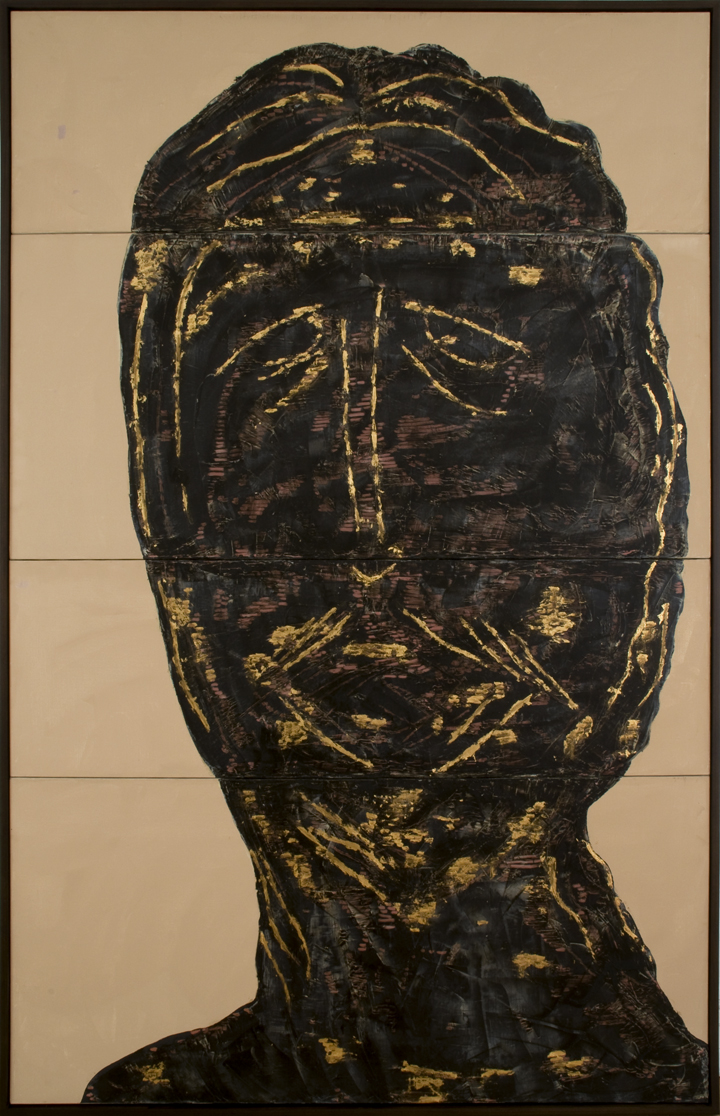
mary-magdalene-2007-69-x-69-inches1The Lenten paintings will cover the stained-glass windows for the 40 day period of Lent. These paintings with their austerity of near abstraction reverence the Icons of Christian antiquity. With a modern hand Borysewicz gives pictorial voice to the Catholic heritage. As Pope Benedict once observed, ‘next to the saints the art which the church has produced is the only real apologia for her history’.

Alfonse Borysewicz will also deliver the Brooklyn Oratory ‘2009 Baronius Lecture’ on 22 March at 4 pm. His lecture will be entitled ‘Art and Faith: Can You Be a Contemporary Artist and a Practicing Catholic?’. The lecture will be followed by a reception and tour of Alfonse’s paintings. See here for more details.

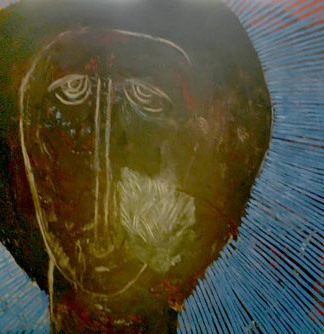
Left image: ‘Emmaus’, 2007; Right image: ‘Mary Magdalene’, 2007.

God: the artist who completes his work

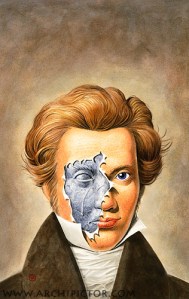
kierkegaard‘If a poet or an artist puts himself into his Productions he is criticized. But that is exactly what God does, he does so in Christ. And precisely that is Christianity. The creation was really only completed when God included himself in it. Before the coming of Christ, God was certainly in the creation, but as an invisible sign, like the watermark in paper. But the creation was completed by the Incarnation because God thereby included himself in it’. – Søren Kierkegaard, The Journals of Kierkegaard (edited by Alexander Dru. New York: Harper & Brothers, 1959), 324.

The [best] poet is the true prophet

‘It has often been said that the teachers of the age’s religion are to be sought rather among its poets than its preachers. But it seems as if we must look for our noblest theology also to our poets, rather than to our clerical schools … The age is deeply theological, and does not know it. It is like the man who was amazed to find that all his life he had been talking prose without being aware of it. We are theological, and don’t know it. Hence part of our unhappiness. It is like the sorrow of some young Werther who bears in his bosom the ferment of a genius not yet apprehended, and the germ of a revolution not yet realised. Our atheology belies our true deep selves, and our great poets are in this but prophets. They steal upon our less aggressive hours, and reveal our soul and future to ourselves. They fore-shadow our destiny, and they tell us that, in spite of all the savants say about the impossibility of a theology, it is the passion for a theology which is at the root of our mind’s unrest, and the possession of a theology which alone can lay our mind’s anarchy’. – PT Forsyth, ‘The Argument for Immortality Drawn from the Nature of Love: A Lecture on Lord Tennyson’s “Vastness”’. Christian World Pulpit, 2 December 1885, 360.

[Image: John Everett Millais, Alfred Tennyson 1881. Oil on canvas. Tate Gallery. Lent by National Museums Liverpool, Lady Lever Art Gallery]

Rembrandt on the humanity of Christ

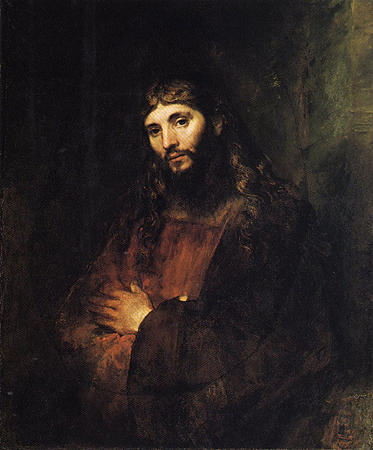
I’d like some help with something. I’ve spent a good bit of time today reflecting on these two paintings by Rembrandt. Specifically, I’ve addressed a certain question to them: Which one depicts a more human-looking Jesus? I’m not even certain yet why I’m asking the question. All the same, I’d value the thoughts of others.

 Christ (c. 1657–61; The Hyde Collection, Glens Falls, New York)

 The Resurrected Christ (1661; Bayerische Staatsgemäldesammlungen, AltePinakothek, Munich)


[For what it’s worth, my first thought was that the resurrected Jesus had a greater earthiness about him]

Faith in the Frame

On Sunday 31 August, the UK TV station ITV will air the first in a 10-part series on religious art. The series is called Faith in the Frame. The TimesOnline have also run a story on it.

Each each episode will focus on one painting. The ten chosen are:

The Resurrection, Cookham, by Stanley Spencer

The White Crucifixion, by Marc Chagall

The Massacre Of The Innocents, by Pieter Breughel

The Wenhaston Doom, Anonymous

The Crucifixion In The Isenheim Altarpiece, by Matthias Grünewald

The Arezzo Frescoes, by Piero della Francesca

The Garden of Earthly Delights, by Hieronymous Bosch

The Upper Room, by Chris Ofili [The NT Times ran an interesting article on this piece here]

Lux Eterna, by Ana Maria Pacheco

The Mystic Nativity, by Botticelli

Alongside presenter Melvyn Bragg,  each programme will involve two or three invited guests who will offer their own refections on the work. These guest include:
Jonathan Jones – art critic for The Guardian

Tim Marlow – writer and broadcaster

Antony Sutch – Franciscan monk and broadcaster

Imtiaz Dharker – poet and artist

Richard Harries – former bishop of Oxford

Sarah Dunant – novelist and broadcaster

Howard Jacobson – novelist

Jackie Wullschlager – art critic for the Financial Times

Rowan Williams – Archbishop of Canterbury

Andrew Graham-Dixon – art expert, broadcaster and writer

Joanna Woodall – expert on Northern Renaissance art at The Courtauld Institute

Martin Kemp – Professor of Art History at Oxford University

Michael Berkeley – composer and broadcaster

Eamon Duffy – Professor of Divinity at Cambridge University

Ekow Eshun – Artistic Director of the Institute of Contemporary Arts

John Harvey – Professor of Art at the University of Wales


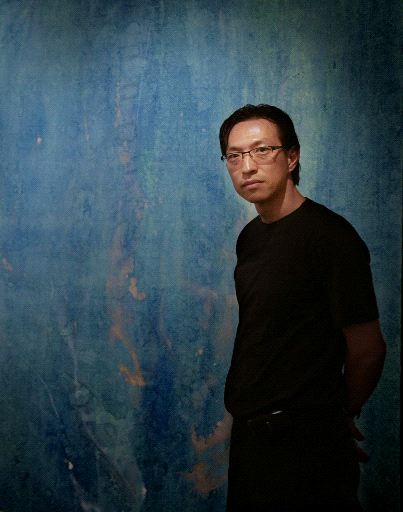
Makoto Fujimura on art, evil and hope

‘… I find that the theological answer for suffering is not really an answer at all. Rather, the Bible is about looking at evil square in the face and calling it “evil.” All of my work inevitably comes to the questions of wrestling with the question of evil and hope. Of the different ways to address the problem, I think the most effective approach is through the arts, because the question itself is not, fundamentally, a rational question. You need the world of imagination – the language of art – in order to be convincing in wrestling with it. Lamentations is a path to understanding this issue. We in the West don’t know how to lament … I see my art as part of the river of God, made up of God’s tears, which I have in common with a broken world. Rather than offering an idealized landscape for people to look to as an escape from reality, I paint in the ashes. Out of the ashes. From the ashes. And I’m not offering false hope, nor am I offering a nihilistic spiral of despair. Rather, I’m interpreting a longing that is deeply hopefully [sic] and real’. – Wresting With Evil and Hope‘.

I’ve long revered In a (so-far) four-part interview (i, ii, iii, iv) in which he reflects on the significant impact of Nick Wolterstorff’s wonderful work – Art in Action: Toward a Christian Aesthetic observes how Wolterstorff’s work is concerned with issues of justice, and with the world’s brokenness. He suggests that art is a fitting medium for mediating conversation about these things. Insofar as art might serve in this capacity, it is, he says, ‘a means for rehumanizing the world’.

In response to the question of what might be the artists’ responsibility towards this end of repairing and rehumanising human culture and the world, and whether Wolterstorff places any such responsibility on artists themselves, he says ‘Yes, and no. Nick is one of the few people who talks about an artist’s responsibility as not the opposite of freedom, but rather that an artist’s freedom is connected to his responsibility in society. To Nick, they’re not disjointed’. he world is drawn to that work which seeks to transform culture’, and to speak of our need to ‘love offensively’.

While it’s certainly not always the case thatto seek those things which transform culture, I thank God for those moments (even in me) when such a reality is realised; for this too is a sign that the kingdom of God is among us, the kingdom which indeed confronts us with an offensive love.

Hart on God and human artistry

Those anywhere near Sydney ought not want to miss this year’s New College Lectures (2-4 September) at the University of New South Wales. The three lectures will be delivered by the brilliant Trevor Hart. His theme is God and the Artist: human creativity in theological perspective and his lecture titles are:

  • 1. ‘The lunatic, the lover and the poet’: divine copyright and the dangers of ‘strong imagination’
  • 2. The ‘heart of man’ and the ‘mind of the maker’: Tolkien and Sayers on imagination and human artistry
  • 3. Giveness, grace and gratitude: creation, artistry and Eucharist

Who’s blogging what?

  • Halden tells us why John Owen’s soteriology threatens to turn God into ‘little more than an omnipotent demon’.
  • Byron responds to common Christian misconceptions of going-to-heaven-when-you-die in a wee reflection on John 14.
  • Ben introduces us to Matthew Myer Boulton’s new book, God against Religion: Rethinking Christian Theology through Worship.
  • Cramner has a swipe at Google in his post on the Christian Institute’s suing of the Goliath.
  • If you’re a parent (or planning to be) and you need a good laugh (which you do), then click here.
  • The Theology of UglyGrünewald’s Isenheim Altarpiece. (Parts I, II, III, IV, V). He writes of Grünewald’s piece:

‘… the monks at the Monastery of St. Anthony specialized in hospital work, particularly the treatment of ergotism, the gangrenous poisoning known as “Saint Anthony’s fire.” In ancient times ergotism was largely caused by ingesting a fungus-afflicted rye or cereal. The symptoms of ergotism included the shedding of the outer layers of the skin, edema, and the decay of body tissues which become black, infected, and malodorous. Prior to death the rotting tissue and limbs are lost or amputated. In 857 a contemporary report of St. Anthony’s fire described ergotism like this: “a Great plague of swollen blisters consumed the people by a loathsome rot, so that their limbs were loosened and fell off before death.” The theological power of the Isenheim Altarpiece is that Grünewald painted the gangrenous symptoms of ergotism into his crucifixion scene. As the patients of St. Anthony’s Monastery worshiped, and a more hideous, ugly and diseased congregation can scarce be imagined, they looked upon the Isenheim Altarpiece and saw a God who suffered with them.

Van Gogh’s ‘The Raising of Lazarus’

Van Gogh devoted little oil to explicitly biblical themes. One exception is his Pieta (after Delacroix), 1889. An other – painted whilst in a mental hospital in Saint-Rémy – is The Raising of Lazarus. The work is based on an etching by Rembrandt that his brother Theo had sent him. Some think Lazarus’ face is a self-portrait; the similarities are, no doubt, striking. What do you think?

Details: oil on canvas (50 × 65 cm) — 1890, Van Gogh Museum, Amsterdam

Introducing Alfonse Borysewicz

The artist Alfonse Borysewicz has already received mention in a number of my articles (including this one). Now, America: The National Catholic Weekly has published an article on Alfonse entitled ”An Ordinary Mystic’: The faith and art of Alfonse Borysewicz’. Because I’m such a fan of Alfonse’s work I thought it worth reproducing the article by Maurice Timothy Reidy here. There’s also an audio slide show of his work that you might want to check out (I recommend doing so before you read the article).

The relationship between the art world and the Catholic Church in recent years has been, to say the least, strained. To pick two prominent examples, Andres Serrano’s photograph “Piss Christ” was condemned by Catholic leaders when it was first shown in 1989, as was Chris Ofili’s elephant-dung-covered Madonna, “The Holy Virgin Mary,” when it was unveiled at the Brooklyn Museum 10 years later. While these works have their Catholic defenders, the controversies that erupted around them are a sign of a wide gap that has opened up between art—specifically the visual arts—and religion. Once the foremost patron of the arts, the church is now more circumspect about contemporary painting. The art world, meanwhile, seems glad to be rid of the church’s influence, exercising its own kind of censorship on material it deems tainted by sentimental piety.

Trying to bridge the gap between these two spheres is not for the faint of heart, and one is hard-pressed to find many artists who have the courage to try. One painter who is both a committed Catholic and a serious artist is Alfonse Borysewicz (pronounced Bor-uh-CHEV-itz), a Brooklyn-based former seminarian whose work has been shown both in Chelsea and in a Catholic church in Brooklyn, N.Y.

Gregory Wolfe, an editor at Image, a quarterly review of arts and religion, calls Borysewicz one of the most important religious artists since the French Catholic Georges Rouault. When first encountering Borysewicz’s work, Wolfe felt “he was in the presence of something sacred.” He sensed that the art was “almost being offered up, instead of saying ‘Look at me.’”

Yet despite his strong desire to exhibit his work in “sacred spaces,” Borysewicz has received little attention from the church. His work is currently on display at the Oratory Church of St. Boniface in Brooklyn and has appeared in a few liturgical art magazines, but he has failed to break through to the next level. His difficulties as a Catholic trying to make it in the art world—and an artist trying to make in the Catholic world—say much about the state of religion and art in our era.

‘Separated’ From New York

Borysewicz is an avid reader of theology. He likes to sprinkle his conversation with quotes from Karl Rahner (“Every act has eternal consequences”) or René Girard (a historian who has written on violence and religion), and recently he has been working his way through the writings of Bernard Lonergan. While he does not claim to understand it all, Borysewicz hopes that certain parts seep into his consciousness and find their way into his paintings. In the past he has found inspiration in homilies. In one, his pastor compared the outstretched arms of Jesus to an open embrace. That idea is reflected in his three-panel painting “Cross I & II and Blessing,” which shows the two outstretched arms of Jesus, as well as a hand held in a gesture of blessing.

Borysewicz lives in Bay Ridge, a traditionally Italian section of Brooklyn, with his wife and two children, ages 20 and 14. A tall man approaching 50 who still favors the clothes of a Brooklyn hipster, Borysewicz paints in a walk-up studio apartment in the shadow of the Brooklyn Bridge, in a neighborhood known as Dumbo. Down the street is the storied River Café, and in the distance the skyline of Lower Manhattan. When he was young, Borysewicz enjoyed success across the river, where his work was exhibited in galleries in Chelsea.

Borysewicz now considers himself “separated” from the New York art scene. He sees theology and art as “one continuum,” but as of late, he says, he has been forced to choose between the two. Asked to pinpoint the moment when his fortunes changed, he recalls a show in the late 1990s. (It is a sign of Borysewicz’s liturgical-mindedness that the show was meant to mark the last Advent of the millennium.) The centerpiece of the exhibit was “Your Own Soul,” a small chapel he constructed from paintings and collages. The title, taken from Simeon’s words to Mary in Luke’s Gospel (“a sword will pierce your own soul”) was suggested by Michael Paul Gallagher, S.J., a professor at the Gregorian University in Rome, who first met Borysewicz in 1993.

“It took the form of a four-sided small chapel,” Gallagher recalled in an e-mail interview, “with symbols of tears on the outside, and one had to enter the interior on one’s knees. Inside you first saw a large, dark figure suggesting a dead body, and as the eyes became used to the dim light, one discovered smaller gold hints of resurrection.”

As a Catholic, Borysewicz had always been interested in religious themes, but in early paintings, like “River Rouge and Grace” (1993-96) or in his “Strata” series (1992), the imagery was more abstract. In such works as “Your Own Soul,” his art became more representational, which, he says, was “the beginning of my undoing.” Curators and collectors were “comfortable with [his faith] in the abstract, but not in the flesh.” That may seem like a broad indictment, but Wolfe thinks it is particularly difficult for a religious painter to make his way in the contemporary art world. “Of all the different art forms, the one that is the most hostile, the most hermetically sealed against religion in any kind of dimension…is the visual arts,” he says.

In 1995 at least one critic recognized the spiritual dimension of Borysewicz’s painting. “One look around the gallery tells you that Alfonse Borysewicz is a person of tremendous spiritual intensity,” Pepe Karmel wrote in a 1995 review in The New York Times. “The problem is getting this intensity onto canvas in a convincing way.” Borysewicz, not surprisingly, disagrees with Karmel’s implied criticism—where else could the critic sense the intensity except from the canvas?—but tries to take a detached approach to criticism. What is most important to him now, he says, is “not so much how I changed painting but how painting changed me.” His goal is no longer to mount a show in New York, but to present his art in churches and to help younger artists to do so as well.

“Sacred spaces have to inspire again,” he told me during an interview at his studio. “So many churches rest on what they’ve been given. There’s a younger generation out there who want to authentically give their voice to it.”

Finding a Vocation and a Home

Borysewicz was raised in a working-class neighborhood in Detroit when the city was undergoing tumultuous change. As a boy, he learned about the importance of faith from his parents, who were still mourning the loss of his older sister, who had died two years before he was born. Every week the family would go to the graveyard, and his parents often spoke about her. That experience gave him a sense that “you were always breaking bread with your past, that the past was present…and the vehicle for that was faith,” he says.

Borysewicz attended college for two years before entering the seminary, where he met Bishop Kenneth Untener of Saginaw, Mich., who encouraged him to paint. In 1981, he left the seminary and moved to Boston, where he taught in a Catholic high school while taking art classes at night.

He describes his work from that period as “Otto Dix meets Marc Chagall.” In a few years he was showing his paintings in New York and Boston. The twin tragedies of his father’s death in 1983 and the outbreak of the AIDS pandemic, which took the lives of many friends and colleagues, gave him a sense that suffering and death were very much a part of life.

In his essay in Image (No. 32), Borysewicz wrote that he was also struggling with “guilt over my choice of vocation.” He wrote:

Given my family’s working-class ethic, what I was doing seemed strange. At times it was construed as lazy, arrogant or sissy, but the charge that hurt me the most, and still does, was that what I was doing was indulging in artifice. People make that accusation because they don’t see art as part of the real world, which they see as made up of bread-and-butter issues like building a solid career; they do not see how the struggle of faith and its representations connects with all of our lives.

Borysewicz has found an artistic home at the Oratory Church of St. Boniface. He was encouraged to paint for the church when the parish moved from its former home a few miles away to its current site in downtown Brooklyn. The Rev. Mark Lane, the pastor, coordinated the redesign of the old church of St. Boniface with the goal of bringing together “the old and the new.” He recruited Borysewicz, a parishioner, to contribute to the project.

Two of Borysewicz’s paintings are displayed behind statues in the church’s vestibule. Borysewicz would prefer the art to stand on its own, rather than behind more traditional works of art, but Lane gave serious thought to the decision. He believes the older statues—like one of St. Philip Neri—will help lead the worshipers to the more modern, challenging work.

“We’ve never had any negative comments from anyone,” says Lane. “Although sometimes you hear, ‘I don’t understand what it means’—the sort of standard response to contemporary modern art.”

The most challenging piece of art at St. Boniface is not in the sanctuary, but in the priests’ private chapel. Known as “Cor Unum,” Borysewicz’s four-paneled canvas covers an entire wall of the room. The center panel depicts a bee hive of activity; the right panel shows Jesus peering from behind a honeycomb. The images are scattered about, some difficut to discern. It is difficult to imagine “Cor Unum” displayed on the wall of your local parish, but unlike many pieces of conventional liturgical art, it provokes contemplation. When showing off the piece, Lane pointed to the honeycomb motif, which he interprets as a symbol of how, in John’s Gospel, the early church viewed life through the lens of the community.

“It’s actually quite accurate, theologically,” Lane says.

Borysewicz finds it frustrating that he cannot place his art in more churches. Too many churches are unimaginative, he says, adding that while parishes have experimented with modern music, architecture, even dance, they seem less willing to embrace modern visual art.

Why? “A cautious piety seems safer,” says Father Gallagher. “I suppose there is a fear that people will find [modern art] too strange, difficult or different. Caravaggio got something of the same reaction in his day. One of Alfonse’s favorite theologians, Bernard Lonergan, once quipped that the church always arrives on the scene a little breathless and a little late.”

A Difficult Choice

Making the choice to be a painter has been a difficult one for Borysewicz. He has struggled financially and has done teaching on the side to provide for his family. “I feel like I’ve taken a vow with painting,” he says. At a conference for young evangelicals in New York in March, Borysewicz told the crowd that he is often approached by people who say they intend to devote their lives to painting when they retire. “No you won’t,” he tells them. “This life is not a dress rehearsal.”

“Alfonse is very down to earth,” says Gallagher, “often surprising audiences with his emphasis on art as hard work [and] daily waiting.” He tells them it is “not as romantic as people imagine.”

Gregory Wolfe, a fan and friend, suggested that Borysewicz has suffered some “emotional fallout” as a result of separating himself from the contemporary art scene. In our conversations, Borysewicz also suggested that he was emerging from a dark time. When pressed, he noted enigmatically, “I’ve taken hostages on this journey—my kids and my wife.”

After meeting with Borysewicz several times, I was struck by the ways he describes himself. He often identifies himself as an “ordinary mystic”—an allusion to Rahner’s comment that all modern believers are in some ways mystics. In professional circles he has taken to calling himself an “icon painter,” although more traditional icon painters might take exception to that description. It is obvious that he sees himself as part of an artistic religious tradition that stretches back centuries.

Identifying himself so clearly as a religious painter has had its consequences, but Borysewicz does not seem to regret his choice. He likes to say that the purpose of the religious image is twofold: to “tell us what happened and to remind us what was promised.” Finding new ways to present the Gospel story may be a rare artistic endeavor today, but Borysewicz’s work is a reminder that it is still fertile soil for those willing to till it.

Encouragement for preachers …

For those called to bear witness to the Word of God, and/or who might be preparing sermons for this Sunday, and/or who just haven’t happened to get around to visiting the Musée du Louvre lately, here’s some encouragement from the left panel of the Braque triptych by Rogier van der Weyden (1399/1400–1464):
‘John the Baptist’, oil on panel (41×34 cm) — ca. 1450
The words read ‘Ecce Agnus Dei qui tollit peccata mundi.’ (Behold the Lamb of God that will take away the sins of the world.) If you’re curious, centre panel and right panel here.

The Catholic Fantastic of Chesterton and Tolkien

Ralph Wood has a good article on Chesterton and Tolkien in today’s First Things in which he praises Alison Milbank’s Chesterton and Tolkien As Theologians: The Fantasy of the Real. Here’s a taste:

Unlike Coleridge and the Romantics, however, Tolkien and Chesterton never grant godlike status to artists and thinkers as having the power to invent their own self-enclosed universe. On the contrary, they share a deep Thomistic regard for the primacy of being: for things as they are perceived by the senses. Like Kant, they confess the difficulty of moving from the phenomenal to the noumenal realm of things-in-themselves. Yet, unlike him, they do not despair over the seemingly impassable gap between the inner and the outer, the mental and the natural; instead, they reveal that the world is not dreadfully dead (as we have believed since Descartes and Newton) but utterly alive and awaiting our free transformation of it. The universe that has been made dissonant also requires reenchantment, therefore, in order for us to participate in an otherness that is not finally cacophony but symphony, a complex interlocking of likenesses and differences that form an immensely complex but finally redemptive Whole. The doubleness of all things is cause for rejoicing, it follows, rather than lamentation.

As readers we are able to experience Treebeard at two levels: On the one hand, he is patently an aesthetic invention, a fictional creature. Both Chesterton and Tolkien constantly draw attention to the created character of their work, reminding us that it belongs to secondary and not primarily reality: it is a constructed thing to be enjoyed as such. Yet having encountered this fantastic tree with human features, readers can no longer look upon real trees as mere objects meant only for our manipulation. On the contrary, we can now envision all trees as analogical actualities, as transcendent symbols that participate in the reality that they signify, as having likenesses to us despite their differences from us, and thus as linking natural things with both human and divine things—and perhaps also with things demonic. It is not a long leap, for instance, from Treebeard to the trees in the Garden of Eden.

Chesterton and Tolkien have not autonomously invented their own imaginative worlds so much as they have reordered the existing world in accordance with their fundamentally Aristotelian/Thomistic perception of it. Their common conviction is that everything has its own entelechy, its own end within itself that pushes it toward completion and fulfillment within a larger, indeed a final telos.

You can read the full article here.

The Musical Mystique: Defending classical music against its devotees

‘He played Bach at a subway door and failed. She played Bach on a subway platform with success. What does this say about Bach? Subways? Classical music?’

In the latest edition of The New Republic, Richard Taruskin – author of The Oxford History of Western Music and the revised edition of Music in the Western World: A History in Documents (with Piero Weiss) – gives us a really engaging (and lengthy) review of three books:

Who Needs Classical Music? Cultural Choice and Musical Value, by Julian Johnson (Oxford University Press),

Classical Music, Why Bother? Hearing the World of Contemporary Culture Through a Composer’s Ears, by Joshua Fineberg (Routledge), and

Why Classical Music Still Matters, by Lawrence Kramer (University of California Press).

Taruskin recounts Joshua Bell’s sublime music-making in different locations:

1. Outside a burning building (not one fireman stopped to listen!)

2. At a car crash site (one paramedic actually pushed him aside!)

3. During a graduation exam (shushed by the invigilators!)

4. At a school play (thrown out by angry parents!)

5. On an airport runway (passing jet liners seemed oblivious!)

Taruskin’s response: ‘In one respect … the caper was instructive. It offered answers to those who wonder why classical music now finds itself friendless in its moment of self-perceived crisis – a long moment that has given rise in recent years to a whole literature of elegy and jeremiad’.

He proceeds to suggest that German romanticism is the ‘veritable mummy’ that still ‘reigns in many academic precincts, for the academy is the one area of musical life that can still effectively insulate its transient denizens (students) and luckier permanent residents (faculty) from the vagaries of the market’.

In a world (and blogoshere) of far too many positive book reviews, Taruskin’s criticism of Johnson’s book are refreshing – whether or not it is fair. He describes it as ‘a sort of Beyond the Fringe parody of a parish sermon in some Anglican backwater, [that] will convince no one but the choir. To have such a voice advocating one’s own cause is mortifying’.

My favourite quote of the review, however, is reserved for Fineberg:

Art is not about giving people what they want. It’s about giving them something they don’t know they want. It’s about submitting to someone else’s vision; forcing your aesthetic sense to assimilate the output of someone else’s … All art demands a surrendering of your vision in submission to the artist’s or at least the museum or concert curator’s.

Tom Wright , Andrew McGowan and Post-Modernity

Is Christianity a rival, an ally or a coping mechanism in the post-modern empire? In this engaging podcast, N T Wright addresses this question in front of Melbourne Anglicans and is joined in the discussion (it’s not a debate) by Rev Dr Andrew McGowan, Director of Trinity College, University of Melbourne.

On the way, Wright talks about postmodernity, 9/11, the current invasion of Iraq, beauty, ‘authenticity’, and the arts.

McGowan (definitely not the Andy McGowan from Scotland) offers us a much more positive view of the relationship between Christianity and Postmodernity, and also a critique of the Church’s relationship with consumerism, a go at conservative Anglicanism (read Sydney? and a ‘Hillsong-style Anglicanism’), and relevance vs authenticity in mission.

Other topics of discussion include immigration policy, the current state of worldwide Anglicanism, and human rights,

The discussion is well worth listening to.