Author: Jason Goroncy

Lovers, Watchmen, Chorus: a sermon on Song of Songs 3.1–5 and 5.2–8

Song-of-SongsA guest post by Chris Green 

Anytime I preach from Song of Songs I’m reminded of a “gift” my mother gave Julie and me not long after we announced our engagement: a 12-part sermon series from Song of Songs on love-making and the art of marriage. We were, as you’d expect, traumatized by such a graphically “literal” reading; but rest easy—what I’m offering today is a typological reading.

More seriously, I’m struck by the resonance of a theme—or chorus of themes—I’ve heard spoken in our chapel services this year (for example, in sermons by Jonathan Martin, Dr. Gause, Dr. Martin, Chris Brewer, Michael Pogue, and Dr. Cheryl Johns): the invitation into the holy, transfiguring Presence of Christ—holy because he alone transfigures; transfiguring because he alone can share with us his holiness. We have been invited again and again to tryst with him in the garden of agony, to know him in the fellowship of his sufferings, to be melded into him, as a branch is one with the Candlestick. I trust whatever I say today will be heard as a voice in that choir.

**

Reading Song of Songs is a bewildering, at times impossible, venture. On a close reading, the text turns out to be an impenetrable tangle of characters, exchanges, and metaphors/images—a “thick darkness.” At times, the text slides into apparent meaninglessness, or at least becomes unreadable. As Paul Griffiths says, “Almost everything … is puzzling and disconcerting. The Song’s reader must look for help, first elsewhere in the Song and then elsewhere in Scripture.”

Why would God give us such a text? Perhaps precisely because God means for us to acknowledge our helplessness, allowing ourselves to be forced into the desperation necessary to see all things new. Perhaps because it is only in our shared struggle to make gospel sense of the written Word of Scripture that we are ourselves being made apt for transfiguration into the image and likeness of the living Word, Jesus Christ. Seeing that, we know this “thick darkness” of meaning as in fact a form of the radiant darkness enthroned on the Ark—it’s not without reason that ancient Jewish and Christian readers described the Song as the Holy of Holies of Scripture—, a darkness that makes us aware of our blindness and just so begins to open our eyes, ever so gradually, to the rising light.

***

When they’re read side-by-side, a pattern emerges from these two scenes. The lover, abed at night, is consumed with longing for her beloved, whom she names “The-One-Whom-My-Heart-Loves.” She dives out into the night to find him. She encounters the watchmen, who prove of no use. Her desire is ultimately unmet, and in the end the chorus is invoked to act. Of course there are variations: for example, in the first scene, her longing is awakened by her own fantasies; in the second, they are stirred by the beloved’s attempts to break into her rooms; in the second scene, she does not find her beloved at all; in the first scene she does in fact find him—only to fall asleep before they can consummate their love. But there’s something about this pattern of frustration that demands our attention. Why the seeking? Why the not-finding? Why the finding-and-losing? Why the failings of desire? Because Jesus is not only the one whom we desire; he is also the one who must educate, master, our desires. We desire the wrong things. So he has to teach us to desire the right things. We desire the right things wrongly. So he has to teach us to desire the right things the right way. As our lives are more perfectly aligned with Christ’s, we find ourselves desiring more than our nature can in fact receive. So we must be transfigured into his likeness, sharing in his divine nature, so we can be made capable of truly enjoying the infinity of God’s love.

As these scenes illustrate, Christ both draws near to us, awakening our desire, and withdraws from us, hiding himself, frustrating that newly-awakened desire. But make no mistake: he does it all for our good. As Song 2.14 makes clear, he longs to see our face even more than we can desire to see his—but we do not yet have faces to face him; our eyes cannot yet behold his glory.

We belong to Jesus and he belongs to us. But we cannot “hold” him, cannot keep him in our “mother’s house,” in whatever reality we’ve know as “home.” If we would be strange with his saving strangeness, we cannot domesticate him, drawing him down to the size of our lives. Instead, we must be ever increasingly enlarged until we are conformed finally to the full measure of his stature, filled to overflowing with the fullness of his life. To that end, he says to us, as he said to Mary Magdalene, “Do not cling to me!” He does not want to be as we remember him, or as we wish or imagine him to be. He insists, for our good, on being all the Father knows him to be for us. Until the End, therefore, we must ever be pursuing him in the Spirit, always reaching out to apprehend that for which we have been apprehended; never grasping, always being held.

****

The watchmen—or “sentinels,” as one translation has it—play a major role in these scenes. In the first scene, they ignore the woman’s cry. In the second scene, they abuse her for her forwardness. Some readers have taken them as types of the prophets, whom God uses to chastise God’s people. But I see them as religious figures who regard themselves as gatekeepers entrusted with the preservation of a certain “order.” Concerned with keeping the status quo—and confusing it with the Kingdom—they, like Eli did with Hannah, fail to discern the difference between the disordered passions of those dominated by the “flesh” and the Spirit-inflamed longings of the God-intoxicated. Like the Pharisees, they fail at the most basic level to understand that this God desires mercy and not sacrifice (Mt. 9.10-13).

The text says that while the lover was seeking her beloved, the sentinels “found” her. Clearly, then, they are no longer searching for the beloved. They have reduced themselves to watching out for rule-breakers, for those they identify as bandits or outlaws. In truth, they have abandoned their “first love” (Rev. 2.4). Now, they love their “city” and its “order” far more than they love the one who dwells always outside the city gates (Heb. 13.12-14), the one who befriends sinners and dies with thieves.

“Watchmen,” of whatever kind, trade in perverse notions of holiness. As Jonathan Martin put it, they are more concerned with standing up for Jesus than with standing with him. We, however, should be those who recognize that Jerusalem shall be inhabited as a city without walls (Zech. 2.1ff)—and so has no need of sentinels, at least not of this kind.

*****

We need to be like the daughters of Jerusalem. Unlike choruses in classical Greek drama, this chorus of “young women” is engaged with the characters and not only the audience/readers. Again and again, they ask questions of the lover and her beloved. In 5.9, they ask her the question: “What is your beloved more than another beloved?” And, hearing her ecstatic response, make the decisive offer (6.1): “Where has your beloved turned, that we may seek him with you?”

They can ask such a question and make such a promise because they see her differently than the watchmen see her. They see her as “fairest among women.” In fact, they see her exactly as her beloved sees her. In this, they show us the true nature of Christian being: to know one another rightly is to see one another as Christ sees us. As St. Paul says, we know no one “after the flesh” any more (2 Cor. 5.16). Let this, then, be our prayer: in our seeking may we find not only The-One-Whom-Our-Heart-Loves, but also one another. For, in finding one another, we begin to become the people who can know as we are known.

[Chris’ recent book, Toward a Pentecostal Theology of the Lord’s Supper: Foretasting the Kingdom, was reviewed here]


Grading papers as a form of lovemaking

grading-1aIt is not difficult to imagine a world in which not a few teachers will be seduced by the kind of software that edX is making available. But it is inevitable, is it not, that such seductive invitations, if taken up, will be met with a massive anti-climax and a certain increase in academic sterility. More tragically, however, it would mean a decline in the frequency and joy of teachers making love. For grading papers, like indexing a book or replying to students’ emails, is an act of love-making – love for our students, love for attempts at meaning making, love for the pains that inevitably accompany an inquiring mind, love for the subject and for those whose labours have made ours possible, love for the task of teaching itself, et cetera. And as with all other forms of love making, one is, to be sure, not always ‘in the mood’, and it can be simply exhausting and largely unsatisfying in and of itself. It is certainly a form of judgement. Even so, it is incumbent upon we who teach – the incumbency of the kind of freedom that only love can bring – to strive to improve our love-making skills (it’s why some of us try to keep up with our Greek, for example) rather than subcontracting such responsibilities out to third parties, gadgetries and gimics. Thank God for good tools – that is, tools which assist our efforts to love – but when tools reign over, replace, or even become an extension of the lover themselves, we have ceased to love, and so God help us all.

ch901101

Speaking of love making, if all goes to plan the next post here at Per Crucem ad Lucem will be a sermon on two texts from the Song of Songs.

Martyn Percy in Dunedin

percy martynThe Centre for Theology and Public Issues at the University of Otago is to host Martyn Percy for two public talks on Monday 15 April:

(i) Prof Percy will be giving the fourth Abbey College Prestige Lecture, in collaboration with the Centre, at 5.30 pm in Archway 3 Lecture Theatre in Dunedin. The title of the lecture is: Salvation and Soil: Some Challenges for Churches in Contemporary Culture.

(ii) And earlier, from 12.30-1.30 pm, he will be in conversation with Centre Director, Andrew Bradstock, in the University’s AV Studio (Owheo Building, 133 Union Street East, Dunedin). You are welcome to attend in person or watch on-line. If you plan to attend in person, you will need to reserve your seat either by e-mail or phone (+64 3 471 6458).

Rick Floyd on ‘Low Sunday’

AngelRick Floyd writes some wonderful sermons. Here’s a snippet from one he preached a few years ago on John 20.24–29. It’s on ‘Low Sunday’, and it’s titled ‘Behind Locked Doors’:

The Second Sunday of Easter, traditionally called “Low Sunday,” is a tough Sunday for a preacher for a number of reasons.  First of all, the context of our preaching can be a bit discouraging. We have fewer than half the people we had last week, and I always preach better for some reason when their are more people present. It must have something to do with group dynamics. Easter is always a high holy day in the church, a bright and festive day, and though the church in theory believes that Easter lasts for the Great Fifty Days, the second Sunday is, well you know, Low Sunday.  Plus I am always exhausted and worn thin after Easter. But having said all that let me make a confession: I like low Sunday.

I like it for two reasons. First, the folks who come on Low Sunday tend to be the faithful core of the congregation and I feel I don’t have to explain so much of the Gospel to you. To use Eugene Peterson’s helpful distinction, on Low Sunday there are more pilgrims and fewer tourists. I say that not to disparage religious tourists, God knows we have all been that at one time or another. God meets us where we are and even spiritual tourists need God’s mercy and love. My point is just that hardly anyone feels a pressing social or cultural need to get up and come to church on Low Sunday, so those who are here tend to be serious about what we are doing here, and I appreciate that, since I am serious about what we are doing here.

But the second and more important reason I like Low Sunday is that it speaks deep truths about how the risen Christ comes to us. Low Sunday is sort of a down and out Sunday, and the Lord Jesus seems to appear especially to the down and out. If you read the stories of the resurrection appearances it is startling that without exception the disciples are doing nothing especially religious when Jesus appears to them. They aren’t praying or worshipping. In Luke they are walking on the road lamenting what had happened, or they are fishing, having given up their discipleship to return to their day job. Here in John’s Gospel on Easter night the disciples are in a locked room, hiding in fear.

And it occurs to me that is the church’s natural state: a bunch of scared people locking out the world. You might argue that the disciples are not yet the church, until Jesus comes to them and gives them the Holy Spirit (John’s version of Pentecost) and you would be right.  The church without the risen Christ and the Holy Spirit is just a bunch of quite literally dispirited people hiding in fear from real and imagined enemies.

And that is one of the reasons I like Low Sunday. The disciples are so obviously failures at being disciples and so they share that in common with us. It’s Easter and they don’t even know it. They have nothing to offer as the church, no vision, no energy, no courage, no conviction. They are hiding. They are afraid. As far as they know Jesus is dead and done. The shepherd has been struck down and the sheep have scattered.

You can read the rest here.

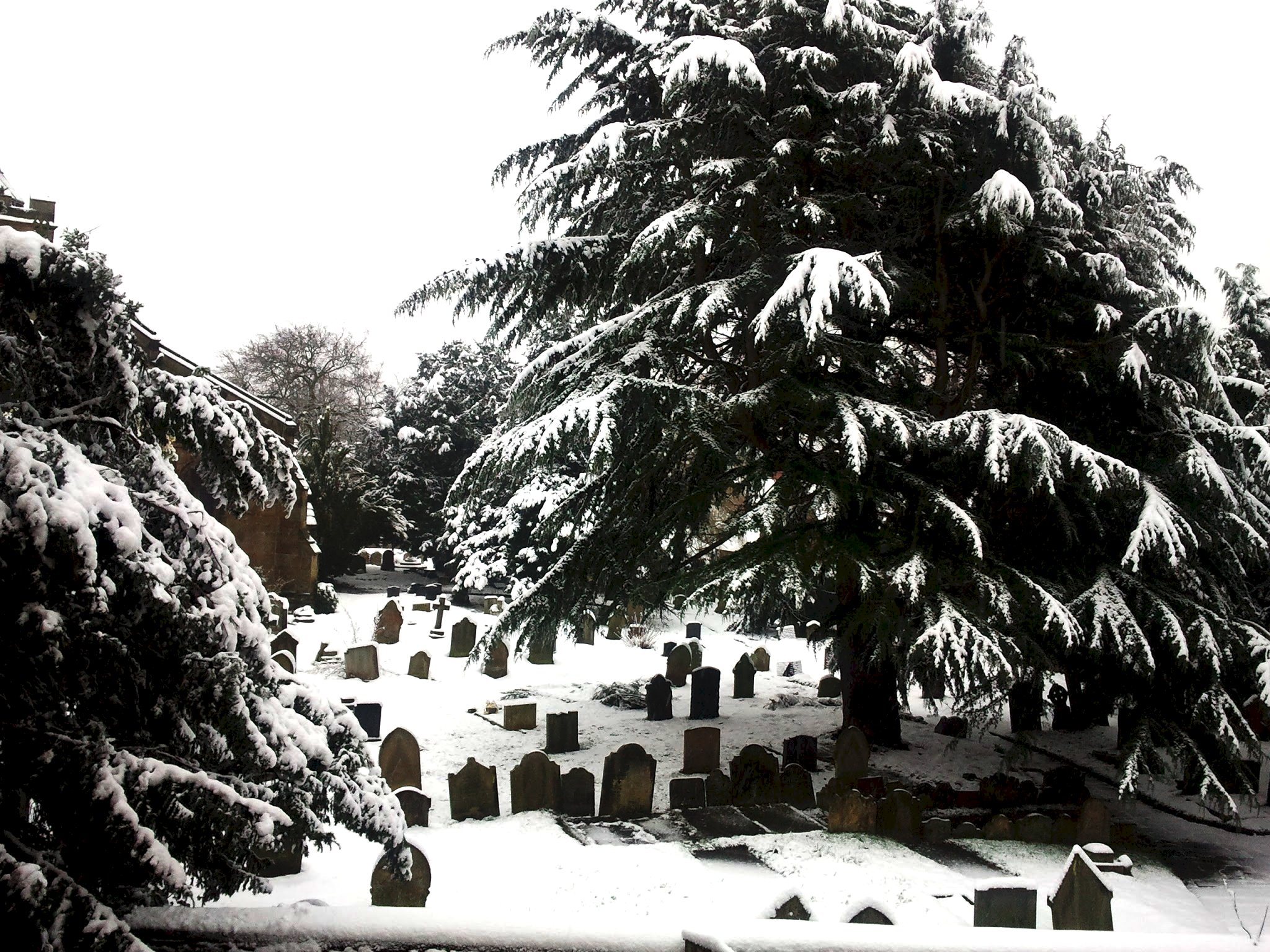
Pinkfoot, Hawarden

2013-03-24 17.34.26

Drink to the dregs the
winter’s fracture and
sun’s terminal
stretch and
follow the snow-lined
Broughton Brook.

Fly south-west
over Beeches Wood
toward the receding of
a tide once
certain but
now a tired
unknowing.

– Jason Goroncy, March 2013

March stations …

Reading:

Listening:

Watching:

‘Resurrection’, by R. S. Thomas

Easter. The grave clothes of winter
are still here, but the sepulchre
is empty. A messenger
from the tomb tells us
how a stone has been rolled
from the mind, and a tree lightens
the darkness with its blossom.
There are travellers upon the road
who have heard music blown
from a bare bough, and a child
tells us how the accident
of last year, a machine stranded
beside the way for lack
of petrol, is crowned with flowers.

‘They set up their decoy’, by R. S. Thomas

They set up their decoy
in the Hebrew sunlight. What
for? Did they expect
death to come sooner
to disprove his claim
to be God’s son? Who
can shoot down God?
Darkness arrived at
midday, the shadow
of whose wing? The blood
ticked from the cross, but it was not
their time it kept. It was no
time at all, but the accompaniment
to a face staring,
as over twenty centuries
it has stared, from unfathomable
darkness into unfathomable light.

– R. S. Thomas, Counterpoint (Newcastle upon Tyne: Bloodaxe Books, 1990), 38.

‘Open the Doors!’, by Edwin Morgan

Open the doors! Light of the day, shine in; light of the mind, shine out!

We have a building which is more than a building.
There is a commerce between inner and outer,
between brightness and shadow, between the world and those who

think about the world.

Is it not a mystery? The parts cohere, they come together
like petals of a flower, yet they also send their tongues
outward to feel and taste the teeming earth.
Did you want classic columns and predictable pediments? A
growl of old Gothic grandeur? A blissfully boring box?
Not here, no thanks! No icon, no IKEA, no iceberg, but

curves and caverns, nooks and niches, huddles and
heavens syncopations and surprises. Leave symmetry to
the cemetery.
But bring together slate and stainless steel, black granite
and grey granite, seasoned oak and sycamore, concrete
blond and smooth as silk – the mix is almost alive – it
breathes and beckons – imperial marble it is not!

Come down the Mile, into the heart of the city, past the kirk
of St Giles and the closes and wynds of the noted ghosts of
history who drank their claret and fell down the steep
tenements stairs into the arms of link-boys but who wrote
and talked the starry Enlightenment of their days –
And before them the auld makars who tickled a Scottish king’s
ear with melody and ribaldry and frank advice –
And when you are there, down there, in the midst of things,
not set upon an hill with your nose in the air,
This is where you know your parliament should be
And this is where it is, just here.

What do the people want of the place? They want it to be
filled with thinking persons as open and adventurous as its
architecture.
A nest of fearties is what they do not want.
A symposium of procrastinators is what they do not want.
A phalanx of forelock-tuggers is what they do not want.
And perhaps above all the droopy mantra of ‘it wizny me’ is
what they do not want.
Dear friends, dear lawgivers, dear parliamentarians, you are
picking up a thread of pride and self-esteem that has been
almost but not quite, oh no not quite, not ever broken or
forgotten.
When you convene you will be reconvening, with a sense of not
wholly the power, not yet wholly the power, but a good
sense of what was once in the honour of your grasp.
All right. Forget, or don’t forget, the past. Trumpets and
robes are fine, but in the present and the future you will
need something more.
What is it? We, the people, cannot tell you yet, but you will know about it when we do tell you.
We give you our consent to govern, don’t pocket it and ride away.
We give you our deepest dearest wish to govern well, don’t say we
have no mandate to be so bold.
We give you this great building, don’t let your work and hope be other than great when you enter and begin.
So now begin. Open the doors and begin.

‘Open the Doors!’ was originally written for the opening of the Scottish Parliament, 9 October 2004. Hearing a section of it read in the context of morning Eucharist, however – as I did this morning as part of the missio – gave a wonderfully fresh sense to it, and to the Supper too.

‘He atones not with blood’, by R. S. Thomas

He atones not with blood
but with the transfusions
that are the substitute of its loss.

Under the arc-lamps
we suffer the kisses
of the infected needle,

satisfied to be the saviour
not of the world, not
of the species, but of the one

anonymous member
of the gambling party
at the foot of the cross.

– R. S. Thomas, Counterpoint (Newcastle upon Tyne: Bloodaxe Books, 1990), 38.

R. S. Thomas on wonderful people, and on Non-Conformity

(c) DACS and Sir Kyffin Williams; Supplied by The Public Catalogue FoundationJ. B. Lethbridge’s interview with R. S. Thomas, published in the Anglo-Welsh Review, is a delightful compliment to a mid-morning strong cup of tea. Here are two enjoyable moments from Thomas:

‘I’m very conscious as an idea that there must be wonderful people in the world, but I don’t meet them’.

‘I’m sort of Non-Conformist without agreeing with the Non-Conformist way of worship. I find the average Non-Conformist place of worship so ugly. Not that the [Established] churches are much better, but the average Non-Conformist chapel is such a hideous place – I can’t worship. And yet I like the sort of freedom, their emphasis on the Bible as being the sort of direct word of God to the individual, that you don’t need a priest to come between you and God. I like their disassociation from the Establishment in England, the King and Queen and this sort of rubbish. I like it for that side. I don’t like the system of deacons … I dislike cathedrals on the whole, big places, because they are associated in my mind with English imperialism. I see these royal processions and the bishop in all his regalia and the Union Jack flying, you know, hanging in the corner. I look upon the Church of England as having betrayed Christianity by its acquiescence in war and this sort of thing’.

The scandal of Palm Sunday

photo

‘Christ on the Ass’, c. 1480. Limewood and pine, painted and gilded. Southern Germany. Victoria and Albert Museum, London.

There’s a little study on ‘The Scandal of Palm Sunday’ (based on Hebrews 2.18) in William Stringfellow’s Free in Obedience where he argues that Palm Sunday is not a day of triumph but of dramatic temptation for Christ, and ‘profound frustration’ for the disciples. Moreover, it is for us moderns a ‘symbol of the terrific confusion which burdens the Church as to the meaning and manner of the Christian witness in society … If only Palm Sunday were the outcome of Christ’s ministry, Christians would be rid of the gospel and free from all that distinguishes them as Christians from the rest of the world’ (p. 34). If Christ’s ministry ended here among palm branches and civic celebration, we could be spared the embarrassment of Judas’ betrayal, the apathy and cowardice of the remaining eleven, the mystery of the Last Supper, Gethsemane’s sweat and agony, the accusations of the authorities, the ridicule of the crowd, the cross and the descent into hell, the embarrassment of the resurrection and the ‘awful gift of Pentecost’ (p. 35). ‘Palm Sunday’, Stringfellow insists, ‘is no day of triumph; for Christians it is a day of profound humiliation’ (p. 37).

Two little musings on irony …

There are a handful of titles that simply never abandon my desk – The Collected Poems: 1945–1990 of R.S. Thomas*, and Bonhoeffer’s Letters and Papers from Prison, and The Book of Common Prayer, for example. And Dag Hammarskjöld’s Markings. (I’m currently awaiting my copy of Roger Lipsey’s substantial biography (752 pages!) to arrive. I was in Cambridge last week and heard Rowan Williams giving a talk about it. ‘nough said.) While Markings was significantly more popular with a generation older that mine than it is with my own (perhaps Lipsey’s book might change that for some?), I have lived with Markings now for almost two decades. And even though it’s not part of my daily diet, this morning I ‘took up and read’ again a few of the opening pages (which is more than enough with this book), and these words spent some time with me:

Tomorrow we shall meet,
Death and I –.
And he shall thrust his sword
Into one who is wide awake.

I’ll not post here my musings on these words, but the irony gestured to here reminded me of something else I saw in Cambridge and which spoke to me of the ironies of life, and of the playfulness of such. Here ’tis:

2013-03-14 09.41.40 (1)

* I just noticed that there are plans for the publication of some of Thomas’ Uncollected Poems due out mid year. This is very exciting.

Conference on the doctrine of the Trinity

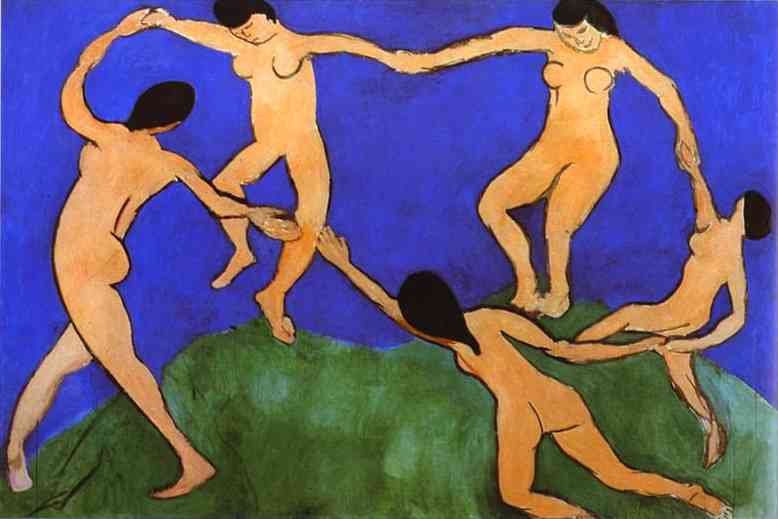
Henri Matisse - La DanseSt Mary’s College (University of St Andrews) is hosting what promises to be a very stimulating one-day conference on the doctrine of the Trinity. Here are the details:

Date: 30 April, 2013

Time: 9.30am – 5.30pm

Where: Parliament Hall, South Street, St Andrews

Cost: Free (but must email to register)

Programme:

Classical Views of the Doctrine of the Trinity:

  • Professor Paul D. Molnar, St John’s University, New York
  • Dr. Stephen R. Holmes, The University of St Andrews

Relational Views of the Doctrine of the Trinity:

  • Professor Paul S. Fiddes, University of Oxford
  • Dr. Thomas H. McCall, Trinity Evangelical Divinity School

Conference flyer is available here.

To register for this conference, or for more information, contact Jason Sexton.

The theologian as grammarian

John_the_Grammarian_as_ambassador_before_Theophilos_and_Mamun

‘Liberals are right that the language we use as Christians is not “literally” true; rather, it is figurative, poetic, imaginative language. But the orthodox are right in a more profound way: for the language of imagination – which is to say, biblical language – is the only language we have for thinking and speaking of God, and we receive it as the gift of the Holy Spirit. Theology deceives itself if it conceives of its task as translating the figurative language of scripture and piety into some more nearly literal discourse about God. The theologian’s job is not to tell fellow believers what they really mean; rather, it is to help the church speak more faithfully the language of the Christian imagination. The theologian is not a translator but a grammarian’. – Richard Bauckham and Trevor Hart, ‘The Shape of Time’ in The Future as God’s Gift: Explorations in Christian Eschatology (ed. David Fergusson and Marcel Sarot; Edinburgh: T&T Clark, 2000), 86.

Two forthcoming books on PT Forsyth

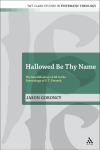
Forsyth 16Regular readers here at PCaL may be aware that my book Hallowed Be Thy Name: The Sanctification of All in the Soteriology of P. T. Forsyth (Bloomsbury/T&T Clark) is due out very soon; in just over a week. (Tasters are available here and here). I am also pleased to announce that another book on Forsyth, specifically on his preaching, will, if all goes to plan, be out on the heels of the aforementioned, i.e., sometime in mid-2013. Here are the details and the blurb for the back cover:

‘Descending on Humanity and Intervening in History’: Notes from the Pulpit Ministry of P.T. Forsyth. Eugene: Pickwick Publications, 2013.

This collection of forty-eight sermons, most of which are previously unpublished, discloses the integration of vocation and imagination in one of the greatest of Free Church theologians, P. T. Forsyth. At a time of fragmentation, when theological study has become too much removed from the task of the preacher, Forsyth’s work can remind us of the invigorating power of Christian doctrine interpreted and expounded in situations of pastoral and political exigency. Its capacity for the renewal of the church is evident again from this rich and timely anthology, here brought together and introduced by Jason Goroncy.

And Alan Sell has again been kind enough to compose the following deathless prose for its back cover:

Far from being a collection of cosy meditations, here are challenging, biblically rooted, theologically powerful, pastorally concerned essays and sermon notes by Britain’s most stimulating theologian of the twentieth century. Church members will be energized; preachers will be prompted towards relevant exposition. The book is the product of much persistent burrowing by Jason Goroncy, whose substantial introduction is an exemplary piece of scholarship in its own right. We are greatly indebted to him.

There are some tentative plans too to work on two additional books on Forsyth; but more on that at a later time …

Notes from London

SAMSUNGLondon, that wonder-filled city characterised by ‘the grey damp filthiness of ages’ (P. J. Harvey), is a city with absolutely no shortage of the bustle that attends the wellsprings of human civilisation. Following on from my meeting in Rüdlingen, I had opportunity to revisit the place last week; and I milked the brief time I had. Starved for cultural input, I enjoyed revisiting The British Museum (it really is the most extraordinary collection of stolen goods) where I was euphoricised by the lime plaster statutes from ‘Ain Ghazal in Jordan, the earliest large-scale representation of the human form and dated at around 7200BCE. And while it is not my favourite gallery, it was worthwhile too to revisit Tate Modern where I was reminded of the fact that the collection of work housed therein reflects both the groping for new meaning and the attempt to reject precisely such a quest in a world whose confidence and conscience was irreparably wounded on the battle fields of Flanders and in the execution chambers of (mostly) Eastern Europe. Time at Tate Britain was richly rewarding too, although I was saddened to discover that Ophelia, who usually hangs out in those hallowed halls, is in the US at the moment. I hope that she’s not too cold, or made too exhausted by the constancy of North American chatter. A day in the British Library (one genuine highlight of which is the Treasures Gallery), and a half day at the Victoria and Albert Museum also made up the brief visit.

Of course, no trip to London is complete without spending some time – and moula – in the West End. So I took in Simon Gray’s delightful play Quartermaine’s Terms, starring Rowan Atkinson, and, later that same day, Les Misérables. Not having seen the live show before, I was very excited about going, had a great seat, and was not disappointed. It was absolutely outstanding. In addition to a visit to the West End, the other must-see-every-time-I-visit-London highlight (and it probably helps that it’s free!) is the National Portrait Gallery. Feeling a little flat, still jet-lagged and gallery-exhausted, and with sore feet, there was a sense in which the last place that I wanted to be was wandering about another gallery/museum. Instead, I wanted beer and sleep. After succumbing to the former (and a quick power nap in the pub), I soldiered on to the NPG. I love that place, and within minutes my mood and energy had lifted, and with my Nexus in hand I penned a poem on Joshua Reynolds’ portrait of Samuel Johnson. In addition to the good Mr Johnson, this time the following subjects attracted my most sustained attention: Johns Milton and Bunyan, Williams Wilberforce, Shakespeare, Gladstone and Blake, Hannah Moore, the Lake Poets, Coleridge, Joseph Banks, Michael Dahl, Samuel Johnson, W. G. Grace, Charles Darwin, Benjamin Disraeli, Mary Seacole, Alfred Tennyson, Henry Irving, Holman Hunt, Ernest Henry Shackleton, T. S. Eliot (and Eliot again and again and &c), Ralph Vaughan Williams, plus an entire room of portraits by George Frederic Watts. O that I had more time to stay with and write poems about each one.

Speaking of ‘cultural input’, I also had the opportunity to meet the Tillings – Chris and Anja, his ‘ridiculously beautiful wife’. What a wonderful team they make, and what a fine chap – and preacher – Chris is. Chris preached at St Judes church on Colossians 4, drawing an important connection between Paul’s verses on prayer and the mention of names in the final chapter of the letter as being not an optional extra but a natural overflow/extension to the manner of life borne witness to in the earlier and more ‘theological’ chapters. It was really wonderful. His basic point was that there is no proclamation of Christ apart from human relationships. This makes sense for, among other things, when Christ comes he always seems to bring his friends along with him, apart from whom his life makes no sense. Then over coffee later in the week, Chris and I discussed theological education, his writing projects, and PT Forsyth. We didn’t solve all of the world’s problems, but we made a start. [Note: Although the tidy state of Chris’s office gives every indication that he not doing any serious theology, he assures me that the case is otherwise. The proof, as they say, shall be in the pudding.]

As delightful and as intoxicating as London is, however, like every other metropolis it suffers under a strange absence of a sense of not being a place where vegetables are grown, and meats cured, and nappies changed by the side of the road. For all its grime, and for all the time it affords on one’s feet, it lacks a sense of dirtiness; that is, of its location in earthdom. It is not the kind of place, in other words, where dogs – or their owners – appear to be at home, as it were. But bless you London. For the conservatism with which you embrace change, for the efficiency of good (albeit expensive) public transport, for decent pizza, for resplendent women wearing ear muffs and tastefully tailored coats, for conventional-looking men undaunted by the snow resting gently on their shiny bald heads, for making space for a tide of Polish and Ukrainian workers, for driving on the correct side of the road, for restaurants happy to attend to appetites well after 10pm, for stiff upper lips and for unreliable football teams, bless you.