Month: October 2008

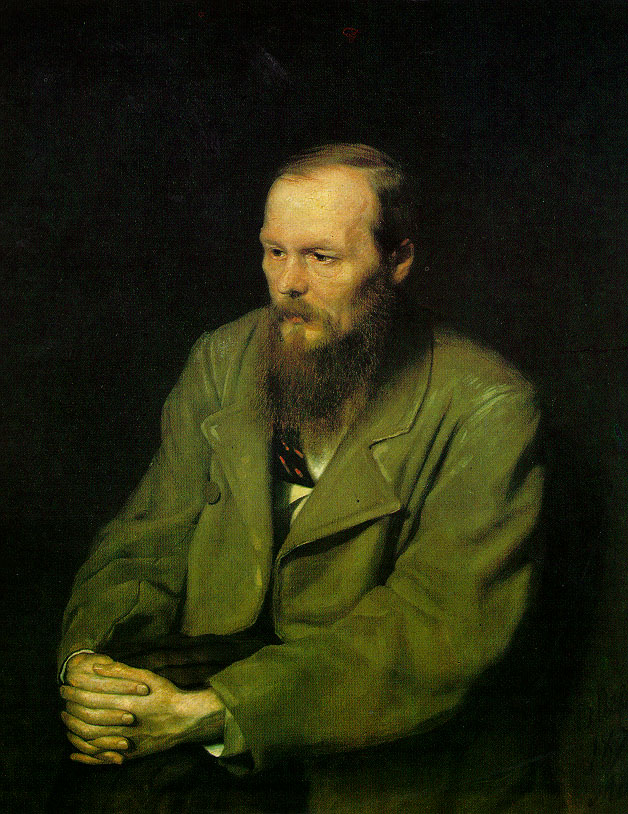
In Memoriam: Ernst Cassirer

This is the locust season of our days
When the ripe meadows of the mind are bare,
This is the month of the never-born maize
Upon whose golden meats we shall not fare.
This is the week of the stunted stalk
And fruit that is dust on the bones of rock,
This is the day of the hungry hawk
And the songbirds dead by the fallen flock.
This is the noon of our derelict plain,
The sun-parched hour of most desolate pain.

Yet there is a valley where sweet grain grows
In strong-rooted stands, in tall splendid rows.
Here toiled in the meadows a man wise and serene,
And the meadows bore fruit and the meadows are green.

– Edward Murray Case, ‘In Memoriam: Ernst Cassirer’, in The Philosophy of Ernst Cassirer (edited by Paul Arthur Schilpp; Library of Living Philosophers, 6. Evanston: George Banta Publishing Company, 1949), 40.

DKBA soldiers attack Karen village in Thailand


Download report as PDF [Adobe Acrobat PDF 455 kb]

After disputes over arbitrary taxation payments and accusations of favouring the KNLA, 40 to 50 soldiers of DKBA Battalion #907 – under brigade commander N’Kaw Mway – attacked the village of Mae Gklaw Kee in Thailand’s Umphang District. Troops shelled the village tract leader’s house, shot at villagers’ houses and then burnt down villagers’ crop storage barns. The Batallion subsequently set up a camp in nearby Gklaw Ghaw village. As SPDC and DKBA troops work together in an effort to take control of the area, villagers face increased restrictions, overlapping taxation demands, and the threat of future attacks and land confiscation.


On Saturday, October 4th 2008, Democratic Karen Buddhist Army (DKBA) officer Bla Nah, under the command of brigade commander N’Kaw Mway, led 40-50 soldiers of Battalion #907 in an attack on Mae Gklaw Kee village in Umphang District of Thailand (only three kilometres from the Burma border). After shelling the village tract leader’s house with a grenade launcher, soldiers shot at the villagers’ houses, shot out truck tyres and then burnt the villagers’ crop stores. After the attack, the soldiers set up camp in nearby Gklaw Ghaw village on the other side of the Burma border in Kawkareik township of Dooplaya District and are now working with nearby Light Infantry Battalions #401 and #407 of the State Peace and Development Council (SPDC)[1] to place movement restrictions on the villagers.

According to information collected by a KHRG researcher, a combination of factors seem to have led to this attack, with one of the major reasons being a refusal by the villagers (or inability) to pay the full amount of taxes demanded by the DKBA. As Mae Gklaw Kee village is located so close to the border, the villagers regularly travel back into Burma to work in their rented corn fields in the area around Bplah Doh village, close to Gklaw Ghaw village, in Maw Kee village tract of Kawkareik township. The area around Gklaw Ghaw and Bplah Doh villages is largely controlled by Karen National Liberation Army (KNLA) Battalion #201, but SPDC and DKBA soldiers also operate in the area. Other villages in Maw Kee village tract closer to the DKBA base at Gaw Lay village are largely controlled by the DKBA. Villagers are therefore faced with competing tax demands as the different military groups vie for control of the area.

Corn fields farmed by local villagers have been particularly subject to these overlapping taxation demands. Each local corn field usually produces from 3,000 to 6,000 big tins[2] of sweet corn per year and sometimes up to 10,000 big tins. Each year, KNLA soldiers demand 10 Thai baht (US $0.29) for each sack of corn – one sack of corn cobs contains approximately seven big tins of corn – from local farmers (including Mae Gklaw Kee village) or an estimated 4,286 to 8,571 Thai baht (US $123.86 to $248.06) for a field with a normal yield. However, in 2007 the DKBA also placed a much higher tax demand on the corn produced by the villagers – demanding eight Thai baht (US $0.23) for each big tin of sweet corn and 100 baht (US $2.89) for each big tin of sweet corn seed. For a normal yield, this is equivalent to 24,000 to 48,000 Thai baht (US $694.40 to $1,388.80) per field (not including the tax on corn seed). Struggling to meet the demands of both armed groups, villagers from Mae Gklaw Kee village told DKBA soldiers that they could only afford to pay them three baht per tin, as opposed to the eight baht demanded. In response, the DKBA soldiers simply increased the tax demand for 2008, asking for 15 baht for each big tin of corn, approximately 45,000 to 90,000 baht (US $1,302.07 to $2,604.13) for a normal yield field and 150 baht for each big tin of seed. The villagers knew they would be unable to pay this amount following the harvest (which usually starts in October) and, the village tract leader reportedly referred to DKBA soldiers as ‘dogs’ for placing such demands upon the villagers. This apparently angered commander N’Kaw Mway and prompted him to call for the attack upon Mae Gklaw Kee village. At this time, the villagers had not paid any tax to the DKBA for 2008, as the harvest was not yet completed. A KHRG field researcher also noted the villagers’ support of the KNLA as another reason for the attack and the Bangkok Post referred to a ‘brawl’ between DKBA soldiers and local teenagers from the village in September as another motive for the attack.[3]

Since the attack on Mae Gklaw Kee village, SPDC and DKBA soldiers have been restricting the movements of villagers in the area around Gklaw Ghaw village in an effort to take control of the area away from the KNLA. In the past, KNLA soldiers have ambushed and attacked DKBA and SPDC soldiers operating in the area. However, although KNLA soldiers remain in the area, they have not yet attacked the new DKBA camp at Gklaw Ghaw. KNLA soldiers claim that they are currently hesitant to attack the camp at Gklaw Ghaw for fear of creating more problems for the villagers, after a recent spate of retaliatory actions by SPDC and DKBA soldiers against villagers for such KNLA attacks – such as the burning down of corn storage barns in the area.

Villagers in the surrounding area therefore face increased restrictions imposed by the SPDC and DKBA soldiers based at Gklaw Ghaw, as soldiers try to clamp down on any possible communication between villagers and the KNLA. In Gklaw Ghaw village itself, civilians have been forbidden to travel outside of the village, even for work or trade, and have also had their mobile phones confiscated.[4] Villagers in Mae Gklaw Kee have currently been able to remain in their village with increased security from Thai authorities, but still live with the threat of further attacks and the future of their corn field farming remains uncertain, given the increased troop build-up by SPDC and DKBA forces in the area.

DKBA soldiers have had a record of imposing arbitrary taxation demands upon villagers, with other villages in the area having faced similar problems to Mae Gklaw Kee. In another incident in 2007, DKBA soldiers succeeded in extorting more than the original eight baht per big tin of corn demanded, by pretending that they were also collecting tax for the KNLA. In this way, villagers from Gaw Lay, Htee Ther Lay and Oo Poe Hta villages (all also located in the large Maw Kee village tract in Kawkareik township) were forced to pay ten baht per tin of corn. Villagers have also been threatened with land confiscation for KNLA use of landmines. On October 6th 2008, DKBA Battalion #907 officers Muang Shwe Wa, Kyaw Pa Pu and Bo Kyaw Kyaw summoned village heads from Ler Gaw, Lay Ghaw, Oo Poe Hta, Oo Gray Hta, Wa Mee Hta, Maw Ker Hta and Gaw Lay villages to meet with them at the DKBA army camp in Gaw Lay village, where brigade commander N’Kaw Mway is based. During the meeting, the DKBA officers reportedly told the village heads that if any DKBA soldier in the area should step on a landmine planted by the KNLA, they would take away all of the lands owned by the villagers.

With money to be gained from agriculture, logging, mining and taxes upon villagers, the DKBA and SPDC are keen to gain control of this border area. As the various armed groups vie for control of village tracts on both sides of the Thai-Burma border (in Dooplaya District on one side and Umphang District on the other), villagers face competing demands for taxation on their crops, increased restrictions on their movement and communication, and the increased threat of attacks and land confiscation by the SPDC and DKBA.

For more information on the situation in Dooplaya District and the human rights abuses involved in DKBA and SPDC control in other areas of Karen State, see the following previously published KHRG reports:

Footnotes

[1] The State Peace and Development Council (SPDC) is the military junta currently ruling Burma.

[2] A ‘big tin’ is a local measurement of approximately 2 litres or 4.5 gallons in volume.

[3] “Karen fighters attack village”, Bangkok Post, October 5th 2008, accessed athttp://www.bangkokpost.com/051008_News/05Oct2008_news12.php on October 9th 2008.

[4] Villagers were previously able to use Thai mobile networks to communicate with other villages in the area and in Thailand due to the proximity of the border, but are now unable to do so.

[Source: KHRG]


The Archbishop’s Dostoevsky: Why Rowan Williams is the best man for the job – of appreciating the greatness of Dostoevsky

This wonderful article by A.N. Wilson appeared in today’s The TimesOnline:

Fyodor Dostoevsky’s views on religion are notoriously hard to pin down with confidence. If you collected up the criticism devoted to Tolstoy, there could be no doubt about what he believed at any stage of his journey. Yet in the history of Dostoevsky criticism we find, for example, Henry Miller reading Dostoevsky as a great social revolutionary, whereas others have seen him as a diehard conservative. Rowan Williams, in his latest book, quotes (and rebuts) William Hamilton, who sought to enlist Dostoevsky as a forerunner of “Death of God” theology; Georges Florovsky, who saw Dostoevsky as an exemplar of Russian Orthodoxy; Malcolm Jones, who has linked him to “post-atheism” in contemporary Russia, and judged him to exemplify the workings of “minimal religion”. Clearly, all these contradictory readings cannot be right. Or can they? Is that precisely the nature of the difficulty?

We need a guide who combines the gifts of a literary critic and a trained theologian to work out how far the novels of Dostoevsky can be used as vehicles for such explorations. We also need a guide who is deeply versed in the ethos and spiritual traditions of the Russian Orthodox Church to place Dostoevsky, and the tormented exchanges of his characters, within some intelligible historical framework. Luckily, the Archbishop of Canterbury combines all these qualities, and more.

There are many insights in Dostoevsky: Language, faith and fiction which will illumine its subject’s novels, and which could only have come from this interpreter. Williams’s discussion of The Idiot, and the salience of Holbein’s painting “Christ in the Grave” (1521) for our understanding of the protagonist, is a case in point. “Holbein’s [deposition] shows (though this is not explicitly described in the novel) a corpse seen from alongside – not only a dead man fixed at a moment in the past (there are Orthodox depictions of the dead Christ and his entombment), but a dead man in profile, a double negation of the iconographic convention. In a fairly literal sense, this is a ‘diabolical’ image.” There will be few non-Orthodox readers who are aware of the fact, presented here by Williams, that in the tradition of icons, the only figures who normally appear in profile are demons or Judas Iscariot. This is a very pertinent addition to Williams’s accumulation of readings of the Idiot’s character. Far from seeing Myshkin as Christ-like, Williams alerts us to his “lethal weakness”: “the person who is presented as innocent and compassionate in Christ-like mode is in fact unwittingly a force of destruction”. With even greater precision, he hits the target with this paradoxical statement: “Myshkin is a ‘good’ person who cannot avoid doing harm” – about the neatest summary of The Idiot that has ever been written. In the conclusion to his book, Williams makes the striking claim that the fusion of incompatibilities in which so much of Dostoevsky’s work consists, creates something comparable to the traditions of icon-painting.

It is this fusion of a surrender to the claims of an independent truth and a surrender to the actual risks and uncertainties of asserting this truth in word and action that makes the entire enterprise of spiritual – and specifically Christian – life one that is marked by the decentring and critique of the unexamined self. What is so distinctive about Dostoevsky’s narrative art is that he not only gives us narratives in which this difficult fusion is enacted; he also embodies the fusion in his narrative method, in the practice of his writing, risking the ambitious claim that the writing of fiction can itself be a sort of icon.

As we read Williams’s discussion, and become absorbed not only in his enjoyment of Dostoevsky’s novels, but also in his own wide reading in the patristic literature and immersion in the Eastern traditions of Christianity, we begin to realize that ambiguities and downright contradictions which seem so startlingly “modern” in Dostoevsky’s pages are often matters that have always been inherent in theology. The book thereby combines a rereading of Dostoevsky with an attempt to confront, not merely the storm clouds of the nineteenth century, as Ruskin called the theological crisis of faith, but also our contemporary phenomenon of Darwinian revivalism which believes itself to have answered, or repeated, the destruction of theology’s claims to plausibility.

The book therefore begins where, one suspects, Dostoevsky himself would want a book published in 2008 to begin – if he were still with us and observing contemporary life. The author starts, not with the great Russian literature that is his theme, but with “the current rash of books hostile to religious faith”. “They treat religious belief almost as a solitary aberration in a field of human rationality; a set of groundless beliefs about matters resting on – at best – faulty and weak argumentation”. In contrast to these writers, whose work, it could be said (though the author does not quite say it), was all anticipated in the writings of the later Dostoevsky, Williams spells out the way in which religion actually operates in individual human lives. This was central to Dostoevsky’s work as a novelist. Williams’s book is a work of literary criticism, but it begins, therefore, as if it were one of theological apologetics.

If this causes some methodological problems as Williams goes along, they are certainly problems that Dostoevsky would have relished. Outside the Roman Catholic traditions represented by writers such as François Mauriac or the later Evelyn Waugh (both of whom Dostoevsky, with his horror of “the foul Roman God”, would have found morally and aesthetically repellent), the better Western novelists have tended to fight clear of theology. Their works might contain a religious element, but they are not vehicles, as Dostoevsky’s great novels are, for the presentation of raw metaphysical debate. It simply is not possible to read The Brothers Karamazov without becoming engaged with the God questions: Does he exist? If he exists, how can the suffering of a child even be thinkable? Is there an alternative to the seductive, and ultimately blasphemous allure of the Grand Inquisitor’s creation of a religion which offers mystery and authority? As we turn the pages of Karamazov, that monumental whodunnit, the question of who killed the brothers’ horrible father becomes inextricably tied up with theological matters. Is the novel the most Christian fictional work ever written, or the most damning indictment of religious faith, from which in fact no “realist” account of religious belief could ever be extrapolated? Or is it neither? Is it a book which enables the reader to wrestle with these questions, unshackled either by obedience to a tightly defined religious system, or by that equally limiting worship of science which the nineteenth century erected as a substitute?

Commentators on Dr Williams’s record as a church leader have sometimes observed his apparent capacity simultaneously to hold two totally incompatible beliefs. This debate need not concern us here, unless we find it irresistible in passing to reflect that Dostoevsky’s own views on female – let alone gay – bishops would be all too easily imaginable. Whether or not there is an advantage in doublethink when performing an Archbishop’s agonizing role of reconciling the ill-thought-out positions of American liberals and African conservatives, the capacity to hold opposite viewpoints on religious matters is precisely what Dostoevsky’s characters demonstrate again and again. Williams acknowledges from the outset his indebtedness to the great Russian critic-philosopher Mikhail Bakhtin, whose Problems of Dostoevsky’s Poetics has been essential reading since it was first published in 1929, and which has had such an immense effect on literary theory.

Bakhtin’s development of what he called “dialogism” perhaps reflected his own necessarily secret attitudes to Orthodoxy. The Party bullies were profoundly suspicious of his readings of Dostoevsky, and saw him as a religious subversive. As far as I know, Bakhtin’s religious position remains a mystery to this day. The 1920s in Russia was not an easy time to come clean about such matters, and this brutal historical fact probably explains some of the tortuousness of Bakhtin’s reflections on religion and literature. Nevertheless, it was Bakhtin who taught us – and Williams reinforces the message in innumerable bits of valuable close reading of the texts – that Dostoevsky is an essentially “polyphonic” writer. Read in this way, the novels do not reflect a divided mind, or a struggling existentialist doubter; they are themselves demonstrations of the areas which have to be explored if one is to make sense of any of the great questions of philosophical theology. If the doctrine of the incarnation is true, for example, it could never be settled by “scientific” analysis. Christians follow not a mere Logos, as the Platonists did, but an enfleshed Logos, a Logos crucified by involvement in human sin. Dietrich Bonhoeffer would probably not have much appealed to Dostoevsky, but the Russian would have seen the poignancy and potency of the German pastor-martyr’s declaration that the only God in whom he could believe was a suffering God. As Williams puts it:

Dostoevsky is not presenting us a set of inconclusive arguments about “the existence of God”, for and against, but a fictional picture of what faith and the lack of it would look like in the social and political world of his day – an assumption articulated by Bakhtin, and also one that shapes some of the most interesting philosophical discussion of Dostoevsky in recent decades.

This is an attractive position to follow, and it certainly avoids falling into the crude trap of believing that the later novels are simply Slavophile or Christian manifestos. But there is a difficulty with it. And the difficulty is raised by the strange voice of Dostoevsky himself, not merely in the books but also in the journalism. If there is a lack in Williams’s rich book – and it will certainly be enjoyed by a wide audience and stimulate an eager rereading of Dostoevsky – it is not that it fails to refer to Dostoevsky’s journalism (there is plenty of ripe reference to A Writer’s Diary), but that it does not confront the problem which this journalism presents to the “polyphonic” reading of the novels. The novels are indeed polyphonic, and it is impossible to catch their essence unless they are read with the patience and the eye for detail that Williams repeatedly demonstrates. But Dostoevsky himself makes abundantly clear (in The Devils, for example) what he thinks of the pernicious influence of 1840s liberals; and the mockery heaped on the heads of old Verkhovensky or of Karmazinov (Turgenev) is precisely of the kind we should expect from Dostoevsky the journalist. Indeed this journalist, far from fading away as the novelist in him got into his stride, is ever-present. As if aware of the aesthetic, not to say philosophical, difficulty which this will present, Dostoevsky invents local narrators in The Devils and Karamazov who relate the strange events as if from the position of the town gossip. But even the use of the narrators cannot entirely blind us to the presence of Another – namely the violently intemperate journalist Dostoevsky who both is, and is not, a part of the dialogues which he constructs for his characters, and for the narratives of the shadowy storytellers. The hectoring satirist, the bombastic nationalist, the predictable anti-Semite who wrote the reams of journalism would not, one feels, have been capable of writing the great novels; and yet – this is the paradox and the proviso – Dostoevsky was not writing (to use the Miltonic metaphor) the novels with his right hand and the journalism with his left. The loud-mouthed Slavophile journalist is there in the very texture of the novels.

English novelists have often done time in their youth as journalists in some shape or form. Yet in almost all cases – whether you think of Marian Evans working on The Westminster Review, or Graham Greene as a sub-editor on The Times, or even of Martin Amis or Alan Hollinghurst on the TLS – the job has been seen as a way of making ends meet before they took wing as purely “creative” writers. The career of Dostoevsky (1821–81) unfolded in a different way. He was involved off and on throughout his career with Russian periodical literature; but far from shaking off the humiliating trappings of hack work, his trajectory rose towards it. He wrote for the St Petersburg Gazette in his youth, after the publication of Poor Folk (1846), and the novels thereafter are all laced with such reflections about the current state of the world as, in an English tradition, would more naturally be found in newspaper columns or other periodicals. The House of the Dead, written about his four years in a Siberian prison camp (from 1849 onwards), is journalism of the first degree. His marvellous travel sketches, Winter Notes on Summer Impressions (1863), are a superbly scornful, and accurate, picture of contemporary Europe. In his European wanderings, accompanied by his much younger second wife Anna, he had written The Idiot and, after the completion of Besy (The Devils, or, as it is called in a brilliant new Penguin translation by Robert A. Maguire, Demons), Dostoevsky returned from his European wanderings to take up the editorship of The Citizen (Grazhdanin). The articles that he himself wrote for this publication, now given the title of The Diary of a Writer and running to well over a thousand pages, must certainly be read alongside the great novels of the later period.

The repeated railing against the corruptions of the West, the defence of a belligerent and militaristic foreign policy against Austria and Turkey, and, above all, the reiteration of the belief that Russians are the God-bearers of history, are familiar Slavophile themes to anyone who has read the literature of the 1870s. “So please don’t tell me that I do not know the people! I know them; it was because of them that I again received into my soul Christ Who had been revealed to me in my parents’ home and Whom I was about to lose when, on my own part, I transformed myself into a ‘European liberal’”. There are endless such moments in this later journalism, when we find ourselves reminded of the more histrionic characters in his novels. No one could enlist the journalist Dostoevsky, as they have enlisted Dostoevsky the novelist, as an Ur-member of the Death of God school, nor even, one suspects, as a post-atheistic minimalist, whatever that is. But equally, only the insensitive could fail to see that it is essential to read the novels as narratives in which ideas repellent to Dostoevsky are given freedom to breathe. Indeed, in one of his finest chapters, Williams argues that this is central to Dostoevsky’s entire purpose as a writer, and as a religious thinker. Auden’s line about teaching the free man how to praise comes to mind. Williams’s Dostoevsky is cleverly constructing a rhetoric of freedom, discovering a language which can escape determinism. Brilliant as the Archbishop’s book is, however, neither he nor anyone else will ultimately solve the riddle, which is one of the reasons why Dostoevsky remains one of the most endlessly interesting writers who ever lived.

Was it Dostoevsky who thought that if man ceases to believe in his immortality and in God, then all is permitted? Or was it Ivan Karamazov, as filtered through his murderous half-brother Smerdyakov, as a feeble excuse for having killed his own father? Is it Dostoevsky, or the Devil, or Ivan Karamazov imagining the Devil, who says that he would rather give up everything and become a merchant’s wife lighting votive candles? It certainly seems very like the Dostoevsky who, in 1854, shortly after being released from prison, wrote to Natalya Fonvizinia, “if someone were to prove to me that Christ was outside the truth, and it was really the case that the truth lay outside Christ, then I should choose to stay with Christ rather than with the truth”. How does one interpret the self-dramatizing outbursts by Dostoevsky the journalist with the comparable, sometimes all but identical statements made in the novels by people who are on the verge of being unhinged? A good example, explored by Williams, is Marya Timofeevna Lebyadkina, the funny little crippled sister of the drunken captain in The Devils, one of the most Dickensian figures in the whole Dostoevskian oeuvre. (The casual slitting of her throat is surely one of the most unbearable events in the novel.) During a scene which begins as semi-farce, when she bursts into the respectable general’s widow’s drawing room after church, she makes the famous speech about watering the earth with tears which will bring forth joy. Williams cautiously tells his readers that the words have “been taken too hastily for an expression of Dostoevsky’s own spirituality”. Williams points out Marya Timofeevna’s heterodoxy, not to say heresy – “God and Nature are all one”, she says, and she identifies the Virgin, “the hope of the human race”, with “Sacred Mother Earth”. “She is in some sense a prophetic presence”, Williams comments, “but we are warned to read her words with care”. Her theological confusions have much in common, he adds, with those of others “who have turned their backs on transcendent reality”, including the key members of the revolutionary cell who cause all the diabolical catastrophes in the story.

His attempts to make sense of this passage for the reader perhaps demonstrate the limitations of any attempt to explain the novels, rather than give oneself up to them. At first it almost seems as if Williams the professional divine is marking the ravings of poor Marya Timofeevna for her theology Finals. Then, as if conscious that such an approach is inapposite, Williams changes gear. First comes a “lit crit” reading of the passage – Marya has a fantasy that she has given birth to a baby whom she has drowned in a pond, and this, Williams argues, perhaps reasonably, “anticipates” the murder of Shatov, to whom she is spinning the yarn, and whose body is eventually destined to be dumped in the pond; it also echoes the gospel narrative which gives the book its title – the cascading of the Gadarene swine into the sea. But having corrected her theology, Williams then turns in the opposite position where he does approve of it after all. When Shatov tells the wicked Stavrogin to repent and water the earth with his tears, “it is a sign of reconnecting with a reality Stavrogin is fleeing from, reconnecting with what is outside his head or his will . . . . Marya is right to the extent that reconciliation with God and with nature are inseparable”. Phew! So the poor lame grotesque perhaps gets her Upper Second after all.

At points such as this, one feels that the commentator is trying to represent Dostoevsky as a more coherent, and in a sense more respectable artist than he really was. It feels as though a gentle Western intellectual is bringing his great Russian friend forward to introduce to us. As Dostoevsky shouts something out, perhaps on the verge of an epileptic fit, or asking to borrow some money for the gambling tables or shouting an anti-Semitic insult, we imagine Williams rendering his comments as some subtly phrased compliment to the Dean and Chapter. But the moments when Williams’s pages give off this tone are rare. For the most part, we feel ourselves uncannily inside not merely the novels, but the mind that made them. There is something electrifying in Williams’s chapters on Dostoevsky’s treatment of the demonic, on his exploration of blasphemy and on the Russian’s incarnational profundity. Precisely because Dostoevsky was trying, in the face of nineteenth-century determinism, to free his characters, and his readers, from the deadness of systems, he took the risk of incoherence. For that reason, trying to extract sense from him is a delicate task.

Towards the end of his book, Williams quotes that quite extraordinary story which Dostoevsky tells in A Writer’s Diary for 1873. (It is Number 4 of The Citizen.) A young peasant pilgrim, for a dare, receives his Communion, but does not swallow it. Instead, to fulfil the dare, he must take the consecrated morsel, place it on a stick, and fire a gun at it. As he does so, he sees the crucified figure whom he is shooting, and he himself passes out of consciousness. Williams uses this story for a deft analysis of the way comparable blasphemous acts in the novels (Fedka placing a mouse in a glazed icon, for example, in The Devils) alert the reader to the manner in which religious truth can be envisioned. “The interwoven stories of Zosima, Markel, Alyosha and Mitya are his mature essay in imaging the holy – not simply in one ‘achieved’ character, despite the pivotal significance of Zosima, but precisely in the interaction and mutual mirroring in these lives.” The point is nicely made. But the shock of the story of the peasant shooting the eucharistic morsel is, as Dostoevsky insists, uniquely Russian: the young peasant with his gun, his defiance, his awful penitence. Only a man who believed in the ultimate reality of Christ in the Eucharist would have perpetrated the act of shooting.

Perhaps one of the deepest mysteries of our own times is not that Darwinian atheists, whom Dr Williams takes to task in his opening pages, have emerged from the milk-and-water post-Enlightenment religious traditions of England to mock simple-minded American-style Evangelicalism. It is that the Russian Orthodox faith, which Dostoevsky was right to see as something different in kind from the religion of other nations, has survived nearly a century of Marxist atheism, with civil war, massacre, starvation and a relentless attempt to eradicate it from the Russian soul by persecution and by programmes of materialist education. Whether a Western intellectual believes in it, or feels at home in it, is an irrelevance. No sooner had the Soviet Union imploded than there reappeared, in full view, the Church of Fr Zosima and Bishop Tikhon, seemingly strengthened by its torments – just as in Dostoevsky’s novels murders and drunkenness, child-molestations, suicides and blasphemies actually quicken the faith of indelibly drawn, mired but redeemed characters.

The Doctrine of Election in Evangelical Calvinism

The latest edition of the Irish Theological Quarterly is now out and includes an essay by Myk Habets on ‘The Doctrine of Election in Evangelical Calvinism: T. F. Torrance as a Case Study’. Here’s the abstract:

Representing what may be termed ‘evangelical Calvinism,’ Thomas Forsyth Torrance’s doctrine of election is, with critical modifications, recommended as a model worthy of contemporary acceptance. Torrance follows Barth’s christologically conditioned doctrine of election closely, but not slavishly, and presents a view of universal atonement and even universal pardon, but not universal salvation. Torrance contends that the word ‘predestination’ emphasizes the sovereign freedom of grace and so the ‘pre-‘ in predestination refers neither to a temporal nor to a logical prius, but simply to God Himself, the Eternal. For God, election is not an event of the past but rather an action internal to God (a se). Because Christ is the ground of election, and Christ came in space—time, election took on a temporal component. Election derives from the Divine initiative of grace and Torrance is highly critical of Arminian theology at this point, accusing it of being semi-Pelagian; he is equally critical of Roman Catholicism which, according to Torrance, is also semi-Pelagian if not Pelagian outright.

Around the traps …

John Wilson’s Introduction to Modern Theology: A Review

John E. Wilson, Introduction to Modern Theology: Trajectories in the German Tradition (Louisville/London: Westminster John Knox Press, 2007). x+286 pages. ISBN: 978-0-664-22862-0

The work of the eighteenth-century Königsberg-born philosopher Immanuel Kant set a new direction for philosophical and theological enquiry up until our day. Because of Kant, theological behemoths like Fichte, Schelling, Hegel, Kierkegaard and Schleiermacher were able to propose new form to the increasingly important conversations between religion and reason, and revelation and experience. So attractive and dominating were these new forms that no Protestant theologian in nineteenth-century Germany could think without them. Moreover, late eighteenth- and nineteenth-century Germany witnessed one of the most creative and prodigious outputs in theological work in any period before or since.

In this introduction, Professor of Church History at Pittsburgh Theological Seminary John E. Wilson invites us on a survey of the German theological tradition beginning with Kant, and proceeding via Hegel, the Mediating Theologians and the Ritschlians, through to Bonhoeffer, the Niebuhr’s and Rahner, among others, purposing to demonstrate lines of continuity and trajectories in the German Protestant traditions since Kant.

Commencing with a useful historical overview of the political and social context from the French Revolution until those fertile decades following WWII, Wilson proceeds to devote chapters to many of the leading shapers of the German schools. Each chapter mostly stands alone and is given to introducing readers to the key writings, grammar (Wilson helpfully attends to key German words and explains them) and contributions of various theologians in an accessible though learned way. The chapter on post-liberal American theologian Paul Tillich was particularly helpful, not least because Tillich represents a revival in the basic pattern of nineteenth-century mediation theology (both in its method and in a return to its sources in German Idealism) but in a radically new context, but also because Tillich’s writing does not represent theological literature in its most reader-friendly form. One who provides help with reading Tillich’s map is never unwelcome.

While Wilson’s grasp of the literature is encyclopaedic in its scope, in not a few places the work is (over)dominated by questions of epistemology and on the relationship between religion and science. Other equally-important features of the tradition are all but ignored. For example, apart from the briefest of mentions in the context of Moltmann’s christology, there is an absence of discussion on nineteenth-century kenoticism. Another disappointment for this reviewer is that while Wilson traces the tradition’s tributary from Germany to the USA, the German tradition’s influence throughout other parts of the world is ignored. A concluding chapter which recapitulates the sweep undertaken, offers some critical reflection on the tradition and some suggestions for possible direction is also sadly lacking from this study (as is a bibliography). Consequently, the reader is left with the clear sense that while Hegel is (deservedly) no doubt the titan whose voice refuses to be silenced, she holds in her hands an unfinished manuscript.

These reservations aside, this volume is a valuable introduction to the theological landscape of nineteenth- and twentieth-century theology, not least for that burgeoning array of scholars undertaking work on Barth, Brunner, Bultmann, Ebeling, Bonhoeffer, or on those German theologians who emerged in the 1960’s and whose theological output remains underappreciated – Sölle, Moltmann, Pannenberg, Heidegger, Ott and Jüngel, in whom the tradition reaches its most satisfying evolution.

Thomas Wyatt: ‘Ffrom depth off sinn’

Ffrom depth off sinn and from a diepe dispaire,
    Ffrom depth off deth, from depth off hertes sorow,
    From this diepe Cave off darknes diepe repayre,
The have I cald o lord to be my borow;
    Thow in my voyce a lord perceyve and here
    My hert, my hope, my plaint, my ouerthrow,
My will to ryse, and let by graunt apere

That to my voyce, thin eres do well entend.
    No place so farr that to the it is not nere;
No depth so diepe that thou ne maist extend
    Thin ere therto; here then my wofull plaint.
    Ffor, lord, if thou do observe what men offend
And putt thi natyff mercy in restraint,
    If just exaction demaund recompense,
    Who may endure o lord? who shall not faynt
At such acompt? dred, and not reuerence,
    Shold so raine large. But thou sekes rather love,
    Ffor in thi hand is mercys resedence,
By hope wheroff thou dost our hertes move.
    I in the, lord, have set my confydence;
    My sowle such trust doth euermore approve
Thi holly word off eterne excellence,
    Thi mercys promesse, that is alway just,
    Have bene my stay, my piller and pretence;
My sowle in god hath more desyrus trust
    Then hath the wachman lokyng for the day,
    By the releffe to quenche of slepe the thrust.
Let Israell trust vnto the lord alway,
    Ffor grace and favour arn his propertie;
    Plenteus rannzome shall com with hym, I say,
And shall redeme all our iniquitie.

– Thomas Wyatt, Ffrom depth off sinn’, in Collected Poems of Sir Thomas Wyatt (eds. Kenneth Muir & Patricia Thomson; Liverpool: Liverpool University Press 1969), 121-22.

Ratzinger on being human

In a fascinating discussion on praying for the dead, Ratzinger offers the following observation on what it means to be human being: ‘Yet the being of man is not, in fact, that of a closed monad. It is related to others by love or hate, and, in these ways, has its colonies within them. My own being is present in others as guilt or as grace. We are not just ourselves; or, more correctly, we are ourselves only as being in others, with others and through others. Whether others curse us or bless us, forgive us and turn our guilt into love – this is part of our own destiny. The fact that the saints will judge means that encounter with Christ is encounter with his whole body. I come face to face with my own guilt vis-à-vis the suffering members of the body as well as with the forgiving love which the body derives from Christ its Head … This intercession is the one truly fundamental element in their “judging.” Through their exercising of such judgment they belong, as people who both pray and save, to the doctrine of Purgatory and to the Christian practice which goes with it. As Charles Péguy so beautifully put it, “J’espère en toi pour moi”: “I hope in you for me.” It is when the “I” is at stake that the “you” is called upon in the form of hope’. – Joseph Ratzinger, Eschatology: Death and Eternal Life (ed. Aidan Nichols; trans. Michael Waldstein; Washington, D.C.: The Catholic University of America Press, 1988), 232.

Rowan Williams: ‘Being Disciples’

Discipleship is, as your title indicates, a state of being. Discipleship is about how we live; not just the decisions we make, not just the courses we attend, but a state of being. It’s very telling that at the very beginning of St John’s Gospel, a text to which unsurprisingly I’ll be coming back later (St John 1.38-39), when the two disciples of John the Baptist come to Jesus they say, ‘Rabbi, where are you staying?’, Jesus says, ‘Come and see’, and they remained with him that day. The Gospel teaches us that the bottom line in thinking about discipleship has something to do with staying.

No accident then that later in the same gospel the language of abiding is what is used to speak about the relation of the disciple to Jesus. In other words, what makes you a disciple is not turning up from time to time. Discipleship may be being a student in the strict Greek sense of the word, but it doesn’t mean turning up once a week for a course, or even a sermon. Discipleship is not an intermittent state; it’s a relationship that continues. In the ancient world being a student was rather more like that than it is these days. If you said to a modern student or prospective student that the essence of being a student was to hang on your teacher’s every word, to follow his or her steps, to sleep outside their door in case you missed any pearls of wisdom falling from their lips, to watch how they conducted themselves at the table, how they conducted themselves in the street, you might not get a very warm response.

But in the ancient world, it was a rather more like that. To be the student of a teacher was to commit yourself to living in the same atmosphere and breathing the same air; there was nothing intermittent about it. Discipleship in that sense is a state of being in which you’re looking and listening without interruption. It’s much more like, for instance, the state of the novice monks as they appear to us in the sayings of the Desert Fathers, who are just hanging around hoping that they’ll get the point, who occasionally say desperately to the older monks, ‘Give us a word, Father’, and the older monk says something really profound like, ‘Weep for your sins’ followed by about six weeks of silence. Or indeed the relationship between (even today) the Buddhist novice and the master in a Zen house, where something similar applies. You’re hanging around; you’re watching; you’re absorbing a way of being, and you yourself are in a state of being. You learn by sharing life; you learn by looking and listening. So “‘Rabbi where are you staying?’ … ‘Come and see.’ … They saw where he was staying and remained with him that day.” is quite a good beginning to think about discipleship. And, as I hinted, I don’t think it’s any accident that John puts it right at the beginning of his Gospel. If we’re going to understand what he has to say to us about discipleship, we have to understand about abiding and sharing, and this non-intermittent side of being a disciple.

I shall have a little more to say about in a while about that sharing a place, an atmosphere, a state of being. But let us just stay with what it involves for a moment and think about it in terms of discipleship as a state of awareness. The disciple is not there to jot down ideas and then go away and think about them. The disciple is where he or she is so that they’ll change – so that the way in which they see and experience the whole world changes. That great Anglo-Welsh poet David Jones wrote in one of his late poems of the poet’s relation to God: ‘It is easy to miss him at the turn of a civilization.’ And discipleship as awareness is trying to develop – to grow – into those skills that help you not to miss God – Jesus Christ – at the turn of a civilization, or anywhere else. Awareness is inseparable in this connection from a sort of expectancy, and I think that is one of the characteristics that most clearly marks the true disciple.

The true disciple is an expectant person, always taking it for granted that there is something about to break through from the master, something about to burst through the ordinary and uncover a new light on the landscape. The master is going to speak or show something; reality is going to open up when you’re in the master’s company and so your awareness (as has often been said by people writing about contemplative prayer) is a little bit like that of a bird-watcher, the experienced bird-watcher, who is sitting still, poised, alert, not tense or fussy, knowing that this is the kind of place where something extraordinary suddenly bursts into view.

I’ve always rather liked that image of prayer as bird-watching. You sit very still because something is liable to burst into view, and sometimes of course it means a long day sitting in the rain with nothing very much happening, and I suspect that most of us know that a lot of our experience of prayer is precisely that. But the odd occasions when you do see what T. S. Eliot called ‘the kingfisher’s wing flashing light to light’ make it all worthwhile. And I think that living in expectancy – living in awareness, your eyes sufficiently open and your mind sufficiently both slack and attentive to see that when it happens – has a great deal to do with discipleship, indeed with discipleship as the gospels present it to us. Interesting (isn’t it?) that in the gospels the disciples don’t just listen, they’re expected to look as well. They’re people who are picking up clues all the way through.

This is shown to us in very different ways in different gospels, different gospels which I think pick up those different keys and registers and styles of discipleship that all of us experience in different ways, so that we can recognize ourselves in very diverse modes. What I mean is that the gospel of St Mark on the whole portrays the disciples as incredibly stupid about picking up clues: they can’t do it. The kingfisher flashes past them and Peter, or someone (usually Peter), turns round and says ‘Oh, I missed that!’ Whereas in St John’s gospel, there’s a much more steady accumulation of moments of recognition and realization from the moment (right after the first sign in Cana of Galilee) when the disciples see his glory, and they pick up, moment by moment, and they see.

And that theme of seeing of course comes to its great climax when Peter and the Beloved Disciple stumble into the empty tomb and see the folded grave clothes. It’s an inexhaustibly wonderful text because it distinguishes so clearly between the first moment when Peter looks in and ‘notices’ and the other disciple comes in and ‘sees’. And you can draw up a chart of those words as they evolve through the whole of St John’s gospel. That ‘seeing’ – noticing and seeing – the noticing and seeing which is part of the disciple’s task. And although the disciples may still be a bit slow in St John’s accounts, they’re not nearly as dim-witted as they appear in St Mark. And that corresponds to dimensions of our own discipleship: those longish periods where, looking back, we feel ‘How could we have been so obtuse?’ and those periods where we think ‘Yes: I don’t see it all yet but it’s beginning to link up.’ And to me the excitement of reading St John’s gospel, in the context of trying to be a disciple of Jesus Christ, is something to do with watching that excitement of things linking up as the great narrative unfolds. And I’m sure that in reality, Peter and John and the rest of the disciples and the Twelve were actually not so very different from us: that is, they had their dim-witted days, and their bright days.

Disciples watch, they remain alert, attentive, watching symbolic acts as well as listening for words; watching the actions that give the clue to reality being re-organized around Jesus. Let me just remind you of the beginning of John’s story once again – the wedding at Cana (St John 2.11): Jesus performed this first miracle in Cana in Galilee. There he revealed his glory, he made his glory to be seen. And his disciples believed in him, his disciples trusted him. They see what’s going on and something connects.

Sometimes those signs are difficult or ambiguous. ‘What did you do that for?’ is a question that is occasionally hangs around the gospel narratives. There’s the occasion in the synoptic gospels of the cursing of the fig tree. Jesus goes to Jerusalem. The puzzlement of what’s going on there, a puzzlement which many modern readers share with the first disciples; but there it is, an action which Jesus so to speak offers to the disciples and says, ‘What do you make of that? Do you see what that’s about?’ Again, another strange exchange between Jesus and the disciples in the boat after the feeding of the multitude, ‘Do you see it yet? Do you understand what was going on yet? How many loaves? How many baskets of leftovers? What have you seen? Tell me.’ So, awareness and expectancy are very much around in the expectation that Jesus seems to have of the disciples. Watching the acts as well as listening to the words. Watching with a degree of inner stillness that allows the unexpected world-changing to occur.

And for us today, trying to be Christ’s disciples, awareness and expectancy are no less important. We are not precisely where those first disciples were. We are post-resurrection believers and, in theory at least, we ought to understand a little more than Christ’s first disciples in the gospels did. In theory at least. We have the Holy Spirit to direct and inform, to energize our awareness, to kindle our expectancy. But like those first disciples, we look as well as listen. We watch with expectancy the world in which live. We listen for the word to come alive for us in scripture. We look at the great self-identifying actions of the Church in the sacraments, asking the Spirit to make the connection come alive. We look, we listen – awareness, expectation. And (a point that I love to underline because it’s not always easy to hold to this in the Church) we look at one another as Christians with expectancy. It cannot be said too often, but the first thing we ought to think of when we are in the presence of another Christian is: what is Christ giving me through this person, this group? Given what we encounter in some of the other Christians we mix with much of the time, that can be hard work. But, none the less, that is the expectation of expectancy.

Jesus has brought us together precisely so that we look at one another with that degree of expectancy, which (as again I usually have to say) doesn’t mean that you will agree with everything the other Christian says. It simply means that you begin by saying, ‘What is Jesus Christ giving me here and now?’ Never mind the politics; never mind the policy; never mind anything, just ask that question and it does perhaps move you forward a tiny bit in discipleship. Can we live in a Church characterized by expectancy towards one another of that kind? It would be a very biblical experience of the Church.

But now, awareness, expectancy, discipleship as not something intermittent – all of this presupposes the category of following, which is so very basic in all the language about discipleship. This listening awareness, this expectancy, presupposes following because it presupposes that we are willing to travel to where the master is, to follow where the master goes. And, of course, in the gospels, where the master goes is very frequently not where we would have thought of going, or where we would have wanted to go. Hence, taking up the instrument of our execution – the cross – and walking his way.

Let me take you to St Luke 14 for a moment. In that chapter Jesus repeats insistently in what sort of lives cannot be lived by disciples. And they’re hard words. Those who come to me cannot be my disciples unless they love me more than they love father and mother, wife and children, brothers and sisters (14.26). And themselves as well: those who do not carry their own cross and come after me cannot be my disciples. ‘Cannot’: it repeats itself through that chapter in a very alarming way. But the point is that if you’re going to be where the master is, those things you think come naturally and comfortably are not necessarily going to be where you find yourself. The place where you’re going to be is always going to be defined by the master, not by you, because a disciple is not greater than his master, as both St Luke and St John in their different ways say.

Following so as to be in the same place as the master. There are two very interesting, rather different directions in which we can take this idea. First of all, a fairly obvious meaning, but one I think is quite important in thinking about discipleship in the New Testament. Being where Jesus is means finding yourself in the company of the people whose company Jesus seeks and keeps. So, when Jesus goes to be in the company of the excluded, the wretched, the self-hating, the poor, the diseased, that’s where you’re going to find yourself. If you are going to be where Jesus is, if your discipleship is not intermittent but a way of being, that’s where you are going to find yourself, in the same sort of human company that he is in. This is once again an important reminder that our discipleship is not about choosing our company beyond choosing the company of Jesus.

So that is indeed why so many great disciples across the history of the Christian Church, and indeed now, find themselves in the company of people they would never have imagined being with had they not been seeking to be where Jesus is. Those who have gone to the ends of the earth for the sake of the Gospel, and the spread of the Gospel; those who have found themselves in the midst of strangers wondering ‘How did I get here?’ – great figures like (one of my own personal heroes) Bishop Thomas French, a great CMS figure of the nineteenth century who spent almost his entire mission ministry as Bishop of the Persian Gulf at a time when there were (at a generous estimate) two Christians in the whole of the area he was looking after and who died alone of fever on a beach in Muscat. What took him there? The desire to be where Jesus was, Jesus waiting to come to birth – come to visibility – in all those souls whose lives he touched even though in the long years he worked in the Middle East he made barely one convert. He wasn’t there first to make converts, he was there first because he wanted to be in the company of Jesus Christ: Jesus Christ reaching out to and seeking to be born in those he worked with. It’s the very failure, and the drama of that failure, that draws me to his story now (not, I hasten to add, because I have any kind of affiliation to failure, though archbishops perhaps ought to get used to it) but because it just demonstrates the utter value of a discipleship that is concerned with being where Jesus is regardless of the consequences.

But then there’s another, deeper and I think more exciting direction to this, a dimension that comes again and again into visibility in the fourth gospel. ‘Where I am, there will my servant be also’, (St John 12). And where Jesus Christ is – St John has told us at the beginning of his gospel – is next to the Father’s heart. The Word of God in the bosom of the Father. And so, where he is we are to be also. We are to be not only where he is in terms of mission and outreach and service in the world, where he is in serving the outcast; we are also to be where he is in his closeness to the Father. We follow him, not simply to the ends of the earth, to do his work and echo his service; we follow him to be next to the heart of the Father.

As I was thinking about this I was struck by a thought that that had never really occurred to me before: that there’s a connection in St John’s gospel between the way in which disciples are to see and do what their master is doing, and what Jesus himself says about his relation to the Father. If you look at St John 5.19, you find the great affirmation of the Son doing what the Father is doing. The Son gazes on and absorbs the eternal action of the Father, and the acts it out in his own life, in eternity and in history. The Son, the Word of God, drinks in the everlasting act of the Father and then makes it real in another context. Does St John mean us to pick up a sort of echo of that in various places in his Gospel, where he speaks in similar terms about seeing and doing? Look too at St John 7:3: ‘Leave this place,’ say Jesus’s brothers, ‘and go to Judea, so that your followers will see the things that you are doing; for no one hides what he is doing if he wants to be well known.’ And then of course there are the great meditations of the farewell discourses (St John 17) where it seems very clear that the seeing and the doing are connected. The disciples see what Jesus is doing, and they also see that Jesus is doing what the Father is doing, they see the glory that Jesus and the Father give to each other, and that glory is given to them. But I suspect that we’re meant at least to make some connection there between the seeing and doing of Jesus in relation to the Father, and the seeing and doing that goes on between disciples and Jesus. This helps us again in thinking about what I called at the beginning the non-intermittent character of discipleship. The relationship of Jesus to the Father is not episodic. Jesus does not receive an occasional bit of instruction from the Father, his relationship is sustained, eternal and unbroken. He gazes into the mystery of the Father’s love and he does it, in heaven and on earth. And we in our discipleship are gazing into the mystery of that incarnate love and we are seeking to do that same will, to act that same action, on earth as it is in heaven, as the Lord’s prayer puts it.

So, that suggests the rather ambitious thought (but an ambition entirely justified by scripture) that the heart of discipleship is trinitarian; that it is as we understand more deeply the trinitarian life of God that’s uncovered for us in those wonderful passages of St John’s gospel that we understand more fully what it is that is the root and energy of our being disciples here and now. We see and we do, not just because that’s the way discipleship or studentship worked in the ancient world; we see and we do because that’s what the Father and the Son are involved in for all eternity.

Let me try to draw some of this together. What I’m suggesting is that to get some perspective on the biblical sense of the disciples’ identity means first and most obviously the simple willingness to be consistently in Christ’s company. What that means practically for the Christian today is being consistently in the company of other servants of Christ, in the company of the revelation of Christ in scripture, in the company of the Father and the Son in the Spirit in prayer, all of which will require of us a certain degree of inner stillness and, what I think I called earlier, a sort of poise: the attentiveness of the bird-watcher again. Attention and expectancy, an attitude of mind sufficiently free of the preoccupations of this or that business of the ego to turn itself with openness to what God in Christ is giving.

At the primary level, that will mean learning and deepening our attentiveness to the Bible, to the sacraments and to the life of the Body of Christ. And secondly, arising out of that, it means learning a level of attentiveness to all persons, places and things, looking at everything with the eye of expectancy, waiting for something of God to blossom within it. Being in Christ’s company, learning attentiveness and practicing that kind of still alertness that is looking and waiting for the light to break through. Then thirdly, it means being attentive to where Christ is going, keeping company with those he’s with. Among them we will find the most unexpected and unlikely characters, the kinds of people that Jesus seems to spend so much time with in the gospels and today. Most importantly we will find him keeping company with the Father, in whose company he eternally is.

Our attentiveness is not just a kind of aesthetic attitude, an appreciation of beauty. It is also a willingness to bring an active and transfiguring love into that situation of expectancy, to keep company so that an action and a relationship may come to being. So, being a disciple means being in his company, learning stillness and attentiveness, expectancy, being willing to go when Jesus is going and to be in the company of those he’s in company with, letting the action come through and the relation be made; letting his action come through us as the Father’s act comes through him. Finally what seems to be suggested by these reflections upon the biblical identity of the disciple is that our discipleship in the company of Jesus is a trinitarian mode of life that is imbedded in the relationship of the Father, the Son and the Holy Spirit: that is, it is a contemplative mode of life (not in the sense that we might all become Carthusian hermits, tempting as that often appears); but that we’ve all got to grow into what I’ll call a ‘mature stillness’, a poise and an openness to others and the world, so that thirdly, it can also be a transformative mode of living in which the act of God can come through so as to change ourselves, our immediate environment, our world.

A trinitarian living, a contemplative living, a transformative living: no opposition here (as there isn’t in the fourth gospel) between contemplation and action. (And we do need to say that: it’s one of the awful clichés that Christians have sometimes been trapped by: what matters more, contemplation or action? Perhaps the only answer to that is: just try and think of contemplation without action or action without contemplation, and you realize you’re drawing up a charter for really sterile, and potentially even destructive, human living.) Hold them together – contemplation as your openness to the real roots of transforming action – and maybe it doesn’t look like quite such a stand-off.

The greatest teachers of prayer and action have held those together in the most remarkable way, like the great St Teresa of Avila (1515-82) saying that when you have finally ‘progressed’ through all the hair-raising mystical experiences that she describes, what it’s all finally about is enabling you to do some very ordinary things a little bit better. As she says, when you’ve been through the seventh mansion of spiritual union with God you’re better at the washing-up. The habit of attentiveness and expectancy towards God and one another results, overflows, in modes of being and action in the world that – because it can be free from ego and anxiety – actually allows God-shaped change to take place around you. Not by effort and struggle, furrowed brows and tensed muscles, but by allowing something to rise up, something irresistible within your awareness that is God’s purpose coming through to make the difference that only God can make.

Finally then, discipleship is indeed about traveling, and about growing. You can’t begin to describe the life of the disciples in the New Testament without coming to grips with that dimension of traveling. Disciples were people called away from home because they must be where their master is. And that is never going to be comfortable; but perhaps it becomes intelligible when one realizes (something that again is writ large on every page of scripture) that the home where you will finally realize who and what you are is the home, the place prepared for you, by Jesus. And the disciple is engaged in a journey from a place that looks like a comfortable and manageable home towards a home that is eternal and that – as St Augustine says – doesn’t fall away or fall into non-existence because we don’t happen to be living in it at the moment. Discipleship is, paradoxically, a journey away from home, and a journey toward home. Just as the conversion that is the daily task of a disciple, is a break with what seems closest and dearest to us, and a cleaving to what is actually deepest and most natural in us.

[Source: Fulcrum]

The Cost of War: Funding International War Crimes

The National Priorities Project of Washington DC has introduced a timely new function to their site, CostOfWar.com. Through the Individual Cost of War Calculator, U.S. taxpayers can see what portion they owe of the $590 billion and counting on the Iraq war.

www.CostOfWar.com has long provided the most accurate tally of the budget expenditures on the Iraq war with their War Cost Calculator. They have also allowed users to break down that total cost to their state or local area.

Now CostOfWar.com shows what portion of that 1/2 a trillion dollars each individual is responsible for. Users simply (and anonymously) input their income or taxes over the course of the Iraq war to see how much they personally paid, and will continue to pay.

For households making $75,000 a year, their cost of Iraq equates to approximately $20,000 to be paid toward the Iraq war right out of that family’s check book. Considering the failing economy, eye-opening information like this is sure to be a major issue in the U.S. Presidential race.

These calculations were originally launched in 2007 as MyWarTax.org. The founders, Jim Cousins and Don Raleigh of Minnesota, recently donated it to the National Priorities Project’s site, CostOfWar.com. The intent was to provide this information to a mass audience, and CostOfWar.com receives more than 100K hits each month.

Democracy fails without an informed citizenry, and CostOfWar.com is now informing people of their financial contributions to the Iraq War on an individual level.

[Source: Scoop]

Trevor Hart: ‘God and the Artist: Human Creativity in Theological Perspective’

Trevor Hart recently gave the 22nd Annual New College Lectures at the University of New South Wales. The three (exceptional) talks are now available for MP3 download:

Tuesday 2nd September: ‘The lunatic, the lover and the poet’: divine copyright and the dangers of ‘strong imagination’

Wednesday 3rd September: The ‘heart of man’ and the ‘mind of the maker’: Tolkien and Sayers on imagination and human artistry

Thursday 4th September: Givenness, grace, and gratitude: creation, artistry and eucharist

September bests …

Best books: The Changing Shape of English Nonconformity, 1825-1925, by Dale A. Johnson; Karl Barth’s Theology of Relations: Trinitarian, Christological, and Human: Towards an Ethic of the Family, by Gary W. Deddo

Best music: Roby Lakatos, The Gypsy Violin – Live in Budapest (2003); Show of Hands, Witness (2006); Martin Simpson, The Bramble Briar (2001)

Best films: Rails & Ties (2007); Cassandra’s Dream (2007)

Best drink: Trade Winds from the Cairngorm Brewery

How do we get at the entire personality of Christ?

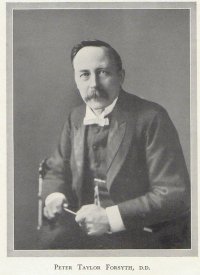
‘How do we get at the entire personality of Christ? The account in the Gospels is too meager for our purpose, and to many it has been made by criticism more or less unstable. With these data we are more successful in reaching the character than the person, though even the character cannot be depicted on modem, intimate, and psychological lines. The motivation, the pragmatism, cannot easily be traced, if at all. As we go into the Gospels it becomes clearer that they were not put there to depict a character, or to be a monument to a personality, but to lead up to the great crisis and victory which, for the first Christians, made Christ Christ before a Gospel was written, even in rudiment. The Gospels have a tendency. There is a movement in them. They hurry, with many a leap, to a dénouement, to a goal in which the movement “arrives,” where the deep fire flames. They make for a crisis where the center of gravity lies. And, as the interest concentrates, the treatment expands. They are more ample as they draw to the close. They spend a disproportionate space on the passion, and on all the precincts of the Cross. Their stream is never so broad as when it enters the sea and disappears. The Gospels have the work of Christ on the Cross for their goal, as the Epistles have it for their center. Redemption is their Leitmotiv.’ – P.T. Forsyth, ‘Christ’s Person and His Cross’. The Methodist Review 66 (1917), 9-10.

The Cross and Violence

Richard Floyd, author of a wonderful study called When I Survey the Wondrous Cross, and a Forsythian scholar, has posted some helpful reflections on the cross and violence: