Worship

Forsyth: ‘Christianity and Society’

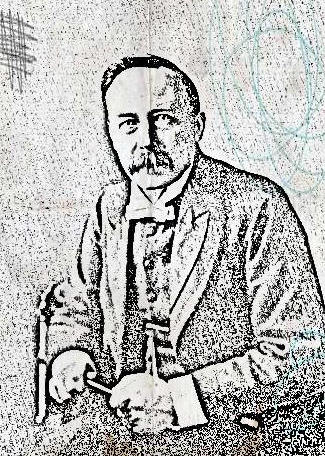
forsyth-61Regular readers of Per Crucem ad Lucem can gear themselves up for some more Forsyth in the next few posts. Here’s a few nuggets from his 1914 essay, ‘Christianity and Society’ (Methodist Review Quarterly):

‘The Church’s true attitude and action in the world is Christ’s. It is that of him whose indwelling makes it a Church The question, therefore, of the Church’s relation to Society is really the whole question of Christology’. (pp. 3-4)

‘Christ is God by his eternal personal relation to the divine holiness, rather than by his essential relation to the divine substance’. (p. 4)

‘The Church is not simply the superlative of religious society. It is not spiritual Humanity coming to its own. Christianity is not the republication of the lex naturæ with supreme éclat. Grace is not a mere reēnforcement of nature. There is a new Creation. That is the vital thing’. (p. 5)

‘The principle of the Church is thus the antithesis of the world; and yet it is in constant and positive relation with it. They co-exist in a vital paradox which is the essence of all active religion. The Gospel can neither humor human nature nor let it alone. That is the grand collision of history, however its form may vary … Hence the first business of the Church is not to influence man but to worship and glorify God, and to act on man only in that interest. All its doctrine, preaching, culture, and conduct is a confession and glorification of the Saviour. The Church does not save; it only bears living witness and makes humble confession, in manifold ways, of a God who does. It is not a company for the promotion of goodness, but a society for the honor of God’. (p. 6)

‘The evil neglect of the theologian by the public today is in a measure his own fault. His truth has not kept pace with the growth of social interest. It has been too idealogical, and not enough social. His doctrine has not remained a living expression even of his own society of the Church. He has failed to show how necessary it is for the social interest itself. And he has not so construed the Gospel as to force a social regeneration on the Christian conscience. He has been often occupied with a God of substance, process, or ideas, instead of a God of act, life, and the Kingdom’. (p. 7)

‘Christianity has more and more to face a dechurched civilization. The circumstances are thus quite different from the mediæval state of things. The traditional civilization is turned more and more upon its own resources. Can they save it from anarchy? It is on its trial’. (p. 14)

‘… our eyes are being purged today to see many things. We feel the effects of a modernized Pelagianism, the effect of worshiping (if it is worship) a God whose revelation is too little of a moral crisis and re-creation of human nature, and too much of its glorification. We inherit a Christianity which allows too much to human nature, and therefore is conquered by it’. (p. 17)

What is Worship?

Those who have appreciated the ministry of James Torrance will be encouraged to take note of this wee reflection on worship by Worldwide Church of God minister, Dr. Joseph Tkach. Good news is always worth reading/watching/listening to … and then sharing with others. Tkach writes:

Christians around the world participate in an act of worship that is known by several names, including the Lord’s Supper, the Eucharist, Communion, and even the New Testament Passover.

Whatever it may be called in any given Christian tradition, the eating of bread and drinking of wine is done in remembrance of Jesus as he commanded.

In Luke 22:19-20 (NIV), we read:

And he took bread, gave thanks and broke it, and gave it to them, saying, “This is my body given for you; do this in remembrance of me.” In the same way, after the supper he took the cup, saying, “This cup is the new covenant in my blood, which is poured out for you.

As we participate in this act of worship it helps to understand what Jesus meant in his command “in remembrance.” The Greek word used in the Gospel of Luke is anamnesis, a word of rich liturgical significance. It does not refer merely to recalling a past event. It points to remembering in such a way that we understand our actual participation in that past event.

And there is a specific reason for this kind of remembrance. Our own personal past, present and future are in fact fully enmeshed in the personal experience of Jesus Christ in his life, death, resurrection and ascension. Jesus Christ became human for our sakes, in our place and on our behalf. As our Creator and our Redeemer, he took up our cause in his own being by becoming human for us.

Authentic worship, therefore, does not originate with us, but rather with Jesus in whom every human being exists and has meaning.

Therefore our emphasis in worship is not upon ourselves, but upon Christ’s action on our behalf. As Scottish theologian James Torrance explained it: “Our response in faith and obedience is a response (this is “response” with a lower case “r”) to the Response (this “Response” is with an upper case “R”)already made for us by Christ…” (Torrance, J.B. The Vicarious Humanity of Christ appearing in The Incarnation, Torrance, T.F. (ed.) (Handsel Press, Edinburgh: 1981).

Our worship of God is authentic worship only because Jesus himself, as the representative human, the perfect human, in our place and on our behalf, worships God for us and in us.

Early Christian leaders made this same point. The fourth century church father Athanasius taught that there is a two-way movement in Jesus Christ. On the one hand, Jesus is God’s saving action toward us. He is the act of God the Father reaching down to deal with our sin and guilt and shame and emptiness. Jesus ministers the things of God to all humanity.

And on the other hand, Jesus is Man representing all humanity, responding perfectly to God on behalf of every human. He is not only God coming to man. He is man going to God, on our behalf and in our place.

Jesus is our perfect and permanent mediator and high priest. He is God acting for humanity, and he is the perfect human responding to God on our behalf. He offers to God on our behalf the perfect and complete Response of everything God wants and expects of humanity.

As the perfect human representing all humans, Jesus answers the Father not with rebellion, not with indifference, not with coldness or apathy, but with zeal and passion and obedience and sincere submission and true adoration. He is human for us, standing in for us, representing all humanity as he lives in true fellowship with God the Father and the Holy Spirit.

In other words, worship is really something we do with our lives as we live in Christ. It happens in every moment as we reflect Jesus Christ who lives within us. It happens when we read a story to our children, when we hug our parents, when we show kindness to another person.

And it happens whenever we eat and drink the Lord’s Supper. All this is participating in the very life of the Trinity and feeling the joy and love shared by the Father, the Son and the Holy Spirit.

Forsyth on old energies in new and higher forms

(Charles) Silvester Horne (1865-1914) was a Congregational minister and politician, and a dear friend of PT Forsyth’s. As part of his tribute to Horne around the latter’s grave, Forsyth offered the following insightful reflection: ‘In the lives of true saints and great wrestlers with God (yea, and of some who know themselves to be neither!) there come times when they wish to pray no more. It is not weariness, nor impatience, nor despair. It is the other way. It is fruition. “In that day ye shall ask Me nothing.” It is not even repose. It is the old energy in a new and higher form. It is praise. It is adoration. We just worship’. – W.B. Selbie, ed., The Life of Charles Silvester Horne, M.A., M.P. (London: Hodder & Stoughton, 1920), 304.

The Good News of Psalm 22

God, God…my God! Why did you dump me
miles from nowhere?
Doubled up with pain, I call to God
all the day long. No answer. Nothing.
I keep at it all night, tossing and turning.

And you! Are you indifferent, above it all,
leaning back on the cushions of Israel’s praise?
We know you were there for our parents:
they cried for your help and you gave it;
they trusted and lived a good life.

And here I am, a nothing—an earthworm,
something to step on, to squash.
Everyone pokes fun at me;
they make faces at me, they shake their heads:
”Let’s see how God handles this one;
since God likes him so much, let him help him!”

And to think you were midwife at my birth,
setting me at my mother’s breasts!
When I left the womb you cradled me;
since the moment of birth you’ve been my God.
Then you moved far away
and trouble moved in next door.
I need a neighbor.

Herds of bulls come at me,
the raging bulls stampede,
Horns lowered, nostrils flaring,
like a herd of buffalo on the move.

I’m a bucket kicked over and spilled,
every joint in my body has been pulled apart.
My heart is a blob
of melted wax in my gut.
I’m dry as a bone,
my tongue black and swollen.
They have laid me out for burial
in the dirt.

Now packs of wild dogs come at me;
thugs gang up on me.
They pin me down hand and foot,
and lock me in a cage—a bag
Of bones in a cage, stared at
by every passerby.
They take my wallet and the shirt off my back,
and then throw dice for my clothes.

You, God—don’t put off my rescue!
Hurry and help me!
Don’t let them cut my throat;
don’t let those mongrels devour me.
If you don’t show up soon,
I’m done for—gored by the bulls,
meat for the lions.

Here’s the story I’ll tell my friends when they come to worship,
and punctuate it with Hallelujahs:
Shout Hallelujah, you God-worshipers;
give glory, you sons of Jacob;
adore him, you daughters of Israel.
He has never let you down,
never looked the other way
when you were being kicked around.
He has never wandered off to do his own thing;
he has been right there, listening.

Here in this great gathering for worship
I have discovered this praise-life.
And I’ll do what I promised right here
in front of the God-worshipers.
Down-and-outers sit at God’s table
and eat their fill.
Everyone on the hunt for God
is here, praising him.
”Live it up, from head to toe.
Don’t ever quit!”

From the four corners of the earth
people are coming to their senses,
are running back to God.
Long-lost families
are falling on their faces before him.
God has taken charge;
from now on he has the last word.

All the power-mongers are before him
—worshiping!
All the poor and powerless, too
—worshiping!
Along with those who never got it together
—worshiping!

Our children and their children
will get in on this
As the word is passed along
from parent to child.
Babies not yet conceived
will hear the good news—
that God does what he says.

(HT: The Dancing God)

Children and Church

Since being joined to the church, I have always struggled with the notion of children being ‘sent out’ of the service. I hear the rhetoric of church as ‘family’ and so often see this translated as ‘the men’ going off to do their thing, ‘the women’ going off to do their thing, and ‘the children’ going off to do their thing. Lots of groups ‘doing their thing’; but not much family. It’s all a bit like a ‘get your own lunch today’ day that we sometimes have at our place … and, as convenient as it sometimes is, and as it means that I usually get to eat what I want to eat (when I want to eat it), I don’t like it one bit!

Having a toddler of my own has not changed my mind about kids in church one bit. Sure, it’s not always the most convenient way to pray while someone is pulling off your glasses and hitting you in the head with a Bible, but I want to publically worship with my daughter and with the other kids, not have them shoved out to the back hall while ‘we’ do the real ‘church stuff’. Not only are these young people missing out on worshipping with – and learning from – us adults, but we are missing out on worshipping with – and learning from – our kids.

Of course, we’re all familiar with the old arguments that kids learn differently, that their attention spans are less – and these are important considerations that I don’t want to undermine – but what I (and too often they) really hear is ‘they’re a distraction’, and ‘we can’t be bothered thinking of a way of doing church that is relevant to non-adults, or at least to non-adults different from ‘us’.

So it is that I was excited to come across the following words from FW Boreham, cited by Geoff Pound (and reprinted here with his permission):

I am told that, away beyond the Never-Never ranges [remote areas of Australian outback] there is a church from which the children are excluded before the sermon begins.

I wish my informant had not told me of its existence. I am not often troubled with nightmare, my supper being quite a frugal affair.

But just occasionally I find myself a victim of the terror by night. And when I am mercifully awakened, and asked why I am gasping so horribly and perspiring so freely. I have to confess that I was dreaming that I had somehow become the minister of that childless congregation.

As is usual after nightmare, I look round with a sense of inexpressible thankfulness on discovering that it was only a horrid dream. An appointment to such a charge would be to me a most fearsome and terrifying prospect. I could not trust myself.

In a way, I envy the man who can hold his own under such circumstances. His transcendent powers enable him to preserve his sturdy humanness of character, his charming simplicity of diction, his graphic picturesqueness of phrase, and his exquisite winsomeness of behaviour without the extraneous assistance which the children render to some of us.

But I could not do it. I should go all to pieces. And so, when I dream that I have entered a pulpit from which I can survey no roguish young faces and mischievous wide-open eyes, I fancy I am ruined and undone. I watch with consternation as the little people file out during the hymn before the sermon, and I know that the sermon is doomed. The children in the congregation are my salvation. – FW Boreham, ‘Pity My Simplicity!’ Mushrooms on the Moor (London: Charles H Kelly, 1915), 151-152.

If the NT is anything of a reliable witness, it is clear that kids loved being with Jesus. What does this tell us about Jesus? What ought this tell us about the way that the church (the body of which he is head) ought to be?

On Good Friday this year, I took my daughter to a service at the Baptist Church in St Andrews. Many things struck me at that service. Here’s three of them: (i) The worship leader made an enormous effort to help ‘all’ those at the service to worship God in a way that was meaningful to them; (ii) The welcome of children was a fantastic and practical reflection of the stained-glassed window above the communion table that represented Jesus welcoming children; and (iii) Sitting on a pew surrounded by the wriggles and voices of children and their praise, I worshipped God with them.

Three further notes:

1. I am not necessarily advocating the cessation of Sunday Schools.

2. Perhaps the argument that children are better served by the Christian family via some more age-appropriate teaching time (during the sermon, for example) is the most practical (and convenient) compromise, but is it really the best option? I don’t know. Perhaps it is. If so, how can churches better communicate to young people that this service to them is an act of love and an affirmation of their value to the community, and to God? Perhaps this is the real issue behind this post.

3. My wife is convinced that my theological idealisms do not translate into the ‘real world’. She may be right! She usually is!

It’s time to name the gods: some reflections on some reactions to Rowan Williams’ recent lecture

There are a number of really disturbing features about the reaction to Rowan Williams’ recent lecture, Civil and Religious Law in England: a Religious Perspective. I want to highlight just three:

1. Thus far, by far the loudest responses have come from those who have not even read the lecture. For a clarification of what Rowan did and did not propose see this post on What did the Archbishop actually say?

2. The element of fear (encouraged by fear politics and a lazy and irresponsible and basically unaccountable media) that exists in the community gut; a fear bred and fed from mistrust and ignorance.

3. Most disturbing, however, has been the coming to the surface of some idols – ‘Christian’ and otherwise – that exist in Britain (and in other places too). As I’ve been listening, and reading responses, to the lecture itself – and to many précised distortions of it! – what is becoming most obvious to me is that here we have a battle of cultus’, cultus’ that must be defended at all costs, whether true to the gospel or not. Nothing more informs a community – religious or otherwise – than its allegiance to its particular cultus. In his On Being The Church Of Jesus Christ In Tumultuous Times (reviewed here) Jones makes the timely observation that ‘one symptom of the disarray in the church today is that most of its actual members are more decisively formed and informed by their national identity than by their identity as disciples of Jesus Christ’ (p. xxi). He proceeds to note that all politics are simply the practices, conversations and processes of forming and sustaining particular communities. The question here for Christians therefore is, ‘What politic will inform our life together and our life-in-relation to others?’ This at least means – alongside a host of other questions – asking the question, ‘What does it mean to love our neighbour as ourselves?’

Agree with him or not, Archbishop Williams’ public comments here – as always – are informed by deep and engaging thought with the gospel itself, and with the implications for the Church and her witness in mind. Here, Williams is an exemplary leader. That the volume has been turned down – and that not least by many Church leaders – on the Truth to which Williams seeks to bear witness is, to my mind, a cause of greater concern than anything that he said, or did not say, in this recent lecture. If we’re going to have a public debate on these things – as we ought – let’s make sure we are absolutely clear on what the issues really are, and are not. Anything less is a destructive and painful waste of everyone’s time. Of course, the issues will be different for members who align themselves with different cultus’. That is unavoidable … but it’s time (and it always is) to name the gods.

    Introducing Children to Worship

    I just came across this post from a fellow blogger and thought it was worth sharing here. The quotation, from Debra Dean Murphy, a theologically sensitive director of Christian Education at a UMC in North Carolina, is from a short essay entitled “Introducing Children to Worship”, from the latest issue of the Baylor University-sponsored journal series Christian Reflection: A Series in Faith and Ethics (click here to find out how to get the journal for free).

    Murphy says:

    …we must regularly communicate to children (and their parents) that they are integral to the whole worshipping body gathered weekly to imagine and practice God’s world into being, and that their presence and participation are not merely tolerated but happily anticipated. When we “dismiss” children from the worshipping body (say, for “childrens church”), no matter how well-intentioned our efforts at teaching them about worship, we convey to them and to all others present that dividing the worshipping body is an acceptable norm. More importantly, we rob children of the gift of being formed by the regular habit, discipline, and joy or corporate worship – which is really how they learn it and learn to love it in the first place …
    But it is also important to insist that worship should not cater to children, since to do so is to give in to the pressures of accomodating style and preference and the temptation to appeal to a target audience. Rather, worship that seeks above all else to enact God’s story of redemption and to imagine God’s politics of peace invites and expects the participation of the whole household of faith – young and old, rich and poor, the able and the infirm – with the understanding that, in regard to young children especially, there are privileges reserved for their maturity, and mysteries and riches of the worshipping life that reveal themselves as rewards for years of practice and perserverance. Children should never be the center of attention in worship (God alone is the object of our devotion) but as children learn about worship by regularly participating in it, we hope and trust that they will come to reap those rewards …

    U2 and Schleiermacher

    Yesterday, I referenced a forum where a discussion on religious experiences at U2 concerts is happening. This morning, I have been reading Schleiermacher’s autobiography (as you do) and came across this related entry to Henriette von Willich to Schleiermacher:

    I cannot tell you what a strange state of mind I was in while at church; how vividly you were present to me, although my whole soul was full of devotion; how, in the moments of profoundest worship in the sanctuary, I was so conscious of my love for you, that the feeling of the divine character of this love penetrated me anew, and filled me with rapture. One doubt, however, arose in my mind, and I determined to speak to you at once about it. It is whether I am wrong in calling those feelings religious which are awakened in me by the music in church? For I must confess that I feel quite differently when the service is not accompanied by music. I cannot describe to you how my soul is borne aloft, as it were, by the tones; what a feeling of freedom is developed in me, what a consciousness of the holy and the infinite seems to pervade me.

    Now I’m trying to imagine the young Friedrich at a U2 concert.