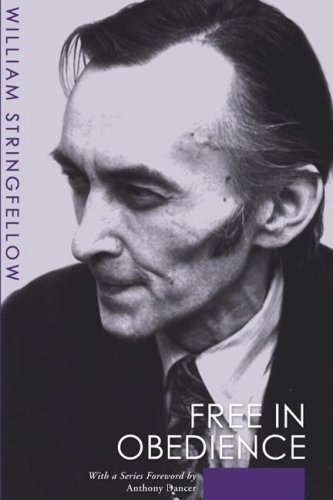
 The final chapter in Free in Obedience is a reflection on the freedom of God, which the opening paragraph describes thus:
‘The freedom of God in his ruling love for this world in this world is not at all coincident with, contingent upon, nor captive of the Church, much less so of the churches or of individual Christians. If the Church or those within the churches do not see and honor the freedom of God, if they will not thus acknowledge and worship God, if they persist in vain commendations of themselves instead of in gladness in the Word of God, if they indulge in boasting witness to themselves rather than bragging of their weakness to explain and attest God’s grace and strength, if they conceive of salvation as in part attributable to themselves and not wholly the gift of God’s initiative in this world, then God, as has been the case before, in his terrible and magnificent generosity with himself in the world, will simply find his own way of working his will and do without the churchly institutions and those who profess to be Christians and, so to speak, take over wholly himself the ministry of the Church’ (pp. 107–8).
This is a chapter written with Bonhoeffer-like boldness, where the demarcation often made (by pietists and moralists) between ‘being’ and ‘doing’ is erased, as is the case in love. So what then is the believer’s task in the world? It is, Stringfellow contends, ‘to so enjoy the Word in the world as to attest the veracity of the Word of God for all men in any and every event’ (p. 117), it is to witness to the one Word of God in the gospel, an action which is always an ‘inherently sacramental event’ (p. 117) and as such is a ‘festival of the event of reconciliation already taking place in the midst of history’ (p. 118). He warns that where the sacraments fail to represent the unity of being and doing in the Church then they become idols, ‘no different from the other principalities of tradition and institution in the world’ (p. 119) and their use then becomes idolatrous. He also warns that ‘when the forms of the sacraments become idols and the sacraments become radically secularized, the world is misled about the meaning and grandeur of God’s work and bewildered about the scope and substance of the Christian faith’ (p. 119). He writes about church offerings, about the daily work and witness of God’s people in the world, and about how Christian freedom consists of the acceptance of the fact of one’s own justification as the work of divine freedom which relieves believers of the anxieties over how God judges us. The believer can therefore live and act, whatever the circumstances, without fear of, or bondage to, either their own death or the works of death in the world. The believer is both enabled and authorised by the gift of the Spirit in baptism to ‘expose all that death has done and can do, rejoicing in the freedom of God which liberates all men, all principalities, all things from bondage to death’ (p. 128). He continues:
‘That being so, the Christian is free to give his own life to the world, to anybody at all, even to one who does not know about or acknowledge the gift, even to one whom the world would regard as unworthy of the gift. He does so without reserve, compromise, hesitation, or prudence, but with modesty, assurance, truth and serenity. That being so, the Christian is free, within the freedom of God, to be obedient unto his own death’. (p. 128)
Don’t forget Wipf & Stock’s offer to readers of Per Crucem ad Lucem of 40% off the retail price of any of the Stringfellow volumes. To obtain the 40% discount, just include the coupon code STRINGFELLOW with your order.
 jasongoroncy.com