Pastoral Ministry

Theology for the community

The quote from David Lyall to which I drew attention in my previous post, What is practical theology?, and the ensuing discussion, reminded me of a section from John de Gruchy’s brilliant little book Theology and Ministry in Context and Crisis: A South African Perspective, wherein de Gruchy writes:

In Germany the title ‘theologian’ refers in the first place not to the academic theologian but to the pastor. It is the primary designation within the Protestant churches of an ordained minister. Yet few priests or pastors would regard themselves as such, especially within the Anglo-Saxon world. In his book Ferment in the Ministry, the north American pastoral psychologist Seward Hiltner imagined the possible responses which ordained ministers would give to a Gallup Poll which asked the question: ‘Do you regard yourself as a theologian?’

31% said, ‘Well, I am a minister, but you could hardly call me a theologian.’

22% said, ‘It is true I have studied theology, but I am not really a theologian.’

17% replied, ‘Brother, I sure ain’t. I’m only a simple parson, not one of those highpowered book guys.’

8% admitted, ‘Well, I guess I am, in a way, but I am more interested in serving people than in theology.’

7% said, ‘Where did you get that idea? And don’t do it again.’

4% replied, ‘I am about twice a year, when I go back to the alumni lectures.’

2% said, ‘Pardon me, I have to rush to a funeral.’

1% snorted, ‘I wonder who thought up that question?’

0.9% said, ‘Yes.’ (Seward Hiltner, Ferment in the Ministry (Nashville: Abingdon Press, 1969), 159.)

Why is there this reluctance on the part of ordained ministers, to regard themselves as theologians, and, on the part of some, especially Anglo-Saxons and their heirs, why is there such antipathy towards theology? In the Germanic world the traditional tendency and temptation is precisely the opposite, to glory in the title ‘theologian’, and to create theologies remote from Christian praxis and existence in the world. Helmut Thielicke has a German audience in mind when, in his A Little Exercise for Young Theologians, he writes about the ‘pathology of the young theologian’s conceit’. Yet even in Germany the idea that the ordained minister’s self-perception is that of a theologian cannot be assumed. At Christmas in 1939 Dietrich Bonhoeffer wrote in a letter to his former students:

How superficial and flippant, especially of theologians, to send theology to the knacker’s yard, to make out that one is not a theologian and doesn’t want to be, and in so doing to ridicule one’s own ministry and ordination and in the end to have, and to advocate, a bad theology instead of a good one! – Dietrich Bonhoeffer, True Patriotism: Letters, Lectures and Notes, 1939-1945 (ed. Edwin Hanton Robertson; trans. Edwin Hanton Robertson and John Bowden; The Collected Works of Dietrich Bonhoeffer; vol. 3; London: Collins, 1973), 28.

This attitude parallels the tendency within the church generally to disparage theology in the interests of ‘practical Christianity’.

Theology has a bad name amongst many theological students and ordained ministers, not primarily because of their modesty but because they fail to grasp its vital necessity and relevance to their vocation. Indeed, they may even regard it as something detrimental to their calling and the life and mission of the church. There are theological students who regard the study of theology as an unfortunate requirement for ordination, rather than as that which should provide the focus for their work. The image of a theologian is academic, intellectual, and far-removed from the everyday tasks of the parish minister. Much of the blame for this must be laid at the door of university departments of theology, theological colleges and seminaries, and those of us who teach in them. Theology has too often been taught in ways which reduce it to idealistic abstractions, and result in its rejection as a useful, indeed, essential part of the mission of the church and therefore of the ordained ministry. After all, the value of theology taught as a series of independent academic disciplines lacking both coherence or direction and unrelated to biblical vision or faith, is not self-evident for the Christian community struggling to be faithful in the midst of the world. This situation needs to be radically transformed if theology is to become the vocation of the ordained minister, and central to the total ministry of the church, and not simply be regarded as the peculiar province of scholars.

In John T. McNeill’s magnificent A History of the Cure of Souls, there is what we might call a ‘give-away’ comment which reinforces my argument that the ordained minister, is primarily a theologian. McNeill refers to the fact that ‘Jean Daniel Benoit, the expert on Calvin’s work in the cure of souls, states boldly that the Genevan Reformer was more a pastor than theologian’, but he then continues, ‘to be exact, he was a theologian in order to be a better pastor’. Conversely, in his introduction to Karl Barth’s essays, Against the Stream, Alec Vidler has this perceptive comment about the theologian’s theologian, Karl Barth: ‘I was aware of a quality or style about him which is hard to define. It may perhaps best be called pastoral, so long as this is not understood as a limitation.’ Christian pastors are called to be theologians, and those whom we normally designate theologians may well be pastors …

The primary task of the ministry of the Word and Sacraments is to enable the upbuilding of the church in such a way that it is always pointed beyond itself to the reign of God in Jesus Christ in the midst of the world. Its task is to keep the People of God mindful of the tradition of Jesus, crucified and risen, and what this means for their lives and the praxis of the church today. Its task is to enable the church to be faithful to its identity as the People of God in the world, discerning who God is and what God requires of them. In this way the ministry of the Word and Sacraments is, literally speaking, church leadership because it provides theological direction for the mission of the People of God in the world. – John W. de Gruchy, Theology and Ministry in Context and Crisis: A South African Perspective (London: Collins, 1987), 40–3, 47

And then there’s that wonderful section from Karl Barth’s Evangelical Theology: An Introduction, a book written in part to speak to ‘the present-day younger generation’ (p. i) and clearly with an intention to encourage budding pastors. The first lectures of this collection were delivered under the auspices of the Divinity School, the University of Chicago and were the Annie Kinkead Warfield Lectures of 1962 at the Princeton Theological Seminary. The section which I was reminded of appears in a chapter titled ‘The Community’:

Since the Christian life is consciously or unconsciously also a witness, the question of truth concerns not only the community but the individual Christian. He too is responsible for the quest for truth in this witness. Therefore, every Christian as such is also called to be a theologian. How much more so those who are specially commissioned in the community, whose service is preeminently concerned with speech in the narrower sense of the term! It is always a suspicious phenomenon when leading churchmen (whether or not they are adorned with a bishop’s silver cross), along with certain fiery evangelists, preachers, or well-meaning warriors for this or that practical Christian cause, are heard to affirm, cheerfully and no doubt also a bit disdainfully, that theology is after all not their business. “I am not a theologian; I am an administrator!” a high-ranking English churchman once said to me. And just as bad is the fact that not a few preachers, after they have exchanged their student years for the routine of practical service, seem to think that they are allowed to leave theology behind them as the butterfly does its caterpillar existence, as if it were an exertion over and done with for them. This will not do at all. Christian witness must always be forged anew in the fire of the question of truth. Otherwise it can in no case and at no time be a witness that is substantial and responsible, and consequently trustworthy and forceful. Theology is no undertaking that can be blithely surrendered to others by anyone engaged in the ministry of God’s Word. It is no hobby of some especially interested and gifted individuals. A community that is awake and conscious of its commission and task in the world will of necessity be a theologically interested community. This holds true in still greater measure for those members of the community who are specially commissioned … – Karl Barth, Evangelical Theology: An Introduction (trans. Grover Foley; Grand Rapids: Wm. B. Eerdmans, 1979, 40–1.

A little later on Barth proceeds to recall that theology – even, one should add, that is as extensive as Barth’s own Church Dogmatics (the word ‘Church’ is crucial here) – ought to be undertaken for the sake of the Community and its witness to the Word of God:

Theology would be an utter failure if it should place itself in some elegant eminence where it would be concerned only with God, the world, man, and some other items, perhaps those of historical interest, instead of being theology for the community. Like the pendulum which regulates the movements of a clock, so theology is responsible for the reasonable service of the community. It reminds all its members, especially those who have greater responsibilities, how serious is their situation and task. In this way it opens for them the way to freedom and joy in their service. (p. 42)

Who would have thought – dared to think – that a human discipline might have a responsibility beyond its own indulgence! In this case, ‘for the reasonable service of the community’, even for the equipping of the saints for the work of ministry, for building up the body of Christ, until we all attain to the unity of the faith and of the knowledge of the Son of God … (Eph 4:12–13). Pastors who are serious about serving their communities will be theologians, and unashamedly so.

The Poetry of Care and Loss

davisDoing the rounds this week:

  • Ellen Davis presented her inaugural lecture as the Amos Ragan Kearns Distinguished Professor of Bible and Practical Theology on October 27, 2009, at Duke Divinity School. The title of the lecture was ‘The Poetry of Care and Loss’. It is available via iTunes.
  • The Thailand Burma Border Consortium compares Eastern Burma to Darfur.
  • Julian Bell reviews Vincent van Gogh – The Letters (now we just need Thames & Hudson to review the price!).
  • A fascinating interview with Slavoj Žižek: ‘… it’s very easy to have a radical position which costs you nothing and for the price of nothing it gives you some kind of moral superiority. It also enables them to avoid the truly difficult questions’.
  • Andrew Brower Latz continues his note sharing on Alan Torrance’s 2009 Didsbury Lectures (Parts I, II and III).
  • Jim Gordon reminds us why reading Bonhoeffer is ‘like engaging in a theological detox programme’.
  • Kyle Strobel writes about Evangelical Idolatry.
  • Rick Floyd posts on Lesslie Newbigin’s The Gospel in a Pluralist Society.
  • W. Travis McMaken, on his way into his final qualifying exam in systematic theology, shares a quote from TF Torrance on modern preaching and the god named ‘existentialist decision’.

Gregory of Nazianzus on pastoral ministry and healing

Gregory of NazianzusLately, I have been making my way through the work of Gregory of Nazianzus, and I was particularly struck by his ‘Oration II: In Defence of his Flight to Pontus, and his Return, after his Ordination to the Priesthood, with an Exposition of the Character of the Priestly Office’ where he not only outlines the gravity of the pastoral call and charge, but also identifies that the nature of pastoral ministry concerns healing, and that that healing is unreservedly grounded in the incarnation:

‘… the scope of our art [i.e. pastoral ministry, which he elsewhere calls the ‘the art of arts and science of sciences’] is to provide the soul with wings, to rescue it from the world and give it to God, and to watch over that which is in His image, if it abides, to take it by the hand, if it is in danger, or restore it, if ruined, to make Christ to dwell in the heart by the Spirit: and, in short, to deify, and bestow heavenly bliss upon, one who belongs to the heavenly host.

This is the wish of our schoolmaster the law, of the prophets who intervened between Christ and the law, of Christ who is the fulfiller and end of the spiritual law; of the emptied Godhead, of the assumed flesh, of the novel union between God and man, one consisting of two, and both in one. This is why God was united to the flesh by means of the soul, and natures so separate were knit together by the affinity to each of the element which mediated between them: so all became one for the sake of all, and for the sake of one, our progenitor, the soul because of the soul which was disobedient, the flesh because of the flesh which co-operated with it and shared in its condemnation, Christ, Who was superior to, and beyond the reach of, sin, because of Adam, who became subject to sin.

This is why the new was substituted for the old, why He Who suffered was for suffering recalled to life, why each property of His, Who was above us, was interchanged with each of ours, why the new mystery took place of the dispensation, due to loving kindness which deals with him who fell through disobedience. This is the reason for the generation and the virgin, for the manger and Bethlehem; the generation on behalf of the creation, the virgin on behalf of the woman, Bethlehem because of Eden, the manger because of the garden, small and visible things on behalf of great and hidden things. This is why the angels glorified first the heavenly, then the earthly, why the shepherds saw the glory over the Lamb and the Shepherd, why the star led the Magi to worship and offer gifts, in order that idolatry might be destroyed. This is why Jesus was baptized, and received testimony from above, and fasted, and was tempted, and overcame him who had overcome. This is why devils were cast out, and diseases healed, and the mighty preaching was entrusted to, and successfully proclaimed by men of low estate.

This is why the heathen rage and the peoples imagine vain things; why tree is set over against tree, hands against hand, the one stretched out in self indulgence, the others in generosity; the one unrestrained, the others fixed by nails, the one expelling Adam, the other reconciling the ends of the earth. This is the reason of the lifting up to atone for the fall, and of the gall for the tasting, and of the thorny crown for the dominion of evil, and of death for death, and of darkness for the sake of light, and of burial for the return to the ground, and of resurrection for the sake of resurrection. All these are a training from God for us, and a healing for our weakness, restoring the old Adam to the place whence he fell, and conducting us to the tree of life, from which the tree of knowledge estranged us, when partaken of unseasonably, and improperly.

Of this healing we, who are set over others, are the ministers and fellow-laborers; for whom it is a great thing to recognize and heal their own passions and sicknesses: or rather, not really a great thing, only the viciousness of most of those who belong to this order has made me say so: but a much greater thing is the power to heal and skillfully cleanse those of others, to the advantage both of those who are in want of healing and of those whose charge it is to heal’.

– Gregory of Nazianzus, ‘Oration II: In Defence of his Flight to Pontus, and his Return, after his Ordination to the Priesthood, with an Exposition of the Character of the Priestly Office’ in A Select Library of Nicene and Post-Nicene Fathers of the Christian Church, Second Series (ed. Philip Schaff and Henry Wace; Edinburgh/Grand Rapids: T&T Clark/Wm. B. Eerdmans, 1989), 7:209–10.

Among other things, Gregory reminds us that the ministry of pastoral care needs to be set within a theological understanding of ministry that is at once apostolic, trinitarian, catholic and evangelical. The primary ministry is the ministry of God, incarnate in the person of Jesus Christ in the world; the mission and ministry of the Church is to participate, in the Spirit, in that ministry of Jesus Christ in the world.

Andrew Purves, in his Reconstructing Pastoral Theology, argues that a huge space seems to have opened up between the faith of the church, understood biblically and historically (the consensus fidelium), and what is often identified as pastoral theology and pastoral care. He contends that it is reasonable to expect that pastoral theology and care would in its own way express what Christians believe about God and the gospel of Jesus Christ and do so in a clear, simple and coherent manner. If this is so the focus of pastoral care will be on God’s grace in Jesus Christ, on the gospel that is a Word from beyond us, and to which pastoral theology and practice must submit to be faithful to the gospel. In other words, it must be Trinitarian, Christological and soteriological:

To insist that God, or, more accurately the ministry of the Father through the Son and in the Holy Spirit, is the subject matter of pastoral theology means then that there is no faithful content to speaking forth and living out the gospel pastorally apart from knowledge of and sharing in the mission of the God who acts savingly in, through, and as Jesus Christ and in the Spirit precisely as a man for all people. It is important to emphasize the reality of our union with Christ, for without that all pastoral work is cast adrift from the actuality of God’s ministry. If it gets God wrong, or more specifically fails to appreciate that knowledge of God is always and only a knowledge of a God who acts, and who acts in, through, and as Jesus Christ, and into whose action and life we, by the Holy Spirit, participate through our union with Christ, the church gets its saying and doing wrong. Knowledge of God and God’s mission is the only critical perspective from which we can judge our own pastoral actions. (Andrew Purves, Reconstructing Pastoral Theology, xxi)

In other words, pastoral care becomes the task of maintaining the connection between the particularity of human stories and the grounding story of the Christian tradition and its community.

A Liturgy for a Miscarried Child

William_Turner_-_Shade_and_Darkness_-_the_Evening_of_the_DelugeWe are made for life. Everything in our humanity cries out against death. Strangely, and shockingly, we’ve come to accept the ‘fact’ of death (and even, in some cases, to benefit from it), especially when it concerns those who have ‘had a good innings’. But one of the toughest gigs is to bury a child. Only one who has lost a child can know the journey from enrapture at the news that ‘we’re pregnant’, to the birth of dreams and laughter, to losing the grip on hope, and … well, to the great emptiness.

Many of those who ‘lose’ a child – including a child in utero – feel that they want to remember rightly, to honour life, and to thank God for the life given – and taken – from them. For some, this means intentional time together with God, to give thanks, to listen, to rage, to see if God might listen, to bury the ‘body’, to protest.

About a year ago, it fell to me to conduct a ‘private’ funeral service for a child which had died in utero (at 11 weeks). Disappointingly, among all the many resources that I had at hand for preparing a funeral liturgy, I had absolutely nothing for funerals in the case of a miscarriage. I was shocked, and deeply bothered, that while I could find prepared liturgies for children who had died in infancy, or as stillborns, I looked in vain for words that might gather up the feelings surrounding the 10-20% of pregnancies that end in miscarriage. So in the end, I scrambled together my own.

The liturgy I pulled together in haste remains a work-in-progress, but rather than wait I wanted to make it available for others for whom it might be a helpful resource. Note that the couple in question had ‘named’ their child with an in utero ‘name’. It was this ‘name’ that was used in the service.

A Liturgy for a Miscarried Child

Gathering

We are here together to worship God, to thank God for God’s love, and to remember [name] short life with us on earth; to share our grief and to commend [name] to God’s eternal care. We meet in the hope that while death is the great enemy, death is not the end, but the new beginning, and so may be faced without fear, bitterness, or guilt, but in faith, hope, and love.

Readings

‘God bent his bow and aimed it squarely at me. He shot his arrows deep into my heart … He has filled me with bitterness. He has given me a cup of deep sorrow to drink. He has made me grind my teeth on gravel. He has rolled me in the dust.Peace has been stripped away, and I have forgotten what prosperity is. I cry out, “My splendor is gone! Everything I had hoped for from the LORD is lost!” The thought of my suffering and homelessness is bitter beyond words. I will never forget this awful time, as I grieve over my loss. Yet I still dare to hope when I remember this: The unfailing love of the LORD never ends! By his mercies we have been kept from complete destruction. Great is his faithfulness; his mercies begin afresh each day. I say to myself, “The LORD is my inheritance; therefore, I will hope in him!” The LORD is wonderfully good to those who wait for him and seek him’. (Lamentations 3.12–25)

‘Where shall I go to escape your spirit? Where shall I flee from your presence? If I scale the heavens you are there, if I lie flat in Sheol, there you are. If I speed away on the wings of the dawn, if I dwell beyond the ocean, even there your hand will be guiding me, your right hand holding me fast. I will say, ‘Let the darkness cover me, and the night wrap itself around me,’ even darkness to you is not dark, and night is as clear as the day. You created my inmost self, knit me together in my mother’s womb. For so many marvels I thank you; a wonder am I, and all your works are wonders. You knew me through and through, my being held no secrets from you, when I was being formed in secret, textured in the depths of the earth. Your eyes could see my embryo. In your book all my days were inscribed, every one that was fixed is there’. (Psalm 139.7–16)

Silence

Prayer

Merciful Father, before you formed us in the womb you knew us as a mother. You make nothing in vain and you love all that you have made. You are the God of unfailing compassion, and you too know what it is like to lose a child. In your creative love and tenderness you gave us [name], so full of hope for the future. You are the source of all our lives, the strength of all our days. You did not make us for darkness and death but to see you face to face and to enjoy abundant life. We praise you for with you nothing is wasted or incomplete, and all things are upheld and made whole with your love. Help us to comfort one another with the comfort we receive from you through your two hands – Word and Spirit.

We pray for [name]. We ask that any trauma that [name] may have felt in those last days, hours, or moments, may be met with your healing. We pray that [name] may continue to grow physically and to mature emotionally, unfrightened and secure in your love, and thrilled about knowing you as the Ground of their being. We thank you for the promise that [name] is in your care where there is no more dying, or tears or pain. And we thank you for giving us every reason to hope that one day we might meet [name] face to face, and in that long-awaited embrace, know afresh that you are the promise-keeping Lord of life.

Readings

‘Let the children come to me; do not hinder them, for to such belongs the kingdom of God’. (Mark 10.14)

‘I am convinced that nothing can ever separate us from God’s love. Death can’t, and life can’t. The angels can’t, and the demons can’t. Our fears for today, our worries about tomorrow, and even the powers of hell can’t keep God’s love away. Whether we are high above the sky or in the deepest ocean, nothing in all creation will ever be able to separate us from the love of God that is revealed in Christ Jesus our Lord’. (Romans 8.38–39)

Silence

Apostles’ Creed

We believe in God, the Father Almighty,
the Creator of heaven and earth,
and in Jesus Christ, His only Son, our Lord:
Who was conceived of the Holy Spirit,
born of the Virgin Mary,
suffered under Pontius Pilate,
was crucified, died, and was buried.
He descended into hell.
The third day He arose again from the dead.
He ascended into heaven
and sits at the right hand of God the Father Almighty,
whence He shall come to judge the living and the dead.
We believe in the Holy Spirit, the holy catholic church,
the communion of saints,
the forgiveness of sins,
the resurrection of the body,
and life everlasting.

Prayer of Committal

Gracious God, we commit [name] into your ever-caring and gentle love; [name] brought the promise of joy to our lives, and to those closest to us, for such a short time; enfold [name] now in your mighty and eternal life of love, in the name of the risen One who was born and died and who lives and reigns with you and the Holy Spirit for ever.

Blessing

‘God bless you and keep you, God smile on you and gift you, God look you full in the face and make you prosper’. (Numbers 6.24–26)

Reading

‘Then I saw a new heaven and a new earth, for the old heaven and the old earth had disappeared. And the sea was also gone. And I saw the holy city, the new Jerusalem, coming down from God out of heaven like a beautiful bride prepared for her husband. I heard a loud shout from the throne, saying, “Look, the home of God is now among his people! He will live with them, and they will be his people. God himself will be with them.He will remove all of their sorrows, and there will be no more death or sorrow or crying or pain. For the old world and its evils are gone forever.” And the one sitting on the throne said, “Look, I am making all things new!” … And he also said, “It is finished! I am the Alpha and the Omega – the Beginning and the End. To all who are thirsty I will give the springs of the water of life without charge! All who are victorious will inherit all these blessings, and I will be their God, and they will be my children’. (Revelation 21.1–7)

William H. Willimon: Advice for New Pastors

William Willimon

William Willimon recently posted an exceptional series of posts in the form of ‘advice’ for those starting in pastoral ministry. It is taken from a book edited by Allan Hugh Cole titled From Midterms to Ministry: Practical Theologians on Pastoral BeginningsI have pasted Bishop Willimon’s posts together into this one post. Read on seminarians, pastors and theological educators, and be encouraged … and challenged. This is one to keep coming back to and re-reading again, and again.


Between Two Worlds

In retrospect, my first year as a pastor was perhaps the most painful, frightening year of my entire ministry. Part of the terror that I experienced was my fear of failure, not simply to fail at being an effective pastor (I had little means of knowing what being “effective” would look like), but rather my fear that I had failed to discern God’s will for my life. What I had thought was my tortured, gradually dawning, wrestling with “call to the ministry,” might be revealed as something other than God’s idea. Looking back, I realize now that the early bumps and potholes that I experienced during the course of that first year were so disconcerting because each one of them made me wonder: maybe my friends are right. Maybe I don’t have what it takes to be a pastor. Perhaps the church really is a waste of my life.

As it turned out, I received more confirmation of my vocation in that first year than invalidation. Wonder of wonders, God really did occasionally speak through me to God’s people, God really did sometimes use me to work a wonder, and God’s people – some of them – really did respond to my ministry. I came to realize that much of my consternation was due, not to my own lack of preparation, or to inadequacies in me or in the church but rather to a move I was making from one world to another.

I recently heard Marcus Borg of the errant “Jesus Seminar” chide us pastors for protecting our congregations from the glorious fruits of “contemporary biblical scholarship.” There’s a brave new world of insight through the historical-critical study of Scripture! Don’t hold back from giving the people in the pew the real truth about Jesus as it has been uncovered by contemporary biblical scholarship and faithfully delivered to you in seminary biblical courses. He implied that even the laity, in their intellectual limitations, can take the truth about Jesus as revealed by Professor Borg and his academic friends.

Yet it seemed not to occur to Professor Borg that contemporary biblical scholarship, because it is asking the wrong questions of the biblical texts, and even more because it is subservient to a community that is at odds with communities of faith, may simply be irrelevant both to the church and to the intent of the church’s Scripture. Sometimes the dissonance between the church and the academy is due, not to the benighted nature of the church, but rather to the limited thought that reigns in the academy.

It took me a long time to learn this. As I said, I remember experiencing that dissonance in my first days in my first church in rural Georgia. I was the freshly minted product of Yale Divinity School now forlorn and forsaken in a poor little parish in rural Georgia. My first surprise was how difficult it was to communicate. If was as if I were speaking a different language. As I preached, my congregation impassively looked at me across a seemingly unbridgeable gulf.

At first I figured that the problem was a gap in education. (Educated people are continued to think this way when dealing with the uneducated.) I had nineteen years of formal education behind me; many of them had less than twelve. Most of my education involved lots of writing and talking, whereas they seemed taciturn and reserved.

I was impressed that they knew more about some things than I. Mostly, they talked and thought with the Bible. They easily, quite naturally referred to Scripture in their conversation, freely using biblical metaphors, sometime referring to obscure biblical texts that I had never read. If they had not read the masters of my thought – Bultmann, Tillich, and Barth, then I had no way to speak to them. I had been in a world that based communicating upon conversations about the thought of others, rather than worrying overmuch about my own thoughts. I realized that my divinity school had made me adept in construing the world psychologically, sociologically (that is, anthropologically) rather than theologically. The only conceptual equipment my people had was that provided by the church, whereas most of my means of making sense were given to me by the academy. Their interpretation of the world was not simply primitive, or simple, or naïve, as I first thought. Rather they were thinking in ways that were different from my ways of thinking. I came to realize that we were not simply speaking from different perspectives and experiences; it was as if we were speaking across the boundaries of two different worlds.

When a theologically trained seminary graduate like me confronts the sociological reality of the church, when a new pastor, schooled in a vision of the church as it ought to be, has his or her nose rubbed in the church as it is, it’s a collision that is the concern of this book. The leap between academia and ecclesia can be a challenge.

I want to avoid a characterization of the challenge as a leap between the goofy ideal (ecclesia as portrayed in the thoughtful academy) and the gritty real (ecclesia as it is in all its grubby mediocrity). Sometimes new pastors say, “Seminary did not prepare me for the true work of ministry,” or “There is too great a gap between what I was told in seminary and what the church really is.”

I do not want to put the matter in a way that privileges academia over ecclesia, as if to imply that to theological schools and seminaries has been given the noble vision of the real, true, faithful church whereas it has been given to the church the grubby, impossible task of actually being the church, putting all that high falutin’ theological theory into institutional praxis.

The challenge is not to stretch oneself between the ideal and the real, or the clash between the theoretical and the practical, the challenge is in finding oneself in the middle of an intersection where two intellectual worlds collide. True, there is often a disconcerting disconnect between the questions being raised in the seminary and the answers that constitute the church. Yet there may also be the problem that the seminary is preoccupied with the wrong questions, or at least questions that arise from intentions other than the Kingdom of God and its fullness.


The Seminary’s World

To be sure, it’s risky to attempt to characterize so complex and diverse a phenomenon as “the seminary.” My characterization arises out of nearly thirty years on a mainline protestant seminary faculty and visits, in the course of time, to over forty different theological schools. Some of my books have become standard texts in the curriculum of a few dozen seminaries, so I know at least a large part of the world of the seminary.

I am helped, in attempting to generalize about theological education, because the world of the seminary is more uniform and standardized than the world of the church. Seminaries, be they large or small, conservative or liberal, have more in common than the churches they serve. They have patterned their internal lives, constructed their curricula, selected their faculties, and have expectations of their students that are based more on the models of other seminaries than on the mission of the church. That’s only one of the problems of theological schools.

Seminaries, at least those in our church, labor under a growing disconnect between the graduates they are producing and the leadership needs of the churches these graduates are serving. This disjunction causes friction in and sometimes defeat of the transition between seminary and church for new pastors. For example, most protestant seminaries have organized themselves on the basis of modern, Western ways of knowing. The epistemology that still holds theological education captive is that which was borrowed from the modern university – detached objectively, the fact/value dichotomy, the separation of emotion and reason with the exaltation of reason as the superior means of knowing, the sovereignty of subjectivity, the loss of any authority other than the isolated, sovereign self pared with subservience to the social, cultural, and political needs of the modern nation state. (The best history of what happened in our seminaries in the Twentieth Century is by Conrad Cherry, Hurrying Toward Zion: Universities, Divinity Schools and American Protestantism, Indiana University Press, 1995.)

That’s saying a mouthful but it is an attempt to depict the intellectual “world” of the theological school that has a tough time honoring the intellectual restrictions of academia and the peculiarly sweeping mandate of the church of Jesus Christ.

The word “seminary” means literally “seed bed.” Seminary was meant to be the nursery where budding theologians are cultivated and seeds are planted that will bear good fruit, God willing, in the future. Trouble is, seminaries thought they could simply overlay those governmentally patronized, culturally confirmed ways of academic thinking over the church’s ways of thought, and proceed right along as if nothing had happened between the seminary as the church created it to be (a place to equip and form new pastoral leaders for the church) and the seminary as it became (another graduate/professional school).

In the world of the contemporary theological school, faculty talk mostly to one another (As Nietzsche noted, long ago, no one reads theologians except for other theologians.), faculty accredit and tenure other faculty using criteria derived mainly from the modern, secular research university. While the seminary desperately needs faculty who are adept at negotiating the tension between ecclesia and academia, faculty tend to be best at bedding down in academia. The AAR (American Academy of Religion) owns theological education.

One last disconnect I’ll mention: The seminary, by its nature, is a selective, elitist institution, selecting and evaluating its students with criteria that are derived from educational institutions rather than the ecclesia. In one sense, a theological school should be selective, astutely selecting these students who can most benefit Christ’s future work with the church. Trouble is, when criteria are applied that arise from sources other than the Body of Christ, we have the phenomenon of the church’s leadership schools cranking out people who have little interest in equipment for service to the church as it is called to be. If college departments of Religious Studies were not in decline, there would be something to do with the best of these seminary graduates. If the US Post Office were not holding its employees more accountable for their performance, the rest of them would have promising careers.

For instance, when my District Superintendents and I interviewed a group of soon to be graduates in one of our seminaries, we were distinctly unimpressed with their responses. Here we were before them saying, in effect, “We are a declining organization. We are looking for people who will come into the United Methodist ministry, take some risks, attempt to grow some new churches and new ministries, and help lead us out of our current malaise.” Yet the seminarians we were conversing with struck us as mostly those interested in being care givers to established congregations, caretakers of ministries that someone else long before them had initiated, and in general, to be people who were attracted to our church’s ministry precisely because they would never, ever have to take a risk with Jesus. 

When I was critical of the students we were meeting, one of the pastors with me said, “Look, you have people who have spent a lifetime in school learning nothing more than how to be in school. They have been taught by tenured faculty who have given their lives to doing well in academia and thereby getting tenure and never having again to take a risk in their lives. Faculty who are not held accountable for their performance or results are not likely to educate clergy who are focused on accountability or results.”

When seminaries appoint faculty who have little skill or inclination to traffic between academia and church, is there any wonder why the products of their teaching find that transition to be so difficult? Alas, what many graduates do is quickly to jettison “all that theology stuff” that seminary attempted to teach and relent to the “real world” of the congregation, the rest of their ministry simply flying by the seat of their pants. The seminary may self-flatteringly think of itself as the vanguard of the thought of the church when in reality it is an agent for the preservation of the church’s boring status quo.


The Church’s World

Seminarians who have been schooled in modern, Western notions that they are primarily individuals, detached persons whose main source of authority is their own subjectivity, have thereby been inculcated into the unchristian notion that they should think for themselves. What a shock to enter their first parish and find that church is an essentially group phenomenon, an inherently traditioned enterprise. Our most original thinking occurs when we think, not by ourselves, but with the saints. The best thing that seminary has done for its graduates, if it has done its work, is to introduce them to the burden and the blessing of the church’s tradition, to form them into advocates for the collective witness of the church, and to make believe that the church is God’s answer to what’s wrong with the world. Yet the way that the seminary engages the witness of the saints makes it difficult for new pastors to think with the saints.

For example, Scripture, the tradition of the church, has a privileged place in the communication of the church. Pastors are ordained, ordered to bear that tradition compellingly, faithfully, quite unoriginally before their congregations, not primarily so that their congregations can think through the tradition, but rather so that they can, in their discipleship incarnate Christian truth. We pastors are not free to rummage about in the recesses of our own egos, not free to consult other extraecclesial texts until we have first done business with Scripture and the great tradition. Alas, too much of today’s theological training (arising out of the German university of the Nineteenth Century) places the modern reader above the texts of the church, assuming a privileged, detached and superior position to the church’s historic faith. The academic guild stands in judgment upon the texts, raising questions about the texts. Thus it comes as a jolt for the seminarian to graduate and to find him or herself cast in the role of the ordained, the official who leads the church not in detached criticism of these texts but rather in faithful embodiment of the sacred texts.

In my book, Pastor: The Theology and Practice of Ordained Ministry (Abingdon, 2002), I observed that many seminarians tend to be introverted, reflective, personal seekers after God whereas the church is heavily politicized and communal. Pastors are supremely “community persons,” officials of an institution, leaders who the church expects to worry about community and group cohesion with a Savior whose salvation is always a group phenomenon. The seminarian who is trained occasionally to write a speech for a group of individuals, sometimes to do one-on-one counseling, to form intense personal relationships within a conglomerate of individuals, finds herself flung into a politically charged, complex organization, a family system that requires astute knowledge of group dynamics and wise leadership of a divisive group of people who have been caught in the dragnet of God’s expansive grace in Christ. When Chrysostom argued his own inadequacy to be a pastor or bishop, it was precisely this public quality of Christian leadership that he cited as the reason why he did not have what it takes to be a pastor.

Sadly, too often the seminary has taught its students to step back from the Christian tradition and its Scriptures, to reflect, learn to critique, and actively to question. True, such stepping back and critique are developmentally appropriate for the formation of the church’s leaders. Yet when the seminarian becomes a pastor, she takes her place as leader of an organization that has goals like embodiment, engagement, involvement, participation, and full-hearted commitment, embrace of the enemy, hospitality to the stranger, group cohesion, koinonia. The whole point of discipleship is not cool consideration of Jesus but rather following Jesus. The person who fails to make the move from being the lone individual, confronting the faith, tending his or her own spiritual garden, to the role of a public leader of a group, is the person who will have a tough time in the first parish.

Today many describe the ordained ministry as “servant leadership.” The peculiar service that the church needs from those who ordained is that they step up, lay aside their own spiritual quandaries, and speak for the church to the church. They must, as the bishop tells them in the ordinal, “take authority,” cultivating in themselves the habit of thinking more about the community and its needs than their own. Students who have been enculturated into the world of the academy – in which students must defer and submit to the authority of the professor, who has submitted to the authority of the academic guild – sometimes have difficulty standing up in a congregation and, in service to the community, taking charge, casting a vision, and taking the time and doing the work to build a group of allies who will join the pastor in moving toward responsibility for Christ’s mission into the world.

I, therefore, say to seminarians, upon their graduation, you are not just taking on a new job, you are moving to a new world.

Recently, I asked a group of our best and brightest new pastors what they would like most from the church and from me as their bishop. I was surprised to hear them all respond: “Supervision!” They yearn for help with the move between these two worlds because they realize the inadequacy of their preparation. Churches and judicatories must take this move more seriously and must develop better means of mentoring and supervising new pastors through this process.

As someone who now works with new pastors on that move from the world of the theological school to the world of the parish, I have some specific suggestions:

1. Devise ways to learn to speak their language. Laity sometimes complain that their young pastor, in sermons, uses “religious” words like “spiritual practice,” “liberation,” “empowerment,” “intentional community” (this is an actual list a layperson collected and sent to me) that no one understands and no one recalls having heard in Scripture. Such “preacher talk” makes the pastor seem detached, alien, and aloof from the people and hinders leadership.

2. At the same time, prepare yourself to become a teacher of the church’s peculiar speech to a people who may have forgotten how to use it. This may seem contrary to my first suggestion. My friend, Stanley Hauerwas, says that the best preparation for being a pastor today is previously to have taught high school French. The skills required to drill French verbs into the heads of adolescents are the skills that pastors need to teach our people how to speak the gospel. Trouble is, most seminarians are more skilled, upon graduation from school, to be able to describe the world anthropologically than theologically. They have learned to use the language of Marxist analysis or feminist criticism better than the language of Zion. We must be person who lovingly cultivate and actively use the church’s peculiar speech.

3. Keep telling yourself that the difference in thought between the laity in your first parish and that of your friends back in seminary is not so much the difference between ignorance and intelligence; it’s just different ways of thinking that arise out of life in different worlds. I recommend reading novels (Flannery O’Connor saved me in my first parish by writing true stories that sounded like they were written by one of my parishioners) in order to appreciate the thought and the speech of people who, while having never been initiated into the narrow confines of the world of theological education, are thinking deeply.

4. Remind yourself that while the seminary has an important role to play in the life of the church, it is the seminary that must be accountable to the church, not vice versa. It is my prejudice that, if you have difficulty making the transition from seminary to parish it is probably a criticism of the seminary. The Christian faith is to be studied and critically examined only for the purpose of its embodiment. Christians are those who are to become that which we profess. The purpose of theological discernment is not to devise something that is interesting to say to the modern world but rather to rock the modern world with the church’s demonstration that Jesus Christ is Lord and all other little lordlets are not.

5. Be open to the possibility that the matters that were focused upon in the course of the seminary curriculum, the questions raised and the arguments engaged, might be a distraction from the true, historic mission and purpose of the church and its ministry.

6. On the other hand, be open to the possibility that the church has a tendency to bed down with mediocrity, to accept the mere status quo as the norm, and to let itself off the theological hook too easily. One reason why the church needs theology explored and taught in its seminaries is that theology (at its best) keeps making Christian discipleship as hard as it ought to be. Theology keeps guard over the church’s peculiar speech and the church’s distinctive mission. Something there is within any accommodated, compromised church (and aren’t they all, in one way or another?) that needs to reassure itself, “All that academic, intellectual, theological stuff is bunk and is irrelevant to the way the church really is.” The way the church “really is” is faithless, mistaken, cowardly, and compromised. It’s sad that it is up to seminaries to offer some of the most trenc hant and interesting critiques of the church. Criticism of the church ought to be part of the ongoing mission of a faithful church that takes Jesus more seriously and itself a little less so. I pray that your theological education rendered you permanently uneasy with the church. Promise me that you will, throughout your ministry, never be happy with the church.

7. I pray that you studied hard in seminary, read widely, thought deeply because you are going to need all of that if you are going to stay long as a leader of the church. Your life would be infinitely easier and less complicated if God had called you to be an accountant or a seminary professor. Most of the stuff that you read in seminary will only prepare you really to grow and to develop after you leave seminary. Think of your tough transition into the parish as the beginning, not the end, of your adventure into real growth as a minister. Theology tends to be wasted on the young. It’s only when you run into a complete dead end in the parish, when you are aging and tired and fed up with the people of God (and maybe even God too) that you need to know where to go to have a good conversation with some saint in order to make it through the night. Believe it or not, it’s much easier to beg in in the ministry, even considering the tough transition between seminary and the parish, than it is to continue in ministry. A winning smile, a pleasing personality, a winsome way with people, none of these are enough to keep you working with Jesus, preaching the Word, nurturing the flock, looking for the lost. Only God can do that and a major way God does that is through the prayerful, intense reading, study and reflection that you can only begin in three or four years of seminary.

8. Try not to listen to your parishioners when they attempt to use you to weasel out of the claims of Christ. Much of the criticism that you will receive, many of their negative comments about your work, are just their attempt to excuse themselves from discipleship. “When you are older, you will understand,” they told me as a young pastor. “You have still got all that theological stuff in you from seminary. Eventually, you’ll learn,” said older, cynical pastors. Now it’s, “Because you are a bishop, you don’t really understand that I can’t….” God has called you to preach and to live the gospel before them and they will use any means to avoid it. Be suspicious when people encourage you to see the transition from seminary to the parish as mainly a time finally to settle in and make peace with the “real world.” Jesus Christ is our definition of what’s real and there is much that passes for “the way things are” in the average church that makes Jesus want to grab a whip in hand and clean house.

9. The next few years could be among the most important in your ministry, including the years that you spent in seminary, because they are the years in which you will form your habits that will make your ministry. That’s one reason why I think the Lutherans are wise to require an internship year in a parish, before seminary graduation, for their pastors and why I think that a great way to begin is to begin your ministry is as someone’s associate in a team ministry in a larger church. In a small, rural church, alone, with total responsibility in your shoulders, in the weekly treadmill of sermons and pastoral care, if you are not careful there is too little time to read and reflect, too little time to prepare your first sermons, so you develop bad habits of flying by the seat of your pants, taking short cuts, and borrowing from others what ought to be developed in the workshop of your own soul. Ministry has a wa y of coming at you, of jerking you around from here to there, so you need to take charge of your time, prioritize your work, and be sure that you don’t neglect the absolute essentials while you are doing the merely important. If you don’t define your ministry on the basis of your theological commitments, the parish has a way of defining your ministry on the basis of their selfish preoccupations and that is why so many clergy are so harried and tired today. Mind your habits.


The Necessity of Mentors

One of the most important decisions that a new pastor can make is to obtain a good pastoral mentor. Ministry is a craft. I am unperturbed when new pastors sometimes say, “Seminary never really taught me actually how to do ministry.” I think seminary is best when it instills the classical theological disciplines and exposes to the classical theological resources of the church, not so good at teaching the everyday, practical, administrative and mundane tasks of the parish ministry. One learns a craft, not by reading books, but by looking over the shoulder of a master, watching the moves, learning by example, developing a critical approach that constantly evaluates and gains new skills.

Selecting a mentor can be your greatest challenge as a new pastor. Few experienced pastors have the training or the gifts for mentoring a new colleague. The “Lone Ranger” mentality afflicts many lonely pastors and their work shows the results of their failure to obey Jesus’ sending of the Seventy “two by two” (Luke 10:1). Some senior colleagues are often threatened by your youth, or your idealism, or your talent, seeing their own failures and disappointments in the light of your future promise. You will encounter those experienced pastors whose main experience has been that of accommodation, appeasement, and disillusionment with the meager impact of their ministry. They have a personal stake in robbing you of your youthful energy and expectation for ministry. Their goal is to get you to say, “Well, I thought that ministry in the name of Jesus would be a great advent ure but now I’ve settled in and turned it into a modestly well paying job.”

Yet in asking someone to be your mentor, to look into your life, to show you how to do ministry as they have done it, is one of the most flattering and affirming things you can do for a senior colleague. The Christian ministry is too tough to be done alone. There is something built into the practice of Christian ministry that requires apprenticeship from Paul mentoring young Timothy to Ambrose guiding the willful Augustine, to Carlyle Marney putting his arm around me and saying, “Here’s what a kid like you has got to watch out for.” In my experience, one of the most revealing questions that I can ask a new pastor is, “Who are your models for ministry? Whose example are you following?”

One of the most decisive examples given to me, in my first months of ministry, was a negative one. I was attending my first Annual Conference. Between one of the sessions, an older, self-presumed wiser pastor took me aside and said, “Son, you seem ambitious and talented. Let me give you some advice that I wish someone had given me when I was at your age. Buy property at Junaluska (Lake Junaluska, the retreat center now Methodist resort near our Conference).”

Property at Junaluska?” I asked in wide-eyed stupidity.

“Right. Doesn’t have to be a house. Perhaps start with an undeveloped lot. Eventually move up to a home at Junaluska,” he continued. “Name me one person on the Bishop’s Cabinet who doesn’t have a house at Junaluska,” he responded before moving on to offer advice to some other promising young pastor.

I thought to myself, “Four years of college. Three years of seminary. Three years of graduate school for the purpose of a lousy mortgage at Lake Junaluska. This is what it’s all about?”

That interchange was one of the most significant in my first days as a United Methodist minister. It was encouragement for me to lay hold of the vocation that had taken hold of me. Standing there in the lobby of the auditorium, I prayed, “Lord, you have my permission to strike me dead if I ever degrade my vocation as that guy has degraded his.”

That I am here today, over thirty years after my transition from seminary to the pastoral ministry, writing this essay, suggests to me that I kept the solemn vow I made that day. More likely is that the Lord is infinite in mercy, full of forgiveness, and patient with those whom the Lord calls to ministry.

William H. Willimon

[Source: Parts I, II, III, IV]

Encouragement for pastors to be pastors

eugene-petersonEugene Peterson is always worth listening to, and his writing on pastoral ministry is enormously encouraging. Here’s some snipperts from a Leadership interview with this pastor to pastors:

‘The most important thing a pastor does is stand in a pulpit every Sunday and say, “Let us worship God.” If that ceases to be the primary thing I do in terms of my energy, my imagination, and the way I structure my life, then I no longer function as a pastor. I pick up some other identity. I cannot fail to call the congregation to worship God, to listen to his Word, to offer themselves to God. Worship becomes a place where we have our lives redefined for us. If we’re no longer operating out of that redefinition, the pastoral job is hopeless. Or if not hopeless, it becomes a defection. We join the enemy. We’ve quit our basic work’.

‘I don’t ever want to convey that our primary job as pastors is to fix a problem. Our primary work is to make saints. We’re in the saint-making business. If we enter the human-potential business, we’ve lost our calling’.

‘I begin with the conviction that everything in the gospel is experience-able. As a pastor, whatever the person’s situation, you’re saying to yourself, This person can experience the gospel here. I haven’t a clue how it’s going to happen, but I’m willing to slog through whatever has to be slogged through and not give up. I will continue to keep the gospel clear on Sundays; I will continue to be a companion with this person on Fridays’.

‘You cannot go to a pulpit week after week and preach truth accurately without constant study. Our minds blur on us, and we need that constant sharpening of our minds. And without study, without the use of our mind in a disciplined way, we are sitting ducks for the culture’.

‘I get my job description from the Scriptures, from my ordination vows. If I let the congregation decide what I’m going to do, I’m as bad as a doctor who prescribes drugs on request. Medical societies throw out doctors for doing that kind of thing; we need theological societies to throw out pastors for doing the same thing. And if you give up prayer and study, you will soon give up the third area: people’.

‘Listening, paying attention to people is the most inefficient way to do anything. It’s tedious, and it’s boring, and when you do it, it feels like you’re wasting time and not getting anything done. So when the pressures start to mount, when there are committees to run to and budgets to fix, what’s got to go? Listening to people. Seeing them in their uniqueness, without expecting anything of them. You quit paying attention, and people get categorized and recruited. It doesn’t take long for pastors to become good manipulators. Most of us learn those skills pretty quickly. If you can make a person feel guilty, you can make him or her do almost anything. And who’s better at guilt than pastors?’

‘The person who prays for you from the pulpit on Sunday should be the person who prays for you when you’re dying. Then there’s a connection between this world and the world proclaimed in worship. Classically – and I have not seen anything in the twentieth century that has made me revise my expectation – a pastor is local. You know people’s names, and they know your name. There’s no way to put pastoral work on an assembly line … Pastoral care can be shared, but never delegated. If the congregation perceives that I exempt myself from that kind of work, then I become an expert. I become somehow elitist; I’m no longer on their level. Elitism is an old demon that plagues the church’.

‘The church is not a functional place. It’s a place of being’.

‘It’s odd: We live in this so-called postmodernist time, and yet so much of the public image of the church is this rational, management-efficient model. If the postmodernists are right, that model is passe; it doesn’t work any more. In that sense, I find myself quite comfortably postmodern. I think pastors need to cultivate “unbusyness.” I use that word a lot. My father was a butcher. When he delivered meat to restaurants, he would sit at the counter, have a cup of coffee and piece of pie, and waste time. But that time was critical for building relationships, for doing business. Sometimes I’m with pastors who don’t wander around. They don’t waste time. Their time is too valuable. They run to the tomb, and it’s empty, so they run back. They never see resurrection. Meanwhile, Mary’s wasting time; she’s wandering around. To be unbusy, you have to disengage yourself from egos – both yours and others – and start dealing with souls. Souls cannot be hurried’.

‘For me, being a pastor means being attentive to people. But the minute I start taking my cues from them, I quit being a pastor’.

‘Most pastoral work is slow work. It is not a program that you put in place and then have it happen. It’s a life. It’s a life of prayer’.

To read the whole interview: Part I; Part II.

Richard Hays on ‘Limping and Praising’: An ordination sermon

richard-haysHere’s a sermon preached by the Rev. Richard Hays for the ordination of his son, the Rev. Christopher Hays, at La Crescenta Presbyterian Church, La Crescenta, Calif., on March 8, 2009.

Texts: Genesis 32:9-1122-30Colossians. 1:9-14Revelation 4:10-5:10

I have to admit, I didn’t always see this coming. But having watched Chris grow up, I realize now that I probably should have anticipated this day, because there is a pattern here.

When Chris was five years old, there was that classic pennant race between the Boston Red Sox and the New York Yankees, the one that ended in a one-game playoff won by the Yankees on Bucky Dent’s home run. Chris watched his longsuffering dad desperately rooting for his beloved Red Sox – and he decided to become a Yankees fan.

Later, when Chris began to feel the inexorable pull of vocation to the serious academic study of theology, he sized up his father’s career as a New Testament scholar – and decided to assert his intellectual independence by going into the field of Old Testament studies.

And so, when the time came that Chris felt God’s powerful call to ordained ministry, it was probably inevitable that he would take note of his dad’s service as a United Methodist minister and once again rebel against the paternal example – by being ordained in the PC(USA). And so we find ourselves here this evening … to celebrate this latest contrarian act of rebellion.

To be fair, I should acknowledge that Chris comes by his Calvinist inclinations with an honest sense of family roots. His proud mother was a cradle Presbyterian and indeed served as an elder in the First Presbyterian Church of New Haven during Chris’s formative adolescent years. And even his Methodist father harbors the secret opinion that Calvin and Barth got a lot of things right.

The truth is, of course, that all of us are here to celebrate this glad occasion with great joy, along with the due sense of awe that always attends any service of ordination to the ministry of word and sacrament in the church of Jesus Christ. We are here to solemnize the particular call that lies on Chris’s life and to confirm publicly the office he now assumes within the church. But at the same time, we are mindful that ministry is first and last the work of the Holy Spirit in the church, and that all of us, as the people of God, are called in one way or another to share in the work of ministry through the diverse gifts and graces which the Spirit distributes broadly among us all. And so, as we reflect together on the Scriptural texts and on the prayers and liturgical actions through which we set Chris apart for this work, each of us here should also prayerfully consider our own calling and renew our own sense of vocation, whatever it may be, within the church’s ministry.

But as we enter that process of prayerful consideration, we have to acknowledge that the Scriptural texts Chris has chosen for this occasion are more than a little daunting. Interestingly, none of them says anything at all about ordination or about ministry as such. The letter to the Colossians is addressed to all “the saints and faithful brothers and sisters in Christ in Colossae,” (Colossians 1:2) and it speaks to all of them, together, as people who have been “rescued us from the power of darkness and transferred us into the kingdom of his beloved Son.” (Colossians 1:13) And we get the distinct impression from our other two texts that being transferred into that kingdom is both a cause for joy and – at the same time – a strange and fearsome experience, as love always is. I want to reflect with you tonight about these two strange texts from the beginning and end of the canon, from Genesis and Revelation. What do they have to teach us about ministry?

We begin with Jacob. From the day of his birth, he was a trickster and an operator, grabbing and scrambling, figuring the angles to outsmart and outmaneuver his brother Esau – indeed, cutting a deal to swindle him out of his rightful inheritance – then later jockeying for economic advantage with his equally devious father-in-law, Laban. You can bet that if the banking business had existed in his day (it was actually forbidden by Old Testament law – but that’s a topic for another day), Jacob would have been packaging derivatives and collecting sweet executive bonuses. But – as is always the case – the day of reckoning was coming. After long absence, Jacob is returning home, preparing to face his estranged brother Esau, whom he had defrauded. And it is under these circumstances that he meets God.

God does not come to him as some sweet, forgiving presence. Rather, under the cloak of darkness, God comes as a mysterious adversary, appearing from nowhere to accost Jacob in a wrestling match. The struggle is lengthy and inconclusive, but Jacob hangs on for dear life, refuses to let go without receiving a blessing. And the blessing he receives includes a new name: Israel – the one who strives with God. The name Israel recalls a protracted struggle in the dark – a struggle that leaves Israel lame, permanently limping as a reminder of surviving a strange face-to-face encounter with God.

What does all that have to do with ministry? First, if Jacob/Israel is our precursor as one who first receives and then finally gives blessings (and surely that is not a bad description of what we do in ministry), then we should remember that we don’t deserve what we get or get what we deserve. Why does God choose Jacob as the one through whom the line of promised blessing is to extend? God knows … but it certainly wasn’t because Jacob was more devout or virtuous than others around him. One of the particular charisms you Calvinists bring to the church universal is the gift of depravity. You remind us constantly that we receive God’s grace despite our total unworthiness. That’s not a popular message in an age that prizes self-esteem, but it is, simply put, the gospel. That is what Paul means when he characterizes God as the one who “justifies the ungodly” (Romans 4:5). God chose Jacob to become Israel for reasons we cannot begin to fathom. Just before this midnight encounter, you will recall, Jacob had rightly prayed, “I am unworthy of the steadfast love and all the faithfulness you have shown to your servant” (Genesis 32:10). And so it is also with those who are called to ministry – not just Chris, but all of us here.

richard-hays-1

Precisely for that reason, the encounter with God as Genesis 32 describes it is a fearsome one. If we unworthy servants are to be transferred from the power of darkness, that means God is going to have to come after us in the dark. If we are honest with ourselves, we will see it couldn’t be any other way. And it also means that ministry has its genesis in a struggle. Those who encounter God in the dark will be not only changed but also marked, left with the wound created by God’s wrenching us out of one life and blessing us with a new one. And this God who wrenches us free may well have a dreadful aspect.

Such a God cannot be lightly named. Jacob asks the name of his adversary, but the only reply he receives is this: “Why do you ask my name?” What kind of an answer is that? In the book of Judges, there is a similar passage that may give us a clue. The angel of the Lord appears to Samson’s mother and father to proclaim that they are at last, after years of barrenness, to have a child. They too ask the messenger’s name, and this is his answer: “Why do you ask my name? It is too wonderful” (Judges 13:18). So also with the divine figure who wrestles with Jacob: His name is too wonderful to be spoken. And thus Jacob comes to realize with whom he has been wrestling: “I have seen God face to face, and yet my life is preserved.”

Those called to the work of ministry will emerge from such an encounter limping and chastened, knowing that our words are inadequate, that we are not sufficient for these things. But we also will know that the God whom we serve, the God who has graciously and inexplicably called and blessed us, is wonderful beyond all telling.

And with that we turn to our other text from the Book of Revelation. Those saints casting down their crowns around the heavenly throne know well the wonder of God. The God they worship is worthy “to receive glory and honor and power,” for this is the God who has created all things. This word “worthy” echoes through the whole passage. The Lord God on the throne is worthy, but no one else can be found who is worthy to open the scroll.

Now, I don’t know for sure why Chris chose this text for his ordination service, but I do know this: For those of us in the business of biblical scholarship, there is nothing more enticing than an unopened scroll with hidden writing on it. You could build a whole career on the basis of finding something like that. But apart from any career-building concerns, we are just dying with curiosity – holy curiosity, if I may say so – to find out what might be in that sealed scroll. This scroll, it seems, contains the revelation of God’s hidden designs for all history. So we go to school for years and study Greek and Hebrew, or even Akkadian and Ugaritic, in hopes that we might be deemed prepared and worthy to read that mysterious text. But the seer John is insistent: “No one in heaven or on earth or under the earth was able to open the scroll, or to look into it” – not even if they have a Ph.D. in Old Testament. And so he weeps bitterly. You have to understand how frustrating this would be: all those years of study, all this vast erudition – it all comes to nothing. No one is worthy.

There is only one, it turns out, who is worthy to open the scroll that hides the secrets of creation, the one whom one of the heavenly elders calls “the Lion of the tribe of Judah.” And so we are expecting a glorious, roaring figure to appear and break open the seals. But then John looks, and what does he see? “A Lamb, standing as if it had been slaughtered.” The heavenly chorus proclaims in their new song that only this one is worthy to open the scroll. Why? Not because he is smarter than everyone else, not because he commands an army, but precisely because he has been slaughtered. And by his blood he has ransomed a great throng from all over the world and “made them to be a kingdom and priests serving our God.”

So again, I ask, what does this have to do with ministry? As it turns out, everything. We constantly live with the illusion that our effectiveness in ministry, our fitness for the job, will have something to do with our intellectual acuity, our level of dedication and hard work, our interpersonal skills, our passion for justice. The book of Revelation punctures that illusion with a simple devastating pronouncement: No one was found worthy. It is only the slain Lamb who can be the revealer. If Jacob was marked by a limp, this Lamb is marked by the wounds of the cross. Only so does he open what is otherwise hidden, and only so does he make us into priests serving our God.

What, then, is our role in ministry? Chiefly, above all else, it is to follow the Lamb wherever he goes and to join the great heavenly chorus, singing – perhaps to music composed by Handel – “Worthy is the Lamb who was slain, to receive power and wealth and wisdom and might and honor and glory and blessing.” Praise is our vocation. It is in blessing God that we in turn are blessed. As the Reformed tradition confesses, our chief end – and our fulfillment – is to glorify God and to enjoy him forever. That is why it is fitting that our first hymn today offers up this prayer: “Come thou fount of every blessing,/ Tune my heart to sing thy grace,/ Streams of mercy, never ceasing,/ Call for songs of loudest praise.”

“Tune my heart.” Just as the tuning of a guitar is different from the tuning of a violin or the tuning of a piano, for each of us it will mean something slightly different to have our hearts rightly tuned for praise. For Chris, being rightly tuned for praise will indeed mean opening books, including those Ugaritic books, and sharing with students snatches of the mysterious melody of creation and redemption. That is at least part of the unfinished song he has been given. Much of the rest of it remains to be disclosed and played later.

So, as we wrestle with these texts, they press upon us this understanding of ministry: We are unworthy of the blessings we receive and the tasks to which we are called, limping as we go. The heart of our service is simply to worship faithfully, to declare the praise of the God who spoke us into being and rescued us from the power of darkness by the self-giving death of the One who is worthy: the Lamb. All else will follow from that.

Only when we understand ministry in this way can we join together in praying for Chris the prayer that Paul offers for the Colossians:

“… May you walk worthily of the Lord … as you bear fruit in every good work, and as you grow in the knowledge of God.”

[Source: Faith & Leadership]

Forsyth on the current claptrap against theology

forsyth-13‘It is doubtful if anywhere so much ability is going to seed as in the pulpit, if so much toil, ingenuity, intelligence, and feeling are being wasted anywhere as in the thousands of sermons that go to their drawers as to their last cradle and long home, week by week, to haunt as feckless ghosts the preacher’s soul. Hence the restlessness that is observable in the ministry in various quarters, the sense of ineffectiveness, the desire to try a new soil with the same seed, in the hope that the Spirit may at last reward the effort and bring back His sheaves with Him. But it is not a change of sphere that is required most. That may but foment the unquiet, or else become the soul’s narcotic, It is a change of note that is needed, and a change that no new place can bring. If the lack is power, the cause of the lack is the absence of a definite, positive, and commanding creed which holds us far more than we hold it, holds us by the conscience, founds and feeds us on the eternal reality, and, before we can do anything with it, does everything with us. Every Church and every preacher is bound to run down without such a creed, and no amount of humane sympathy or vivid interests can avert the decline. In every direction, the Church is suffering from the inability to know its own spiritual mind, or to strike a stream from its own rock, and from its indisposition to face the situation or its impotence to fathom it. For a generation now we have been preaching that experience is the great thing, and not creed; till we are losing the creed that alone can produce an experience higher than the vagaries of idiosyncrasy, or the nuances of temperament, or the tradition of a group, or the spirit of the age … The current claptrap against theology is only an advertisement of the lack in religion of that passion of spiritual radicalism and mental veracity which will settle nowhere but at the very roots of things, and must draw its strength from the last realities of the soul’s intelligent life. The result of the defect is a vague sense of insecurity as to foundations and an insidious dubiety which, unconsciously to the preacher, conveys itself to his flock, and generates a malaise that nobody can explain’. – PT Forsyth, ‘Veracity, Reality, and Regeneration’, London Quarterly Review 123 (1915), 194, 195.

Forsyth: Sunny Love or Solemn Grace?

forsyth-10‘The old layman demanded depth at any cost, for which he was willing to pay the inward price and meet the preacher half way; the new demands simplicity at no cost at all, and will have everything brought, cooked and flavoured, to his door. Simplicity for him is not what clears a concerned conscience, but it is what speaks the language of his business or consecrates the voice of his bosom. It is the Gospel deposited at his private address, without effort of his, for family use; it is not a Gospel which he travels miles of spiritual preparation to hear, and which might cost father, mother, wife, or child. He does not dig for it as for hid treasure – the ministry is there for that purpose, in the preparing of sermons. And the ministry fails because it either has to dig alone, or it is discouraged to do more than hoe the ground, and then finds nothing to make it more than a carrier and turn it to a prophet. In church going many hope at most to be impressed, and at least to have a treat: what they fear is to be humiliated – broken up, cast down, taught an obedience, frightened about their soul, and born again. Theirs is a cordial faith rather than a joyful – as the New Testament understands joy. It is a faith of the heart rather than the conscience, a faith in sunny Love rather than solemn Grace’. – P.T. Forsyth, ‘Lay Religion’. Constructive Quarterly 3, December (1915), 781-2.

PT Forsyth on ‘How To Help Your Minister’

help‘By great care in his (sic) selection. I do not mean merely care as to his ability and character. I mean care that he is one who increases your own faith and ministers to your own soul. It is fatal to our Protestant principle to vote for a minister because you can just tolerate him yourself, but think he will be of great use among the young or in the town. The minister is first and foremost minister to your faith; and he will not feel that he gets from you what he needs unless he feel also that you are united in the bond of a growing faith and love. Select your minister for yourself, and not for your neighbour.

Let him feel that his ministry is a real factor in the reasons which lead you to live where you do. What help can you give to the minister’s work and soul if he feels that you are ready to remove to the other side of the town for better tennis, a better golf–course, or for a change merely? It is amazing that Christian people should take a house without any inquiry what the neighbourhood offers a family in the way of religious advantage. When men complain that they cannot hold their family to their faith because there is no church near they can profit by, whose fault is that?

Represent to him that it is unnecessary for him to attend every meeting held in connection with the church, that to be out most nights at such meetings is mischievous to next morning’s study, and that he cannot hope to be the blessing to his people that he might be if Sunday arrive simply at the close of a jaded week. Do not forget that what starts you on a new week is for him the end of a stale one, so far as nervous condition goes.

Tell him when he first comes to see you that it will make no difference to your sympathy or your Sunday attendance if he never comes to see you at all except in some crisis. You stand some chance then of being the best–visited family in the congregation.

Tell his wife the same thing, especially if she have a family of children.

Send him a note when the sermon has done you special good; and add that if he answer it, you will not send another.

But if a text trouble you, or a problem, put it in black and white, and say that if he is at a loss for a subject at any time, you would be grateful if he would take that, or would let you talk to him about it.

Use your opportunity to practise local preaching and the conduct of a service. Few things carry home to the pew so well as that what it means to be in the pulpit every Sunday. The minister has this reason of his own for wishing that all the Lord’s people were prophets. Besides, it is a great thing for a minister to know that he preaches to preachers, and is giving to givers. If you have a class, treat it not only as a teacher, but also as a pastor. Have a care of souls. That will open your eyes a little to what pastoral concern is. Faults and failings which to an outsider are mere matter of curiosity are to the pastor an anxiety and grief. You will help him to carry it if you know by experience what this divine concern is, if you have souls you watch for, and lives you train for Christ. Your family may teach you this pastoral sympathy if no other sphere does. Do not omit or neglect this pastoral office at home, as the manner of so many is. It casts on the minister a burden he was never meant to bear. The father is the true pastor of the young. You have no right to blame the minister for the indifference of your young people unless he is palpably incompetent, or worse. It seems to me sometimes that the congestion of work thrown on the church, the dispersion of its energies over trivial efforts to catch youth, the oppressive distraction of the minister, all have their root in the general neglect of family religion. The church and the minister are called on for work which God never meant should be done by the church at all, but by the home. The church is but one organ of the Kingdom of God, and the home is another. And we know what happens when a vital organ refuses work and throws a long strain on another. The end is weakness, illness and death.

Bring to church affairs business methods, but not the business spirit. A Church Meeting is not a committee, nor is it a political assembly. It is the sphere neither of criticism nor of mere discussion, but of Christian work and fellowship in faith and love. Let all truth–telling be the telling of the truth as it is in Jesus.

When the minister asks you to do something, do it without excuses, and without deprecating yourself as compared with someone else. If you wish to escape being asked, do what you are asked and let your unfitness be proved. People will not believe it till you convince them. Then you will have peace.

Do not ask him and his wife to tea “and spend the evening”. At least, do not regard it as part of his ministerial work.

punctualInsist that he be punctual in keeping engagements, answering letters, and especially in beginning service. You can sometimes see the whole secret of an ‘ineffectual ministry in the ten minutes after the hour at which worship should begin. A man who is systematically late at public meetings loses more influence than he knows. How can he hope to be effective with business people whom he exasperates to begin with? Besides, it is an offensive liberty to take.

It might help him if he thought there were the occasional risk of a deacon calling on some pressing business at 9 a.m.

If you are absent from church, let it be when he is there, not when he goes away. The minister supplying finds and reports abroad a poor congregation. It is gauche flattery to say to your minister you only miss when he does.

It would be a help to some if you made it understood, in some kind way, that the minister’s speech at a social meeting need not always be funny, so long as it was sunny.

Do not omit to thank him for asking a subscription. They do you a true service who suggest to you, or collect from you what it is your duty to find means to give. Let him know that when he has a case of real need, he may always reckon on you according to your power. Few things are more disagreeable to most ministers than to ask for money. Remember, those who ask you for Christian money are your agents, not your duns.

Make it clear that you have a higher respect for the office of the ministry than even for the man who fills it. A minister who holds his place only in the affection of his own people carries a too heavy burden; it puts too much of the responsibility upon his personal qualities alone. After all, the church is more than the minister, and the apostolic office is more than the idiosyncrasy of its occupant. No minister should be encouraged to think that he improves his position or usefulness by what doctors or lawyers would call unprofessional or undignified conduct, or by any course that lowers the standard of his office. Your minister, to be sure, needs sympathy, and he must have it; for with us the whole ministerial bond is dissolved when sympathy ceases between pulpit and pew, and divorce should quickly ensue. But there is something that the true minister craves more than sympathy with his person, and that is sympathy with his gospel. “I believe in you, but I don’t believe in your truth,” is no Christian relation. It is mere personal friendship, and the minister must have a higher aim than being his people’s friend; he must be their guide, teacher, and at need corrector. When he is appointed, he is appointed to this. He is not merely the representative of his own community, he is a representative of the whole Church and a special trustee of what Christ committed to the Church. He must speak sometimes to his own church in the name of the Church universal and invisible. You should help to protect him from a frame of mind that overlooks this or makes it impossible. You will lose as well as he if he become parochial or conventialist, if he be a mere prophetic individualist and make nothing of his office. A freelance may rouse and pique, but a lance of any kind is very apt to wound, especially when it is nothing but free.

The old–fashioned advice, “Pray for your minister”, is never out of date. I would only press it into detail.

Pray with him–i.e. let your private prayers include what is most on his heart.

Pray for him–not generally, but in detail. Realize his position by an act of imaginative sympathy, and pray for the special things you divine he needs.

reading-bibleIt may help him even more if you really and privately study your Bible. The minister is hampered by his people’s ignorance of their Bible more than by most things. It is a joy and a power to minister to a people exercised in the Bible and hungry for its light. The more you pray over your Bible, the more you pray with and for your minister. You both work with the same textbook. What must it be for the teacher when the class is habitually unprepared?

The more you do to help your minister, the more he will feel, if he is of the right sort, that he is there to help you rather than to be helped by you. He comes not to be ministered unto, but to minister. Your help will be abundantly returned to you. Help his gospel if you would have him help your soul. But if you go on neither really helping the other, then God help you both!’

– PT Forsyth, ‘How to help your minister’, in Revelation Old and New: Sermons and Addresses (ed. John Huxtable; London: Independent Press, 1962), 115-19.

[Editorial note: I have left unchanged Forsyth’s non-inclusive language. He was a person of his time after all, a truth evident not only in terms of grammar but also in terms of the shape that pastoral ministry took, and the way the home was understood. Still, there is enough truth and meat in this short piece to encourage and challenge pastors and pastored alike.]

Pastoral Ministry: Enter at Risk

hazardousA quick glance over to the bookshelf beyond my desk, four titles catch my eye:

These titles remind me – as if I needed reminding – that the journey into pastoral ministry ought to be impossible without regularly passing a sign that reads: ‘BEWARE: YOU ARE NOW ENTERING A DANGROUS AREA’, or ‘ ENTER AT RISK’, or ‘HAZARDOUS FOR HEALTH’, or ‘SPEEDING KILLS: SLOW DOWN’, or ‘SLIPPERY WHEN WET’.

One such sign appears in the latest edition of the Presbyterian Record (a monthly from the Presbyterian Church of Canada) and its cover story by Sandra Moll and Kristine O’Brien entitled ‘Breaking the Silence: The mental health of our clergy’. Also, a 2003 study undertaken by The Centre for Clergy Care and Congregational Health was recently brought to my attention. The study, ‘Clergy Well-Being: Seeking Wholeness with Integrity’, examined responses from 338 clergy from the six major protestant denominations in Ontario: United, Anglican, Presbyterian, Evangelical Lutheran, the Baptist Convention of Ontario and Quebec, and the Pentecostal Assemblies.

stress1And the results are in:

* Ministers worked an average of 50 hours per week, but over 25 per cent worked in excess of 55 hours each week.

* In a 30-day period, almost 40 per cent of ministers took three or fewer days off.

* 80 per cent felt guilty if people saw them taking time off during the week.

* 78 per cent felt their position as a minister demanded perfection.

* 51 per cent indicated that they had suffered physically from stress-induced problems.

* 67 per cent said they sometimes projected job frustrations onto their families.

* 38 per cent sought the aid of a clinical councillor;

* 21 per cent a psychologist;

* 15 per cent a psychiatrist;

* 45 per cent the advice of a family doctor regarding stress and anxiety issues.

* 20 per cent had been diagnosed with an emotional condition;

* When asked to specify the condition, 16 per cent named depression.

* 62 per cent said they sometimes appeared outwardly happy while they were in emotional distress.

* 75 per cent were afraid to let their parishioners know how they really felt.

* Close to 49 per cent of ministers identified two or fewer close friends in their church or community.

* 60 per cent said evenings with friends usually involved ‘church talk.’

* 55 per cent indicated that they sometimes feel very lonely.

* stress-1181 per cent experienced a situation in which they required personal pastoral care in the past five years.

* Only 71 per cent sought and received such care.

* 40 per cent of ministers indicated that they had someone who was their personal pastor, but only 16 per cent indicated that they had a spiritual director.

* 80 per cent were sometimes jealous of the success of other ministers.

* 83 per cent believed ministry was a calling from God and the church. [How this informs/deforms one’s doctrine of God is significant in itself]

* 91 per cent agreed that being a minister felt more like a job than a calling.

* 77 per cent felt more like CEOs than pastors.

* 83 per cent felt their churches wanted a CEO, not a pastor.

* 94 per cent said they read Scripture for sermon preparation, but it rarely spoke to them personally.

* 86 per cent prayed regularly with others but had little time for personal prayer.

* 71 per cent did not feel spiritually affected while leading worship.

* 89 per cent sometimes felt like they were simply going through a ritual when they led worship.

* 70 per cent felt unfulfilled in ministry.

* 33 per cent had considered leaving their denomination.

* 60 per cent indicated that they had at some time considered leaving ministry.

stress-31All this caused me to pause and pray for those families in pastoral ministry (particularly my students), and then to recall words penned long ago by one who though he lived in an age when the shape of pastoral ministry was significantly different from our own, also knew the burden, demands and cost of ministry:

‘There are churches that seem to live in an atmosphere of affable bustle, where all is heart and nothing is soul, where men decay and worship dies. There is an activity which is an index of more vigour than faith, more haste than speed, more work than power. It is sometimes more inspired by the business passion of efficiency than the Christian passion of fidelity or adoration. Its aim is to make the concern go rather than to compass the Righteousness of God. We want to advance faster than faith can, faster than is compatible with the moral genius of the Cross, and the law of its permanent progress. We occupy more than we can hold. If we take in new ground we have to resort to such devices to accomplish it that the tone of religion suffers and the love or care for Christian truth. And the preacher, as he is often the chief of sinners in this respect, is also the chief of sufferers. And so we may lose more in spiritual quality than we gain in Church extension. In God’s name we may thwart God’s will. Faith, ceasing to be communion, becomes mere occupation, and the Church a scene of beneficent bustle, from which the Spirit flees. Religious progress outruns moral, and thus it ceases to be spiritual in the Christian sense, in any but a vague pious sense. Before long the going power flags, the petrol gives out on a desert’. – PT Forsyth, The Preaching of Jesus and the Gospel of Christ (Blackwood: New Creation Publications, 1987 (1915)), 119.

Tomorrow, I’ll post Forsyth’s wee essay, ‘How To Help Your Minister’. Until then, check out this short piece and long blibliography.

The Scandal of Weak Leadership: A Sermon on 2 Corinthians 11:16–12:10

herculesSt Hercules Presbyterian Church in Lake Paringa is looking for a new minister. The ad reads:

Minister Required:

  • For a growing, charismatic church with a congregation of diverse backgrounds.
  • Must have strong leadership qualities and the ability to cast vision.
  • Must be an excellent preacher.
  • Needs to demonstrate appropriate spiritual gifts.
  • The ability to interact with influential figures in our local community is a definite advantage.
  • Attractive remuneration package with bonuses available when the church grows (which, of course, it will just as brother Ebenezer received the vision).

This is the sort of ad that I can imagine the church in Corinth writing. How disappointed they must have been when they got Paul! He was not the eloquent speaker for which they had hoped. Instead of providing the ‘strong’ leadership they wanted, he treated them with gentleness. And while he was prepared to teach about spiritual gifts, he hardly ever talked about his own ‘spiritual’ experiences, even less gloat about them. And rather than mixing with the influential, he insulted them. Even worse – he would not take their money!

Instead of getting Arnold Schwarzenegger or Napoleon or Takaroa, in Paul the Corinthians were given a weak, sick, persecuted, afflicted and bruised human being. And then to add insult to injury, Paul had the audacity to tell them that his weakness was actually proof that he was genuine!

What we have come to call 2 Corinthians constitutes Paul’s defence of his apostleship. All through this letter, Paul insists that the appropriate model for Christian ministry is one where divine power is demonstrated in the presence of weakness. He begins in Chapter 1 praising ‘the Father of mercies and the God of all consolation, who consoles us in all our affliction’ (1:3-4). In Chapter 2, he pictures himself as one led in a procession of death for Christ’s sake – not as the great victor of heroic Greek epics, but as the defeated captive of the exploits of worldly power and ambition. And he makes it clear that his presence in such a procession is not due to his own achievement, nor to God’s failure to care for him, but rather is due to God’s victory. And twice in the space of just a few verses (2:17-3:6) Paul tells us that he labors as he does because of his relationship with Christ, and because the focus of Christian ministry is to bear witness to one who was – as Paul tells us later on – ‘crucified in weakness, but who lives as a result of God’s power’ (13:4).

The fact that ministry can only be conducted in God’s power is reiterated again in Chapter 4. Indeed that’s precisely why, Paul says, we should not loose heart (4:1). He is even more explicit in vv. 7-11. Reading from Eugene Peterson’s The Message:

If you only look at us, you might well miss the brightness. We carry this precious Message around in the unadorned clay pots of our ordinary lives. That’s to prevent anyone from confusing God’s incomparable power with us. As it is, there’s not much chance of that. You know for yourselves that we’re not much to look at. We’ve been surrounded and battered by troubles, but we’re not demoralized; we’re not sure what to do, but we know that God knows what to do; we’ve been spiritually terrorized, but God hasn’t left our side; we’ve been thrown down, but we haven’t broken. What they did to Jesus, they do to us – trial and torture, mockery and murder; what Jesus did among them, he does in us – he lives! Our lives are at constant risk for Jesus’ sake, which makes Jesus’ life all the more evident in us.

So welcome to Christian ministry. Welcome to the life of the baptised, to the way of God’s reconciling the world to himself in Christ.

shard_potteryThroughout this letter, Paul is up against the criticisms and accusations of those ‘pseudo-apostles’ who consider him weak and inferior. But instead of succumbing to boasting of his family connections and academic qualifications and spiritual experiences, Paul is embarrassed to talk about them. Instead of hiding those things in his life which would make him appear weak and vulnerable, he glories in them, no matter how much it makes him feel ‘a fool’ and ‘out of his mind’ to do so. Instead of putting together a hero’s résumé to impress the great minds of his age, Paul recites the persecutions he has endured, the dangers from which he has only narrowly escaped, and the crippling sense of responsibility that pressurises him every day. ‘Troubles, deprivations and anxieties – that has been my lot’, says Paul. ‘And how do I cope with all that? Do I emerge like some old President, dopey but glowing with self-confidence at the end of each test? No way!’: ‘Who is weak, and I do not feel weak? Who is led into sin, and I do not inwardly burn?’ (11:29). ‘In fact, if you really want to know what sort of apostle I am’, Paul says, ‘I am the sort who when the going gets really tough, bails out. In fact, I’ve always been like it. One of the first things I did after I was baptised was to run away’: ‘In Damascus the governor under King Aretas had the city of the Damascenes guarded in order to arrest me. But I was lowered in a basket from a window in the wall and slipped through his hands’. (11:32-33).

And as for that mysterious ‘thorn in the flesh’, who knows? The commentators have a field day here: Paul had a theological opponent; Paul had an unbelieving wife; Paul had poor eyesight; Paul had homosexual urges; Paul had malaria – all of which are possibilities, but must remain speculations. Whatever it was, and however much Paul at times wished it removed, it served as a constant reminder to him that the integrity and effectiveness of his ministry would rest not on his worthiness or credentials but on God’s grace. And even though we can’t know what the thorn was, Paul at least tells us why it was given to him and he asserts God’s promise to him that no hindrance would be suffered in his ministry as a result of it:

To keep me from becoming conceited because of these surpassingly great revelations, there was given me a thorn in my flesh, a messenger of Satan, to torment me. Three times I pleaded with the Lord to take it away from me. But he said to me, “My grace is sufficient for you, for my power is made perfect in weakness.” (12:7-9a)

‘… power is made perfect in weakness’. That’s how v. 9 is usually translated. But the verb used here (teleitai) could equally be translated as ‘brought to an end, finished, done with’. In other words, ‘My grace is sufficient for you; for power is brought to an end in weakness’. Indeed, the context indicates that Paul’s intention was not primarily to comfort people who were weak and suffering, but rather to challenge those obsessed with a particular brand of power. At heart, what Paul bears witness to is the revelation of God’s way with us as the way of paradox – of that recurring Word which warns against overly-optimistic reliance upon techniques or technicians which can intensify or alter creation’s true way of being, as if creation could fulfill and complete itself apart from the action of the initiative-taking God.

Paul’s words invite us to consider a different form of human life and service than that which is often trumpeted by so-called leadership gurus. For when we stand in God’s service, we must be able sometimes, and perhaps for long periods, to be still, to wait, to keep silent, to suffer. This, too, is power. Indeed, it is the power of God, the power of Jesus Christ, the power of the Lamb as well as the Lion, of the cross as well as the resurrection, of humiliation as well as exaltation, of death as well as life. As one theologian put it, the power which comes from God is

the capacity to be high or low, rich or poor, wise or foolish. It is the capacity for success or failure, for moving with the current or against it, for standing in the ranks or for solitariness. For some it will almost always be only the one, for others only the other, but usually it will be both for all of us in rapid alternation. In each case, however, it will be true capacity, the good gift of God, ascribed to each as needed in His service. God demands one service to be rendered in the light, another which can be performed only in shadow … Either way, it is grace, being for each of us exactly that which God causes to be allotted to us.[1]

Indeed, here is grace’s way – of Israel’s birth through a barren womb. Here is grace’s way – of the champion from Gath killed by Jesse’s youngest son. Here is grace’s way – of the Word taking on fallen flesh and stubbornly refusing to be fallen in it. Here is grace’s way – of ostracised women being commissioned as proclaimers of God’s good news. Here is grace’s way – that the deepest revelations of God are not given to the wise and understanding but to infants. Here is grace’s way – that God has a deliberate policy of positive discrimination towards nobodies, that the kingdom of God belongs to the poor and that the earth will be inherited by the meek. Here is grace’s way – love your enemies and bless those who make life hell for you. Here is grace’s way – of God making foolish and weak the wisdom and power of the world. Here is grace’s way – of God putting his treasure into jars of clay in order to show that God’s all-surpassing power is from God and not from us. Here is grace’s way – that only in humiliation do we find God exalting us, only in dying do we find God making us alive, only in throwing our lives away do we find God giving life back to us. Here is grace’s way – of power being brought to an end in weakness. Here is grace’s way – that we might actually be more use to God with our thorns than without them. Only when I am weak, am I strong.

chain2Father Mike Buckley once wrote a letter to ordinands who were preparing for ordination. In it he asked them this question: ‘Are you weak enough to be a priest?’ Buckley was taking a shot at the way society commonly evaluates people by listing their strengths. If someone is a capable speaker with an agile mind, we think they’ll make a good lawyer or a persuasive politician. If someone has good judgement, a scientific bent and manual dexterity we decree they’d make a splendid surgeon. And the tendency, Buckley says, for those of us in the church is to transfer this method of evaluation, to line up all the pluses to say that such and such a person would make a good minister.

Buckley says that such a transfer is disastrous because a more crucial question is ‘Is this person weak enough to be a priest?’ That’s a key question that needs to be asked by students training for pastoral ministry. It’s also a question that parish councils need to ask when they are meeting with a prospective minister. Is this person deficient enough that they have not been able to ward off suffering, that they have lived with a certain amount of failure, because it is in this deficiency, in this weakness, in this tasting of temptation, that they become qualified like that great high priest to sympathise with others in their weakness.

So Henri Nouwen reminds us, and with this I finish, that:

The way of the Christian leader is not the way of upward mobility in which our world has invested so much, but the way of downward mobility ending on the cross … Here we touch the most important quality of Christian leadership in the future. It is not a leadership of power and control, but a leadership of powerlessness and humility in which the suffering servant of God, Jesus Christ, is made manifest … To come to Christ is to come to the crucified and risen One. The life-giving apostle embodies in himself the crucifixion of Jesus in the sufferings and struggles he endures as he is faithful and obedient to his Lord. So Paul preaches the crucified and risen Jesus, and he embodies the dying of Jesus in his struggles to further point to the Savior. His message is about the cross and his life is cruciform, shaped to look like the cross … I leave you with the image of the leader with outstretched hands, who chooses a life of downward mobility. It is the image of the praying leader, the vulnerable leader, and the trusting leader. May that image fill your hearts with hope, courage, and confidence.[2]


[1] Karl Barth, Church Dogmatics III.4 (trans. A.T. Mackay, et al.; Edinburgh: T&T Clark, 1961), 396-7.

[2] Henri J.M. Nouwen, In the Name of Jesus: Reflections on Christian Leadership (New York: Crossroad, 1989), 62-3, 70, 73.

James Denney: Pastor and Theologian for the Church

I have just returned from New Zealand where I presented the following paper on James Denney to a group of ministers-in-training. (A pdf version is available here). [Those interested in Denney, however, could do no better than read the primary texts themselves. By far the best and most comprehensive biography available is that by Jim Gordon, James Denney (1856-1917): An Intellectual and Contextual Biography (Milton Keynes: Paternoster, 2006), upon which I have relied heavily in the early parts of the paper. The most thorough treatment of Denney’s overall theology remains John Randolph Taylor’s, God Loves Like That! The Theology of James Denney (London: SCM, 1962). There’s still much work on Denney that could be – and deserves to be – done. While Taylor’s volume is OK, a more lengthy and critical evaluation of Denney’s thought remains undone. Read: there’s a PhD topic here for any who are interested.]


James Denney: Pastor and Theologian for the Church

Introducing James Denney

What I would like to do in this paper is to introduce you to the Scottish United Free Church theologian and NT scholar James Denney, and I want to do that by way of a brief look at Denney’s 13 years in pastoral ministry,[1] and then move on to consider some more theological issues on the nature of ministry itself that arise from Denney’s own life and thinking, and suggest that there are things about Denney’s theology that remain critical for pastoral practitioners today.

1856 was the year that saw the publication of John Macleod Campbell’s The Nature of the Atonement – a work that trumpeted God’s universal love revealed in Christ, a word all the more radical given its context in formalistic and austere Scotland. It was also the year that witnessed the establishment of the Wynd Mission in Glasgow,[2] and expanding interests in world mission, reaching as far as the New Hebrides (Vanuatu).[3] 1856 saw a congregation in Glasgow dare to install an organ in its sanctuary, and another congregation in Edinburgh explore the radical possibility of using a new order of worship. Some Scottish theologians were beginning to feel at home with Schleiermacher and Wellhausen,[4] and all were completely unaware of the bombshell that Darwin’s On the Origin of the Species would drop just three years later.

James Denney (1856-1917) was born at Paisley near Glasgow on 5 February 1856, and spent his childhood at nearby Greenock. His father John was a joiner by trade and a Reformed Presbyterian by conviction, serving as a deacon in the Cameronian (Reformed Presbyterian) Church.[5] These early years in such a staunchly conservative context instilled in Denney a permanent seriousness about spiritual and theological matters.[6] Arguably the most formative years of Denney’s life, however, were those nine years between 1874 and 1883 when he was a student – first an arts student at Glasgow University (1874-1879) where he graduated with First Class Honours in Classics and Philosophy, and then a student of theology at the United Free Church College in Glasgow (1879-1883). It was during these years when he was exposed to some of the most acute minds of his generation that Denney came to believe that the ‘life of the mind is answerable to the imperative of truth’, and that reality is ‘freighted with moral and existential significance’.[7]

Upon completing his theological studies in 1883, Denney was appointed Missioner at East Hill Street Mission of St John’s (Free Church, Glasgow) and then minister of East Free Church in Broughty Ferry, where he served as parish minister for 11 years until his appointment in 1897 at his old alma mater.[8] Denney served at the United Free Church College, first as Professor of Systematic Theology and then, from 1900, as Professor of New Testament Language and Literature, a post he held until his death in 1917 (the year before Barth published his ground-breaking Der Römerbrief). It was during those final decades that Denney’s theology reached its full maturity – drawing upon a whole life’s journey with God, and with God’s people.

Ministry at Glasgow and Broughty Ferry (1883-1897)

East Hill Street Mission, Gallowgate, Glasgow (1883-1885)

After being licensed to preach as a probationary minister in 1883,[9] Denney unsuccessfully applied for a teaching position at the Free Church College in Calcutta. Then St John’s in Glasgow was looking for a new missionary for their work at East Hill Street, Gallowgate, and Denney started there in July. His responsibilities reflected the typical stuff of nineteenth-century pastoral life: assisting with preaching at St Johns, regular preaching to the mission congregation, visitation evangelism, overseeing the Sabbath School, Sunday night lectures and supervising other work of the mission. This involved a host of activities: they ran industrial training classes, savings banks, libraries, clothing societies, and Thursday night lectures on popular science (and other topics) which were preceded with ‘Musical Entertainment’.[10] For all this Denney received £130pa (NZ$337) made up from various bequests, mission funds and preaching engagements.[11]

At East Hill Street, the young Denney quickly learnt that pastoral care is not about approaching people from a superior position. He confessed that ‘the smallest suspicion of patronage, of condescension or self complacency’[12] would be rightly met with a shut door. Neither was pastoral care about shoving down people’s throats propositions from the Westminster Catechism. Rather, with that confidence that attends one for whom spirituality is more about Christ than about self, Denney recognised that pastoral encounters require an ‘openness of mind and willingness to recognise and assimilate new truth’.[13] He also learnt the value of having intellectual freedom to explore the gospel and its implications, and that such freedom was an indispensable part of both his own spiritual integrity, and of what pastoral ministry is about.

A read through the available sermon manuscripts from Denney’s days at Gallowgate reveals a definite growth in his theological articulations. Although it was still far from the shape which it would take in his more mature work, already by 1885 there were early signs that it would be the fundamentals of the gospel which would dominate his thinking.[14] This comes home in his farewell sermon on Colossians 2:10 preached in June of the same year:

I felt constrained on this last occasion on which I could [speak to you] rather to present in one view the fullness of that Gospel which I came here to preach … Everyone will make mistakes at times, even with the honestest intentions, and no doubt I have sometimes missed the truth, sometimes disguised it in foolish words, sometimes confused it with explanations, sometimes corrupted its simplicity by reasoning about it … but I would not address you for the last time on anything but what is fundamental in the gospel and in the plainest words.[15]

What was ‘fundamental in the gospel’ for Denney was ‘the death of Christ which is’, as he put it, ‘the life of the Church. There is no gift of the Spirit until [Christ] is glorified, and He is glorified on the cross’.[16] Here are early signs that spiritual experience, formal education and pastoral responsibilities are beginning to find some integrated shape in informing Denney’s thinking. Certainly his farewell confession serves as a reminder that very few of us go through the journey of ministry without undergoing theological revision and development, and that our years at theological college and in early ministry are perhaps more about learning to ask the right kinds of questions than about getting a handle on all the answers – though hopefully there’s a little bit of the latter too.

Broughty Ferry East Free Church (1886-1897)

Denney left East Hill Street in June 1885 and went on to preach in a number of churches until he received a call from Broughty Ferry East Free Church in February 1886, where he was subsequently ordained on 22 March. He was 30 years old, and he could hardly have been called to a place more different than industrial Glasgow. By 1886, Broughty Ferry had transformed itself from ‘a watering place and little sea port’ to an increasingly popular holiday town, attracting nineteenth-century yuppies and holiday makers to its ‘pleasant site, fine air and good sea bathing’, as one writer of the day put it.[17]

The church’s Minute Book reveals that Denney was a well-loved minister, not least because it was to him that ‘many owed their souls’.[18] By all accounts, Denney’s time at Broughty Ferry was positive, and the relationships that he enjoyed with the church’s folk were mutually edifying.[19] Describing his relationship with the church session, he wrote: ‘I had rich merchants, secretaries of financial companies, schoolmasters, shopkeepers, tradesmen and coachmen in my session, and we were as true a brotherhood in Christ as a minister could wish to have part in’.[20]

They were big shoes that he filled there. Following in the footsteps of A.B. Bruce,[21] Denney maintained the high quality of preaching that the congregation was accustomed to, evidenced by the fact that two series of his Broughty Ferry expositions served as the basis for his commentaries on 1-2 Thessalonians (1892) and 2 Corinthians (1894). Of these two collections one commentator penned:

These works show Denney to be, what in every sense he was, the scholar, thorough, accurate, impartial, critical, but also far more than that. He was a great moral and religious force, an eminent Christian doctor of his generation, a kind of national conscience to his ministerial brethren in all the Churches.[22]

Not a few commentators have noted that a most significant influence on Denney’s theological pilgrimage took place while he was at Broughty Ferry. Within months of his induction, he married (on 1 July 1886) Mary Carmichael Brown (of Glasgow) who drew out of Denney a kindness and a tenderness that not a few who remember him testify were not his natural default setting. It was she who introduced him to the writings of Charles Haddon Spurgeon, which he devoured.[23] From this time on, Denney’s theology certainly took a more pronounced evangelical shape. While he absorbed Spurgeon, Denney was no sucker for popularist preaching, especially of the American flavour. Following his visit to America in April 1894, where he delivered lectures at Chicago Theological Seminary, Denney wrote to his lifelong friend, J.P. Struthers: ‘there are many things strong which I dislike – Baptist principles, belief in the millennium, premillennial notions, and in general the fads of the uneducated and half-educated man’.[24]

In light of this, one of the growing convictions that Denney felt during his years at Broughty Ferry was that it was his primary responsibility as minister and community theologian to articulate the dogmatic core of the Christian faith. It was this, he believed, that best equipped people for their own spiritual and intellectual journey. Too often, our sustained attention is drawn to matters that are at best periphery, and sometimes this can so become our habit that those periphery things actually threaten to become our new centre. Denney reminds us that no matter how busy and messy life and ministry get, we ought never wander so far that our compasses are unable to adjust themselves towards the centre of all things – even of God: the cross of Christ.

A Theologian for the Church

I want to turn now and consider some of what I think are Denney’s more valuable contributions concerning pastoral ministry,[25] and I will introduce these under the following headings. Denney was:

  • a holistic theologian
  • a word-centred theologian
  • a Church theologian
  • a worldly theologian
  • a staurocentric (cross-centred) theologian
  • an ecumenical theologian, and
  • a practical theologian

What I’m hoping we’ll see as we proceed is that each of these areas for Denney are not only intermingled, but that are in fact part of one great synthesis which is christologically determined and informed. In other words, to think about each of these things begins with the same question: ‘Who is Jesus Christ?’ For Denney, this question is the starting point for thinking about and assessing everything else.

A holistic theologian

Denney’s theological education did not finish when he sat his final exams at bible college but when he took his last breath at the age of 61. His published writings of serious bible commentaries and dogmatic theology, along with copious journal,[26] encyclopaedia and newspaper articles, all testify that Denney was a champion scholar.[27] But he was also committed to various justice projects in Glasgow, not least the fight for better housing for the poor. Certainly for Denney, theology is not only about ‘head-knowledge’ but is holistic, striving to draw together the disciplines of thought and the breadth of human experience: ‘It is no use being orthodox’, he once wrote, ‘unless you both feel and live your creed’.[28] He insisted that in order for doctrine to be true it must be existentially realised; that is, while not based on experience it must be certified by experience: ‘No dogmatic is worth reading or thinking about’, he wrote, ‘in which one cannot feel at all the critical places the pulse of vital religion’.[29] (It is worth noting that Denney was one of few English-speaking theologians at the time who was reading Kierkegaard (in German)). And so he began his 1894 Chicago lectures with these words:

Theology is the doctrine of God: systematic theology is the presentation in a systematic form of that doctrine. But the doctrine of God, in the very nature of the case, is related to everything that enters into our knowledge; all our world depends upon Him; and hence it follows that a systematic presentation of the doctrine of God involves a general view of the world through God. It must contain the ideas and the principles which enable us to look at our life and our world as a whole, and to take them into our religion, instead of leaving them outside.[30]

As a theological educator, Denney wanted to see evidence that his students were engaging with issues at a personal and practical level. Thinking about God ought never be divorced from the existential reality of living before and with God. Orthodoxy (right thinking) must be accompanied by orthopraxis (right living) and orthokardia (right heartedness).[31] This is because God is committed to not just the transformation of our minds, but also to the transformation of our hearts, lives and communities. In fact, these are intricately entwined. So Helmut Thielicke rightly warns us that the person who studies theology ‘might watch carefully whether he [or she] increasingly does not think in the third rather than in the second person … Theological thought can breathe only in the atmosphere of dialogue with God’.[32] Prayer and worship are not optional extras for the Christian theologian, but the necessary posture of thinking and service. Murray Rae recently reminded us that ‘theological knowing is inseparable from the life of obedience and faith. It is fostered through worship and prayer – those practices by which we submit ourselves to the Word and Spirit of God – and is borne of humility before the Word’.[33]

Certainly, Denney never read Scripture ‘as if he had written it: he always [read] it as if listening for a Voice’.[34] That’s why someone once said of Denney, ‘Had he lived to be a hundred years of age he could never have become a “fossil”. What he gave to his [congregation and] students and readers was his latest thought at the time’.[35] What he shared were those things which were alive to him. ‘The one conviction I have about teaching’, he wrote after 17 years of teaching, ‘is that whenever one is learning enough to be interested himself, he need have no anxiety about interesting his students’.[36] That is why he had no dilemmas about burning the large majority of his sermons when he left Broughty Ferry. Indeed, he once confessed, ‘If every scrap of sermon under this roof at this moment were to go up in a blaze, I would not singe the tip of a finger to save the best of them’.[37]

A word-centred theologian

Denney reminds us that Christian dogmatics assumes the givenness of revelation – that God is a talking God; that theology is not about those schemes and speculations which go up but is concerned with that Word which has come down. He wrote:

The starting-point … in Christian theology must be the revelation of God in Christ … In a sense, then, it is Christ who is the great problem of the Christian theologian; our first task is to answer His own question, ‘Whom say ye that I am?[38]

To engage in theology, therefore, is to engage in the action of divine grace. Theology is principally about Jesus and not about the Bible. However, while he rejected any suggestion of an infallible book, Denney maintained that the biblical canon enjoys a unique privilege of service in the divine economy wherein God superintends particular writers and writings in order to ensure a trustworthy and potent witness to the truth. It seems to me that what one does with the Bible – how one uses the Bible – is always more revealing than what one says about the Bible. This is no less true in Denney’s case for whom theology properly begins with rigorous exegesis of Holy Scripture, and then dialogues with the tradition with an eye both on the Church and on the world, ever returning to its source (ad fontes) in that same word of God.[39]

A Church theologian

There are churches whose environment is stale and sterile, with hardly a breath of the Spirit’s presence. In such churches one is reminded of a wax museum, where the living and the dead mingle cautiously and circumspectly, so as to not disturb each other. When the church appears to lack spiritual vigour and vitality, a new infusion of the Spirit may be necessary – someone who knows how to do spiritual CPR![40]

So writes Ray Anderson in his book on the emerging church. But these words also reflect the situation in a declining Scottish church in the early twentieth century, and Denney was certainly someone who tried to do such spiritual CPR! Speaking from the floor of the 1912 General Assembly, Denney spoke of the need for a revived Church, and a revived sense of the value of the Church itself. He said,

Many have disparaged the Church in the past. But I am sure of this, that the Church is the great witness to Christ and spiritual things in the world, and that the witness of the Church as an institution, bearing its continuous testimony, is the thing on which the permanence of the Christian faith in the world depends.[41]

I suspect that if Denney were with us today he would issue a similar call, whether to traditionalists, charismatics or those for whom faith is most meaningfully expressed with the grammar and values of the emerging church. Notice, Denney is not defending the Church’s institutionalism: He loved the Church too much for that. Rather, he is reminding the Church of two things: (i) that its existence in the world is indispensable to God’s purposes; and (ii) that it lives by and for the Word of God’s reconciliation in Christ and that to ‘do church’ in a theological vacuum is irresponsible, unfaithful and finally suicidal. He said, ‘The Church is concerned in the first instance not with what it has to do, but with what God has done for it’.[42] And the Church’s first response to that action, according to Denney, is worship – and particularly worship that consciously rests on God’s atoning work.[43] The sacraments, therefore, serve as God’s continuing witness through the Church of God’s reconciling Word, which is itself the ground of the Church’s being.[44] Therefore,

The primary function of the Church is to assert its origin; it is to bear witness to Christ as the author of all the blessings it enjoys. Its first duty, as its primal impulse, is worship … There is nothing so characteristic of the Church’s life as doxology.[45]

A worldly theologian

Denney lived in a time of great theological and philosophical flux, and when Presbyterian denominations were urgently grappling with the social implications of the gospel – poverty, unemployment, slave labour, the morality of war, people trafficking, fair wages, substandard accommodation, and alcohol abuse, just to name a few. Glasgow was Scotland’s main hub of industrial, commercial and social life and Denney provided robust leadership as he engaged with a wide range of these issues.

Denney understood that good theology doesn’t emerge out of ivory towers but rather out of our engagement with and in the creation. Like the NT itself, good theology – i.e. theology that is both faithful to its determining subject (the Word of God himself) and that which consciously serves the Church – is written by pastors and evangelists who are engaged with the questions of how the Gospel addresses the world’s concerns.[46] Denney reminds us that if theology is to be Christian theology – that is, theology determined by the incarnation – then it must be hammered out not only from articles and books but in the dynamic action of mission and of the challenges that being the missionary people of God attracts.

A staurocentric theologian

Like his scholarship, Denney’s preaching and writing were the epitome of clarity, and he expected no less from his students. He who vigilantly wrote out his sermons in full once said to his class: ‘Gentlemen, the first thing in a sermon is lucidity; the second is lucidity; and the third is lucidity’.[47] While we might not always agree with Denney, at least it is deadly clear what he is saying.[48] While Denney was clear, however, he had very little positive to say about his own ability as a preacher (he was very critical, for example, of his lack of ability to find and use good illustrations, though he genuinely appreciated those who did).[49] That said, he certainly had an evangelist’s heart.[50] He once wrote to his friend William Robertson Nicoll, ‘Though it is my business to teach, the one thing I covet is to be able to do the work of an evangelist, and that at all events is the work that needs to be done’.[51] He had no interest in theological fads, once confessing, ‘I haven’t the faintest interest in any theology which doesn’t help us to evangelise’.[52] He also believed that ‘if evangelists were our theologians or theologians our evangelists, we should be nearer the ideal’.[53] ‘The evangelist’, he pressed, ‘is in the last resort the judge of theology. If it does not serve his [or her] purpose it is not true’.[54]

So it is of little surprise that at the heart of all Denney’s theology stands the cross.[55] He was convinced that it is ‘not Bethlehem by Calvary [which] is the focus of revelation in the New Testament’.[56] He understood that Christ’s whole life was a revelation of the Father and of what the kingdom looks like, but, he said, in order to truly preach Christ it is necessary to represent his death as ‘the main part’.[57] Denney believed that all theology, ethics, apologetics, prayer – indeed, all of life – took its bearing from that one place in history where God is most clearly manifest.[58] Here, more than anywhere, sentimentalised love and notions of a Nazarean martyr are dissipated, Jesus’ teachings and healings receive their proper context, dignity and interpretation, and the reign of God is secured in the world. Above all, here we see God – who God is, what God thinks of himself, and how God feels towards the world.[59] So as stoutly Protestant as he was, Denney used to say that he envied the Roman Catholic priest his crucifix: ‘I would like to go into every church in the land’, he said, ‘and, holding up the crucifix, cry to the congregation “God loves like that”‘.[60]

By being ‘a man of one theme’[61] – and because that one theme was the cross – Denney was able to approach every pastoral encounter with a word that echoes the heart of the NT itself. He wasn’t constantly scurrying around from idea to idea and conference to conference trying to pick up something to say. He understood that there is nothing more ‘relevant’ and ‘practical’ than the word that God has determined in the crucified Christ to gather all things unto himself.

An ecumenical theologian

Reared in one of Scotland’s smallest and most conservative churches, Denney had an early prejudice for small denominations. But the more he studied the NT, the more he heard its call for church unity. As a result, he devoted a significant part of his teaching years towards working for the reunion of the Presbyterian churches in Scotland. Sadly, he died 12 years before such union was formally realised in 1929.[62]

The unity of the Church, Denney pressed, is christologically grounded, and is experienced by its members in the Spirit who is ‘the bond of union’.[63] The Church’s unity, therefore, is not ideological but ontological.[64] It is not founded upon offices, constitutions, creeds, or polity, for such things, Denney stressed, are not mentioned or imposed by the apostles. The diversity of gifts reminds us that unity does not mean uniformity, which, Denney says, ‘suffocates all originality and enterprise in the Christian life’.[65] And so, for Denney, the NT puts no boundaries on the shape that Christian community might take. God has never been interested in cloning anything, still less the community of his people. The church should look different in Invercargill than in Oslo or Rangoon, or even Auckland. There’s something quite tragic about attending a church service in Bangkok that looks and sounds the same as one in Seattle or London.

Denney believed that two things militated against the fellowship and unity of the Church: (i) the composition of formal creeds, and (ii) a Church based upon an order of clergy.[66] We don’t have time to consider these in any depth. Suffice it to say that the creeds, for Denney, remain valuable (he used to teach through The Shorter Catechism, for example, at Broughty Ferry)[67] but they should not be seen as permanent legislative restrictions upon our experience. Neither should they be stubbornly clung to or sentimentally coddled as permanently defining shibboleths.

The creeds and confessions are sources, not laws, for theology. Faith comes to us, no doubt, as an inheritance, yet it is a new birth in every [person]; and he who lives by faith does not live under law.[68]

So Denney believed that ‘the Church’s confession of faith should be sung, not signed’.[69] He was really concerned that those creeds which where initially created to serve the Church in its self-defence against attacks on the gospel had become increasingly complex and binding upon church members. As a consequence, the very notion of what it means to be Church had shifted: the essentially organic and spiritual character of the body of Christ had been pushed into the background and into the breach stepped a fundamentally sterile concept of the Church. ‘It is always dangerous’, he said, ‘when we call in the law, no matter in what shape, to defend the Gospel’.[70]

Denney did, however, propose an ecumenically-motivated creed based on one germinal article. His suggestion was simply: ‘I believe in God through Jesus Christ His only Son, our Lord and Saviour’.[71] He also reminded the Church that ‘our Church expressly gives those who sign its confession liberty to dissent from it on matters not entering into the substance of the Reformed faith’.[72] The substance of this faith is binding on all: ‘the Church must bind its members to the Christian attitude to Christ, but it has no right to bind them to anything besides’.[73] Again, his ecumenism was determined by his christology. Finally,

A practical theologian

Denney reminds us that the often-made distinction between ‘practical’ and ‘speculative’ theology is unhelpful. A queen of the sciences, theology remains a ‘practical’ science, i.e., it exists not for its own sake but for the sake of the Christian community, and for that community’s witness to the Word of Life. Like all good theologians, Denney’s theology was carved out at the coalface with people in their doubt, grief, death, guilt and repentance. Even when he took up a formal academic position, he did not use that as an excuse to retreat into the havens of a cloistered cleric but he kept in touch with the wider community and church – serving on various public committees and occupying a different pulpit just about every Sunday for nearly 20 years. He also poured himself out in service at a denominational level, serving for many years as clerk of the Senate and, from 1913, as convenor of the Central Fund Committee of the Church – a job that practically killed him.[74] Furthermore, his faithful letter writing over a period of more than two decades to encourage struggling pastors speaks volumes about the person that he was, and about the things that he most valued.

In our own day, few have thought more deeply about the practical nature of ministry as Ray Anderson whose definition of practical theology is one which I believe echoes Denney’s and so is worth introducing here in this context. Anderson writes:

Practical theology is a dynamic process of reflective, critical inquiry into the praxis of the church in the world and God’s purposes for humanity, carried out in the light of Christian Scripture and tradition, and in critical dialogue with other sources of knowledge. As a theological discipline its primary purpose is to ensure that the church’s public proclamations and praxis in the world faithfully reflect the nature and purpose of God’s continuing mission to the world and in so doing authentically addresses the contemporary context into which the church seeks to minister.[75]

Ministry at the dawn of the twenty-first century should not look like it did at the dawn of last century, or of the sixteenth, or even as it did 20 years ago. Neither the world nor the Church are the same. However, there remain some important insights that we can glean from Denney about the content and centre of pastoral ministry. For while the apparatus of ministry is by nature of the case organic, for Denney the heart of ministry is determined by one thing alone – God’s reconciling work in Christ. This means that the heart of the Presbyterian Church in Nelson should be beating to the same beat as an Anglican Church in Beijing, or a Roman Catholic Church in Sierra Leone. It is this conviction that informs Denney’s essay on ‘Preaching Christ’ wherein he writes: ‘Changing conditions may demand for it different forms, but presumably under all forms there will be a vital continuity or rather identity in the substance which is preached’.[76] Every part of the Church’s ministry ought to be determined by what Dietrich Bonhoeffer called ‘the christological question’:[77] ‘Who is Jesus Christ?’ The answer to this question certainly should find voice from the pulpit, but is not exhausted there. Rather, it informs and provides the ballast for every part of the Church’s life and witness, ever calling upon God’s people to review their action and thought in light of this one determining question. It is this christological question that provides the justification, direction and hope for pastoral care, for social justice, for mission, for worship, for church planting, for ecumenism, for counselling, for church polity, for the church’s identification with the poor and the powerless, for the church’s prophetic witness against those principalities and powers that destroy human being, and for the sacramental movement of the Church. In short, everything that the Church is called to be about finds its raison d’être not in itself but in the gracious being and action of the triune God in our world enfleshed in the Christ.[78]

Unfortunately, Denney doesn’t develop a theology of ministry along explicitly trinitarian lines. He does, however, say enough to remind us that there can be no authentic ecclesiology which is isolated from its trinitarian, soteriological and eschatological foundations. Denney’s emphasis on the indispensability of our personal and corporate experience of the living Christ in the world recalls for us that theology and ministry are inextricably linked, even while ministry both precedes and produces theology, rather than the other way around.[79]

As those called to leadership in local churches, it is so easy for us to be seduced into thinking that ministry is about us, about what we do, about what initiatives we set up, or about what sermon we preach. This was wonderfully illustrated in this recent post by a blogging mate of mine.[80] It’s also easy for us to be seduced into the lie that if we could just run this program or adopt this new model of doing church then that would solve all our problems. Denney is not so gullible, but is among those who remind us that the only ministry that we can ever authentically exercise is that action which is a participation in the Son’s service towards the Father in the Spirit, and in the Father’s honouring of the Son in that same Spirit. To do Christian ministry is to be gathered up into the very life and communion of the triune family, and with that fellowship to turn towards the world in reconciling love.[81]

Denney reminds us that theology happens – not in abstracto, but emerges organically out of, and for the sake of, ministry. Only such can theology be in accord with the divine modality.[82] An implication of this is that the praxis of ministry serves as the only appropriate context for doing theological thinking. In short, ministry ‘is itself intrinsically a theological activity‘.[83]

Leaving Denney aside for a moment, I want to briefly offer some thoughts that arise out of his conviction (which I think is right) that all ministry ought to be determined by one central question. To affirm that the vicarious ministry of the Church’s crucified, resurrected and ascended Lord is central to all we are about gives both content and direction to the Church in its ministry. This is because Jesus is the Church’s true minister who takes the things of God and faithfully discloses them to human persons, and who takes those same persons to himself and graciously binds them into his own Sonship with the Father. The Church has no existence apart from this Word who called it into being and who now equips it by the Spirit. For the Church to seek a ministry of its own is, therefore, to deny its only legitimate ministry and to turn aside to counterfeit activities which can never justify its own existence. To affirm that such ministry is made possible through the gift of the Spirit is to bear witness to the reality that God has united the Church’s ministry with that which has already been accomplished in Christ. Yes there are different ministries and gifts given to the Church, but all are forms of God’s own ministry and find their location in the world where God is. To stay embedded in ecclesiastical ghettos is to risk failing to participate in Christ’s own ministry to the Father for the sake of the world. In other words, to do Christian ministry means to be in the world – where Christ is. Equally, to abandon the Church in order to serve ‘in the Spirit’ (as is sometimes claimed) is to deny Christ’s promise to be with his people, and to suggest that Christ and the Spirit might be about different things.[84] For the Church to minister in the name of Jesus and in the power of the Spirit is to confess that it is our loving Father and not democracy or utilitarianism or pragmatism or marketing strategies or pastors and elders who sets the agenda for the Church’s life.[85]

By way of conclusion …

Sometimes as pastors, we get so bogged down in the nuts and bolts of ‘running a church’ that we fail to make time to wrestle – and to help our people wrestle – with the real issues, ideas and movements that determine our world, and upon which the Church is founded, and for which the Church lives to bear witness. Familiarising ourselves with someone like Denney who did not shrink from consistently bringing that word to ordinary people of what God has accomplished in Christ serves as a helpful reminder of our own calling. To break bread and drink wine and tell the story about which they bear witness, to befriend the outcast, to risk becoming vulnerable before one’s enemies, to respond graciously and prayerfully to criticism, slander and martyrdom, to spend oneself for those who can offer nothing in return, to put relationships before career and money, to do justice and to love mercy, is for the Church to participate in the prophetic and perichoretic action of the triune God, and in God’s love for our world. Denney reminds us that where there is faith there is freedom, where there is hope there is the action of God in his self-disclosure, and where there is love there is a prophetic vision and penetration into all that is enduring and real.

Of course, Denney was not perfect. As much as his theology anticipated many of the best insights of Barth and others, he could have done more to tease out the trinitarian implications of his theology, and he could have done more to help ordinary believers see how theology connects with all of life – the arts, having kids, gardening, etc. He left much of this to others. What he did bequeath to us, however, was a robust theological foundation and ministry example upon which to unpack some of these things. And I reckon that that makes him a better pastor than if he had simply done the unpacking, but failed to lay the foundation.

To read Denney is to take up an invitation to reflect on one’s own ministry, and to reflect on what word one will live by and help others to live by.[86] What I’ve tried to do in this paper is to introduce you to someone that you may have not known a lot about before, and to encourage us to learn from his experience and to think about our ministries as having one determining centre. Undoubtedly, that centre for Denney was christological, driven by his hope that people might come into contact with the reconciling love of God, the centre and climax of all things.


[1] As far as Denney’s pastoral practice is concerned, Jim Gordon’s excellent treatment is the fullest account of which I am aware. James M. Gordon, James Denney (1856-1917): An Intellectual and Contextual Biography (Milton Keynes: Paternoster, 2006), 99-134. See also Philip Edgcumbe Hughes, ‘Evangelist-Theologian: Appreciation of James Denney’, CT 1, no. 4 (1956), 3-5; Thomas Hywel Hughes, The Atonement: Modern Theories of the Doctrine (London: George Allen & Unwin, 1949), 83-91; Archibald M. Hunter, ‘The Theological Wisdom of James Denney’, ExpTim 60 (1949), 238-40; I. Howard Marshall, ‘James Denney’, in Creative Minds in Contemporary Theology (ed. Philip Edgcumbe Hughes; Grand Rapids: Eerdmans, 1969), 203-38; I. Howard Marshall, ‘Denney, James (1856-1917)’, in The Dictionary of Historical Theology (ed. Trevor A. Hart; Carlisle/Grand Rapids: Paternoster/Eerdmans, 2000), 156-8; Samuel J. Mikolaski, ‘The Theology of Principal James Denney’, EvQ 35 (1963), 89-96, 144-68, 209-22; John K. Mozley, Some Tendencies in British Theology: From the Publication of Lux Mundi to the Present Day (London: SPCK, 1951); 130-6; Kenneth R. Ross, ‘Denney, James’, in Dictionary of Scottish Church History and Theology (ed. Nigel M. de S. Cameron; Edinburgh: T&T Clark, 1993), 239-40; John Randolph Taylor, God Loves Like That! The Theology of James Denney (London: SCM, 1962); T.H. Walker, Principal James Denney, D.D. A Memoir and a Tribute (London: Marshall Brothers, 1918).

[2] See James Wells, ‘The Wynd Mission’. The Free Church of Scotland Monthly (2 January 1899): 4; William G. Enright, ‘Urbanization and the Evangelical Pulpit in Nineteenth-Century Scotland’, CH 47, no. 4 (1978), 400-7.

[3] The PCNZ (the Northern Church) began its missionary work in the New Hebrides through William and Agnes Watt who arrived from Scotland in 1869.

[4] See, for example, James Denney, ‘Preaching Christ’, in A Dictionary of Christ and the Gospels (ed. James Hastings, et al.; vol. 2; Edinburgh/New York: T&T Clark/Charles Scribner’s Sons, 1908), 398-9.

[5] 1876 saw the union between the Reformed Presbyterian Church and the Free Church of Scotland.

[6] See Denney’s comments on the place of humour in the Bible. James Moffatt, ed., Letters of Principal James Denney to His Family and Friends (London: Hodder & Stoughton, 1921), 78-80.

[7] Gordon, Denney, 9; cf. William Malcolm Macgregor, Persons and Ideals: Addresses to my Students and Others (Edinburgh: T&T Clark, 1939), 13-4: ‘[Denney] was then a shy, austere, rather formidable figure, a little older than many of us, and by no means easy of approach. In the Theological Society, where others splashed in the shallows, theorizing and talking at large, he was able to push out into deep waters as one who knew his way. He had been by far the most distinguished student of his time in the University, and to us he appeared already a master in classics and philosophy, in literature and the history of opinion within the Church. He had also the most admirable gift of pregnant and witty and often demolishing utterance. And to this rich intellectual equipment he added an overawing sense of the religious realities in their dogmatic form’.

[8] John Taylor observes that Denney’s two decades at the theological college in Glasgow mark its ‘golden age’, when the college was ‘looked to for leadership throughout the theological world … it is fair to say that no divinity school of the time stood higher, certainly none in the English speaking world’. Taylor, James Denney, 20.

[9] See Minutes of the Free Presbytery of Greenock, ‘CH3/166/4′, (Edinburgh: National Archives of Scotland), 470, 475-6.

[10] Session and Deacons’ Minutes of St John’s Free Church of Scotland, ‘CH3/1162/3′, (Glasgow: Mitchell Library, Glasgow City Archives), 174.

[11] The 1870s and 1880s were dominated in Free Church circles with the challenge of retaining existing church members, which inevitably diverted energy and resources from more overtly evangelistic efforts to win new converts. ‘Repeated calls for new programmes of church extensions co-existed with the difficult reality that the church was struggling to hold on to those already reached’. Gordon, Denney, 100-1.

[12] James Denney, ‘Patient continuing in welldoing’, (Unpublished Paper: New College, Edinburgh, nd), 6.

[13] James Denney, ‘Let no man glory in men’, (Unpublished Paper: New College, Edinburgh, nd), 7.

[14] Certainly, Denney is chiefly remembered – and revered – for his meticulous and penetrating writings on the atonement. See especially The Death of Christ: Its Place and Interpretation in the New Testament (London: Hodder & Stoughton, 1909); The Atonement and the Modern Mind (London: Hodder & Stoughton, 1910); The Christian Doctrine of Reconciliation (London: Hodder & Stoughton, 1917).

[15] James Denney, ‘In Him dwelleth.’ (Unpublished Paper: New College, Edinburgh, 1885), 6.

[16] James Denney, ‘It is expedient for you’, (Unpublished Paper: New College, Edinburgh, 1885), 2.

[17] Anonymous, ‘Broughty Ferry’, in Ordnance Gazetteer of Scotland: A Survey of Scottish topography, Statistical, Biographical and Historical (ed. Francis H. Groome; vol. 1; Edinburgh: Thomas C. Jack, 1882), 194.

[18] Taylor, James Denney, 189.

[19] See, for example, Moffatt, ed., Letters of Principal James Denney, 131.

[20] James Denney, Letters of Principal James Denney to W. Robertson Nicoll, 1893-1917 (London: Hodder & Stoughton, 1920), 107-8.

[21] Denney preceded James Moffatt at Broughty Ferry.

[22] Walker, Denney, 50-1.

[23] W. Robertson Nicoll noted: ‘[Denney’s] wife, who gave him the truest and most perfect companionship, led him into a more pronounced evangelical creed. It was she who induced him to read Spurgeon, whom he had been inclined to despise. He became an ardent admirer of this preacher and a very careful and sympathetic student of his sermons. It was Spurgeon perhaps as much as any one who led him to the great decision of his life – the decision to preach Christ our righteousness’. Cited in Ibid., 51-2.

[24] Moffatt, ed., Letters of Principal James Denney, 56. While at Broughty Ferry, Denney did however accept an invitation to preach in the local Baptist Church. Also, Denney was much more positive about America on subsequent visits. See Moffatt, ed., Letters of Principal James Denney, 125-8.

[25] My decision to focus on Denney as a theologian for the Church (as opposed to the well-traversed ground of his atonement theology, for example) is because Denney, as a churchman, models for us the kind of spiritual intensity, academic rigour, evangelical passion, practical leadership and theological acumen that are worthy of our emulation and of which we can never have too many models, particularly models from within our own denominational family. This aspect of Denney’s contribution has gone too unnoticed. Not a few significant thinkers have recognised Denney’s more general contribution. The English philosopher Hastings Rashdall recalled Denney’s ‘passionate scholarship’, and A.B. Macaulay described Denney as ‘an alpha plus scholar’. P.T. Forsyth went even further when he said that ‘[Denney] has more important things to say than anyone at present writing theology’. Cited in Taylor, James Denney, 9. And writing some years after Denney’s death, Forsyth confessed in an unpublished letter: ‘Denney became a court of reference in my silent thought. No man was so needful for the conscience of the Church and the public … There is nobody left now to be the theological prophet and lead in the moral reconstruction of belief’. Peter T. Forsyth, ‘Letter to William Robertson Nicoll, 25 November’, (Unpublished, 1920). And again Forsyth: ‘Denney is the greatest thinker we have upon our side’. Cited in Moffatt, ed., Letters of Principal James Denney, 153. Alec Cheyne identifies Denney as ‘one of the ablest biblical scholars his country ever produced’. He was one of ‘Scotland’s finest theologian[s]’. Alec C. Cheyne, Studies in Scottish Church History (Edinburgh: T&T Clark, 1999), 135, 137. Moreover one recent biographer laments that Denney is ‘one of Scotland’s most significant yet increasingly neglected theologians’. Gordon, Denney, xv. Denney’s work also attracted praise from T.F. Torrance, Karl Barth, and H.R. Mackintosh. Mackintosh noted: ‘As theologian and as man, there was no one like him. I have known many theologians both scholarly and devout; but I have never known his equal for making the New Testament intelligible as the record and deposit of an overwhelming experience of redemption, and for generating in those who listened to him the conviction that the gospel incarnate in Jesus is the only thing that matters’. Hugh Ross Mackintosh, ‘Principal Denney as a Theologian’, ExpTim 28 (1917), 493-4. ‘He towered above the general body of theological teachers in this country. Some years since, an American student of divinity who had taken a protracted course of study in Europe singled out three men as having made upon him the deepest impression of power: Herrmann of Marburg, Wernle of Basel, Denney of Glasgow. He belonged emphatically to the very small class of great lecturers. Men went into his auditorium expecting something to happen, and came out awed and thrilled’. Mackintosh, ‘Denney’, 489. Paul Wernle was a very influential Swiss theologian. He received his doctorate from Basel in 1897 and was appointed Professor of New Testament in 1900, and Professor of Church History and the History of Dogma in 1901. His greatest work is considered to be Einführung in das theologische Studium (1908, 1911, 1921). See Richard E. Burnett, Karl Barth’s Theological Exegesis: The Hermeneutical Principles of the Römerbrief Period (Grand Rapids: Eerdmans, 2004), 128-33.

[26] Including his many contributions to The Morning Watch, a Reformed Presbyterian Sunday-School magazine which ran from 1888 to 1915 and was edited by his friend, the Rev. John Patterson Struthers of Greenock.

[27] Denney’s colleague, W.M. Clow, bears witness to Denney’s passionate biblical scholarship: ‘Wide as was the range of his reading in all literature, as his apt quotations from many languages gave evidence, and thorough as was his mastery of the whole round of theological scholarship, he was essentially a man of one book. That book was the New Testament. Its history, its sources, its authors, and especially the Gospel writers, and Paul as their interpreter, called forth from him all his powers, with a deep joy in their exercise. To state the problem of a great passage, to trace and lay bare the writer’s thought, to expound the doctrines and apply the message to the lives of men, was a visible delight to him, as it was a devout fascination to his students’. Cited in Walker, Denney, 69.

[28] Moffatt, ed., Letters of Principal James Denney, 29.

[29] James Denney, ‘Dogmatic Theology’, The Expositor Series 5, no. 6 (1897), 426. Again: ‘The material with which the theologian deals can only be certified to him through religious experience; in other words, only a living Christian is competent to look at the subject’. James Denney, Studies in Theology (London: Hodder & Stoughton, 1906), 17. And in a letter: ‘You can study other people’s diseases in hospitals, whether they like it or not, but in the last resort the only soul you can study is your own’. Moffatt, ed., Letters of Principal James Denney, 109. At times, however, Denney overstates his case. An example: ‘The only thing to be trusted is experience, and we must take care not to distrust it on the ground that we have the measure of all true Christian experience already in our hands, and can now impose that measure as a law. We cannot. There is no such all-comprehending law known to us, and familiar or unfamiliar we must welcome everything that Christ inspires’. James Denney, The Way Everlasting (London: Hodder & Stoughton, 1911), 275. ‘The important thing in religion’, Denney urged in a sermon on Psalm 139:1, ‘is not the belief that God is omniscient, but the experience that God knows me … Omniscience is a divine attribute, but what is here experienced is a divine action – it is God through His searching knowledge of us entering with power into our lives. It is God besetting us behind and before, and laying His hand upon us’. Denney, Everlasting, 2.

[30] Denney, Theology, 1.

[31] See Graham A. Cole, ‘At the Heart of a Christian Spirituality’, RTR 52, no. 2 (1993), 49-61.

[32] Helmut Thielicke, A Little Exercise for Young Theologians (trans. Charles L. Taylor; Grand Rapids: Eerdmans, 1962), 33, 34.

[33] Murray Rae, ‘Incline Your Ear So That You May Live: Principles of Biblical Epistemology’, in The Bible and Epistemology: Biblical Soundings on the Knowledge of God (ed. Robin Parry and Mary Healy; Carlisle: Paternoster, 2007), 163.

[34] Cited in Adam W. Burnet, Pleading with Men: Being the Warrack Lectures on Preaching for 1935 (New York: F.H. Revell, 1935), 102. The words are Denney’s description of J.P. Struthers. I am reminded here of Forsyth’s statement, ‘We never do the Bible more honor than when it makes us forget we are reading a book, and makes us sure we are communing with a Savior’. Peter T. Forsyth, ‘The Evangelical Churches and the Higher Criticism’, in The Gospel and Authority: A P.T. Forsyth Reader (ed. Marvin W. Anderson; Minneapolis: Augsburg, 1971), 48.

[35] Walker, Denney, 87. Mackintosh suggests that ‘Very few men … have reflected on the Gospel with such utter fearlessness … His mind was always breaking out in a new place’. Mackintosh, ‘Denney’, 489.

[36] Moffatt, ed., Letters of Principal James Denney, 175.

[37] Ibid., ed. 53-4; cf. Denney, Everlasting, 273: ‘It does not matter whether it issues from Nicæa or Augsburg, from Trent or Westminster. The mind that has been fascinated by Christ Himself, and that has begun to know what He is by its own experience of what He does, must never barter that original quickening and emancipation, and what it learns by them, for any doctrine defined by man. It is a false progress that is promoted by unbending conformity to creeds and confessions. The only way to become perfect is to cherish the initial liberating impulse, to keep our being open to the whole stimulus of Christ, to grow and still to grow in the grace and the knowledge of our Lord and Saviour’.

[38] Denney, Theology, 17. Italics mine. ‘Religion … does not depend on the things we are ignorant of, but on the things we know. Its basis is revelation, not mystery; and it is not affected by the fact that mysteries abound’. Denney, Everlasting, 28.

[39] Taylor, James Denney, 133: ‘[Denney] was nothing if not a Biblical theologian’. Denney did not shy away from the rich insights that biblical criticism opens up for us but instead harnessed all the tools at his disposal in order to better understand and exegete the Bible. His employment of the critical apparatus, however, was positive. It was, as he called it, ‘believing criticism’ and so it informed his defence of the central themes of the gospel rather than undermined them. He also modelled for us an ongoing conversation between Scripture, dogmatics, tradition, culture and pastoral experience. Interestingly, Denney at one time offered the following confession: ‘Does it ever occur to you … that we read our Bibles too much, and that it might do us good to read none for a twelvemonth, just as it would do some people good if for as long they read nothing else? I have sometimes felt weary of the very look and sound of the New Testament; the words are so familiar that I can read without catching any meaning, and have to read again, far oftener than in another book, because I have slid a good bit unconsciously’. Moffatt, ed., Letters of Principal James Denney, 81.

[40] Ray S. Anderson, An Emergent Theology for Emerging Churches (Downers Grove: IVP, 2006), 159; cf. Ray S. Anderson, The Soul of Ministry: Forming Leaders for God’s People (Louisville: Westminster John Knox Press, 1997), 134.

[41] G.M. Reith, ed., Proceedings and Debates of the General Assembly of the United Free Church of Scotland (Edinburgh: Lorimer and Chalmers, 1900-1916), 165.

[42] James Denney, The Church and the Kingdom (London: Hodder & Stoughton, 1910), 8.

[43] See Denney, Death of Christ, 103-4.

[44] Ibid., 85, 137: ‘From the New Testament point of view, the Sacraments contain the gospel in brief; they contain it in inseparable connection with the death of Jesus; and as long as they hold their place in the Church the saving significance of that death has a witness which it will not be easy to dispute … The truth seems … to be that both the Sacraments are forms into which we may put as much of the gospel as they will carry; and St. Paul, for his part, practically puts the whole of his gospel into each. If Baptism is relative to the forgiveness of sins, so is the Supper. If Baptism is relative to the unity of the Church, so is the Supper. We are not only baptized into one body (I Cor. xii. 13), but because there is one bread, we, many as we are who partake of it, are one body (I Cor. x. 17). If Baptism is relative to a new life in Christ (Rom. vi. 4f.), in the Supper Christ Himself is the meat and drink by which the new life is sustained (I Cor. x. 3f.). And in both the Sacraments, the Christ to whom we enter into relation is Christ who died; we are baptized into His death in the one, we proclaim His death till the end of time in the other. I repeat, it is hardly possible to exaggerate the significance of these facts, though it is possible enough to ignore them altogether’.

[45] Denney, Church, 7. Denney once told a friend that Christians had ‘run down the Church as if it had no real relation to living Christianity’ (Denney, Letters, 127); that is, the Church lacked a sense of the real and authentic spirituality that he believed the NT bears witness to.

[46] One who knew Denney well observed that ‘He was one of the very few men I have ever seen at white heat over what Christ has done for the world’. Patrick Carnegie Simpson, Recollections: Mainly Ecclesiastical but Sometimes Human (London: Nisbet and Co., 1943), 47.

[47] Cited in Burnet, Pleading with Men, 162. Denney was pained to see his friend P.T. Forsyth’s writing unread because of Forsyth’s difficult and obscure writing style. ‘Forsyth’s book [Positive Preaching and the Modern Mind] interested me very much, but the peculiarity of his style is such that only people who agree with him strongly are likely to read him through. It is immensely clever at some points at which it is not enough to be clever. It is like hitting Goliath between the eyes with a pebble which does not sink into his skull, but only makes him see clearer’. Denney, Letters, 97. And commenting on Forsyth’s Missions in State and Church, Denney wrote: ‘I found [Missions in State and Church] very difficult to read. If this is how one feels who is heartily at one with the writer, how must it strike an unsympathetic reader? He has more true and important things to say, in my opinion, than any one at present writing on theology; but if these papers were preached, as most of them seem to have been, I am sure most of the audiences, while willing enough to take hold of them, must have been sadly perplexed to find the handle. To convince a man that he has an inadequate or false view of the Gospel may do him good, or rather must do so; but to give him a strong impression that you are contemptuous of his view of the Gospel while you do not enable him convincingly to apprehend the better one may have quite opposite effects. But I do not like to say these things about a man whom I like so much, and in the few lines I have written I do not do more than allude to them’. Denney, Letters, 118-9. The other reason that Denney wrote out his sermons and lectures in full was because of his fear that his speech would otherwise ‘degenerate into pure haverel’. Moffatt, ed., Letters of Principal James Denney, 31. To ‘haver’ is a (particularly northern) Scottish word meaning ‘to talk without sense’.

[48] Unfortunately, sometimes such clarity leads to not being taken as seriously as one deserves. In more recent days, I have in mind, for example, the work of Tom Smail. I recall the comment made by A.M. Hunter: ‘In Denney you find what you do not find in many of our modern theologians …  what is in theological writing perhaps the first of all the virtues – perfect lucidity of thought and expression. In a time when theological unclarity is sometimes hailed as profundity and the method of the expositor is often obscurum obscurious, many of us thank God for Denney’s clarity’. Hunter, ‘Denney’, 240. On Smail’s work, see particularly The Forgotten Father (London: Hodder & Stoughton, 1980); The Giving Gift: The Holy Spirit in Person (London: Hodder & Stoughton, 1988); ‘Can One Man Die for the People?’ in Atonement Today: A Symposium at St John’s College, Nottingham (ed. John Goldingay; London: SPCK, 1995), 73-92; Like Father, Like Son: The Trinity Imaged in our Humanity (Milton Keynes: Paternoster, 2005); Once and For All: A Confession of the Cross (Eugene: Wipf and Stock, 2005).

[49] See, for example, Moffatt, ed., Letters of Principal James Denney, 23-5.

[50] Denney not only believed in a preaching church, but he had what Sell calls ‘a preachable theology’. Alan P.F. Sell, Defending and Declaring the Faith: Some Scottish Examples 1860-1920 (Exeter/Colorado Springs: Paternoster Press/Helmers & Howard, 1987), 195. See Denney, ‘Preaching Christ’, 393-403; Taylor, James Denney, 155-72.

[51] Denney, Letters, 176.

[52] Cited in Moffatt, ed., Letters of Principal James Denney, xii-xiii.

[53] Denney, Death of Christ, viii.

[54] James Denney, ‘The Theology of the Epistle to the Romans: IV. “The Gospel Divine Righteousness”‘, The Expositor Series 6, no. 3 (1901), 440.

[55] Denney believed that Christ’s death was both penal and substitutionary: ‘The Cross is the place at which the sinless One dies the death of the sinful: the place at which God’s condemnation is borne by the Innocent, that for those who commit themselves to Him there may be condemnation no more. I cannot read the New Testament in any other sense. I cannot see at the very heart of it anything but this grace establishing the law, not in a forensic sense, but in a spiritual sense; mercy revealed, not over judgment, but through it; justification disclosing not only the goodness but the severity of God; the Cross inscribed, God is love, only because it is inscribed also, The wages of sin is death’. Denney, Theology, 124. This was a position from which Denney did not waver. See Denney, Reconciliation, 273: ‘while the agony and the Passion were not penal in the sense of coming upon Jesus through a bad conscience, or making Him the personal object of divine wrath, they were penal in the sense that in that dark hour He had to realise to the full the divine reaction against sin in the race in which He was incorporated, and that without doing so to the utter most He could not have been the Redeemer of that race from sin, or the Reconciler of sinful men to God’.

[56] Cited in Taylor, James Denney, 10. Marshall has suggested that Denney is ‘the finest expositor of [the cross’s] meaning in the New Testament’. Marshall, ‘Denney’, 158.

[57] Denney, ‘Preaching Christ’, 398.

[58] Gammie observes that Denney had ‘a tremendous earnestness, a burning passion for Christ, [and] an intense belief in the power of the Cross’. Alexander Gammie, Preachers I Have Heard (London: Hodder & Stoughton, nd), 163. Marshall argues that Denney’s reputation as a theologian ‘must stand or fall’ on his teaching on the atonement. Marshall, ‘James Denney’, 225.

[59] Bernhard Steffen reminds us: ‘The scriptural basis for Christian belief in the triune God is not the scanty trinitarian formulas of the New Testament, but the thoroughgoing, unitary testimony of the cross; and the shortest expression of the Trinity is the divine act of the cross, in which the Father allows the Son to sacrifice himself through the Spirit’. Bernhard Steffen, Das Dogma vom Kreuz. Beitrag zu einer staurozentrische Theologie (Gütersloh: Bertelsmann, 1920), 152; cited in Jürgen Moltmann, The Crucified God: The Cross of Christ as the Foundation and Criticism of Christian Theology (trans. R.A. Wilson and John Bowden; London: SCM, 1974), 241.

[60] Cited in Taylor, James Denney, 10.

[61] Sell, Defending, 195.

[62] 1929 saw the United Free Church of Scotland reunite with the established Church of Scotland. The minority who opposed the initial union retained their independence and the name United Free Church. The Free Church of Scotland, which remained outside of the 1900 union with the United Presbyterian Church of Scotland, was not part of the 1929 reunion.

[63] Denney, Theology, 187.

[64] That is, its unity is one of its marks, together with its holiness, catholicity and apostolicity. Oneness is known by each of its members, and their local congregations. For ‘these local churches [in the NT], reciprocally independent as they were, were nevertheless one; they were a church; they were the church of the living God’. Denney, Theology, 187; cf. John Webster, ‘The Goals of Ecumenism’, in Paths to Unity: Explorations in Ecumenical Method, by members of the Faith and Order Advisory Group (ed. Paul Avis; London: Church House Publishing, 2004), 1-12. The unity of the Church is manifest in a common reception of God’s love in Christ, and the common consent to the obligations that such love compels.

[65] Denney, Theology, 190.

[66] Denney was very concerned about the Church’s unity, a unity he pressed which is christologically grounded (particularly in Christ’s perpetual High Priesthood), and subsequently exposed attempts to create unity based on ‘orders of ministry’. Indeed, he strongly argued against any ‘priesthood’ within the Church apart from the sole High Priesthood of Christ. Any such ‘official mediators’ are, in effect, to ‘apostasize from Christianity’. James Denney, ‘Priest in the New Testament’, in A Dictionary of the Bible (ed. James Hastings; vol. 4; Edinburgh: T&T Clark, 1902), 100. That the Church of Rome, with its ecclesiastical hierarchy, should claim to have an unbroken line reaching back to the apostles is, according to Denney, without foundation. Empirically, he argued, there is no unbroken succession, and even if there was, no external continuity could ever guarantee spiritual correlation to Jesus and his apostles. Denney, Everlasting, 102. He derided the much vaunted ‘apostolic succession’ as ‘a dead weight which some Churches carry, and which, though sometimes imposing to the imagination, is never in the truest Christian sense inspiring’. Denney, Theology, 198. For more on Denney’s critique of the notion of the Church based on an order of clergy see Taylor, James Denney, 161-2. For more on Denney’s criticism of Romanism see Moffatt, ed., Letters of Principal James Denney, 102, 151-2.

[67] See Moffatt, ed., Letters of Principal James Denney, 62. Scottish universities in Denney’s day had abolished confessional tests for professors and there was a sense of new freedom in the intellectual community. This however – at least for Denney – did not signal a free for all. Nor did it mean the reduction of theology to simply a private matter. To be sure, Denney gave high place to personal experience, as we have seen. But it was the corporate experience of the Church that most occupied his attention, an experience expressed – but not contained – in the Church’s historic creeds.

[68] Denney, ‘Dogmatic Theology’, 427. The abiding practical value of the creeds ought be noted:

  • They serve as a framework for outlining the great themes of the Gospel.
  • They remind us of that great river of history to which we inseparably belong.
  • They recall for us that we are members of the Church catholic.
  • They are not crowded with subjective impressions.
  • They assist to equip the people of God to defend the faith against error.
  • They may help the church to diverge from a focus on hobby horses.

[69] Moffatt, ed., Letters of Principal James Denney, ix. For the application of this principle, see G.W. Anderson, ‘Israel’s Creed: Sung, not Signed’, SJT 16 (1963), 277-85. One is reminded here of Calvin’s attitude to theology, especially in his five-volume commentary on the Psalms. See Joel R. Beeke, ‘Calvin on Piety’, in The Cambridge Companion to John Calvin (ed. Donald K. McKim; Cambridge: Cambridge University Press, 2004), 137-9.

[70] The context of this statement is thus: ‘It [i.e. the Church] is no longer the fellowship of the saints, the community of those who possess salvation in Jesus Christ; it is the community which confesses certain historical facts, and recognises certain interpretations of them … The spiritual character of the Church has retired, and it has assumed an intellectual aspect … It was well meant, and it was well done, but it shifted the emphasis in the conception of the Church, and we have had to pay for that ever since. It became possible then to look for the marks of the Church, not in the actual Christianity existing in it, not in the new life which its members owed to Christ and lived to Him, but in the correctness of their opinions … It is always dangerous when we call in the law, no matter in what shape, to defend the Gospel’. Denney, Theology, 194, 195. Denney was convinced that the unity of the Church is not a matter of sentiment or of its works but is a matter of its belief. It is, therefore, theological rather than philanthropical, concerned with faith rather than good feeling. Denney believed that the Church should avoid shackling its members to a fixed creed. Since the Bible does not act as a ‘straitjacket’, neither should, or could, creeds and confessions. Such formulae can at best be secondary, and their answers provisional (cf. 1 Cor 13:9) and always subject to revision. See Sell, Defending, 204. Denney’s biographer, George Jeffrey, commented that Denney would have heartily endorsed the saying that ‘you can no more imprison the living, loving, Risen Christ in a form of words than you can capture a perfume in a net’. George Johnstone Jeffrey, ‘James Denney’, in Fathers of the Kirk: Some Leaders of the Church in Scotland from the Reformation to the Reunion (ed. Ronald William Vernon Selby Wright; London: Oxford University Press, 1960), 259. Denney held that the creeds and confessions, even those of the Reformation, seemed to remain one step beyond or adrift from the believer’s experience and life of faith.

[71] James Denney, Jesus and the Gospel: Christianity Justified in the Mind of Christ (London: Hodder & Stoughton, 1908), 398. While some saw insurmountable difficulties in and with such an abbreviated formula, two of his peers gave favourable responses. Forsyth, writing on his own advocacy of a single article as the basis of union, comments, ‘I was greatly relieved and cheered to find Dr. Denney taking the same position in his great book on Jesus and the Gospels‘. Peter T. Forsyth, Theology in Church and State (London: Hodder & Stoughton, 1915), 33. (Forsyth suggested that 2 Corinthians 5:18-21 might serve as the template for such a creed). This sentiment was echoed by H.R. Mackintosh: ‘[Denney’s] exposition of this simple but profound confession has done more than perhaps he knew to quicken the movement for modification of the Creed, into a formula vital, unspeculative, and essentially religious.’ Mackintosh, ‘Denney’, 493. While Denney contributed to a growing number of ecumenical discussions that were taking place, he expressed considerable concern about a tendency in some circles to reduce the unity of the Church to its lowest common denominator. In his discussion on the simplification of creeds, for example, he pressed for what he called ‘the true principle of union’ which he saw as the gospel itself. He maintained that the place of creeds and denominational distinctives remains: ‘It is very natural that the first steps toward the recognition of such … [true principles of union] should be hesitating and uncertain. Churches which have inherited complex and elaborate creeds – creeds which, though they may be called confessions of faith, are not really confessions of faith, but more or less complete systems of theology – are apt to think that it is in the complexity and elaboration of their confessions that the difficulty lies. Their first thought is that what we need for union among Christians is the reduction or simplification of our elaborate creeds. Why, for example, it is asked, should we cling to the Westminster Confession, a document containing hundreds of sharply-defined propositions, about many of which there is no prospect of Christians ever agreeing? Why should we not recognise that it is hopeless to expect union on this basis, and go back to a sublime and simple formula like the creed of Nicæa? Would not all Christians gather round that? This has not only been ventilated as a possibility, but has been definitely proposed as the doctrinal basis of union between the Presbyterians and Episcopalians of Australia. Plausible as this may sound, it is plausible only to those who have never appreciated the nature of the difficulty which has to be dealt with. What we want as a basis of union is not something simpler, of the same kind as the creeds and confessions in our hands; it is something of a radically different kind. To simplify merely by going back from the seventeenth century to the fourth is certainly an easy matter, but what a contemptuous censure it passes on the Christian thought of the centuries between. When a man speaks of giving up the Westminster Confession for the Nicene Creed, one can only think that he has no true appreciation of either’. Denney, Jesus and the Gospel, 390-1. We may or may not agree with Denney here, but his desire to steer a cautious, gracious and unanxious path through the matrix of ecumenical discussion is worth remembering, especially when we hear quick calls today that ecumenism involves abandoning all denominational distinctives. The main criticism of Denney’s ‘symbol’ was its failure to include reference to the Holy Spirit. Somewhat unsurprisingly, Denney suffered from the accusation that he was implicitly binitarian in his theology. See Sell, Defending, 205. A similar observation has been offered by A.E. Garvie. See Alfred E. Garvie, ‘”Christ Crucified” for the Thought and Life of Today’, ExpTim 30, no. 2 (1918), 83-5. For Nicoll’s correspondence to Denney and Mackintosh on this matter see T.H. Darlow, William Robertson Nicoll: His Life and Letters (London: Hodder & Stoughton, 1925), 360-5. Taylor, Denney’s chief expositor, has argued that such an accusation is totally unfounded; it exhibits a failure to appreciate the place and role of the Spirit in Denney’s thought and writings. Taylor, James Denney, 119-32. Denney claims that the Creeds have historically been embarrassed about the article on the Spirit. Sell suggests that such embarrassment is Denney’s! For Denney, argues Taylor, the Spirit’s operation is co-extensive with Christian faith and experience. Rather than being absent, the Spirit is everywhere through his theology, without being explicitly cited. The implications for this are, for example, ‘to understand what is meant by the Spirit is to understand these two things – the New Testament and the Christian Church … In them and in their mutual relations we have the only adequate witness to what the Spirit means for Christians’. James Denney, ‘Holy Spirit’, in A Dictionary of Christ and the Gospels (ed. James Hastings; vol. 1; Edinburgh: T&T Clark, 1906), 731; cf. James Denney, St. Paul’s Epistle to the Romans (ed. W. Roberton Nicoll; London: Hodder & Stoughton, 1900); Denney, Reconciliation, 310-1. It is this Spirit of Jesus who unites the members of the Church to Christ their Head and King, and who brings all Christian experience to unity. Hence, anticipating some reaction to a supposedly deficient pneumatology, Denney proposed that since the Spirit and faith are correlative, the Spirit is included. Denney, ‘Holy Spirit’, 738.

[72] Denney, Everlasting, 69. The sermon, entitled ‘Learning from the Enemy’, is based on 2 Samuel 16:11.

[73] Denney, Jesus and the Gospel, viii; cf. p. 375: ‘Christianity does not mean the recognition of necessary truths of reason, but an attitude of the soul to God, determined by Christ.’ When we weigh up Denney’s contribution, we must give due regard to his own conclusion to his work on Church unity and the proposed creed: ‘it is not the acceptance of any theology or Christology, however penetrating or profound, which keeps us Christian; we remain loyal to our Lord and Saviour only because He has apprehended us, and His hand is strong’. Denney, Jesus and the Gospel, 411. The pastoral implications of this for a Christian doctrine of assurance, for example, are significant.

[74] The Central Fund Committee raised £180,000pa to raise stipends for between 700-800 of the poorer ministers. Moffatt, ed., Letters of Principal James Denney, xiii: ‘To the surprise of those who did not know him except as a scholar, he did the work ably. He could master detail, he had a clear head for figures, and, as his letters indicate, he applied himself unsparingly to the task, no matter how it trenched upon his time and strength. It involved repeated journeys to Edinburgh, and constant committee work. But, apart from a humorous grumble now and then at the waste of time, he grudged nothing, if he could carry through this labour for his fellow ministers. It proved further that he was ready to practise what he preached so often, about men [sic] assuming responsibilities in the Church instead of being merely passengers in the ship or sitting in the cabin criticising those upon the bridge. He did not allow this work to interfere with his duty as a professor, but I fear it was one of the elements of strain which wore him down at the end, that and the intense feeling stirred by the war’. See also his letter to his sister, dated 15 December, 1915, wherein he lamented: ‘… as for exercising any self-denial to support poor churches in the country, you might as well ask for subscriptions to plant a colony in the moon’. Moffatt, ed., Letters of Principal James Denney, 189; cf. pp. 207-8.

[75] Ray S. Anderson, The Shape of Practical Theology: Empowering Ministry with Theological Praxis (Downers Grove: IVP, 2001), 22.

[76] Denney, ‘Preaching Christ’, 393. See also Eduard Thurneysen, A Theology of Pastoral Care (trans. Jack A. Worthington and Thomas Wieser; Richmond: John Knox Press, 1962), 11-31. While Denney could not swallow everything in Ritschl, especially his unduly-pressed distinction between religion and metaphysics, insofar as Christ must be our starting point, Denney was grateful to Ritschl. A.E. Garvie felt that Denney was over-critical of Ritschl. See Alfred Ernest Garvie, The Ritschlian Theology Critical and Constructive: An Exposition and an Estimate (Edinburgh: T&T Clark, 1899), 187, 222, 286-95. In Denney’s defence, James Orr argued that Garvie’s criticism of Denney’s on Ritschl were too severe. See James Orr, The Ritschlian Theology and the Evangelical Faith (London: Hodder & Stoughton, 1897), 78.

[77] See Dietrich Bonhoeffer, Christology (trans. John Bowden; London: Collins, 1966), 27-37.

[78] Church of England House of Bishops, Eucharistic Presidency: A Theological Statement by the House of Bishops of the General Synod (London: Church House Publishing, 1997), 13: ‘Any theology of the Church must ultimately be rooted in the being and acts of God: the church is first and foremost the people of God, brought into being by God, bound to God, for the glory of God’.

[79] See Ray S. Anderson, ‘A Theology for Ministry’, in Theological Foundations for Ministry (ed. Ray S. Anderson; Edinburgh/Grand Rapids: T&T Clark/Eerdmans, 1979), 6-21.

[80] David Hayward, What Jesus gets every day! (2008 [cited 17 June 2008]); available from http://nakedpastor.com/archives/2102.

[81] It is worth reminding ourselves that God does not work in ideal situations. Nor does he ever hold back waiting until our utopian visions are realised. Ministry is always messy. Just as well we serve a God who in serving us is not hesitant to get his own hands dirty – and indeed pierced. Moreover, even Jesus didn’t come to do his own thing. Neither did he ever seek ticks of approval from those to whom he was sent. Instead, his ministry was to do the will of the Father and to live by every word that proceeds from God’s mouth. God is always the prime minister in the creation and his ministry always concerns his gracious initiating and bringing into actualisation of our experience God’s own reconciliation with a besmirched and broken humanity. Authentic pastoral ministry, therefore, is done in the service of the divine Word – our participation in Christ’s ministry being a proclamation of a finished work. Denney’s comments on 2 Corinthians 5, preached during his time at Broughty Ferry, are insightful here: ‘[Reconciliation] is God’s earnest dealing with the obstacle on His own side to peace with [human beings] which prevails on [human beings] to believe in the seriousness of His love, and to lay aside distrust. It is God’s earnest dealing with the obstacle on His own side which constitutes the reconciliation; the story of it is “the word of reconciliation”; when [human beings] receive it, they receive (Rom. v. 10) the reconciliation. “Reconciliation” in the New Testament sense is not some thing which we accomplish when we lay aside our enmity to God; it is something which God accomplished when in the death of Christ He put away everything that on His side meant estrangement, so that He might come and preach peace. To deny this is to take St. Paul’s Gospel away root and branch … The putting away of [God’s condemnation of the world and its sin] is “reconciliation”: the preaching of this reconciliation is the preaching of the Gospel’. And again, ‘When St. Paul says that God has given him the ministry of reconciliation, he means that he is a preacher of this peace. He ministers reconciliation to the world … It is not the main part of his vocation to tell [people] to make their peace with God, but to tell them that God has made peace with the world. At bottom, the Gospel is not good advice, but good news. All the good advice it gives is summed up in this – Receive the good news. But if the good news be taken away; if we cannot say, God has made peace, God has dealt seriously with His condemnation of sin, so that it no longer stands in the way of your return to Him; if we cannot say, Here is the reconciliation, receive it, – then for [humanity’s] actual state we have no Gospel at all … When Christ’s work was done, the reconciliation of the world was accomplished’. James Denney, The Second Epistle to the Corinthians (London: Hodder and Stoughton, 1907), 212, 213-4.

[82] Pastoral ministry, therefore, can never be construed solely as the practical application or technique which makes theological knowledge ‘relevant’.

[83] Anderson, ‘Theology for Ministry’, 7. Italics mine.

[84] See Moffatt, ed., Letters of Principal James Denney, 169-70.

[85] See Anderson, ‘Theology for Ministry’, 7-9. Also Jürgen Moltmann, The Church in the Power of the Spirit: a Contribution to Messianic Ecclesiology (trans. Margaret Kohl; London: SCM, 1977), 10: ‘What we have to learn … is not that the church “has” a mission, but the very reverse: that the mission of Christ creates its own church’.

[86] Taylor has suggested that ‘Perhaps the greatest lesson which [Denney] has bequeathed us is the lesson of his own person. In all that he says he is sharing a theology which has been wrought out in experience and lived out in life. His life and work stand as a challenge to men and women of this day to commit ourselves as courageously to the search for the truth which is timeless. He calls us in our own time to the serious study of theology as the adventure of our lives’. Taylor, James Denney, 189.
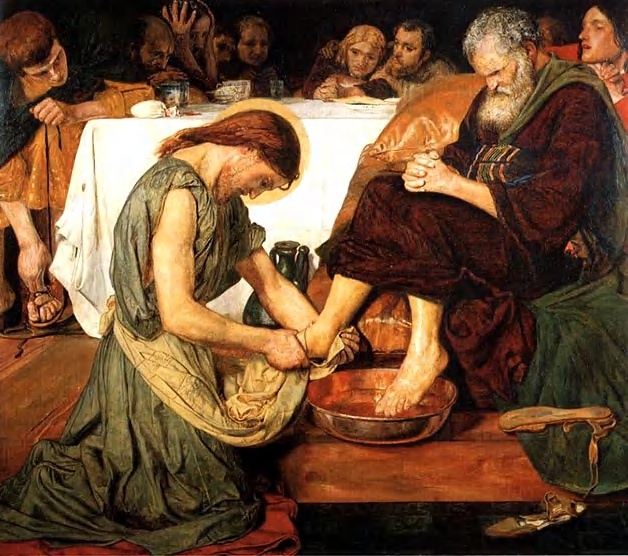
Ray Anderson on theology as practical

Reading Ray Anderson is always good for the soul, the head, and the hands. He writes as one who is simultaneously clinician and patient – pointing ever away from himself to Christ as both God’s Act of reconciliation and God’s Word of revelation. Like all good theologians, Anderson does his theology apostle-like; that is, daily at the coalface with people in their doubt, grief, death, guilt and repentance. Not one word of the NT came from the pen of a cloistered cleric! NT theology was hammered out not from articles and commentaries and academic conferences but on the anvil of existential need, seeking at every turn to bring every situation under the scrutiny and grace, not of Scripture, but of Jesus Christ, mindful of the fact that Jesus did not come to preach the Gospel (or the Bible) so much as he came to make a Gospel to preach. Ray Anderson continues in this tradition … and that’s one reason why I love reading him.

Anyway, here’s a few sentences from his great introductory essay on practical theology:

‘What makes theology practical is not the fitting of orthopedic devices to theoretical concepts in order to make them walk. Rather, theology occurs as a divine partner joins us on our walk, stimulating our reflection and inspiring us to recognize the living Word, as happened to the two walking on the road to Emmaus on the first Easter (Lk 24) … At the center of the discussion of the nature of practical theology is the issue of the relation of theory to praxis. If theory precedes and determines practice, then practice tends to be concerned primarily with methods, techniques and strategies for ministry, lacking theological substance. If practice takes priority over theory, ministry tends to be based on pragmatic results rather than prophetic revelation … Barth, from the beginning, resisted all attempts to portray theory and praxis in opposition to one another, In his early Church Dogmatics he described any distinction between “theoretical” and “practical” as a “primal lie, which has to be resisted in principal”. The understanding of Christ as the light of life can be understood only as a “theory which has its origin and goal in praxis”‘. – Ray S. Anderson, The Shape of Practical Theology: Empowering Ministry with Theological Praxis (Downers Grove: IVP, 2001), 12, 14, 15.

Memoirs of an Ordinary Pastor

David Mathis has shared two moving quotations from Don Carson’s forthcoming book about his dad: Memoirs of an Ordinary Pastor: The Life and Reflections of Tom Carson. Mathis notes that ‘things weren’t easy for Tom Carson (1911-1992). Quebec was spiritually frigid in the 60s and 70s when he planted a church and preached week in and week out to twenty people. His journals are very honest. He wrestled with discouragement and seeming fruitlessness. But he persevered, staying the gospel course’.

I recall Don Carson bearing witness a number of times to the huge impact that his parents – particularly his praying mother – had on his own faith. He also testified to the faithfulness of his father, who pastored at a time when there were very few evangelical pastors in French-speaking Canada, and not a few of them, if I recall rightly, were imprisoned for their fidelity to the gospel.

Don Carson:

Some pastors, mightily endowed by God, are a remarkable gift to the church. They love their people, they handle Scripture well, they see many conversions, their ministries span generations, they understand their culture yet refuse to be domesticated by it, they are theologically robust and personally disciplined. … Most of us, however, serve in more modest patches. Most pastors will not regularly preach to thousands, let alone tens of thousands. They will not write influential books, they will not supervise large staffs, and they will never see more than modest growth. They will plug away at their care for the aged, at their visitation, at their counseling, at their Bible studies and preaching. Some will work with so little support that they will prepare their own bulletins. They cannot possibly discern whether the constraints of their own sphere of service owe more to the specific challenges of the local situation or to their own shortcomings. Once in a while they will cast a wistful eye on “successful” ministries. Many of them will attend the conferences sponsored by the revered masters, and come away with a slightly discordant combination of, on the one hand, gratitude and encouragement, and, on the other, jealousy, feelings of inadequacy, and guilt.

Most of us—let us be frank—are ordinary pastors.

Dad was one of them. This little book is a modest attempt to let the voice and ministry of one ordinary pastor be heard, for such servants have much to teach us.

* * *

Tom Carson never rose very far in denominational structures, but hundreds of people … testify how much he loved them. He never wrote a book, but he loved the Book. He was never wealthy or powerful, but he kept growing as a Christian: yesterday’s grace was never enough. He was not a far-sighted visionary, but he looked forward to eternity. He was not a gifted administrator, but there is no text that says “By this shall all men know that you are my disciples, if you are good administrators.” His journals have many, many entries bathed in tears of contrition, but his children and grandchildren remember his laughter. Only rarely did he break through his pattern of reserve and speak deeply and intimately with his children, but he modeled Christian virtues to them. He much preferred to avoid controversy than to stir things up, but his own commitments to historic confessionalism were unyielding, and in ethics he was a man of principle. His own ecclesiastical circles were rather small and narrow, but his reading was correspondingly large and expansive. He was not very good at putting people down, except on his prayer lists.

When he died, there were no crowds outside the hospital, no editorial comments in the papers, no announcements on the television, no mention in Parliament, no attention paid by the nation. In his hospital room there was no one by his bedside. There was only the quiet hiss of oxygen, vainly venting because he had stopped breathing and would never need it again.

But on the other side, all the trumpets sounded. Dad won entrance to the only throne-room that matters, not because he was a good man or a great man—he was, after all, a most ordinary pastor—but because he was a forgiven man. And he heard the voice of him whom he longed to hear saying, “Well done, good and faithful servant; enter into the joy of your Lord.”