Church and State

Forsyth: ‘Christianity and Society’

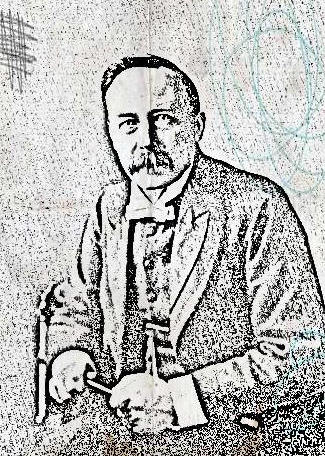
forsyth-61Regular readers of Per Crucem ad Lucem can gear themselves up for some more Forsyth in the next few posts. Here’s a few nuggets from his 1914 essay, ‘Christianity and Society’ (Methodist Review Quarterly):

‘The Church’s true attitude and action in the world is Christ’s. It is that of him whose indwelling makes it a Church The question, therefore, of the Church’s relation to Society is really the whole question of Christology’. (pp. 3-4)

‘Christ is God by his eternal personal relation to the divine holiness, rather than by his essential relation to the divine substance’. (p. 4)

‘The Church is not simply the superlative of religious society. It is not spiritual Humanity coming to its own. Christianity is not the republication of the lex naturæ with supreme éclat. Grace is not a mere reēnforcement of nature. There is a new Creation. That is the vital thing’. (p. 5)

‘The principle of the Church is thus the antithesis of the world; and yet it is in constant and positive relation with it. They co-exist in a vital paradox which is the essence of all active religion. The Gospel can neither humor human nature nor let it alone. That is the grand collision of history, however its form may vary … Hence the first business of the Church is not to influence man but to worship and glorify God, and to act on man only in that interest. All its doctrine, preaching, culture, and conduct is a confession and glorification of the Saviour. The Church does not save; it only bears living witness and makes humble confession, in manifold ways, of a God who does. It is not a company for the promotion of goodness, but a society for the honor of God’. (p. 6)

‘The evil neglect of the theologian by the public today is in a measure his own fault. His truth has not kept pace with the growth of social interest. It has been too idealogical, and not enough social. His doctrine has not remained a living expression even of his own society of the Church. He has failed to show how necessary it is for the social interest itself. And he has not so construed the Gospel as to force a social regeneration on the Christian conscience. He has been often occupied with a God of substance, process, or ideas, instead of a God of act, life, and the Kingdom’. (p. 7)

‘Christianity has more and more to face a dechurched civilization. The circumstances are thus quite different from the mediæval state of things. The traditional civilization is turned more and more upon its own resources. Can they save it from anarchy? It is on its trial’. (p. 14)

‘… our eyes are being purged today to see many things. We feel the effects of a modernized Pelagianism, the effect of worshiping (if it is worship) a God whose revelation is too little of a moral crisis and re-creation of human nature, and too much of its glorification. We inherit a Christianity which allows too much to human nature, and therefore is conquered by it’. (p. 17)

‘Protestant Nonconformity in the Twentieth Century’: A Review

Alan P. F. Sell and Anthony R. Cross (eds.), Protestant Nonconformity in the Twentieth Century (Milton Keynes: Paternoster, 2003). x + 398 pages. ISBN: 978 1 84227 221 3. Review copy courtesy of Paternoster/Authentic Books.

This book, edited by Alan Sell and Anthony Cross, is another worthy addition to what is an excellent series of Studies in Christian History and Thought, a series comprising monographs, revised dissertations, and collections of papers which explore the church’s witness through history. The series includes some important contributions to scholarship, among which is David Wright’s Infant Baptism In Historical Perspective, Byung Ho Moon’s Christ the Mediator of the Law: Calvin’s Christological Understanding of the Law as the Rule of Living and Life-giving, and David Bebbington’s brilliant 1998 Didsbury Lectures, Holiness In Nineteenth-Century England.

Protestant Nonconformity in the Twentieth Century is a collection of papers presented at the second conference of The Association of Denominational Historical Societies and Cognate Libraries, held at Westhill College, Birmingham, in July 2000. The result is twelve papers from scholars representing a number of Nonconformist traditions which invite reflection on Nonconformist contributions to biblical studies, theology, worship, evangelism, spirituality, and ecumenism during the twentieth century.

Sell’s own contribution, ‘The Theological Contribution of Protestant Nonconformists in the Twentieth Century: Some Soundings’, is an embryonic version of his 2006 Didsbury Lectures, published as Nonconformist Theology in the Twentieth Century and reviewed here (I wish I’d noticed this before I was near the end of the chapter, although it was great to read over this material again). He again reminds us that Nonconformists are nothing if not diverse. Employing Dale’s summary on the question of the final fate of the impenitent, Sell writes:

The twentieth century provided Nonconformist theologians with both inner-family and external stimuli to theological endeavour. As the century opened the Wesleyans were earnestly debating the question of eternal life. The particular question at issue was the final fate of the impenitent. Discussion of this topic had been rumbling on at least since the eighteenth century, and R.W. Dale had specified the options in 1877. There are, he said, those who cannot make up their minds on the subject: ‘They cannot warn men against eternal condemnation, because they are not sure that any man will be eternally condemned.’ There are those who hold that the impenitent are to be condemned to suffering, whilst hoping that ‘there may be some transcendent manifestation of the Divine grace in reserve, of which as yet we have no hint.’ There are those who believe that the Christ who came to seek and to save the lost will persist in this effort even though, because of the invincibility of human freedom, it cannot be affirmed that all will in fact be saved. There are those who believe that God’s love cannot finally be thwarted, and hence all will finally be saved; those who hold that the impenitent will nevertheless enjoy an eternal life on a lower plane than the saved; and those who deny that the impenitent can finally be restored. (p. 36)

While all the studies are certainly erudite and deserving of comment, I wish here to identify a few for special mention. Norman Wallwork’s piece, ‘Developments in Liturgy and Worship in Twentieth-Century Protestant Nonconformity’ is a helpful survey of the general issues and particular contributions that concern Nonconformist worship. The contributions of Unitarians, Free Catholics, Presbyterians, Congregationalists, the United Reformed Church, Congregational Federation, Baptists and are all attended too with care, and the Quakers, Methodists, Independent Methodists and Salvation Army are also considered. Wallwork writes:

Of all the Free Churches the Unitarians were the most given to textual revision of the Book of Common Prayer [no surprises here], but their demise included their destruction of the Trinitarian theology which undergirded the Anglican tradition. However, Martineau’s love of good liturgical language passed over into all the Free Churches not least into Congregationalism. The Free Church Catholic and ritualistic revival under Lloyd Thomas and Orchard was short-lived, but the prayers in Orchard’s Divine Service furnished other service books for over fifty years. The movement for liturgical renewal which hit the Free Churches in the 1960’s and created the Joint Liturgical Group produced some fine liturgical texts and created new service books centred on classical eucharistic texts, an increase in the frequency of communion, a shift to morning all-age celebrations, and a much greater emphasis on the Christian year. In the end, only the Methodists and the United Reformed Church would place a eucharistic rite in the hands of their congregations. In all the traditions worship leaders and preachers turned to a variety of available resources, often without the approval of any recognizable magisterium. The memory of revival songs from the Sankey and Moody era helped to secure a place for lively and spontaneous worship revived among the Free Churches, as in Anglicanism, by a new wave of charismatic prayer and praise and the new tradition of heavy ‘biblical teaching’ in Sunday worship. This movement had its strongest support among the Baptists and many of the original ‘Plymouth’ Brethren congregations who now renamed themselves ‘Evangelical Churches’. The influence of the High Genevan school of the English Reformed tradition was still seen in the liturgical texts of the United Reformed Church but much of its worship was dominated by the twin calls to inclusive all-age worship and to be relevant and engaged in issues of local and international justice. Several babies went out with the bath water. (pp. 130-1)

Other essays I particularly valued were David Bebbington’s, ‘Evangelism and Spirituality in Twentieth-Century Protestant Nonconformity’, and ‘Protestant Nonconformist Attitudes towards the First World War’, by Alan Ruston. Ruston, who is editor of the Transactions of the Unitarian Historical Society, surveys how WWI witnessed Nonconformist churches becoming increasingly part of the establishment, particularly in attitude. They became, he writes, ‘an integral element within the political machine in almost the same terms as the established church. But flying into the sun in this way burnt their wings and like Icarus they fell to the sea. They did not drown like Icarus but the weakness engendered by the war remained with them for the rest of the century’ (p. 240). Ruston’s contribution to this volume is a powerful reminder of how voluntaryist assumptions about church, state and society inform Nonconformist contributions to religious, social and political life.

Those who identify themselves with the Nonconformist family, and those with an interest in (particularly early) Twentieth Century theology and history would be well served by reading this book.

Kevin Rudd on the Gospel

Most of us have grown understandably suspicious of politicians and their ‘God-talk’. In this speech (24 mins) given to New College at the University of New South Wales in 2005 Kevin Rudd (who is now Australia’s Prime Minister) outlined his vision of the appropriate relationship between Church and State in Australia. He stresses that while Jesus teaches compassion for the marginal, Catholic social teaching emphasises the proper balance between the rights of organised capital and labour. Whether you’re an Aussie or not, Rudd’s speech is well worth listening to.

On Being the Church of Jesus Christ in Tumultuous Times: A Review

Joe R. Jones, ON BEING THE CHURCH OF JESUS CHRIST IN TUMULTUOUS TIMES (Eugene: Cascade Books, 2005). Pp. xxx + 239. $27.00, ISBN: 9781597522762. A review.

Joe R. Jones, author of the massive The Grammar of Christian Faith and Doctrine, and who Stanley Hauerwas names ‘the best unknown theologian in America’ (how would Hauerwas know?), is well aware of at least two important realities that inform good theology. First, that theology is a discipline not of the academy but of the believing community which is ever to be that ‘sort of community that sustains a vigorous and continuing conversation within itself as to who has called it into being, to whom it is responsible, and what it is called to be and to do’ (p. xiii). Second, that Christian theology has its ground and end in the redeeming economy of the Triune God. These two convictions inform this collection of essays, sermons, and prayers composed over four decades.

The volume is made up of three sections. In the first, he addresses what it means to be the Church, that ‘broken body [which] must strive, in the midst of its brokenness in tumultuous times, to remember its calling and mission as an alternative community living an alternative way of life under the Lordship of Jesus Christ‘ (p. xiv). He repeatedly posits (pp. xvi, 6, 21, 35-6, 51, passim) his working definition of the Church:

The church is that liberative and redemptive
community of persons
called into being
by the Gospel of Jesus Christ
through the Holy Spirit
to witness in word and deed
to the living triune God
for the benefit of the world
to the glory of God.

Jones, a confessing pacifist ‘with many questions about how to be a pacifist’ (p. xxiv), contends that wherever Jesus’ body lives in the world, there the Church is properly a political entity with a distinct theology and ethic, and whose political witness is never for itself but is for the benefit of the world. Thus with definition above before him, Jones, in the tradition of that prisoner on Patmos, pens ‘A letter to the Churches After 9/11′ in which he reminds the church that it is ‘not called into existence by the American way of life, not called into existence in order to punish evildoers, not called into existence to endorse any given political regime, and not called into existence to protect Christians and wreak vengeance on nonchristians. But it does exist for the “benefit of the world,” though not on the world’s own terms regarding what it finds beneficial as an endorsement of the way it prefers to live’. When the Church, either ecumenically or as a particular congregation, is unclear about how to answer the key questions of its own identity ‘then its life will be a miasma of disarray and confusion’ (p. 6). Jones consistently names nationalism for the destructive and deceitful idol that it is, calling the Church to allegiance to its Lord alone, rather than serve two masters.

Jones turns in the second, third and fourth essays to a reflection on the Church’s illiteracy wherein he argues that the Christian community whose ‘language of faith has too often become hallow and empty’ has become ‘illiterate’ and ‘uneducated’ (p. 11). The Church needs to recover its ‘distinctive language’ (p. xv), its own voice – or that of her Lord’s – lest it be repeatedly ‘overwhelmed and held hostage by the nation-state and its political discourses and practices’ (p. xxiv), and whose discourse and practice form a necessary purlieus for doing theology. The witnessing Church requires a literacy in the Gospel: ‘The Gospel is not willy-nilly whatever people choose it to be. It is not just any presumably good or comforting news. But to be able to hear well and to witness well, the church must incessantly cultivate an understanding of the Gospel and the light it throws on the world. Whenever the church has neglected this cultivation, this education, it has itself become a wandering nomad, bedeviled by the mirages of passing fancies and fads’ (p. 14). He calls for a recovery of the Church’s educational processes that accentuate learning the Gospel’s content and giving it intelligent expression for the world. This doing of theology is not a luxury (or responsibility) for a few but for all the people of God. That said, the Church also needs to recover, he argues, a sense of the pastor as teacher and theologian for the community, to equip the community of theologians for ek-static movement towards and in the world as witness to God’s loving life (see pp. 21-34).

In the second of the three sections, ‘Theological Baselines for Doing Church Theology’, Jones explores, among other themes, notions of faith, soteriology, trinity, and Jewish-Christian dialogue. The essay on salvation (chapter 7) outlines the basis upon which believers have good reason to hope in an apokastasis panton. He argues that ‘the logic of a radical incarnation/atonement view centred in Jesus Christ moves resolutely to the final conclusion that all we be ultimately saved by God’s sovereign grace’ (p. 119). It is of little surprise, therefore, to read that Jones lists among his most significant influences and conversation partners, Karl Barth, Ludwig Wittgenstein, Alfred North Whitehead and Charles Hartshorne.

Also, not a few of the essays betray Jones’ indebtedness to Søren Kierkegaard and to that Dane’s insistence that ‘to be a Christian is to learn how to be a Christian’ (p. 51). This American nonconformist does not, however, share Kierkegaard’s despairing thoughts on the Church more generally, or the latter’s over-subjectivism. Instead, Jones persuasively posits that learning how to be a Christian ‘involves being a member of a community that has characteristic discourses and practices about the narrative of God’s grace’ (p. 67). Little doubt, if Kierkegaard had a different model of Church in mind when he made his bold criticisms, he would agree with Jones here. Jones’ collection includes two fine chapters on Kierkegaard: one on Kierkegaard’s thoughts on authority and revelation; the other on Kierkegaard as ‘Spy, Judge, and Friend’ in which he outlines the basic life, contributions and contours of Kierkegaard’s thought. He laments that while Kierkegaard ‘was one of the most influential intellectuals for the twentieth century’ today ‘I find few entering divinity students that can spell his name, fewer still who have read anything of his, fewer yet that have benefited from his friendship’. He describes Kierkegaard as ‘a Spy who will push you into inward places of hiddenness you are reluctant to explore, a Judge who will indict your vagaries of life with inescapable and relentless precision and vivacity, but finally a Friend who might spiritually edify you on the multifaceted journey of becoming a Christian‘ (p. 154). He proceeds:

‘With uncanny prescience, Kierkegaard knew he would someday be famous but feared and loathed the prospect that he would fall into the hands of the professors, who would analyze and reduce his life and writings to a thumbnail sketch or footnote, or even to a voluminous narrative, but would never realize that the whole of his literature was directed even to the professor as an existing person who still had to exist somehow. He criticized professors, philosophers, and theologians unmercifully for building grand mansions of theory and thought only to live their actual, existing lives in the barnyard, feeding daily out of the pig trough. The point here is this: intellectuals are given to the pursuit and development of thought, concepts, and ideas, and they can easily fool themselves into supposing that if they have thought the thought they have also lived the thought. No, says Kierkegaard; to live the thought means to have one’s living passions and decisions shaped by the thought. Intellectuals are inclined to forget the actual passions and concrete decisions that shape their daily living, and therefore are forgetful of their actual existing. Their theories cannot – of themselves – encompass and shape the theorist’s existential reality without decision and persistence in passions’ (p. 155).

The final section is made up largely of pastoral prayers and some moving sermons, including those preached by Jones at ordination and funeral services.

While few will be convinced of all Jones’ claims, this an engaging and at times provocative miscellany properly written with one eye on the Church (and not least his own Disciples of Christ denomination the focus on which, at times, gives the reader a sense that she is reading an in-house review) and one on God as both God and Church direct their engaging gaze to the world. The reader would have been better served with the inclusion of an index and a little more editing out of repetitious material. That said, this book will assist the Church to better understand, celebrate and practice the good and missional news of Jesus Christ in tumultuous times.

Church and State

David has a helpful post here on the Church’s relationship to the State and what it might mean to ‘be political’ in a divisive and ideologically-driven political environment. He suggests a relationship at once dialectical, covenantal and dialogical, and concludes by asserting that the Church cannot be silent on social and political issues, that the Church’s speech ‘cannot help but be political, since there are not two spheres of engagement but, in fact, only one sphere, one kingdom, one reign of Jesus Christ, and that the Church must be steadfastly opposed to all ideologioical manipulatn of the gospel’. Finally, he contends that the Church’s being-in-dialogue is a being-in-love. ‘Modern political dialogue’, he writes, ‘is inherently violent because it is rooted in a capitalistic climate of competitiveness. In order for the church to engage the world politically, it must find a way to establish a dialogue rooted in love. We can learn something from Paul’s discourse on love in 1 Cor. 13. The church needs to learn to interpret this passage as a guide to political dialogue’.

Kierkegaard on the Church’s freedom , and the faithfulness of depression

‘If the Church is “free” from the state, it’s all good. I can immediately fit in this situation. But if the Church is to be emancipated, then I must ask: By what means, in what way? A religious movement must be served religiously – otherwise it is a sham! Consequently, the emancipation must come about through martyrdom – bloody or bloodless. The price of purchase is the spiritual attitude. But those who wish to emancipate the Church by secular and worldly means (i.e. no martyrdom), they’ve introduced a conception of tolerance entirely consonant with that of the entire world, where tolerance equals indifference, and that is the most terrible offence against Christianity … [T]he doctrine of the established Church, its organization, are both very good indeed. Oh, but then our lives: believe me, they are indeed wretched’. – Søren Kierkegaard, Journals (January 1851)

‘In addition to my other numerous acquaintances, I have one more intimate confidant. My depression is the most faithful mistress I have known – no wonder, then, that I return the love’. – Søren Kierkegaard