On friendship that persists through blunders

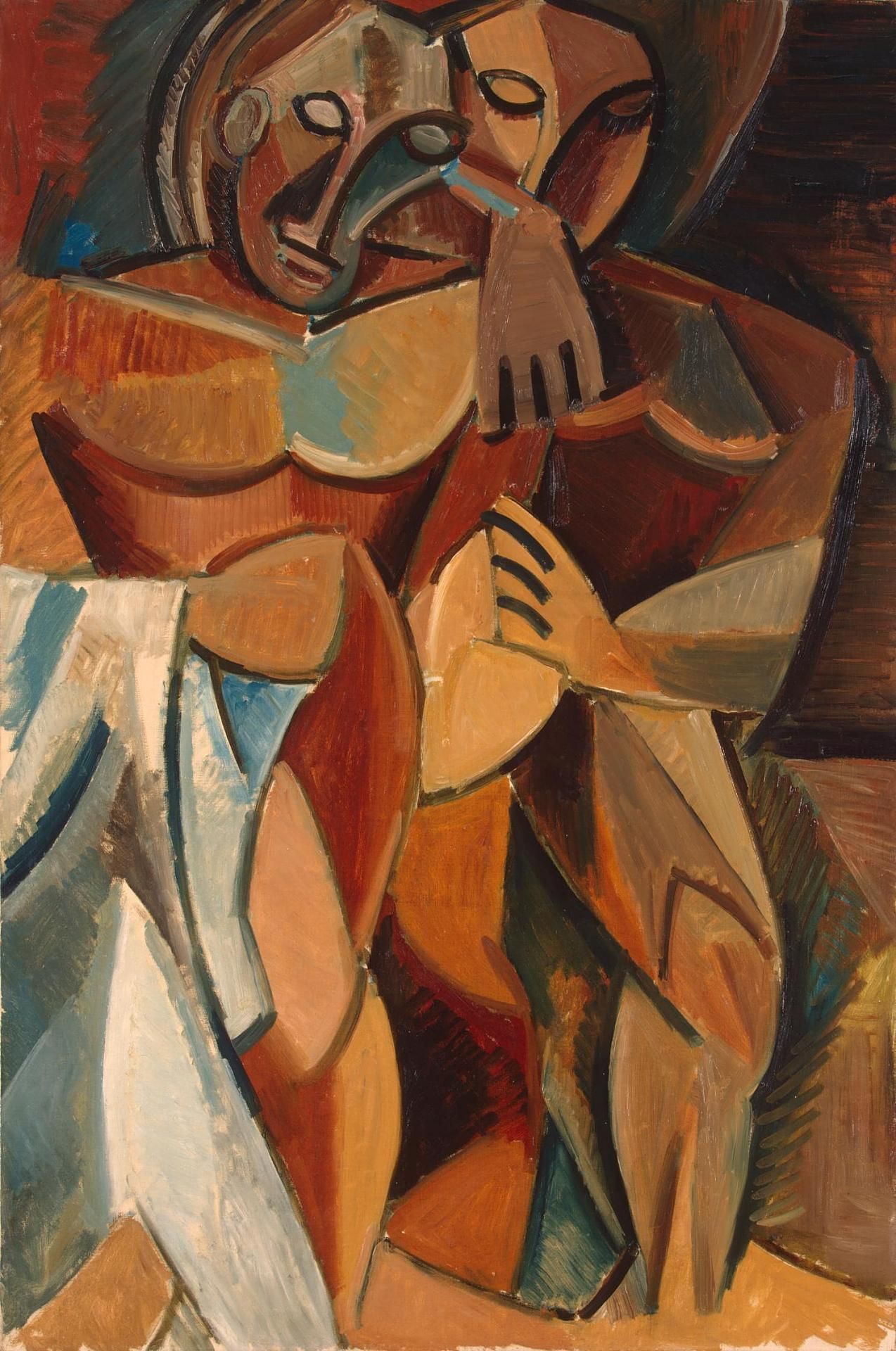
Pablo Picasso, L’amitié, 1908. Oil on canvas, 151.3 x 101.8 cm. Hermitage Museum, Saint Petersburg, Russia.

Jesus said to him, ‘Friend, do what you are here to do’. (Matthew 26.50)

In the darkness of Gethsemane, amid the clash of swords and the flicker of torches, Jesus addresses his betrayer with a word that stops us in our tracks: hetairos (‘friend’). This Greek word is not the warm philos of intimate companionship, but neither is it a term of contempt. It carries the weight of association, of one who has walked alongside, shared meals, witnessed miracles. And Jesus uses it at the precise moment when that companionship is being weaponised against him.

The theological scandal of this address lies in its refusal to unmake the relationship at the very moment it is being violated. Judas arrives with a kiss – the gesture of greeting now twisted into a signal of betrayal, of identification for arrest. Yet Jesus does not revoke the covenant of their shared journey. He names Judas as what he has been and will be, even as Judas enacts what he has chosen to become.

This moment in the garden confirms what was already enacted hours earlier in an upper room. The church’s liturgy captures this with haunting precision: ‘On the night he was betrayed, [Jesus] took bread …’. Not the night before. Not the night after Judas left. The very night of betrayal itself. And the bread broken and shared was given to the twelve, not to eleven. There’s all the hope of the world in that.

The ‘friend’ spoken in Gethsemane thus echoes the broken bread given in the upper room. Both gestures refuse to allow betrayal to have the final word on the relationship. Both offer dignity and recognition at the precise moment when they are least deserved and will be most thoroughly rejected. Knowing does not prevent giving.

This, it seems to me, has profound implications for how the Christian story invites us to understand and embody our own relationships. Jesus’ calling Judas ‘friend’ does not prevent consequences – Judas’ story ends in disaster, just like Jesus’, at least penultimately. Yet it also suggests something subterranean that cannot finally be completely broken. When I think about my own damaged relationships, this is where both hope and pain get generated.

Those who recognise in Jesus something of the divine life see in that meal and garden something of the relentless and outlandish logic of grace, of a love that precedes our choices and persists through our blunders. The bread given to Judas is the same bread given to Peter, who will deny, and to all the other disciples, who will scatter.

For those of us who live in the aftermath of our own experiences of betrayal, small and large, this gives pause. Maybe the same voice that called Judas ‘friend’ in the garden still calls us by name, places bread into our uncertain hands, and refuses to let the worst moments define the terms of our relationships? This, we hope, is the character of divine love: unconditioned not because it is indifferent to betrayal, but because it remains loyal even when loyalty is not returned.

Call for Papers: Bible and Visual Culture unit at SBL (International Meeting)

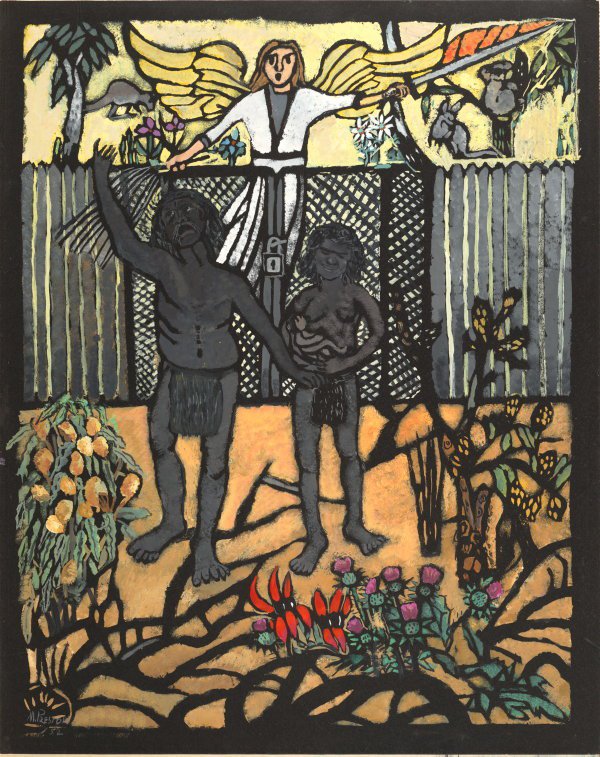
Margaret Preston, The Expulsion, 1952. Colour stencil, gouache on thin black card with gouache hand colouring, 60.5 x 48.5 cm. Art Gallery of New South Wales, Sydney, Australia.

We are pleased to invite you to the Bible and Visual Culture unit meeting, taking place 5–9 July 2026 in Adelaide, Australia, as part of the Society of Biblical Literature International Meeting.

The Bible and Visual Culture unit is dedicated to the critical study of how biblical texts, themes, and figures are interpreted, adapted, and reimagined through visual media—from ancient mosaics and manuscript illuminations to contemporary film, television, video games, advertising, and public art. These visual interpretations have shaped, and continue to shape, the ways biblical texts are received, interpreted, and contested within the wider cultural imagination.

The unit is intentionally interdisciplinary, drawing on art history, film and theatre studies, media studies, musicology, gender studies, trauma studies, postcolonial criticism, and more. Whether examining biblical motifs in cinema, exploring representation in public art, or analyzing the commodification of biblical imagery in advertising, it highlights the interpretive power of the visual and its capacity to illuminate aspects of biblical reception.

We warmly invite established scholars and PhD candidates to submit a proposal on any topic related to the visual reception, interpretation, or representation of biblical texts—historical or contemporary, theoretical or methodological. Presentations will be thirty minutes, including discussion.

Given our location in Adelaide, we particularly welcome papers that engage with Australian art featured in Australian galleries, museums, and public spaces. How have Australian artists interpreted biblical narratives? What role does biblical imagery play in Australia’s visual culture, from colonial-era works to contemporary Indigenous perspectives? This meeting offers a unique opportunity to explore these questions in context.

Paper proposals should be submitted here and should include your name, institutional affiliation, paper title, and an abstract of approximately 250 words. Proposals may be submitted at any time before 15 January 2026. All presenters must register for the SBL International Meeting. Further details about the Adelaide meeting are available on the SBL website.

Amanda Dillon and Jason Goroncy
Coordinators, Bible and Visual Culture Unit

“Attention, Sign-making, and the Tragic”

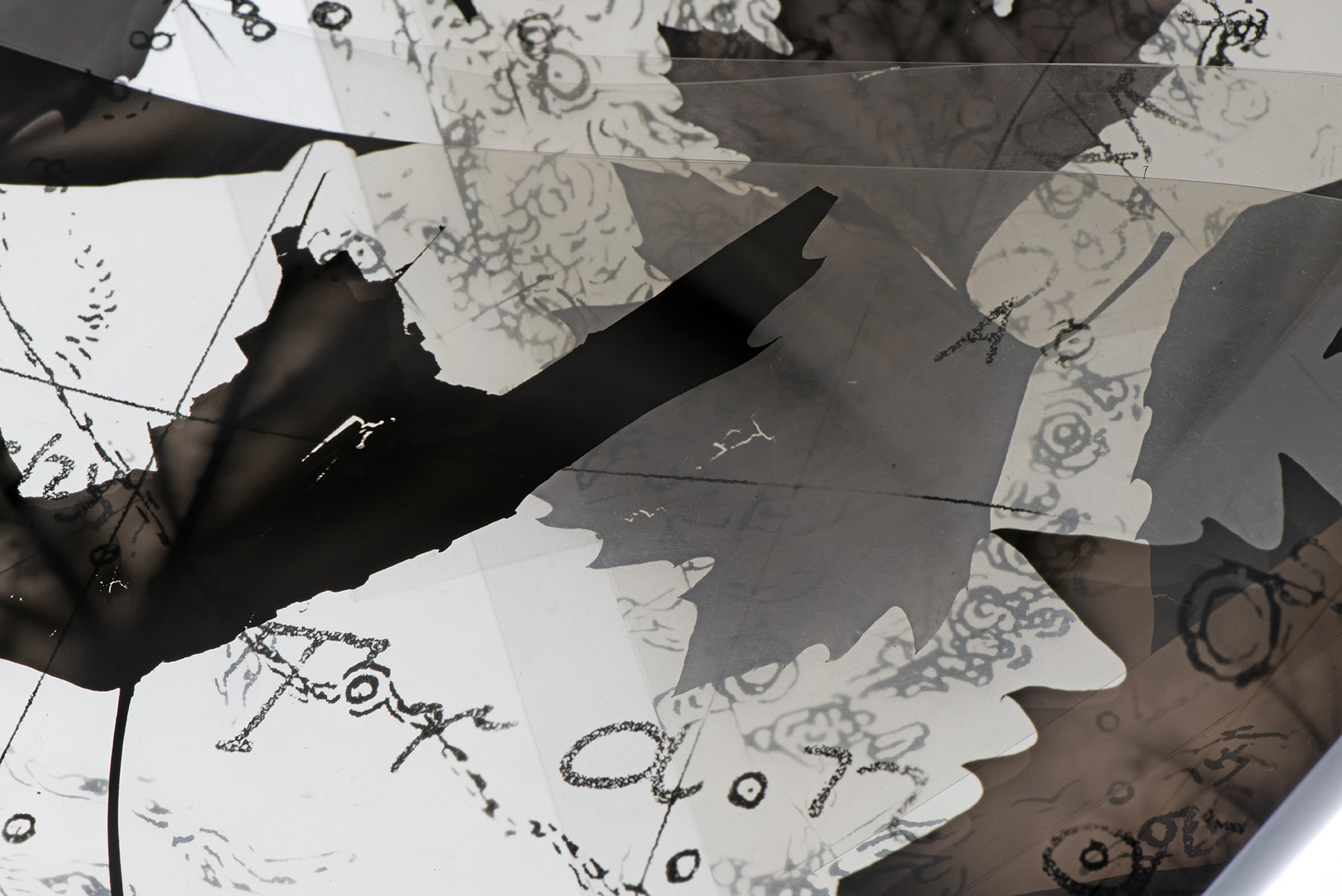
Harry Nankin, The Impossibility of Knowing the Mind of Another Kind of Living Being, 2011. Detail. Two toned gelatin silver fibre paper shadowgrams. Each print 107 x 107 cm; overall dimensions 107 cm x 220 cm; frame 135 cm x 245cm. Unique object.

In the midst of such a sombre time, the publication of the new issue of the Australian Journal of Jewish Studies feels like a small but meaningful act of scholarly continuity and shared purpose. I’m grateful to have a piece included in this volume, which has just been released online.

My article, “Attention, Sign-making, and the Tragic: On the Indexing of Ecological Icons in the Work of Harry Nankin,” explores how Nankin’s photographic and environmental practice invites us to attend differently to the more‑than‑human world—its fragility, its beauty, and its tragic dimensions. The essay considers how ecological signs are made, how they are read, and how they might help shape our moral and imaginative responses to the crises we face.

The full article is available open access.

My thanks to the editors and the Australian Association for Jewish Studies for their work in bringing this issue to publication.

Some New Publications: Attention, Theology, and the Poetics of Presence

Harry Nankin, Platanus luna, 2002. Eight toned gelatin silver shadowgram films paired in four sandwiches each inside a Mylar envelope. Film pairs are 19 x 71 cm, 10 x 72 cm, 19 x 71 cm and 23 x 71 cm respectively. Arrangement variable. Unique objects.

I’m pleased to share four recent pieces that have found their way into print in recent months, each exploring different facets of what it means to pay attention—to art, to theology, to culture, and to the world after certainty has departed.

Rethinking Nicaea from the Margins

Together with John Flett, I contributed “The Heresy of Nicaea and the Jesus of Colony” to Receiving Nicaea Today: Global Voices from Reformed Perspectives (Evangelische Verlagsanstalt). The essay questions how the Nicene formulations functioned—and continue to function—within colonial frameworks. We ask what it means to receive this Christian creed from perspectives shaped by the experience of empire’s violence, and how orthodoxy itself can become a form of theological imperialism.

Photography as Attention

In “Attention in Harry Nankin’s Photography Practice: Assisting Nature to Write Itself,” published in Art-Making as Spiritual Practice: Rituals of Embodied Understanding (Bloomsbury Academic), I introduce the work of the Australian photographer Harry Nankin, locating it in a tradition of cameraless photography and highlighting its key concerns vis-à-vis matters of attention, which are made equally concrete in Nankin’s processes and the subjects themselves. I then propose that Nankin’s art practice shares some analogies with that of an iconographer or, more exactly, with one who recognises and indexes icons. This reckons with certain convictions Nankin shares about nature’s communicative character and how he, therefore, understands the place and responsibility of the human artist.

Engaging with Paul Mitchell’s Poetry

My review of Paul Mitchell’s High Spirits appears in the latest edition of TEXT. Mitchell’s collection presents a vigorous conversation with existence itself through poetry that is both deeply personal and universally resonant, balancing spiritual depth with artistic sophistication while finding transcendence in ordinary life. The collection addresses contemporary existence through intimate portraits of marriage, family, and Australian suburban life alongside broader cultural and environmental concerns, all rendered in an accessible yet profound conversational tone marked by humour and wisdom. Mitchell’s work demonstrates how careful attention to the world reveals it as sufficient and potentially sacred, offering poetry that connects rather than obscures, in a tradition that labours under the burden of modernity’s “broken contract” (George Steiner) between language and reality.

On Attention and Absence

Finally, my essay “On Being Called to Attention ‘After the Gods have Departed'” appears in Gesher. This short piece wrestles with what happens when traditional structures of meaning recede, and how we might cultivate forms of attention that don’t depend on what has been lost. The title gestures toward that strange condition of modernity: how do we attend to what matters when the old guarantees of significance have withdrawn? The essay engages with work of three witnesses: Simone Weil, Harry Nankin, and Edward Said.


These pieces circle around related concerns: the quality of our attention in a disenchanted age, the politics embedded in theological language, poetry’s ongoing argument with reality, and the spiritual dimensions of aesthetic practice. Each represents a different register—scholarly, collaborative, analytical, critical—but all share an interest in how we show up to the world, and what might show up when we do.

PDFs of all four pieces are available here on my website.

The Ledger of Our Lives: The Hobsons Bay Blues

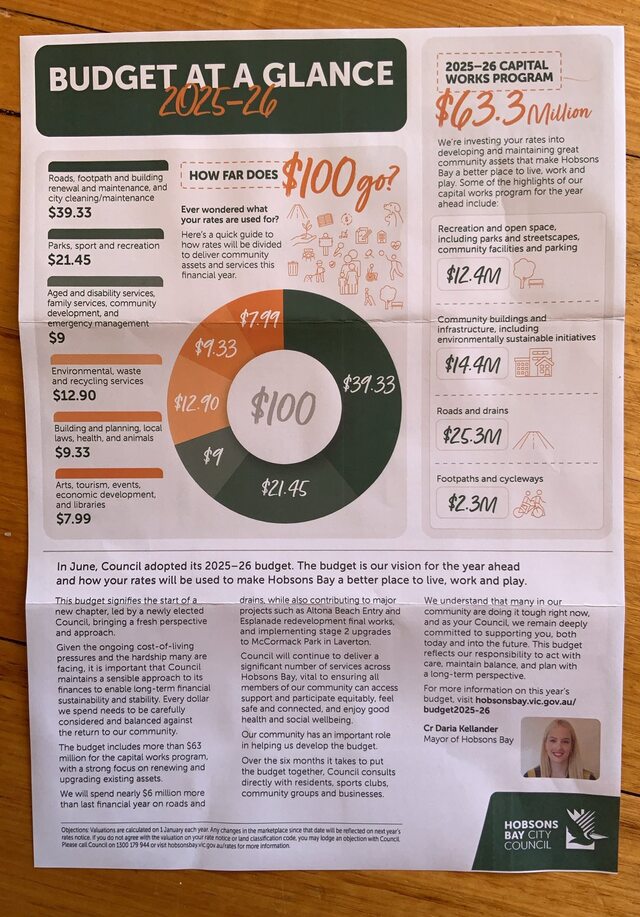
In the halls of Hobsons Bay, they’ve drawn their battle lines,
There’s squillions for the roads, while community declines.
Seven dollars ninety-nine for art, for books, for dreams –
Tell me what this says about our values, plots, and schemes.

Thirty-nine for every road, twenty-one for parks and play,
Nine dollars for the aged, the faint, the ones who’ve lost their way.
These numbers tell a story of a community that’s lost,
Where concrete speaks much louder, and compassion pays the cost.

Sixty-three million for the monuments we’ve planned,
While the homeless sleep in doorways throughout this promised land.
Where is the friendly shelter when the rain falls cold and hard?
Where is that stubborn hope when kindness seems forever barred?

Twenty-five million dollars flows beneath our very feet in drains,
While struggling families break apart under crushing financial strains.
No food banks in the budget, no refuge for the poor,
Just the thunder of construction shaking every weary door.

A mother reads to children by the light of shopping malls,
An artist paints on cardboard in abandoned bathroom stalls.
The programs fade to nothing while the asphalt spreads like flame –
These are the quiet victims of our civic spending game.

Twelve-ninety for the fragile earth that cradles all our dreams,
While thirty-nine pours concrete over rivers, fields, and streams.
The warming earth sends warnings through each rising tide and flame,
Yet still we pave our children’s paths with poison, steel, and shame.

Just pennies for the saplings that could clean our poisoned air,
While toxins flood our waterways without a cent of care.
No funds to plant the forests that our children’s lungs will need,
As chemicals keep flowing from our profit-driven greed.

Disability gets nine dollars in this cold arithmetic,
While millions fund the monuments to progress smooth and slick.
The numbers tell our story of a community grown numb –
Fine roads for all to travel, but life has been struck dumb.

Is this the cost of progress?
Is this what we are for?
At least the ledger’s balanced
though humanity’s no more.

*****

This wee poem, first published in Star Weekly, my local paper, was my response to the Hobsons Bay Council 2025–26 budget, which was mailed out to residents as a mode of positive promotion.

Sunflowers

This song, co-written with my friend Jonathan Hicks, was inspired by and written for the people of Ukraine. It first emerged in 2024 during my time performing with the folk group Catgut and Air. It is also a song that strikes close to home genealogically. Were she alive to witness it, my Russian babushka would have been utterly appalled by the aggression shown by the leadership of her motherland. Today marks the anniversary of her death. Releasing this song today is one of the ways I acknowledge her enduring influence on my life.


You can check out some of my other songs here. I am also currently working on a new album, which I hope to release later this year.

On history’s eradication of memory

‘The “acceleration of history” … confronts us with the brutal realization of the difference between real memory – social and unviolated, exemplified in but also retained as the secret of so-called primitive or archaic societies – and history, which is how our hopelessly forgetful modern societies, propelled by change, organize the past. On the one hand, we find an integrated, dictatorial memory – unself-conscious, commanding, all-powerful, spontaneously actualizing, a memory without a past that ceaselessly reinvents tradition, linking the history of its ancestors to the undifferentiated time of heroes, origins, and myth – and on the other hand, our memory, nothing more in fact than sifted and sorted historical traces. The gulf between the two has deepened in modern times with the growing belief in a right, a capacity, and even a duty to change. Today, this distance has been stretched to its convulsive limit.

This conquest and eradication of memory by history has had the effect of a revelation, as if an ancient bond of identity had been broken and something had ended that we had experienced as self-evident – the equation of memory and history’.

Pierre Nora

‘Blessed are the cracked, for they shall let in the light’ (Julius Henry Marx)

Christ as Strange(r)

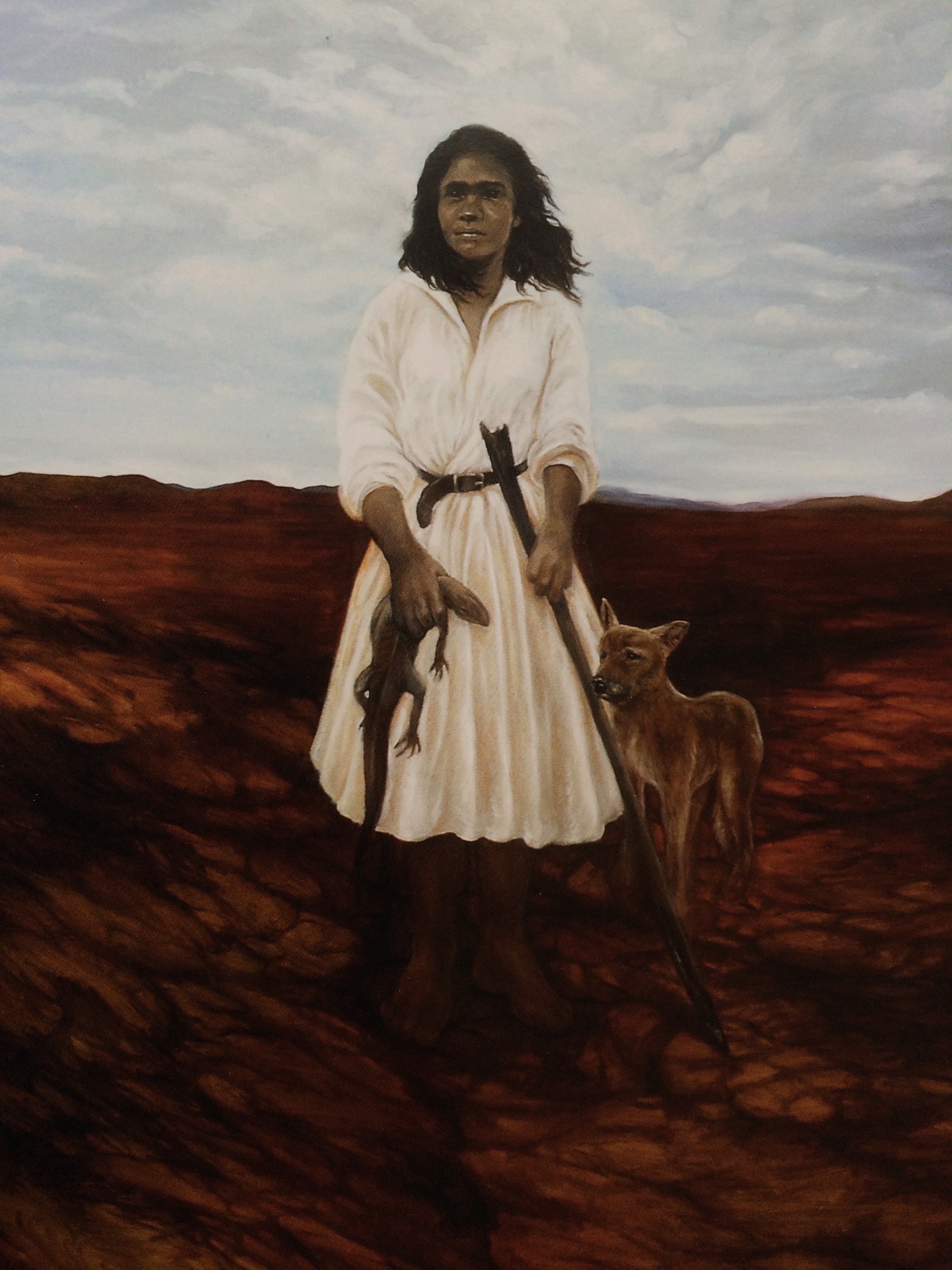
Julie Dowling, Mary, 2001. Oil on linen, 150 x 120 cm. State Art Collection, The Art Gallery of Western Australia, Perth, Australia.

I have a new essay out: ‘Christ as Strange(r): The Elusiveness of Jesus in the Work of Nick Cave and Julie Dowling’. In Seeing Christ in Australia Since 1850, edited by Kerrie Handasyde and Sean Winter, 149–66. Cham: Palgrave Macmillan, 2024.

The Abstract reads:

Strangely, Australian theologians have mostly been quite uninterested in pursuing the question of what an Australian Jesus might be like. This suggests an investment in a theological methodology at odds with the disruptive and inverting character of the presentations of Jesus offered in the Second Testament, wherein questions arising from particular contexts were considered basic for responsible theological work. Conversely, the figure of Jesus has occupied an endearing and idiosyncratic place in the broader Australian imagination. This essay represents an effort to listen to what two contemporary Australian artists—Nick Cave and Julie Dowling—make of Jesus and to consider some implications of their contributions for doing theology in Australia. Their work recognises that the question of Jesus’ identity and the countless cultures in which Jesus is woven cannot be unbraided, however interruptive and strange such a reality may prove to be. In testing the claim that it is only as a stranger that Jesus is ever a sign of the divine life among us, the essay is also an invitation to relinquish efforts to domesticate or homogenise Jesus. To experience this stranger is to experience one who ‘appears only in the moment in which we are dispossessed’ (Judith Butler) of them. This is the event that disrupts, disorients, and dissolves any sense one may enjoy of history’s continuity or possession. Recognition of this stranger is only ever the measure of our failure.

Predicaments

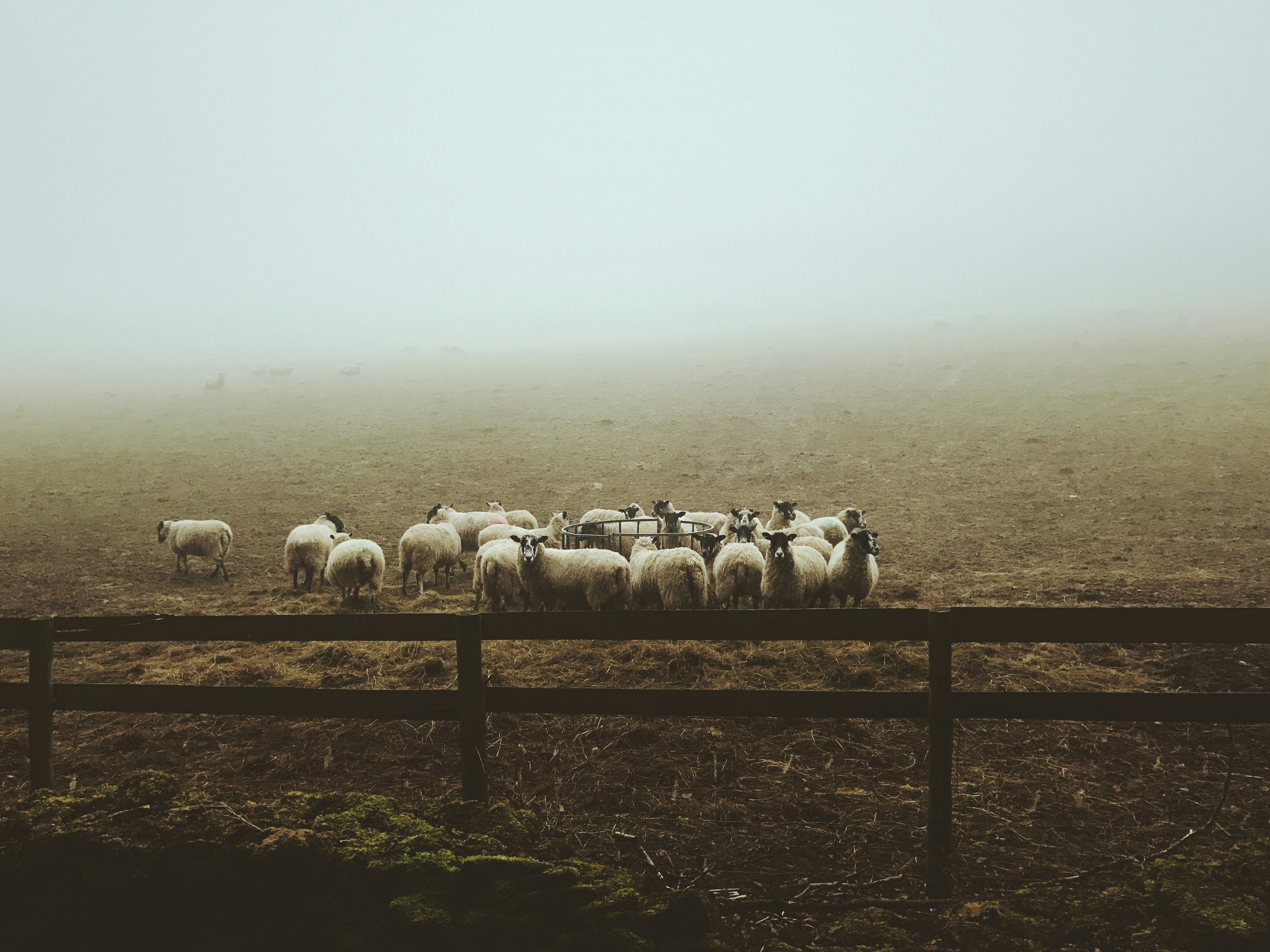
Photo by Joe Green on Unsplash.

“[I]t is possible to mean well, to be caring and kind, loving one’s neighbour as oneself, yet to be complicit in the corruption and violence of social institutions. Furthermore, this predicament may not correspond to, and may not be represented by, any available politics or knowledge.”

– Gillian Rose, Judaism and Modernity: Philosophical Essays (Oxford: Blackwell, 1993), 35.

Recent publications

I note two recent publications:

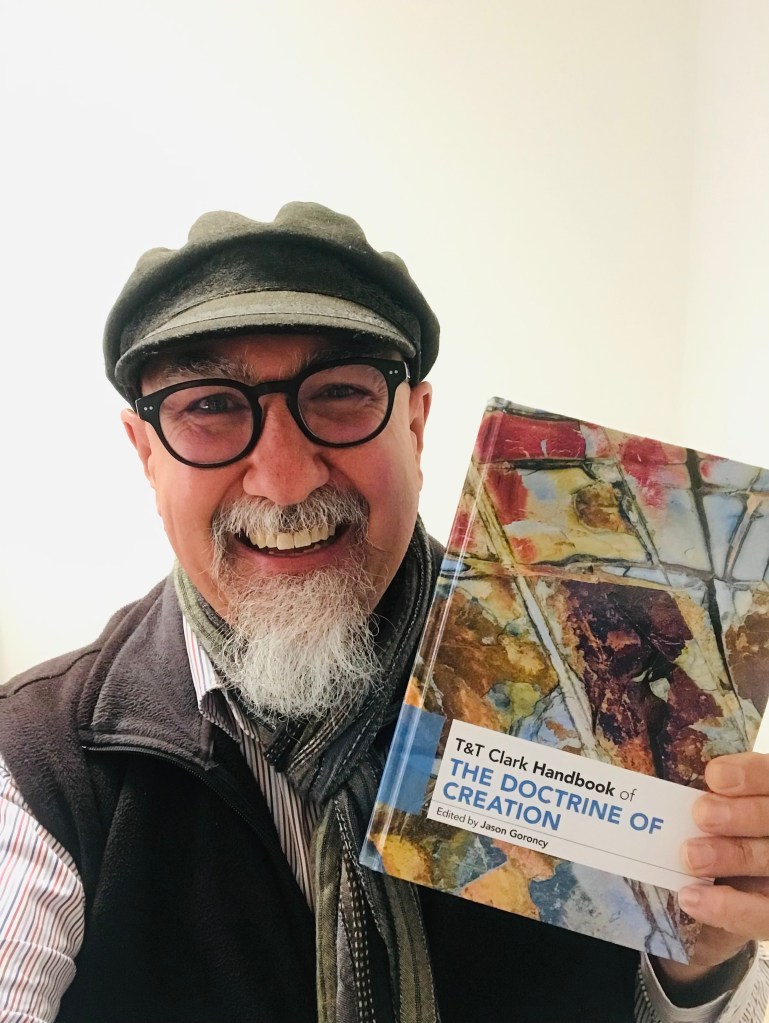
The T&T Clark Handbook of the Doctrine of Creation is a project that had its genesis in 2017 when Bloomsbury invited me to edit a book in their Companion series. I suggested that I would like to tackle the volume on creation and they were agreeable. It was a privilege to work with such a diverse array of scholars, early career and established, across a range of disciplines, not a few undertaking their work in very difficult circumstances. I’m delighted – and somewhat relieved – to have completed this project and am so grateful to all who contributed so generously to it. I hope it might prove useful for those engaged in learning and research.

I also have a poem, ‘Gathering’, in the latest edition of Spiritus: A Journal of Christian Spirituality.

Hope, Resilience, and Resistance: Life in the Holy Land

Mercy Aiken began volunteering with Bethlehem Bible College in 2015 and lived there for a period of over five years. She is passionate about sharing her experience through writing and advocacy. Mercy is currently employed as a Relationship Manager for the Network of Evangelicals for the Middle East (NEME). In this role, Mercy engages evangelical leaders, scholars, and pastors in learning more about the challenges that Christians and others face in the Holy Land and across the Middle East. Mercy holds a BA in English from Northern Arizona University and is currently working on a Master of Arts in Theology/Culture/Peacemaking from Saint Stephen’s University in New Brunswick, Canada. She is part of the International Advisory Council for Christ at the Checkpoint and is passionate about ecumenical work and relationship-building between Christians, Muslims, and Jews. Mercy also organises and leads tours to the Holy Land twice yearly. She is the co-author of the biography of Bishara Awad, a Palestinian Christian and founder of Bethlehem Bible College – Yet in the Dark Streets Shining: A Palestinian Story of Hope and Resilience in Bethlehem. Mercy interviewed Bishara and many of his family members and other Palestinian Christians over a number of years for the writing of this book. The book weaves historical facts with a personal account of Bishara’s remarkable life.

Rachel Coghlan is a public health leader with over 20 years of post-qualification experience gained in clinical physiotherapy practice and in international health and humanitarian research, policy, and advocacy. Rachel is a Fulbright Scholar and holds a PhD from the Centre for Humanitarian Leadership, Deakin University. Her research explores the place of palliative care in humanitarian settings. She has contributed to palliative care research and education in Gaza and maintains special connections with Palestinian friends and colleagues. Rachel is a curious thinker and listener, always searching to learn from those most affected by illness and humanitarian crises. She regularly writes to spread compassion and humanity in living and dying and to help make sense of grief and suffering in our world.

Register here.

Church Responses to the Palestine–Israel Conflict

Jason Goroncy, Towards the Ancient City, 2016. Photograph of mixed media.

The escalation of execrable violence in Israel and the occupied Palestinian Territories is again in the world’s spotlight. Among the many statements being offered in response are those from Christian communities and ecumenical bodies. These reflect a diversity of approaches and viewpoints, a reminder, among much else besides, that catholicity does not equate to univocality. In most instances, these give some visible expression to the aspirations of those whose lives remain marked by a struggle to bring discord, division, fear, and violence to an end; that is, some expression of the hopes promised in the gospel.

Ecumenical and Interchurch Statements

Other

Please include any further such statements in the comments below and I will add these to the list.

Wes Campbell: Disturbing Illusions of Peace

Wes Campbell, Encroaching Salt, nd.

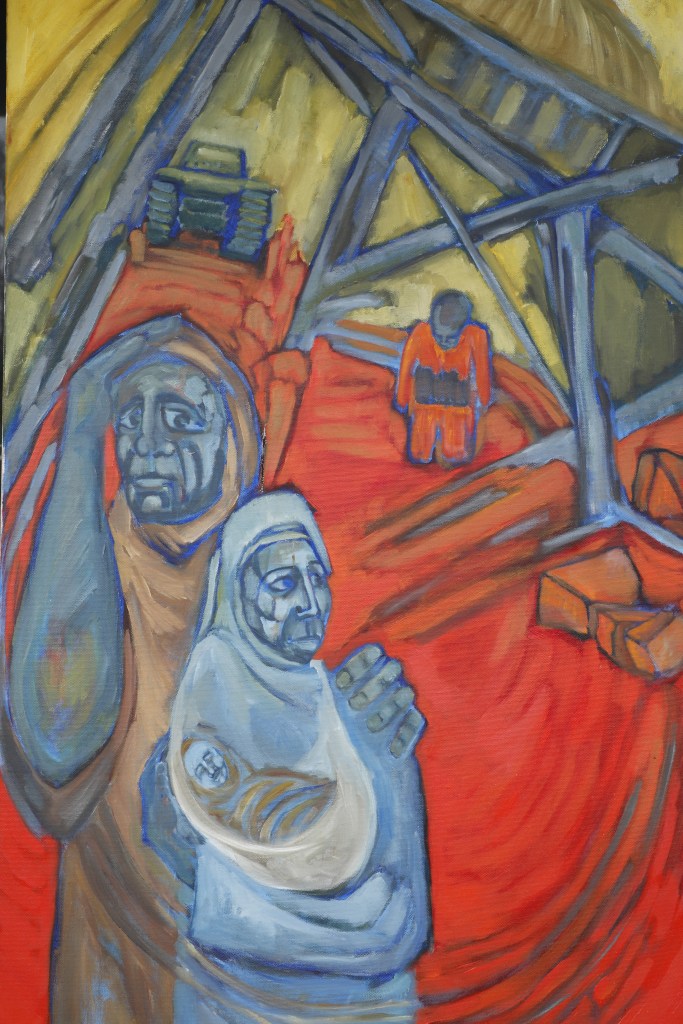
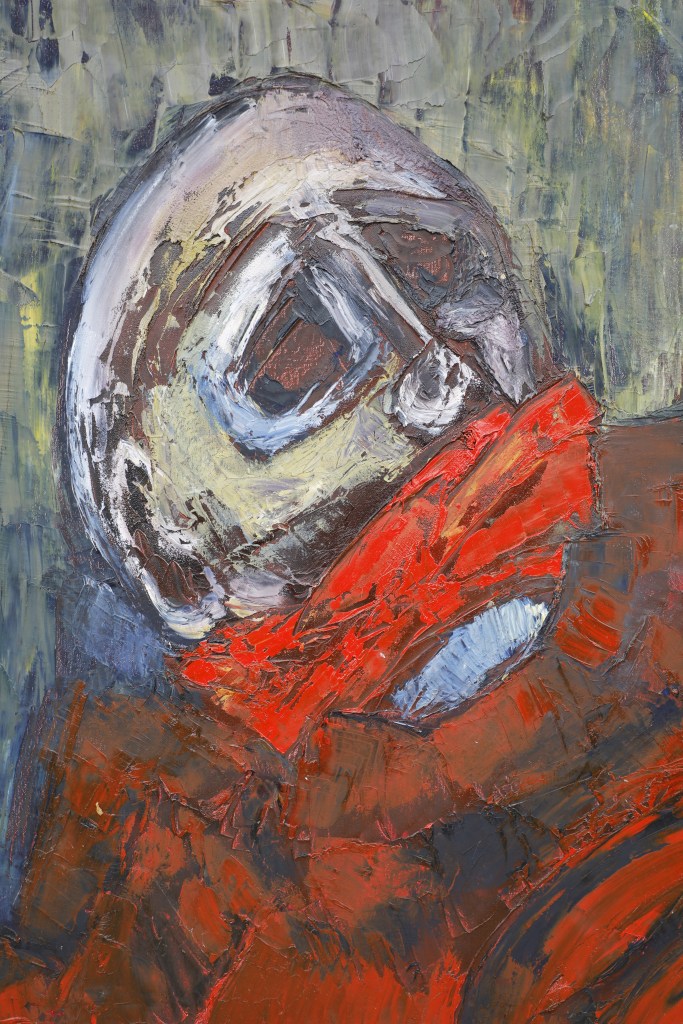
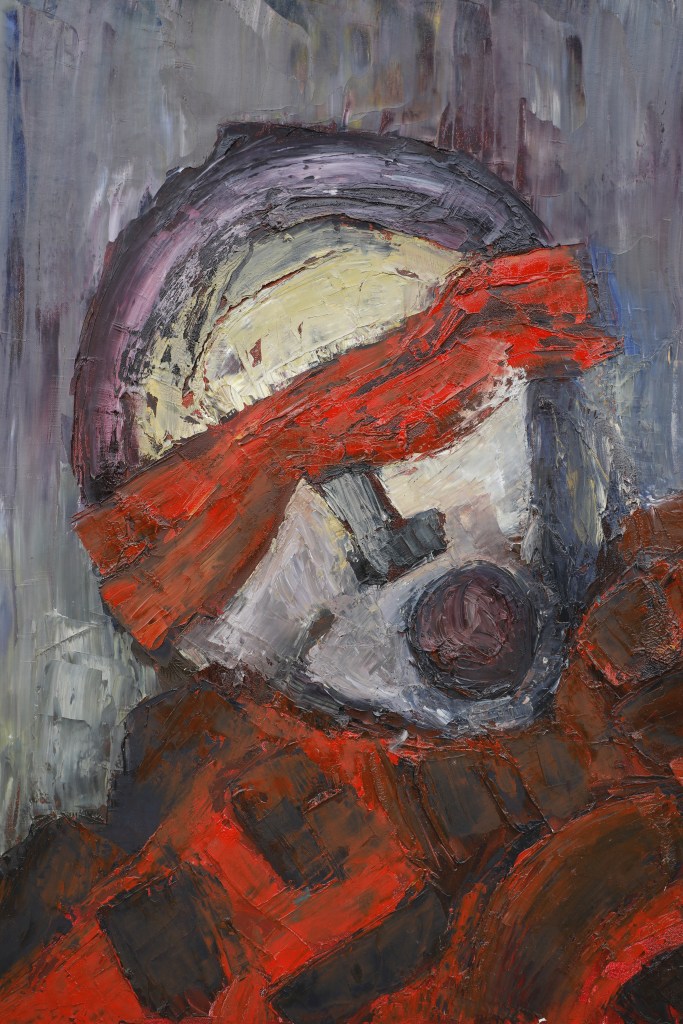
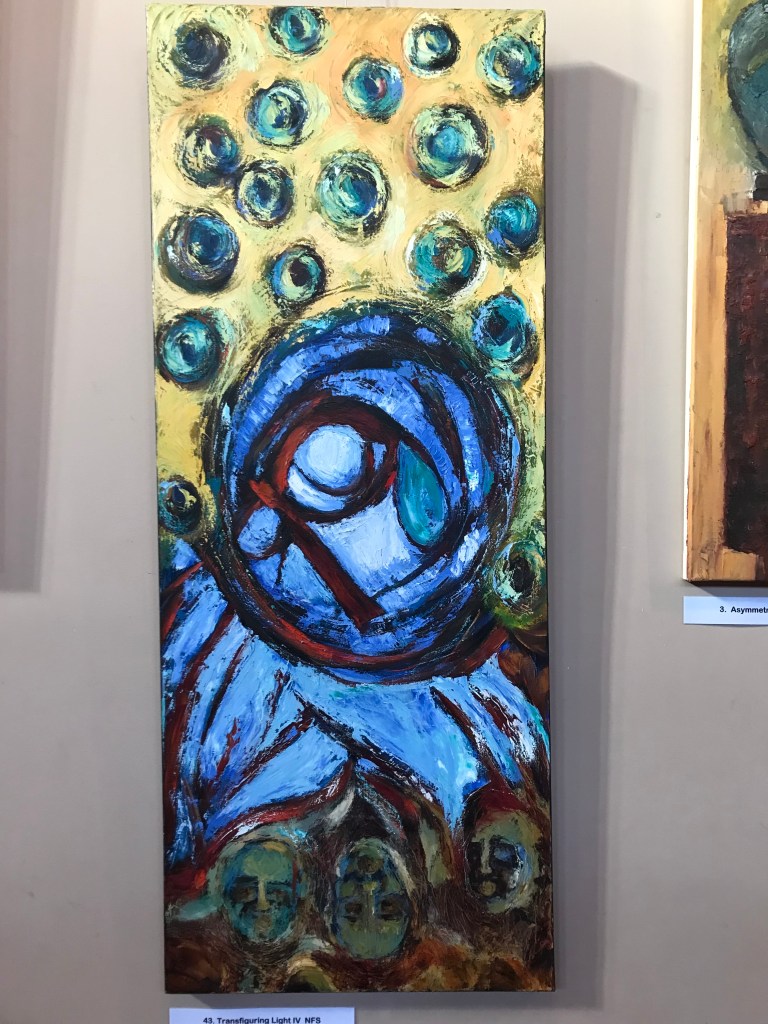
Last month, I had the immense pleasure and honour of speaking at the opening of an exhibition of Wes Campbell’s artwork. Wes is a theologian, artist, and (retired) Minister of the Word in the Uniting Church in Australia. An edited version of my talk is now available on the ABC’s Religion and Ethics portal.

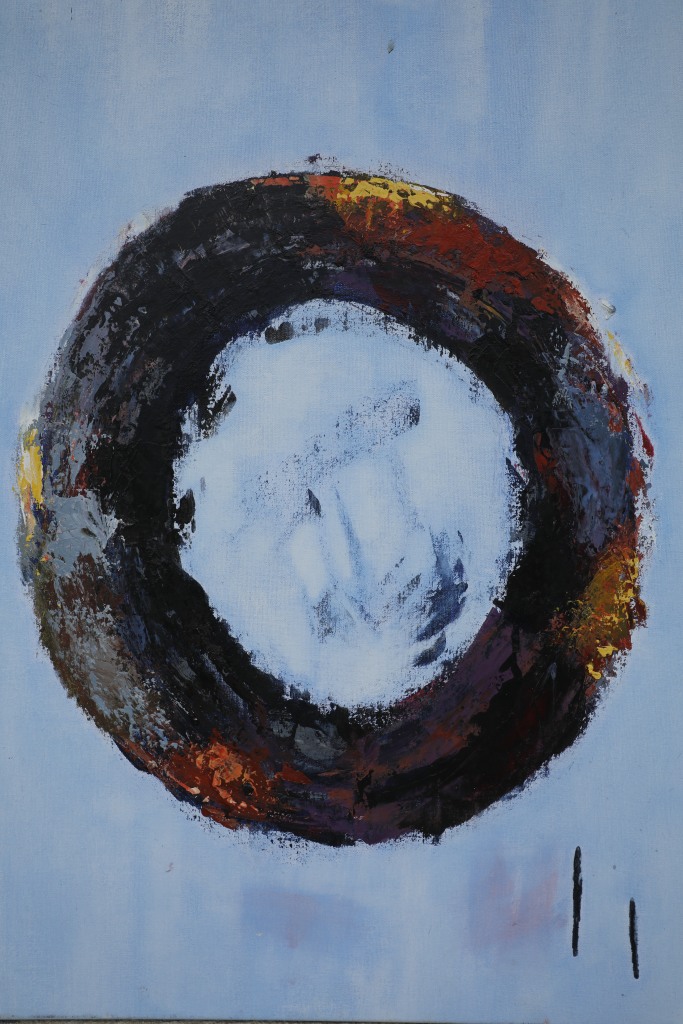
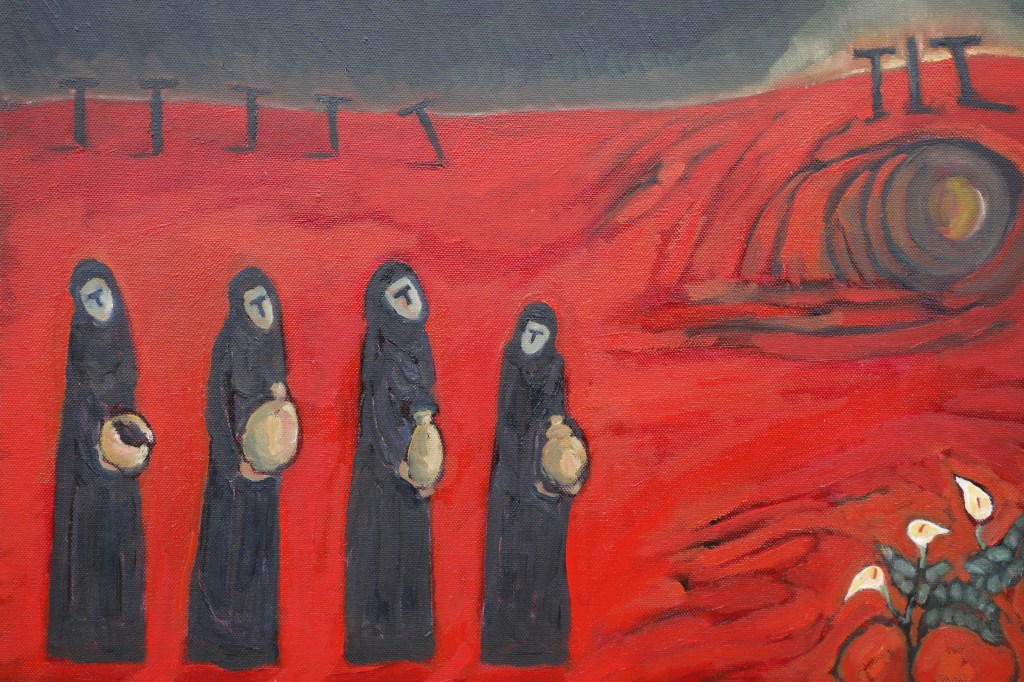
Below are a few more photos of Wes’ work – 1. Nativity; 2. Silence I; 3. Silence II; 4. Three Crucified Shirts; 5. Banksias and Leucadendrons; 6. Transfiguration of Christ; 7. Transfiguring Light IV; 8. Wholeness; and 9. Women Visiting the Tomb.

A wee vision of the happiest society

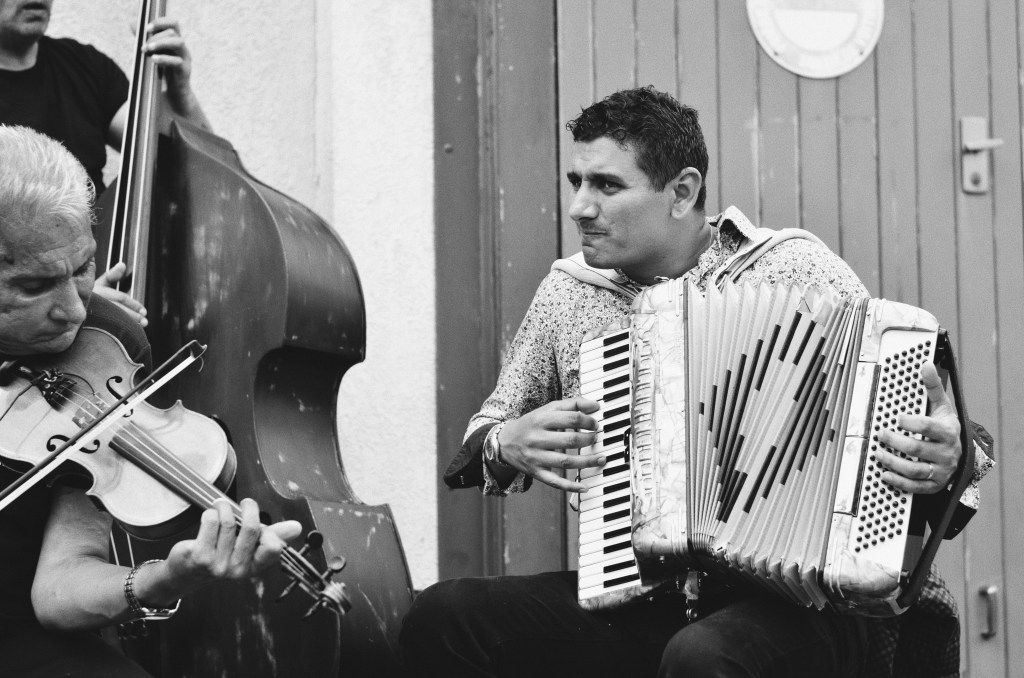
‘The best, most beautiful, and most perfect way that we have of expressing a sweet concord of mind to each other, is by music. When I would form in my mind an idea of a society in the highest degree happy, I think of them as expressing their love, their joy, and the inward concord and harmony and spiritual beauty of their souls by sweetly singing [or making other such music] to each other’.

– Jonathan Edwards, The Works of Jonathan Edwards, Volume 13: The “Miscellanies” (Entry Nos. a–z, aa–zz, 1–500), ed. Thomas A. Schafer (New Haven: Yale University Press, 1994), 331.

There are worse visions …

Motet

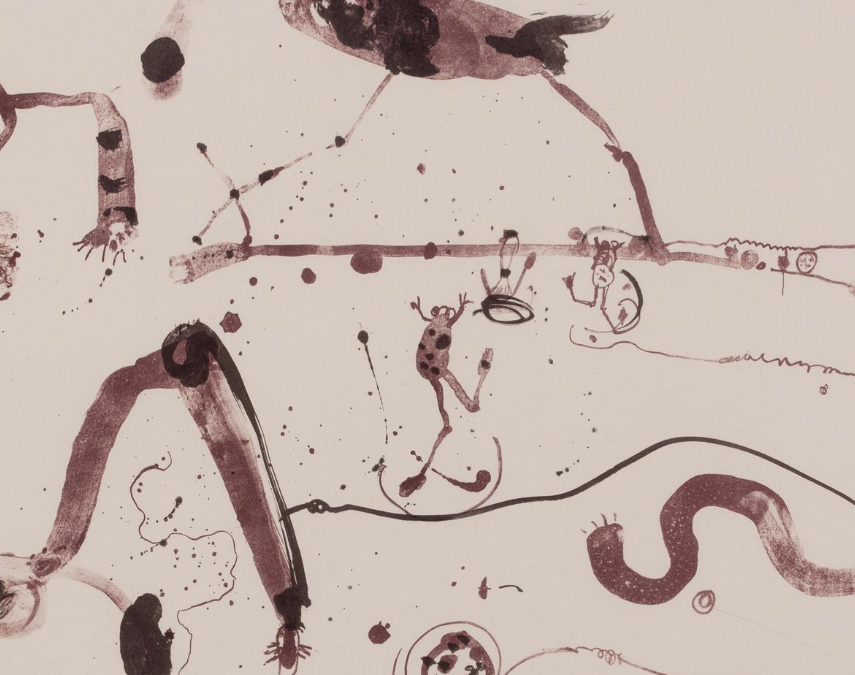
John Olsen, Birds and Frog at Lake Eyre, 1975. Lithograph printed in brown & purple inks on paper, 80 x 121 cm. Art Gallery of South Australia, Adelaide
John Olsen, Birds and Frog at Lake Eyre, 1975. Lithograph printed in brown & purple inks on paper, 80 x 121 cm. Art Gallery of South Australia, Adelaide.

O my white-burdened Europe, across
so many maps greed zigzags. One voice
and the nightmare of a dominant chord:
defences, self-mirroring, echoings, myriad
overtones of shame. Never again one voice.
Out of malaise, out of need our vision cries.

Turmoil of change, our slow renaissance.
All things share one breath. We listen:
clash and resolve, webs and layers of voices.
And which voice dominates or is it chaos?
My doubting earthling, tiny among the planets
does a lover of one voice hear more or less?

Infinities of space and time. Melody fragments;
a music of compassion, noise of enchantment.
Among the inner parts something open,
something wild, a long rumour of wisdom
keeps winding into each tune: cantus firmus,
fierce vigil of contingency, love’s congruence.

– Micheal O’Siadhail, ‘Motet’, in The Chosen Garden (Dublin: The Dedalus Press, 1990), 82.

That creation might sing with its own voice …

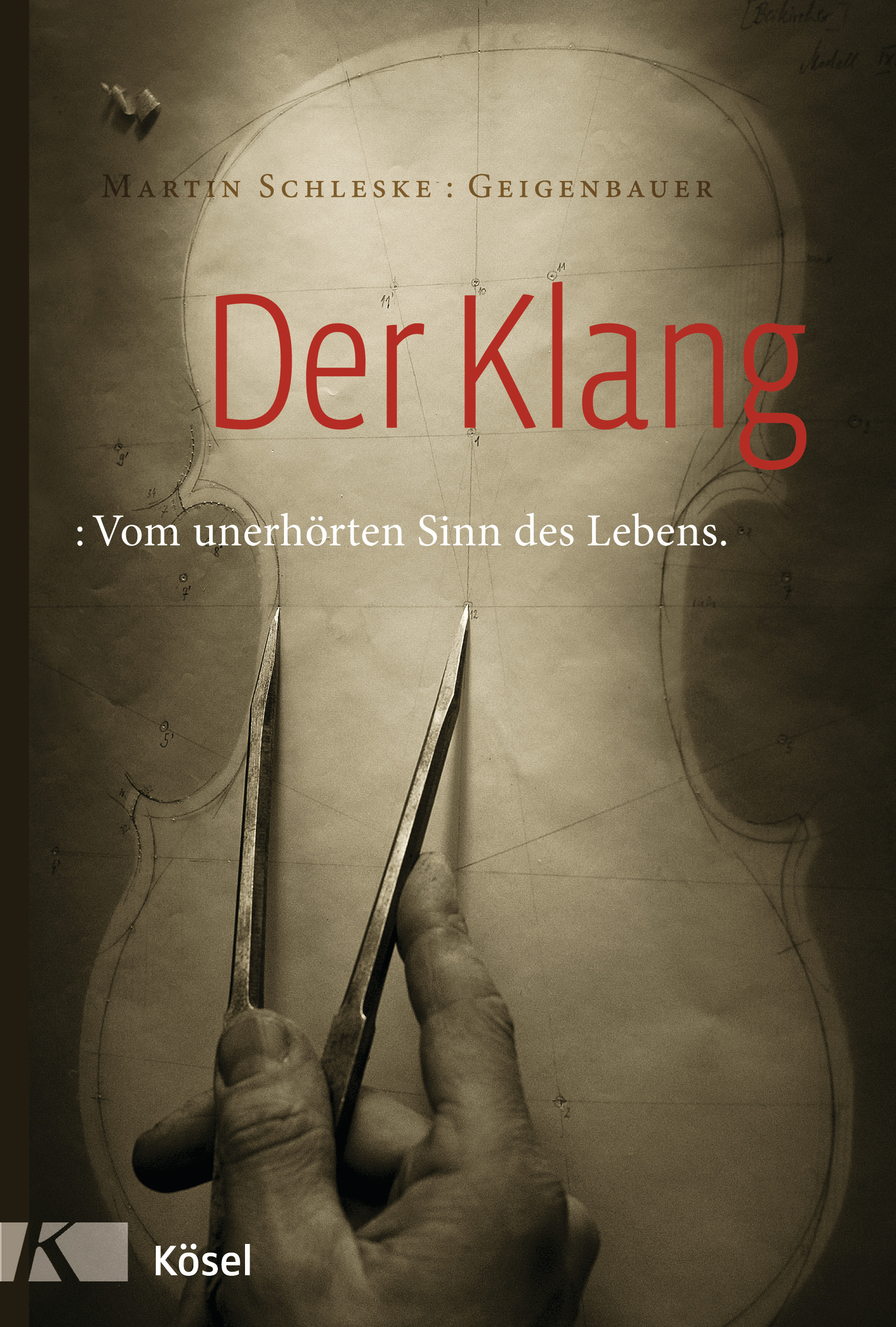
Der Klang von Martin Schleske

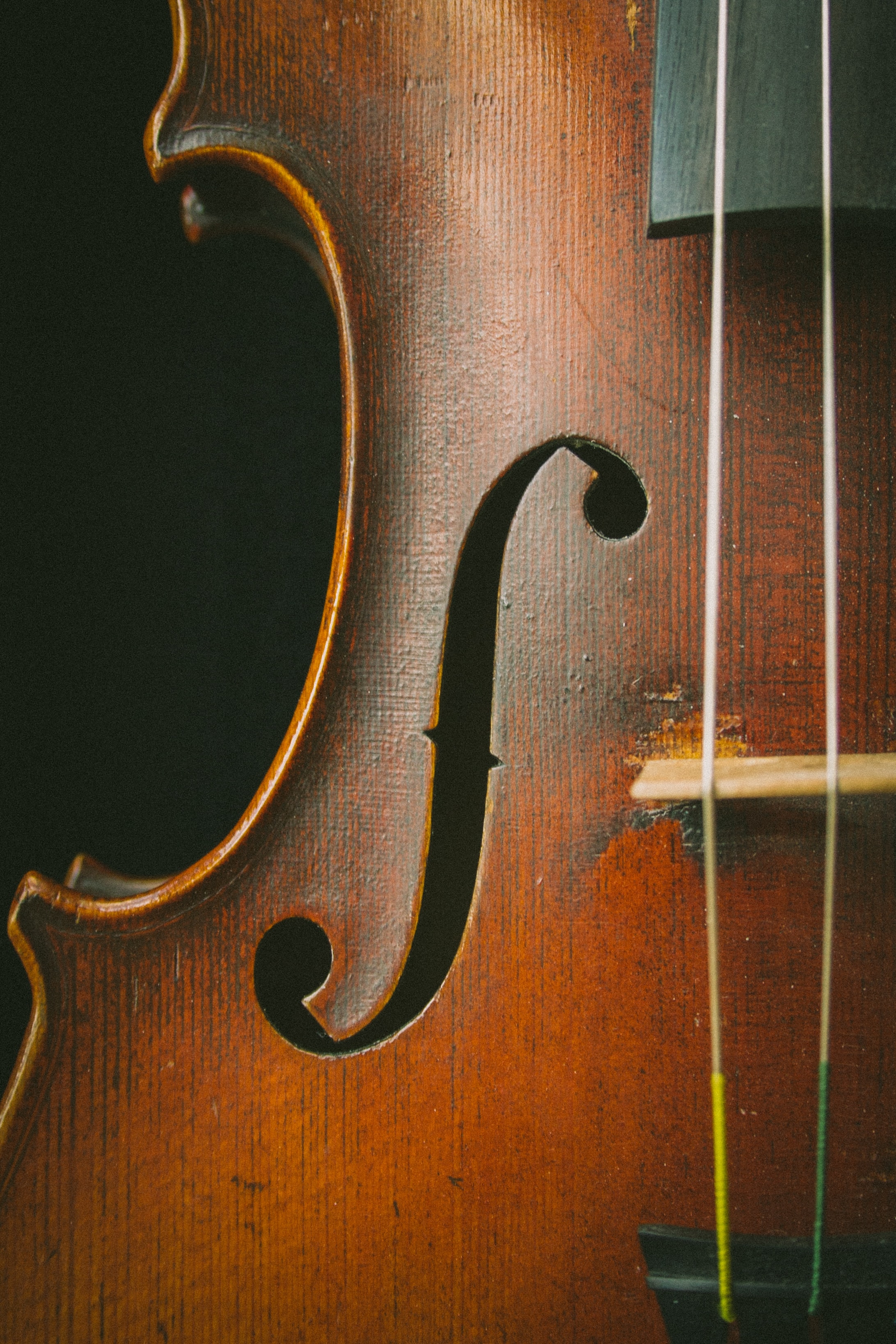
Martin Schleske lives just outside of Munich. From the age of 7, he studied the violin, then violinmaking, and then physics, completing his thesis on the topic ‘Eigenmodes of vibration in the creation of a violin’. Today he is one of the most highly respected violinmakers in the world. In his book Der Klang, first published in 2010, Schleske describes the ways that the violinmaker must yield to the composition of the wood before they can begin to reshape it into a violin’s body. To find that right wood – the best ‘singer trunks’ – Schleske would often spend months on end seeking the truest tree by tapping on them with a tuning fork. The violinmaker chooses seasoned timber – trees formed by rough weather, winds, and meagre ground, and where the knots and cracks add to rather than subtract from the character of the wood. Such trees, as Jim Gordon noted, bear witness to the resilience and to the kind of elasticity required to create the curved sides that the best violins call for. They witness to the possibility of lives lived ‘without pressure warping [their] integrity’; of lives that ‘bear stress without splitting’; of lives that ‘survive intact and strong’ through the seasons of life. So Schleske:

A good violin builder respects the texture of the wood and under their fingers feels the character, the solidity and density. This shows the builder both the possibilities and the limits of the wood. Each of this wood’s quirks and characteristics has an influence on the sound it will bring forth.

johanna-vogt-h7kvzjgum3m-unsplash
Photo by Johanna Vogt on Unsplash.

It is nature’s cruelty that shapes the best-sounding wood. As Schleske puts it: ‘every hardship the tree experiences, make the roots go deeper and the structural fibres stronger’. The best-sounding wood is discovered not made, and after being cut down is then stored for many years in the artist’s workshop where the heat and humidity levels are carefully monitored, until such time as it is ready to be shaped into the body of a violin. Here is where the true work of the craftsperson comes to the fore, for the best violin makers are those who resist the temptation to force their own perceptions, or forms, or laws onto the wood through being fixated on some ‘ideal’ or ‘right’ shape. Instead, they see something else; they follow the wisdom given in the timber’s own history as it is carried in the wood’s fibres, honouring what is crooked, exercising care to not cut in the wrong places or a direction that would dishonour the grain, and knowing both the possibilities and the limits of the material in their hands. The goal, after all, is to so form the instrument that it sings with its own voice. What makes it an act of loving creation is that it is not the wood that capitulates to the artist, but the artist who consents to the wood. It is the difference between forcing an agenda and living with a promise, between subjection and interlocution, between working upon and working with.

‘A, a, a, Domine Deus’

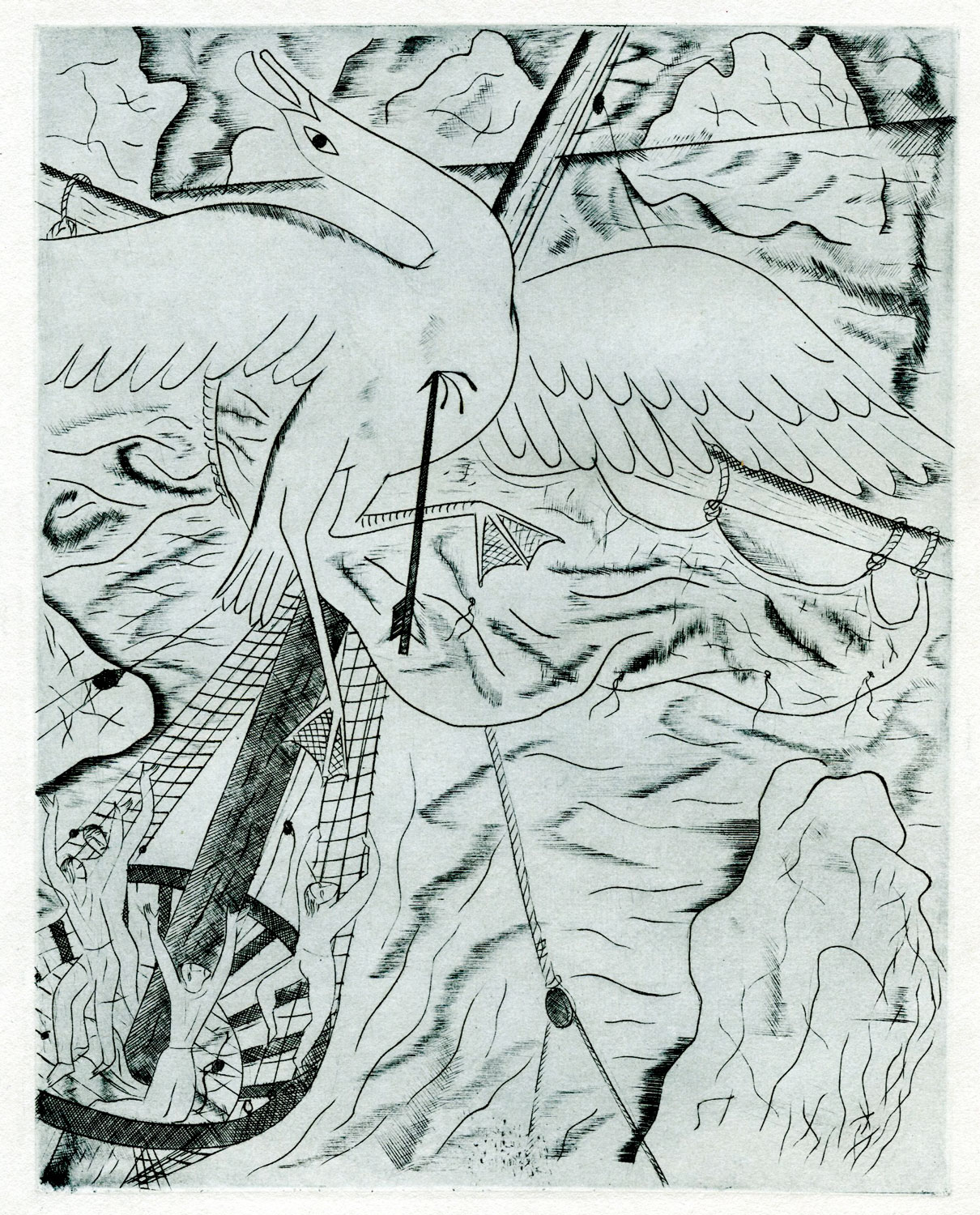
David Jones, The Albatross, 1928. Copper engraving, 17.5 x 13.5 cm. Private collection.

I said, Ah! what shall I write?

I enquired up and down.

       (He’s tricked me before with his manifold lurking-places.)

I looked for His symbol at the door. 

I have looked for a long while

           at the textures and contours.

I have run a hand over the trivial intersections. 

I have journeyed among the dead forms 

causation projects from pillar to pylon.

I have tired the eyes of the mind

           regarding the colours and lights. 

I have felt for His Wounds

           in nozzles and containers.

I have wondered for the automatic devices. 

I have tested the inane patterns

             without prejudice. 

I have been on my guard

             not to condemn the unfamiliar 

For it is easy to miss Him

              at the turn of a civilization.

I have watched the wheels go round in case I might see the living creatures like the appearance of lamps, in case I might see the Living God projected from the Machine. I have said to the perfected steel, be my sister and for the glassy towers I thought I felt some beginnings of His creature, but A, a, a, Domine Deus, my hands found the glazed work unrefined and the terrible crystal a stage-paste … Eia, Domine Deus

– David Jones, ‘A, a, a, Domine Deus’, in The Sleeping Lord, and Other Fragments (London: Faber & Faber, 1974), 9.